Your First Day In Cusco, The Acclimatisation Day
Cusco sits at 3,335 m, higher than Machu Picchu, and the CDC Yellow Book names it a rapid-ascent destination. This page sets out what the sources actually say about a first, light day in the city.
Short answer
Arrive, keep the day light, stay low and slow in the historic centre, save Sacsayhuaman and high hikes for later, and let the CDC's graded-ascent advice, not a clock schedule, shape the order.
Cusco, the historic city in the Andes of southern Peru, also spelled Cuzco, stands with its Plaza de Armas at 3,335 m, and that single number shapes everything a visitor should do on day one. The city is higher than Machu Picchu, whose citadel sits at 2,430 m, so the usual instinct, rushing straight from the airport to the famous ruins, works against the body. The CDC Yellow Book prefers a graded ascent and names Cusco specifically as a rapid-ascent destination, which makes the first 24 hours a planning question rather than a sightseeing sprint. This page reports what the official sources say and arranges it into a sensible, unhurried first day.
Why Does Altitude Shape A First Day In Cusco?
Because Cusco's Plaza de Armas sits at 3,335 m and the CDC Yellow Book names the city as a rapid-ascent destination, the first day is best treated as a light, low-lying day in the historic centre. The CDC prefers graded ascent, advises considering acetazolamide as a prescription decision with a doctor, and notes travellers to Cusco can descend to lower elevations to sleep for one or two nights before ascending further.
The CDC Yellow Book is the source behind every altitude line on this page, and its advice is specific. It advises avoiding a move from low altitude to a sleeping altitude of 2,750 m or more in a single day, and once above 3,000 m, moving sleeping altitude by no more than 500 m per night with an extra night for every 1,000 m gained. Cusco breaks that rule by definition for anyone flying in, which is why the Yellow Book names it. It also advises avoiding alcohol for the first 48 hours at high altitude.
No sourced figure exists for the probability of getting altitude sickness, how many days acclimatisation takes, or how much coca tea helps, and this page stays silent on all of those numbers. Bodies differ, and symptoms warrant a doctor. The CDC's Level 1 travel notice for Peru adds that Machu Picchu is at high altitude and that travellers should talk to a doctor, which is the full extent of what an official source says on the subject.
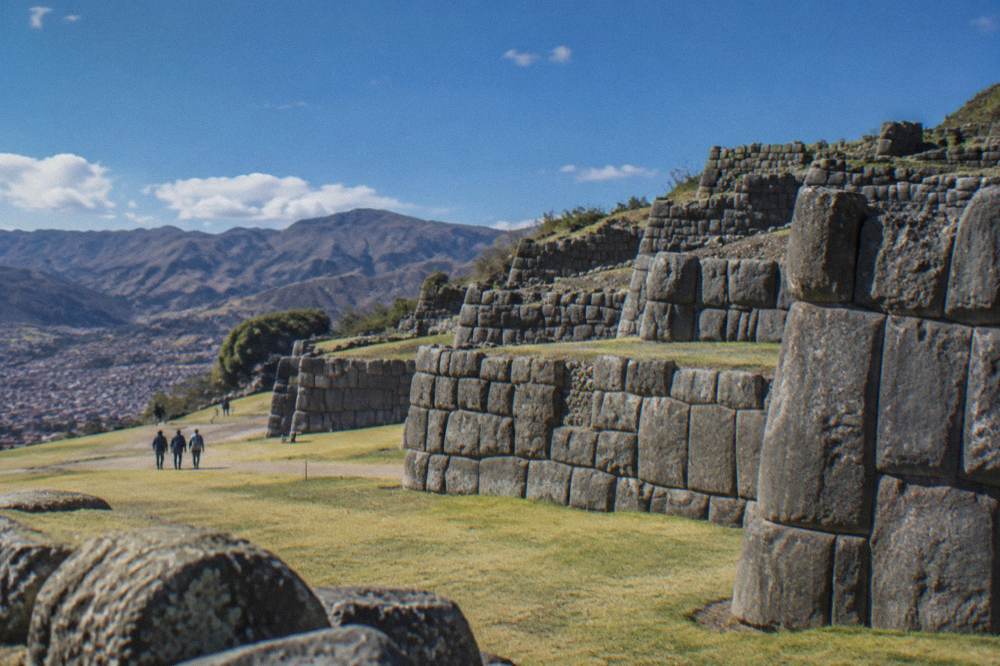
The practical consequence for an itinerary is simple. The first day belongs to the flat, central, walkable parts of the city, and the higher excursions, Sacsayhuaman at 3,701 m, Humantay Lake at about 4,200 m, Palccoyo at 4,900 m and Rainbow Mountain at about 5,000 m, belong to later days. The full question of how long acclimatisation takes is covered on How Long To Acclimate In Cusco, which reports the same CDC lines without inventing a day count.
What Should The Morning Of Your Acclimatisation Day In Cusco Look Like?
The morning should be slow, central and mostly flat: a light breakfast near the Plaza de Armas, gentle walking through the historic centre, and nothing above the city rim. The airport sits at 3,310 m about 6 km from the Plaza de Armas, a reported 15 to 20 minutes by taxi, with a reported taxi fare of about S/ 15 to 25, so arrival itself is short and undemanding.
Alejandro Velasco Astete International Airport handles every Cusco flight, and PromPeru gives the distance and taxi time. The new Chinchero airport is not operating, with completion targeted for 2028, so nothing about arrival has changed for a first-day plan. An airport taxi to the centre is reported at about S/ 15 to 25, a secondary range rather than an official tariff, and other transfer options can be compared on the transfer product card.
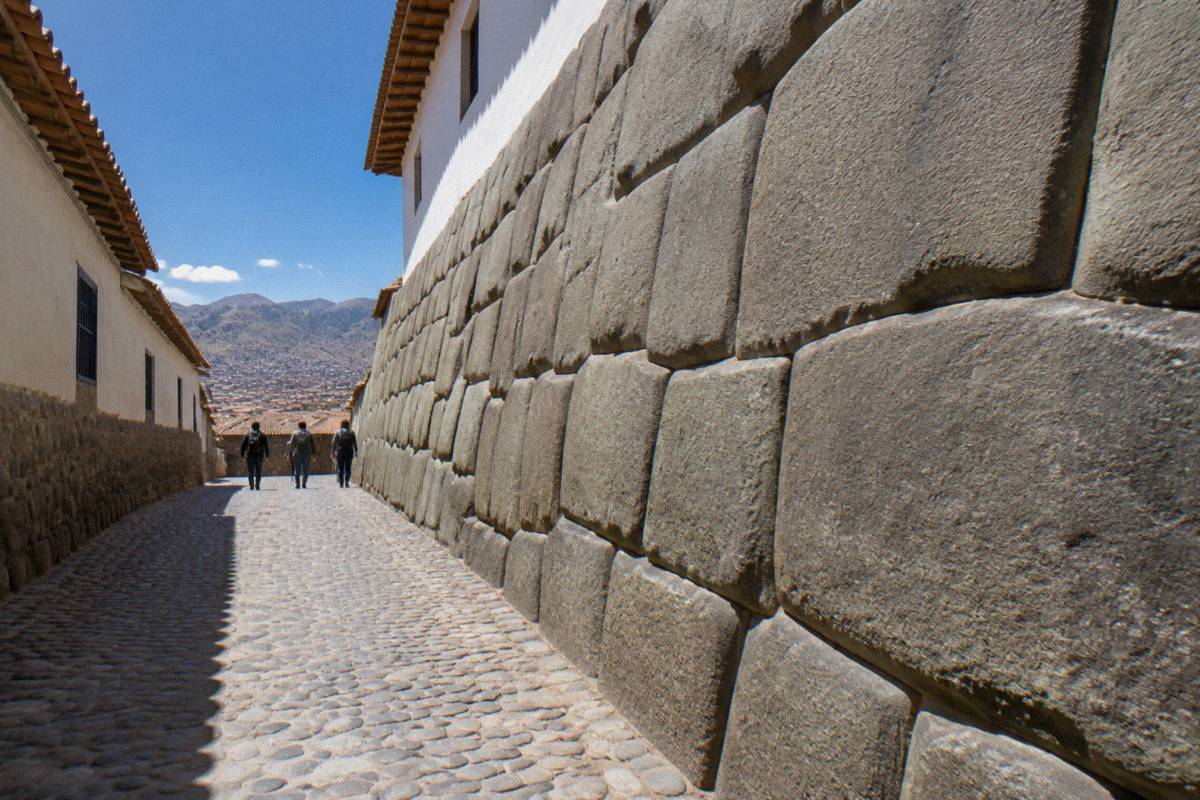
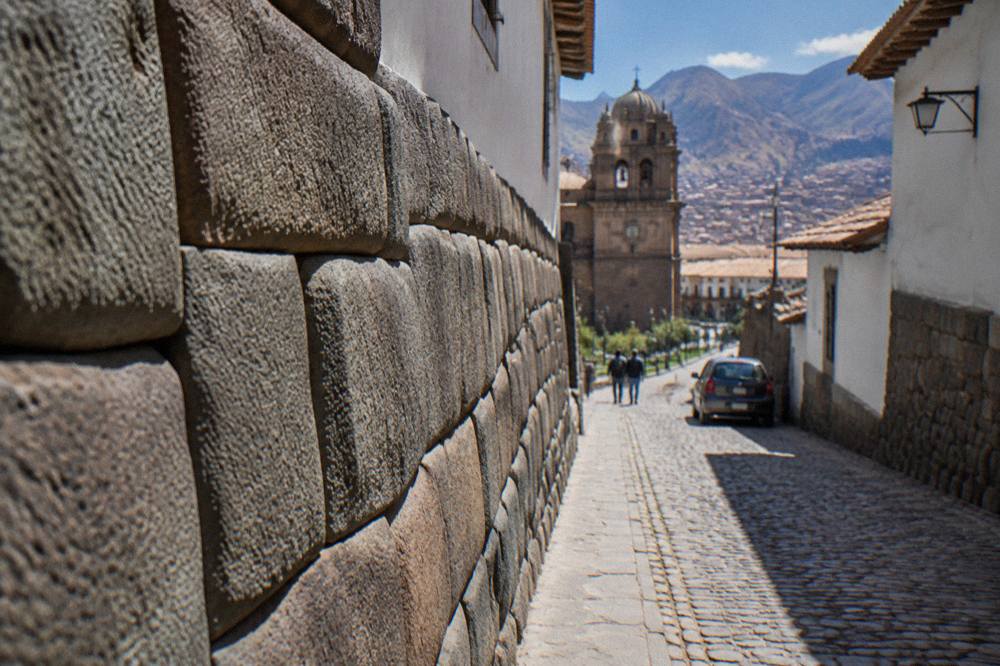
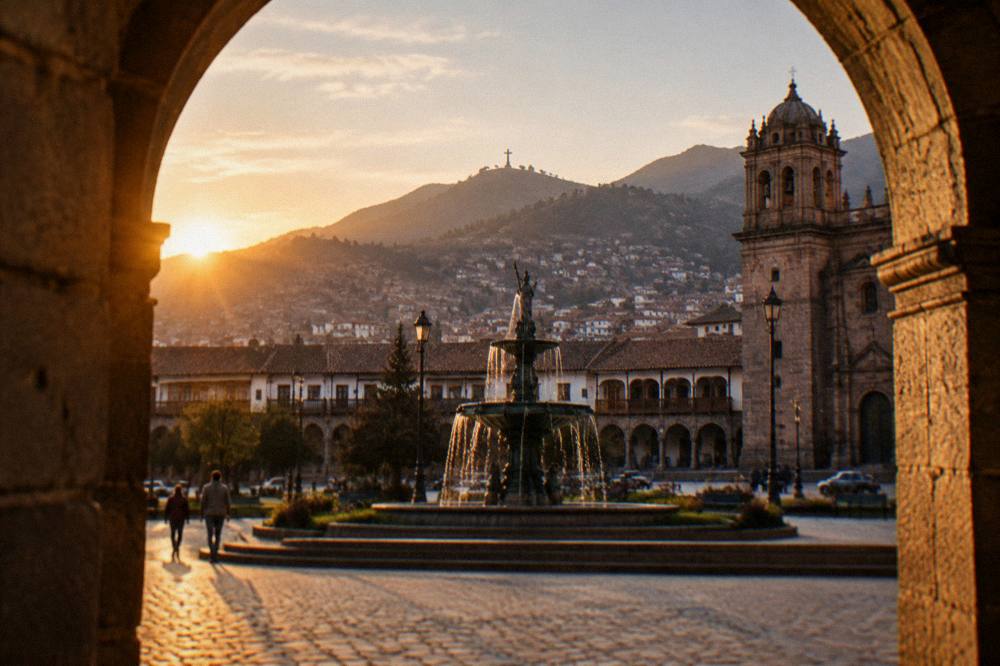
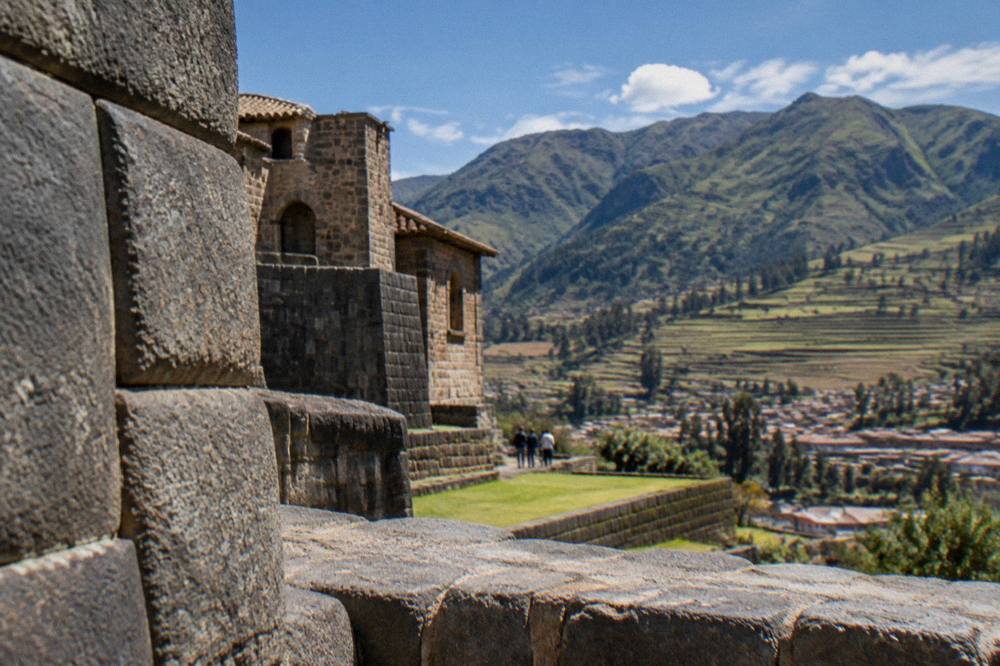
After dropping bags, the morning works best inside the historic centre, which is compact and level around the plaza. Colonial churches stand on Inca stone foundations, a widely documented qualitative fact, and the Cusco Historic Centre rewards slow looking rather than a checklist. The Twelve Angled Stone on Hatunrumiyoc street is a large, finely fitted polygonal stone in an Inca wall near the plaza and San Blas, and it costs nothing to stand and study.
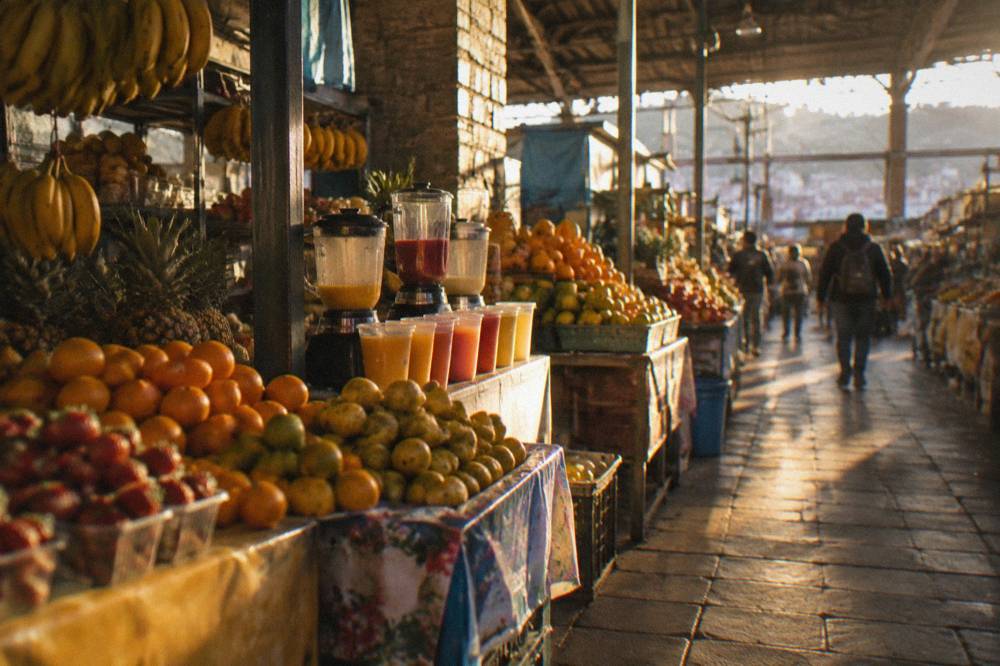
A mid-morning stop at San Pedro Market keeps the day grounded and low-effort. A cup of coca tea is reported at about S/ 2 to 5, and a menu del dia runs about S/ 8 to 15, both everyday on-the-ground ranges from secondary sources, never official tariffs. Sitting in a market with a juice is as valid an acclimatisation activity as any ruin, and it sits at city altitude rather than above it.
A guided option can carry the morning without adding physical effort. A Cusco walking tour with local guides keeps the route flat and central, and the free GuruWalk walks, including the Free Tour in Cusco with local guide led by Frank Emerson and the YANA walking tour of the historic centre run by Yana Tour Operator, are tip-based options that must be booked with the platform named. None of these climbs above the city.
Which Cusco Sights Suit Day One, And Which Should Wait?
Day one suits the Plaza de Armas, Qorikancha, the Cathedral, San Pedro Market and the flat historic lanes; Sacsayhuaman at 3,701 m, the higher day hikes and everything on the high mountain routes should wait for later days. The Boleto Turistico is sold in person only, the integral ticket costs S/ 130 for a foreign adult and lasts 10 days, so a first-day purchase still covers later visits.
The elevation ladder is the deciding factor. COSITUC's tarifario and FAQ give the boleto prices and rules, and the Ministry of Culture's ticket platform handles Machu Picchu separately, so the two systems never conflict. The table below arranges the sights a first-day plan touches by elevation, using only figures the facts pack holds.
| Place | Elevation | Ticket | First Day Or Later |
|---|---|---|---|
| Aguas Calientes (Machu Picchu Pueblo) | about 2,040 m | Machu Picchu ticket, separate | Later, not on the boleto |
| Machu Picchu citadel | 2,430 m | Ministry of Culture platform, from about S/ 163 foreign adult standard | Later |
| Ollantaytambo | 2,792 m | Boleto Circuit III | Later, lower than Cusco |
| Urubamba | 2,870 m | Sacred Valley base, no site ticket for the town | Later, lower than Cusco |
| Pisac town | 2,972 m | Boleto Circuit III | Later, lower than Cusco |
| Cusco Plaza de Armas | 3,335 m | Free to walk | First day |
| Qorikancha museum | city altitude | S/ 20, also on Boleto Circuit II | First day |
| Moray | 3,385 m | Boleto Circuit III | Later |
| Sacsayhuaman | 3,701 m | Boleto Circuit I | Later, higher than the city |
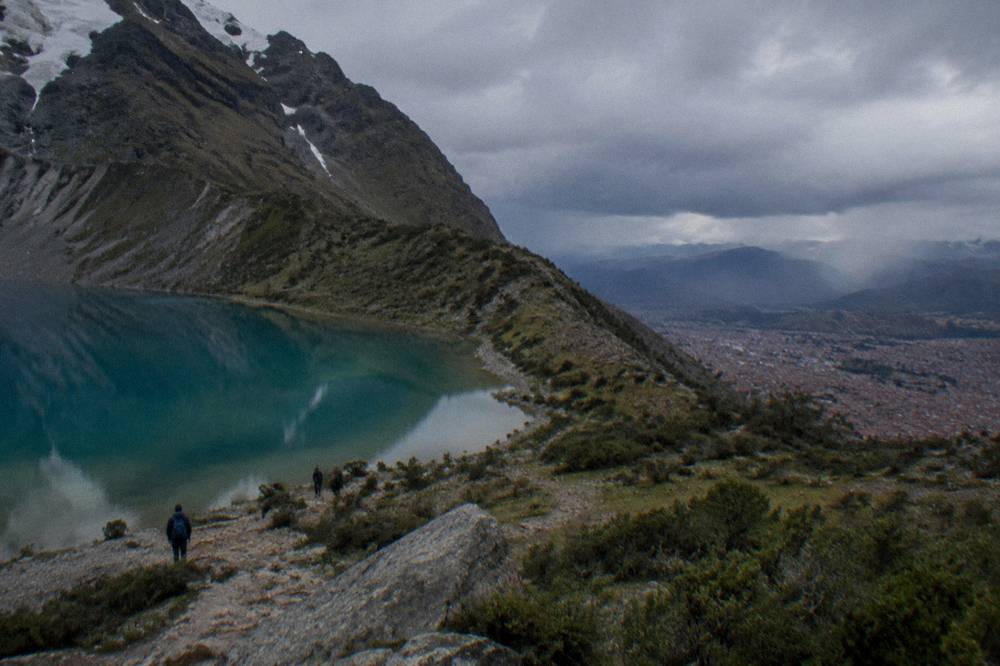
| Humantay Lake | about 4,200 m | entry S/ 10 to 20, sources disagree | Much later |
| Palccoyo viewpoint | 4,900 m | about S/ 20 for foreigners | Much later |
| Rainbow Mountain (Vinicunca) | about 5,000 m | community fee S/ 25 to 30, cash | Much later |
The boleto's own structure rewards a first-day purchase. COSITUC sells it in person only, at the counter on Av. El Sol 103 daily from 07:30 to 18:00 and at most included sites, and its FAQ states that covering all 16 sites needs a minimum of three days. The integral ticket's 10-day validity means buying it on day one commits you to nothing strenuous that day.
| Boleto Turistico Option | Foreign Adult Price | Validity | Sites |
|---|---|---|---|
| Integral (BTCI) | S/ 130 (about US$38) | 10 days | All 16 |
| Circuit I Saqsayhuaman | S/ 70 (about US$20) | 1 day | Saqsayhuaman, Q'enqo, Puka Pukara, Tambomachay |
| Circuit II City | S/ 70 (about US$20) | 2 days | Qorikancha site museum, regional and contemporary museums, others |
| Circuit III Sacred Valley | S/ 70 (about US$20) | 2 days | Pisac, Ollantaytambo, Chinchero, Moray |
| Foreign student integral | S/ 70 | 10 days | All 16, with student ID |
Two wrong versions circulate and are worth refusing. Machu Picchu is not covered by the boleto, and the boleto is not sold online. The Ministry of Culture's platform sells Machu Picchu's own nominal ticket, valid only for the stated date, hour, circuit and holder, with a guide recommended rather than mandatory under the September 2026 ministerial resolution. That is a later-day problem, not a day-one one.
For day two and beyond, the higher options open in a sensible order. The half-day city tour with Sacsayhuaman and Q'enco takes in the Circuit I sites above the city once the body has settled, and the Rainbow Mountain and Red Valley day trip with meals is a later-day option at about 5,000 m with a community fee of S/ 25 to 30 in cash. Availability for both is on the operator's live listing.
How Does Cusco Weather Change What You Can Do On Day One?
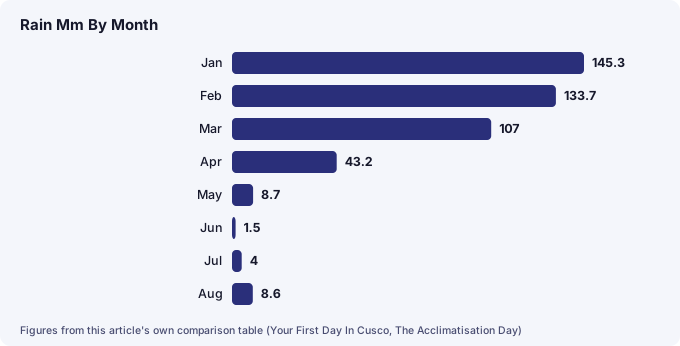
Cusco's dry season runs roughly May to September with clear days, cold nights and frost in June and July, and the wet season runs roughly November to March, with December to March carrying 71.9 percent of the year's 707.8 mm of rain. Mean daily maxima stay between 18.8 and 20.9 C all year, so day one is walkable in any month, but the night cold and the rain change what to pack.
The figures come from the WMO World Weather Information Service station "Cuzco", supplied by SENAMHI, a historical normal rather than a 1991-2020 table. The Southern Hemisphere season labels matter: June to August is Cusco's winter, dry and clear with frost nights, never a northern-hemisphere summer. SENAMHI reports that frosts peak in June and July and run April to September.
| Month | Mean Max C | Mean Min C | Rain mm |
|---|---|---|---|
| Jan | 18.9 | 6.6 | 145.3 |
| Feb | 18.8 | 6.5 | 133.7 |
| Mar | 19.1 | 6.2 | 107.0 |
| Apr | 19.7 | 4.9 | 43.2 |
| May | 19.8 | 2.5 | 8.7 |
| Jun | 19.5 | 0.3 | 1.5 |
| Jul | 19.1 | 0.1 | 4.0 |
| Aug | 19.8 | 1.6 | 8.6 |
| Sep | 19.8 | 3.9 | 21.8 |
| Oct | 20.9 | 5.5 | 39.4 |
| Nov | 20.7 | 6.1 | 71.9 |
| Dec | 19.4 | 6.4 | 122.7 |
The day-night swing is the detail that surprises arrivals. In July the mean maximum is 19.1 C and the mean minimum 0.1 C, about 19 C apart, while in January the swing is 12.3 C. A first-day plan built around a warm afternoon walk can still meet a near-freezing evening, so layers matter more than the calendar suggests. No sourced temperature or rainfall figure exists for Machu Picchu, Aguas Calientes, Rainbow Mountain or the Sacred Valley, and this page states none.
Crowds follow the same calendar. MINCETUR's open data shows Machu Picchu's 2025 visitors peaking in October at 154,105 against 79,806 in February, with October drawing 1.93 times February's count. A first day in Cusco city is less crowd-sensitive than the citadel, but the same dry-season concentration shapes hotel demand and the pace of the plaza.
What Does A Sensible Acclimatisation Day Order Look Like?
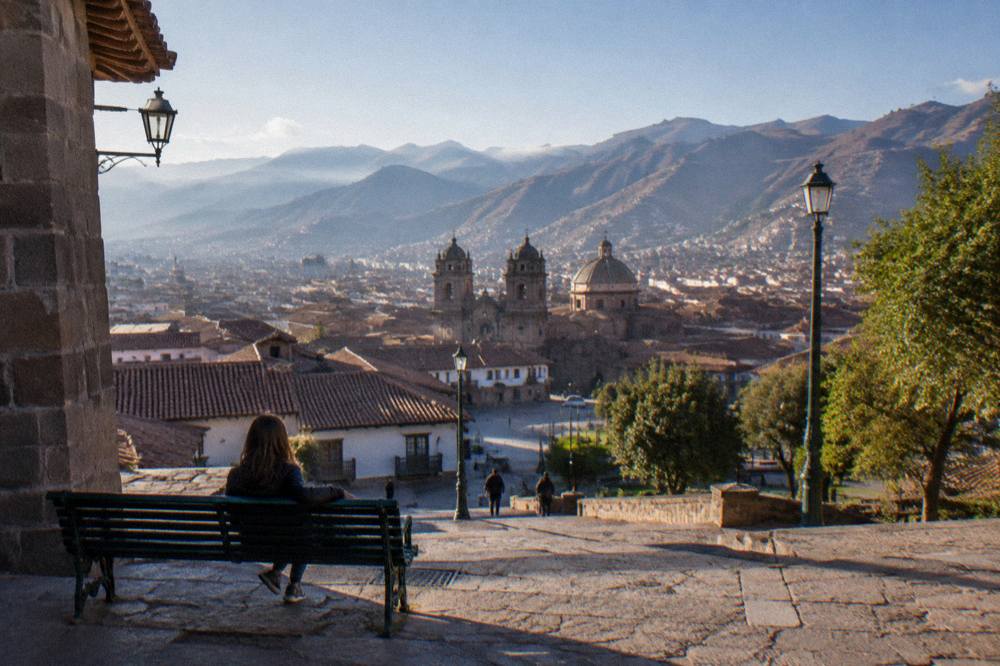
A sensible order runs flat and central first, then edges upward: the Plaza de Armas and its cathedral, the Qorikancha museum, San Pedro Market and the historic lanes, with an optional low viewpoint at dusk and nothing above the city rim. Timings vary, so the plan below is an order of sights, not a clock schedule, and it keeps every stop at city altitude.
The order matters more than the hours. The Cathedral stands on the plaza and peru.travel lists its admission at S/ 25, a figure from a dated page, so check before visiting. The Cusco Cathedral and Qorikancha anchor the flat centre, and the Inca Museum at S/ 20 for a foreign adult offers a sitting-down afternoon option if the body asks for one.
| Stop | Place | Altitude Load | What It Asks Of You |
|---|---|---|---|
| 1 | Plaza de Armas and the Cathedral | Flat, city level | Slow walking, steps inside |
| 2 | Qorikancha museum | Flat, city level | Mostly indoor, seated options |
| 3 | San Pedro Market lunch | Flat, city level | Sitting, eating, hydrating |
| 4 | Hatunrumiyoc and the Twelve Angled Stone | Flat, one short lane | Gentle stroll, free |
| 5 | San Blas lanes | Gentle uphill streets | Short climbs, rest stops |
| 6 | Optional low viewpoint at dusk | Above the plaza, below Sacsayhuaman | Only if the day has gone well |
The table is deliberately free of times. The pack holds no walking times for city routes, and inventing them would be the fabrication class this destination punishes most. What the order does encode is the CDC's logic: effort only after rest, altitude only after the body has spent a day at 3,335 m.
If day one goes well, the evening can end with a short climb into San Blas, but the walk up to Sacsayhuaman is a separate question with its own answer on Walking From Cusco To Sacsayhuaman. Sacsayhuaman is on Boleto Circuit I, not free, and at 3,701 m it is the first rung above the city, best saved for day two.
Where Should Day Two Go Once You Have Acclimatised In Cusco?
Day two can go upward or downward: Sacsayhuaman and the Circuit I ruins above the city, the Sacred Valley towns that sit lower than Cusco, or the higher mountain day trips, in that order of difficulty. Urubamba at 2,870 m, Ollantaytambo at 2,792 m and Pisac at 2,972 m all sit below the city, so the valley is genuinely a descent, while Humantay, Palccoyo and Rainbow Mountain climb well above it.
The Sacred Valley's lower elevations make it the natural second day, and the question of sequencing it against Machu Picchu has its own answer on Sacred Valley Or Machu Picchu First. Whether the valley fits a single day is answered on Sacred Valley In One Day. Both pages work from the same elevation figures this page uses.
The mountain day trips rank themselves by altitude. Humantay Lake at about 4,200 m comes first, Palccoyo at 4,900 m next, and Rainbow Mountain at about 5,000 m last, and the comparison between the two rainbow options is laid out on the Rainbow Mountain versus Palccoyo guide. The day hikes from Cusco collect the options in one place.
Longer plans then assemble themselves from the same logic. The 2-day Cusco itinerary, the 3-day itinerary and the 5-day itinerary all start from a light first day, and the Cusco And Machu Picchu plan sequences the descent to the citadel after the city days. The CDC's graded-ascent preference is the thread running through every one of them.
What Should You Not Do On A First Day In Cusco?
The first day should avoid Sacsayhuaman at 3,701 m, the high mountain day trips, alcohol in the first 48 hours per the CDC, and any rushed straight-through connection to Machu Picchu, since the citadel at 2,430 m is a descent but the journey to reach it is a long one. Nothing on day one should require a 05:00 start or a mountain road.
The CDC's alcohol line is one of the few concrete behavioural rules an official source gives, and it belongs on any first-day page. The rest of the list follows from elevation and journey effort rather than from any single rule. The Inca Trail closes every February, permits sell only through licensed agencies with 500 people a day including staff, and the permit price is about S/ 292, all facts for a much later planning stage, not day one.
A first day is also the wrong day to lock in a rigid schedule. Machu Picchu tickets are nominal, valid only for the stated date, hour, circuit and holder, with no changes beyond a single passport-number correction, so a flexible first day protects the later fixed days. The 1-day Cusco itinerary exists for travellers with no room to spare, but the acclimatisation logic still applies to it.
For travellers heading onward to Puno, the Cusco to Puno scenic day trip with lunch is a later-day option that crosses high ground on the way to the lake. It is a sitting day, but a long one, and it earns its place after the city has settled. The bus journey runs about 389 km and takes about six hours, per PromPeru, and the Route of the Sun stops break up the distance.
Once the Puno leg is placed, the remaining decisions are about order rather than effort. The 4-day itinerary and the 7-day itinerary both leave room for the high mountain trips after the valley days, and the Sacred Valley 2-day plan splits the valley across two nights at lower altitude, which the CDC's graded-ascent logic favours over a single rushed day.
Common Questions About An Acclimatisation Day In Cusco
How Long Does It Take To Acclimate In Cusco?
No sourced figure exists for how many days acclimatisation takes, and bodies differ. The CDC Yellow Book prefers graded ascent, advises avoiding a single-day move to a sleeping altitude of 2,750 m or more, and names Cusco as a rapid-ascent destination. Symptoms warrant a doctor, and acetazolamide is a prescription decision with one.
Is Cusco Higher Than Machu Picchu?
Yes. The Cusco Plaza de Armas sits at 3,335 m and the Machu Picchu citadel at 2,430 m, roughly 900 m lower. The town of Aguas Calientes, also called Machu Picchu Pueblo, sits at about 2,040 m. The Sacred Valley towns of Urubamba, Ollantaytambo and Pisac are also lower than the city.
Can You Visit Sacsayhuaman On Your First Day In Cusco?
You can, but the elevation argument says to wait. Sacsayhuaman sits at 3,701 m, above the city, and it is on Boleto Turistico Circuit I, not free. The integral ticket lasts 10 days, so visiting on day two or three costs nothing extra if the boleto was bought on day one.
Does Coca Tea Help With Altitude In Cusco?
No sourced figure exists for how much coca tea helps, and this page states none. A cup is reported at about S/ 2 to 5 in the city, and it is a normal everyday drink in Cusco. The CDC Yellow Book's advice is about graded ascent, avoiding alcohol for the first 48 hours, and a doctor's view on acetazolamide.
Should You Go To Rainbow Mountain On Day One?
No. Rainbow Mountain, Vinicunca, stands at about 5,000 m with a community entry fee of S/ 25 to 30 in cash for foreigners, and it is the highest of the standard day trips. It belongs several days into a trip, after the city and the lower valley have been done.
What Should You Do If You Feel Unwell On Day One In Cusco?
Rest, stay at city altitude, and treat symptoms as a reason to see a doctor. The CDC's Peru notice is Level 1 and advises talking to a doctor about high altitude before travel. Tourist police operate a 24-hour line, and iPeru runs a 24-hour tourist information service, both listed on peru.travel's emergency page.
The first day in Cusco is a slow day by design, and the sources behind it, the CDC Yellow Book, COSITUC's tarifario, the WMO station record and MINCETUR's visitor data, all point the same way: stay low, walk gently, buy the boleto in person, and save every altitude above 3,335 m for a body that has had a night to settle. More on the city's own sights is on Things To Do In Cusco Peru, and the longer itineraries build outward from exactly this first day.