Rainbow Mountain From Cusco
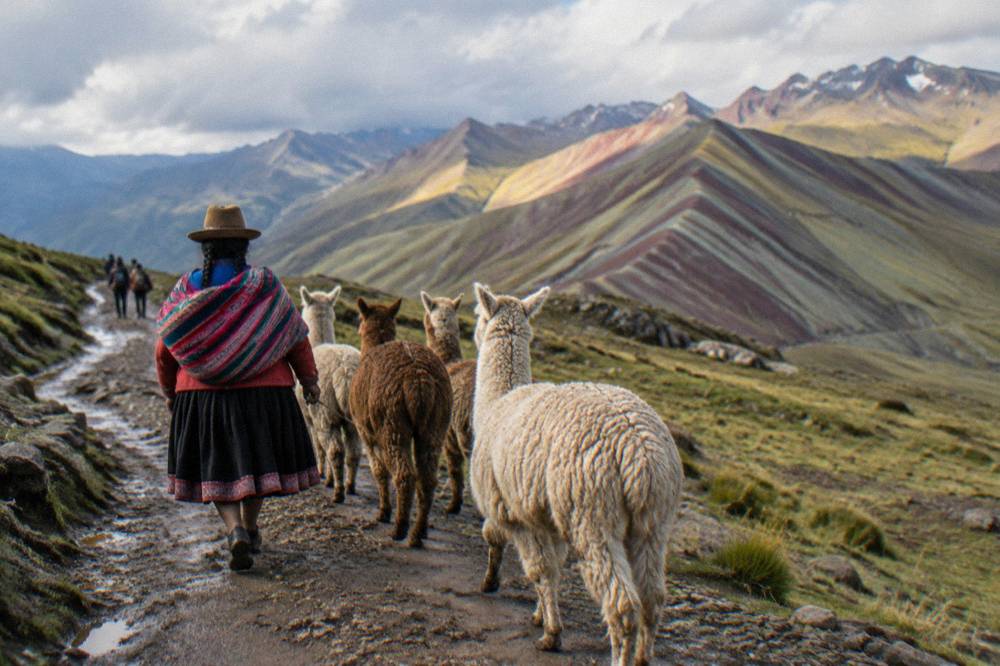
Rainbow Mountain, or Vinicunca, sits at about 5,000 m in the Andes above Cusco and has become one of the region's most photographed day trips. This guide sets out what the verified sources say about the elevation, the cash community fee, the climate that shapes the best months to go, and how the walk compares with the Palccoyo alternative.
Short answer
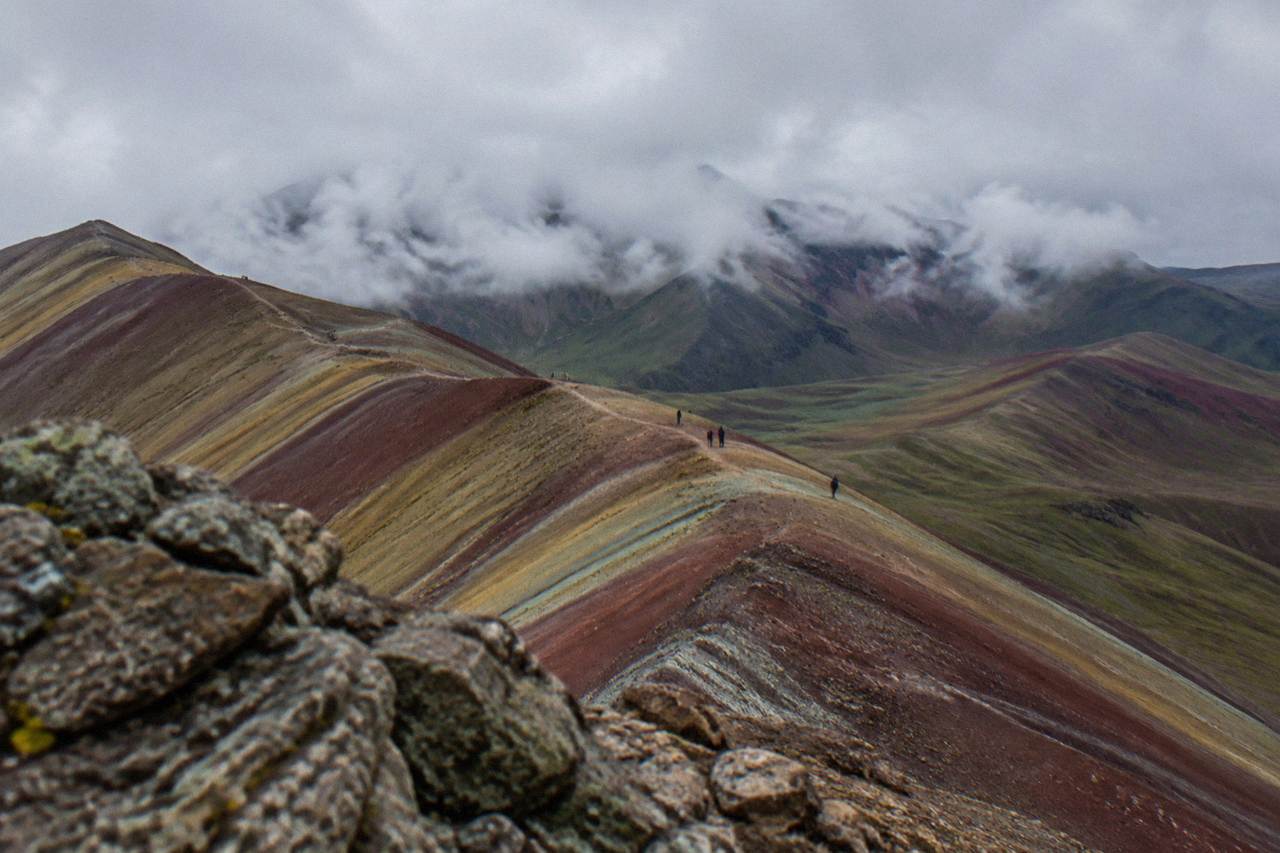
Rainbow Mountain (Vinicunca) is a striped high-Andean ridge about 5,000 m above sea level, reached on a day trip from Cusco. Foreign visitors pay a community fee of S/ 25 to S/ 30 in cash. The dry season from May to September offers the clearest days, and the CDC advises a graded ascent and a doctor's input on acetazolamide before committing to the altitude.
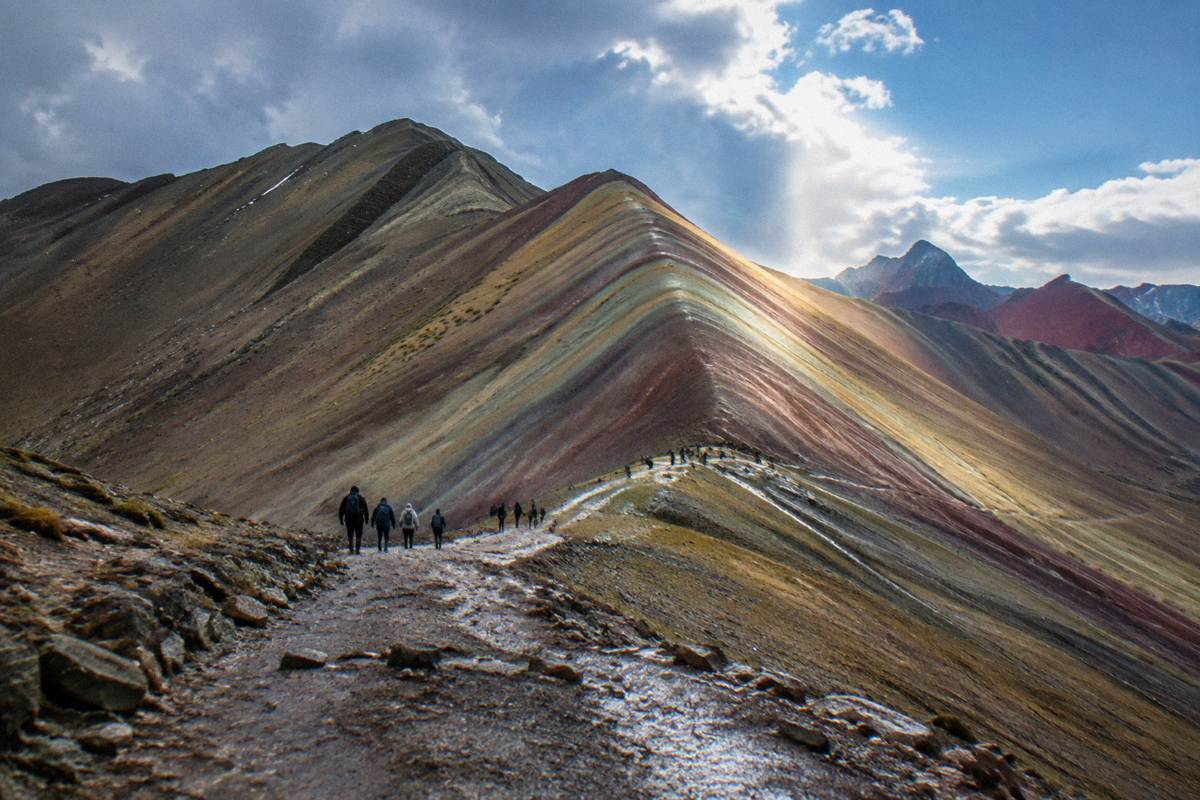
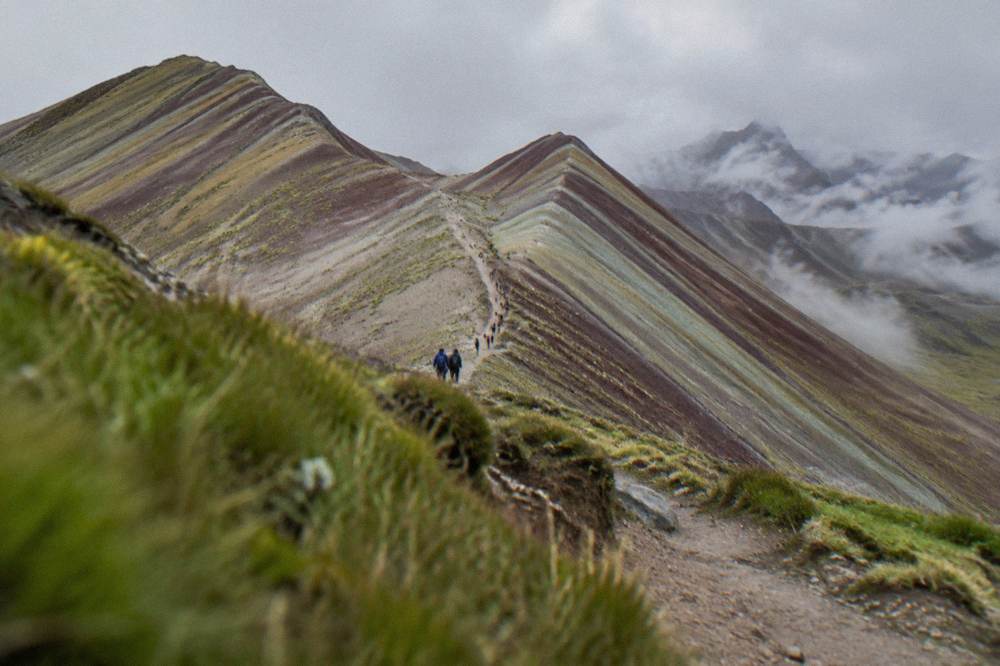
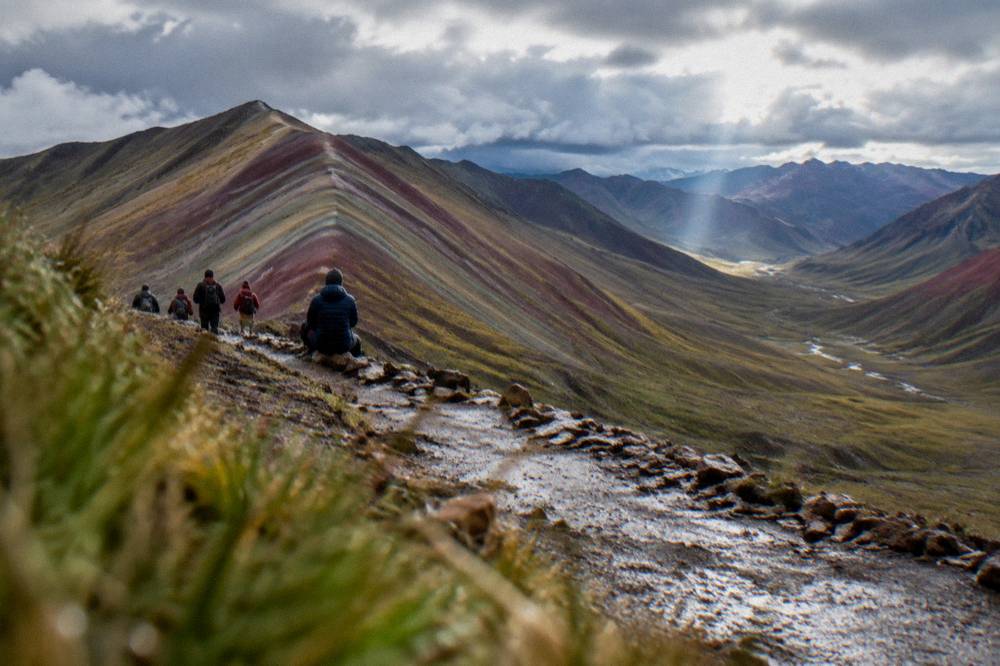
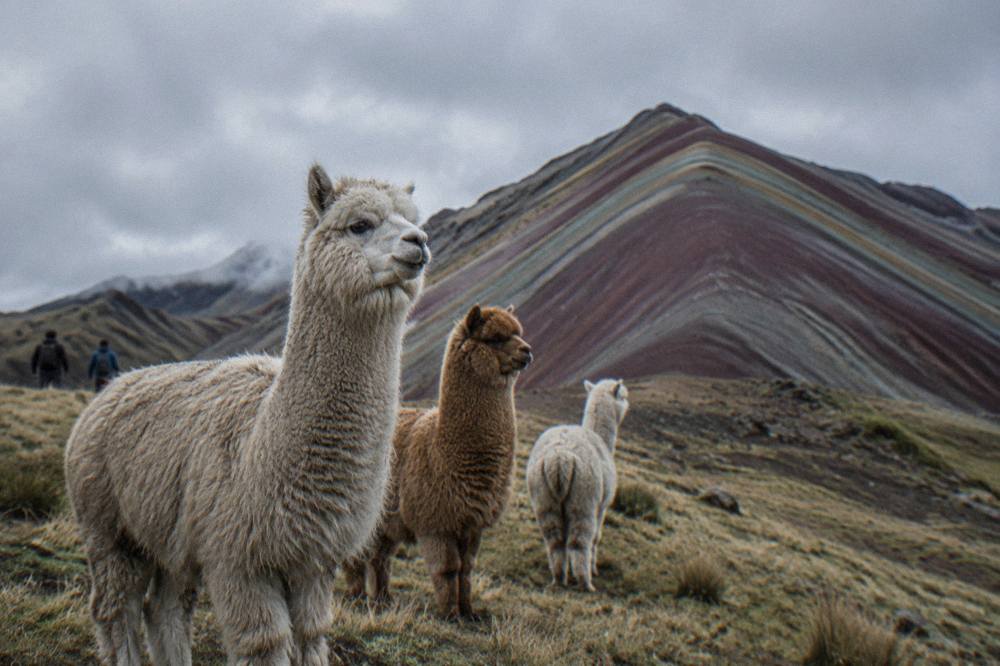
Vinicunca, the mountain most of the world calls Rainbow Mountain, stands about 5,000 m above sea level in the high Andes of the Cusco region of southern Peru, and it is visited almost entirely as a day trip from the city of Cusco, whose Plaza de Armas sits at 3,335 m. The striped colours that made it famous are mineral bands in the mountainside, and the walk to the viewpoint is short but steep, through country where frost is common and the weather can turn in an afternoon. This page collects what the verified sources actually say about the mountain: its elevation, the cash community fee foreign visitors pay, the climate data that should shape the choice of month, and the altitude guidance the CDC publishes for travellers flying into Cusco.
PromPeru, Peru's official tourism board, describes Vinicunca as a mountain of seven colours whose highest point is approximately 5,200 m, while the commonly quoted figure is about 5,000 m, and this guide sticks to that rounded form. The site Things To Do In Cusco Peru treats the mountain as one of the signature high-altitude day trips from the city, alongside Humantay Lake and the Ausangate region it belongs to.
Where Is Rainbow Mountain And How High Is It?
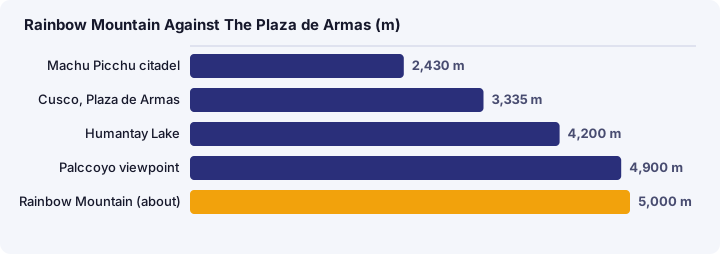
Rainbow Mountain, or Vinicunca, sits at about 5,000 m above sea level in the high Andes of the Cusco region of southern Peru, roughly a day trip away from the city of Cusco, whose Plaza de Armas is at 3,335 m. PromPeru describes the highest point as approximately 5,200 m, and the Palccoyo viewpoint on the neighbouring massif is at 4,900 m.
The mountain belongs to the high country around Ausangate, the great snow peak of the region, and the Ausangate seven lakes area sits in the same high-altitude landscape. The elevation figures matter more here than at almost any other Cusco attraction: the viewpoint is well over a kilometre higher than the city, and the CDC names Cusco itself as a rapid-ascent destination at approximately 3,350 m. Nobody publishes a verified oxygen figure for the ridge, and this page does not invent one; what the sources do say is that the climb from the trailhead to the viewpoint is steep and that altitude is the single biggest factor in whether the day is enjoyable.
The colours themselves are geological, not cultural or artificial. For readers who have seen heavily saturated photos and wonder whether the whole thing is a filter, the site's dedicated answer on whether Rainbow Mountain is real goes through what the mountain actually looks like and how the mineral banding produces the stripes.
What Does A Rainbow Mountain Day Trip From Cusco Involve?
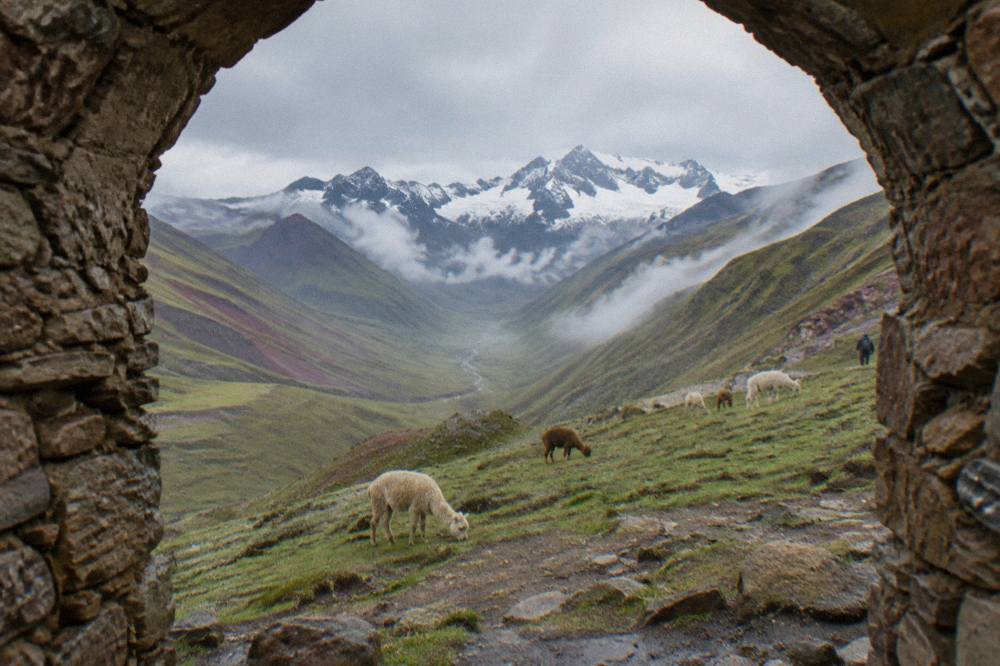
A standard day trip from Cusco means a pre-dawn start, a drive into the highlands, a walk up to the striped ridge at about 5,000 m, time at the viewpoint, and the return drive to the city. Operators run these trips as guided group tours, several with meals included, and the featured option on this site pairs the ridge with the Red Valley extension. A guide is not a legal requirement here, but organised transport is how nearly everyone reaches the trailhead.
The roster on this site includes several verified operators running the route. The featured trip, the Rainbow Mountain and Red Valley day trip with meals, takes an early-start approach with breakfast and lunch included, and its listing describes skipping the crowds with early access. A premium version of the same route exists, and a Palccoyo alternative covers the gentler twin ridge on the far side of the massif. Product details such as prices, ratings and durations render on the tour cards below rather than in this prose, because those figures change and the cards pull them from verified listing data.
The Red Valley, the rust-coloured canyon beside the main ridge, is an optional extension on several trips, and one operator guide reports the extension fee at about S/ 30 on top of the main community fee. The question of whether to do Rainbow Mountain or Machu Picchu first comes up often for visitors fitting both into one week; the short version is that the mountain is the harder altitude day, so many travellers schedule it after a few nights of acclimatisation in Cusco rather than on arrival day.
How Much Does Rainbow Mountain Cost To Visit?
Foreign visitors pay a community fee of S/ 25 to S/ 30 in cash to visit Rainbow Mountain, about US$7 to US$9, depending on the access route: Cusipata collects S/ 25 and Pitumarca S/ 30, and PromPeru itself lists S/ 30 for foreign visitors and S/ 20 for nationals. The fee is collected at the trailhead in soles, not online, and it is separate from any tour price. The Red Valley extension is reported at about S/ 30 more.
The fee belongs to the local communities, not to a government ticketing platform, and that is why it is cash-only and route-dependent. There is nothing to pre-book on an official site for the mountain itself, unlike Machu Picchu, whose tickets sell through the Ministry of Culture platform and are nominal, valid only for the stated date, hour, circuit and holder. The comparison table below places the Rainbow Mountain fee alongside the other natural-site fees in the Cusco region, all of them secondary-source figures for 2026 and all of them paid in cash on the ground.
| Site | Entry cost for foreigners | Notes |
|---|---|---|
| Rainbow Mountain (Vinicunca) | S/ 25 to S/ 30, cash | Cusipata route S/ 25, Pitumarca S/ 30; PromPeru lists S/ 30 |
| Red Valley extension | about S/ 30, cash | Optional add-on beside the main ridge |
| Palccoyo | about S/ 20, cash | Operator-reported 2026; older official pages said S/ 10 to S/ 15 |
| Humantay Lake | S/ 10 to S/ 20, cash | Sources disagree, so no single figure is reliable |
| Maras salt mines | S/ 15 to S/ 20, cash | Operator-reported 2026 |
| Q'eswachaka | about S/ 20, cash | Operator-reported; bridge renewal held 2 to 4 July 2026 |
| Waqrapukara | S/ 10 to S/ 20 contribution | No formal ticket; community contribution |
A budget note that is often missed: the community fee is normally not inside the tour price, so the cash in soles has to survive the day. Exchange rates move; a safe framing is about S/ 3.4 to the US dollar. The conversions below are the only ones this site uses.
| Amount in soles | About US$ |
|---|---|
| S/ 20 | US$6 |
| S/ 25 | US$7 |
| S/ 30 | US$9 |
| S/ 70 | US$20 |
| S/ 130 | US$38 |
When Is The Best Time Of Year To Visit Rainbow Mountain?
The clearest months for Rainbow Mountain are the dry season, roughly May to September, when the Cusco region receives very little rain: at the WMO and SENAMHI Cuzco station, May to August together bring just 22.8 mm, 3.2 percent of the year's 707.8 mm. December to March is the wet season, carrying 71.9 percent of the annual rain, and June and July add frost nights on the high ground, so the trade-off is clear skies against bitter mornings.
The climate table below is the historical normal for the Cuzco station, supplied by SENAMHI to the World Weather Information Service. There is no verified rainfall or temperature figure for the mountain itself, so the city's record is the honest proxy, and the site's month-by-month guide to Cusco weather by month applies the same dataset to the whole trip-planning question.
| Month | Mean max C | Mean min C | Rain mm |
|---|---|---|---|
| Jan | 18.9 | 6.6 | 145.3 |
| Feb | 18.8 | 6.5 | 133.7 |
| Mar | 19.1 | 6.2 | 107.0 |
| Apr | 19.7 | 4.9 | 43.2 |
| May | 19.8 | 2.5 | 8.7 |
| Jun | 19.5 | 0.3 | 1.5 |
| Jul | 19.1 | 0.1 | 4.0 |
| Aug | 19.8 | 1.6 | 8.6 |
| Sep | 19.8 | 3.9 | 21.8 |
| Oct | 20.9 | 5.5 | 39.4 |
| Nov | 20.7 | 6.1 | 71.9 |
| Dec | 19.4 | 6.4 | 122.7 |
Two seasonal details are worth more than the raw numbers. First, the day-night swing in the dry months is enormous: in July the mean maximum is 19.1 C and the mean minimum 0.1 C, roughly 19 degrees apart, so a day on the mountain can move from frost at the trailhead to warm sun at the viewpoint. Second, SENAMHI's own tourist forecasting page reports July minimums even lower than the WMO table, which is why this guide says only that frost nights are common rather than quoting a deeper figure. Frosts, or heladas, peak in June and July and run from April to September. For readers weighing the whole calendar, including the weeks to avoid, the site's answer on when not to visit Cusco covers the wet-season trade-offs in detail.
Rainbow Mountain Or Palccoyo: Which Should You Choose?
Palccoyo is the lower, gentler alternative: its viewpoint sits at 4,900 m rather than about 5,000 m, the walk to the striped slopes is shorter and less steep, and the fee is about S/ 20 instead of S/ 25 to S/ 30. Rainbow Mountain remains the famous name with the single iconic ridge and the Red Valley extension beside it. Travellers short on acclimatisation, fitness or time often choose Palccoyo; those chasing the classic photograph choose Vinicunca.
The site's full comparison guide, Rainbow Mountain versus Palccoyo, works through the decision in depth, and the Palccoyo day-trip page covers the alternative route on its own terms. The honest framing is not that one is better; it is that they are different walks on the same massif. Vinicunca concentrates its visitors on one ridge and one viewpoint, which is why operators sell early starts so hard. Palccoyo spreads walkers across a wider set of striped hills and, at 4,900 m, still sits far higher than Cusco, so nobody should treat it as a low-altitude option.
Both trips appear in the roster with verified listings, and the trio below shows the featured Rainbow Mountain trip, the Palccoyo alternative and a quad-bike Sacred Valley option for a lower-altitude rest day between them.
How Do You Handle The Altitude At Rainbow Mountain?
The CDC advises avoiding a single-day ascent to a sleeping altitude of 2,750 m or more, and once above 3,000 m, raising sleeping altitude by no more than 500 m per night with an extra night for every 1,000 m gained. For Cusco the CDC notes travellers can descend to lower elevations to sleep for a night or two before ascending. Acetazolamide is a prescription decision with a doctor, and the CDC advises avoiding alcohol for the first 48 hours at high altitude.
That is the official guidance, and it maps onto a Rainbow Mountain day trip in a specific way: the mountain is not a sleeping altitude for visitors, it is a daytime high point reached from a base in Cusco, so the acclimatisation that matters is the nights spent in the city beforehand. The CDC puts rates of altitude illness as approaching 50 percent in abrupt-ascent situations where staged acclimatisation is not feasible, which is a statement about flying straight into high altitude, not a prediction for any individual walker. Nobody publishes a verified probability for a day-tripper who has already spent three nights in Cusco, and this page will not manufacture one.
The practical reading of the CDC rules, in the site's own voice:
| CDC altitude rule | What it means for a Rainbow Mountain trip |
|---|---|
| Avoid a single-day ascent to a sleeping altitude of 2,750 m or more | Flying from sea level straight into Cusco at 3,335 m is the abrupt ascent the CDC warns about |
| Above 3,000 m, raise sleeping altitude by no more than 500 m per night | Spend the first nights in Cusco before adding higher destinations |
| An extra night for every 1,000 m gained | A few days in the city before the mountain is the graded approach the CDC prefers |
| Consider acetazolamide if abrupt ascent is unavoidable | A prescription decision made with a doctor, not something to buy on arrival |
| Avoid alcohol for the first 48 hours at high altitude | Applies to the arrival nights in Cusco before the trip |
For the deeper treatment, the site's guides to Cusco altitude and the acclimatisation day set out how to spend the first days in the city, and the answer page on how likely altitude sickness is handles the statistics carefully. One point of comparison travellers ask for: the Humantay versus Rainbow Mountain difficulty question, since Humantay Lake sits at about 4,200 m and is the other famous pre-dawn climb from the city.
Can You Visit Rainbow Mountain Without A Tour?
Independent visits are possible in the sense that there is no national ticketing platform and no mandatory guide: the community fee is paid in cash at the trailhead, and public transport options exist toward the access towns. In practice the pre-dawn timing, the remote trailhead and the cash-only community fee make organised transport the way the overwhelming majority of visitors do the trip, and the site's answer page on visiting without a tour works through the trade-offs.
The honest answer on Rainbow Mountain without a tour is that the fee structure and the start time push travellers toward operators even when no rule forces it. The same applies to the question of closures: the site's answer on why Rainbow Mountain is closed explains that no closure existed in 2026, that weather and local decisions close individual days rather than seasons, and that access is set by the communities and operators, not by a government notice board. Any page claiming a standing closure is working from a rumour rather than a source.
For travellers who want a high-altitude day without the Vinicunca crowds at all, the site's answer on alternatives to Rainbow Mountain lists the quieter options, including the Waqrapukara archaeological complex and the Huchuy Qosqo trek, both of which reach high country with far fewer people on the trail.
What About The Weather, The Crowds And The Rest Of The Trip?
The dry months of May to September bring clear skies, frost mornings and the busiest trails, while the wet months of December to March bring 71.9 percent of the year's rain and far fewer walkers. Crowd levels at Machu Picchu, tracked in the MINCETUR open data, show October 2025 drawing 1.93 times the visitors of February 2025, and the same dry-season concentration shapes every high-altitude day trip from Cusco, Rainbow Mountain included.
The MINCETUR dataset is the only sourced monthly visitor count in the region, and it measures Machu Picchu rather than Vinicunca, but the pattern it records is the pattern every Cusco operator plans around: the dry season fills the trails, and the shoulder months of April, May, September and October are where travellers who want good weather without peak crowds aim. The site's guide to the best time to visit Cusco builds that argument month by month.
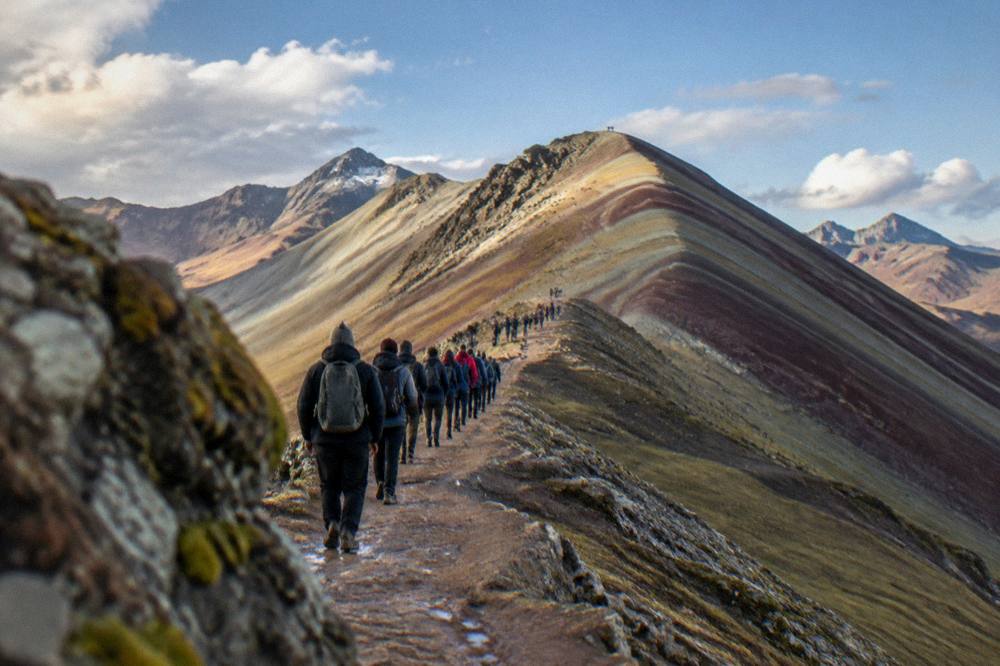
Rainbow Mountain also fits into a wider highland itinerary more easily than its reputation suggests. The Sacred Valley day trip runs at a lower altitude and makes a natural pairing either side of the mountain day, and the Machu Picchu day trip, the citadel at 2,430 m, is lower than Cusco itself, which surprises many visitors. The site's three-day Cusco itinerary shows how the pieces slot together when time is short.
Common Questions About Rainbow Mountain From Cusco
Is Rainbow Mountain real?
Yes. The stripes are real mineral banding in the mountainside, and PromPeru presents Vinicunca as a genuine geological feature, not an artificial or digitally created one. Photos are often saturated, and the site's dedicated answer page on whether Rainbow Mountain is real describes what the colours look like on an ordinary day.
Why is Rainbow Mountain closed?
No closure of Rainbow Mountain was found in 2026, and operator guides describe it as open. Access is set by local communities and operators, and individual days can be lost to weather or local decisions, but there is no standing seasonal closure in the verified sources.
Can you visit Rainbow Mountain without a tour?
There is no mandatory guide and no national ticketing platform, and the community fee of S/ 25 to S/ 30 is paid in cash at the trailhead. In practice the pre-dawn start and the remote trailhead lead many visitors to take an organised trip, and the site's answer page on visiting without a tour sets out the trade-offs.
What is the oxygen level at Rainbow Mountain?
No verified oxygen figure exists for the ridge, and this site does not invent one. What the sources do establish is the elevation, about 5,000 m, and the CDC's general guidance on high-altitude travel, including its advice to ascend gradually and to discuss acetazolamide with a doctor.
How much does Rainbow Mountain cost?
Foreign visitors pay a community fee of S/ 25 to S/ 30 in cash, about US$7 to US$9, depending on the access route, with the Red Valley extension reported at about S/ 30 more. Tour prices are separate and render on the operator listings linked from this page.
Is Rainbow Mountain harder than Humantay Lake?
Both are steep pre-dawn climbs, but Rainbow Mountain's viewpoint is higher: about 5,000 m against about 4,200 m at Humantay Lake. The site's dedicated comparison of whether Humantay is harder than Rainbow Mountain works through the difference in detail.
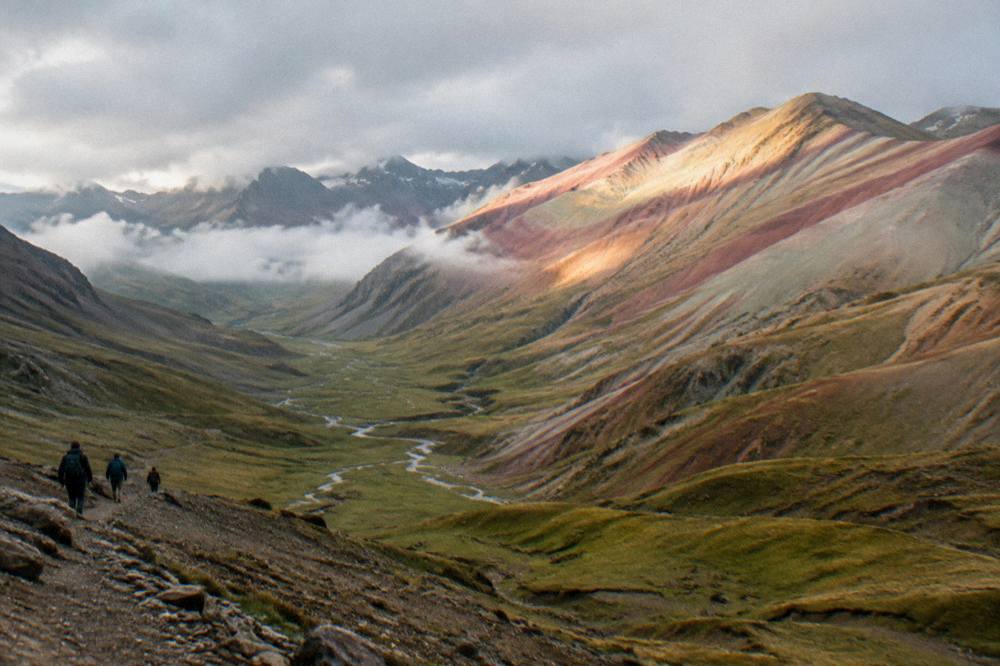
The short version of all of it: Rainbow Mountain is a hard, high, rewarding day out from Cusco, priced by a cash community fee rather than a ticketing platform, best in the dry months, and gentler in its Palccoyo twin for those who want the stripes without the summit push. Check the live details on the operator listings before booking, carry soles in cash for the trailhead, and give the altitude the respect the CDC says it deserves.