Sacred Valley From Cusco
The Urubamba river corridor below Cusco holds Pisac, Ollantaytambo, Chinchero, Moray and the Maras salt mines. Here is what the Boleto Turistico covers, what it leaves out, and how the valley fits one-day and two-day plans from the city.
Short answer
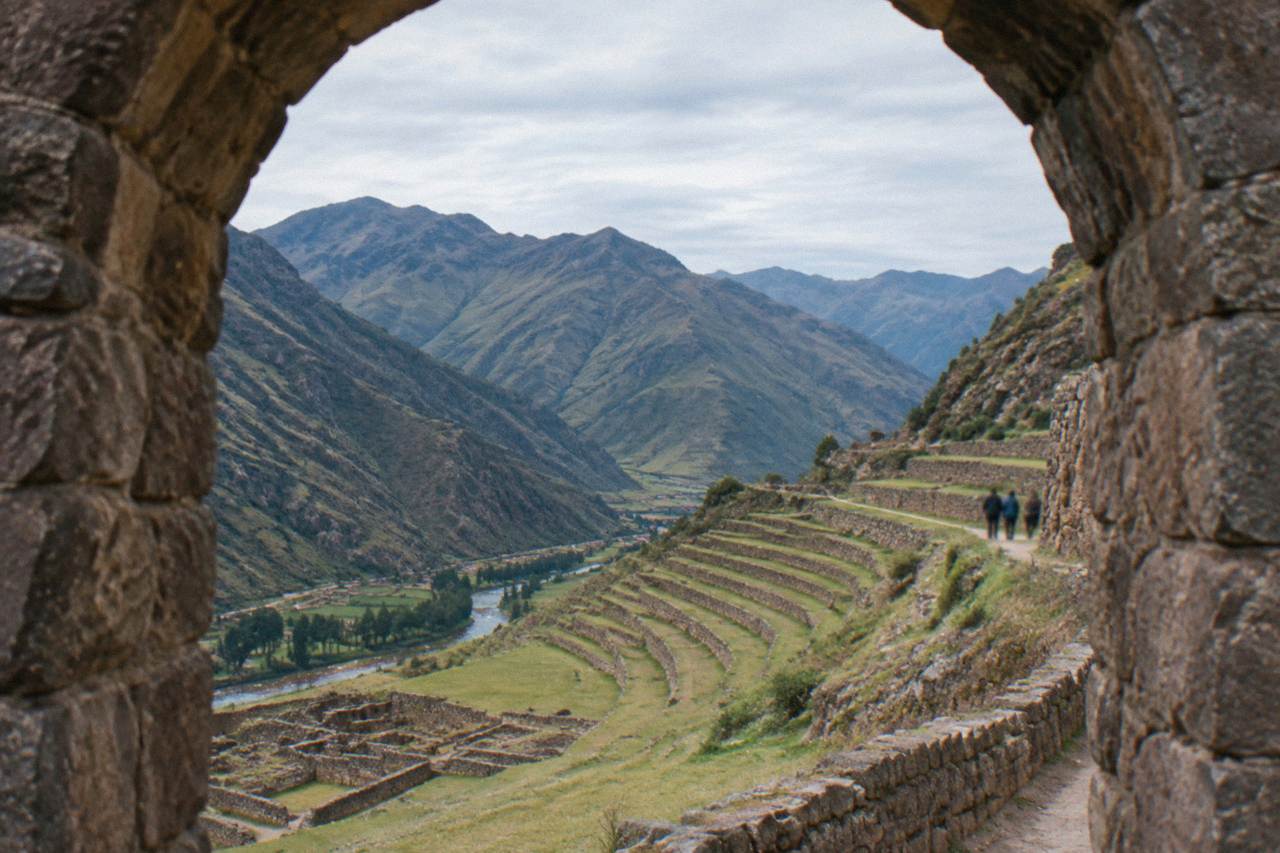
The Sacred Valley is the Urubamba river corridor below Cusco, whose main sites are Pisac, Ollantaytambo, Chinchero, Moray and the Maras salt mines. The Boleto Turistico Circuit III covers the first four for S/ 70, about US$20, valid 2 days. It does not cover Machu Picchu or the salt mines.
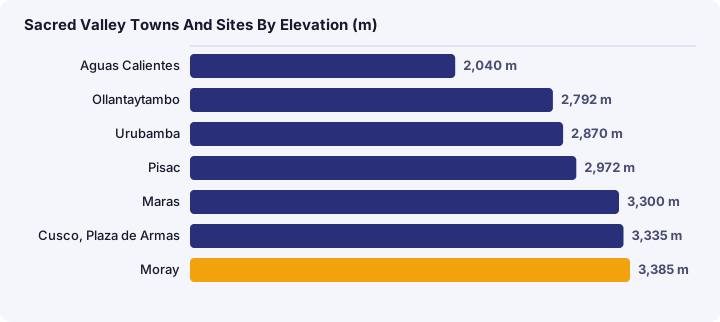
The Sacred Valley of Peru is the Urubamba river corridor that drops away from Cusco, the historic city in the Andes of southern Peru (also spelled Cuzco), and runs toward Machu Picchu. Its main towns all sit below the city: Pisac at 2,972 m, Urubamba at 2,870 m and Ollantaytambo at 2,792 m, against 3,335 m at Cusco's Plaza de Armas. This guide lays out what the Boleto Turistico covers, what it leaves out, and how the valley's sites fit one-day and two-day plans from the city.
What Is The Sacred Valley Of Peru?
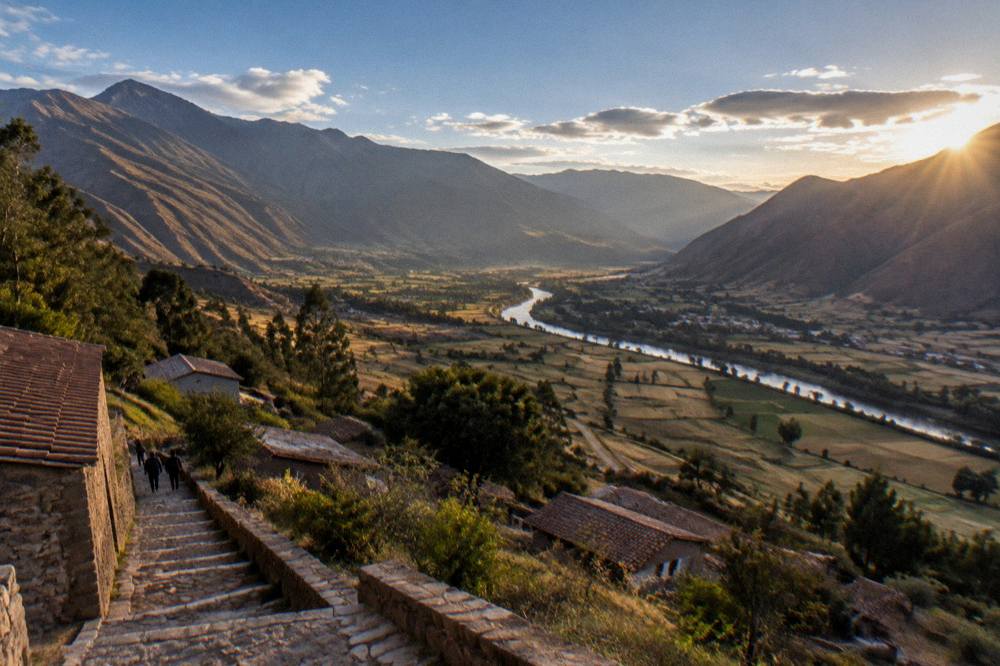
The Sacred Valley of Peru is the Urubamba river corridor downstream of Cusco, linking the towns of Pisac, Urubamba and Ollantaytambo on the way toward Machu Picchu. Every main town sits below the city: Pisac at 2,972 m, Urubamba at 2,870 m and Ollantaytambo at 2,792 m, against 3,335 m at Cusco's Plaza de Armas. Its headline sites are Pisac, Ollantaytambo, Chinchero, Moray and the Maras salt mines.
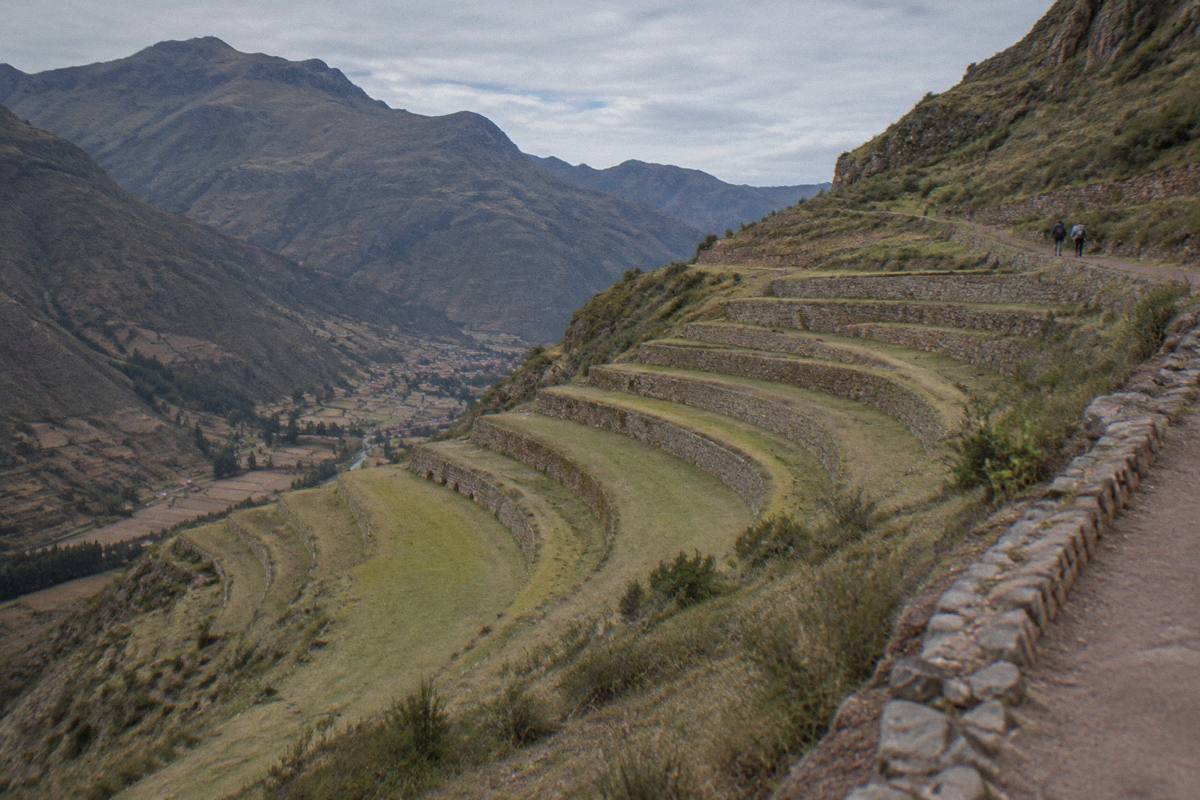
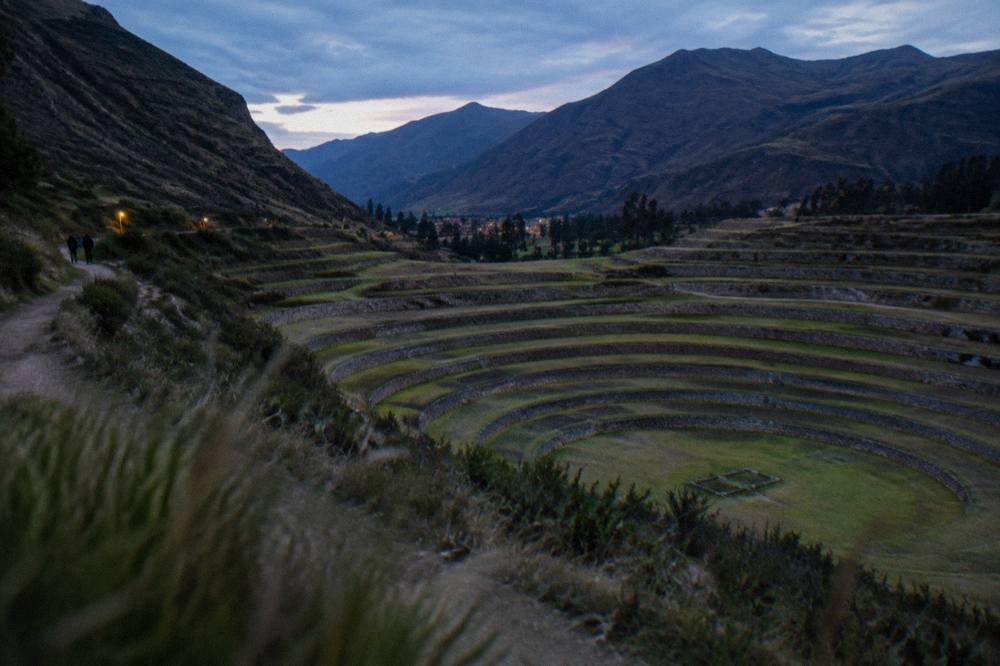
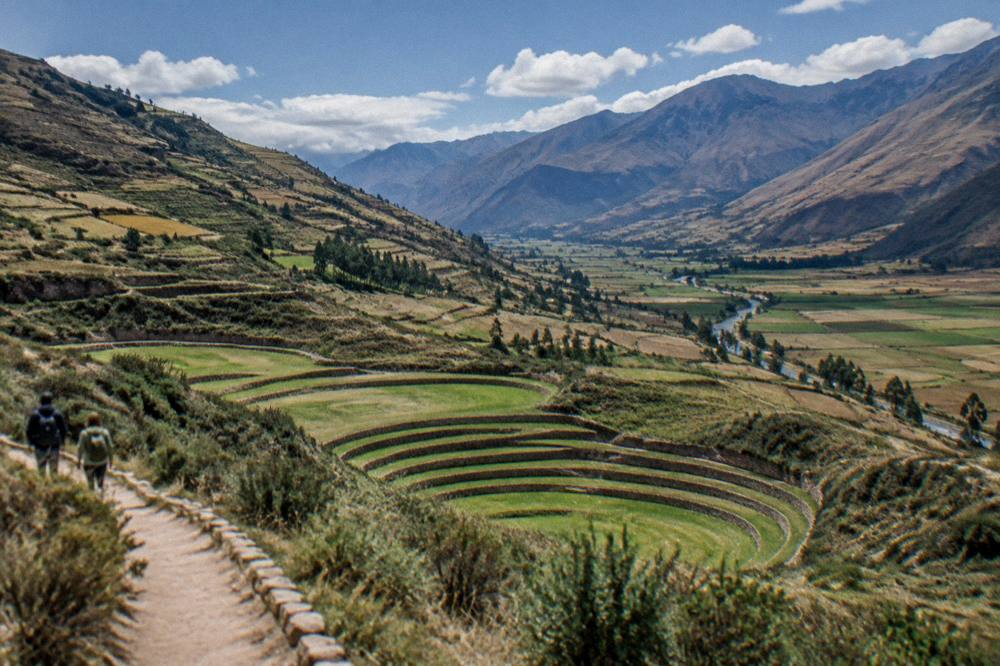
The valley was the agricultural heartland that fed the Inca capital, and the evidence is still carved into the hillsides: farming terraces ring Pisac and Ollantaytambo, and the circular terraces of Moray sit in a natural depression at 3,385 m. The towns themselves keep Inca foundations under colonial churches, a pattern repeated across the region. The City of Cusco was inscribed on the UNESCO World Heritage list in 1983, and the Machu Picchu Historic Sanctuary followed on 9 December of the same year, so the whole corridor carries protected status at both ends.
Two practical points shape every visit. First, the valley is a day-trip scale destination from Cusco, not a single site: the towns string along the river and the ruins sit above or between them. Second, the altitude drops as you go, which matters for anyone following the acclimatisation logic, since sleeping low after arriving high is the pattern the CDC Yellow Book describes for destinations like Cusco. The rest of Things To Do In Cusco Peru covers the city end of the trip, including the Plaza de Armas guide for the square at 3,335 m where most valley tours start.
| Place | Elevation | Note |
|---|---|---|
| Cusco, Plaza de Armas | 3,335 m | PromPeru figure for the main square |
| Moray | 3,385 m | The only main site higher than the city |
| Maras | 3,300 m | Salt ponds on the hillside above town |
| Pisac town | 2,972 m | Terraced site above the town |
| Urubamba | 2,870 m | Valley transport and lodging hub |
| Ollantaytambo | 2,792 m | Rail hub for Machu Picchu |
| Machu Picchu citadel | 2,430 m | Lower than every valley town |
| Aguas Calientes | 2,040 m | The town below the citadel |
What Does The Boleto Turistico Cover In The Sacred Valley?
COSITUC's Boleto Turistico Circuit III covers four Sacred Valley sites: Pisac, Ollantaytambo, Chinchero and Moray. A foreign adult pays S/ 70 for that partial circuit, about US$20, valid for 2 days, or S/ 130, about US$38, for the integral ticket covering all 16 sites over 10 days. It does not cover Machu Picchu or the Maras salt mines, and it is sold in person only, never online.
The tarifario on the COSITUC site sets the prices, and the FAQ sets the mechanics. The Counter Central sits at Av. El Sol 103 (Galerias Turisticas), open Monday to Sunday from 07:30 to 18:00, and most included sites also sell the ticket at the gate. The exceptions are the Museo Historico Regional, the Centro Qosqo de Arte Nativo, the Museo de Arte Popular and the Museo de Arte Contemporaneo, which sell nothing at the door. Validity begins the day you buy it, and the FAQ notes that covering all 16 sites on the integral ticket needs a minimum of three days of visiting.
Children are free to age 9, and ages 10 to 17 pay the student price with ID. The only discount COSITUC offers is the student rate: a foreign student integral costs S/ 70, and there is no teacher or youth-card discount. One point worth catching before you buy: Circuit III does not include Machu Picchu under any version of the ticket, a confusion the sacred valley worth visiting question tends to surface.
| Ticket | Price, foreign adult | Validity | Sites |
|---|---|---|---|
| Integral (BTCI) | S/ 130, about US$38 | 10 days | All 16 COSITUC sites |
| Partial Circuit I | S/ 70 | 1 day | Saqsaywaman, Q'enqo, Puka Pukara, Tambomachay |
| Partial Circuit II | S/ 70 | 2 days | Qorikancha site museum, city museums, Tipon, Pikillacta |
| Partial Circuit III | S/ 70, about US$20 | 2 days | Pisac, Ollantaytambo, Chinchero, Moray |
| Foreign student integral | S/ 70 | 10 days | All 16 sites, student ID required |
For visitors who want the transport, the ticket and the ordering handled in one place, the roster below carries the site's featured valley options alongside the full-day and two-day combinations.
Which Sacred Valley Sites Should You See First?
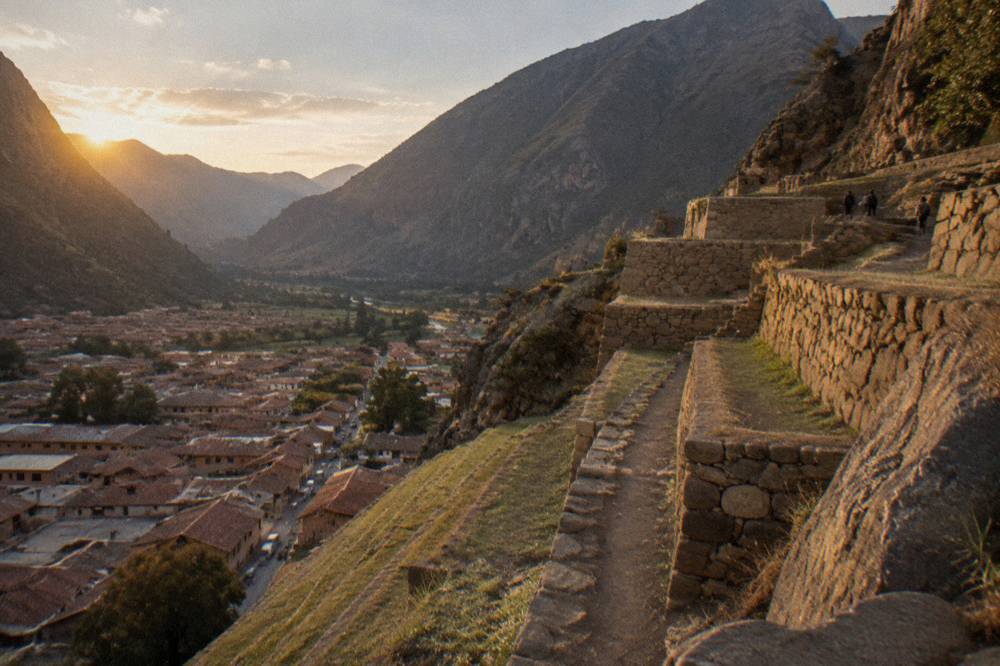
Ollantaytambo and Pisac are the two headline sites, and the 2025 counts back that up: the Ollantaytambo archaeological park recorded 891,526 visits and Pisac 560,578, with Moray close behind at 773,916. Ollantaytambo keeps its Inca street plan below steep terraces, Pisac pairs a high terraced site with its town, Chinchero adds weaving and a church standing on Inca foundations, and Moray holds its circular terraces.
Ollantaytambo is the strongest single stop, and the Ollantaytambo attraction guide covers it in depth. The terraces rise above a town that still follows its Inca layout, and the same town is where the trains leave for Machu Picchu, which makes it the natural anchor for any plan that continues downstream. Pisac works the opposite way: the site sits above the town, so the visit is a climb followed by a descent into a place built around its market.
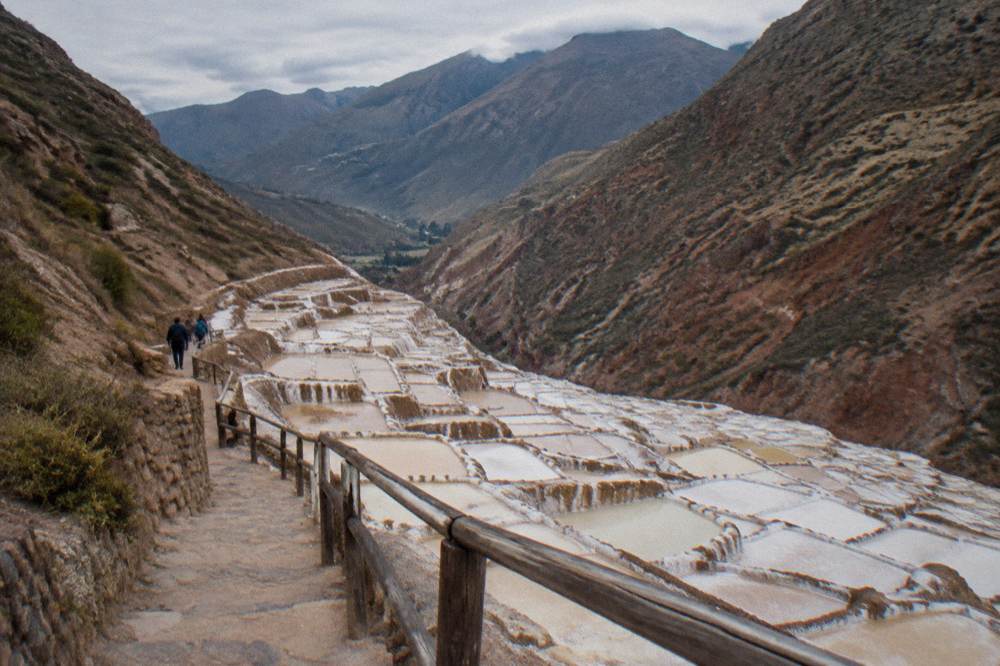
Chinchero and Moray are the quieter pair. Chinchero, perched at the valley's western edge, is where weaving cooperatives demonstrate the full wool-to-cloth process, and its colonial church stands on Inca stone foundations, the clearest single example of the layering that defines the region. Moray's concentric terrace rings are the most photographed geometry in the valley, and the site is on Circuit III, so the boleto covers it. The Maras salt mines, by contrast, are not on any boleto circuit: the community fee runs S/ 15 to S/ 20 in cash, and the ponds have been worked continuously, which makes them less ruin and more living workplace.
| Site | What It Is Known For | On Circuit III | Separate Fee |
|---|---|---|---|
| Pisac | Terraced site above the town | Yes | None beyond the boleto |
| Ollantaytambo | Terraces above an Inca street plan, rail hub | Yes | None beyond the boleto |
| Chinchero | Weaving cooperatives, church on Inca foundations | Yes | None beyond the boleto |
| Moray | Circular concentric terraces at 3,385 m | Yes | None beyond the boleto |
| Maras salt mines | Working salt ponds, community run | No | S/ 15 to S/ 20, cash |
The visitor counts from the MINCETUR open dataset put the valley in context. These are recorded site entries, not unique people, but the scale is telling.
| Cusco Site, 2025 | Recorded Visits |
|---|---|
| Santuario Historico de Machupicchu | 1,542,350 |
| Ciudad Inka de Machupicchu | 1,479,506 |
| Explanada de Saqsaywaman | 944,008 |
| Parque Arqueologico de Ollantaytambo | 891,526 |
| Inca Rail trains | 855,718 |
| Moray | 773,916 |
| PeruRail trains | 698,742 |
| Pisaq | 560,578 |
For the Moray, Maras and Chinchero corner specifically, the roster carries a half-day option that pairs the salt mines with the terraces and a weaving stop, which suits visitors who have already seen Pisac and Ollantaytambo on a separate day.
The salt mines are the one stop on that route where cash in soles matters, since the community fee is collected at the hillside and not through any online system. Everything else on the route is boleto territory, so a Circuit III partial bought the day before covers the archaeology.
Can You See The Sacred Valley In One Day From Cusco?
Yes, one day from Cusco can cover Pisac, Ollantaytambo and Chinchero, or the Moray and Maras salt mines pair on a shorter loop. Two days is the calmer shape: the Circuit III partial ticket is valid for 2 days, sleeping in Ollantaytambo or Urubamba splits the driving, and Ollantaytambo doubles as the rail hub for Machu Picchu, about 1 h 45 away by train.
The one-day question has its own detailed answer page, but the shape is simple. A single day can hold three stops comfortably if the order is fixed in advance, because the valley is linear and backtracking costs the afternoon. The classic trio is Pisac, Ollantaytambo and Chinchero; the alternative is Moray plus the Maras salt mines, which fits a half-day frame and leaves the morning or evening free in Cusco.
| Plan | Stops | Ticket That Fits | Where The Day Ends |
|---|---|---|---|
| One day, main trio | Pisac, Ollantaytambo, Chinchero | Circuit III partial, S/ 70, 2-day validity | Back in Cusco |
| One day, short loop | Moray, Maras salt mines | Circuit III for Moray, S/ 15 to S/ 20 cash at Maras | Back in Cusco |
| Two days | Day 1 Pisac and Chinchero, Day 2 Moray, Maras, Ollantaytambo | Circuit III, or integral S/ 130 with city sites added | Overnight in Ollantaytambo or Urubamba |
The two-day shape is laid out step by step in the two-day Sacred Valley itinerary. Its main advantage is not pace but position: ending the second day in Ollantaytambo puts you at the station for the Machu Picchu trains, and the town's elevation of 2,792 m makes it a lower sleeping option than Cusco. The site's featured full-day product is the compiled version of the one-day trio, with the boleto, transport and ordering handled in a single booking; Check availability on the operator's live listing for current dates and departure points.
Can You Visit The Sacred Valley Without A Tour?
Yes, the Sacred Valley can be visited without a tour. Colectivos and taxis link Cusco with the valley towns, the Boleto Turistico is bought in person at the Av. El Sol 103 counter or at most included sites, and each Circuit III site can be reached independently. What a tour adds is bundling: transport, the ticket and a fixed order of stops in one booked day.
The independent route is well trodden and the mechanics are plain. Buses and colectivos leave from Cusco toward the valley towns through the day, fares are shown or agreed before the ride, and the same services connect the towns with each other, so Pisac to Urubamba to Ollantaytambo can be done as a chain rather than a loop. The boleto counter on Av. El Sol is the one fixed errand, open daily from 07:30 to 18:00, and buying the day before removes the morning queue from the plan.
The trade-offs are real. A fixed circuit order is not possible when you depend on shared transport, Chinchero and Moray are harder to chain than the three main towns, and the Maras salt mines sit off the main road, which usually means a taxi from Maras town. The full mechanics, including where the independent plan breaks down, are covered in the valley without a tour answer.
When Is The Best Time To Visit The Sacred Valley?
The dry season, roughly May to September, is the best time to visit the Sacred Valley: at the WMO's Cuzco station May to August together bring just 22.8 mm of rain against 707.8 mm for the year. December to March carries 71.9 percent of annual rainfall, so afternoon rain is the wet-season norm. June to August is winter: dry, clear days and cold nights, with frost common in June and July.
The numbers come from the World Weather Information Service record for the Cuzco station, supplied by SENAMHI, Peru's national weather service, and they describe a historical normal rather than any single recent year. The pattern they show is a year split in two: a long dry stretch through the southern-hemisphere winter, and a concentrated wet season at the end and start of the year. Mean daily maximums barely move, holding between 18.8 and 20.9 C in every month, so the choice of month is really a choice about rain and night cold rather than daytime warmth.
| Month | Mean Max C | Mean Min C | Rain mm |
|---|---|---|---|
| Jan | 18.9 | 6.6 | 145.3 |
| Feb | 18.8 | 6.5 | 133.7 |
| Mar | 19.1 | 6.2 | 107.0 |
| Apr | 19.7 | 4.9 | 43.2 |
| May | 19.8 | 2.5 | 8.7 |
| Jun | 19.5 | 0.3 | 1.5 |
| Jul | 19.1 | 0.1 | 4.0 |
| Aug | 19.8 | 1.6 | 8.6 |
| Sep | 19.8 | 3.9 | 21.8 |
| Oct | 20.9 | 5.5 | 39.4 |
| Nov | 20.7 | 6.1 | 71.9 |
| Dec | 19.4 | 6.4 | 122.7 |
The shoulder months deserve a second look. April and September sit between the two seasons with modest rain totals, 43.2 mm and 21.8 mm respectively, and September night temperatures, a mean minimum of 3.9 C, are milder than the deep-winter months. The wet season is not a wall of rain either: even in January, the wettest month at 145.3 mm, the mean maximum stays 18.9 C and the rain arrives in the characteristic afternoon pattern rather than all day.
Should You Combine The Sacred Valley With Machu Picchu?
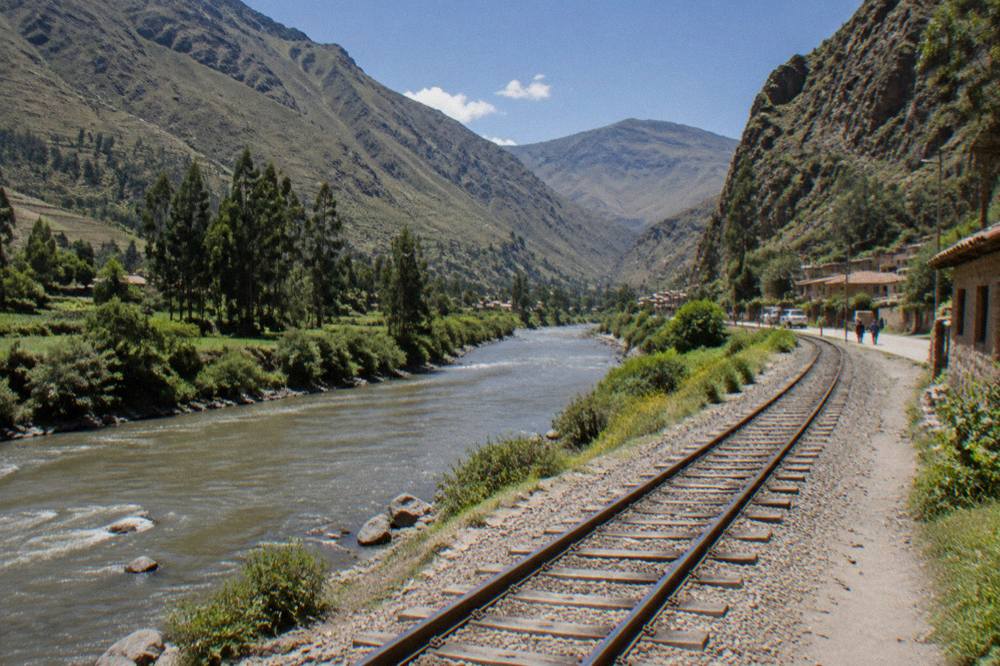
Yes, and the geography helps: Ollantaytambo, at 2,792 m, is the valley's rail hub, and the train from there to Machu Picchu takes about 1 h 45. Machu Picchu is not on the Boleto Turistico; its tickets are sold separately on the Ministry of Culture platform, from about S/ 163 for foreign adults on standard routes, and the citadel sits at 2,430 m, lower than Cusco.
The combination question is really a sequencing question, and it has a dedicated answer in Sacred Valley or Machu Picchu first. The short version: the valley before the citadel is the order the geography suggests, because the route to Machu Picchu passes through Ollantaytambo anyway, and ending the valley day there positions you for a morning train. Tickets for the citadel are a separate matter from everything on this page, sold on the Ministry of Culture's platform or in person at Machu Picchu Pueblo, and the full rules, circuits and routes live on the site's full Machu Picchu guide.
Two booked shapes do the combination in one purchase. The premium option bundles the valley and the citadel across two days with the train and lodging arranged; the by-train version covers the same ground with the Maras and Moray loop included. Both are on the roster below with the valley's adventure option, since the Urubamba river also carries rafting and zip line days for visitors who want the valley's active side.
Where to sleep is the last moving part. The stay in Cusco or the valley question and the where to stay in the valley guide cover the trade: the city keeps the restaurants and the altitude, while Pisac, Urubamba and Ollantaytambo trade both for quiet and a lower sleeping elevation. For a two-day plan that ends at the trains, Ollantaytambo is the practical answer.
Common Questions About The Sacred Valley
Is the Sacred Valley worth visiting from Cusco?
Yes, and the counts make the case: in the MINCETUR open dataset for 2025, the Ollantaytambo archaeological park recorded 891,526 visits, Moray 773,916 and Pisac 560,578, which places three valley sites among the most-visited in the whole Cusco department after Machu Picchu and Saqsaywaman's explanada. The valley also adds the Maras salt mines, which no other stop matches.
How much does the Sacred Valley cost to visit?
The Boleto Turistico Circuit III costs S/ 70 for a foreign adult, about US$20, and is valid 2 days; the integral ticket covering all 16 COSITUC sites costs S/ 130, about US$38, over 10 days. The Maras salt mines are not on the boleto and charge S/ 15 to S/ 20 in cash. Machu Picchu is separate, from about S/ 163 on standard routes for foreign adults.
Does the Boleto Turistico cover Machu Picchu?
No. Circuit III covers Pisac, Ollantaytambo, Chinchero and Moray only, and no boleto circuit includes Machu Picchu. Citadel tickets are sold on the Ministry of Culture's ticket platform or in person at Machu Picchu Pueblo, and a guide is recommended but not mandatory under the current Ministry of Culture rules.
Is the Sacred Valley lower than Cusco?
Yes. The Plaza de Armas in Cusco sits at 3,335 m, while Pisac town is at 2,972 m, Urubamba at 2,870 m and Ollantaytambo at 2,792 m. Moray, at 3,385 m, and Maras, at 3,300 m, are the two exceptions that sit near or above the city's elevation. The Machu Picchu citadel is lower still, at 2,430 m.
Can you sleep overnight in the Sacred Valley?
Yes. Pisac, Urubamba and Ollantaytambo all carry lodging, and Ollantaytambo in particular doubles as the rail hub for Machu Picchu, with the train from there taking about 1 h 45. The trade-offs between the city and the valley are laid out in the site's where-to-stay guide.