Cusco Cathedral
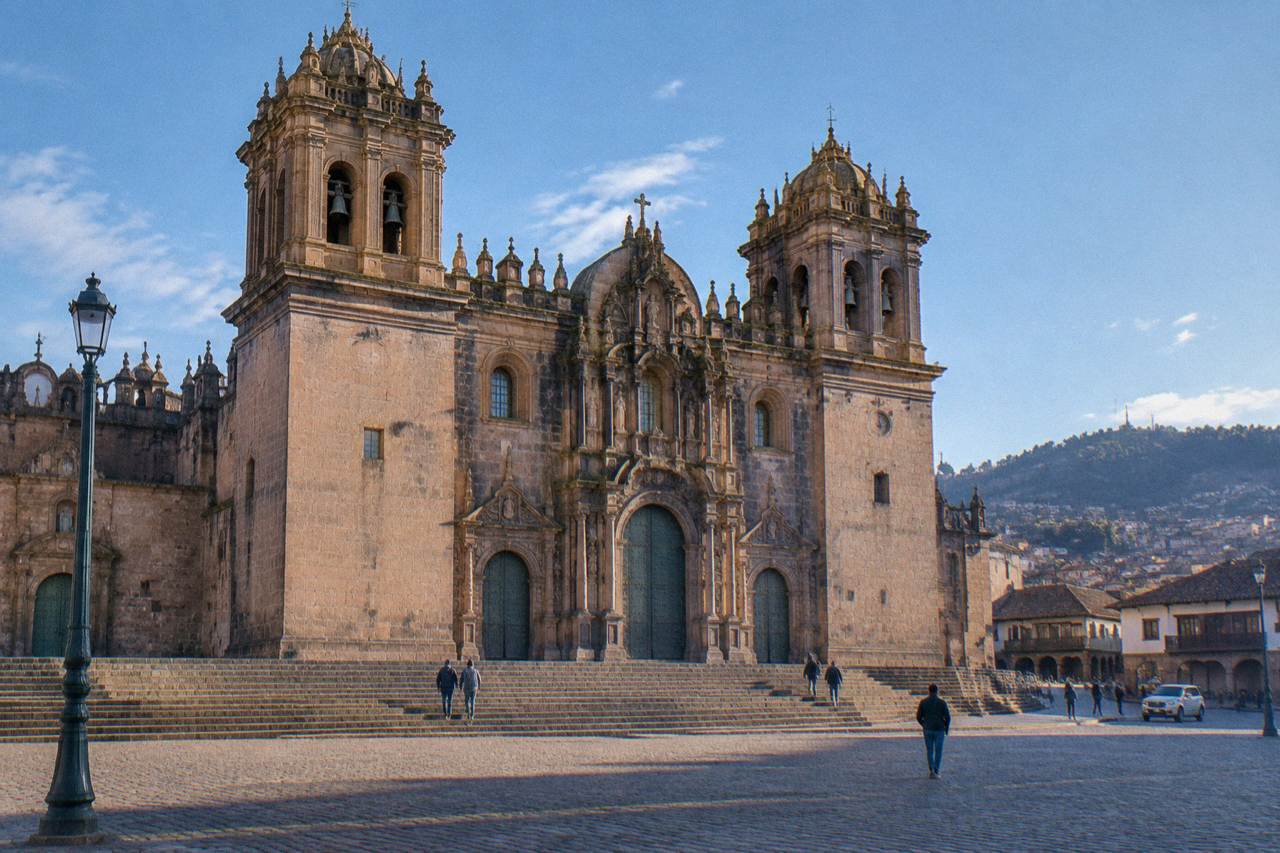
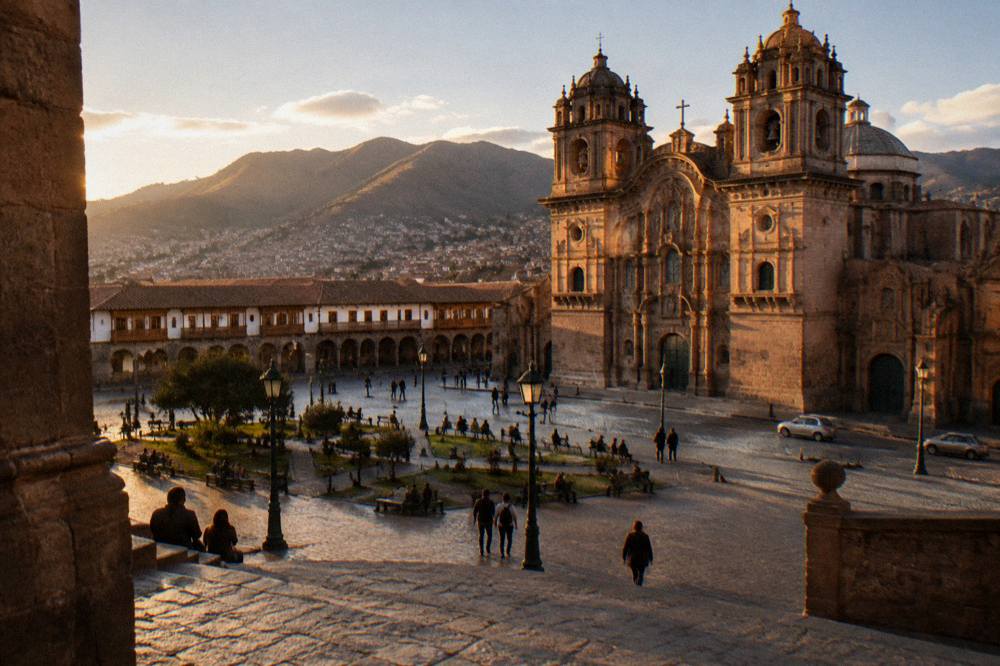
The Cusco Cathedral is the principal church of Cusco, the former Inca capital in the Andes of southern Peru, and it stands directly on the Plaza de Armas at 3,335 m, the dominant colonial landmark of a city UNESCO inscribed in 1983.
Short answer
The Cusco Cathedral is the main church of Cusco, Peru, standing on the Plaza de Armas at 3,335 m. Its admission and hours change and should be checked on the day, and it is not one of the 16 sites on the Boleto Turistico, which costs S/ 130 integral or S/ 70 per partial circuit and is sold in person only.
Cusco's Plaza de Armas sits at 3,335 m above sea level in the Andes of southern Peru, and the building that rules the square is the Cusco Cathedral, the principal church of the former Inca capital. The City of Cusco, with the plaza and its colonial churches at its core, entered the UNESCO World Heritage List in 1983, and the Cathedral remains the single most prominent structure a visitor meets on arrival in the historic centre. This page sets out what the Cathedral is, what a visit costs and covers, what waits inside, and how the church anchors a half-day around the old city.
What Is The Cusco Cathedral And Where Does It Stand?
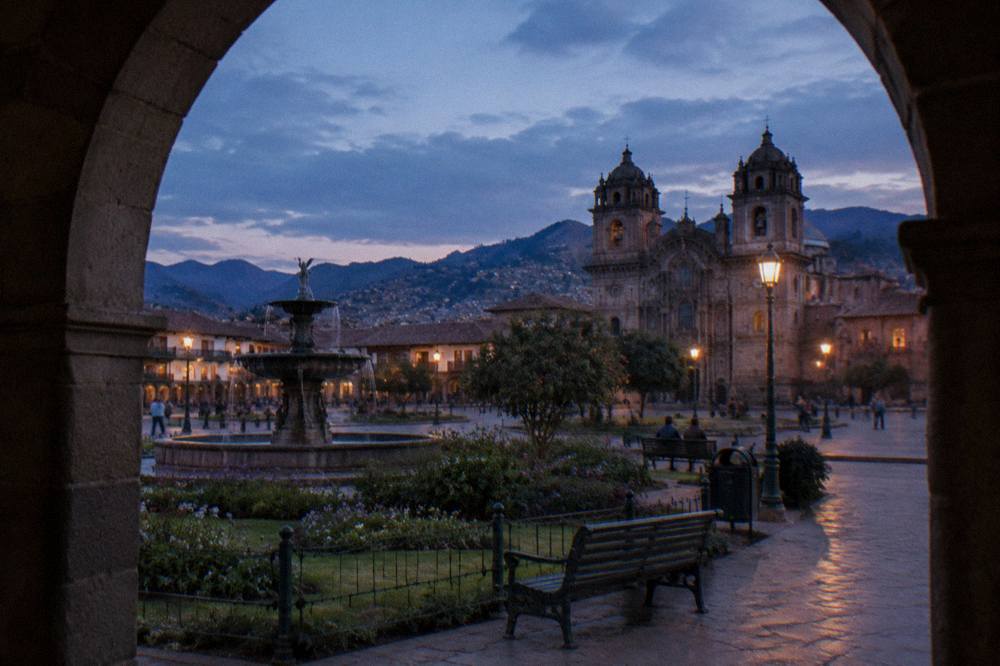
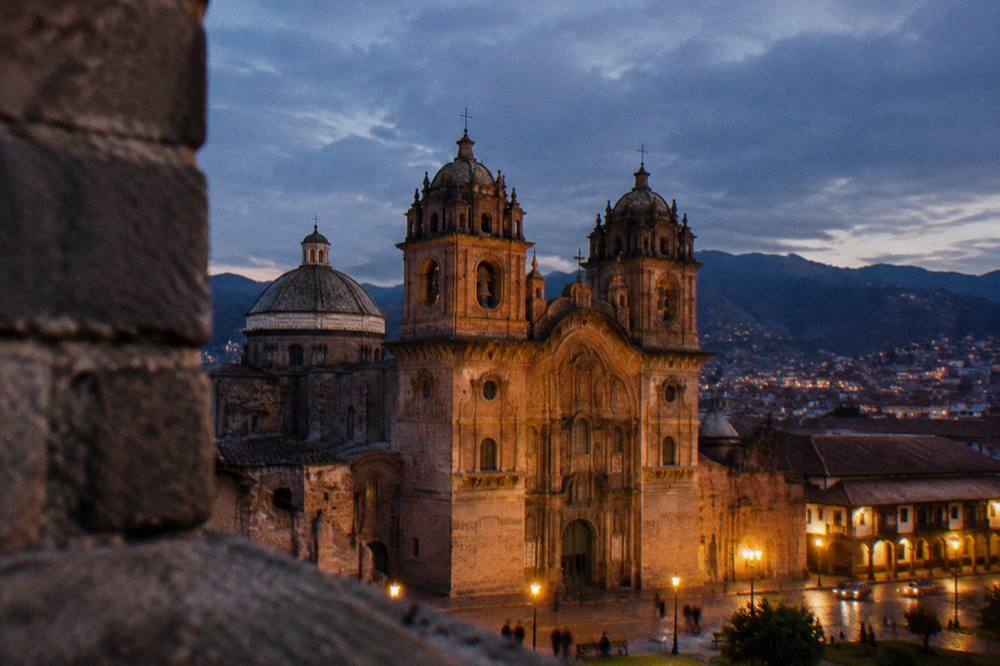
The Cusco Cathedral is the principal church of the historic city of Cusco (also spelled Cuzco), the former Inca capital in the Andes of southern Peru, and it stands directly on the Plaza de Armas, the old centre at 3,335 m above sea level. It is the dominant colonial landmark of a square that also holds the church of the Compania de Jesus on its other side, and the City of Cusco, including the plaza and its churches, was inscribed by UNESCO in 1983.
Cusco is the historic city in the Andes of southern Peru, in the Cusco region, and its old centre clusters on and around the Plaza de Armas. PromPeru places the square at 3,335 m; the airport, Alejandro Velasco Astete, sits slightly lower at 3,310 m per OpenStreetMap data. The city counted 428,450 residents at the 2017 census that the national statistics institute INEI published, and that is the most recent population figure this site treats as current. The Cathedral and the Compania face each other across the square, two colonial churches framing an open space on ground that was central to the Inca city.
The layering is the point. Cusco's colonial churches stand on Inca stone foundations, and the Cathedral belongs to that colonial layer raised over the Inca capital. UNESCO's 1983 inscription of the City of Cusco recognises exactly this: a historic centre where Inca walls, colonial churches and later republican buildings sit within a few streets of one another. For a visitor, the Cathedral, the plaza and the surviving Inca stonework nearby form a single walkable ensemble rather than separate sights.
| Cusco Quick Fact | Figure | As Reported By |
|---|---|---|
| Plaza de Armas elevation | 3,335 m | PromPeru |
| Airport elevation | 3,310 m | OpenStreetMap |
| City population | 428,450 (2017 census) | INEI |
| UNESCO inscription, City of Cusco | 1983 | UNESCO |
| Time zone | UTC-5, no daylight saving | WMO station record |
| Currency | Peruvian sol, written S/ | BCRP, the central bank |
The square itself is public space, colonnaded on its sides and open at its ends, and the Cathedral's towers are visible from almost every corner of the old centre. The Plaza de Armas has its own page on this site with the fuller walk around the arcades, the fountains and the views; this page stays with the church that defines the square's skyline.
How Much Does The Cusco Cathedral Cost, And Is It On The Boleto Turistico?
The Cusco Cathedral's admission and opening hours change with services and seasons, so visitors should check on the day; no current official figure for either is published. What is firmly established is different and more useful: the Cathedral is not one of the 16 sites on the Boleto Turistico, so that ticket, S/ 130 integral or S/ 70 per partial circuit for foreign adults, does not cover the church, and COSITUC sells the boleto in person only.
The Boleto Turistico is Cusco's official sightseeing ticket, run by COSITUC. Its tarifario lists an integral ticket at S/ 130 (about US$38) for a foreign adult, valid 10 days, and three partial circuits at S/ 70 (about US$20) each. Circuit I covers Saqsaywaman, Q'enqo, Puka Pukara and Tambomachay on the hills above the city. Circuit II covers the city sites, among them the Museo de Sitio Qorikancha, the regional history museum and the contemporary and popular art museums. Circuit III covers Pisac, Ollantaytambo, Chinchero and Moray in the Sacred Valley. A foreign student integral costs S/ 70, children are free to age 9, and ages 10 to 17 pay the student price with ID.
What the boleto does not cover matters as much here as what it does. The Cathedral is not on the 16-site list, and neither is Machu Picchu, whose tickets sell on the Ministry of Culture's platform or in person at Machu Picchu Pueblo. COSITUC sells the boleto in person only: the central counter is at Av. El Sol 103, in the Galerias Turisticas, open Monday to Sunday from 07:30 to 18:00, and most included sites sell it too. There is no online sale, the COSITUC FAQ states this plainly, and the only discounts on offer are student discounts.
| Boleto Turistico Option | Price, Foreign Adult | Validity | Sites Covered |
|---|---|---|---|
| Integral (BTCI) | S/ 130, about US$38 | 10 days | All 16 sites |
| Partial Circuit I, Saqsaywaman | S/ 70, about US$20 | 1 day | Saqsaywaman, Q'enqo, Puka Pukara, Tambomachay |
| Partial Circuit II, City | S/ 70, about US$20 | 2 days | Museo de Sitio Qorikancha, Museo Historico Regional, Museo de Arte Contemporaneo, Museo de Arte Popular, Centro Qosqo de Arte Nativo, Monumento a Pachacutec, Tipon, Pikillaqta |
| Partial Circuit III, Sacred Valley | S/ 70, about US$20 | 2 days | Pisac, Ollantaytambo, Chinchero, Moray |
| Integral, foreign student | S/ 70, about US$20 | 10 days | All 16 sites |
For a day built around the Plaza de Armas, the practical split is this: the boleto buys the ruins above the city and the museums around it, while the Cathedral, the Compania and the square itself are handled separately. Hours and admission at the Cathedral shift with religious services and with the seasons, so the reliable approach is to confirm access on the day of the visit. The table below separates what the boleto covers from what it does not, using only figures this site could verify.
| Site Near The Plaza | On The Boleto Turistico? | Verified Admission Figure |
|---|---|---|
| Cusco Cathedral | No | Hours and admission change; check on the day |
| Museo de Sitio Qorikancha | Yes, Circuit II | Covered by the boleto; peru.travel also lists the Santo Domingo museum entry at S/ 20, about US$6 |
| Saqsaywaman | Yes, Circuit I | Covered by the boleto; open 07:00 to 18:00 |
| Inca Museum | No | S/ 20, about US$6, foreign adult; peru.travel lists Mon to Fri 09:15 to 16:00, Sat 09:15 to 14:00 |
| Museo de Arte Precolombino (MAP) | No | S/ 20 general, S/ 10 students |
The pattern repeats across the old centre: the churches are their own economy, the museums another, and the Inca sites a third. Budgeting for the Cathedral therefore means planning for a separate, small, changeable admission rather than assuming any pass covers it. Visitors who also want the Sacred Valley circuit on the same trip will find the Moray and Ollantaytambo pages useful, since both sit on the boleto's Circuit III and pair naturally with a plaza morning.
A booked tour changes the arithmetic again, and usually for the better on a short stay. The half-day city tours that include the Cathedral's quarter and the ruins above the city bundle the logistics of a morning into one booking, and the guides carry the access details that individual sites change without much notice. The sections below look at what that looks like in practice.
What Will You See Inside The Cusco Cathedral?
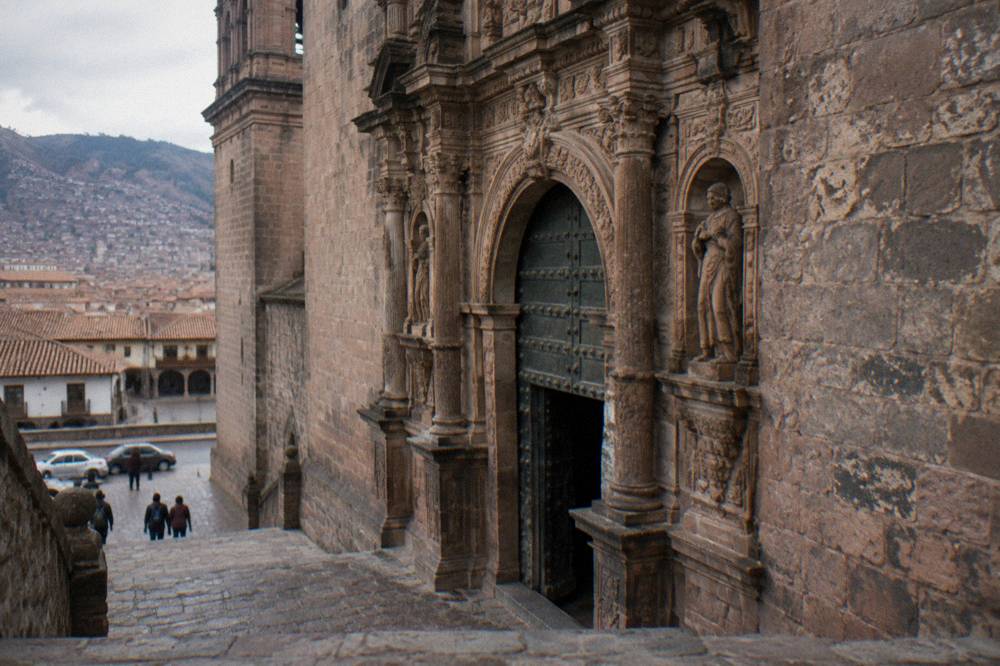
Inside, the Cusco Cathedral is a museum of colonial art as much as a working church: a broad stone nave, carved wooden choir stalls and altarpieces, sizeable silverwork, and walls hung with colonial paintings from the Cusco school. One much-discussed canvas is a Last Supper in which the dish on the table is a roasted cuy, the Andean guinea pig, a detail that ties the city's food culture to its colonial religious art.
The nave is the first impression, wide and stone and dim, with the scale that a principal cathedral church of a colonial capital was built to convey. The carved wooden choir stalls and the altarpieces carry the second wave of detail, and the silverwork, accumulated for a cathedral of this rank, the third. None of these are Inca work; the Inca city survives in the walls and foundations outside and beneath, while the Cathedral's interior belongs to the colonial and later periods that filled the city with religious art.
The paintings give the interior its reputation among travellers who care about art history. The Cusco school of painting, the colonial tradition that grew in this city, covered the region's churches with canvases, and the Cathedral holds a significant share of that output. The Last Supper canvas with the roasted cuy on the table is the example that circulates widest in guidebooks and on tours: a European subject given an Andean table, painted in a city where cuy had been a ceremonial and everyday food long before the colonial period. It is a single painting, but it explains the whole interior in one image, two traditions sharing one frame.
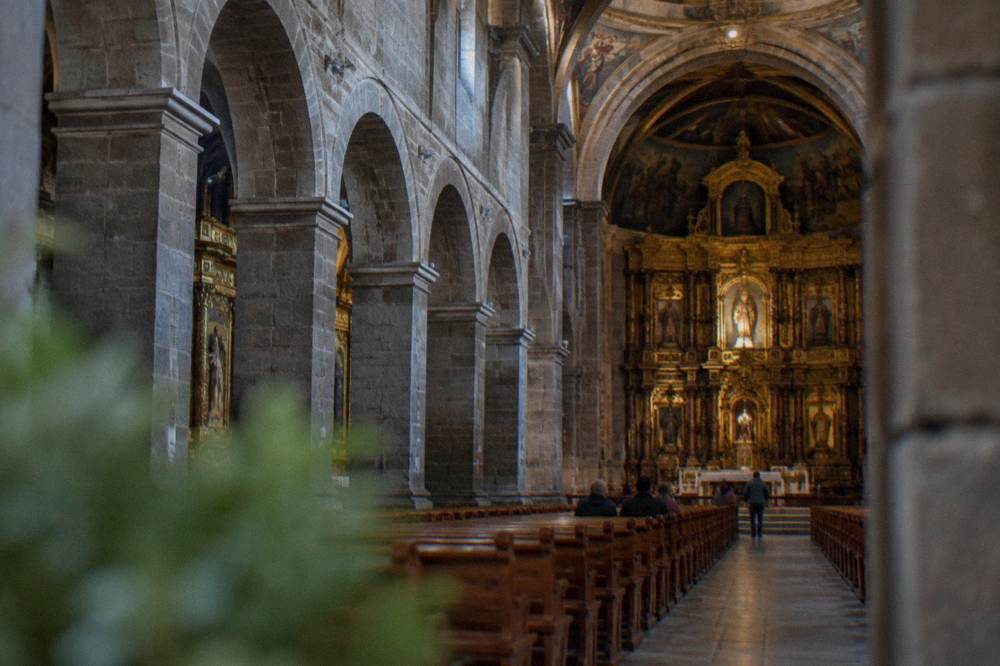
Access to all of this depends on the church's own schedule. The Cathedral is a working church first, and religious services, feast days and preparations can close or restrict the visitor route at short notice, which is why this site repeats the same advice: check on the day. Photography rules, guided routes and ticketed areas also vary, and the staff at the door are the final authority on all three.
A guided visit solves most of the uncertainty. The half-day city tour that this site features pairs the plaza and the Cathedral's quarter with Sacsayhuaman and Q'enqo above the city, with a guide who handles timing around services and carries the historical context that turns the interior from a sequence of rooms into a story. For visitors who prefer to keep the church as a self-guided stop, the same tour can serve as the frame, with the Cathedral visited quickly before or after the ruins circuit.
How Does The Cathedral Fit Into A Half-Day Around The Cusco Historic Centre?
The Cathedral works as the anchor of a half-day circuit of the Cusco historic centre because the city's other landmarks cluster around the Plaza de Armas: the Qorikancha site museum stands a few blocks from the square, the twelve-angled stone sits on Hatunrumiyoc street near the San Blas hill, and the San Pedro market is a short walk away. A half-day city tour that adds Sacsayhuaman and Q'enqo is the structured option for the ruins on the hills above the city.
Start at the square, because everything else is measured from it. The Cathedral and the Compania define the Plaza de Armas; the Qorikancha site museum, the Santo Domingo convent standing on the most famous of the Inca foundations, sits a few blocks away; the twelve-angled stone, a large, finely fitted polygonal stone in an Inca wall on Hatunrumiyoc street, lies on the walk up toward the San Blas quarter; and the San Pedro market fills its halls with regional produce, juices and hot food a short walk from the arcades. This is the compact core that the itinerary pages on Things To Do In Cusco Peru use as the starting point for so many routes, and the Cathedral is its natural first stop.
The order matters less than the spacing. A morning that begins at the Cathedral when it opens to visitors, moves to Qorikancha before the tour groups arrive, and finishes with the market and the Inca wall on the way to San Blas covers the whole historic centre without transport of any kind. An afternoon inverts the light: the plaza's stone glows after midday, and the hills above stay walkable until early evening. Either way, the Cathedral sits at the centre of the map rather than at its edge.
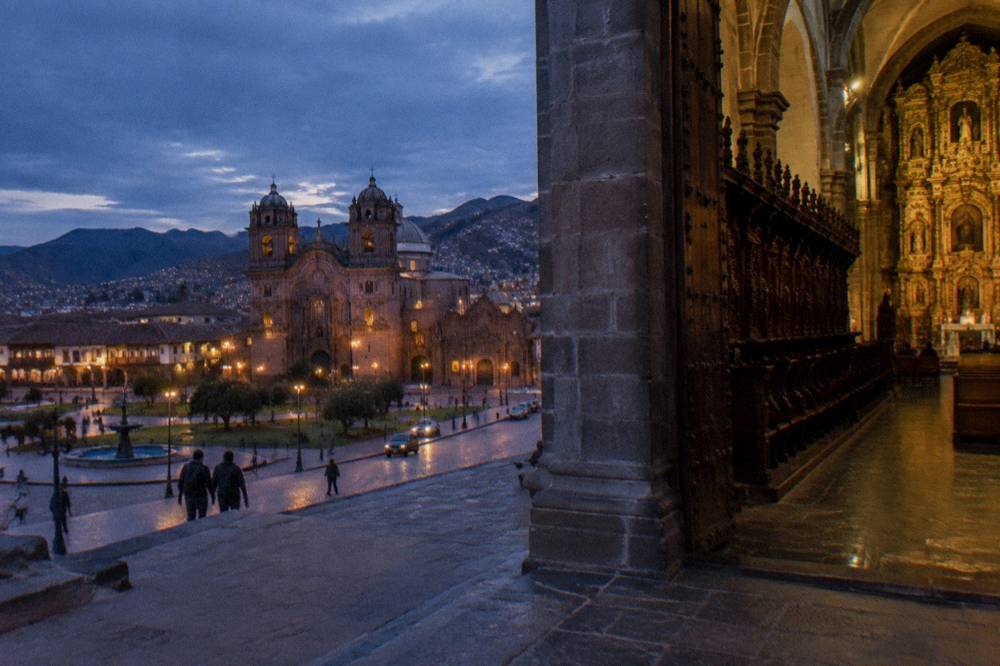
The structured version of the same morning is a booked half-day city tour. The featured option on this page covers the plaza quarter and the Cathedral's surroundings and then climbs to Sacsayhuaman and Q'enqo, the two headline ruins of the Circuit I boleto, in one guided sequence. Check availability if that shape suits the trip; the tour pairs naturally with a boleto bought in person the same day.
A second booked format covers the four ruin sites above and around the city in a half-day, which suits visitors who want the archaeology emphasised and the plaza treated as a free hour at the end. That tour's route overlaps heavily with the boleto's Circuit I, so anyone holding a partial Circuit I ticket from a previous day should check what the listing includes before booking.
For visitors assembling the day by hand, the honest summary is that the historic centre is small, walkable and forgiving of improvised orders. The one piece of fixed planning is the Cathedral's own schedule, and the one purchase worth making in advance of the ruins is the boleto, in person, at the Av. El Sol counter or at a site gate.
When Is The Best Time To Visit The Cusco Cathedral And The Plaza?
The best time to see the Cusco Cathedral and the Plaza de Armas is the dry season, roughly May to September, when the WMO and SENAMHI historical normals for the city record almost no rain, clear days and cold nights with frost in June and July; December to March carries 71.9 percent of the year's 707.8 mm of rain. Inti Raymi takes place on 24 June each year, starting at Qorikancha, passing through the Plaza de Armas and ending with the main ceremony at Sacsayhuaman.
The climate table below is the full monthly record from the "Cuzco" station that SENAMHI, Peru's weather service, supplies to the World Meteorological Organization. It is a historical normal rather than a recent average, and it shows the pattern that defines any visit: mean daily maximums hold between 18.8 and 20.9 C all year, while the rain falls in a concentrated wet season. December, January, February and March together deliver 508.7 mm of the annual 707.8 mm, and May through August together bring just 22.8 mm.
| Month | Mean Max C | Mean Min C | Rain mm |
|---|---|---|---|
| Jan | 18.9 | 6.6 | 145.3 |
| Feb | 18.8 | 6.5 | 133.7 |
| Mar | 19.1 | 6.2 | 107.0 |
| Apr | 19.7 | 4.9 | 43.2 |
| May | 19.8 | 2.5 | 8.7 |
| Jun | 19.5 | 0.3 | 1.5 |
| Jul | 19.1 | 0.1 | 4.0 |
| Aug | 19.8 | 1.6 | 8.6 |
| Sep | 19.8 | 3.9 | 21.8 |
| Oct | 20.9 | 5.5 | 39.4 |
| Nov | 20.7 | 6.1 | 71.9 |
| Dec | 19.4 | 6.4 | 122.7 |
Two features of this table shape the plaza experience. The first is the daily swing: in July the mean minimum is 0.1 C and the mean maximum 19.1 C, a swing of about 19 C within a single day, while in January the swing narrows to about 12.3 C. June and July nights bring frost, which SENAMHI's own material confirms as the peak of the heladas season. The second is that the wet season is a rhythm of afternoon rain rather than a monsoon: mornings on the plaza are frequently usable even in January, and the hills turn green.
| Season | Months | Rain, WMO And SENAMHI Historical Normal | What It Means On The Plaza |
|---|---|---|---|
| Dry, winter | May to Aug | 22.8 mm total, 3.2 percent of the year | Clear days, cold nights, frost in June and July |
| Shoulder | Apr, Sep, Oct | 43.2, 21.8 and 39.4 mm respectively | A mix, with October the warmest mean maximum at 20.9 C |
| Wet, summer | Nov to Mar | Concentrated in Dec to Mar, 508.7 mm, 71.9 percent | Afternoon rain, green hills, fewer groups at the ruins |
The calendar adds two fixed dates that change the square itself. Inti Raymi, the sun festival, falls on 24 June each year: the procession starts at Qorikancha, passes through the Plaza de Armas and ends with the main ceremony at Sacsayhuaman, with grandstand tickets sold through Teleticket; the 2026 edition listed a Sacsayhuaman general seat at S/ 490, a figure for that edition only. Santurantikuy, the craft fair of 24 December, fills the Plaza de Armas with stalls of santons and Andean craftwork, and it is the one date on which the square in front of the Cathedral is itself the event.
What Sits Near The Cusco Cathedral?
Within easy reach of the Cusco Cathedral the verified neighbours are the Qorikancha site museum, on the Boleto Turistico's City circuit, the Inca Museum at S/ 20 for foreign adults, the Museo de Arte Precolombino at S/ 20 general and S/ 10 for students, and Sacsayhuaman on the hills above, open 07:00 to 18:00 on the Boleto's Circuit I. The Cristo Blanco statue and the San Blas quarter complete the ring around the plaza.
The table below collects the near neighbours with the figures this site could verify for each. The pattern to notice is that almost nothing around the plaza is free and almost nothing shares a ticket with the Cathedral: each site has its own arrangement, and the boleto covers only the museums and the ruins.
| Sight | Position Relative To The Plaza | What You See | Verified Figure |
|---|---|---|---|
| Qorikancha site museum | A few blocks away | Inca stone foundations beneath the Santo Domingo convent | Boleto Circuit II; peru.travel lists the museum entry at S/ 20, about US$6 |
| Twelve-angled stone | On Hatunrumiyoc street, toward San Blas | A large, finely fitted polygonal stone set in an Inca wall | Viewed from the street |
| San Pedro market | A short walk away | Regional produce, juices, hot food stalls | Menu del dia reported at about S/ 8 to 15; a cup of coca tea about S/ 2 to 5 |
| Inca Museum | Near the old centre | Inca collections and stonework | S/ 20 foreign adult; peru.travel lists Mon to Fri 09:15 to 16:00, Sat 09:15 to 14:00 |
| Museo de Arte Precolombino | Near the plaza quarter | Pre-Columbian art in a colonial courtyard | S/ 20 general, S/ 10 students |
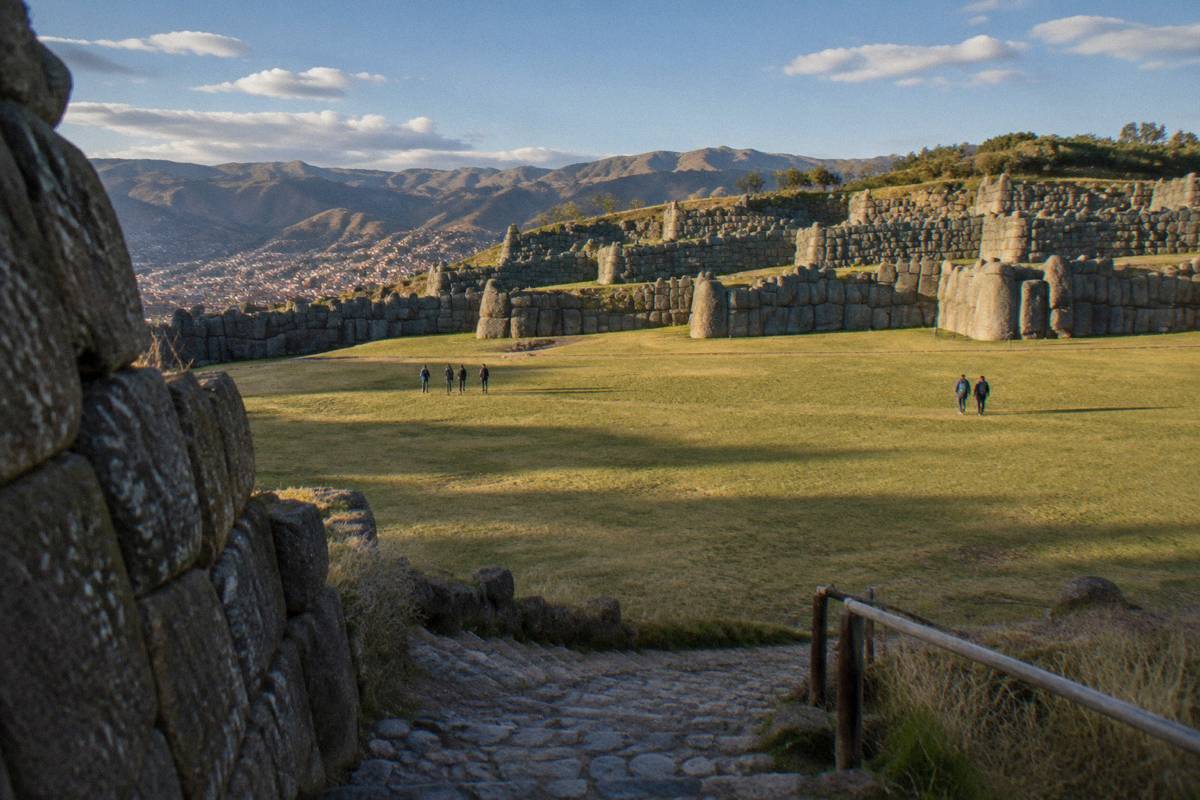
| Sacsayhuaman | On the hills above the city | Megalithic terraces and the esplanade | Boleto Circuit I; open 07:00 to 18:00 |
| Cristo Blanco | On the hills above, near Sacsayhuaman | A white statue with long views over the city's rooftops | No verified fee figure |
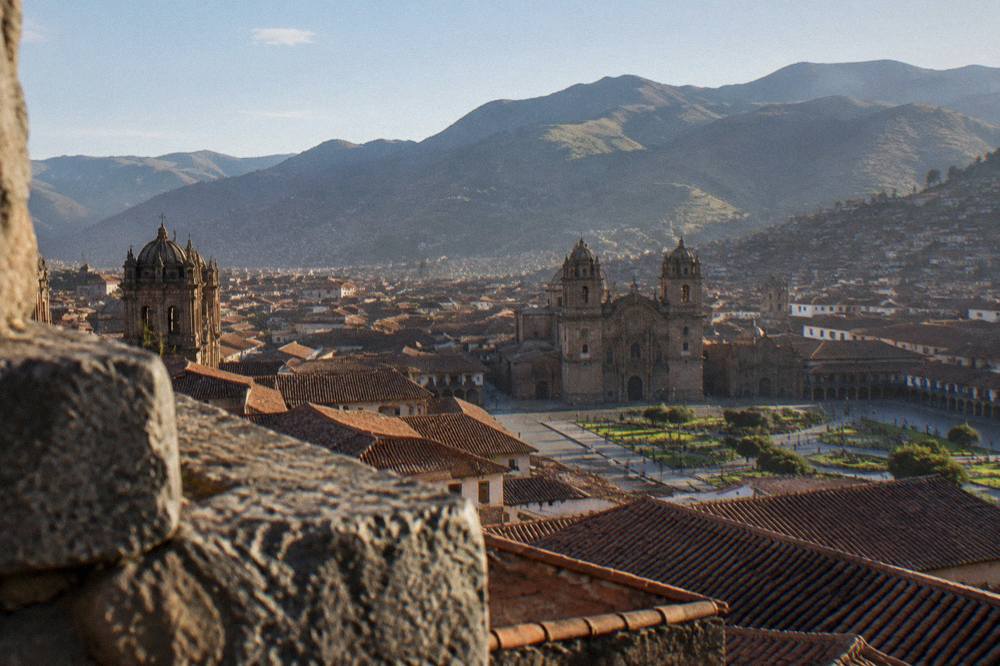
The Museo Inka rewards the visitor who wants the Inca half of the city's story told in objects rather than walls, and the MAP, the pre-Columbian art museum, is the quiet counterpart for the artistic half. Cristo Blanco and Sacsayhuaman above the city give the plaza its backdrop and its evening photograph, the white statue and the megalithic terraces framed by the same dry-season clarity that makes the winter months the clearest of the year.
A short guided walk is the efficient way to hold this ring together, and the historic centre has a strong tradition of free, tip-based walking tours that cover the plaza, the Inca walls and the San Blas quarter in one loop. The listings on this site include a guided walking tour of the historic centre with local guides, which suits a first morning in the city before any ruins or valley day.
Beyond the ring, the day trips begin: the Sacred Valley circuits to Pisac, Ollantaytambo, Chinchero and Moray, the salt mines at Maras, and the high-mountain hikes to Rainbow Mountain and Humantay Lake. Those are full days, and they deserve their own pages on this site; the Cathedral's half-day is the city's own, and it is the piece of the trip that needs no transport beyond a pair of legs and a boleto bought at the counter.
Common Questions About The Cusco Cathedral
Is the Cusco Cathedral included in the Boleto Turistico?
No. The COSITUC FAQ lists exactly 16 sites across the integral ticket and the three partial circuits, and the Cathedral is not one of them. The boleto covers Saqsaywaman, Q'enqo, Puka Pukara and Tambomachay on Circuit I, the city museums including the Museo de Sitio Qorikancha on Circuit II, and Pisac, Ollantaytambo, Chinchero and Moray on Circuit III. The Cathedral's admission is separate and should be confirmed on the day.
What are the Cusco Cathedral's opening hours?
Hours change with religious services, feast days and seasons, and this site does not carry a verified timetable for the church. The reliable approach is to check on the day, either at the door or with a booked tour whose operator tracks the schedule. The surrounding Plaza de Armas is public space and open at all hours, so the exterior, the towers and the facade can be seen whatever the interior's status.
Is the Cusco Cathedral the same building as the Qorikancha?
No. The Qorikancha is the site of the Santo Domingo convent, a few blocks from the plaza, where Inca stone foundations survive beneath and around the colonial church; its site museum sits on the Boleto Turistico's Circuit II. The Cathedral is a separate church standing directly on the Plaza de Armas, and it is not on the boleto at all.
When was the Cusco Cathedral built?
Cusco's colonial churches, the Cathedral among them, stand on and over Inca stone foundations, and the City of Cusco as a whole was inscribed by UNESCO in 1983. A construction date for the building is not among the figures this site verifies, so none is given here; the building's own displays and a licensed guide are the best sources for its architectural history on the day of a visit.
Can you see the Cusco Cathedral without paying?
The exterior costs nothing. The Plaza de Armas is public space, and the Cathedral's twin towers, stone facade and doorway can be studied from the square and the colonnades at any hour. The Cristo Blanco statue on the hills above the city gives a long view over the rooftops toward the plaza and the towers, and the walk up past Sacsayhuaman is the classic way to earn it.
Is the San Pedro market near the Cusco Cathedral?
Yes, the market sits a short walk from the Plaza de Armas and is the natural food stop on a Cathedral morning. Reported on-the-ground prices there run to about S/ 8 to 15 for a menu del dia and about S/ 2 to 5 for a cup of coca tea, ranges rather than tariffs, and the market's own page on this site covers the stalls, the juices and the layout in full.