Day Hikes From Cusco
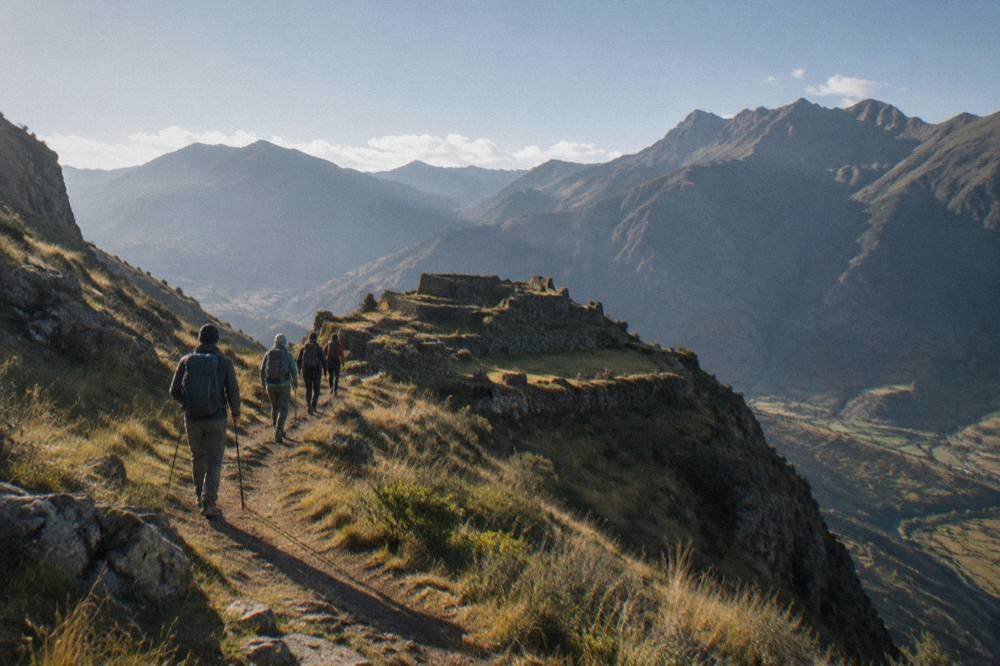
Cusco, the historic city in the Andes of southern Peru at 3,335 m, works as a base for hikes of every scale: Inca ruins within walking distance of the Plaza de Armas, and full-day mountain trips above 4,200 m.
Short answer
The best day hikes from Cusco split into three tiers: ruins walks you start on foot from the city, Boleto Turistico sites such as Tambomachay and Q'enqo just above it, and full-day mountain trips such as Rainbow Mountain (about 5,000 m), Palccoyo (4,900 m viewpoint) and Humantay Lake (about 4,200 m).
Cusco, the historic city in the Andes of southern Peru, sits at 3,335 m on the Plaza de Armas, and that single fact shapes every hike you can start from it. The city is not Machu Picchu: the citadel sits lower, at 2,430 m, while Cusco itself is the high point that travellers sleep at first. That makes the city an unusual kind of hiking base. On day one you can walk uphill from the plaza to Inca ruins at 3,701 m, and within a week the same streets put you on buses to mountain trails that cross 5,000 m. This guide lays out what the verified sources say about each tier, from free walking routes inside the city to the high Andean day trips, with the altitudes, fees and season data that the official pages and the site's own tour records carry.
What Makes Cusco A Base For Day Hikes?
Cusco works as a hiking base because the altitude staircase runs in both directions: Inca sites such as Sacsayhuaman (3,701 m) sit above the city within walking distance, while Pisac (2,972 m) and Ollantaytambo (2,792 m) sit lower in the Sacred Valley, so hikers can climb high, sleep high or descend to recover on different days. The CDC Yellow Book names Cusco as a rapid-ascent destination and even suggests descending to lower elevations to sleep for the first nights.
That staircase is the reason the region's hiking menu is so varied. A traveller who lands at Alejandro Velasco Astete airport, which sits at 3,310 m about 6 km from the Plaza de Armas, is already high. The acclimatisation day itinerary on this site exists precisely because the first 48 hours at altitude are a different project from the hiking that follows. The CDC's advice on Cusco is unusually specific: it notes that in some cases travellers can descend to elevations lower than the airport to sleep for one or two nights and then begin their ascent, which may remove the need for medication. The Sacred Valley towns make that possible without leaving the region.
The practical structure most itineraries follow is a gentle one. Start with the ruins above the city, all of them covered by the Boleto Turistico's Circuit I. Move to mid-altitude valley walks next. Save the high mountain day trips, the ones above 4,200 m, for the back half of the trip, when the body has had some nights at altitude. The five-day Cusco itinerary shows that ordering in full.
Which Hikes Can You Start Right From The City Of Cusco?
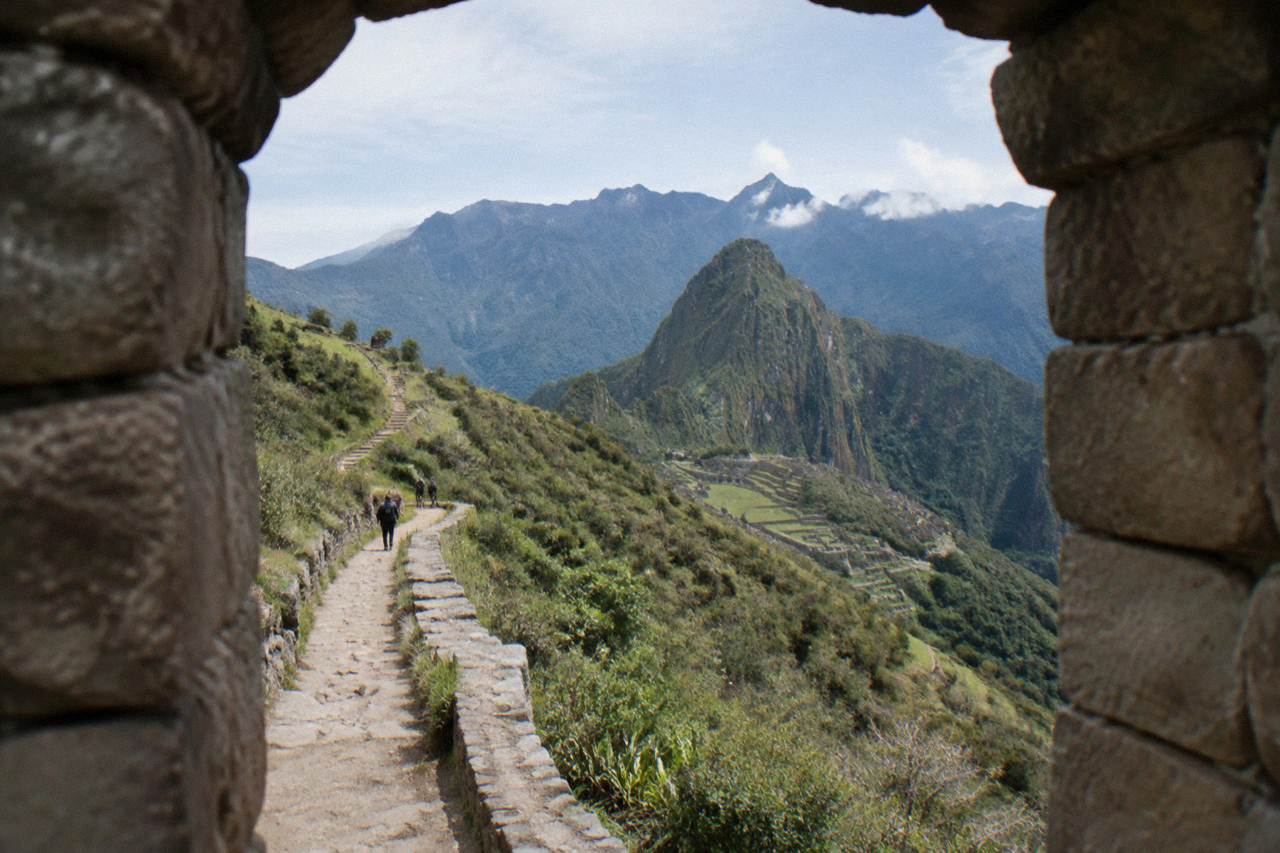
The hikes you can start on foot from central Cusco are the Inca site walks on the city's northern edge: Qorikancha's surroundings in the centre, then the steep climb past San Blas to the Sacsayhuaman archaeological park at 3,701 m, which also holds Q'enqo, Puka Pukara and Tambomachay, all four covered by the Boleto Turistico's Circuit I. No transport is needed for the climb itself.
The climb from the Plaza de Armas to Sacsayhuaman is the classic first-day hike, and it is a real one: the site sits at 3,701 m against the plaza's 3,335 m, so the walk is a genuine altitude gain on foot. A separate article on this site, walking from Cusco to Sacsayhuaman, covers the route in detail. Once at the top, the four ruins of Circuit I line up along the same plateau road: Sacsayhuaman itself, Q'enqo, Puka Pukara and Tambomachay. The four ruins of Cusco page describes each site.
What the sources say about access matters here. The Boleto Turistico is not free and not sold online: COSITUC's own FAQ states it is purchased in person at the counter at Av. El Sol 103, open daily 07:30 to 18:00, or at most included sites. The partial Circuit I ticket costs S/ 70 (about US$20) for a foreign adult and is valid for one day, per the COSITUC tarifario. Children are free to age 9, and ages 10 to 17 pay the student price with ID.
| City-edge hike or site | Elevation | Ticket |
|---|---|---|
| Plaza de Armas, walk start | 3,335 m | Free |
| Sacsayhuaman | 3,701 m | Boleto Circuit I |
| Q'enqo | On the Sacsayhuaman plateau | Boleto Circuit I |
| Puka Pukara | On the Sacsayhuaman plateau | Boleto Circuit I |
| Tambomachay | On the Sacsayhuaman plateau | Boleto Circuit I |
| Cristo Blanco viewpoint | Above the city | Free viewpoint |
For hikers who want the same ground with a guide and no planning, the roster carries a half-day city tour that includes Sacsayhuaman and Q'enco, and it is one of the cheaper products on the site.
A second option costs nothing up front. GuruWalk lists several free, tip-based walking tours of Cusco, including the YANA walking tour of the historic centre run by Yana Tour Operator, and a free walk titled Free Tour in Cusco with local guide, led by the guide named Frank Emerson. These are city walks rather than mountain hikes, but they cover the Inca streets and the climb's lower section, and the tip model is stated on the booking page.
What Are The Best Mountain Day Hikes From Cusco?
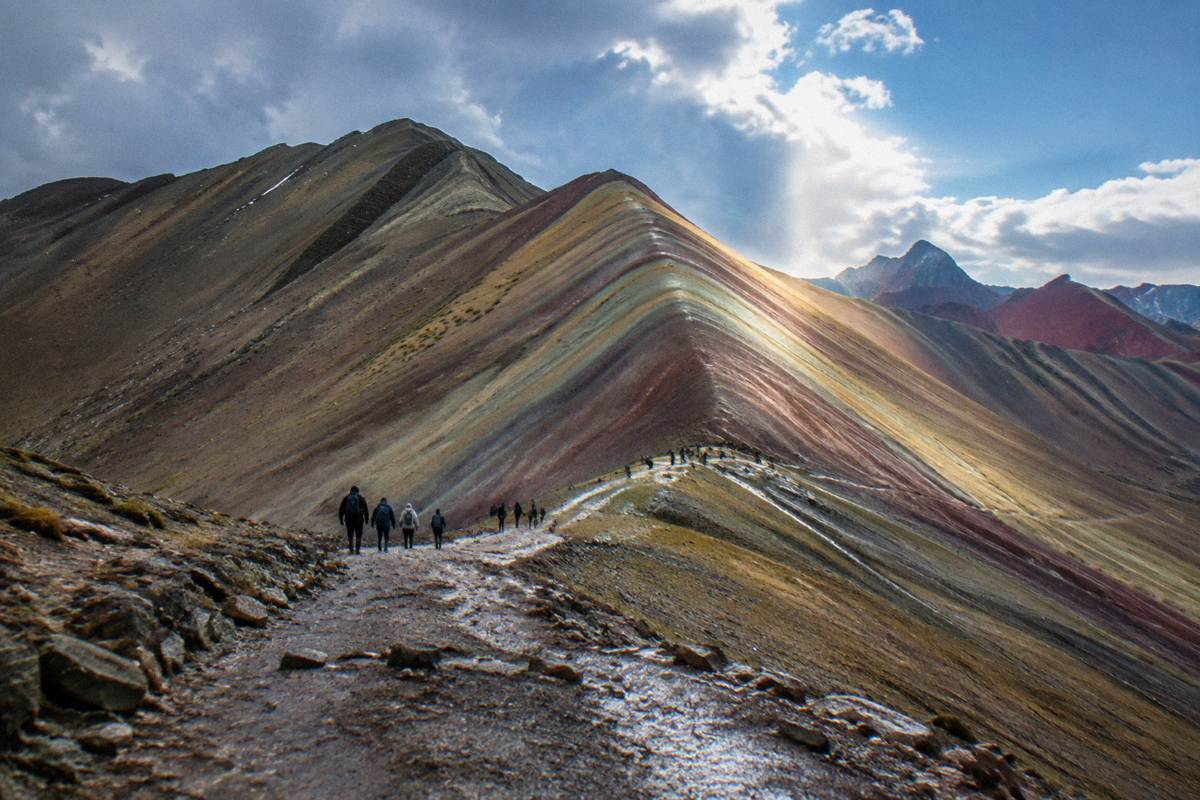
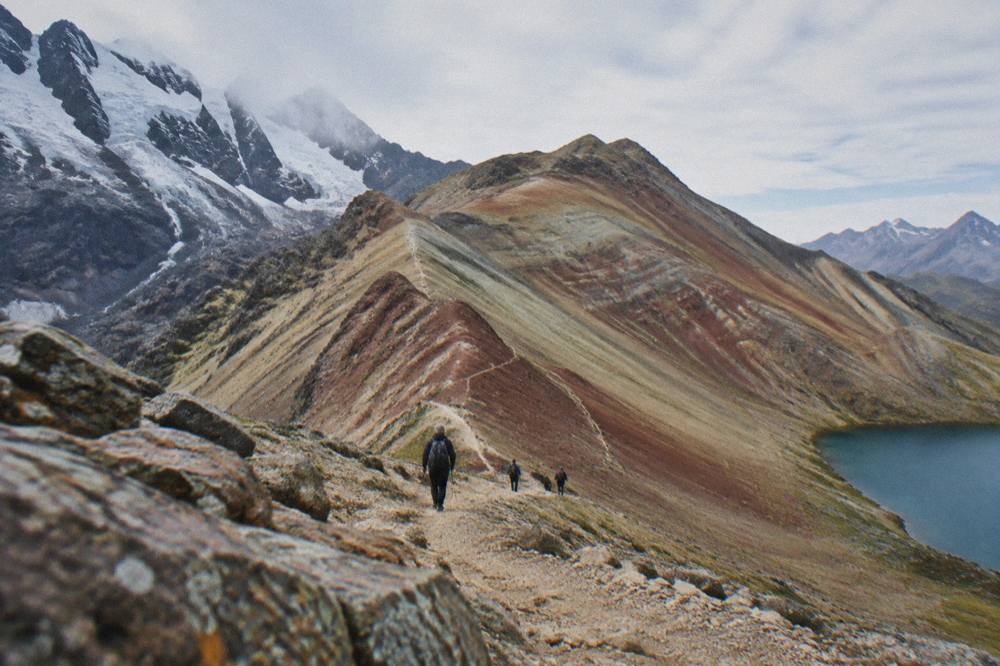
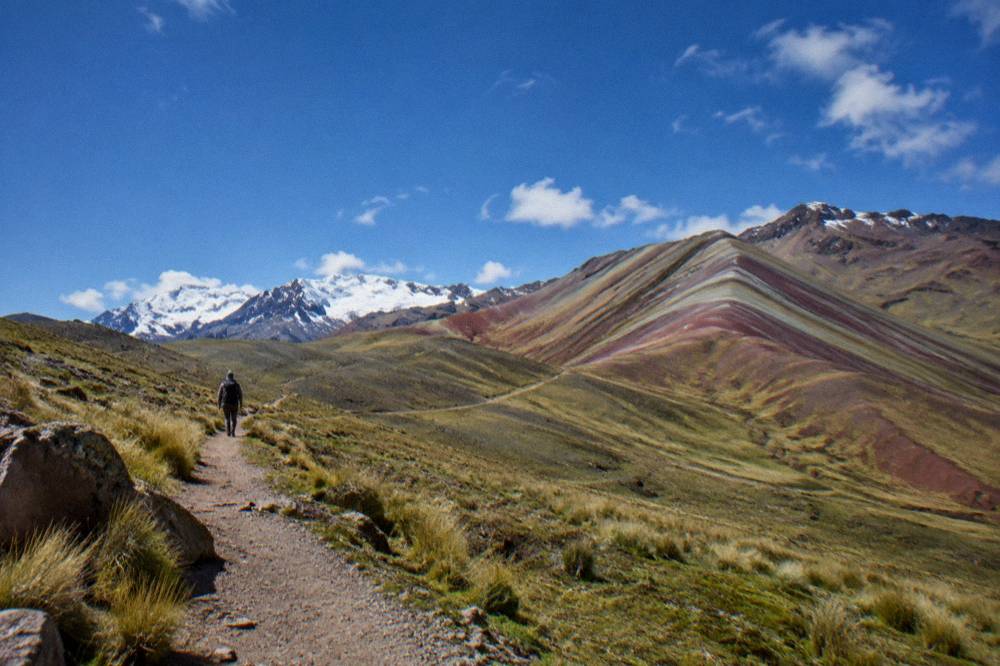
The headline mountain day hikes from Cusco are Rainbow Mountain (Vinicunca, about 5,000 m, community fee S/ 25 to S/ 30 in cash), Palccoyo Rainbow Mountain (4,900 m viewpoint, about S/ 20), Humantay Lake (about 4,200 m, fee reported between S/ 10 and S/ 20, sources disagree), and the Ausangate seven-lakes area, all reachable as full-day guided trips with meals included.
Rainbow Mountain is the best known of the set. PROMPERU's own story on Vinicunca describes the mountain of seven colours and puts the highest point at over 5,000 m; the community entry fee is S/ 25 to S/ 30 for foreigners depending on the access route, paid in cash. The site's Rainbow Mountain versus Palccoyo comparison covers the trade-off between the two: Palccoyo sits at a 4,900 m viewpoint per PROMPERU, charges about S/ 20 per operator listings, and is the lower, quieter alternative.
Humantay Lake is the third pillar of the day-hike menu. The lake sits at about 4,200 m, and the entry fee is genuinely contested between sources, from S/ 10 to S/ 20, so no single figure should be trusted. The roster carries two Humantay products, one of which includes breakfast and a buffet lunch.
Beyond those three, the options widen. The Ausangate seven-lakes trek runs as a full-day trip from Cusco with breakfast and lunch, and Pallay Punchu, a newer striped mountain in the region, runs as a guided full-day excursion with meals. Waqrapukara, an archaeological complex reached through rural country, charges either no ticket or a small community contribution of S/ 10 to S/ 20, per the operator sources the facts pack holds.
| Mountain day hike | Elevation | Entry fee (foreigner) |
|---|---|---|
| Rainbow Mountain (Vinicunca) | About 5,000 m | S/ 25 to S/ 30, cash |
| Palccoyo | 4,900 m viewpoint | About S/ 20 |
| Humantay Lake | About 4,200 m | S/ 10 to S/ 20, sources disagree |
| Waqrapukara | Not stated in the pack | No ticket, or S/ 10 to S/ 20 contribution |
| Q'eswachaka bridge area | Not stated in the pack | About S/ 20 |
The Q'eswachaka rope bridge, the last Inca suspension bridge still renewed each year, is a valley day trip rather than a mountain hike, but the 2026 renewal fell on 2 to 4 July with the festival on 5 July, and the fee is about S/ 20 per the operator listing. For hikers who want a real multi-day step up from these day trips, the classic Inca Trail is the one product on the roster that turns the day-hike habit into a four-day trek to Machu Picchu, returning by Vistadome train.
The step from a guided day trip to a booked trek is smaller than it looks, because the same logic governs both: the altitude plan comes first, the route second. A hiker who has stood at 4,900 m on Palccoyo and slept soundly in Cusco afterwards has already passed the test the Inca Trail's first high camps set. The card below shows the classic trek's live price and rating.
How Does Altitude Change How You Should Hike Around Cusco?
The CDC Yellow Book advises hikers not to go from low altitude to a sleeping altitude of 2,750 m or more in a single day, and once above 3,000 m to raise sleeping altitude by no more than 500 m per night with an extra night for every 1,000 m gained; it names Cusco (about 3,350 m by its figure) as a rapid-ascent destination and says rates of altitude illness approach 50 percent in abrupt-ascent situations.
That is the frame for every hike on this page. Cusco's Plaza de Armas sits at 3,335 m per PROMPERU, the CDC rounds the city to about 3,350 m, and the day-hike destinations climb well above it. Rainbow Mountain at about 5,000 m is the extreme case: a hiker sleeping in Cusco and standing on Vinicunca the same afternoon has made one of the fastest altitude jumps the region offers. The CDC's graded-ascent rule is the standard the site's Cusco altitude guide explains in full.
Two practical consequences follow from the sourced advice. First, the CDC suggests that travellers in Cusco can descend to lower elevations to sleep for the first night or two and then begin their ascent, which is what the Sacred Valley towns allow: Pisac at 2,972 m and Ollantaytambo at 2,792 m both sit below the city. Second, the CDC advises considering acetazolamide to speed acclimatisation if abrupt ascent is unavoidable, and avoiding alcohol for the first 48 hours at high altitude. Whether to take acetazolamide is a prescription decision to make with a doctor, not a call to make from a hiking guide.
| Sleeping location | Elevation | Relation to Cusco |
|---|---|---|
| Ollantaytambo | 2,792 m | Lower, valley sleep option |
| Pisac | 2,972 m | Lower, valley sleep option |
| Cusco airport | 3,310 m | Roughly level with the city |
| Cusco Plaza de Armas | 3,335 m | The base elevation |
| Moray | 3,385 m | Slightly above the city |
| Sacsayhuaman | 3,701 m | The city-edge hike high point |
No sourced figure exists for how likely any individual is to get sick on a given hike, and nobody publishes a day count for acclimatisation. What the sources do give is the structure: sleep low first, climb high later in the trip, and treat the 5,000 m day trips as the last thing on the list, not the first.
Which Sacred Valley Hikes Are On The Boleto Turistico?
The Boleto Turistico's Circuit III covers the Sacred Valley hiking sites of Pisac, Ollantaytambo, Chinchero and Moray, at S/ 70 per foreign adult for a partial ticket valid for two days, or S/ 130 for the integral ticket covering all 16 sites over 10 days; Moray sits at 3,385 m and Pisac town at 2,972 m, so these are mid-altitude hikes relative to the city.
Moray is the standout hiking site on the ticket. The circular terraces sit at 3,385 m, barely above the city, which makes the site a sensible early-trip walk. The Maras salt mines sit nearby at about 3,300 m with a separate entry fee of S/ 15 to S/ 20 per operator listings, and a new asphalt road between Maras and Moray was handed over in late December 2025 per the news record the pack holds. Pisac's ruins climb the hillside above the town at 2,972 m, and Ollantaytambo's archaeological park at 2,792 m recorded 891,526 visits in 2025 in the MINCETUR open dataset, the fourth-highest recorded figure among Cusco sites that year.
| Boleto Circuit | Sites relevant to hikers | Ticket | Validity |
|---|---|---|---|
| Circuit I | Sacsayhuaman, Q'enqo, Puka Pukara, Tambomachay | S/ 70 | 1 day |
| Circuit II | Museo de Sitio Qorikancha, city museums | S/ 70 | 2 days |
| Circuit III | Pisac, Ollantaytambo, Chinchero, Moray | S/ 70 | 2 days |
| Integral, all 16 sites | All of the above plus Tipon, Pikillacta and more | S/ 130 | 10 days |
The Boleto Turistico guide on this site covers the full ticket logic, including the fact that Machu Picchu is not on it. For hikers, the useful detail is that the integral ticket's 10-day validity matches a two-week trip's hiking arc nicely: Circuit I in the first days, the valley sites in the middle, and the mountain day trips, which need no boleto at all, at the end.
When Is The Best Season For Cusco Hikes?
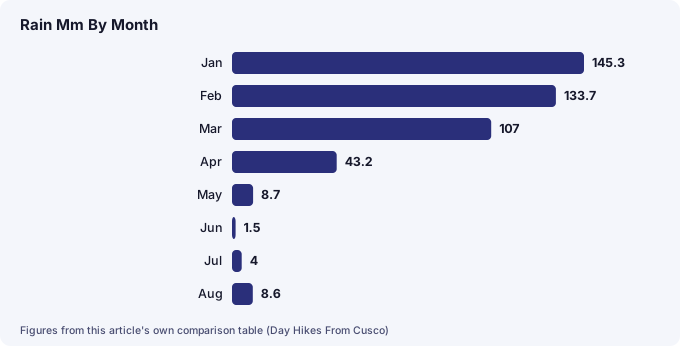
The dry season, roughly May to September, is the hiking season around Cusco: May to August together bring just 22.8 mm of rain, 3.2 percent of the annual 707.8 mm, at the WMO/SENAMHI Cuzco station's historical normal, while December to March carries 71.9 percent of the year's rain, so wet-season hiking means mud, cloud and a real chance of a washed-out day.
The monthly picture is stark. June averages 1.5 mm of rain and July 4.0 mm, against January's 145.3 mm. The trade-off is temperature: mean minimums fall to 0.3 C in June and 0.1 C in July, and SENAMHI's frost guidance puts the heladas season across April to September with the peak in June and July. Frost nights are common in the dry season. Mean daily maximums stay between 18.8 and 20.9 C all year, so the days are mild even in the coldest months. This is the Southern Hemisphere: June to August is winter, dry and clear, never summer.
| Month | Mean max C | Mean min C | Rain mm |
|---|---|---|---|
| Jan | 18.9 | 6.6 | 145.3 |
| Feb | 18.8 | 6.5 | 133.7 |
| Mar | 19.1 | 6.2 | 107.0 |
| Apr | 19.7 | 4.9 | 43.2 |
| May | 19.8 | 2.5 | 8.7 |
| Jun | 19.5 | 0.3 | 1.5 |
| Jul | 19.1 | 0.1 | 4.0 |
| Aug | 19.8 | 1.6 | 8.6 |
| Sep | 19.8 | 3.9 | 21.8 |
| Oct | 20.9 | 5.5 | 39.4 |
| Nov | 20.7 | 6.1 | 71.9 |
| Dec | 19.4 | 6.4 | 122.7 |
One seasonal fact is specific to the Inca Trail rather than the day hikes: it closes every February. The day-hike sites around Cusco do not carry a sourced seasonal closure, and no current closure of Rainbow Mountain or any trail should be stated, because the pack holds none. The Cusco weather by month and best time to visit Cusco pages carry the full climate detail, and the MINCETUR monthly visitor figures on the home page show the crowd side of the same calendar: in 2025, Machu Picchu recorded 154,105 visits in October against 79,806 in February.
Should You Hike With A Tour Or On Your Own Around Cusco?
The city-edge and valley hikes are realistic independent walks: the Boleto Turistico sites are reached on foot or by local transport, and COSITUC sells the ticket in person with no guide attached. The high mountain day trips, by contrast, are almost always guided, with transport and meals bundled, because the trailheads sit far from the city and the community fees are collected in cash at the start.
The split is practical rather than doctrinal. Walking up to Sacsayhuaman costs nothing beyond the boleto, and the getting around Cusco guide covers the local transport that reaches the valley sites. The mountain day trips are a different product category: the roster's Rainbow Mountain, Humantay, Palccoyo, Ausangate and Pallay Punchu entries all bundle pickup, meals and the walk itself, and the listing carries each product's price and rating.
One rule changed recently and matters to independent-minded hikers: at Machu Picchu a guide is recommended, not mandatory, under Article 17.1 as rewritten by the September 2026 ministerial resolution. That is a Machu Picchu rule rather than a day-hike rule, but it is the question hikers ask most often when they start planning beyond the city.
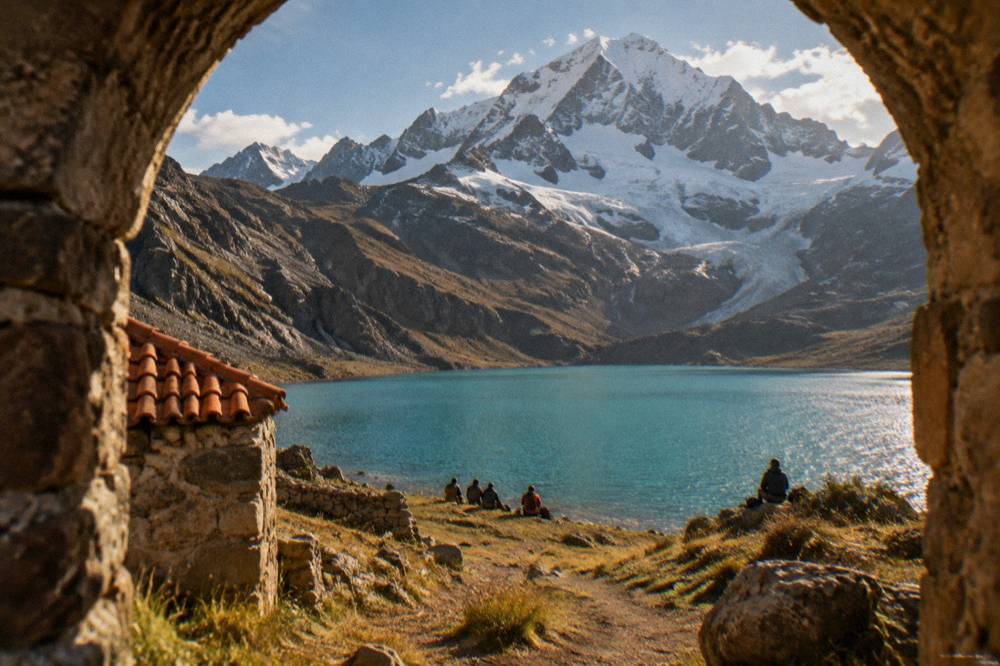
What Should You Pack For A Day Hike Near Cusco?
The sourced packing facts are the climate ones: mean daily maximums stay between 18.8 and 20.9 C all year while dry-season nights fall to around freezing, so the standard kit is sun protection for the high-altitude daytime and real insulation for the start and end of the day, with cash in soles for every community fee, since Rainbow Mountain, Palccoyo, Humantay, Maras and Q'eswachaka fees are all collected in cash at the trailhead.
The cash point is the one hikers miss. Every fee table on this page is a cash-in-soles transaction: S/ 25 to S/ 30 at Vinicunca, about S/ 20 at Palccoyo and Q'eswachaka, S/ 10 to S/ 20 at Humantay and Waqrapukara, S/ 15 to S/ 20 at Maras. The money and ATMs logic applies: per-transaction withdrawal caps on Peruvian ATMs typically run 400 to 700 soles, so the fee money needs planning the night before.
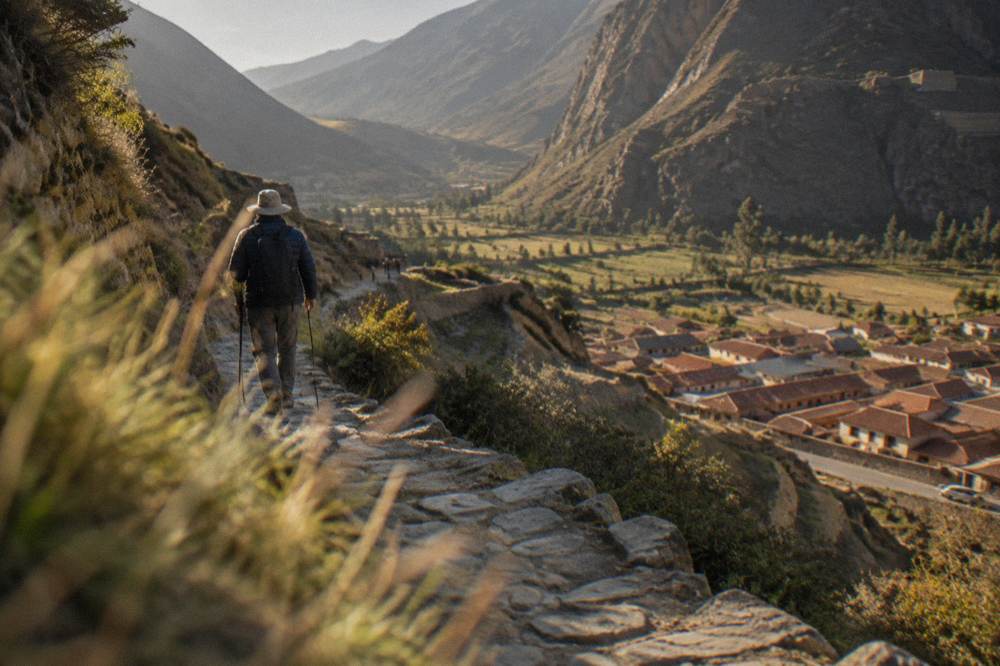
The layering logic comes straight from the temperature table. A dry-season morning at a 4,900 m trailhead can sit below freezing, the same afternoon can push toward 20 C in the sun, and the daily swing in July runs to about 19 C between the mean minimum and the mean maximum. The what to wear in Cusco guide translates that into a full packing list.
How Do The Day Hikes Lead Into The Multi-Day Treks?
The day hikes around Cusco are the standard on-ramp to the region's multi-day treks: the Inca Trail, the Salkantay Trek, the Lares Trek and the Inca Jungle route all start from the Cusco area, and the Inca Trail's permit system allows 500 people per day including porters and guides, sold only through licensed agencies, with the permit price at about S/ 292 (US$77 to 85) per the operator figures the pack holds.
The Inca Trail is the one the day hikes point toward, and it is the featured trek on this site. The roster's classic product runs four days to Machu Picchu with a return by Vistadome train, and its listing carries the price, rating and review figures. The permit rules are the part a hiker cannot work around: the daily quota includes every porter and guide, February is closed for maintenance, and no independent permit purchase exists.
The alternatives each trade something. The Salkantay Trek avoids the permit system and crosses high passes; the Lares Trek runs through valley communities with hot springs; the Inca Jungle route mixes biking and rafting into the approach. All are described in general terms on this site's trek pages, and all of them, like the day hikes, end at the one Machu Picchu page this site maintains.
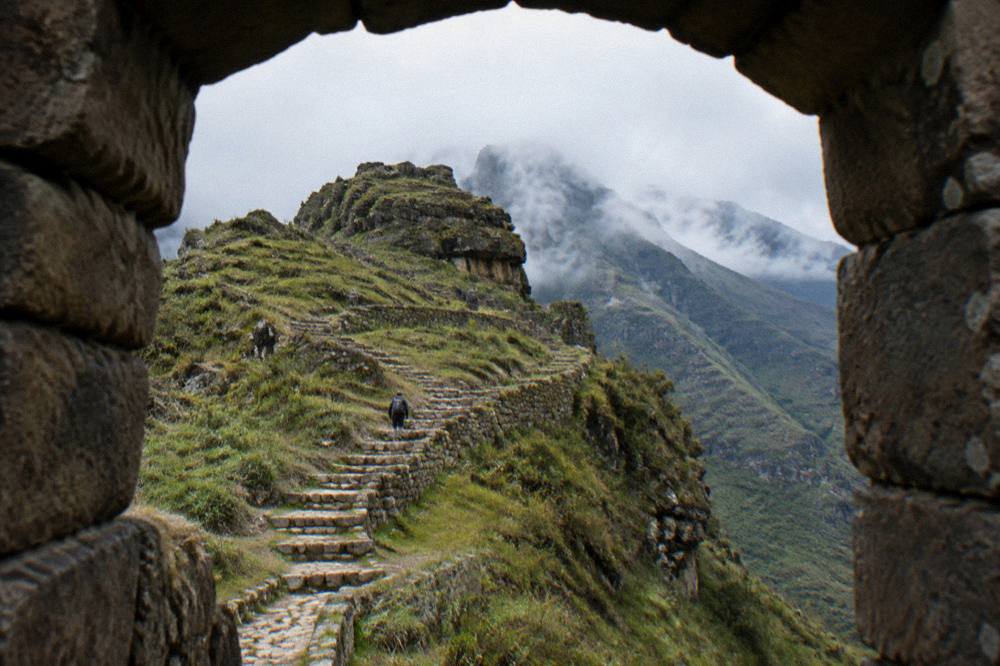
The transition question is really an altitude question again. A hiker who has done Sacsayhuaman, a valley walk and one day trip to Humantay at about 4,200 m has followed something close to the CDC's graded-ascent logic, and is a plausible candidate for a multi-day trek. A hiker who lands and starts a four-day trek the next morning has not, and the CDC's abrupt-ascent warning is the sourced statement of that risk.
Common Questions About Day Hikes From Cusco
Can You Hike Rainbow Mountain Without A Tour From Cusco?
The community fee at Vinicunca is S/ 25 to S/ 30 for foreigners, paid in cash, so nothing stops an independent hiker at the trailhead itself. The practical barrier is the distance from Cusco, which the pack holds no sourced figure for. The site's article on visiting Rainbow Mountain without a tour covers what the sources say, and the roster carries guided trips with meals included if the logistics are not worth solving alone.
Is Humantay Lake A Hard Day Hike?
The lake sits at about 4,200 m, which is roughly 900 m above Cusco's Plaza de Armas, and the entry fee is reported between S/ 10 and S/ 20, with sources disagreeing. No sourced difficulty grade or trail length exists in the verified facts, so no honest answer states one. The CDC's graded-ascent advice is the best guide to whether the elevation suits a given day of your trip.
Do You Need The Boleto Turistico For The City Hikes?
Yes for the four ruins above the city. Sacsayhuaman, Q'enqo, Puka Pukara and Tambomachay are all on Circuit I, which costs S/ 70 (about US$20) as a one-day partial ticket per the COSITUC tarifario. COSITUC sells the ticket in person only, at Av. El Sol 103 daily 07:30 to 18:00 or at most included sites, never online.
Which Is Better, Rainbow Mountain Or Palccoyo?
PROMPERU puts Palccoyo's viewpoint at 4,900 m against Vinicunca's over 5,000 m, and the fees are about S/ 20 versus S/ 25 to S/ 30. The full comparison, including the crowd and accessibility trade-offs the sources describe, is on the site's Rainbow Mountain versus Palccoyo guide.
Is It Safe To Hike Around Cusco Alone?
The UK FCDO's Peru safety page names street crime as a significant problem in Cusco and advises against walking alone in quiet areas or at night, and the US advisory for Peru stands at Level 2, Exercise Increased Caution, with Cusco city, the Sacred Valley, the Inca Trail and Machu Picchu outside the Do Not Travel areas. The site's Is Cusco Safe guide carries the full picture.
What Is The Highest Day Hike From Cusco?
Rainbow Mountain (Vinicunca) is the highest at about 5,000 m per PROMPERU, with Palccoyo's viewpoint at 4,900 m and Humantay Lake at about 4,200 m behind it. All three sit well above the city's 3,335 m base, which is why the altitude advice in this guide puts them late in a trip rather than early.
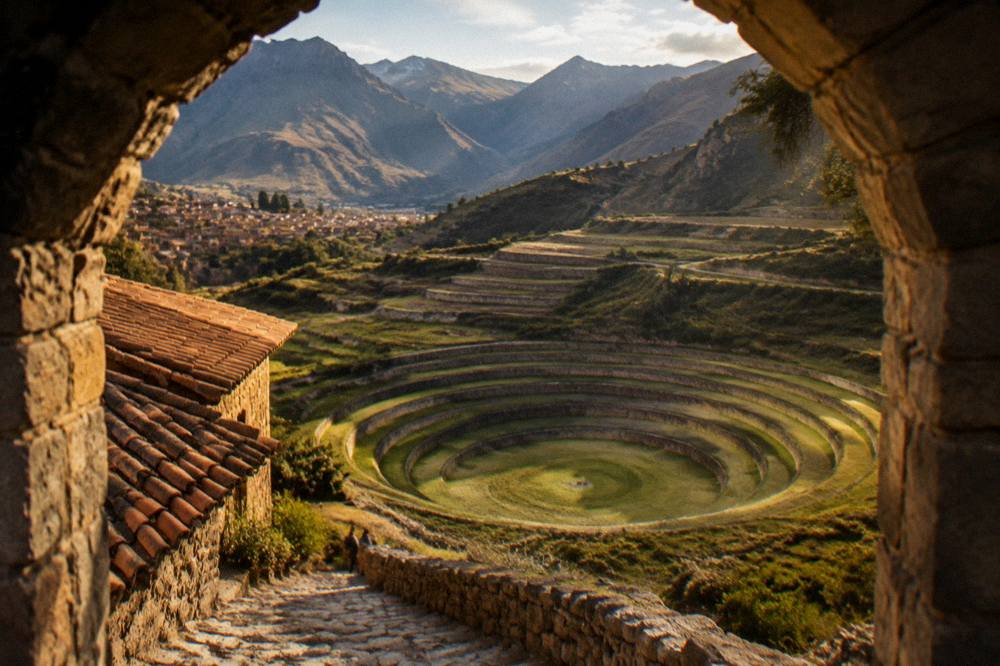
The pattern across every tier of Cusco hiking is the same one: the altitudes are the plan. Start on the city's own stone stairs, buy the Boleto Turistico in person, work through the valley sites while the body adjusts, and let the 5,000 m days and the multi-day treks come at the end, when the CDC's graded-ascent logic has had its nights to work. The Things To Do In Cusco Peru home page carries the live monthly visitor figures that show when everyone else had the same idea.