Can You Do Sacred Valley In One Day?
Yes, the Sacred Valley from Cusco can be done in one day: what a realistic one-day route covers, what the Boleto Turistico Circuit III includes, costs, and whether one day is enough.
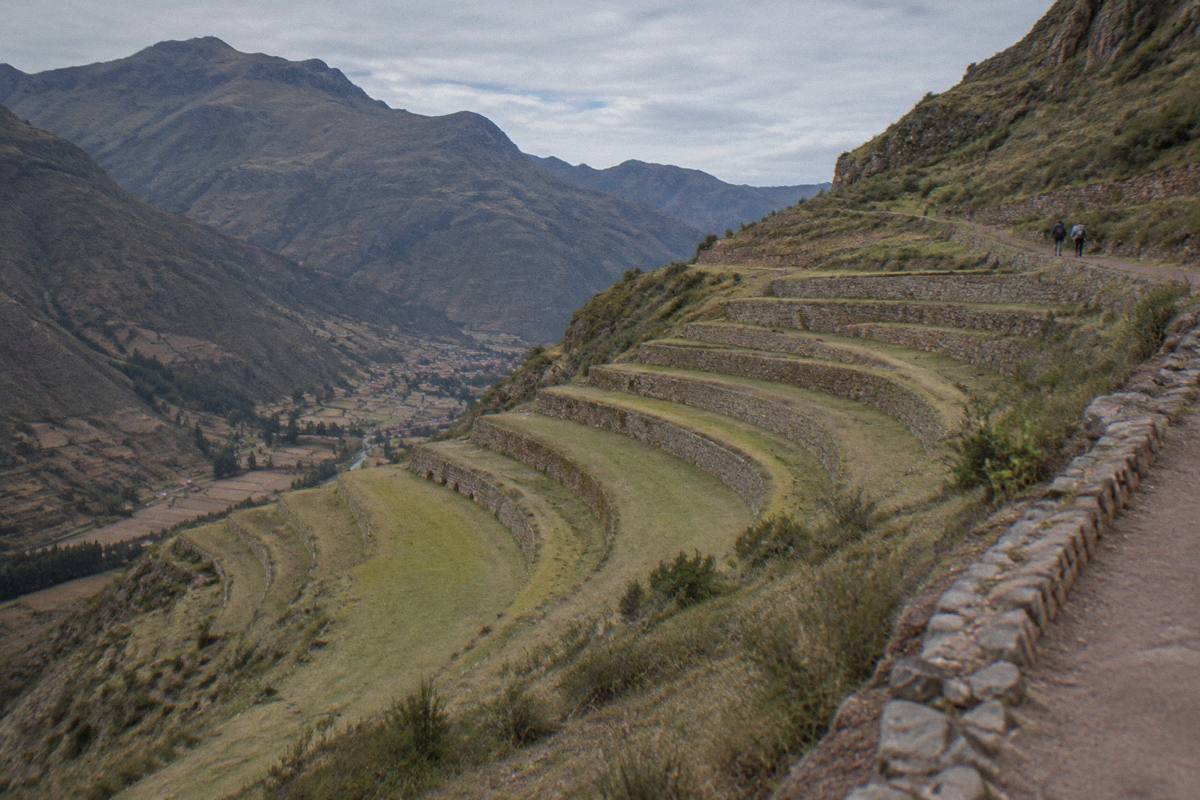
The Sacred Valley of the Incas sits below Cusco, the historic city in the Andes of southern Peru, and it is the one excursion from the city that compresses well into a single day. The valley's main towns all sit lower than Cusco's Plaza de Armas at 3,335 m: Pisac town at 2,972 m, Urubamba at 2,870 m and Ollantaytambo at 2,792 m, which is part of why the valley works as an acclimatisation outing as well as a sightseeing one. The Boleto Turistico's Circuit III exists almost precisely for this trip, covering Pisac, Ollantaytambo, Chinchero and Moray. This page lays out what a one-day route can genuinely include, what it costs, and when one day stops being enough.
Can You Do Sacred Valley In One Day?
Yes, the Sacred Valley can be done in one day from Cusco, and it is the standard way to do it. A single long day covers the four Boleto Turistico Circuit III sites, Pisac, Ollantaytambo, Chinchero and Moray, plus the Maras salt mines, which are paid separately in cash. What one day cannot cover is Machu Picchu, which has its own ticket and its own journey.
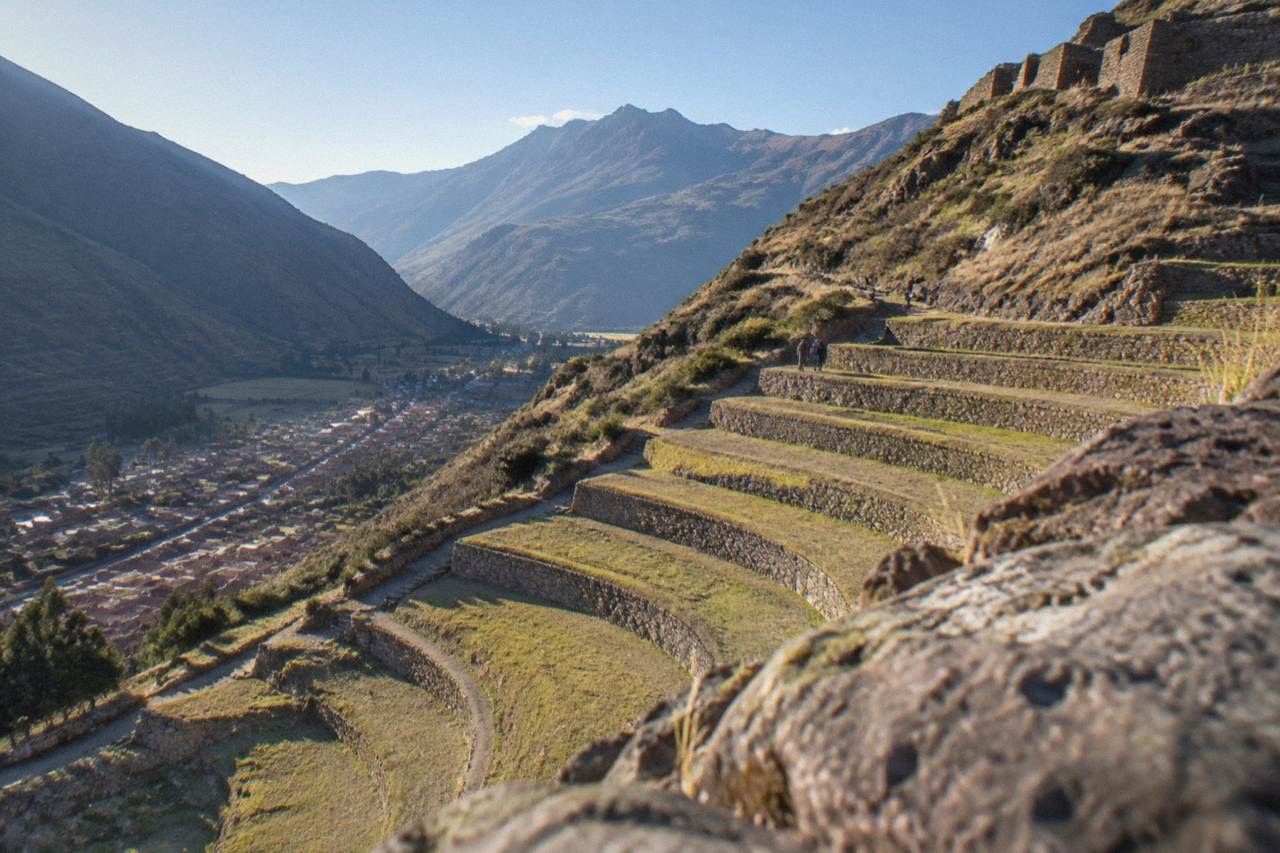
The reason the valley compresses is geography. The four archaeological sites on Circuit III sit along one down-valley corridor from Cusco, and the Maras salt mines sit a short detour from Moray, on an 8 km asphalt road handed over in late December 2025. A day tour loops them in one pass: out from Cusco, down through the valley towns, and back up in the evening. Timings vary with traffic, weather and how long each group lingers, so no honest itinerary prints a clock schedule, but the order of stops is well established and the day is a full one.
The trade-off is depth. A one-day circuit gives each site a stay measured in minutes rather than hours, and it leaves nothing for the towns themselves, the walks between sites, or the longer trails described in day hikes from Cusco. Visitors who want the valley at walking pace, or who want to sleep in Urubamba or Ollantaytambo, should read the stay in Cusco or the Sacred Valley comparison before committing to the day trip.
What Can You Realistically See In One Sacred Valley Day?
A realistic one-day route covers Pisac's terraces and the Chinchero plateau, then Moray's circular terraces and the Maras salt mines, and finishes at Ollantaytambo's fortress before returning to Cusco. Those four sites plus the salt pans are the practical maximum for one day. Adding anything beyond them, including Machu Picchu, is not a one-day itinerary.
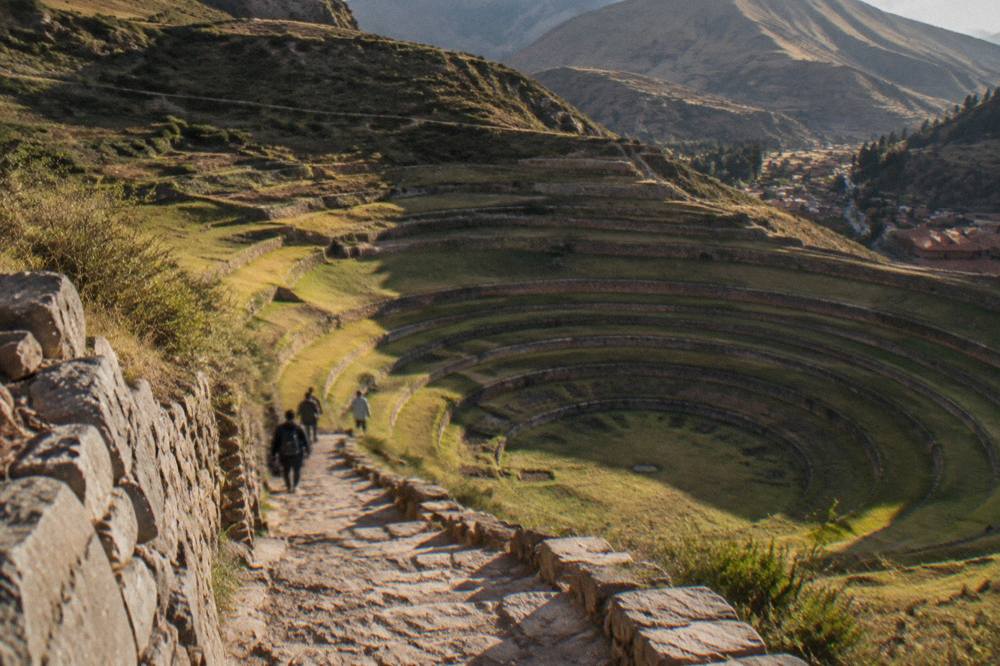
Pisac opens most routes. The site's terraces climb the hillside above the town at 2,972 m, and the Circuit III ticket covers entry. Chinchero follows, a high plateau stop known for its weaving tradition; the Awana Kancha region's textile work is the cultural thread here, and Chinchero is one of the Circuit III sites. Moray, at 3,385 m, is the valley's most distinctive sight: concentric circular terraces sunk into a plateau. The Maras salt mines at 3,300 m are a separate, community-run entry, reported at S/ 15 to 20 in cash, and are not on the boleto. Ollantaytambo, at 2,792 m, usually closes the day, a living Inca town with a fortress above it, and the place where the train to Machu Picchu leaves for the roughly 1 h 45 ride.
The elevations matter for planning. The valley is lower than Cusco, which the CDC Yellow Book's advice on graded ascent makes relevant: a valley day after arrival in Cusco is gentler on the body than a mountain day, and the CDC names Cusco as a rapid-ascent destination where travellers should consider how they sleep and move in the first days. Moray and Maras sit near Cusco's own altitude, so the "low valley" relief is real at the town level but not at every stop.
| Place | Elevation | Entry |
|---|---|---|
| Cusco, Plaza de Armas | 3,335 m | Base city |
| Pisac town | 2,972 m | Boleto Circuit III |
| Moray | 3,385 m | Boleto Circuit III |
| Maras | 3,300 m | Salt mines S/ 15 to 20, cash, not on the boleto |
| Urubamba | 2,870 m | Transit and lunch stop |
| Ollantaytambo | 2,792 m | Boleto Circuit III |
For visitors who would rather not organise colectivos and entry tickets themselves, a guided circuit removes the coordination entirely. The Sacred Valley Full Day Tour runs this loop as a single booked day from Cusco, and it can be checked on the operator's live listing: Check availability. The alternative, doing the valley independently, is covered in Sacred Valley without a tour.
How Much Does A One-Day Sacred Valley Trip Cost?
The Boleto Turistico Circuit III partial ticket costs S/ 70, about US$20, for a foreign adult and covers Pisac, Ollantaytambo, Chinchero and Moray. The Maras salt mines add a reported S/ 15 to 20 in cash. The integral ticket at S/ 130, about US$38, is valid 10 days and only pays off if Cusco's other circuits are also on the plan.
COSITUC sells the boleto in person only, at the counter on Av. El Sol 103 in Cusco, open daily 07:30 to 18:00, and at most included sites. There is no online sale. The partial Circuit III ticket is valid for 1 to 2 days, which fits a one-day trip exactly; buying it the evening before removes a morning queue. Children are free to age 9, and ages 10 to 17 pay the student price with ID. The only discount COSITUC lists is the student one, and the foreign student integral is S/ 70. The full index of guides sits on Things To Do In Cusco Peru.
Two things the boleto does not cover are worth repeating. The Maras salt mines are a community entry, paid in soles at the site, reported at S/ 15 to 20 in 2026 operator listings. And Machu Picchu is not on any boleto circuit: it sells on the Ministry of Culture's ticket platform or in person at Machu Picchu Pueblo, a topic covered in full on the site's Machu Picchu day trip page.
| Ticket or fee | Price | Validity | Covers |
|---|---|---|---|
| Boleto integral, foreign adult | S/ 130 (about US$38) | 10 days | All 16 sites on all three circuits |
| Boleto Circuit III partial, foreign adult | S/ 70 (about US$20) | 1 to 2 days | Pisac, Ollantaytambo, Chinchero, Moray |
| Foreign student integral | S/ 70 | 10 days | All 16 sites, with student ID |
| Maras salt mines | S/ 15 to 20, cash | Per visit | Not on the boleto |
Guided day tours bundle the transport and the guiding but the entry ticket is usually the visitor's own to buy, so the boleto stop belongs in the plan either way. Whether the valley justifies its cost at all is a fair question, and the site's is the Sacred Valley worth visiting answer works through it.
Is One Day Enough, Or Should You Take Two?
One day is enough to see the valley's four main sites and the salt mines, but it is not enough to combine the valley with Machu Picchu, to hike between towns, or to stay overnight in Urubamba or Ollantaytambo. Two days is the honest answer for anyone who wants the valley and Machu Picchu on the same trip.
The two-day question is really a Machu Picchu question. The citadel is a separate journey with its own nominal, timed ticket, and squeezing the valley loop and the citadel into one day is not a plan anyone should attempt. The site's Sacred Valley or Machu Picchu first answer works through the sequencing, and the two-day itineraries, both the Sacred Valley in two days plan and the combined guided options, exist for exactly this.
For visitors with more time, the valley rewards a second day in ways a one-day circuit cannot touch: the where to stay in the Sacred Valley question, the one day in Cusco versus valley trade-off, and the longer acclimatisation logic in the site's how long to acclimatise answer all change once the valley becomes an overnight rather than an excursion. The CDC's preference for graded ascent sits behind much of this: sleeping in the valley at 2,870 m after arriving in Cusco at 3,335 m is the pattern the Yellow Book describes when it says travellers at rapid-ascent destinations can descend to lower elevations to sleep before continuing higher.
Season affects the one-day answer too. The valley sits in the southern hemisphere high Andes: dry season runs roughly May to September, with clear days and frost-cold June and July nights, and the wet season runs roughly November to March, with December to March carrying 71.9 percent of the year's 707.8 mm of rain at the WMO and SENAMHI's Cuzco station, a historical normal. A wet-season day trip is still workable, but the viewpoint stops lose their certainty, and the site's when not to visit Cusco answer has the detail.
Common Questions About The Sacred Valley In One Day
Can you do Sacred Valley in one day?
Yes. One day covers the four Boleto Turistico Circuit III sites, Pisac, Ollantaytambo, Chinchero and Moray, plus the Maras salt mines with a separate cash entry. It does not cover Machu Picchu, which needs its own ticket and at least a second day.
Does the Boleto Turistico cover the Maras salt mines?
No. COSITUC's Circuit III covers Pisac, Ollantaytambo, Chinchero and Moray. The salt mines are a community-run entry, reported at S/ 15 to 20, paid in soles at the site.
Is the Sacred Valley lower than Cusco?
Yes, at the town level. Pisac sits at 2,972 m, Urubamba at 2,870 m and Ollantaytambo at 2,792 m, against Cusco's Plaza de Armas at 3,335 m. Moray and Maras, at 3,385 m and 3,300 m, sit near Cusco's own altitude, so the relief is real in the towns but not at every stop.
Can you visit the Sacred Valley without a tour?
Yes, with planning. The boleto is bought in person in Cusco and the sites are linked by local transport, though the pack holds no sourced driving times between valley towns. The site's Sacred Valley without a tour answer works through the logistics.
Should you do the Sacred Valley or Machu Picchu first?
The valley first is the common sequencing, partly because it is lower and gentler in the first days after arriving at 3,335 m. The full argument, including the two-day options that combine both, is on the site's Sacred Valley or Machu Picchu first page.
Where do you buy the Boleto Turistico for the valley?
In person only, at COSITUC's counter on Av. El Sol 103 in Cusco, open daily 07:30 to 18:00, or at most included sites. COSITUC does not sell the ticket online.
The short version: one day does the Sacred Valley from Cusco, does it well, and leaves Machu Picchu for a second day. Anyone telling a visitor otherwise is selling a two-day trip as a one-day one.