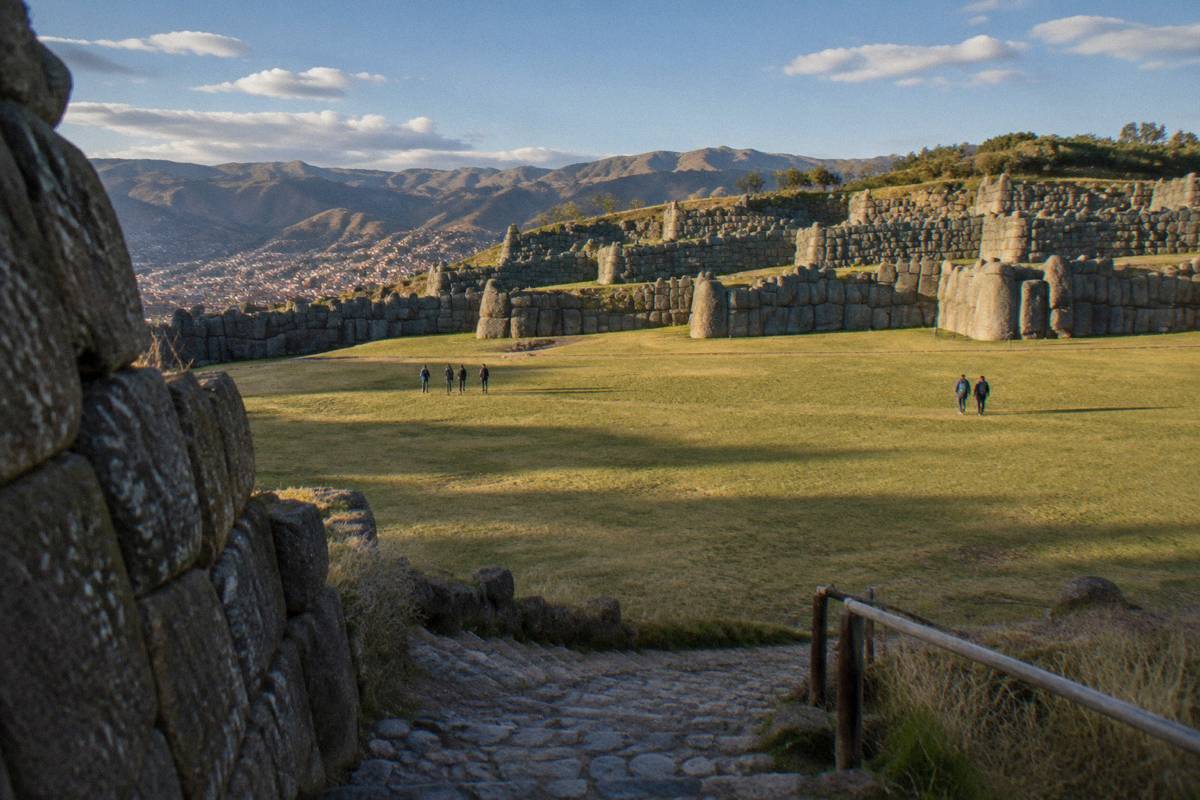
Plaza De Armas Cusco
The Plaza de Armas in Cusco sits at 3,335 m in the Andes of southern Peru, ringed by colonial churches and Inca foundations. This guide covers what the square holds, the sites within walking distance, the tickets that cover them, and the climate facts that shape any visit.
Short answer
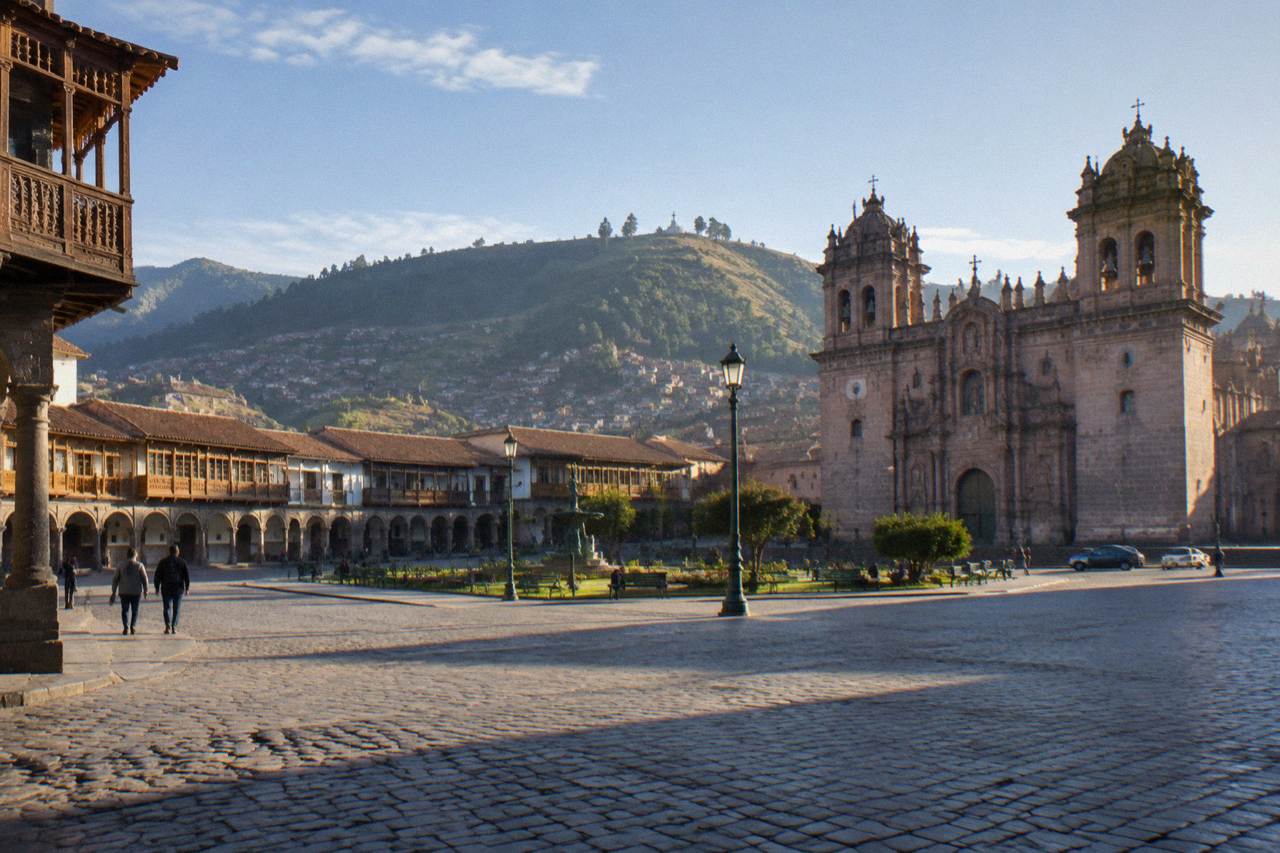
The Plaza de Armas is the historic main square of Cusco, Peru, at 3,335 m elevation. The Cathedral, the Qorikancha site museum and the Boleto Turistico's city circuit all sit within a short walk of it, and it is the natural base for exploring the historic centre.
The Plaza de Armas in Cusco, the historic capital of the Inca world high in the Andes of southern Peru, sits at 3,335 m according to PromPeru, and it works as the city's stage, meeting point and orientation line all at once. Colonial churches close it in on three sides, Inca stone foundations survive under the arcades, and every major street in the historic centre eventually leads back to it. The City of Cusco was inscribed on the UNESCO World Heritage list in 1983, and the square is the natural centre from which that listed city is read. This guide sets out what the plaza itself holds, which sites sit within walking distance, what the tickets cost, and how the high Andean climate shapes a visit at any time of year.
What Is The Plaza De Armas In Cusco?
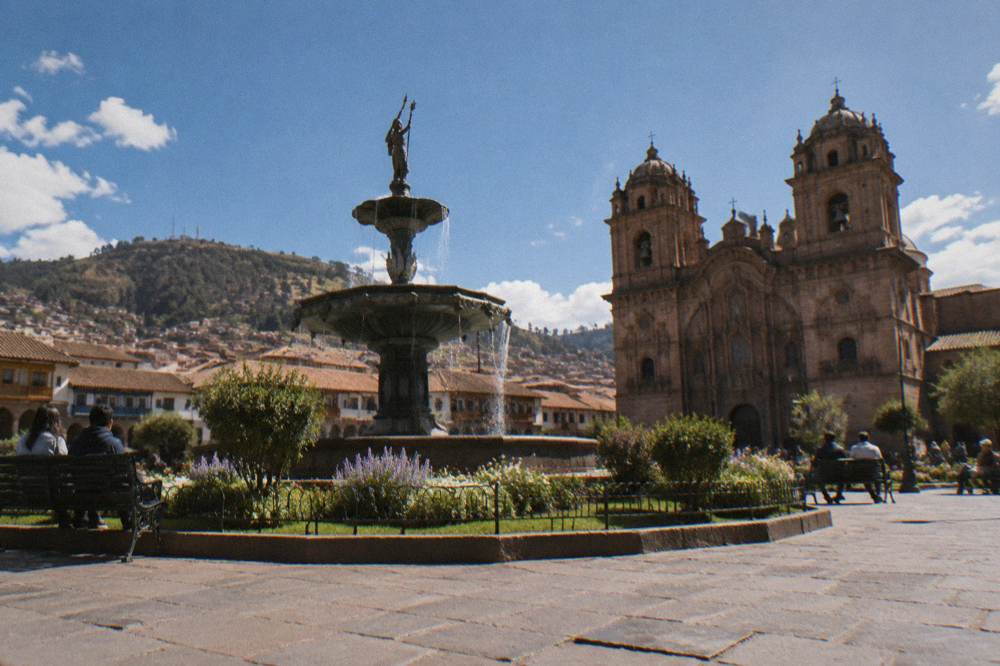
The Plaza de Armas is the historic main square of Cusco, Peru, the city that was the capital of the Inca empire and is now the tourist capital of the southern Andes. It sits at 3,335 m, and UNESCO inscribed the City of Cusco on the World Heritage list in 1983. Colonial churches, arcaded buildings and surviving Inca stonework frame the square on all sides.
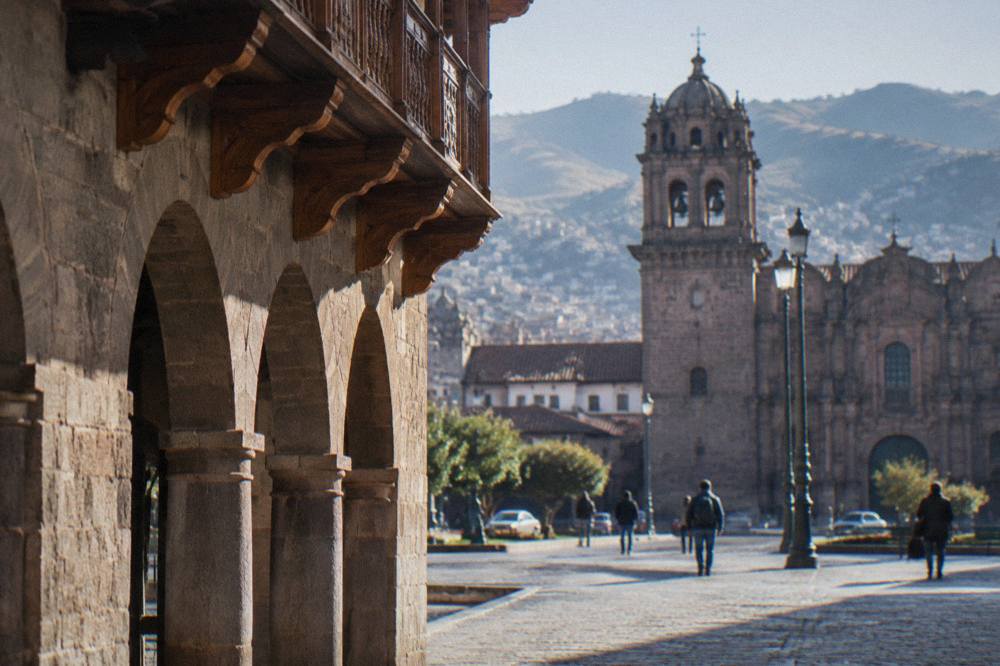
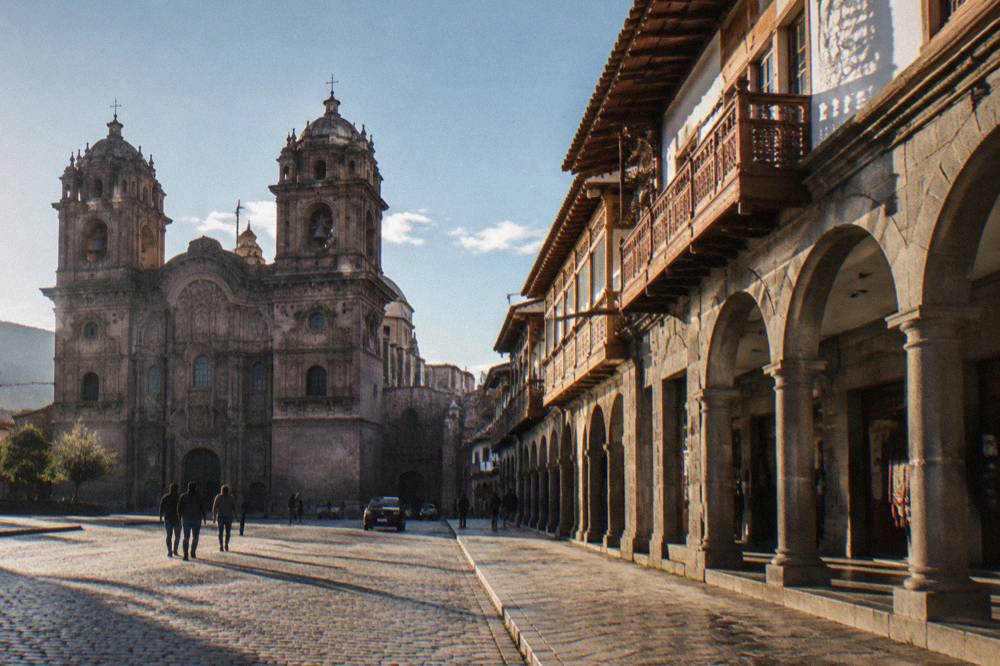
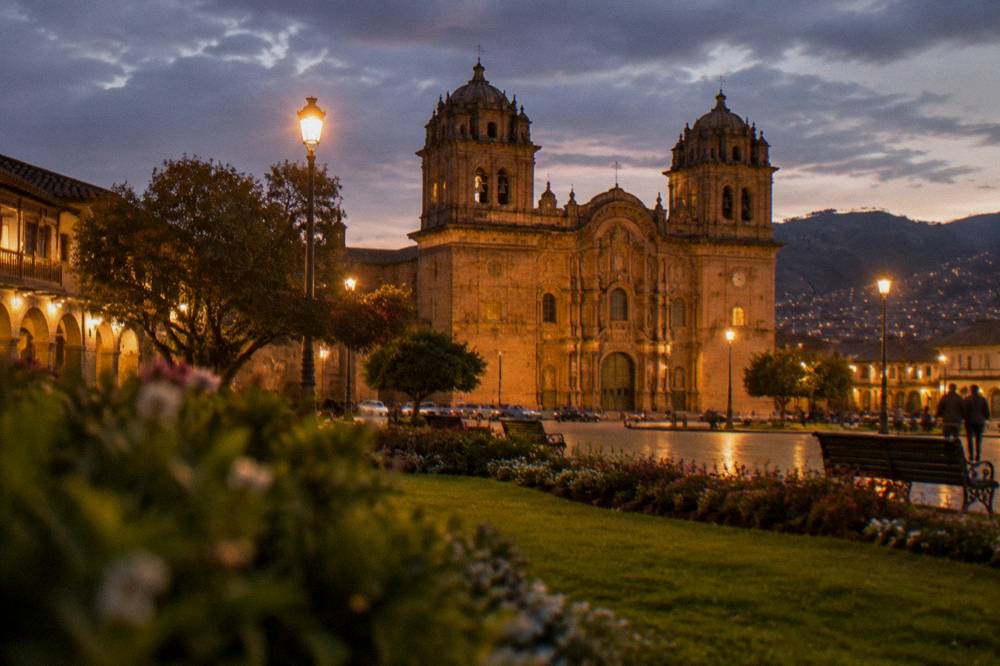
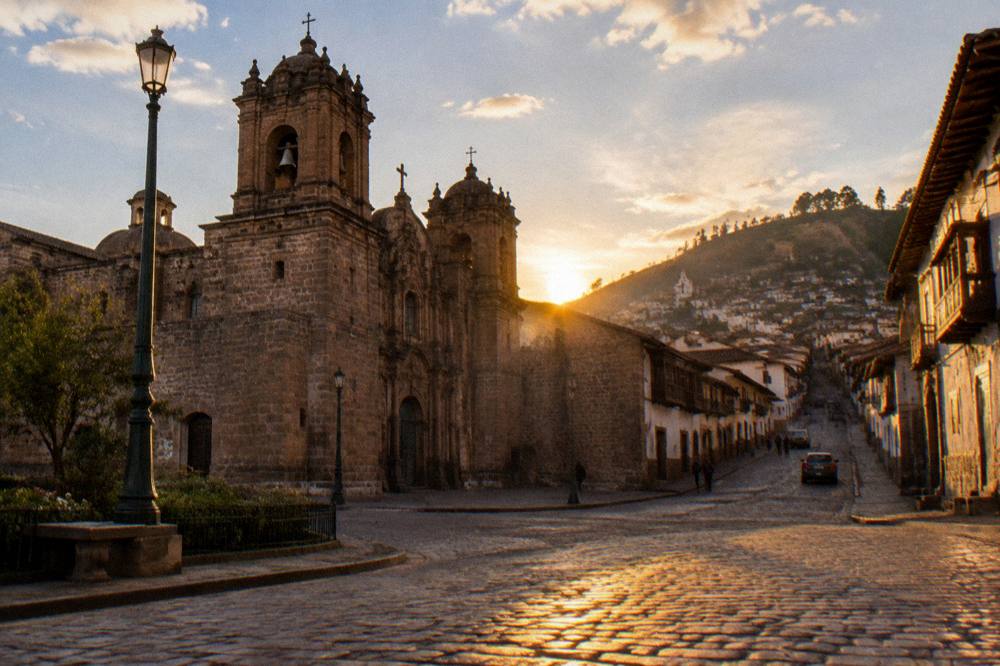
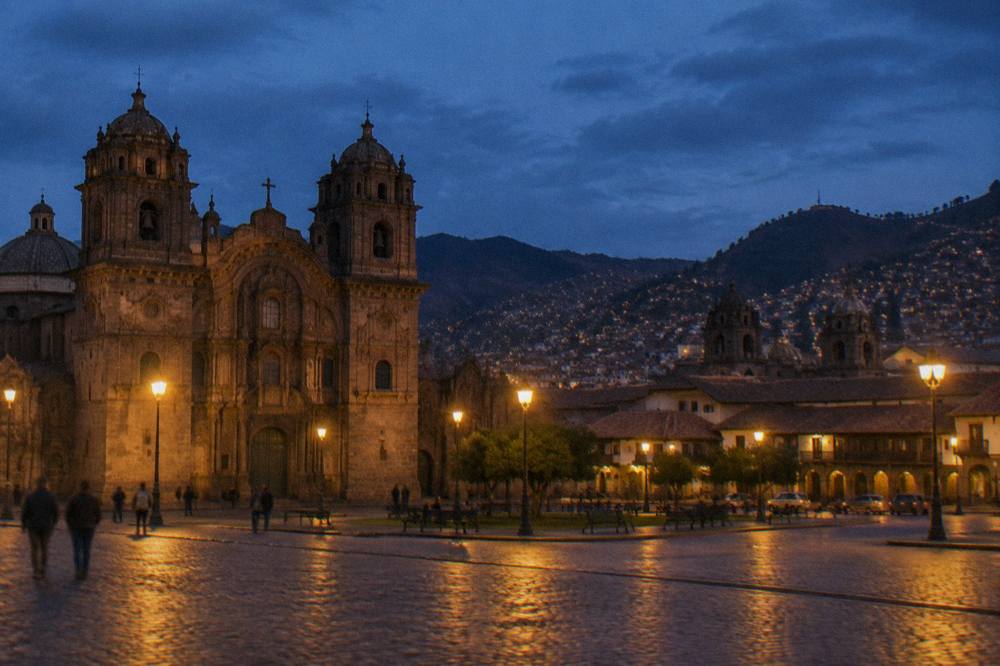
Cusco was the Inca capital, and colonial churches stand on Inca stone foundations: that single sentence is the most widely documented qualitative fact about the square, and it is what a visitor actually sees. The Cathedral faces the square from the north-east side, the Compania de Jesus church rises opposite it, and the arcades that run along the flanks hold restaurants, tour offices and craft shops. PromPeru's own city-tour page for the historic centre uses the plaza as the anchor point of the visit, and the COSITUC tarifario, the official ticket system for the region's state sites, treats the surrounding museums and ruins as the "City" circuit, Circuit II of the Boleto Turistico.
The square is also the city's ceremonial stage. Inti Raymi, the Inca sun festival held each 24 June, begins at the Qorikancha, processes to the Plaza de Armas and holds its main ceremony at Sacsayhuaman, as PromPeru's event pages describe. Santurantikuy, the Christmas Eve craft fair, fills the square on 24 December. Between festivals it is simply the place where every visitor ends up several times a day, because the historic centre's grid funnels into it.
What Can You See Around The Plaza De Armas In Cusco?
Within a short walk of the Plaza de Armas in Cusco sit the Cathedral, the Qorikancha site museum, the twelve-angled stone on Hatunrumiyoc street, the San Pedro market and the San Blas hill neighbourhood, plus the COSITUC museums of the Boleto Turistico's city circuit. Every one of them is reached on foot from the square.
The immediate square holds the Cathedral and the Compania de Jesus. A few blocks away, the Qorikancha site museum, listed on the Boleto Turistico's Circuit II, stands on the site of the major Inca temple, and peru.travel lists its admission at S/ 20 for those buying separately, about US$6. The twelve-angled stone is a large, finely fitted polygonal stone in an Inca wall on Hatunrumiyoc street near the Plaza de Armas and the San Blas neighbourhood, and it draws steady camera crowds on the walk between the two.
The San Blas neighbourhood sits on the hill to the east of the square, and the hills to the north carry Sacsayhuaman and the Cristo Blanco statue. The Cusco Cathedral has its own guide on this site, as do Qorikancha, the twelve-angled stone and the San Pedro market. The table below lists what each holds and how it is paid for.
| Site | Direction from the plaza | What it is | Ticket situation |
|---|---|---|---|
| Cusco Cathedral | On the square | Colonial cathedral facing the plaza | Separate admission, peru.travel lists S/ 25 (dated 2021) |
| Compania de Jesus | On the square | Colonial church opposite the cathedral | Separate admission |
| Qorikancha site museum | A few blocks away | Inca temple site with museum | Boleto Turistico Circuit II, or S/ 20 per peru.travel |
| Twelve-angled stone | Short walk, Hatunrumiyoc street | Finely fitted stone in an Inca wall | Free to view from the street |
| San Pedro market | Short walk | Central food and goods market | Free entry, pay per purchase |
| San Blas | Hill to the east | Artisan neighbourhood and church | Free to wander |
| Sacsayhuaman | Hills to the north | Major Inca site | Boleto Turistico Circuit I |
For visitors who want the city explained rather than just walked, the roster includes a half-day city tour covering Sacsayhuaman and Q'enqo, and several free GuruWalk walks, including the Free Tour in Cusco with local guide Frank Emerson and the YANA walking tour of the historic centre run by Yana Tour Operator, both free and tip-based. The cooking class with a market tour, this site's featured pick for the plaza area, pairs the San Pedro market with a hands-on Peruvian kitchen session, and it is a natural fit for a plaza-based day: Check availability.
The Inca sites on the hills above the city, Q'enqo, Tambomachay and Puka Pukara, sit on the same Boleto Turistico Circuit I as Sacsayhuaman, so one ticket covers the whole northern hill loop.
How Much Do The Tickets Around The Plaza De Armas Cost?
The COSITUC integral Boleto Turistico costs S/ 130 for a foreign adult, about US$38, and is valid for 10 days; each of the three partial circuits costs S/ 70, with Circuit I valid for 1 day and Circuits II and III valid for 2 days. The Boleto is sold in person only, at the Av. El Sol 103 counter daily 07:30 to 18:00 and at most included sites.
The tarifario on the COSITUC site is the source for every figure in that answer, and the FAQ confirms that validity starts on the day of purchase. The integral ticket covers 16 sites across the three circuits: Circuit I holds Saqsayhuaman, Q'enqo, Puka Pukara and Tambomachay; Circuit II, the city circuit most useful from the plaza, holds the Qorikancha site museum, the Museo Historico Regional, the Museo de Arte Contemporaneo, the Museo de Arte Popular, the Centro Qosqo de Arte Nativo, the Monumento a Pachacutec, Tipon and Pikillacta; Circuit III holds Pisac, Ollantaytambo, Chinchero and Moray.
| Ticket | Foreign adult price | Validity | Sites covered |
|---|---|---|---|
| Integral Boleto Turistico | S/ 130 (about US$38) | 10 days | All 16 sites |
| Circuit I partial (Saqsayhuaman) | S/ 70 (about US$20) | 1 day | Saqsayhuaman, Q'enqo, Puka Pukara, Tambomachay |
| Circuit II partial (City) | S/ 70 (about US$20) | 2 days | Qorikancha site museum, four museums, Centro Qosqo, Monumento a Pachacutec, Tipon, Pikillacta |
| Circuit III partial (Sacred Valley) | S/ 70 (about US$20) | 2 days | Pisac, Ollantaytambo, Chinchero, Moray |
| Foreign student integral | S/ 70 (about US$20) | 10 days | All 16 sites with student ID |
Children are free to age 9, ages 10 to 17 pay the student price with ID, and the only discount category COSITUC lists is students: there is no teacher or youth-card discount. The FAQ also states that the ticket is not sold online, so the Av. El Sol counter or the site counters are the only purchase points.
Two admissions around the plaza sit outside the Boleto system. The Cathedral is not among the 16 Boleto sites, and peru.travel listed its admission at S/ 25 on a page dated 2021, so treat that figure as dated and check at the door. The Qorikancha site museum is on the Boleto, but peru.travel lists a separate S/ 20 admission for those not holding a ticket. The Museo de Arte Precolombino charges S/ 20 general and S/ 10 for students per the same peru.travel museum guide.
What Is The Weather Like At The Plaza De Armas In Cusco?
Cusco's climate is a Southern Hemisphere high-Andes pattern: a dry season roughly May to September and a wet season roughly November to March, with December to March carrying 71.9 percent of the year's 707.8 mm of rain. Mean daily maximums stay between 18.8 and 20.9 C all year, while June and July nights fall to around 0 C.
The figures come from the WMO World Weather Information Service record for the "Cuzco" station, data supplied by SENAMHI, the Peruvian weather service, treated as a historical normal. The daily swing is the detail that surprises visitors: in July the mean maximum is 19.1 C against a mean minimum of 0.1 C, a swing of about 19 C in a single day, while in January the swing is 12.3 C. Frost nights are common in June and July, per SENAMHI's tourist forecast pages, yet the afternoons stay mild.
| Month | Mean max C | Mean min C | Rain mm |
|---|---|---|---|
| Jan | 18.9 | 6.6 | 145.3 |
| Feb | 18.8 | 6.5 | 133.7 |
| Mar | 19.1 | 6.2 | 107.0 |
| Apr | 19.7 | 4.9 | 43.2 |
| May | 19.8 | 2.5 | 8.7 |
| Jun | 19.5 | 0.3 | 1.5 |
| Jul | 19.1 | 0.1 | 4.0 |
| Aug | 19.8 | 1.6 | 8.6 |
| Sep | 19.8 | 3.9 | 21.8 |
| Oct | 20.9 | 5.5 | 39.4 |
| Nov | 20.7 | 6.1 | 71.9 |
| Dec | 19.4 | 6.4 | 122.7 |
June to August is winter here, not summer: dry, clear days and cold nights, with frost in June and July. The wettest months, December to March, still deliver daytime maximums near 19 C, so a plaza visit in the wet season means afternoon showers rather than all-day rain. The full month-by-month picture is in the site's Cusco weather by month guide, and the timing trade-offs are worked through in the best time to visit Cusco.
How Does The Altitude At The Plaza De Armas Affect A Visit?
The Plaza de Armas sits at 3,335 m, and the CDC Yellow Book names Cusco, at approximately 3,350 m, as a rapid-ascent destination where rates of altitude illness approach 50 percent in abrupt-ascent situations. The CDC prefers graded ascent, advises avoiding alcohol for the first 48 hours, and treats acetazolamide as a prescription decision to make with a doctor.
Those are the CDC's own words, summarised: the 50 percent figure applies to travellers who fly or drive straight to high altitude without staged acclimatisation, not to every visitor. The CDC's ascent rule, citing the Wilderness Medical Society, is to avoid going from low altitude to a sleeping altitude of 2,750 m or more in a single day, and once above 3,000 m to move sleeping altitude by no more than 500 m per night. The Yellow Book also notes that from Cusco, travellers can descend to lower elevations to sleep for the first night or two before beginning their ascent.
For the plaza specifically, the practical reading is that the first day or two should be gentle: the square itself is flat and compact, but the streets around it climb quickly, and San Blas sits uphill to the east while Sacsayhuaman sits at 3,701 m on the northern hills. Nobody publishes a day count for acclimatisation, so the honest planning advice is the CDC's: graded ascent where possible, and a doctor's input on medication. The site's Cusco altitude guide and the acclimatisation day itinerary cover the detail.
Where Should You Eat Near The Plaza De Armas In Cusco?
The San Pedro market, a short walk from the Plaza de Armas, is the city's central food market, and peru.travel lists it among the city's essential stops; a menu del dia in the city is reported at about S/ 8 to 15, and a cup of coca tea about S/ 2 to 5. The square's own arcades hold the tourist-facing restaurants, while the market holds the local prices.
Those price ranges are reported on-the-ground figures, not official tariffs, and they are the only everyday food prices the verified facts support. The market itself has a full guide on this site at San Pedro market, and the wider food picture, dishes and where to find them, is in what to eat in Cusco.
For visitors who want the food explained and cooked rather than just ordered, the roster's cooking classes are built around this exact geography: the featured Peruvian cooking class with cocktails and a market tour moves from the market stalls to a small-group kitchen, and the Curious Monkey street food walk, limited to 10 people or fewer, tastes its way through papas, meats and sweets with the street vendors themselves. The cooking classes guide compares them all.
What Day Trips Leave From Near The Plaza De Armas?
The Plaza de Armas is the collection point for Cusco's day trips: the Sacred Valley sites of Pisac, Ollantaytambo, Chinchero, Moray and the Maras salt mines all sit lower than the city, between about 2,792 m at Ollantaytambo and 3,385 m at Moray, and the mountain hikes of Rainbow Mountain, Palccoyo and Humantay Lake sit higher, at about 5,000 m, 4,900 m and about 4,200 m respectively.
The elevations matter because they invert the usual acclimatisation logic: the valley trips descend from the plaza, which makes them comfortable early stops, while the mountain hikes climb well above the city and are better left until after a few days. Rainbow Mountain carries a community entry fee of S/ 25 to S/ 30 for foreigners, paid in cash, per peru.travel and operator guides; Palccoyo's fee is about S/ 20; Humantay Lake's fee is reported between S/ 10 and S/ 20, and the sources disagree, so no single figure should be trusted.
| Destination | Elevation | Direction from Cusco | Relative to the plaza |
|---|---|---|---|
| Ollantaytambo | 2,792 m | Sacred Valley, north-west | Lower |
| Urubamba | 2,870 m | Sacred Valley, north-west | Lower |
| Pisac | 2,972 m | Sacred Valley, north | Lower |
| Moray | 3,385 m | Sacred Valley, north-west | Similar |
| Humantay Lake | about 4,200 m | North-west | Higher |
| Palccoyo | 4,900 m | South-east | Higher |
| Rainbow Mountain (Vinicunca) | about 5,000 m | South-east | Much higher |
The valley's own sites each have a guide here: Pisac, Ollantaytambo, Moray, the Maras salt mines and Chinchero, plus the Sacred Valley overview. Machu Picchu, the citadel at 2,430 m, is a day trip of its own and has exactly one page on this site, the Machu Picchu day trip guide. The train from Cusco towards Machu Picchu is a topic with its own dedicated coverage; suffice it to say here that PeruRail and Inca Rail operate from the Poroy and San Pedro area stations, and that wet-season disruptions sometimes reroute passengers through Ollantaytambo.
What Events Happen On The Plaza De Armas In Cusco?
Inti Raymi, the Inca sun festival, processes through the Plaza de Armas each 24 June on its way from the Qorikancha to the main ceremony at Sacsayhuaman, and Santurantikuy, the Christmas Eve craft fair, fills the square on 24 December. PromPeru documents both, and the 2027 Inti Raymi date is 24 June 2027.
Inti Raymi is the biggest date on the city's calendar. PromPeru's event pages describe the route: it starts at the Qorikancha, moves to the Plaza de Armas, and the main ceremony plays out at Sacsayhuaman, where grandstand tickets were sold through Teleticket for the 2026 edition, with the Sacsayhuaman Zona Illapa general seat listed at S/ 490 and Zona Chaska at S/ 680 on the official seller's page. Those are 2026 prices, not standing ones. The festival's full story is in the site's Inti Raymi guide.
The Q'eswachaka bridge renewal, held over 2 to 4 July in 2026 with the festival on 5 July, and the Virgen del Carmen festival at Paucartambo, traditionally 15 to 18 July, sit further out but belong to the same festival season. The whole calendar is laid out in Cusco festivals. One scheduled event worth flagging: Pope Leo XIV's visit to Peru in November 2026 includes Cusco and Sacsayhuaman on 15 November, which is likely to mean crowding and access controls around the northern hills and the square.
Is The Plaza De Armas A Good Base For Exploring Cusco?
Yes, and in practice it is the only base that matters: the Plaza de Armas sits at the old centre of Cusco, with San Blas on the hill to its east and Sacsayhuaman and Cristo Blanco on the hills to the north, and every segment of the city's tourist infrastructure, the Boleto counter on Av. El Sol, the San Pedro market and the historic centre's walking streets, sits within a short walk.
The Boleto counter at Av. El Sol 103 is the purchase point for the ticket that unlocks the state sites, and it opens daily 07:30 to 18:00. The airport sits about 6 km away, with a taxi to the centre reported at about S/ 15 to 25. The where to stay in Cusco guide covers the neighbourhoods in detail, and the getting around Cusco guide covers the transport.
For a first itinerary built around the square, the site's 1 day and 2 days plans start exactly here, with an acclimatisation day that keeps the first 24 hours on the flat plaza and its immediate streets before climbing to the hills. The Cusco city tour guide compares the guided options, including the free GuruWalk walks that leave from the square itself.
What Should You Know Before Visiting The Plaza De Armas In Cusco?
Bring soles in cash, arrive prepared for a big daily temperature swing, and keep the first day gentle: the square sits at 3,335 m, June and July nights fall to around 0 C while afternoons reach about 19 C, and the Boleto Turistico that covers most state sites is sold in person only, never online.
Cash matters more here than in many destinations because the community fees at Rainbow Mountain and other rural sites are paid in soles at the trailhead. The daily swing means layers: the WMO/SENAMHI normals show every month's mean maximum between 18.8 and 20.9 C, so the afternoons are reliably mild, but the nights vary enormously by season. The CDC's altitude advice, graded ascent where possible and no alcohol for the first 48 hours, applies from the moment the plane lands.
The square itself is free to enter and always open. The costs around it are the Cathedral's separate admission, the Boleto for the state sites, and whatever day trips a visitor adds. The site's Cusco costs guide totals a full trip, and money and ATMs covers the machines: per-transaction withdrawal caps are typically 400 to 700 soles, and Banco de la Nacion MultiRed machines are often fee-free for foreign cards but limited to S/ 400 per transaction, per the How to Peru guide that is the source for those figures.
Common Questions About The Plaza De Armas In Cusco
Is the Plaza de Armas in Cusco free to visit?
Yes, the square itself is a public space and free to enter at any time. The costs sit around it: the Cathedral charges separate admission, the state sites are covered by the Boleto Turistico, and the museums have their own entries as listed by peru.travel.
How high is the Plaza de Armas in Cusco?
PromPeru gives the Plaza de Armas elevation as 3,335 m. The airport sits slightly lower at 3,310 m, and the CDC describes Cusco as approximately 3,350 m. The hills above the city climb higher still: Sacsayhuaman sits at 3,701 m.
Can you walk from the Plaza de Armas to Sacsayhuaman?
Yes, Sacsayhuaman sits on the hills to the north of the city, and the walk is a steady climb from the square. The site is on the Boleto Turistico Circuit I, valid for 1 day at S/ 70 for a foreign adult, or covered by the S/ 130 integral ticket. The site's walking guide covers the route in detail.
What is the best time of day to visit the Plaza de Armas?
The square is a public space with no opening hours, so the choice is about light and weather rather than access. The WMO/SENAMHI normals show afternoons reliably mild all year, between 18.8 and 20.9 C mean maximum, while June and July nights fall to around 0 C, so layered clothing matters for any evening visit.
Is the Plaza de Armas safe at night?
The UK Foreign Office states that street crime, including muggings and thefts, is a significant problem in Cusco and other major cities, and advises not walking alone in quiet areas or at night. The US State Department advisory for Peru stands at Level 2, Exercise Increased Caution. The site's safety guide covers the detail.
Does the Boleto Turistico cover the Cathedral on the Plaza de Armas?
No. The Cathedral is not among the 16 sites on the COSITUC ticket. The Boleto covers the Qorikancha site museum and the city museums of Circuit II, the four northern hill sites of Circuit I, and the Sacred Valley sites of Circuit III. The Cathedral charges its own admission.
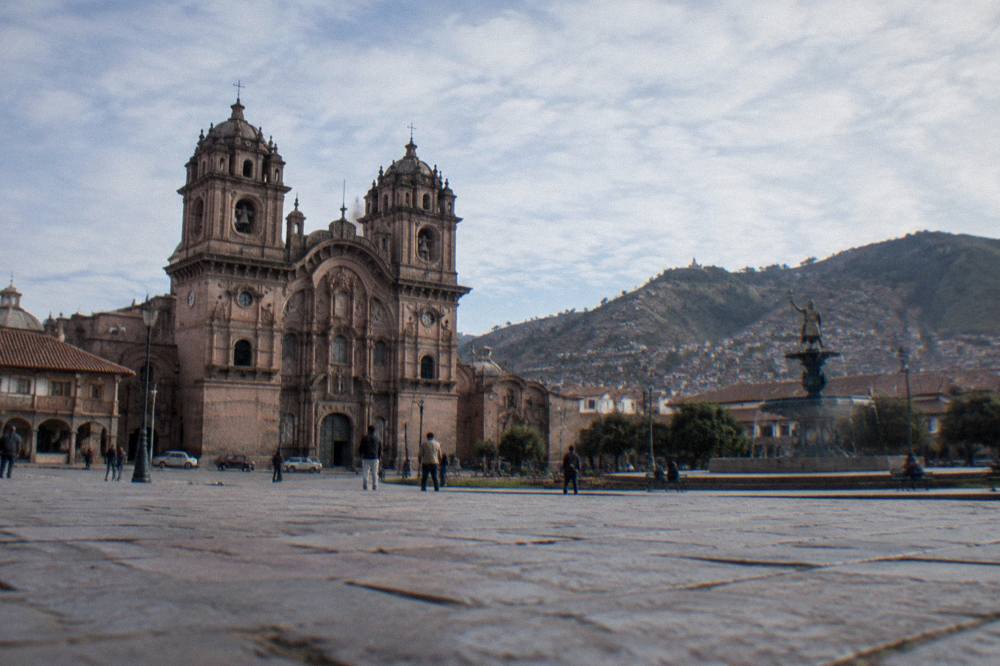
The plaza rewards slow reading: the Inca foundations under the arcades, the Cathedral's stone face, the streets that climb in four directions towards San Blas, the market and the hills. Start on the flat square while the altitude settles, buy the Boleto in person on Av. El Sol, and let the rest of Cusco, valley, mountains and Machu Picchu, arrange itself outward from there. More on the whole city is at Things To Do In Cusco Peru, and the walking routes continue in the historic centre guide.