The Inca Trail From Cusco
The Inca Trail from Cusco is the regulated, permit-only walking route to Machu Picchu: 500 people a day including porters and guides, sold only through licensed agencies, and closed every February.
Short answer
The Inca Trail is a licensed-agency-only trek from the Cusco region to Machu Picchu, capped at 500 people a day including porters and guides, closed every February, with the government portion of a permit reported at about S/ 292 and Machu Picchu entry included in the permit.
The Inca Trail from Cusco is the most regulated walk in Peru: a licensed-agency trek whose daily quota of 500 people includes every porter and guide, whose permits cannot be bought independently, and whose finish at Machu Picchu is governed by a rulebook that changed in September 2026. Cusco, the historic Inca capital in the Andes of southern Peru at about 3,335 m, is where every version of the trek starts, and it is also where the paperwork begins. This guide lays out what the current rules actually say: the quota, the February closure, the permit cost as reported by secondary sources, the Machu Picchu circuit system the trail feeds into, and how the trail compares with the other treks sold from Cusco. Nothing here is a first-person trail report; every figure comes from the official resolutions, the Ministry of Culture's own pages and the operator listings this site verifies.
What Is The Inca Trail From Cusco?
The Inca Trail is the permit-controlled walking route from the Cusco region to Machu Picchu, run only by licensed agencies under a daily quota of 500 people that includes porters and guides. The permit includes entry to Machu Picchu, and the trail is closed every February. It is not a walk you can arrange independently.
That quota is the single fact that shapes every booking decision. The Ministry of Culture resolutions on the trail set 500 people per day, and that number counts the trekking staff, not just the paying hikers, so the number of trekkers who actually get a permit on any given day is smaller than 500. Permits are sold only through licensed agencies, never directly to the public, which is why every Inca Trail product on the market is an agency package with guides, porters, food and camping logistics bundled in. The permit itself covers Machu Picchu entry at the far end, so a trekker does not buy a separate citadel ticket for the arrival day. The trail closes every February for maintenance and rest, which no amount of flexibility works around: a February arrival means a different route, and the alternatives sold from Cusco, such as the Salkantay and Lares routes, keep running through that month.
The trek's finish line is the reason for its rules. Machu Picchu, the UNESCO World Heritage citadel at 2,430 m, inscribed on 9 December 1983, operates hourly entry slots, a 17:30 closing time and a maximum stay of about 2 h 30 on the standard routes, and the Inca Trail's arrival is scheduled inside that system. The trail's own day-by-day distances, camp names and pass elevations are not figures this site's verified pack holds, so they are not printed here; the agency listings carry the itinerary detail, and the permit rules above are the part that is official and fixed.
How Much Does The Inca Trail Permit Cost?
The government portion of an Inca Trail permit is reported at about S/ 292 (about US$77 to 85) per person, a secondary-source figure that agencies fold into their package prices. The permit includes Machu Picchu entry, and the total price of a trek is set by the operator's live listing, not by any official tariff.
That S/ 292 figure is what the sources this site checked describe as the government's cut, and it is a reported number, not a published tariff line: the honest way to state it is "reported at about", with the agency price treated as whatever the listing says on the day. The roster on this site carries the classic 4-day Inca Trail package with a Vistadome train return, and its price, rating and review count render from the product card rather than from prose. The same rule applies to every competitor route: the Salkantay, Lares and Inca Jungle packages each print their own figures on their own listings.
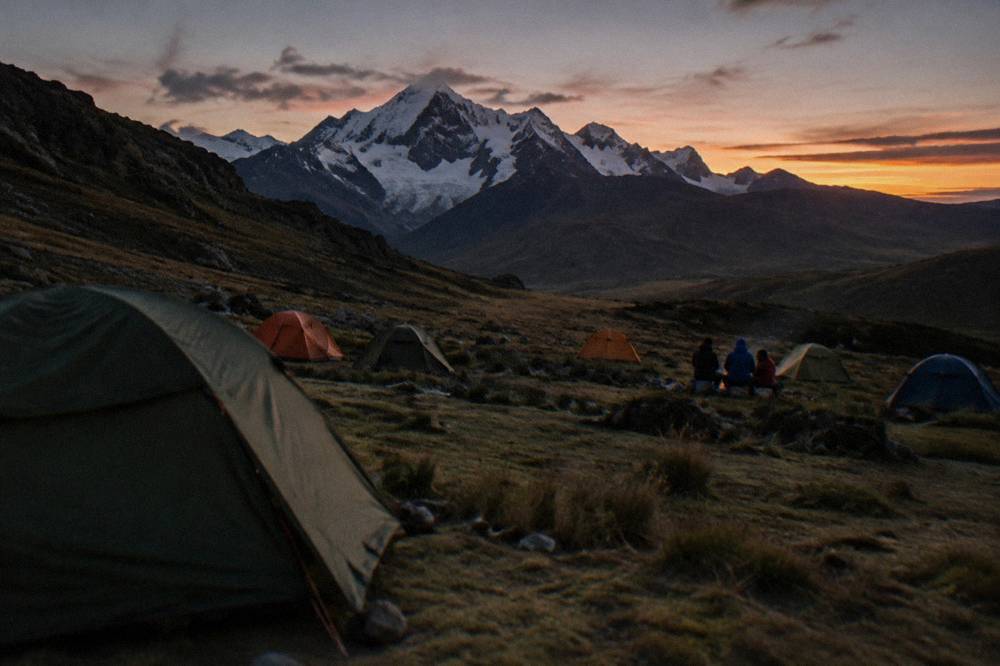
What the permit buys, beyond the trail itself, is the Machu Picchu entry at the end. That matters for arithmetic. A visitor walking in on the trail does not pay the separate citadel price, which for foreign adults is from about S/ 163 on standard routes and S/ 211 on the mountain routes, figures that include an S/ 11 SERNANP fee in force since 1 May 2026. The citadel price is a secondary-source figure too, so the official Ministry of Culture ticket platform is where the live number sits.
| Item | Figure | Source basis |
|---|---|---|
| Daily quota on the trail | 500 people, including porters and guides | Ministry of Culture resolutions |
| Permit sales channel | Licensed agencies only, never independent | RM 306-2025-MC and RM 334-2026-MC |
| Government portion of a permit | About S/ 292 (US$77 to 85) | Secondary operator sources, reported |
| Machu Picchu entry via permit | Included in the permit | Pack, Inca Trail permits |
| Annual closure | Every February | Multiple operator sources |
| 2027 permit release date | Not announced as of late September 2026 | Operator sources, expected Oct to Nov |
Can You Hike The Inca Trail Without An Agency?
No. Inca Trail permits are sold only through licensed agencies, and there is no independent or self-organised option. The 500-person daily quota includes porters and guides, and the permit that an agency buys for a trekker includes Machu Picchu entry on the arrival day.
This is the rule that separates the Inca Trail from almost every other walk in the Cusco region. Day hikes from the city, the Inca ruins around Cusco and the boleto-covered sites can all be visited independently, and several Sacred Valley walks can be done without any operator at all. The Inca Trail cannot. The resolutions behind the current rules name licensed agencies as the only sales channel, and the quota counts staff as well as trekkers, which is why high-season dates fill from the agency side first. A traveller who wants the trail should treat the agency booking as the permit application: the operator handles the government portion, the guide and porter staffing and the Machu Picchu entry that the permit carries.
The choice of agency is therefore the whole decision. The classic 4-day Inca Trail package with a Vistadome train return is this site's featured trek for the route, and its card carries the live price, rating and review figures.
The featured package is the benchmark the alternatives are measured against, and the card above prints its figures. Before any booking, it is worth checking the cancellation terms on the operator's live listing, since permits tie the trekker to a fixed start date the moment the agency secures them.
When Is The Inca Trail Open, And When Does It Close?
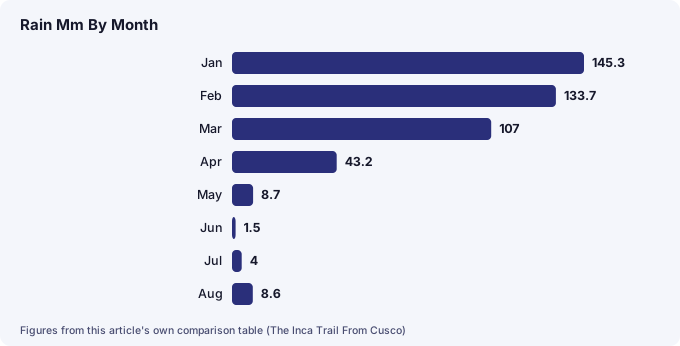
The Inca Trail is closed every February, and open the rest of the year subject to permits. The best booking window lines up with Cusco's dry season, roughly May to September, when rain at the Cuzco station falls to single-digit millimetres per month against a 707.8 mm annual normal.
February is the fixed closure, and no operator sells around it. Everything else about timing is a trade between weather, permits and price. The climate record for Cusco, a historical normal from the WMO's World Weather Information Service station "Cuzco", supplied by SENAMHI, shows the pattern plainly: December to March carries 71.9 percent of the year's 707.8 mm of rain, while May to August together bring just 22.8 mm. June and July mean minimums sit at 0.3 C and 0.1 C, with frost nights common, yet the mean daily maximum stays between 19.1 and 19.5 C, a daily swing of about 19 C in midwinter. Layers, not a single season judgement, are the answer, and the month-by-month detail sits on the Cusco weather by month page, with the wider planning picture on the best time to visit Cusco.
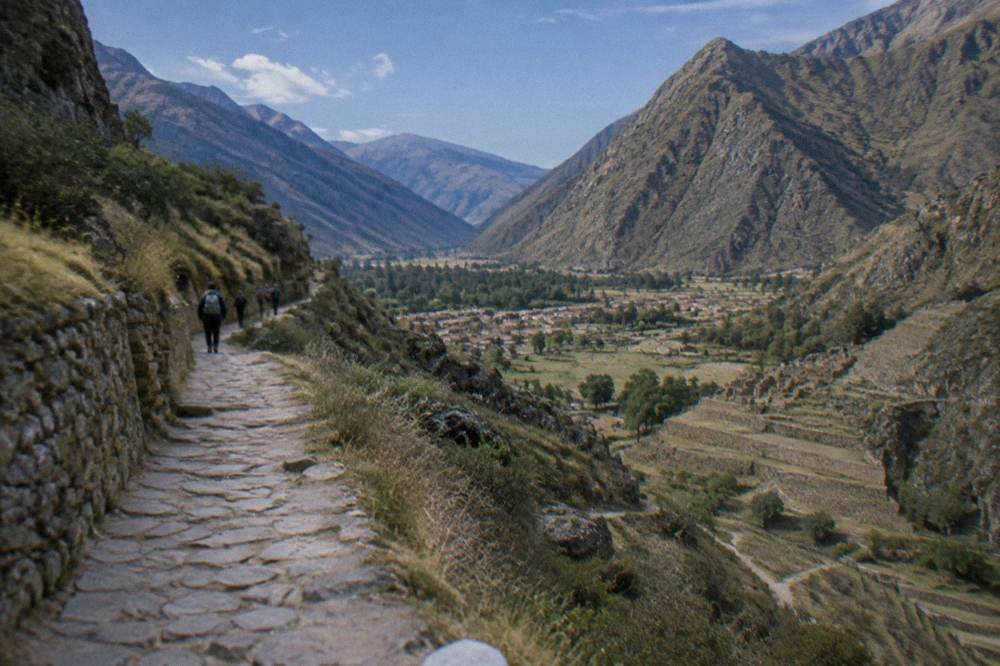
Permit pressure, not weather, is what usually decides the date. High-season permits go first, and the 2027 release had not been announced as of late September 2026, so agencies were still quoting an expected October to November window. Anyone planning around a specific month should ask the operator about permit availability before fixing the rest of the trip.
| Month | Mean max C | Mean min C | Rain mm |
|---|---|---|---|
| Jan | 18.9 | 6.6 | 145.3 |
| Feb | 18.8 | 6.5 | 133.7 |
| Mar | 19.1 | 6.2 | 107.0 |
| Apr | 19.7 | 4.9 | 43.2 |
| May | 19.8 | 2.5 | 8.7 |
| Jun | 19.5 | 0.3 | 1.5 |
| Jul | 19.1 | 0.1 | 4.0 |
| Aug | 19.8 | 1.6 | 8.6 |
| Sep | 19.8 | 3.9 | 21.8 |
| Oct | 20.9 | 5.5 | 39.4 |
| Nov | 20.7 | 6.1 | 71.9 |
| Dec | 19.4 | 6.4 | 122.7 |
WMO/SENAMHI "Cuzco" station, historical normal. Note the February column: the trail's closure month is also the wettest stretch of the year.
How Hard Is The Inca Trail Compared With Other Cusco Treks?
The Inca Trail is a multi-day, permit-gated trek that ends at Machu Picchu, and its difficulty sits alongside several Cusco alternatives: the Salkantay route, the Lares route and the Inca Jungle route all run as agency packages too, differing in terrain, altitude profile and whether they need the same permit. Only the Inca Trail carries the 500-a-day quota and the February closure.
Cusco is a trekking marketplace, and the Inca Trail is one product among several. The Salkantay routes, sold as 4-day and 5-day packages from this site's roster, are the common alternative when Inca Trail permits run out, and the Lares route with hot springs runs as a 4-day package. The Inca Jungle route packages biking and other activities into a 4-day format. None of these print their itinerary figures in prose on this page: each product card carries its own price, rating, review count and duration, rendered from verified listing data. What can be said generally is that every one of them starts from the Cusco region at high altitude, which makes the acclimatisation question, covered below, part of the difficulty for all of them. The full index of guides sits on Things To Do In Cusco Peru.
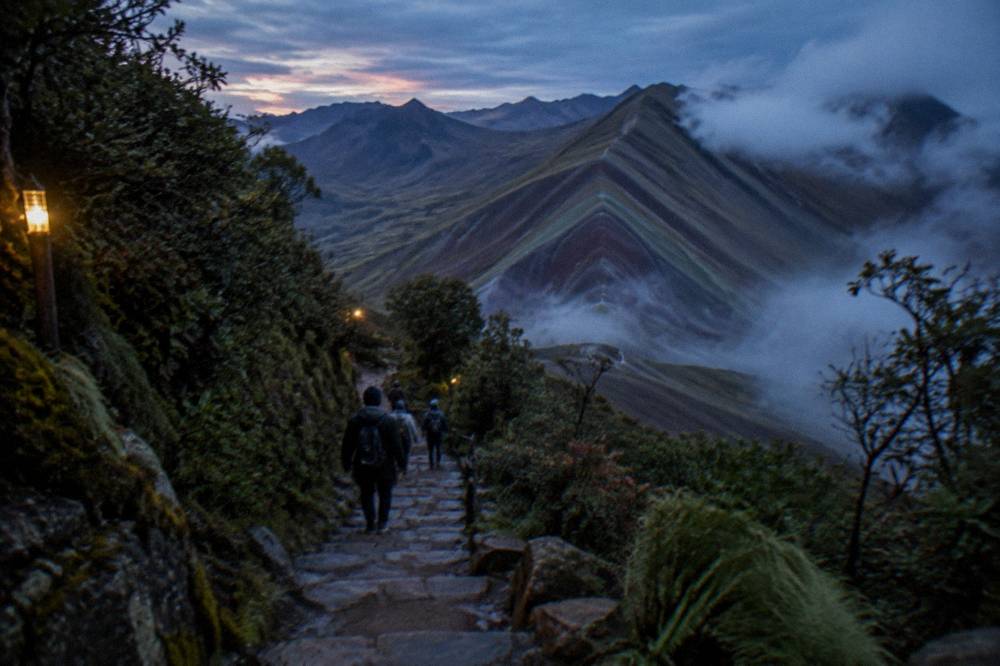
The honest comparison points that the verified pack does support are these. First, the Inca Trail is the only one of these routes with a hard daily cap and a fixed annual closure. Second, Machu Picchu sits at 2,430 m, lower than Cusco at 3,335 m, so the trail's finish is downhill in altitude terms from where the trek begins. Third, the citadel's own rules now shape the last morning: the guide is recommended rather than mandatory, and the entry is tied to a named circuit on the ticket.
| Trek route from Cusco | Permit regime | February status | Ends at |
|---|---|---|---|
| Inca Trail | Licensed agency only, 500 a day including staff | Closed every February | Machu Picchu |
| Salkantay | Standard agency booking, no trail quota in the pack | Runs in February | Machu Picchu |
| Lares | Standard agency booking, no trail quota in the pack | Runs in February | Train connection to Machu Picchu |
| Inca Jungle | Standard agency booking, no trail quota in the pack | Runs in February | Machu Picchu |
What Are The Rules At Machu Picchu After The Trail?
Machu Picchu runs three circuits and ten routes since 1 June 2024, with a guide recommended but not mandatory under RM 000334-2026-MC, tickets that are nominal and unchangeable beyond one passport-number typo, and a 2026 daily capacity of 4,500, rising to 5,600 on listed high-season dates. The Inca Trail permit covers entry.
The circuit system is the part trekkers meet first. Since 1 June 2024 the citadel has three circuits and ten routes: Circuit 1 Panoramico (routes 1-A Machu Picchu Mountain, 1-B Upper Terrace, 1-C Intipunku Gate, 1-D Inka Bridge, the last two high season only), Circuit 2 Clasico (2-A designed route, 2-B Lower Terrace) and Circuit 3 Realeza (3-A Huayna Picchu Mountain, 3-B, 3-C Great Cavern, 3-D Huchuypicchu, the last two high season only). The five-circuit claim that still circulates is wrong and has been since that 2024 change.
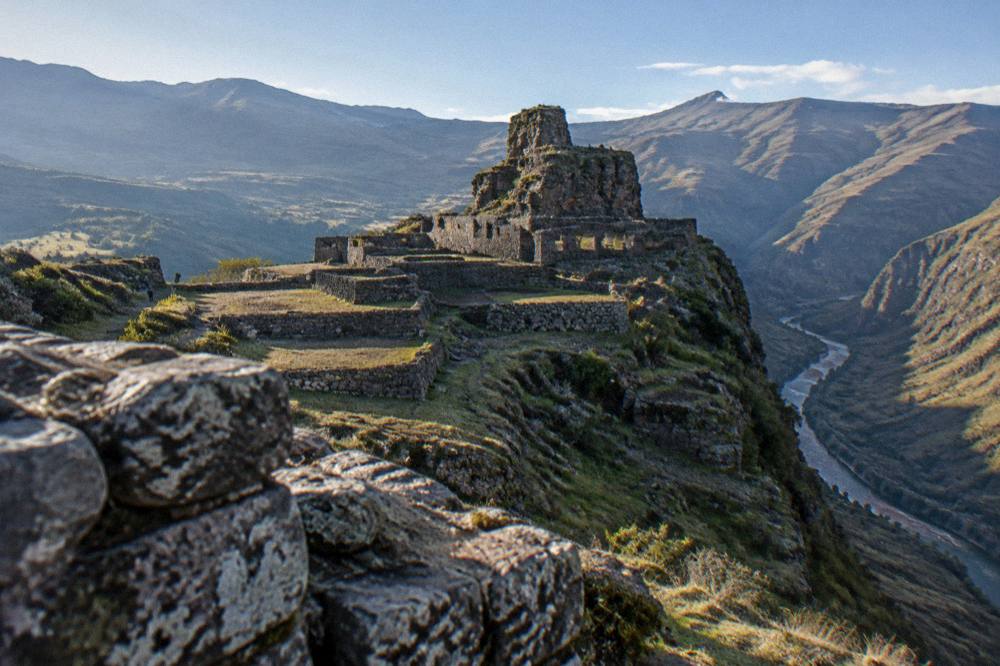
The September 2026 resolution rewrote the guide rule: a guide is recommended, not mandatory, per Article 17.1 as rewritten by RM 000334-2026-MC. Tickets are nominal, valid only for the stated date, hour, circuit and holder, bought against the original official ID or passport, and the only correction allowed is a single passport-number typo. Since 22 September 2026 the ticket platform has been running a 30-day trial of a new sales system: no three-hour prior reservation, 15 minutes to complete payment before the slot is released, and the ticket issued in the visitor's name on payment. That is how the system is working now, and the platform shows the live position.
The code of conduct is a 25-item list on the official site: bags over 40 x 35 x 20 cm, food, tripods, selfie sticks, umbrellas, drones, hard-sole shoes, strollers, loud noise and leaving the circuit are all prohibited. Entry runs on hourly slots reported at 06:00 to 15:00, the citadel closes at 17:30, and the standard routes allow a maximum stay of about 2 h 30, a secondary-source figure since the official table is published as an image.
| Circuit | Routes | Notes |
|---|---|---|
| 1 Panoramico | 1-A Machu Picchu Mountain, 1-B Upper Terrace, 1-C Intipunku Gate, 1-D Inka Bridge | 1-C and 1-D high season only |
| 2 Clasico | 2-A designed route, 2-B Lower Terrace | The classic view routes |
| 3 Realeza | 3-A Huayna Picchu Mountain, 3-B, 3-C Great Cavern, 3-D Huchuypicchu | 3-C and 3-D high season only |
| 2026 dates | Daily capacity |
|---|---|
| 1 January | 5,600 |
| 2 to 5 April | 5,600 |
| 19 June to 2 November | 5,600 |
| 30 to 31 December | 5,600 |
| All other days | 4,500 |
Machu Picchu is not covered by the Boleto Turistico, the COSITUC ticket that covers 16 other sites including Saqsayhuaman and the Sacred Valley circuit; the details of that ticket sit on the Boleto Turistico page. The Inca Trail permit is the one document that bundles trail access and citadel entry together.
How Should You Prepare For The Altitude Before The Trail?
Cusco sits at 3,335 m at the Plaza de Armas, and the CDC Yellow Book names it as a rapid-ascent destination, advising graded ascent where possible, a low threshold for considering acetazolamide when ascent is abrupt, and no alcohol for the first 48 hours at high altitude. Acetazolamide is a prescription decision with a doctor.
The CDC's ascent rule, citing the Wilderness Medical Society, is to avoid going from low altitude to a sleeping altitude of 2,750 m or more in a single day; once above 3,000 m, sleeping altitude should move by no more than 500 m per night, with an extra night for every 1,000 m gained. The CDC also notes that in some cases, Cusco among them, travellers can descend to elevations lower than the airport to sleep for the first night or two and then begin the ascent, which can remove the need for medication. On incidence, the CDC's wording is that rates of altitude illness approach 50 percent in abrupt-ascent situations where staged acclimatisation is not feasible, not for all visitors, and no sourced figure exists for how many days acclimatisation takes. The fuller treatment of the topic, including the medication questions to take to a doctor, is on the Cusco altitude page.
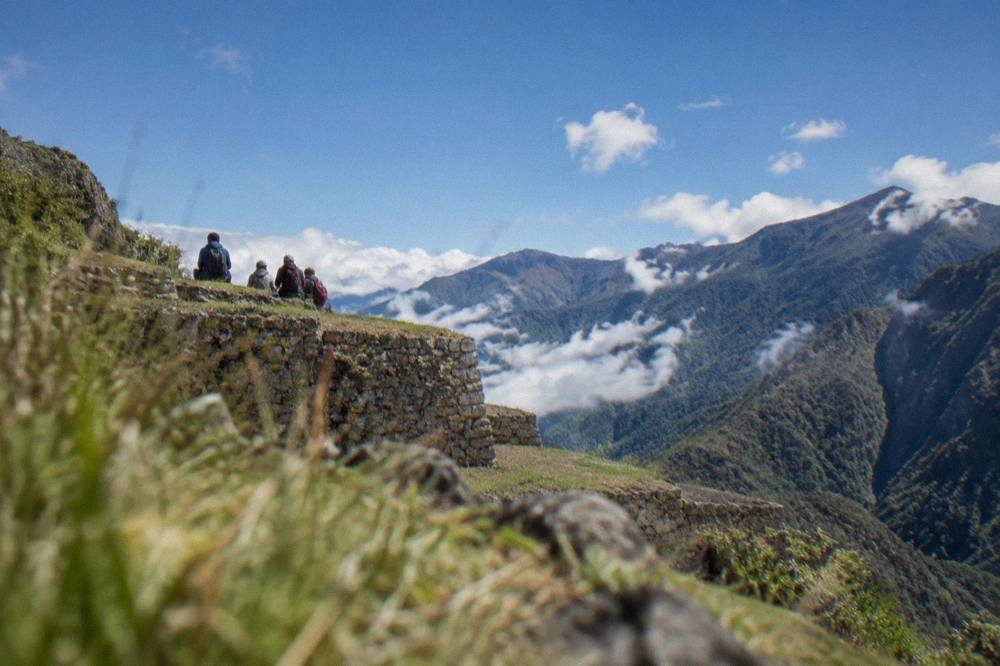
Practically, the trail's own altitude profile is not a figure the verified pack holds, so no elevation claims for individual passes appear here. What the pack does hold is the geography: the trek starts from the Cusco region, the citadel at the end is at 2,430 m, and the city trekkers fly into is the high point of the journey. Days in Cusco before the trek cost little and settle the body, and the where to stay in Cusco page covers the neighbourhoods that make an early arrival easy.
What Does A Trek Package From Cusco Actually Include?
An Inca Trail package from a licensed agency bundles the government permit, guide and porter staffing, camping and food logistics on the trail, and Machu Picchu entry on arrival, with the train return, hotel nights and city transfers varying by package. The listing is the only place the exact inclusions and price are printed.
The featured package on this site is the classic 4-day Inca Trail trek with the return by Vistadome train, and its card carries the current price, rating and review count. Around it, the roster carries the alternatives trekkers compare it with: the Salkantay routes at 4 and 5 days, the Lares route with hot springs, and the Inca Jungle route that trades the permit trail for a multi-activity format. Each product's inclusions differ, and the honest way to compare is listing against listing, because the figures render from verified data rather than from a writer's summary.
Two things are constant across every Inca Trail package: the permit inside it, and the February wall. Everything else, from the train class on the return to the hotel star rating in Aguas Calientes, is a package variable. The train side of the trip belongs to a sibling topic on this network, so it gets one line here: two operators, PeruRail and Inca Rail, run the Cusco-area stations at Poroy and San Pedro, with Ollantaytambo as the valley hub, and fares are shown on the operator's own channels.
What Else Should You See Around Cusco Before Or After The Trail?
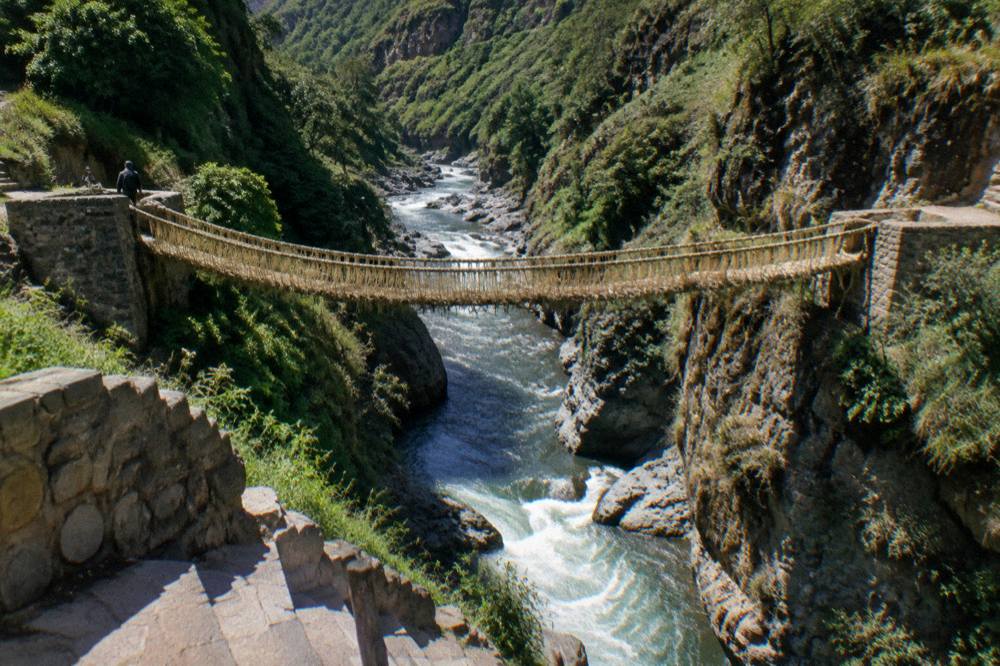
Cusco's own sights fill the days before and after the trek: the Plaza de Armas and the colonial centre standing on Inca stone foundations, the boleto-covered ruin circuits at Saqsayhuaman, Q'enqo, Puka Pukara and Tambomachay, and day trips from Rainbow Mountain to the Q'eswachaka bridge, the last woven Inca bridge, whose 2026 renewal fell on 2 to 4 July with the festival on 5 July.
The acclimatisation days are not dead time. The city's ruin circuit, the museums on the Boleto Turistico's city circuit and the markets are all walkable from the historic centre, and the what to eat in Cusco page covers the food side of those days. Beyond the city, the day-trip menu splits by altitude and appetite: Rainbow Mountain at about 5,000 m with a community fee of S/ 25 to S/ 30 in cash for foreigners, Palccoyo at 4,900 m with a reported fee of about S/ 20, and the Sacred Valley sites at lower elevations than the city itself. The Q'eswachaka bridge, a hand-woven grass bridge renewed each year by local communities, is reached on a full-day trip from Cusco, and a private day trip to it is one of the products in this site's roster.
For evenings, the city runs on a different rhythm from the trail. A pisco sour mixology session in the historic centre is one of the roster's smaller evening products, and the wider after-dark picture is on the Cusco nightlife page.
Common Questions About The Inca Trail From Cusco
Can I buy an Inca Trail permit myself?
No. Permits are sold only through licensed agencies under the Ministry of Culture's resolutions, with a daily quota of 500 people including porters and guides. The agency booking is the permit application.
Is the Inca Trail open all year?
No. The trail closes every February. Every other day of the year is subject to permit availability, with high-season dates filling first through the agencies.
Does the Inca Trail permit include Machu Picchu?
Yes. The permit includes entry to Machu Picchu on arrival, so trekkers do not buy a separate citadel ticket for the arrival day. The citadel's circuit, date and hour rules still apply to the entry.
How much does the permit cost?
The government portion is reported at about S/ 292, about US$77 to 85, a secondary-source figure. The total trek price is whatever the operator's live listing shows, and this site's product cards render those figures from verified data.
Is a guide mandatory at Machu Picchu now?
No. Under RM 000334-2026-MC, a guide is recommended, not mandatory, per Article 17.1 as rewritten in September 2026. On the Inca Trail itself, the licensed agency structure means a guide comes with the permit.
When do 2027 permits go on sale?
The release date had not been announced as of late September 2026. Agencies expected an October to November announcement, and the authorities publish the dates; check with an operator before fixing travel dates.
The Inca Trail from Cusco rewards early paperwork more than early alarm clocks: the permit window, the February closure and the high-season quota decide the trip long before the first stone step does, and the rest, from the citadel circuits to the train home, follows from the rules laid out above.