Can You Walk From Cusco To Sacsayhuaman?
Yes, you can walk from Cusco to Sacsayhuaman: the site sits above the city at 3,701 m, entry is on the Boleto Turistico Circuit I, and this guide covers the route, the ticket and the timing.
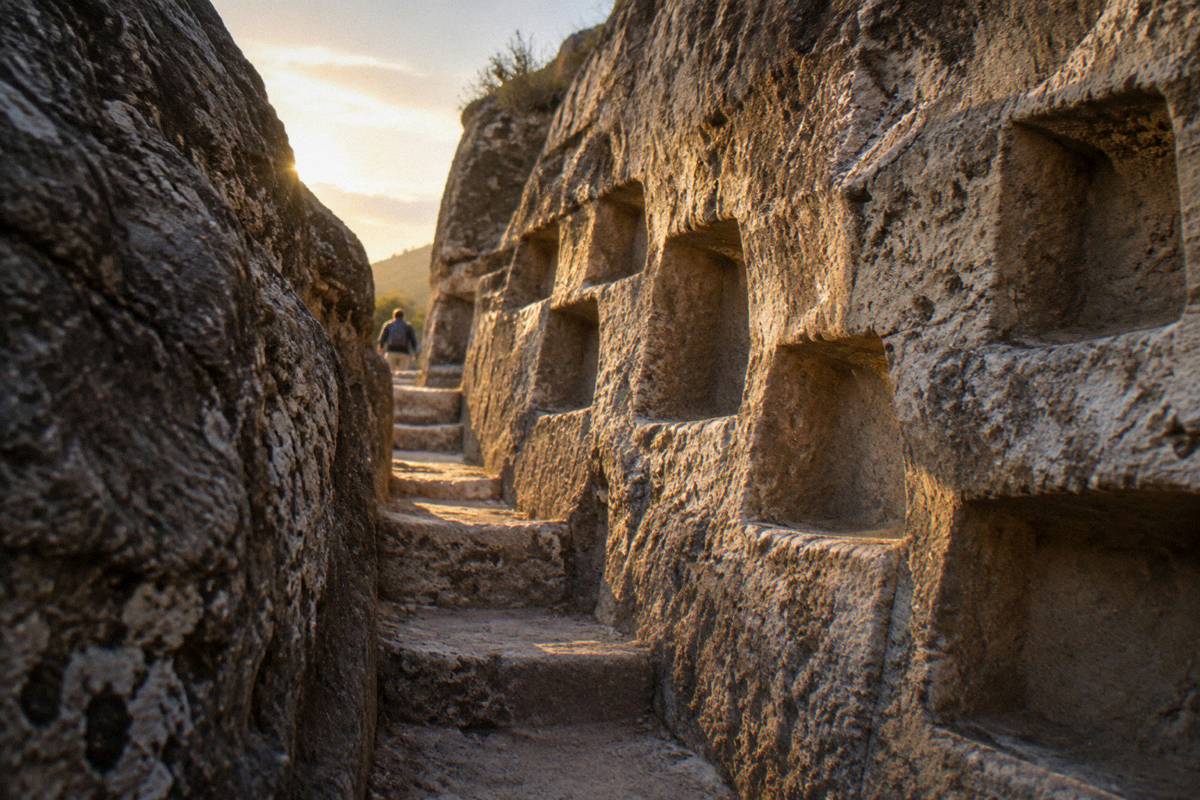
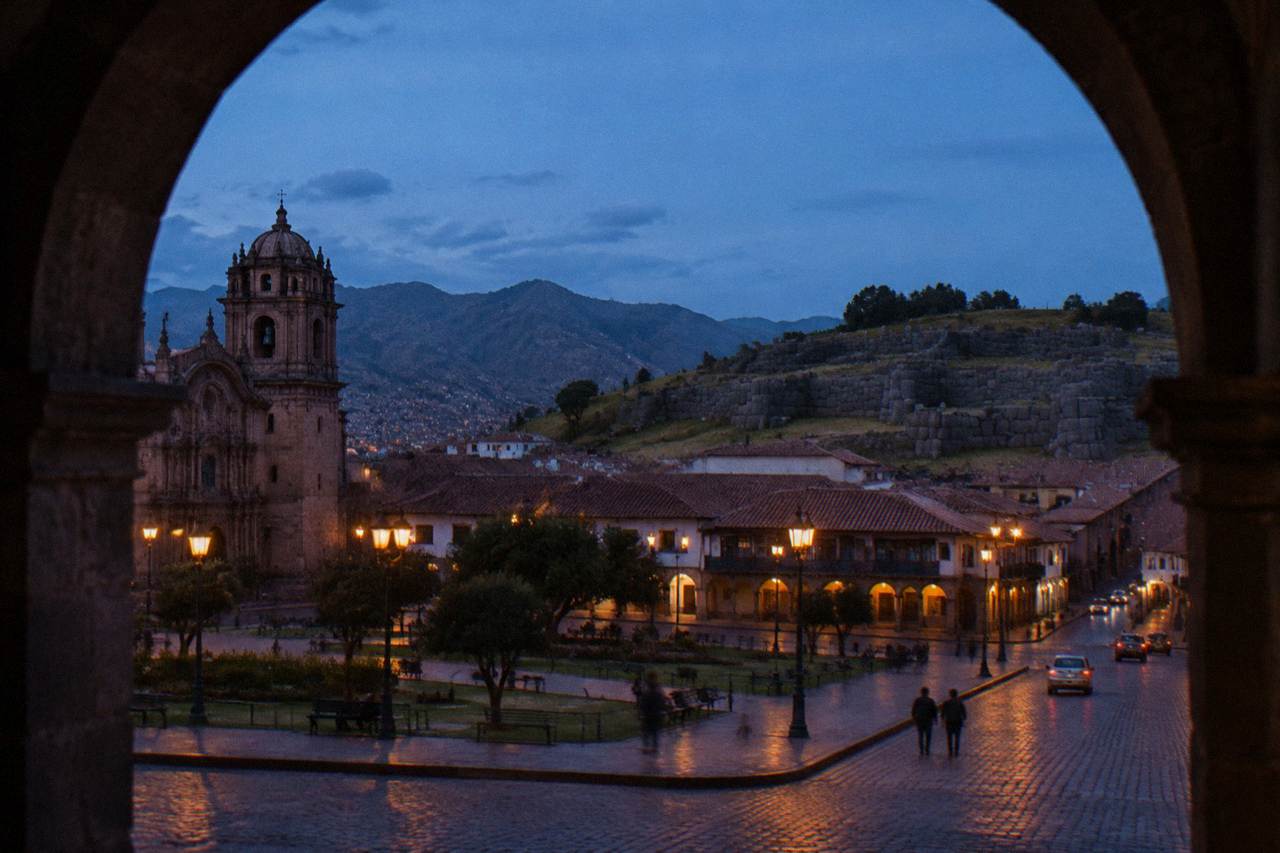
Sacsayhuaman sits on the hillside directly above Cusco, so close that its stone terraces appear in almost every photograph taken from the city's red rooftops. The Plaza de Armas stands at 3,335 m, and the site's own elevation, 3,701 m, is the first number any walker should know: the path up is a real climb, on foot, through thin Andean air. The Ministry of Culture lists Sacsayhuaman's opening hours as 07:00 to 18:00, and the site drew 944,008 recorded visits to its explanada in 2025, according to the MINCETUR open dataset. Walking up is entirely possible, and this page sets out what the verified sources say about the route, the ticket and the timing, with the wider site coverage in the Sacsayhuaman attraction guide.
Can You Walk From Cusco To Sacsayhuaman?
Yes, you can walk from Cusco to Sacsayhuaman, and it is a normal way to arrive. The site sits above the city at 3,701 m against the Plaza de Armas at 3,335 m, so the walk is a steady uphill climb on a paved path and stairways, and the entrance gate keeps the same hours as the site, 07:00 to 18:00 per the Ministry of Culture listing.
No rule, ticket or transport requirement blocks a walker. The COSITUC, the body that runs the Boleto Turistico, sells partial Circuit I tickets at the gate itself and at its counter on Av. El Sol 103, so a walker can buy entry on the spot in person. What the walk does demand is respect for the altitude: the climb covers several hundred metres of elevation on a route that starts at an elevation many walkers have only just flown into. The CDC Yellow Book names Cusco as a rapid-ascent destination and advises graded ascent where possible, a point covered in more depth in how likely altitude sickness is in Cusco.
Two practical notes for visitors. First, Sacsayhuaman is not free: it is on the Boleto Turistico, Circuit I, and the gate checks tickets. Second, the explanada is a working ceremonial space, not just a viewpoint: Inti Raymi holds its main ceremony here every 24 June, and a scheduled papal encounter is set for the site on 15 November 2026, both of which change what a walking visit looks like on those dates.
How Hard Is The Walk Up From Cusco To Sacsayhuaman?
The walk is short in distance but real in effort, because it climbs from the city at 3,335 m to the site at 3,701 m on paths and stone stairways. The air thins as the path rises, and the CDC advises graded ascent and avoiding alcohol for the first 48 hours at high altitude, which matters more here than the length of the trail.
The honest way to size the walk is by the two elevations, not by a time estimate: 3,335 m at the Plaza de Armas, 3,701 m at the site. What the sources do say is enough to plan by. The mean daily maximum in Cusco stays between 18.8 and 20.9 C all year, but the mean minimum falls to 0.3 C in June and 0.1 C in July, with frost common in those months, so an early start means a cold climb and a warm arrival at the top.
The CDC Yellow Book's ascent rules are the medical frame for the effort: avoid going from low altitude to a sleeping altitude of 2,750 m or more in a single day, and once above 3,000 m, move sleeping altitude by no more than 500 m per night. A walker who flew into Cusco the previous afternoon has already broken the first rule by landing, which is why the CDC also notes that travellers in Cusco can descend to lower elevations to sleep for a night or two before beginning their ascent. Acetazolamide is described as a prescription decision with a doctor, not a walking-tour purchase. More on pacing appears in how long it takes to acclimatise in Cusco.
| Elevation point | Metres | Source |
|---|---|---|
| Cusco Plaza de Armas | 3,335 | PromPeru |
| Cusco airport | 3,310 | OpenStreetMap |
| Sacsayhuaman | 3,701 | Wikipedia |
| Machu Picchu citadel | 2,430 | Official Machu Picchu site |
| Aguas Calientes town | 2,040 | Wikipedia |
The table makes one point quickly: Sacsayhuaman is higher than the city, and both are far higher than Machu Picchu, a comparison unpacked in whether Cusco is higher than Machu Picchu. Walkers who feel the climb should treat that as altitude data, not as a reason to push on.
Do You Need A Ticket To Enter Sacsayhuaman?
Yes, Sacsayhuaman needs a Boleto Turistico, Circuit I, which costs S/ 70 for a foreign tourist as a partial ticket, or it is covered by the S/ 130 integral ticket valid 10 days. The COSITUC sells both in person only, at the Av. El Sol 103 counter daily 07:30 to 18:00 and at most included sites, and never online.
Circuit I covers the four ruins cluster above and around the city: Saqsaywaman, Q'enqo, Puka Pukara and Tambomachay. The partial ticket is reported as valid for 1 day, while the integral covers all 16 boleto sites across the three circuits and needs a minimum of three days to use fully, per the COSITUC FAQ. Children enter free to age 9, and ages 10 to 17 pay the student price with ID. Only students receive a discount: the COSITUC FAQ states there is no teacher or youth-card reduction.
| Boleto Turistico option | Price, foreign adult | Validity | Sites |
|---|---|---|---|
| Partial Circuit I | S/ 70 (about US$20) | 1 day (reported) | Saqsaywaman, Q'enqo, Puka Pukara, Tambomachay |
| Partial Circuit II | S/ 70 (about US$20) | 2 days (reported) | 8 city museums and sites |
| Partial Circuit III | S/ 70 (about US$20) | 2 days (reported) | Pisac, Ollantaytambo, Chinchero, Moray |
| Integral | S/ 130 (about US$38) | 10 days | All 16 sites |
Two warnings from the banned-facts list are worth repeating because they appear wrong on many competing pages. The boleto does not cover Machu Picchu, which sells separately on the Ministry of Culture's ticket platform. And the boleto is not sold online at all: any page offering an e-ticket for the COSITUC product is not the official channel. The counter hours, 07:30 to 18:00 daily, line up with the site hours, 07:00 to 18:00, so a walker can buy at the counter on the way up.
What Is The Best Route From Cusco To Sacsayhuaman On Foot?
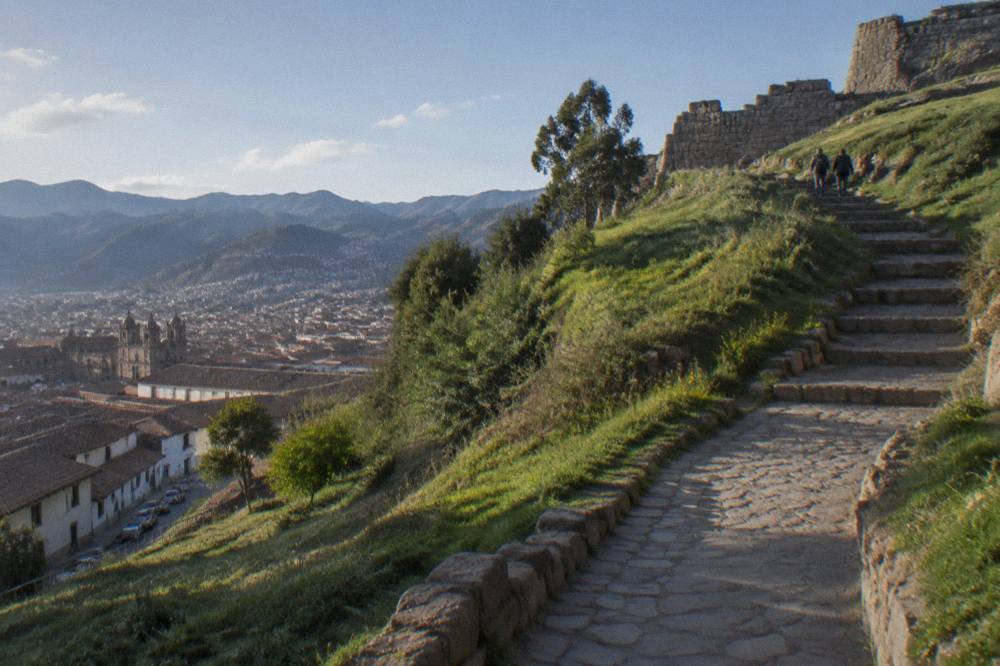
The walking route leaves the historic centre uphill through the San Blas side of the city and joins the paved path and stone stairways that lead to the Sacsayhuaman entrance, with the site gate open 07:00 to 18:00. No verified source publishes an official trail map or a measured distance, so the route is best described by its start, its direction and its gate.
The climb starts from streets around San Blas and Cristo Blanco, the white statue that marks the ridge above the city, and the path runs up the hillside toward the site's main entrance. The stonework at the top is the reward: the site's terrace walls are among the most photographed Inca masonry in the region, and the explanada hosts both the Inti Raymi main ceremony each 24 June and a scheduled papal encounter on 15 November 2026. On those dates the character of the walk changes, with event infrastructure and crowds on the hill. More of these guides are collected on Things To Do In Cusco Peru.
A few planning points worth noting:
- The four ruins of Circuit I sit in a line above the city, so a walker can extend the day toward Q'enqo, Puka Pukara and Tambomachay, a loop covered in the four ruins of Cusco.
- The dry season, roughly May to September, brings clear days, cold nights and frost in June and July; the wet season, roughly November to March, carries 71.9 percent of the year's 707.8 mm of rain at the WMO and SENAMHI station, so afternoon walks in those months meet mud and showers.
- The UK FCDO advises against walking alone in quiet areas or at night in Peruvian cities, which bears on the descent: the site closes at 18:00 and the walk down after dark is the moment to plan around, a point expanded in whether Cusco is safe to walk at night.
When Is The Best Time Of Day To Walk To Sacsayhuaman?
Morning is the best window, because the site opens at 07:00 and the mean daily maximum stays between 18.8 and 20.9 C all year, while June and July nights fall to around freezing. An early walk climbs in cool air and reaches the terraces before the midday sun and the tour groups, and the 18:00 closing time leaves a wide margin for the descent.
The climate normals from the WMO and SENAMHI station record frame the choice. Mean minima sit at 0.3 C in June and 0.1 C in July, so the first hour after opening is genuinely cold in the dry season, but the daily swing is large: the mean maximum stays near 19 C even in those months, and the sun at 3,701 m is strong. In the wet season the same logic applies in reverse: mornings are the drier half of the day, with December to March carrying the bulk of the year's rain.
Crowd timing also argues for the morning. The MINCETUR dataset records 944,008 visits to the explanada in 2025, and the site is a fixed stop on the standard half-day city tours that cover the four ruins, so the terraces fill through the middle of the day. A walker who arrives early sees the stones in low light and can be back down for lunch, which in Cusco is its own attraction: the street food walk by Curious Monkey, Check availability, is one way to spend the afternoon after a morning climb.
Should You Walk Up Or Join A Tour To Sacsayhuaman?
Walking up suits visitors who are acclimatised, want the viewpoint path and can buy the Circuit I ticket in person, while a tour suits those who want the four ruins of Circuit I covered in one ticket window with transport back down. Both are legitimate: the CDC's advice is about altitude pacing, not about how anyone arrives, and the site itself treats walkers and tour groups identically at the gate.
The tour question is really a pacing question. A walker who has been in Cusco for a day or two, following the CDC's preference for graded ascent, gets more from the climb than someone who landed that morning, for whom a vehicle up and a slow descent may be the wiser order. The half-day city tours on this site's roster cover Sacsayhuaman with Q'enco and the other Circuit I ruins, and the free GuruWalk walks of the historic centre cover the city side of the story on a tip basis. Neither replaces the boleto: every visitor, walked or driven, shows the same Circuit I ticket.
For visitors stringing the walk into a bigger plan, the natural extensions are the Sacred Valley, covered in whether the Sacred Valley is worth visiting, and the wider mistakes visitors make, listed in what to avoid in Cusco. The climb itself, done in the morning with a ticket bought in person, is one of the simplest and most rewarding walks in the city, and it needs nothing beyond sensible shoes, water and the S/ 70 partial ticket.
Common Questions About Walking From Cusco To Sacsayhuaman
Can you walk from Cusco to Sacsayhuaman?
Yes. The site sits above the city at 3,701 m against the Plaza de Armas at 3,335 m, reached by a paved uphill path and stone stairways, with the gate open 07:00 to 18:00 and Circuit I tickets sold in person.
Is Sacsayhuaman free to enter?
No. It is on the Boleto Turistico, Circuit I, at S/ 70 for a foreign tourist as a partial ticket or covered by the S/ 130 integral ticket valid 10 days, sold in person only at the Av. El Sol 103 counter and at most included sites.
How high is Sacsayhuaman compared with Cusco?
Sacsayhuaman stands at 3,701 m and the Plaza de Armas at 3,335 m, so the walk climbs several hundred metres. Both are far higher than the Machu Picchu citadel at 2,430 m.
Is the walk safe?
The UK FCDO advises against walking alone in quiet areas or at night in Peruvian cities, so the descent is the part to plan: the site closes at 18:00, and daylight matters on the hillside paths.
Can you buy the ticket at the site?
Yes. The COSITUC sells the Boleto Turistico at most included sites as well as at its counter on Av. El Sol 103, daily 07:30 to 18:00, but never online.
Can you keep walking to the other ruins?
Yes. Circuit I covers Saqsaywaman, Q'enqo, Puka Pukara and Tambomachay in a line above the city, all on the same S/ 70 partial ticket, reported valid for 1 day.