The Twelve Angled Stone
A single finely fitted block on Hatunrumiyoc street has a name of its own in a city full of Inca walls. Here is what the verified sources say about the stone, where it sits, what a visit costs, and how it fits into a wider tour of Cusco's stonework.
Short answer
The twelve angled stone is a large, finely fitted polygonal block set into an Inca wall on Hatunrumiyoc street in central Cusco, Peru, on the slope between the Plaza de Armas and the San Blas hill. It is free to see from the public street, with no ticket, gate or guide required.
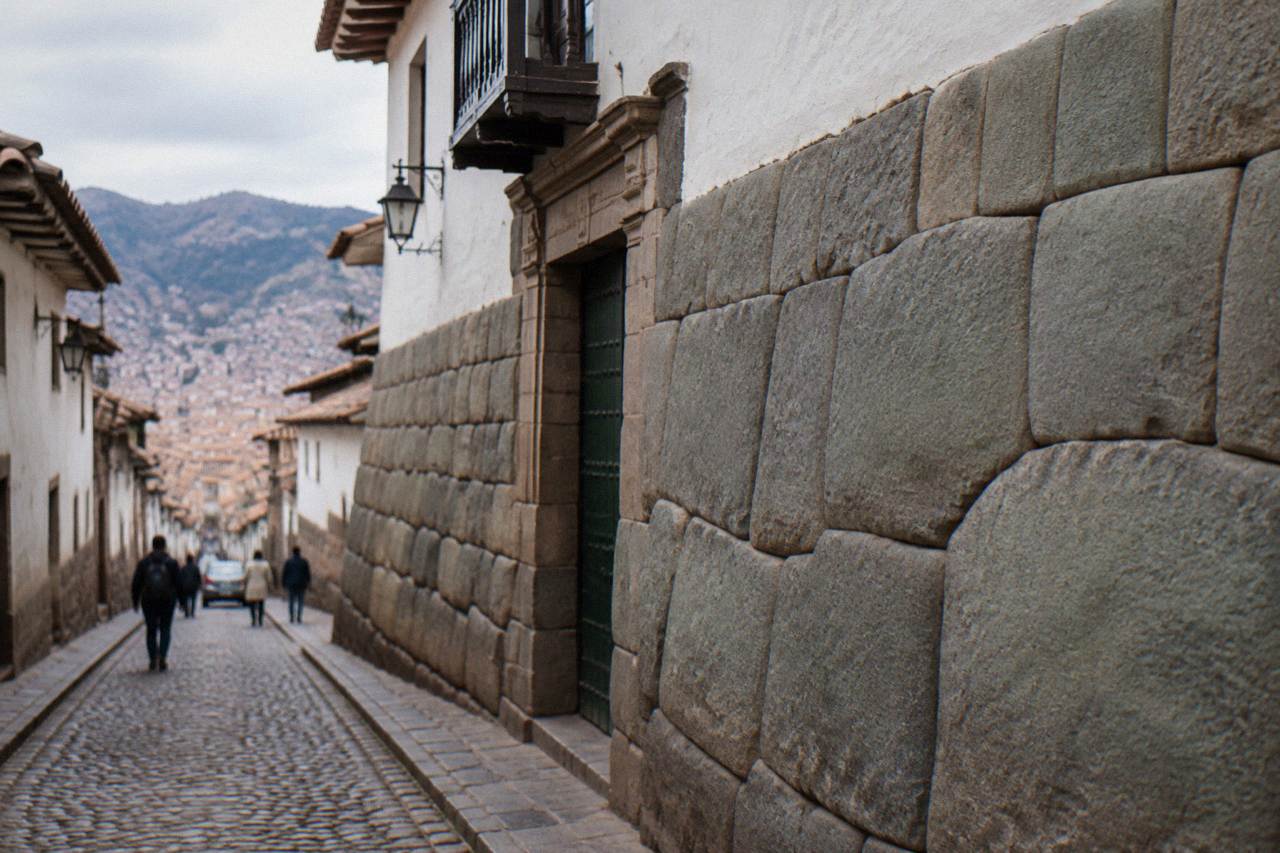
On Hatunrumiyoc street in Cusco, the historic city in the Andes of southern Peru, one block of Inca masonry has a name of its own. The twelve angled stone is a large, finely fitted polygonal block set into a wall of Inca stonework on the narrow street that climbs from the Plaza de Armas, at 3,335 m, toward the San Blas hill to the east. There is no ticket office, no gate and no barrier: the wall belongs to the street, and the street belongs to everyone who walks up it.
What Is The Twelve Angled Stone In Cusco?
The twelve angled stone is a large, finely fitted polygonal block set into an Inca wall on Hatunrumiyoc street in central Cusco, Peru, on the slope between the Plaza de Armas and the San Blas hill. It is part of a surviving stretch of Inca masonry, and it is one of the few individual stones in the city that carries its own name.
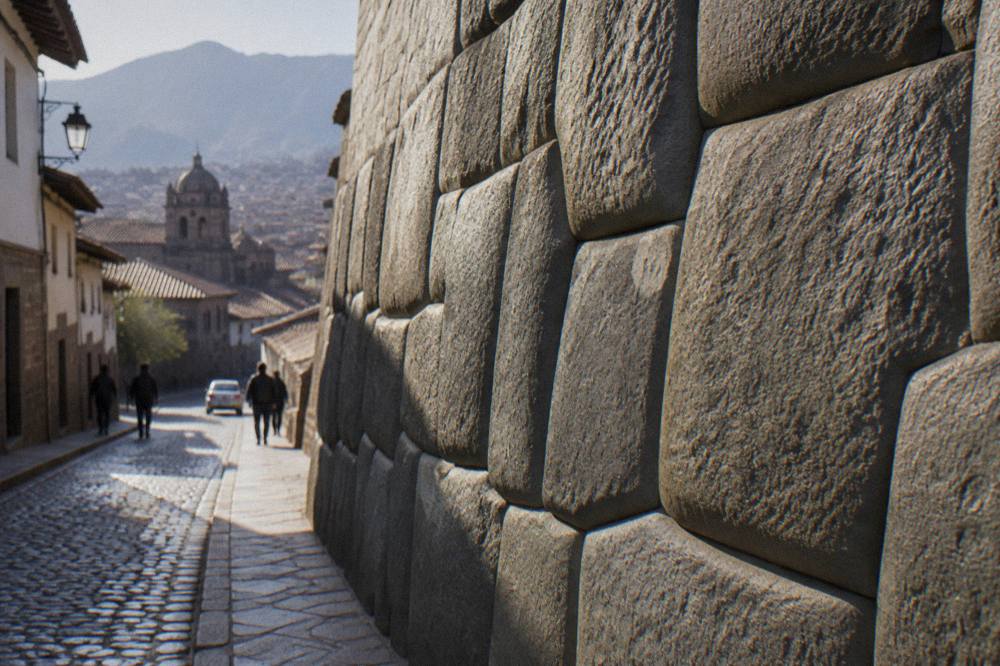
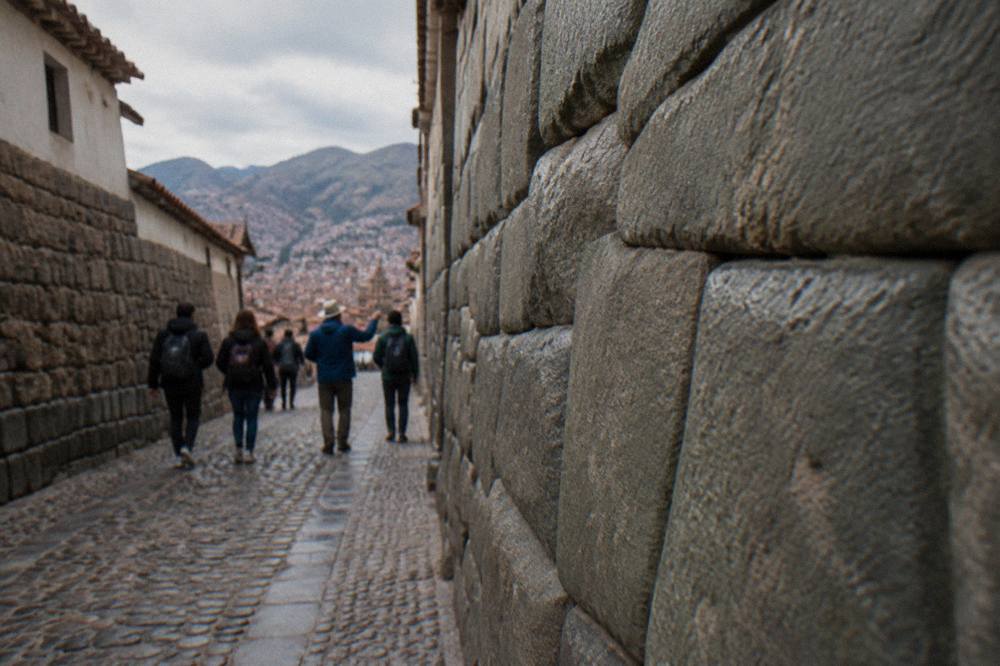
The name comes from the corners on the block's visible face. What a visitor actually sees is simpler and more striking than any number: a single block, cut so that its many edges interlock with the blocks around it, sitting in a wall that has held together through centuries of street life above it.
The wall is street architecture, not a museum piece behind glass. It runs along Hatunrumiyoc at eye level and below, so the masonry is read the way Cusco reads its own history, at the pace of a walk. Cusco was the Inca capital, and colonial buildings stand on Inca stone foundations along streets like this one; UNESCO inscribed the City of Cusco on the World Heritage List in 1983, and walls of this kind are part of what that inscription recognises. The stone is a small, public fragment of that much larger fabric, which is exactly why it costs nothing and never closes.
Where Is The Twelve Angled Stone, And How Do You Find It?
The stone sits in the wall that runs along Hatunrumiyoc, a narrow street that climbs from the Plaza de Armas, at 3,335 m, toward the San Blas hill to the east. There is no gate, no counter and no sign of a ticket: the wall stands on a public street, so the route is simply the walk up from the square, with the San Blas quarter above it.
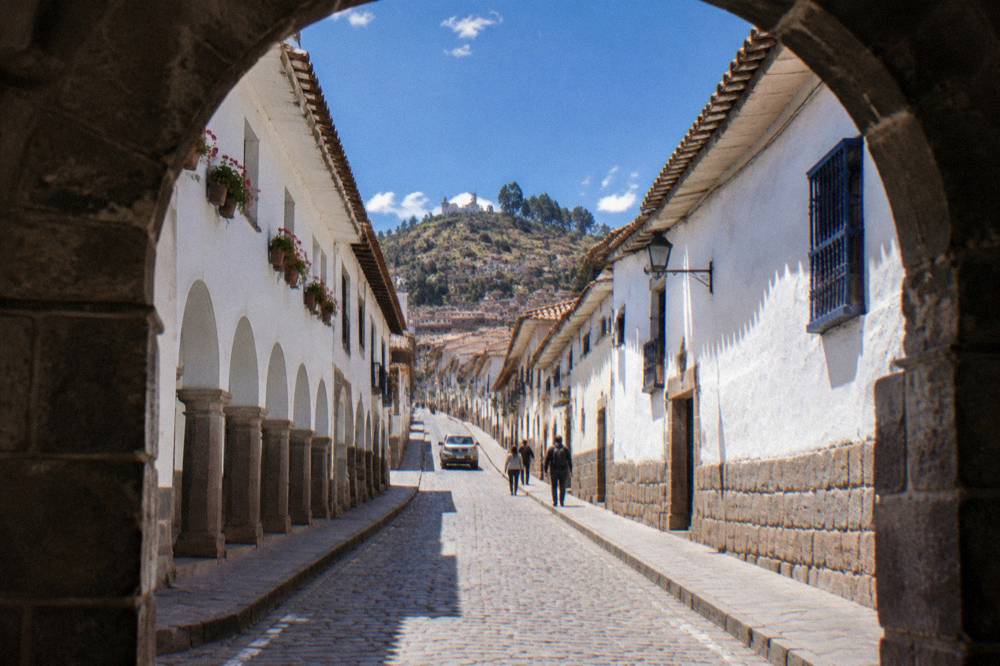
The Plaza de Armas is the old centre of Cusco, and San Blas sits on the hill to its east, so the walk to the stone is a climb. Hatunrumiyoc runs along this slope, and the Inca wall lines the street for much of it. The stone itself is not hidden: it sits in the wall at street level, and the flow of the street, facades above and paving below, frames it. The San Blas quarter above, with its historic church, is the natural next stop, and the whole route is walked rather than driven.
Two practical notes come from the sources rather than from folklore. First, altitude: the CDC Yellow Book names Cusco, at about 3,350 m by its figure, as a rapid-ascent destination and prefers graded ascent, so the climb from the square is worth taking slowly, and the CDC advises avoiding alcohol for the first 48 hours at high altitude. Second, timing: the street is public, so there is no opening hour to plan around, only daylight and weather, which the section on seasons below covers in full.
For visitors who want the stone and the region around it handled in one booking, the tours below are the roster's picks for pairing the historic centre with the Sacred Valley and the high mountains.
How Much Does It Cost To See The Twelve Angled Stone And The Sites Around It?
Nothing. The twelve angled stone stands on a public street in Cusco, so there is no admission charge, no ticket and no opening hour to plan around. The costs start with the sites around it: the COSITUC integral Boleto Turistico is S/ 130 for a foreign adult, about US$38, and each of the three partial circuits is S/ 70, about US$20.
The Boleto Turistico is the ticket that covers the major Inca sites and city museums, and the COSITUC tarifario is specific about it. The integral ticket costs S/ 130 for a foreign adult and S/ 70 for a foreign student, and covers 16 sites. The three partial circuits cost S/ 70 each: Circuit I covers Saqsaywaman, Q'enqo, Puka Pukara and Tambomachay; Circuit II covers the city museums, including the Museo de Sitio Qorikancha, plus Tipon and Pikillaqta; Circuit III covers Pisac, Ollantaytambo, Chinchero and Moray. National tourists pay S/ 70 for the integral ticket and S/ 40 for partials. Children are free to age 9, and ages 10 to 17 pay the student price with ID.
| Ticket | Foreign adult price | Validity | What it covers |
|---|---|---|---|
| Integral (BTCI) | S/ 130 (about US$38) | 10 days | All 16 sites |
| Foreign student integral (BEE) | S/ 70 | 10 days | All 16 sites |
| Partial Circuit I, Saqsaywaman | S/ 70 | 1 day | Saqsaywaman, Q'enqo, Puka Pukara, Tambomachay |
| Partial Circuit II, City | S/ 70 | 2 days | Museo de Sitio Qorikancha, Museo Historico Regional, Museo de Arte Contemporaneo, Museo de Arte Popular, Centro Qosqo de Arte Nativo, Monumento a Pachacutec, Tipon, Pikillaqta |
| Partial Circuit III, Sacred Valley | S/ 70 | 2 days | Pisac, Ollantaytambo, Chinchero, Moray |
| National tourist integral | S/ 70 | 10 days | All 16 sites |
| National partials | S/ 40 | 1 to 2 days | One circuit |
One rule catches visitors out every year: COSITUC does not sell the Boleto Turistico online. The FAQ on the ticket's own site states it is sold in person only, at the central counter at Av. El Sol 103, open daily from 07:30 to 18:00, and at most of the included sites. Validity starts on the day of purchase, and the ticket's own FAQ notes that covering all 16 sites takes a minimum of three days, which is why the 10-day integral window exists.
A few central museums sit outside the boleto's 16-site list or charge separately, and peru.travel carries their current admission figures.
| Museum | Adult admission | Included in Boleto Circuit II |
|---|---|---|
| Qorikancha museum (Santo Domingo) | S/ 20 | Yes, as Museo de Sitio Qorikancha |
| Museo Inka | S/ 20 | No |
| Museo de Arte Precolombino (MAP) | S/ 20 general, S/ 10 students | No |
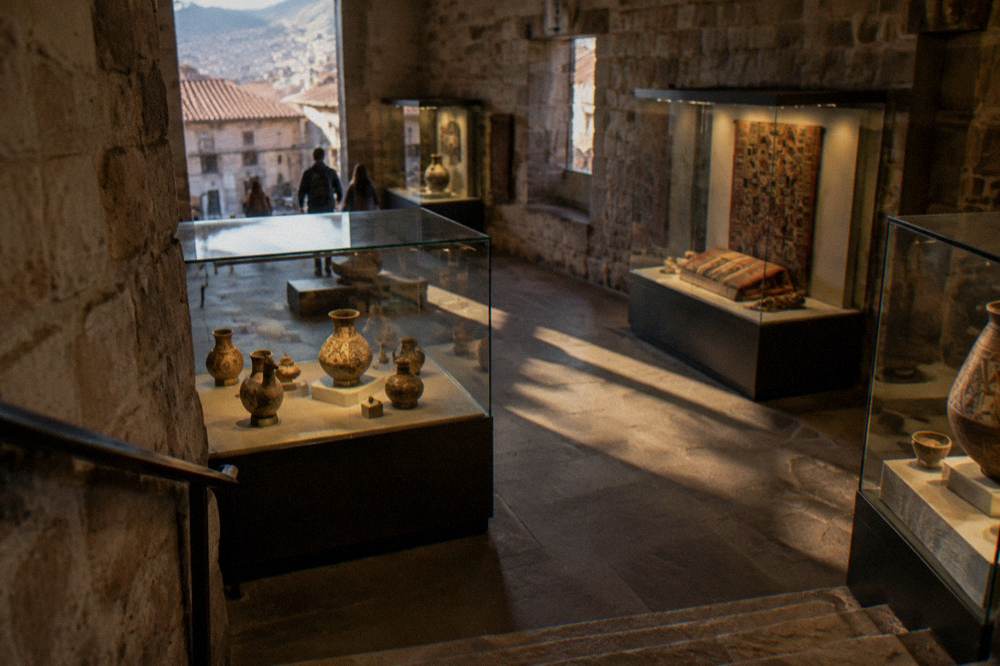
The Museo Inka, which peru.travel lists with hours of Monday to Friday 09:15 to 16:00 and Saturday 09:15 to 14:00, is the natural pairing for the stone: it holds the city's principal Inca collections and sits inside the same walkable centre. The costs around the stone, in short, are the costs you choose. A market-and-cooking morning is one way to turn the walk into a full day, and the card below shows this page's featured pick for it.
Which Other Inca Stonework In And Around Cusco Compares With It?
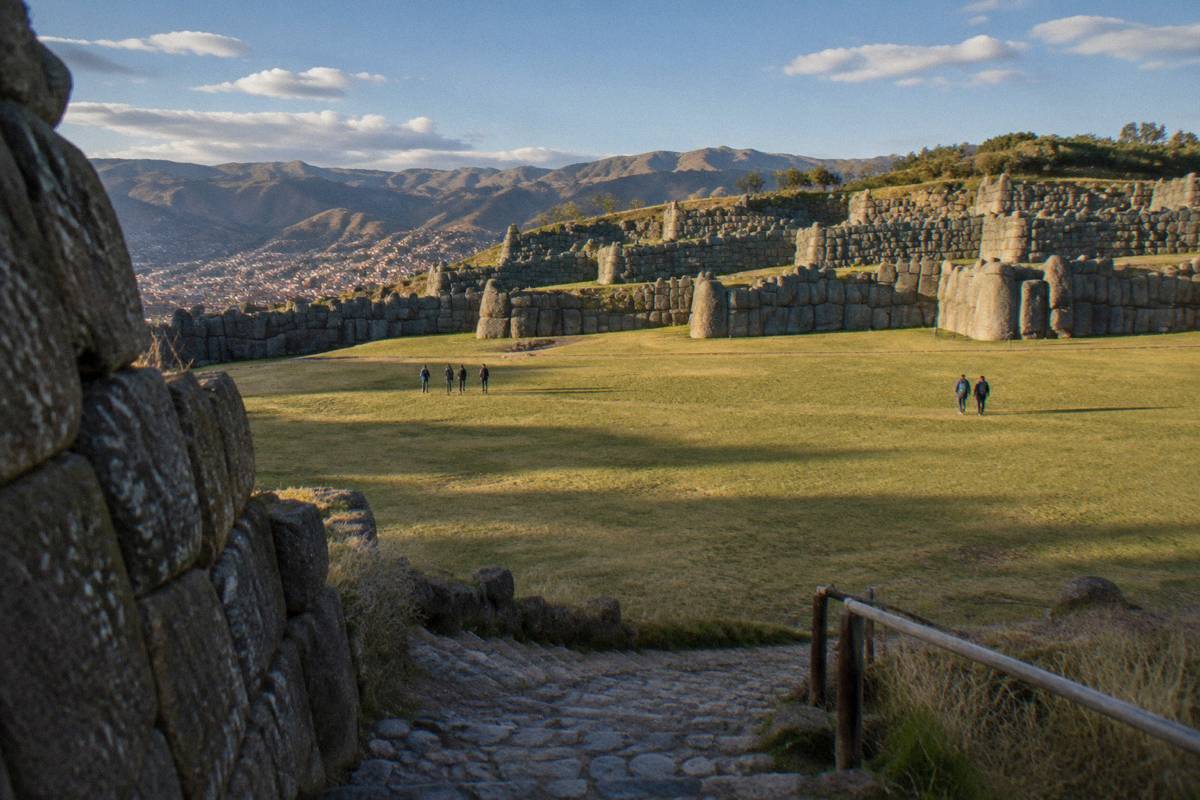
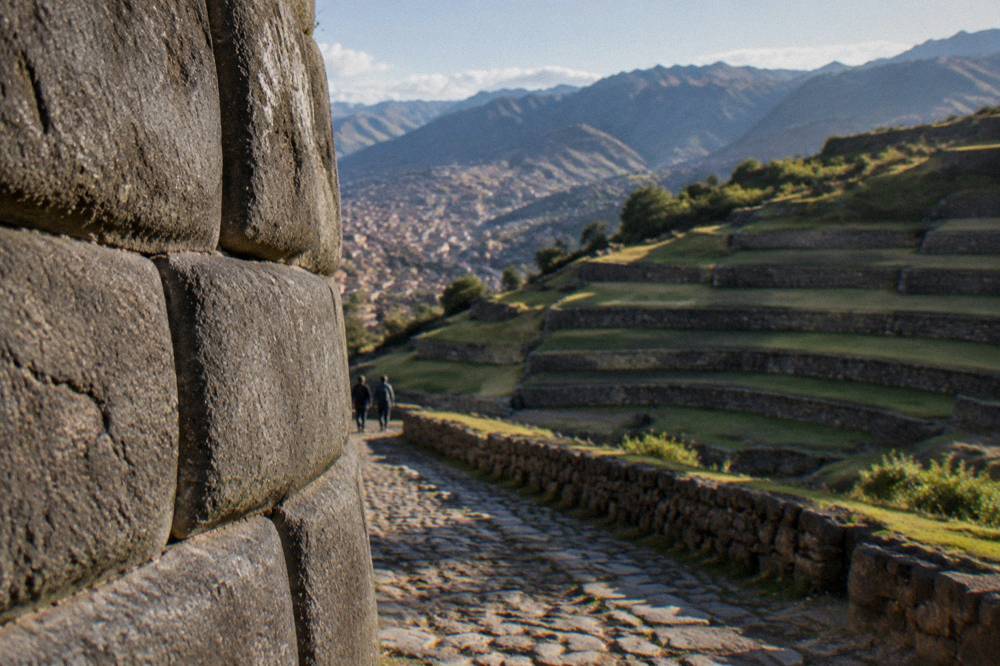
The same masonry survives at scale at Sacsayhuaman, at 3,701 m on the hills north of the city, inside the Qorikancha compound in the centre, and across the Sacred Valley at Ollantaytambo, Pisac and Moray, all of them on Boleto Turistico circuits. Machu Picchu, at 2,430 m and lower than Cusco, is sold separately on the Ministry of Culture ticket platform.
Sacsayhuaman is the headline comparison. It stands on the hills to the north of the centre, on Boleto Circuit I, with peru.travel listing hours of 07:00 to 18:00, and its walls carry the same polygonal logic as the Hatunrumiyoc block at a scale that no photograph quite conveys. The MINCETUR open dataset counted 944,008 visits to the Saqsaywaman explanada in 2025, one of the highest figures of any site in the Cusco region. The Sacsayhuaman guide on this site covers it in full.
In the centre itself, Qorikancha holds the other half of the story: a colonial church standing over the foundations of the Inca compound, with the site museum at S/ 20 or through Circuit II of the boleto. The Qorikancha page walks through it. Further out, the Sacred Valley sites carry the same masonry into the countryside: Ollantaytambo at 2,792 m, Pisac at 2,972 m and Moray at 3,385 m, all on Circuit III, with Chinchero completing the set. The Ollantaytambo, Pisac and Moray pages each break down what a visit involves.
| Site | Elevation | Ticket | Recorded visits 2025 |
|---|---|---|---|
| Saqsaywaman | 3,701 m | Boleto Circuit I | 944,008 |
| Ollantaytambo | 2,792 m | Boleto Circuit III | 891,526 |
| Moray | 3,385 m | Boleto Circuit III | 773,916 |
| Pisac | 2,972 m | Boleto Circuit III | 560,578 |
| Machu Picchu citadel | 2,430 m | Separate ticket, Ministry of Culture platform | 1,479,506 |
The visit figures come from the MINCETUR open dataset of recorded site visits, not unique travellers, but the ordering is instructive: the valley ruins and Sacsayhuaman draw numbers in the same league as each other, while Machu Picchu stands apart. Machu Picchu has exactly one page on this site, the Machu Picchu day trip guide; its tickets are sold on the Ministry of Culture platform or in person at Machu Picchu Pueblo, and under the rules in force since September 2026 a guide is recommended rather than required. A full Sacred Valley day is the standard way to see the circuit III sites in one booked run, and the card below is the roster's pick for it.
When Is The Best Time To Visit Hatunrumiyoc Street In Cusco?
Any hour. Hatunrumiyoc is a public street with no gate, so the stone is visible day and night, and the choice is really about weather and light. The dry season runs roughly May to September, with June and July nights cold enough for frost, and the wet season roughly November to March, when December to March carries 71.9 percent of the year's rain at the Cuzco station.
Cusco is in the Southern Hemisphere at high altitude, so the year runs opposite to Europe and North America: June to August is winter, dry and clear by day and cold by night, never a northern summer. The WMO station record for Cuzco, supplied by SENAMHI, shows mean daily maxima between 18.8 and 20.9 C in every month of the year, while the mean July minimum falls to 0.1 C and June to 0.3 C, a daily swing of about 19 C in midwinter. SENAMHI's own pages note that frosts peak in June and July. Rain is the real seasonal marker: December to March delivers 508.7 mm of the annual 707.8 mm, and May to August together bring just 22.8 mm.
| Month | Mean max C | Mean min C | Rain mm |
|---|---|---|---|
| Jan | 18.9 | 6.6 | 145.3 |
| Feb | 18.8 | 6.5 | 133.7 |
| Mar | 19.1 | 6.2 | 107.0 |
| Apr | 19.7 | 4.9 | 43.2 |
| May | 19.8 | 2.5 | 8.7 |
| Jun | 19.5 | 0.3 | 1.5 |
| Jul | 19.1 | 0.1 | 4.0 |
| Aug | 19.8 | 1.6 | 8.6 |
| Sep | 19.8 | 3.9 | 21.8 |
| Oct | 20.9 | 5.5 | 39.4 |
| Nov | 20.7 | 6.1 | 71.9 |
| Dec | 19.4 | 6.4 | 122.7 |
Crowds follow the calendar as much as the rain. Inti Raymi falls on 24 June each year, running from Qorikancha through the Plaza de Armas to the main ceremony at Sacsayhuaman, and the city fills around it. The festival calendar the sources hold is worth a glance when choosing dates.
| Event | Date | Where |
|---|---|---|
| Inti Raymi | 24 June each year | Qorikancha, Plaza de Armas, Sacsayhuaman |
| Virgen del Carmen | 15 to 18 July | Paucartambo |
| Q'eswachaka bridge renewal | 2 to 4 July 2026, festival 5 July 2026 | Apurimac River |
| Santurantikuy craft fair | 24 December | Plaza de Armas |
| Pope Leo XIV visit, scheduled | 15 November 2026 | Cusco and Sacsayhuaman |
The monthly rhythm is visible in the MINCETUR counts for Machu Picchu in 2025: October was the busiest month at 154,105 visits and February the quietest at 79,806, a near two-to-one swing that the historic centre shares in softer form. The monthly visitor figures on the home page of Things To Do In Cusco Peru track that same rhythm as each month's data is released.
Can You See The Twelve Angled Stone On A Free Walking Tour Of Cusco?
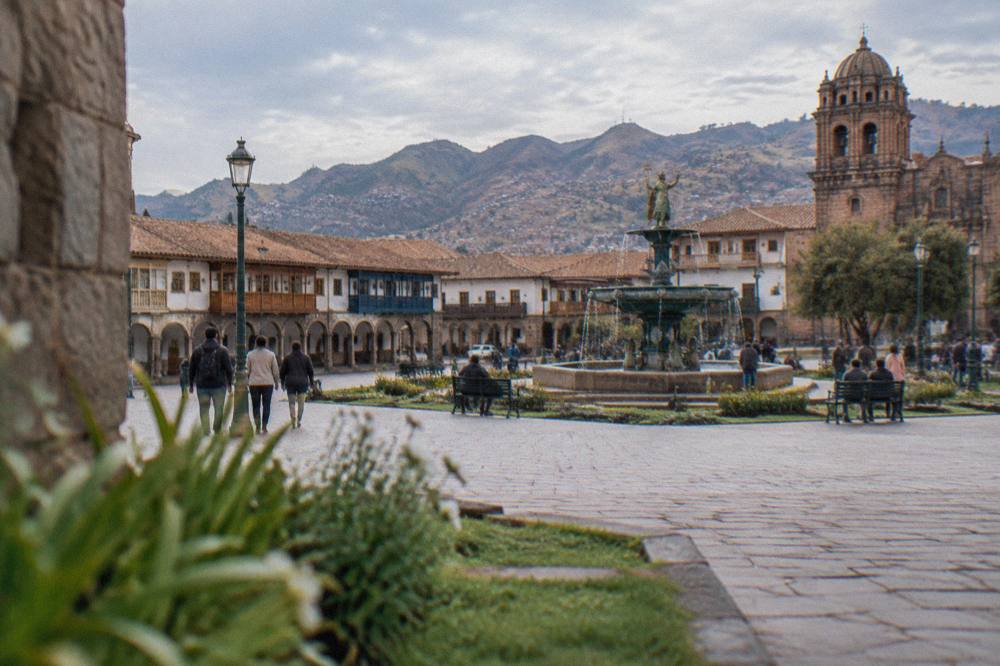
Yes. GuruWalk lists several free, tip-based walking tours of the Cusco historic centre, including Free Tour in Cusco with local guide by Frank Emerson, the YANA WALKING TOUR of the historic centre by Yana Tour Operator, and The Best Historical Free Tour in Latin America by Erick. The roster also carries paid guided walks, and none of the free walks charges a booking fee.
GuruWalk is a separate platform for free tours, and naming it is the honest way to describe these: they are tip-based walks run by independent gurus, not this site's products. The roster holds seven GuruWalk entries for Cusco, all free or pay-what-you-want, and the historic centre is their shared ground, the same streets the stone sits on. Frank Emerson's Free Tour in Cusco with local guide carries the deepest review history of the seven; Yana Tour Operator's YANA WALKING TOUR covers the historic centre; Erick's The Best Historical Free Tour in Latin America is a GuruWalk award winner. For the remaining walks, the titles are listed without a named guru, and no guide should be invented for them.
The paid side of the roster covers the same ground with a licensed guide and a set route, including a short guided walk with experienced local guides and a half-day city tour that takes in the four ruins above the city. How to Peru, a travel guide site, puts tips for free walking tours at about S/ 20 to S/ 40 per person, which is the working etiquette for the GuruWalk format. The card below is the roster's most-reviewed free walk.
A paid walk is the simpler option for anyone who wants a fixed start time, and the short guided walking tour with local guides is the roster's entry for it. Either way, the stone sits on the natural route between the Plaza de Armas and San Blas, so it costs a guide nothing to include and a visitor nothing to see.
What Else To Do Around The Twelve Angled Stone In The Cusco Historic Centre?
Close to the stone, the historic centre holds the San Pedro market, the ChocoMuseo chocolate workshop, the Museo Inka and the Sapantiana aqueduct, with the Cristo Blanco viewpoint on the hill above; the Planetarium Cusco runs evening sessions with round-trip transport included. A cooking class that starts with a market walk ties several of these stops into one booked morning.
The San Pedro market is the centre's working food market, and it anchors the food side of a day around the stone. The reported on-the-ground prices are modest: a menu del dia runs about S/ 8 to 15, a cup of coca tea about S/ 2 to 5, and a tourist SIM about S/ 5 to 15 with a data pack at S/ 20 to 40. An airport taxi to the centre is reported at about S/ 15 to 25. These are reported ranges rather than official tariffs, and they move.
| Item | Reported range | Note |
|---|---|---|
| Menu del dia | S/ 8 to 15 | Market and neighbourhood restaurants |
| Coca tea | S/ 2 to 5 | Market stalls and cafes |
| Airport taxi to the centre | S/ 15 to 25 | Agreed before the ride |
| Tourist SIM | S/ 5 to 15 plus S/ 20 to 40 for data | Street-level vendors |
| Free walking tour tip | S/ 20 to 40 per person | How to Peru's etiquette guide |
The ChocoMuseo runs the bean-to-bar chocolate workshops that the roster carries as bookable products, and the Museo Inka at S/ 20 is the deepest collection of Inca material in the centre. On the hills to the north, beside Sacsayhuaman, the Cristo Blanco viewpoint looks back over the city, and the Sapantiana aqueduct is a quiet colonial-era water structure on a walkable lane. The Planetarium Cusco, out from the centre, lists shared evening sessions from S/ 90 for adults on its own site, with round-trip transport included and the group starting at 17:30.
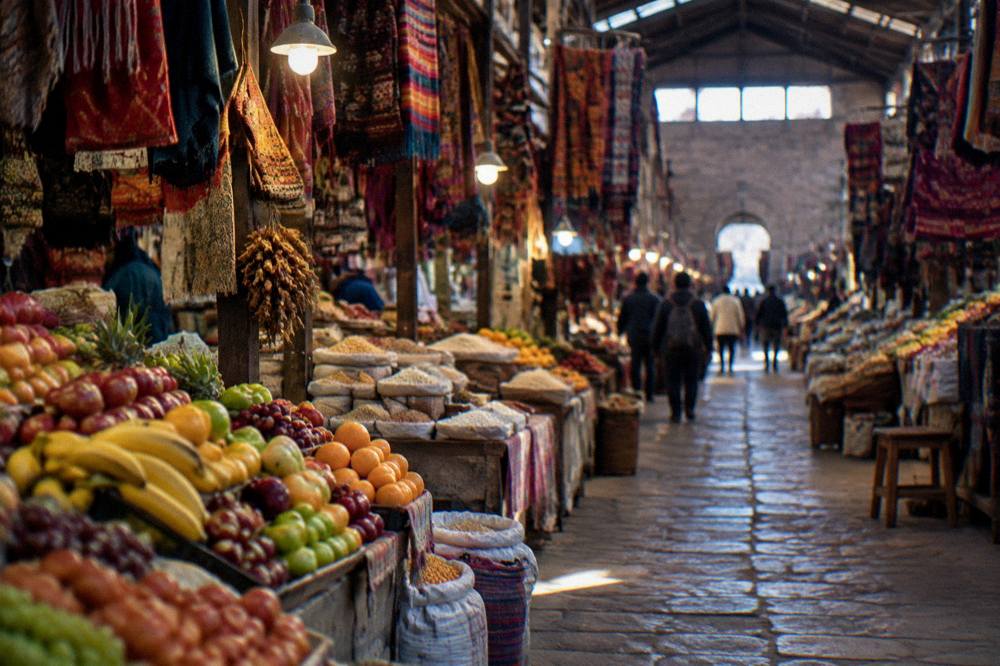
The featured pick on this page is the cooking class and San Pedro market tour, which the roster lists as a small-group class pairing a market visit with hands-on cooking. It is the natural booked complement to a morning on the stones: the walk up Hatunrumiyoc, the market below, and a kitchen at the end of it. Check availability on the operator's live listing if the date matters to your plans.
For a second day, the high mountains are the other half of the Cusco region. Vinicunca, the Rainbow Mountain, stands at about 5,000 m with a community entry fee of S/ 25 to 30 for foreigners in cash, and the Red Valley extension is the quieter walk beside it. The card below is the roster's pick for that day.
Taken together, these three picks cover the three layers of a Cusco visit: the food and market culture of the centre, the Sacred Valley circuit of Inca sites, and the high-mountain day that the region is a gateway to. The stone on Hatunrumiyoc is where all three of those days begin, on a public street, for nothing.
Common Questions About The Twelve Angled Stone In Cusco
Is the twelve angled stone free to visit?
Yes. The stone sits in an Inca wall on Hatunrumiyoc, a public street in central Cusco, so there is no admission charge, no ticket and no gate. The paid sites nearby, such as Sacsayhuaman and the Sacred Valley ruins, are covered by the Boleto Turistico, which COSITUC sells in person only.
Can you touch the twelve angled stone?
The wall stands at street level and the verified sources record no barrier around it. It remains part of the historic centre's original fabric, inscribed by UNESCO in 1983 as part of the City of Cusco, so it is there to be seen rather than handled.
How old is the twelve angled stone?
No verified construction date is published for this wall. Cusco was the Inca capital, and Inca masonry survives across the city and the region, but no official source attaches a year to this specific block, so this page states none.
Is the twelve angled stone part of Sacsayhuaman?
No. Sacsayhuaman stands at 3,701 m on the hills north of the centre and is covered by Boleto Turistico Circuit I, while the twelve angled stone is a wall in the streets of the historic centre, on the slope between the Plaza de Armas and the San Blas hill. The two share a masonry tradition, not a site.
Is the twelve angled stone worth seeing in Cusco?
It costs nothing, it never closes, and it sits on the natural walking line between the Plaza de Armas and the San Blas quarter, so it fits into any centre visit without planning. Visitors with more time pair it with Qorikancha, the Museo Inka and the San Pedro market, all inside the same walkable core.