Should I Go To Sacred Valley Or Machu Picchu First?
The order question for Cusco trips: whether to see the Sacred Valley or Machu Picchu first, based on elevations, train times, ticket rules and the CDC's graded-ascent advice.
Cusco, the historic city in the Andes of southern Peru at 3,335 m on the Plaza de Armas, is the base for both the Sacred Valley and Machu Picchu, and the order in which a traveller visits them shapes the whole trip. The question is not cosmetic. Cusco sits higher than both destinations, the valley towns sit lower than the city, and the citadel sits lower again, so the sequence interacts directly with altitude, train logistics and how Machu Picchu tickets are sold. The Ministry of Culture's rules and the CDC's altitude guidance both bear on the answer, and this page sets out what those sources say.
Should I Go To Sacred Valley Or Machu Picchu First?
Most sources point the same way: spend the first days after arriving in Cusco in the Sacred Valley, then go to Machu Picchu. The valley towns sit several hundred metres lower than Cusco, which matches the CDC Yellow Book's preference for graded ascent, and Ollantaytambo, at 2,792 m, is the train hub closest to Machu Picchu, about 1 h 45 away by rail. Doing the valley first turns the trip into a gentle descent rather than a scramble back up to 3,335 m between visits.
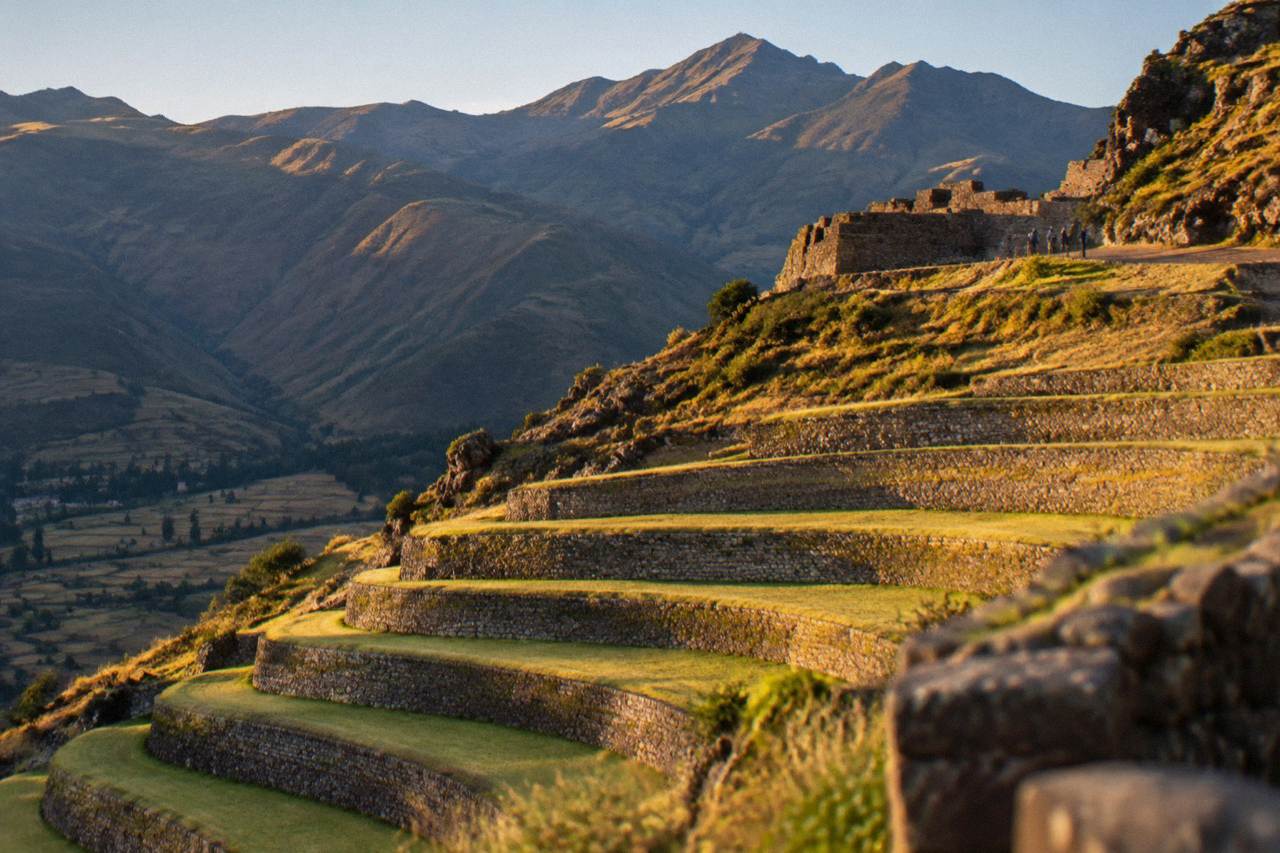
The CDC Yellow Book names Cusco, at about 3,350 m by its own figure, as a rapid-ascent destination and advises travellers to avoid going from low altitude to a sleeping altitude of 2,750 m or more in a single day. It also notes that in cases like Cusco, travellers can descend to lower elevations to sleep for the first nights and then begin their ascent. The Sacred Valley is exactly that lower elevation. Pisac town stands at 2,972 m, Urubamba at 2,870 m and Ollantaytambo at 2,792 m, all below the city.
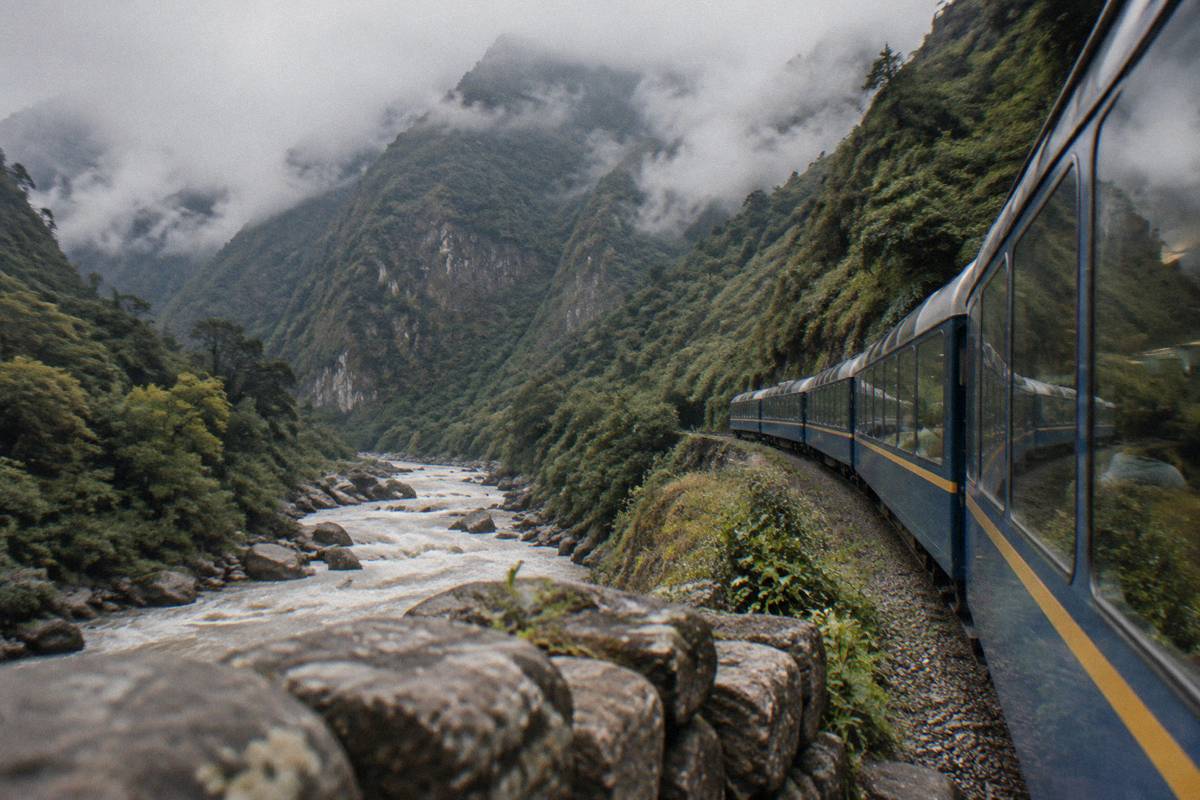
There is a logistical argument on the same side. PeruRail's own FAQ gives the train time from Ollantaytambo to Machu Picchu as about 1 h 45, against about 4 h 30 from San Pedro station in Cusco and about 3 h 30 from Poroy. A traveller who ends a valley day in Ollantaytambo is already standing at the shortest rail connection to the citadel. A traveller who does Machu Picchu first, from Cusco, faces the longest rail day at the point of the trip when the body is least adjusted.
The counter-case exists and is honest: Machu Picchu, at 2,430 m for the citadel, is lower than Cusco, so some itineraries fly visitors straight down to the citadel and climb back up to the city afterwards. That works when tickets and trains are already fixed. The weakness is that it puts the longest, most logistically fragile day of the trip first, with no slack if a train, a ticket or a body disagrees.
Why The Sacred Valley First Works For Acclimatisation
The Sacred Valley first works because every night spent there is a night slept lower than Cusco, the pattern the CDC Yellow Book recommends for high-altitude arrival. Its stated rule is to increase sleeping altitude by no more than 500 m per night once above 3,000 m, and to allow an extra night for every 1,000 m gained. Sleeping at Ollantaytambo, 2,792 m, after flying into Cusco is a descent, not a gain.
The elevation ladder is the whole argument. Cusco's Plaza de Armas sits at 3,335 m per PromPeru, and the airport at 3,310 m. Every principal valley town is lower: Pisac 2,972 m, Urubamba 2,870 m, Ollantaytambo 2,792 m. Moray, the Inca site on the valley's high shoulder, stands at 3,385 m and Maras at 3,300 m, so even the valley's higher stops barely reach the city, and the towns where travellers sleep are comfortably below it.
| Place | Elevation | Relative To Cusco (3,335 m) |
|---|---|---|
| Cusco, Plaza de Armas | 3,335 m | Reference point |
| Moray | 3,385 m | About level |
| Pisac town | 2,972 m | Lower |
| Urubamba | 2,870 m | Lower |
| Ollantaytambo | 2,792 m | Lowest valley town |
| Machu Picchu citadel | 2,430 m | Roughly 900 m lower |
The valley also carries its own sightseeing weight, so the acclimatisation days are not empty days. The Boleto Turistico's Circuit III covers Pisac, Ollantaytambo, Chinchero and Moray, at S/ 70 for the partial ticket (about US$20), and the integral ticket at S/ 130 covers all 16 COSITUC sites over 10 days. COSITUC sells the boleto in person only, at the counter on Av. El Sol 103 and at most included sites; it is not sold online. The Maras salt mines are separate, with a reported community fee of about S/ 15 to 20, and Machu Picchu is not on the boleto at all.
To see Pisac, Ollantaytambo and Moray in one loop, book a Sacred Valley day tour here.
For readers weighing the same question from the sleeping side, the site's guide to where to stay in the Sacred Valley covers the town-by-town differences, and the comparison of staying in Cusco or the Sacred Valley works through the same elevation logic from the accommodation angle. The CDC's advice is reported here as it stands in the Yellow Book; medication decisions belong with a doctor, and the site's page on altitude pills for Cusco goes into that separately.
When Machu Picchu First Makes More Sense
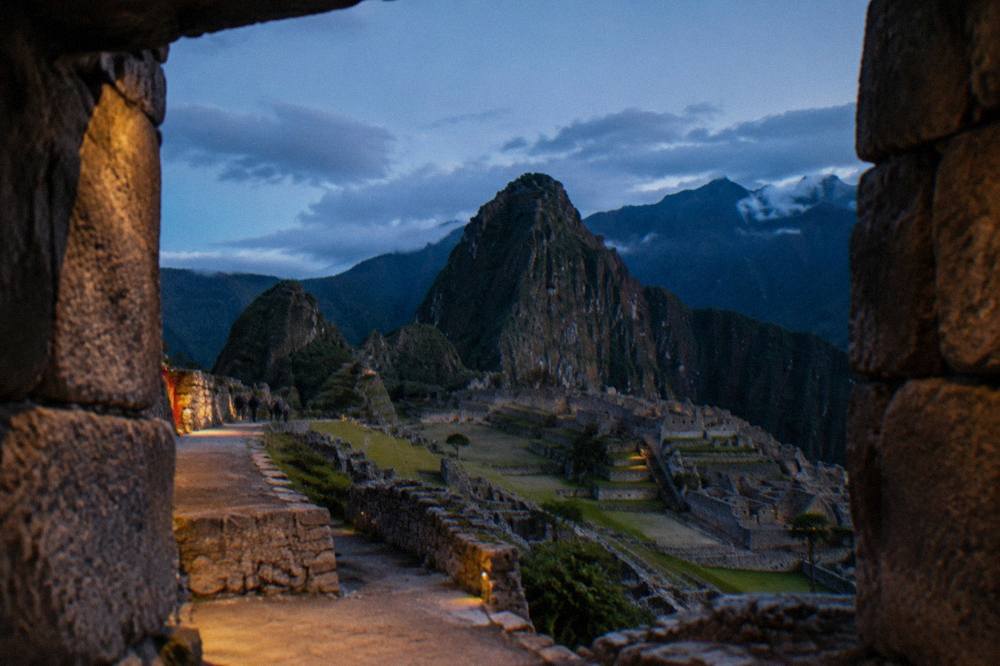
Machu Picchu first makes sense when the ticket, not the body, is the binding constraint. The Ministry of Culture's platform sells nominal tickets, valid only for the stated date, hour, circuit and holder, with no changes beyond a single passport-number correction, so a fixed citadel date can force the order. A traveller holding an entry slot for the day after arrival has no real choice, and the citadel's lower altitude, 2,430 m, means the site itself is not the hard part.
The current rules reward planning either way. Since 1 June 2024 the citadel has had three circuits and ten routes, and in 2026 daily capacity is 4,500 on ordinary days and 5,600 on the flagged high-season dates: 1 January, 2 to 5 April, 19 June to 2 November, and 30 to 31 December. A guide is recommended, not mandatory, under Article 17.1 as rewritten by RM 000334-2026-MC. Foreign adult entry runs from about S/ 163 (about US$48) on standard routes and S/ 211 (about US$62) on the mountain routes, secondary figures that include the S/ 11 SERNANP fee in place since 1 May 2026; the official platform shows the live price. Since 22 September 2026 a trial sales system has been running, with no three-hour prior reservation and a 15-minute window to pay before the slot is released, so the practical advice is to check the platform rather than rely on any fixed description. More of these guides are collected on Things To Do In Cusco Peru.
There is also a one-way itinerary shape that puts Machu Picchu first and still respects the altitude logic: descend to the citadel, return up the rail line as far as Ollantaytambo, and sleep low in the valley before climbing back to Cusco. That order inverts the classic sequence but keeps every night below the city. The site's Cusco and Machu Picchu itinerary sketches both shapes, and the question of whether the Sacred Valley is worth visiting addresses the traveller who is tempted to skip the valley entirely.
What The Elevations And Train Times Actually Look Like
The numbers line up behind the valley-first order: the rail journey from Ollantaytambo to Machu Picchu takes about 1 h 45, against about 4 h 30 from San Pedro in Cusco and about 3 h 30 from Poroy, per PeruRail's FAQ. The two Cusco-side stations both exist, and in wet-season disruptions operators use a bimodal bus-plus-train combination via Ollantaytambo, which again makes the valley the natural staging point.
The train layer is where the order stops being a matter of taste. PeruRail's FAQ gives the taxi transfer times too: about 10 minutes to San Pedro and about 20 to Poroy from the centre. A Machu Picchu day run from Cusco is therefore the longest possible version of that day, while the same day launched from Ollantaytambo is the shortest. PeruRail resumed Cusco to Ollantaytambo train travel from 1 September 2026 after earlier disruption, and its news page is the place to check the current service pattern before locking an order in.
| Rail leg to Machu Picchu | Journey time (PeruRail FAQ) |
|---|---|
| San Pedro, Cusco | About 4 h 30 |
| Poroy, near Cusco | About 3 h 30 |
| Ollantaytambo | About 1 h 45 |
Weather is a second, quieter factor in the order. The Cusco basin's wet season runs roughly November to March, with December to March carrying 71.9 percent of the year's 707.8 mm at the WMO/SENAMHI "Cuzco" station, a historical normal, while May to August together bring just 22.8 mm. Wet-season disruption on the rail line is exactly when the bimodal option appears. The site's month-by-month Cusco weather guide and its page on when not to visit Cusco carry the fuller picture, including the fact that the Inca Trail closes every February.
Can You See Both In Two Days From Cusco?
Yes, and the two-day shape is the one where the order question answers itself: the Sacred Valley on the first day, sleeping low in the valley or at Ollantaytambo, then Machu Picchu on the second day from the short rail leg. That is the structure a guided two-day product follows, and it is also the structure the elevation and train numbers independently favour. A traveller with only two days who reverses it buys the longest rail day first and the acclimatisation benefit never arrives.
The site's featured Check availability link goes to a guided 2-Day Sacred Valley and Machu Picchu tour that runs exactly this sequence, and its tour page details what is handled. For readers planning it independently, the Sacred Valley in one day page and the guide to doing the Sacred Valley without a tour cover the self-drive and colectivo version, and the two-day Sacred Valley itinerary stretches the valley half into something more comfortable.
Two cautions keep the two-day plan honest. First, Machu Picchu tickets are nominal and date-locked, so the citadel day must be ticketed before the rest of the plan is fixed; 1,000 in-person tickets a day are sold at the culture office in Machu Picchu Pueblo, valid for entry the next day, but a two-day plan should not depend on that. Second, the CDC's graded-ascent advice is about sleeping altitude, and a two-day plan from Cusco spends the first night low only if the valley comes first. That is the whole argument in one sentence, and it is why nearly every sourced itinerary on this site, including the acclimatisation day guide, puts the valley before the citadel.
Common Questions About Sacred Valley Or Machu Picchu First
Should I go to Sacred Valley or Machu Picchu first?
The Sacred Valley first, in most cases. Its towns sit lower than Cusco, matching the CDC's graded-ascent advice, and Ollantaytambo is the rail hub closest to Machu Picchu at about 1 h 45 by train. Machu Picchu first makes sense mainly when a fixed ticket date forces the order.
Is Cusco higher than Machu Picchu?
Yes. The Plaza de Armas sits at 3,335 m and the Machu Picchu citadel at 2,430 m, roughly 900 m lower. The town of Aguas Calientes below the citadel is about 2,040 m. The site's page on whether Cusco is higher than Machu Picchu covers the consequences.
Does the Boleto Turistico cover Machu Picchu?
No. The COSITUC boleto covers 16 sites including Pisac, Ollantaytambo, Chinchero and Moray on Circuit III, but Machu Picchu is sold separately on the Ministry of Culture's ticket platform or in person at Machu Picchu Pueblo.
Can you do the Sacred Valley and Machu Picchu in two days?
Yes. The standard shape is the valley on day one, a night low in the valley or at Ollantaytambo, then the citadel on day two from the short rail leg. Guided two-day products run this sequence.
Does altitude affect the order of the two visits?
It is the main reason the valley-first order is preferred. The CDC Yellow Book advises graded ascent and names Cusco as a rapid-ascent destination, and sleeping in the valley keeps the first nights below the city's 3,335 m.
Which train station is closest to Machu Picchu?
Ollantaytambo, at about 1 h 45 by train, against about 3 h 30 from Poroy and about 4 h 30 from San Pedro in Cusco, per PeruRail's FAQ. That is why valley-first itineraries usually end their first day at Ollantaytambo.