Tambomachay In Cusco: The Inca Water Site Above The City
Tambomachay sits on the northern hills above Cusco, a compact Inca site built around spring water, canals and finely cut stone, and it is visited on the same Boleto Turistico Circuit I ticket as Sacsayhuaman, Q'enqo and Puka Pukara.
Short answer
Tambomachay is an Inca ceremonial water site on the hills above Cusco, Peru, included on the Boleto Turistico Circuit I (S/ 70 for foreign tourists, reported as valid one day) or the S/ 130 integral ticket valid 10 days. It is usually visited together with Sacsayhuaman, Q'enqo and Puka Pukara on a half-day circuit of the four ruins.
Tambomachay is a small Inca archaeological site on the hills above Cusco, the historic city in the Andes of southern Peru, and its whole reason for being is water. The COSITUC, the body that administers the Cusco tourist ticket, lists it as one of the four sites on Boleto Turistico Circuit I, alongside Sacsayhuaman, Q'enqo and Puka Pukara. What a visitor finds there is a set of terraces, aqueducts and stone-lined fountains fed by a spring that still runs, set into a dry hillside a short drive out of the city. This guide lays out what the site is, what the ticket costs, how the four-ruins circuit works, when to go, and what else sits on the same hills, all drawn from the official ticket body's published tarifario and the verified site records behind this page.
What Is Tambomachay In Cusco?
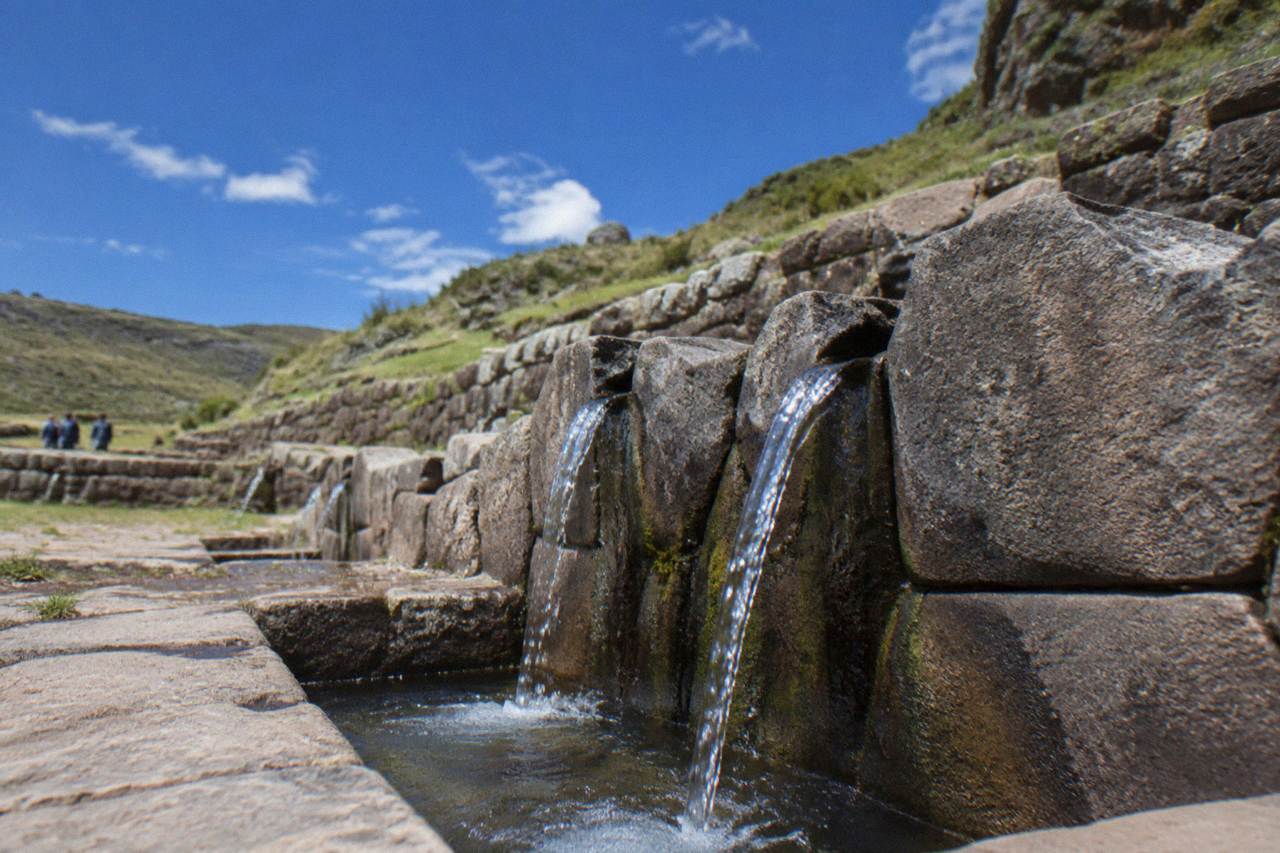
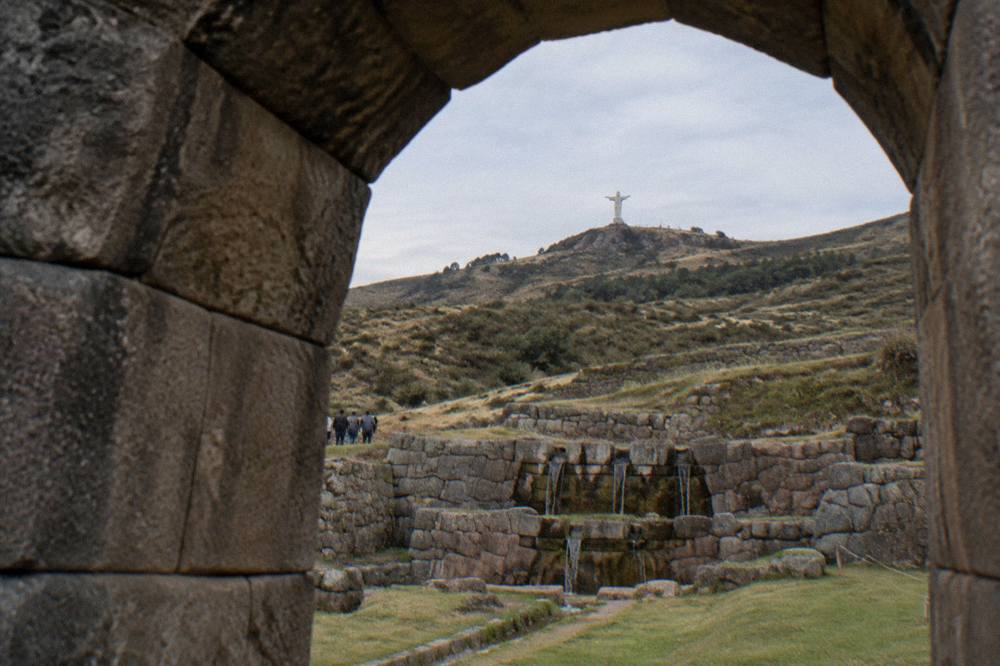
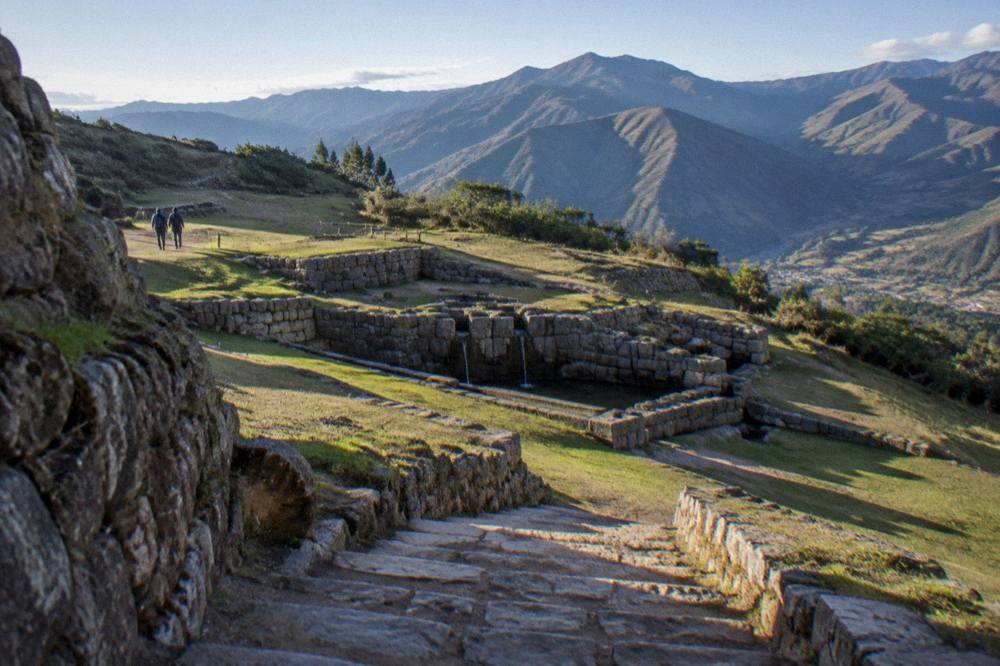
Tambomachay is an Inca ceremonial site built around water, on the northern hills above Cusco, Peru, at roughly the altitude of the city's upper slopes. Its defining features are aqueducts cut into the hillside and a series of stone-walled fountains fed by a natural spring, and it is administered as one of the four Circuit I sites on the official Cusco Boleto Turistico.
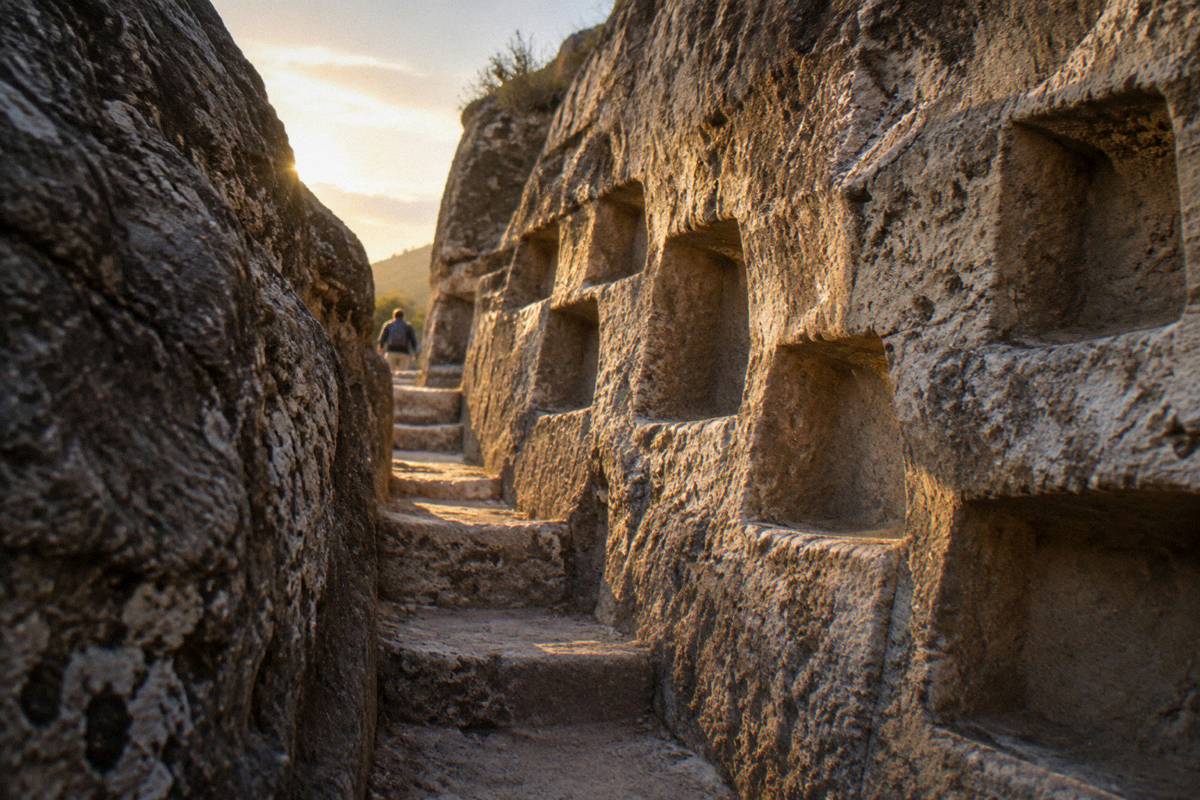
The site's name is often glossed in travel writing as a reference to resting places or baths, but no founding date, no builder and no dimension for Tambomachay can be stated with confidence, so this guide states none of them. What the sources do establish is functional and plain: the Inca builders channelled a hillside spring through cut-stone aqueducts into walled fountain niches, and the water still flows through them. The stonework is the finely fitted polygonal masonry the Cusco region is known for, with niches and trapezoidal openings of the kind seen across Inca architecture in the city centre, where colonial buildings stand on Inca stone foundations.
Peru's official tourism promotion body describes Cusco's historic centre as the old heart of the Inca capital, and the hill sites above it, Sacsayhuaman, Q'enqo, Puka Pukara and Tambomachay, as the ceremonial and defensive belt around that centre. Tambomachay is the farthest out of the four along the hill road, compact enough that a visit is measured in a slow walk around the terraces and water channels rather than a long circuit of walls. The site's draw is precisely its smallness and its water: in a region where the dry season runs from roughly May to September and frost is common on June and July nights, a spring that has kept running since it was first channelled is the whole point of the place.
How Much Does Tambomachay Cost, And Is It On The Boleto Turistico?
Tambomachay is not ticketed on its own: it is covered by the Boleto Turistico del Cusco, and a foreign tourist's cheapest route in is the Circuit I partial ticket at S/ 70, about US$20, reported as valid for one day. The integral ticket, at S/ 130 for foreign adults, about US$38, covers all 16 COSITUC sites and is valid 10 days.
These figures come straight from the COSITUC tarifario and its official FAQ, read at cosituc.gob.pe. The ticket body sells three partial circuits for foreign tourists at S/ 70 each: Circuit I, the Saqsaywaman circuit covering Saqsaywaman, Q'enqo, Puka Pukara and Tambomachay; Circuit II, the City circuit covering the Qorikancha site museum, the regional history museum, the contemporary and popular art museums, the Centro Qosqo de Arte Nativo, the Pachacutec monument, Tipon and Pikillaqta; and Circuit III, the Sacred Valley circuit covering Pisac, Ollantaytambo, Chinchero and Moray. Foreign students pay S/ 70 for the integral ticket with valid student ID. Children are free up to age 9, and ages 10 to 17 pay the student price with ID, with one exception: the Centro Qosqo de Arte Nativo charges from age 6.
One point the official FAQ is unambiguous about, and which catches out a lot of planning: the Boleto Turistico is sold in person only. The COSITUC does not sell it online. The main counter is at Av. El Sol 103, the Galerias Turisticas, open Monday to Sunday from 07:30 to 18:00, and most included sites also sell the ticket at the gate. A handful of the city museums do not sell it, so the Av. El Sol counter or the site gates are the reliable options. Validity starts the day you buy it, and the FAQ notes that covering all 16 sites needs a minimum of three days even on the integral ticket.
| Ticket | Foreign adult price | Validity |
|---|---|---|
| Integral (all 16 sites) | S/ 130 (about US$38) | 10 days |
| Integral, foreign student with ID | S/ 70 (about US$20) | 10 days |
| Partial Circuit I (Saqsaywaman, Q'enqo, Puka Pukara, Tambomachay) | S/ 70 (about US$20) | 1 day (reported) |
| Partial Circuit II (City museums, Tipon, Pikillaqta) | S/ 70 (about US$20) | 2 days (reported) |
| Partial Circuit III (Pisac, Ollantaytambo, Chinchero, Moray) | S/ 70 (about US$20) | 2 days (reported) |
| National tourist integral | S/ 70 | 10 days |
| National student integral | S/ 40 | 10 days |
| National partial circuits | S/ 40 each | 1 to 2 days (reported) |
The partial-circuit day counts sit in a collapsed table on the tarifario page, so this site reports them rather than states them as a hard rule. The safe planning read is that Circuit I is a single-day ticket: buy it the morning you do the four ruins, or buy the integral if the rest of the 16 sites are on the itinerary anyway.
| Where the Boleto is sold | Details from the COSITUC FAQ |
|---|---|
| Counter Central, Av. El Sol 103, Galerias Turisticas | Monday to Sunday, 07:30 to 18:00 |
| Most included sites | Sold at the gate, including the Circuit I hill sites |
| Not sold at four city museums | Museo Historico Regional, Centro Qosqo de Arte Nativo, Museo de Arte Popular, Museo de Arte Contemporaneo |
| Online | Not sold online, in person only |
| Discounts | Students only, with ID; no teacher or youth-card discount |
For travellers who would rather not arrange the hill circuit themselves, the four ruins are a standard product on the Cusco tour roster, and the city's half-day guided options are listed on this site with their live prices and ratings.
How Do You Get To Tambomachay From Cusco?
Tambomachay lies on the hill road that leaves Cusco to the north, the same road that serves Sacsayhuaman, Q'enqo and Puka Pukara, and it is the farthest of the four Circuit I sites from the city. There is no verified public timetable or fare for the route in this site's records, so the practical options are a booked city tour, a taxi agreed before the ride, or the walking route up through the hills.
The verified facts on this are directional rather than numerical: the site records behind this page place Sacsayhuaman and the Cristo Blanco statue on the hills to the north of the old centre, and Tambomachay beyond them along the same hill road, with Puka Pukara the closest neighbouring ruin to it. No sourced distance in metres or minutes is available for the Cusco to Tambomachay run, so this guide prints none. What can be said is that the four sites string along one road, which is why virtually every visitor does them in a single half-day loop rather than as separate trips.
Three booked formats cover the loop. The first is a group half-day city tour, the standard product that sweeps the Plaza de Armas area and then the hill sites; two such tours sit on this site's roster, and the half-day tour with Sacsayhuaman and Q'enco is the direct match for the four-ruins circuit. The second is a walking tour of the city itself, which covers the historic centre rather than the hills but pairs well with a later hill trip. The third is on horseback: a horseback riding tour on this site's roster visits the Temple of the Moon and the Chacan mountain area on the same northern hills, a different way across the same terrain.
For the independent option, a taxi to the hills is an everyday on-the-ground cost of the kind this site reports as ranges: an airport taxi to the centre is reported at about S/ 15 to 25, and hill rides are agreed with the driver before setting off. The site records hold no colectivo fare or frequency for the Tambomachay road, so none is printed here. Walking up from the city is a real option on the dry hill tracks, and the walk from Cusco to Sacsayhuaman is covered in its own article on this site, with the same tracks continuing beyond toward Q'enqo and the farther sites.
Whichever way the loop is done, the pattern that suits most itineraries is a morning on the hills followed by a city afternoon, and that is where the pairing below earns its place: a seated, indoor workshop is the natural counterpart to a morning of exposed hillside walking, and it needs no ticket, only a booking on the operator's live listing.
What Can You See At Tambomachay?
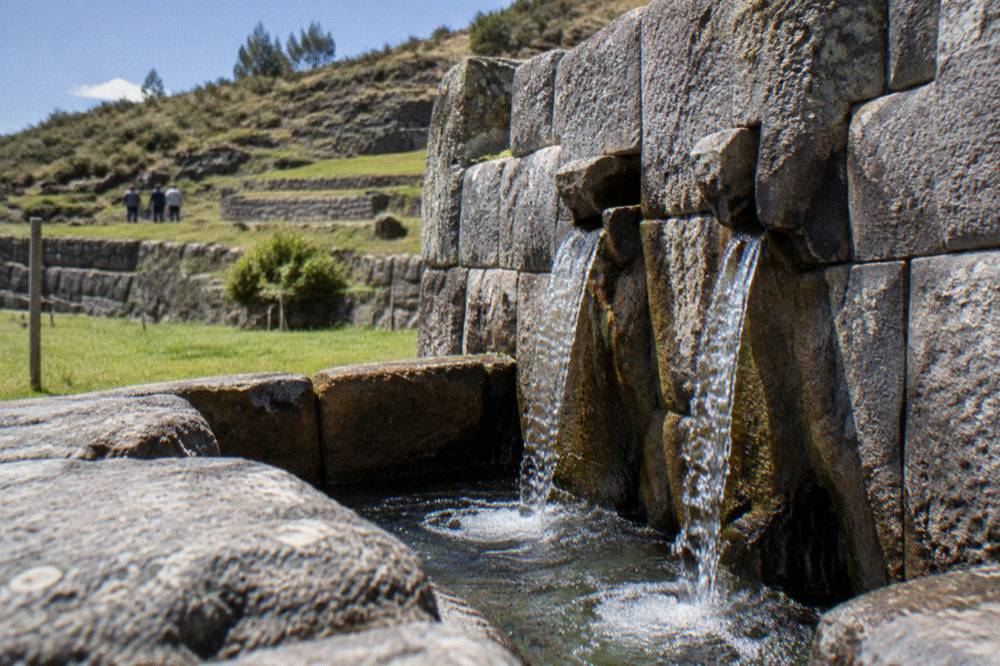
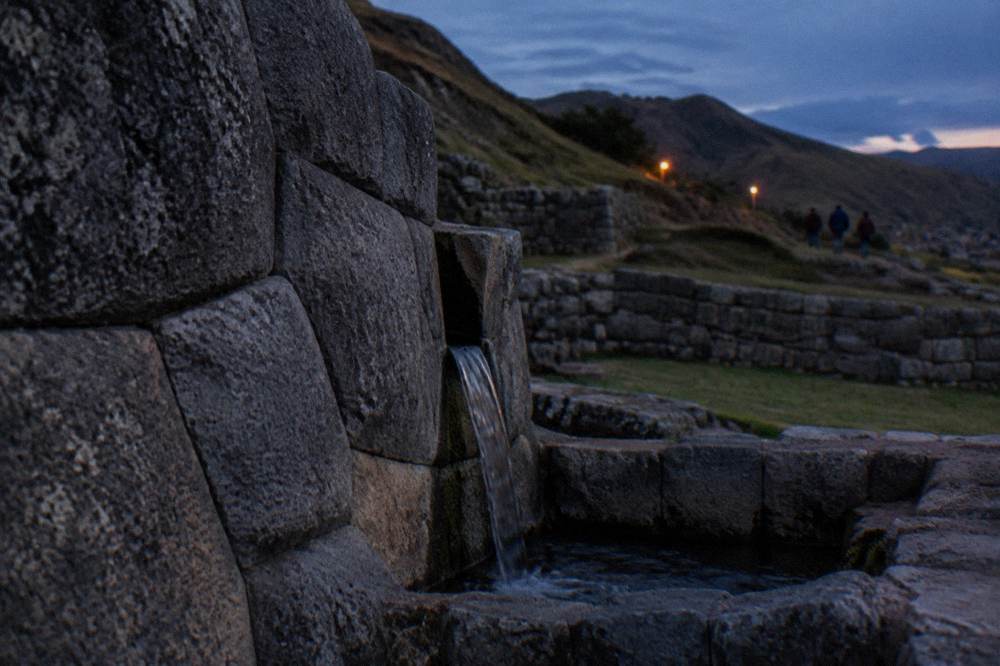
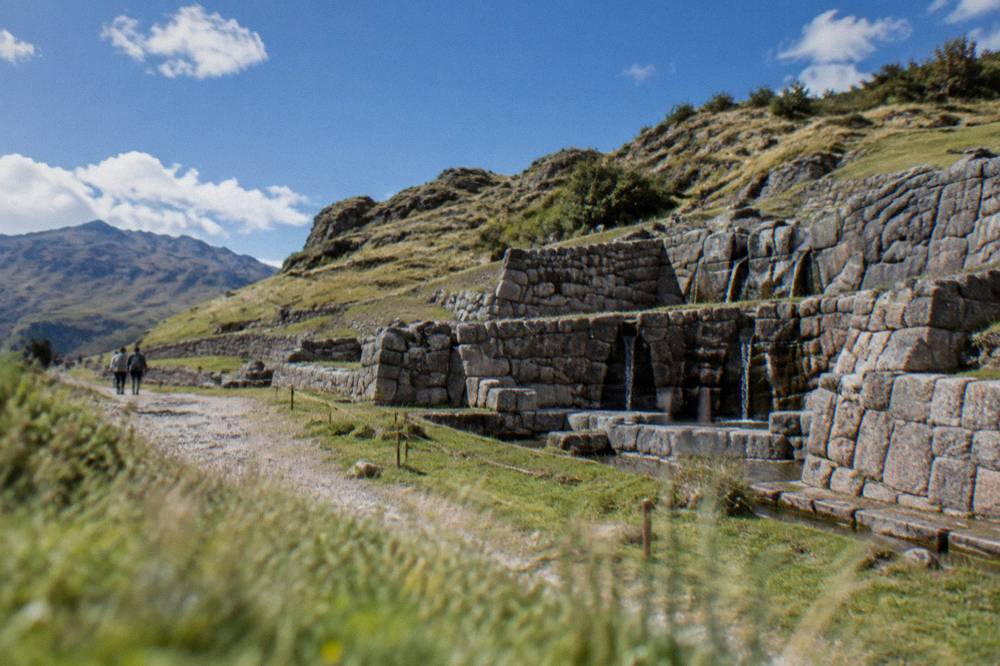
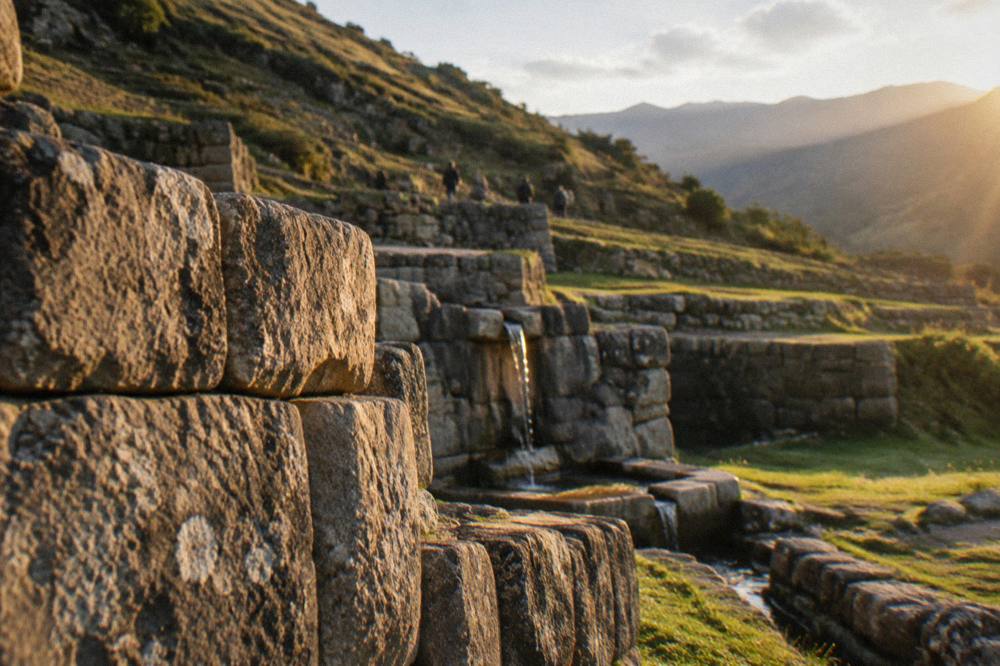
What a visitor sees at Tambomachay is a compact Inca water complex: a natural spring channelled through cut-stone aqueducts into a series of walled fountain niches, framed by terraces and trapezoidal openings typical of Inca masonry, with the water still running through the original channels. No dimensions, builder or construction date survive for the site, so the honest description is structural and visual rather than historical.
The fountains are the heart of it. Water arrives through stone-lined channels and drops into niches built into a retaining wall, and the fit of the blocks around the watercourse is the fine stuff: tight polygonal joins without mortar, of the kind that also carries the fame of the twelve-angled stone on Hatunrumiyoc street in the city centre. Around the waterworks sit terraced walls stepping up the hillside, and small trapezoidal niches of the sort found across Inca ceremonial architecture in the region.
What can be said, and what sources do say, is the site's character: it is small, it is about water, and it reads best as the last stop of the four-ruins loop, when the scale of Sacsayhuaman has already reset the visitor's expectations of Inca engineering. Peru's official tourism body groups the four hill sites as the archaeological belt above the historic centre, and the City of Cusco itself carries UNESCO World Heritage inscription from 1983, a dated fact this site's records do hold.
The practical visit is short and exposed. The site is open hillside, so the sun at 3,300-plus metres is strong in the dry season and the wet season brings afternoon rain, points covered in the timing section below. There are no sourced facilities details, so nothing is claimed about them here.
Tambomachay And The Four Ruins: How The Circuit I Ticket Works
The Boleto Turistico Circuit I covers exactly four sites on the northern hills: Sacsayhuaman, Q'enqo, Puka Pukara and Tambomachay, on one S/ 70 partial ticket reported as valid one day. The four string along a single road, so the standard visit is one half-day loop, usually starting with Sacsayhuaman and finishing at Tambomachay, or the reverse if arriving from the Sacred Valley side.
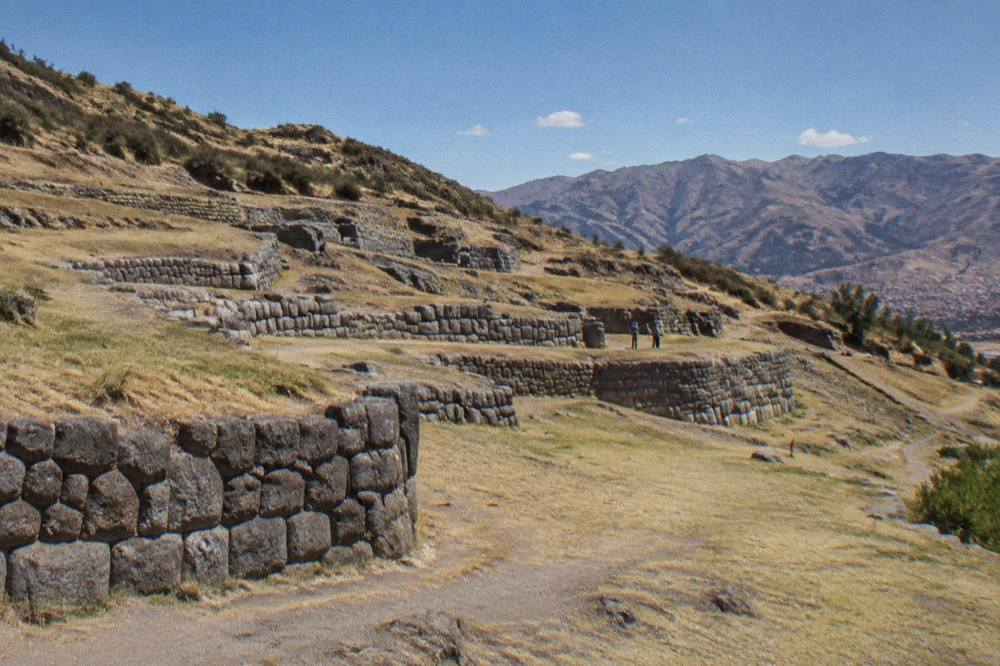
Each of the four is a different animal. Sacsayhuaman is the giant, its elevation recorded at 3,701 m, with the great terraced walls above an explanada that, per the MINCETUR open dataset on site visits, drew 944,008 recorded visits in 2025, one of the highest counts of any Cusco-region site after Machu Picchu and Ollantaytambo. Q'enqo is a carved limestone outcrop with passages and a carved rock altar. Puka Pukara is a smaller walled complex commonly described in travel literature as a lookout or waystation, sitting closest to Tambomachay on the same road. Tambomachay is the water site. The COSITUC lists all four on one circuit precisely because one road and one half-day serve them. The full index of guides sits on Things To Do In Cusco Peru.
| Circuit I site | What the verified records say about it |
|---|---|
| Sacsayhuaman | Great terraced walls above the explanada, elevation 3,701 m, 944,008 recorded visits in 2025 (MINCETUR) |
| Q'enqo | Carved limestone outcrop with passages and a monolithic altar, on the Boleto Circuit I |
| Puka Pukara | Walled hill complex nearest Tambomachay on the same road, on the Boleto Circuit I |
| Tambomachay | Inca water site with spring-fed fountains and aqueducts, on the Boleto Circuit I |
For readers planning the wider ticket, the four ruins of Cusco get their own article on this site, and the full ticket mechanics are on the Boleto Turistico guide. The one warning worth repeating from the official FAQ: Circuit III, the Sacred Valley partial, covers Pisac, Ollantaytambo, Chinchero and Moray, and it does not cover Machu Picchu. Machu Picchu tickets sell separately through the Ministry of Culture platform, and this site keeps exactly one Machu Picchu page, at Machu Picchu.
When Is The Best Time To Visit Tambomachay?
The best time to visit Tambomachay is the Cusco dry season, roughly May to September, when the WMO and SENAMHI historical normals for the Cuzco station show May to August bringing just 22.8 mm of rain between them, 3.2 percent of the year's 707.8 mm. June and July bring frost at night, with mean minima of 0.3 C and 0.1 C, while mean daily maxima stay between 18.8 and 20.9 C all year.
Cusco is in the southern hemisphere at high altitude, so the seasons run opposite to Europe and North America, and June to August is winter here: dry, clear days and cold nights, never summer. The wet season runs roughly November to March, and December to March alone carries 71.9 percent of the year's rain at the Cuzco station. For an open hillside site like Tambomachay, the practical difference is simple: dry-season days are bright and dusty, wet-season afternoons risk rain on exposed stone terraces.
| Month | Mean max C | Mean min C | Rain mm |
|---|---|---|---|
| Jan | 18.9 | 6.6 | 145.3 |
| Feb | 18.8 | 6.5 | 133.7 |
| Mar | 19.1 | 6.2 | 107.0 |
| Apr | 19.7 | 4.9 | 43.2 |
| May | 19.8 | 2.5 | 8.7 |
| Jun | 19.5 | 0.3 | 1.5 |
| Jul | 19.1 | 0.1 | 4.0 |
| Aug | 19.8 | 1.6 | 8.6 |
| Sep | 19.8 | 3.9 | 21.8 |
| Oct | 20.9 | 5.5 | 39.4 |
| Nov | 20.7 | 6.1 | 71.9 |
| Dec | 19.4 | 6.4 | 122.7 |
These figures are a historical normal supplied by SENAMHI, Peru's weather service, to the World Weather Information Service for the Cuzco station, and this site labels them as exactly that. Two timing notes follow from the data. First, the dry months are also the busiest: the MINCETUR dataset shows Machu Picchu's October 2025 total at 154,105 against February's 79,806, and the same high-season pattern applies across the Cusco region's sites. Second, the shoulder months of April, September and October split the difference, with 43.2 mm, 21.8 mm and 39.4 mm of rain respectively and milder nights than the frost months. The month-by-month breakdown lives on this site's Cusco weather by month guide, and the wider timing case is argued in when not to visit Cusco.
What Else Sits On The Same Hills As Tambomachay?
The hills north of Cusco hold more than the four ticketed ruins: the Cristo Blanco statue stands on the same northern slopes, the San Blas quarter sits on the hillside east of the Plaza de Armas, and the hill tracks between them are the walking country that connects the whole belt. The verified site records give directions, not distances, for these placements, and no sourced walking time between them is printed here.
The Cristo Blanco statue is the white landmark on the northern hills, close to Sacsayhuaman, and it is one of the classic photo stops on the hill loop. Down in the city, the San Blas quarter climbs the hill east of the Plaza de Armas, and the whole historic centre is a UNESCO-inscribed fabric of colonial churches standing on Inca stone foundations, a qualitative fact the records do support. The Sapantiana aqueduct is another colonial-era water structure in the city's ravines, a lower-altitude echo of the same Andean preoccupation with moving water that built Tambomachay's fountains.
For visitors with a free afternoon after the hills, the city itself has the strongest short-list of indoor options. The ChocoMuseo in the historic centre runs a bean-to-bar chocolate workshop that this site features as its related tour for this article: a hands-on class that walks participants from the cacao tree to moulding their own chocolate, a warm, seated, low-exertion activity that pairs naturally with a morning spent walking hill ruins. The workshop can be checked on the operator's live listing, and its own page on this site carries the current price and rating rendered from verified data.
The other city anchors worth folding into the same day are the Cusco Cathedral on the Plaza de Armas and the Qorikancha site museum, both on the Boleto Circuit II partial if the integral ticket was not bought. The Cusco planetarium runs evening sessions, a natural follow-on to a hill day that ends with a clear dry-season sky. And for the practicalities of altitude on the hills, the Cusco altitude guide covers the CDC's advice on graded ascent, which matters when the day's plan climbs from the Plaza de Armas at 3,335 m to the Sacsayhuaman explanada at 3,701 m.
| Cusco-area place | Elevation from the verified records |
|---|---|
| Plaza de Armas, Cusco | 3,335 m |
| Cusco airport | 3,310 m |
| Sacsayhuaman | 3,701 m |
| Moray | 3,385 m |
| Maras | 3,300 m |
| Pisac town | 2,972 m |
| Ollantaytambo town | 2,792 m |
| Machu Picchu citadel | 2,430 m |
| Aguas Calientes (Machu Picchu Pueblo) | 2,040 m |
That table carries the one comparison worth internalising before any Cusco planning: the city is higher than Machu Picchu, not lower. The citadel sits at 2,430 m and the town below it at about 2,040 m, both well under the Plaza de Armas, and roughly 900 m of descent separates Cusco from the citadel. The hill sites, meanwhile, stand above the city again, which is why a four-ruins morning is a real walk and why the CDC's graded-ascent advice in this site's altitude guides is worth reading before the itinerary is fixed.
What Does A Tambomachay Day Cost Beyond The Ticket?
Beyond the S/ 70 Circuit I ticket, a Tambomachay day's costs are the everyday Cusco ground prices this site reports as ranges: an airport taxi to the centre at about S/ 15 to 25, a menu del dia at about S/ 8 to 15, a cup of coca tea at about S/ 2 to 5, and a tourist SIM at about S/ 5 to 15 plus a data pack at about S/ 20 to 40. Taxi rides to the hills are agreed with the driver before the ride.
These are planning ranges, not tariffs, and this site states them with "about" wording for exactly that reason. The Boleto itself is the only fixed admission on the day, and the COSITUC FAQ is explicit that only students get a discount, with no teacher or youth-card concession. For the wider budget picture, the Cusco costs guide breaks down a full trip, and the money and ATMs guide covers withdrawal limits and card surcharges reported by Peruvian banking sources.
| Everyday item | Reported range |
|---|---|
| Airport taxi to the centre | about S/ 15 to 25 |
| Menu del dia | about S/ 8 to 15 |
| Cup of coca tea | about S/ 2 to 5 |
| Tourist SIM | about S/ 5 to 15, plus a data pack at about S/ 20 to 40 |
Two practical notes close the money picture. The Peruvian sol is written S/ with the figure after it, and this site converts only at about S/ 3.4 to the US dollar, so the Circuit I partial at S/ 70 reads as about US$20 and the integral at S/ 130 as about US$38. And the Boleto is bought in person, so the first stop of the day for anyone without a ticket is the Av. El Sol counter, daily 07:30 to 18:00, or the gate of the first ruin on the loop.
How Does Tambomachay Fit Into A Longer Cusco Itinerary?
Tambomachay fits into a Cusco itinerary as the half-day hill block: acclimatisation day one in the city centre, the four-ruins Circuit I loop on day two, and the Sacred Valley or Machu Picchu after that, with the integral Boleto at S/ 130 covering the hill sites and the valley sites across its 10-day validity. The site's own itinerary guides on this site sequence exactly this pattern.
The logic is altitude. The CDC Yellow Book advises graded ascent and names Cusco as a rapid-ascent destination, and the practical consequence for a Cusco itinerary is that the low-exertion city days come first and the hill loop second, before any Sacred Valley or Machu Picchu travel. This site's acclimatisation day guide and the 3 days in Cusco and Cusco and Machu Picchu itineraries build that sequence out in full. The hill loop sits comfortably in a morning, leaving the afternoon for a city activity, and the chocolate workshop above is one of the most-booked of them on this site's roster.
For the days after the hills, the standard pairings are the Sacred Valley, whose Sacred Valley hub covers Pisac, Ollantaytambo, Moray and the salt pans, and Machu Picchu itself, which has one page on this site at Machu Picchu. The valley tours on this site's roster include the Sacred Valley and salt mines full-day tour with buffet lunch and the quad bike tour to Moray and the salt mines, both of which pair a valley day with the hill day that preceded it, and both of which can be checked on their live listings.
One last planning point, and it is the one this site most wants to stick: the four ruins are one ticket, one road and one half-day, and Tambomachay is the quiet water end of that loop. Buy the ticket in person, go in the dry months if the calendar allows, and give the fountains the last slow look of the morning before dropping back down into the UNESCO-inscribed centre below.
Common Questions About Tambomachay
Is Tambomachay included in the Boleto Turistico?
Yes. Tambomachay is one of the four Circuit I sites on the Boleto Turistico del Cusco, together with Saqsaywaman, Q'enqo and Puka Pukara. The Circuit I partial ticket for foreign tourists is S/ 70, about US$20, reported as valid one day, and the S/ 130 integral ticket covers all 16 COSITUC sites for 10 days.
Can you buy the Tambomachay ticket online?
No. The COSITUC sells the Boleto Turistico in person only: at the counter at Av. El Sol 103, Galerias Turisticas, Monday to Sunday from 07:30 to 18:00, and at most included sites including the hill ruins. The official FAQ states plainly that the ticket is not sold online.
How do you get to Tambomachay from Cusco?
Tambomachay lies on the hill road north of Cusco that also serves Sacsayhuaman, Q'enqo and Puka Pukara, and it is the farthest of the four sites along that road. The standard options are a booked half-day city tour, a taxi agreed before the ride, or the hill walking tracks. No sourced fare or timetable for the route is printed on this page.
What is Tambomachay famous for?
Water. Tambomachay is an Inca ceremonial site built around a natural spring channelled through cut-stone aqueducts into walled fountain niches, framed by terraces and trapezoidal openings typical of Inca masonry. No construction date, builder or dimensions are known for the site, so its fame rests on the waterworks themselves, which still run.
When is the best time of year to visit Tambomachay?
The Cusco dry season, roughly May to September, is the best window: the WMO and SENAMHI historical normals show May to August bringing just 22.8 mm of rain between them. June and July nights drop to mean minima of 0.3 C and 0.1 C with frost, while mean daily maxima stay between 18.8 and 20.9 C all year. Cusco is in the southern hemisphere, so June to August is winter here, not summer.
Can you visit Tambomachay without a tour?
Yes. The site is on the standard Boleto Circuit I ticket bought in person, and the four ruins string along one road that can be done by taxi or on foot from the city. A booked half-day tour is the alternative for anyone who prefers the loop arranged, and this site's Cusco city tour guide compares the options.