Cristo Blanco Viewpoint
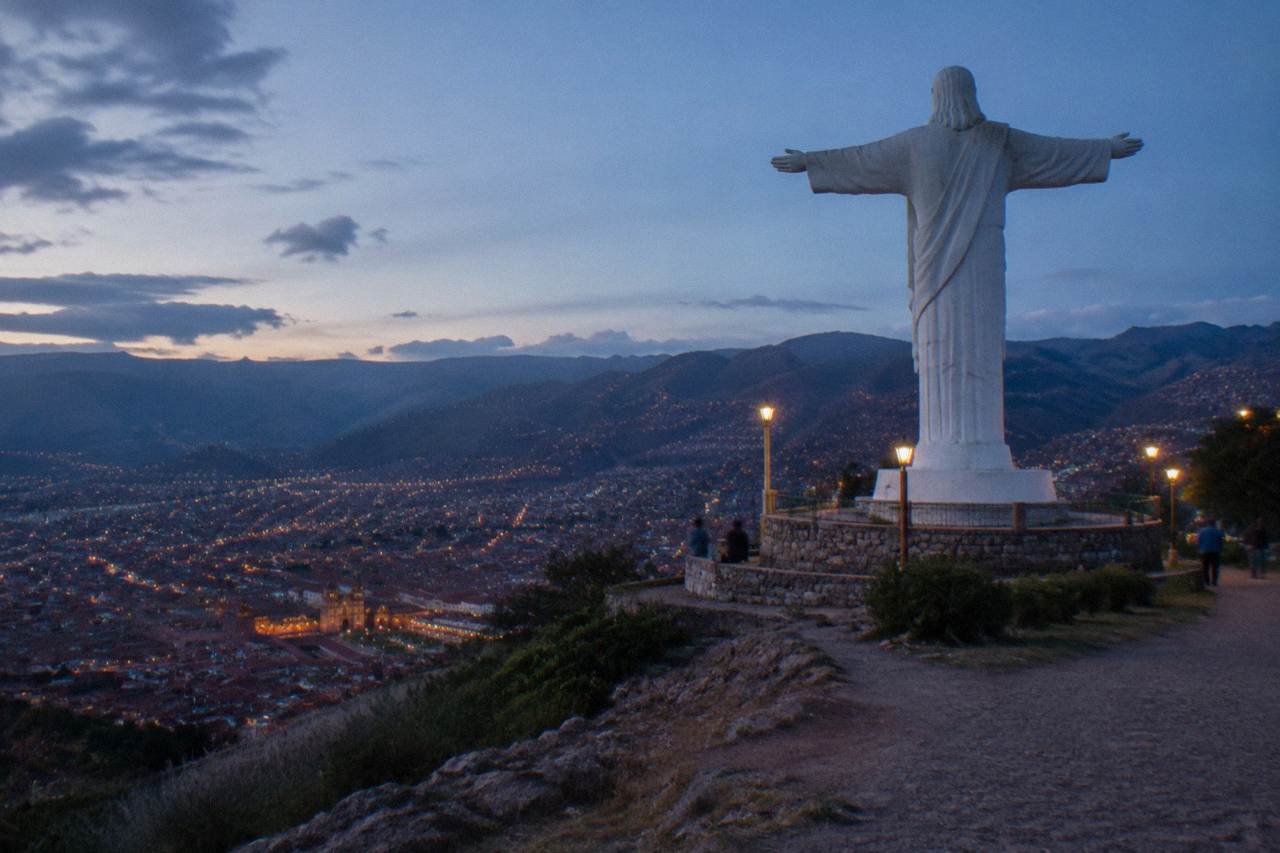
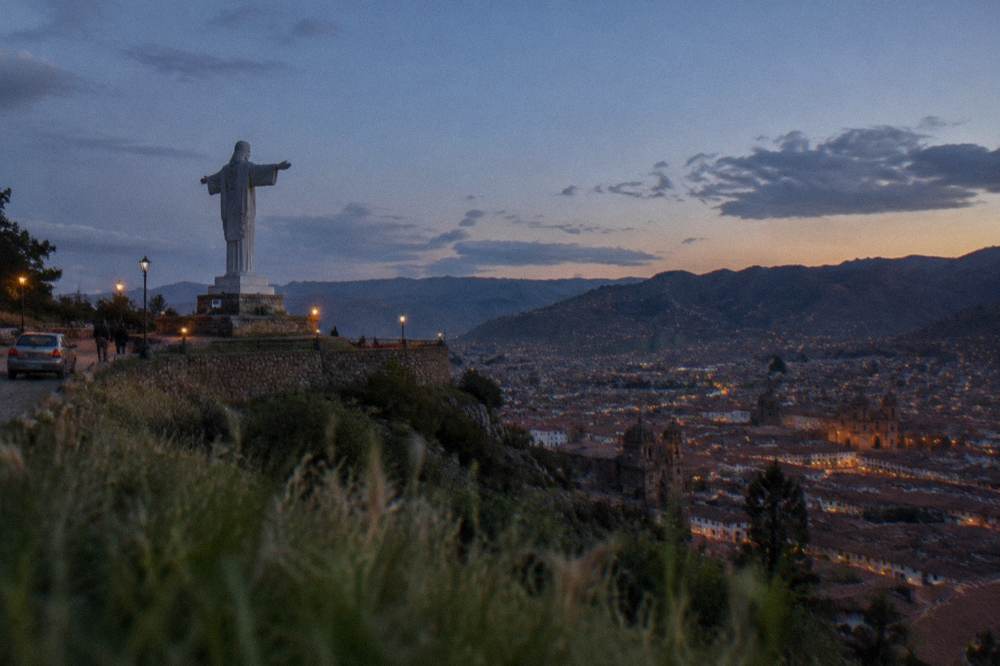
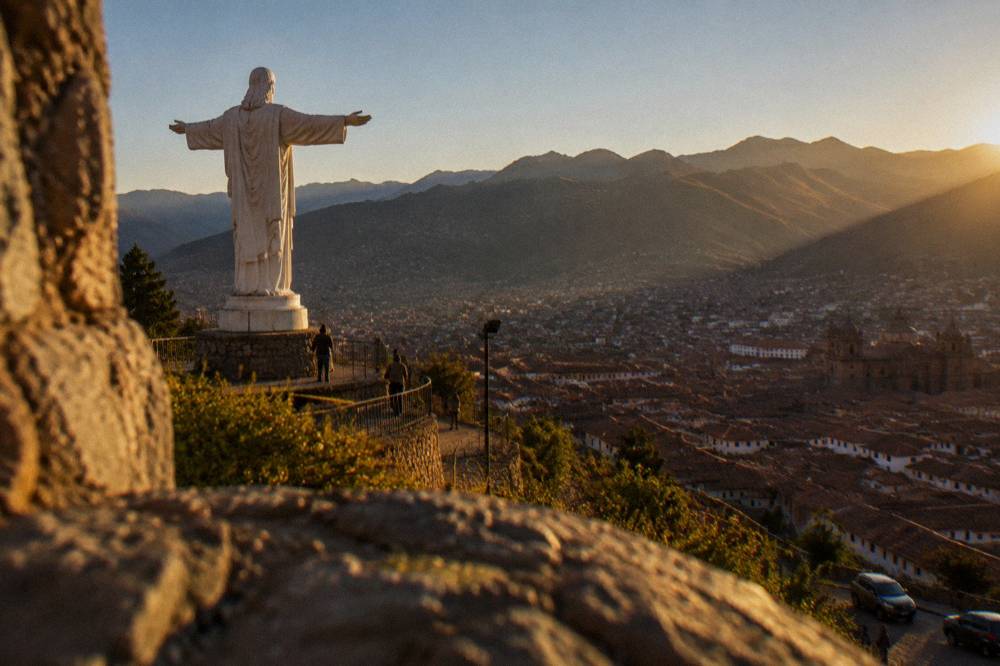
The white Christ statue stands on the hills north of Cusco's Plaza de Armas, and the terrace beneath it is one of the classic places to look back over the city's rooftops and church domes.
Short answer
Cristo Blanco is a white statue and viewpoint on the hillside above Cusco, reached on foot from the historic centre. The statue itself is a landmark rather than a ticketed attraction, and the panorama over the city is the reason people climb.
The Cristo Blanco viewpoint sits on the hills to the north of Cusco, the historic city in the Andes of southern Peru whose Plaza de Armas stands at 3,335 m. The statue is a tall white figure of Christ with arms open toward the valley, and the small terrace at its base has become one of the city's recognised photo stops: a place where the whole bowl of red-tiled roofs, colonial domes and narrow streets appears in a single frame. Things To Do In Cusco Peru covers the city in depth, and this page is the full guide to the statue, the climb and the view.
What Is Cristo Blanco In Cusco?
Cristo Blanco is a large white statue of Christ standing on the hillside north of Cusco's historic centre, with a viewing terrace at its base that looks out over the city. It is a landmark and a lookout rather than a museum or a ticketed site, and there is no interior to visit: the statue and the panorama are the whole attraction. The figure is visible from many points downtown, pale against the brown-green slopes, and it is one of the silhouettes that locals and guides use to orient themselves in the city. In plain terms, it does for Cusco's northern skyline what the hilltop crosses of many Andean towns do: it marks the high ground above the roofs and gives the city a vertical reference point. The site's own records describe the statue simply as a viewpoint feature on the hills above the old centre, alongside the far larger Inca complex of Sacsayhuaman on the same hillside, and any visit is really two things in one: the statue itself and the elevated look back at Cusco.
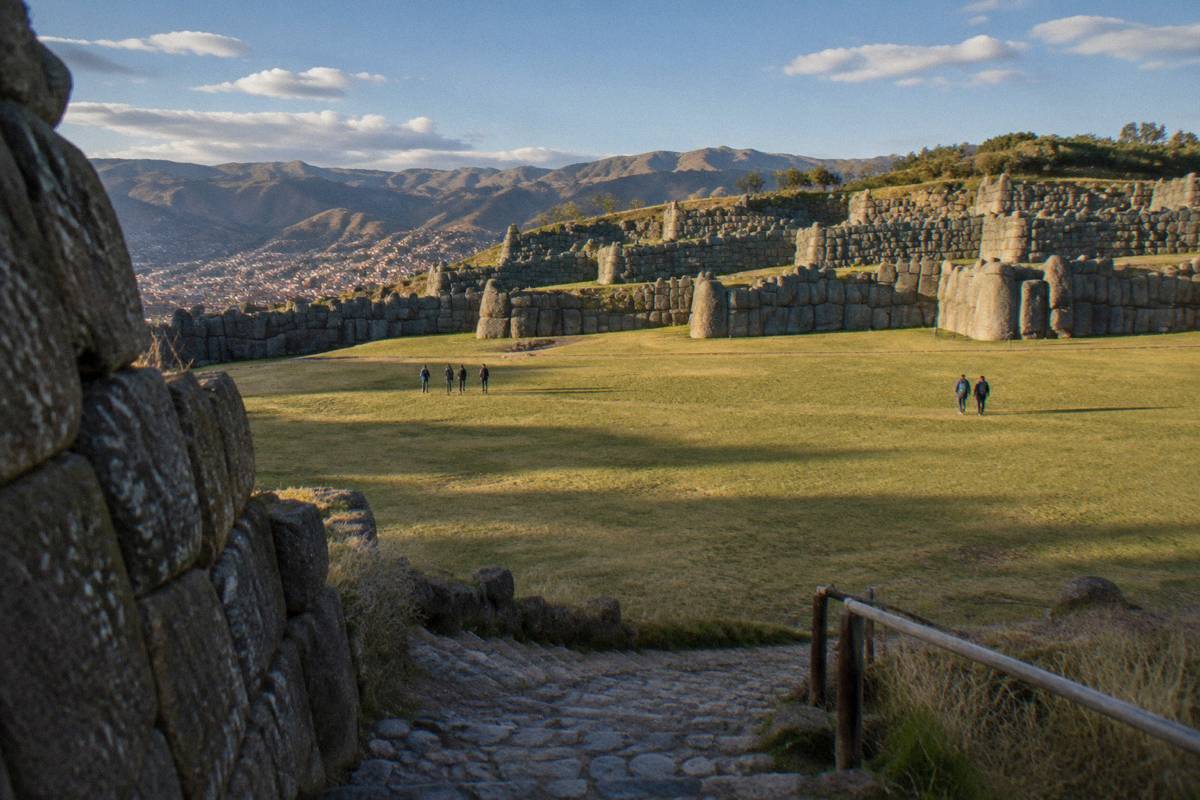
The statue should not be confused with the archaeological sites around it. Those hills, the same slopes that hold Sacsayhuaman, Q'enqo, Puka Pukara and Tambomachay, are the Inca parkland of Cusco's northern edge, and the walking routes between them cross the same open ground. Cristo Blanco is the modern landmark among ancient ones.
Where Is Cristo Blanco And How Do You Get There?
Cristo Blanco stands on the hills to the north of the Plaza de Armas, on the same slope as Sacsayhuaman, and the standard way to reach it is on foot from the historic centre via the stepped lanes that climb from the San Blas side of the city. The climb is a walk, not a drive: the statue sits above the residential edges of the old town, and the paths up are the same kind of stone steps and dirt tracks that connect Cusco's upper neighbourhoods to the Inca sites above. The site's place records put San Blas on the hill to the east of the Plaza de Armas and Sacsayhuaman and Cristo Blanco on the hills to the north, so the route up from the centre runs through or past the San Blas quarter and keeps climbing past the last houses onto open hillside. The walking time and the path length go unstated; the statue overlooks the city from the north, and the way up is on foot through Cusco's steepest streets.
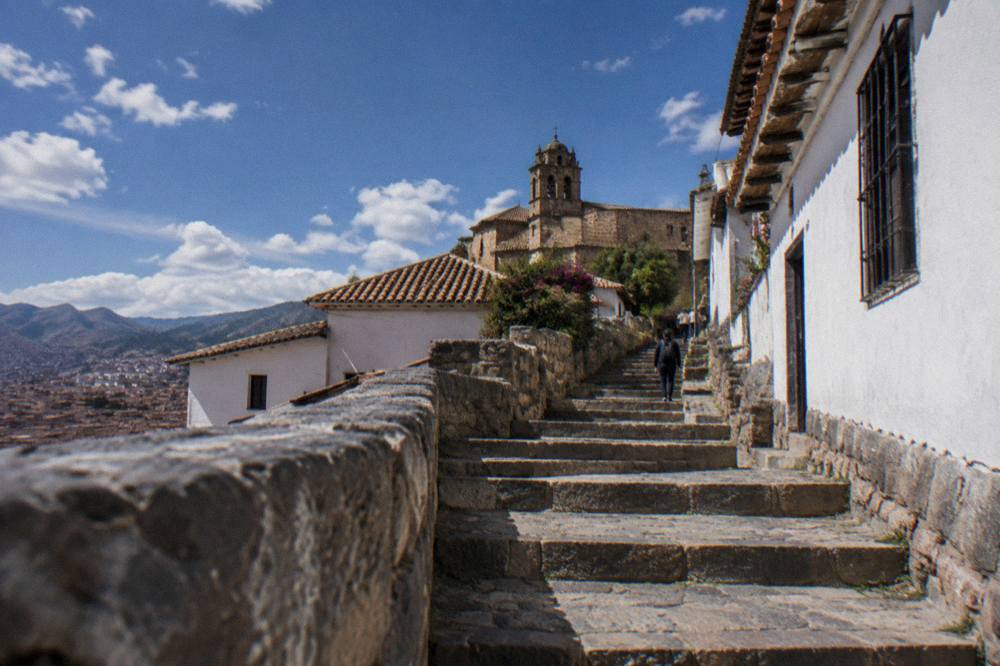
Two practical notes come straight from the verified facts. First, the altitude: the Plaza de Armas is at 3,335 m and the statue is higher still, on the slope that runs up toward Sacsayhuaman at 3,701 m, so the walk is a genuine climb at altitude and belongs after at least a day of acclimatisation, a point the CDC makes about Cusco generally when it names the city a rapid-ascent destination. Second, the alternative: many visitors combine the statue with the Sacsayhuaman archaeological park, walking the ridge between them in one loop, and the same hillside also carries Q'enqo, Puka Pukara and Tambomachay for those with a full day. A good primer on that cluster is the site's guide to the four ruins of the Cusco hillside, and the Plaza de Armas page covers the streets the climb starts from.
What Can You See From The Cristo Blanco Viewpoint?
From the terrace at the base of Cristo Blanco the whole of central Cusco appears below: the Plaza de Armas and its arcades, the Cathedral's domes, the rooftops of the historic centre, the San Blas quarter on its eastern hill, and the valley spreading out to the surrounding peaks. The view is the reason for the climb, and it is the angle that shows Cusco's geography most clearly: a city filling a high basin, with Inca terrace lines and modern streets layered over each other and the brown Andes rising on every side. On clear days the light over the city is the dry-season light the region is known for, and the WMO and SENAMHI station record for Cusco shows why the mornings matter: mean daily maximums sit between 18.8 and 20.9 C all year, while afternoons in the wet season, roughly November to March, carry most of the year's rain. December to March alone delivers 71.9 percent of the year's 707.8 mm at that station, so the odds of a clear panorama are better in the dry months, roughly May to September, when the rain total collapses to a few millimetres a month.
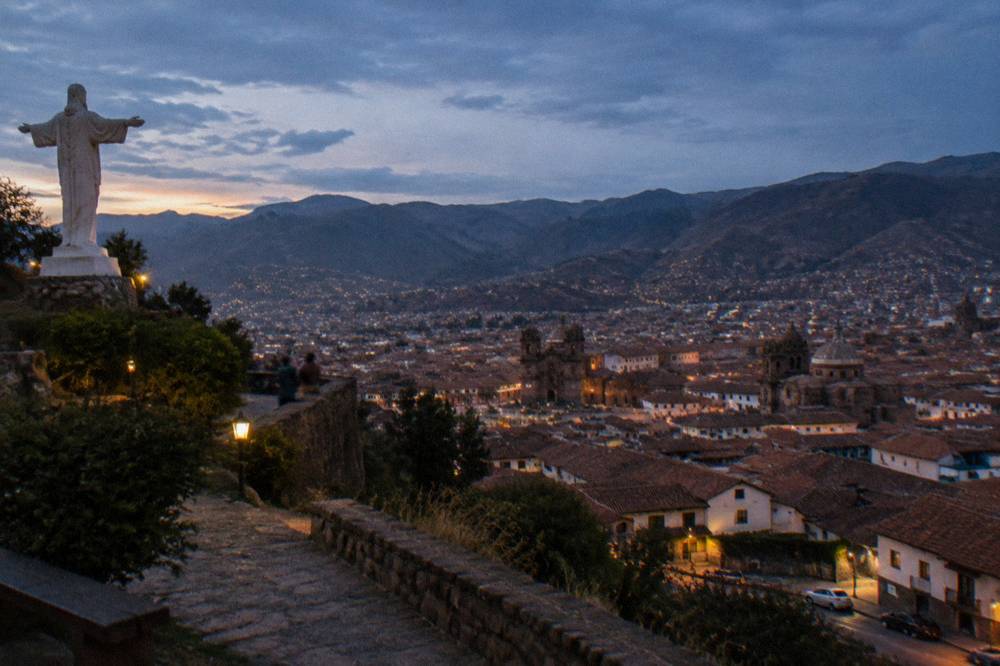
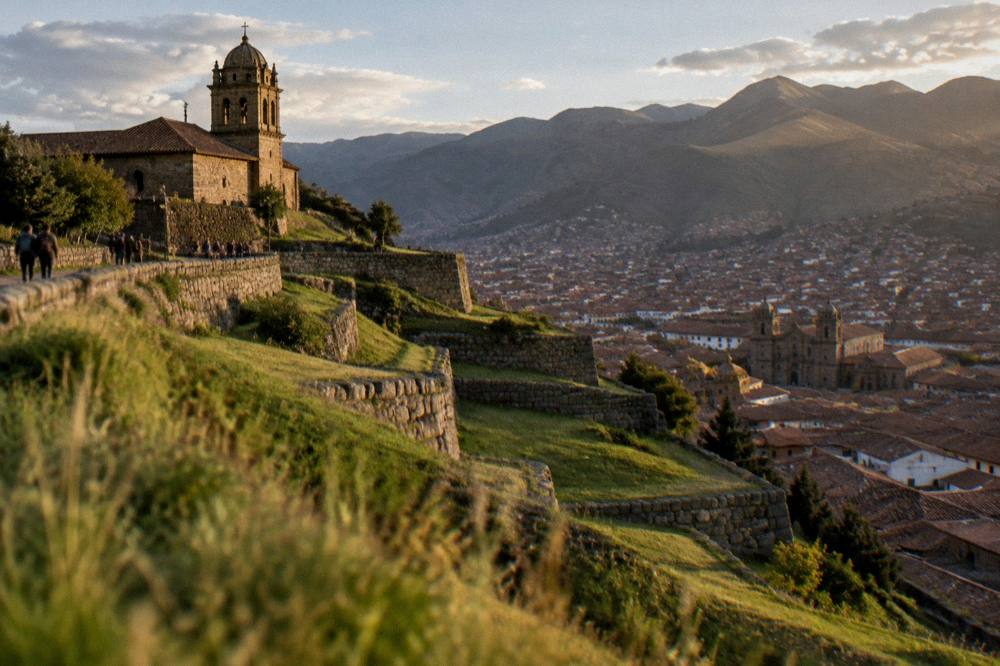
The foreground is as interesting as the distance. From the statue the ground falls away toward the red roofs of the Cusco historic centre, with the Qorikancha quarter and the Cathedral both identifiable from above, and the hillside itself is part of the Sacsayhuaman park, so the walk down passes Inca wall lines and open grass used by locals for picnics and games. Photographers will find the light changes fast at this altitude: mornings are crisp and clear, and late afternoons in the dry season can turn the whole city gold before the temperature drops, with mean June and July minimums of 0.3 C and 0.1 C at the Cusco station making the descent a cold one after sunset.
Is Cristo Blanco Free To Visit?
The Cristo Blanco statue and its terrace are an open hillside landmark rather than a ticketed site, and the verified sources hold no admission fee, opening hours or ticketing system for it. What costs money on the same hillside is the Inca archaeology: Sacsayhuaman and its neighbours sit on the Boleto Turistico, the COSITUC ticket sold in person in Cusco. The distinction matters because a walk to the statue can pass through or beside the Sacsayhuaman park, and the Boleto is checked at the Inca sites, not at the statue. COSITUC's own tarifario and FAQ state the current prices clearly: the integral Boleto Turistico for a foreign adult is S/ 130, about US$38, valid for 10 days and covering 16 sites, while the partial circuits cost S/ 70 each, about US$20, with Circuit I covering Sacsayhuaman, Q'enqo, Puka Pukara and Tambomachay. COSITUC sells the ticket in person only, at its counter on Av. El Sol 103 and at most included sites, and its FAQ states plainly that there are no online sales.
The Boleto structure, from COSITUC's own pages, breaks down like this:
| Ticket | Price (foreign adult) | Validity | Sites |
|---|---|---|---|
| Integral (BTCI) | S/ 130 (about US$38) | 10 days | All 16 sites |
| Partial Circuit I (BTCPI) | S/ 70 (about US$20) | 1 day | Sacsayhuaman, Q'enqo, Puka Pukara, Tambomachay |
| Partial Circuit II (BTCPII) | S/ 70 (about US$20) | 2 days | Qorikancha site museum, regional and contemporary art museums, popular art museum, Qosqo centre, Pachacutec monument, Tipon, Pikillacta |
| Partial Circuit III (BTCPIII) | S/ 70 (about US$20) | 2 days | Pisac, Ollantaytambo, Chinchero, Moray |
| Foreign student integral (BEE) | S/ 70 (about US$20) | 10 days | All 16 sites |
Children are free to age 9 and ages 10 to 17 pay the student price with ID, per the same COSITUC FAQ. One caution worth repeating: Machu Picchu is not among the 16 sites, and the Machu Picchu day trip page covers how that separate ticket works on the Ministry of Culture platform.
When Is The Best Time To Visit The Cristo Blanco Viewpoint?
The dry season, roughly May to September, gives the clearest panorama over Cusco, and within any day the morning offers the most reliable light, because cloud and rain build through the afternoons in the wet months of November to March. The climate record behind that is the WMO World Weather Information Service normal for the Cuzco station, supplied by SENAMHI, a historical normal that the station record does not date to the 1991 to 2020 period. It shows June, July and August with almost no rain at all, 1.5 mm, 4.0 mm and 8.6 mm respectively, against 145.3 mm in January and 133.7 mm in February. It also shows the trade-off of the dry months: June and July nights average 0.3 C and 0.1 C, with SENAMHI's own frost pages putting the heladas season across the high Cusco basin from April to September, so a dry-season sunset visit means descending in near-freezing air.
| Month | Mean max C | Mean min C | Rain mm |
|---|---|---|---|
| Jan | 18.9 | 6.6 | 145.3 |
| Feb | 18.8 | 6.5 | 133.7 |
| Mar | 19.1 | 6.2 | 107.0 |
| Apr | 19.7 | 4.9 | 43.2 |
| May | 19.8 | 2.5 | 8.7 |
| Jun | 19.5 | 0.3 | 1.5 |
| Jul | 19.1 | 0.1 | 4.0 |
| Aug | 19.8 | 1.6 | 8.6 |
| Sep | 19.8 | 3.9 | 21.8 |
| Oct | 20.9 | 5.5 | 39.4 |
| Nov | 20.7 | 6.1 | 71.9 |
| Dec | 19.4 | 6.4 | 122.7 |
The wet season is not a write-off. The same record shows daytime maximums barely move all year, and the hills around Cusco turn green between November and March, which changes the look of the panorama completely: brown slopes in July, green ones in February, with the daily swing in temperature, about 19 C in July against 12.3 C in January, meaning the afternoons stay mild even when the mornings are damp. The one thing the sources do not support is a crowd calendar for the statue itself; no count of its visitors is on record, so this guide stays silent on that and notes only what MINCETUR's dataset does count, the Saqsaywaman explanada next door at 944,008 visits in 2025.
What Else Sits On The Hills Above Cusco?
The hills above Cusco hold a chain of Inca sites and lookouts, and Cristo Blanco sits at the near end of it: Sacsayhuaman's walls and explanada, the rock chambers of Q'enqo, the small fort of Puka Pukara and the water shrine of Tambomachay, all on the same northern slope and all on the Boleto Turistico's Circuit I. This is the most walkable cluster of Inca archaeology anywhere around the city, and the statue is the natural first or last stop on the loop. Sacsayhuaman is the headline: the site's place record puts it at 3,701 m, the highest of the Cusco-area elevations in the verified pack, and MINCETUR's 2025 dataset counted it among the department's most-visited recorded sites. From the statue the walk across to it crosses open hillside with the city on one side and the Inca park on the other.
| Site on the hillside | Elevation | On the Boleto Turistico |
|---|---|---|
| Plaza de Armas (city base) | 3,335 m | Not applicable, public square |
| Cristo Blanco viewpoint | No verified figure | No, open hillside |
| Sacsayhuaman | 3,701 m | Yes, Circuit I |
| Q'enqo | No verified figure | Yes, Circuit I |
| Puka Pukara | No verified figure | Yes, Circuit I |
| Tambomachay | No verified figure | Yes, Circuit I |
Below the hills, the descent drops into the artisan quarter of San Blas and then into the centre, where the Qorikancha site museum, the Cusco Cathedral and the twelve-angled stone on Hatunrumiyoc street make a natural second half of the day. The twelve-angled stone, for the record, is exactly what the site's guide says it is: a large, finely fitted polygonal stone in an Inca wall near the Plaza de Armas and San Blas, with no verified weight, builder or measurement attached to it. The hillside loop and the city loop together are the shape of a full day in Cusco, and the acclimatisation day guide on this site is built around exactly that pattern.
What Tours And Experiences Pair Well With Cristo Blanco?
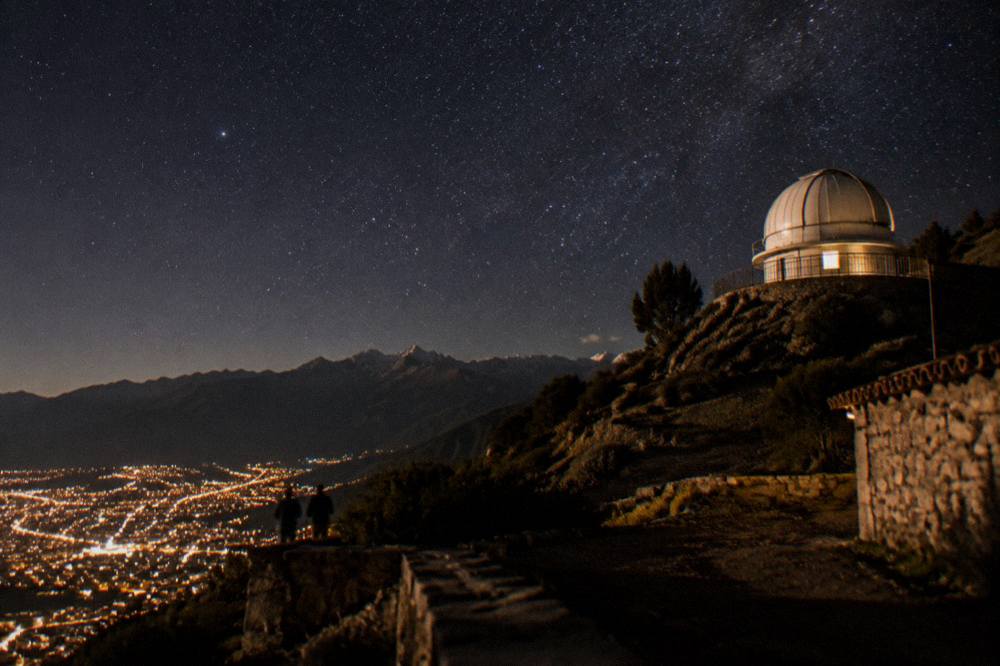
The natural pairings for a Cristo Blanco visit are the hillside archaeology walks, a city walking tour that explains the Inca foundations under the colonial streets, and, for the evening, the Planetarium Cusco session on the same side of the city, which shows the southern sky the Incas read from these very hills. The statue is a free-standing stop, so it folds easily into something larger. A guided city walk puts the view in context, and the roster carries several options, including free, tip-based walks on GuruWalk such as the YANA walking tour of the historic centre run by Yana Tour Operator, and paid options like the half-day city tour that covers the four ruins on the hillside. The Planetarium is this page's featured pairing because it extends the same idea upward: the Incas were sky-watchers, and the Cusco Planetarium page covers what the sessions involve.
Two other roster products sit well with a hillside day. Tandem paragliding over the Sacred Valley gives a different aerial perspective on the same landscape, from the valley floor near Pisac and Ollantaytambo rather than from a city hillside, and the Moray, Maras salt mines and Chinchero weavers tour covers the Inca agricultural terraces and working salt pans on the valley side of the same high plain. Both are day trips out of the city rather than city sights, which is precisely the point: Cristo Blanco is the in-town high point, and these are the next ring out.
For visitors who want the hillside explained rather than just walked, the half-day city tour with Sacsayhuaman and Q'enco on the roster covers the same ground with a guide, and the Cusco city tour guide on this site compares the options in detail. The free walking tours guide lists the GuruWalk options, including the Free Tour in Cusco with local guide Frank Emerson, where GuruWalk must be named because the walk is free and tip-based and the platform is where it runs.
What Should You Know Before Walking Up To Cristo Blanco?
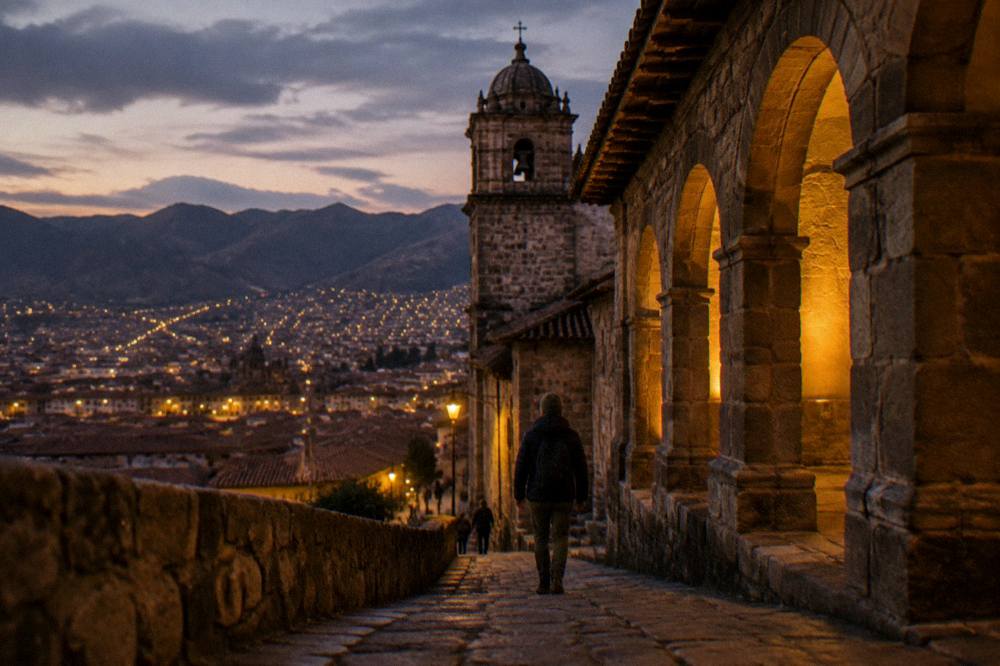
Three things carry the walk: altitude, weather and daylight. Cusco's Plaza de Armas is at 3,335 m and the statue is higher, so the CDC's Yellow Book advice on graded ascent applies, and the dry-season nights drop close to freezing, so a sunset visit needs layers for the way down. On altitude, the CDC names Cusco a rapid-ascent destination and prefers graded ascent where it is feasible, with acetazolamide a prescription decision to take with a doctor rather than a self-serve purchase; nobody publishes a day count for acclimatisation, and this guide does not invent one. On weather, the monthly table above is the honest picture: a June afternoon is likely clear and a January afternoon is not, but the daytime maximums barely differ between them. On daylight, the site's records establish only the city's latitude and the UTC-5 time zone with no daylight saving; the practical point is that Andean evenings cool fast, and a descent after dark on wet stone steps is a different walk from a morning one.
A short planning summary pulls the verified pieces together:
| Question | Answer from the verified sources |
|---|---|
| What is it | A white Christ statue and viewpoint on the hills north of the Plaza de Armas |
| Admission | No verified fee; the statue is an open hillside landmark |
| The hillside ticket | Boleto Turistico Circuit I, S/ 70 (about US$20), covers Sacsayhuaman, Q'enqo, Puka Pukara, Tambomachay |
| Where the Boleto is sold | In person only, COSITUC counter at Av. El Sol 103, daily 07:30 to 18:00, and at most included sites |
| City elevation | Plaza de Armas 3,335 m; Sacsayhuaman 3,701 m |
| Best months for the view | Dry season, roughly May to September, 1.5 to 8.7 mm of rain per month at the Cuzco station |
| Coldest months | June and July, mean minimums 0.3 C and 0.1 C |
The Cristo Blanco viewpoint earns its place on any Cusco itinerary because it is the one stop that shows the whole city at once, Inca walls, colonial domes and modern rooftops in a single Andean basin, and because the climb to it passes through the most characterful streets and the most important archaeology in the department, all within a morning's walk of the Plaza de Armas.
Common Questions About The Cristo Blanco Viewpoint
Is Cristo Blanco in Cusco free to visit?
The verified sources hold no admission fee, hours or ticketing for the statue; it is an open hillside landmark. The nearby Inca sites on the same hillside, Sacsayhuaman, Q'enqo, Puka Pukara and Tambomachay, are on the Boleto Turistico Circuit I at S/ 70 for a foreign adult, about US$20.
How do you get to Cristo Blanco from the Plaza de Armas?
On foot, up the stepped lanes from the historic centre through or past the San Blas quarter onto the open hillside to the north. The site's place records put the statue on the hills north of the Plaza de Armas, on the same slope as Sacsayhuaman. No verified walking time exists, so plan it as a steady climb at altitude.
Can you combine Cristo Blanco with Sacsayhuaman?
Yes, and that is the standard walk. The statue and the Sacsayhuaman park share the same hillside above the city, and the paths between them cross open ground with the city panorama on one side. Sacsayhuaman requires a Boleto Turistico; the statue does not.
When is the best time of day to photograph the view?
Morning, in most months. The WMO and SENAMHI historical normal for the Cuzco station shows rain concentrated in the afternoons of the wet season, November to March, while the dry months, roughly May to September, bring 1.5 to 8.7 mm of rain a month and clear skies. Dry-season evenings turn cold fast, with June and July mean minimums of 0.3 C and 0.1 C.
Is the walk to Cristo Blanco hard at Cusco's altitude?
It is a real climb. The Plaza de Armas sits at 3,335 m and the statue is higher on the slope toward Sacsayhuaman at 3,701 m. The CDC Yellow Book names Cusco a rapid-ascent destination and prefers graded ascent, so the walk fits best after a day or more in the city, and anyone considering medication should speak to a doctor first.
What else should you see on the same day?
The hillside loop covers Sacsayhuaman, Q'enqo, Puka Pukara and Tambomachay on the Boleto, then descends through San Blas to the centre, where the Qorikancha site museum, the Cathedral and the twelve-angled stone on Hatunrumiyoc street complete the day. The evening option is the Planetarium Cusco session, which this page pairs with the viewpoint.