ChocoMuseo Cusco
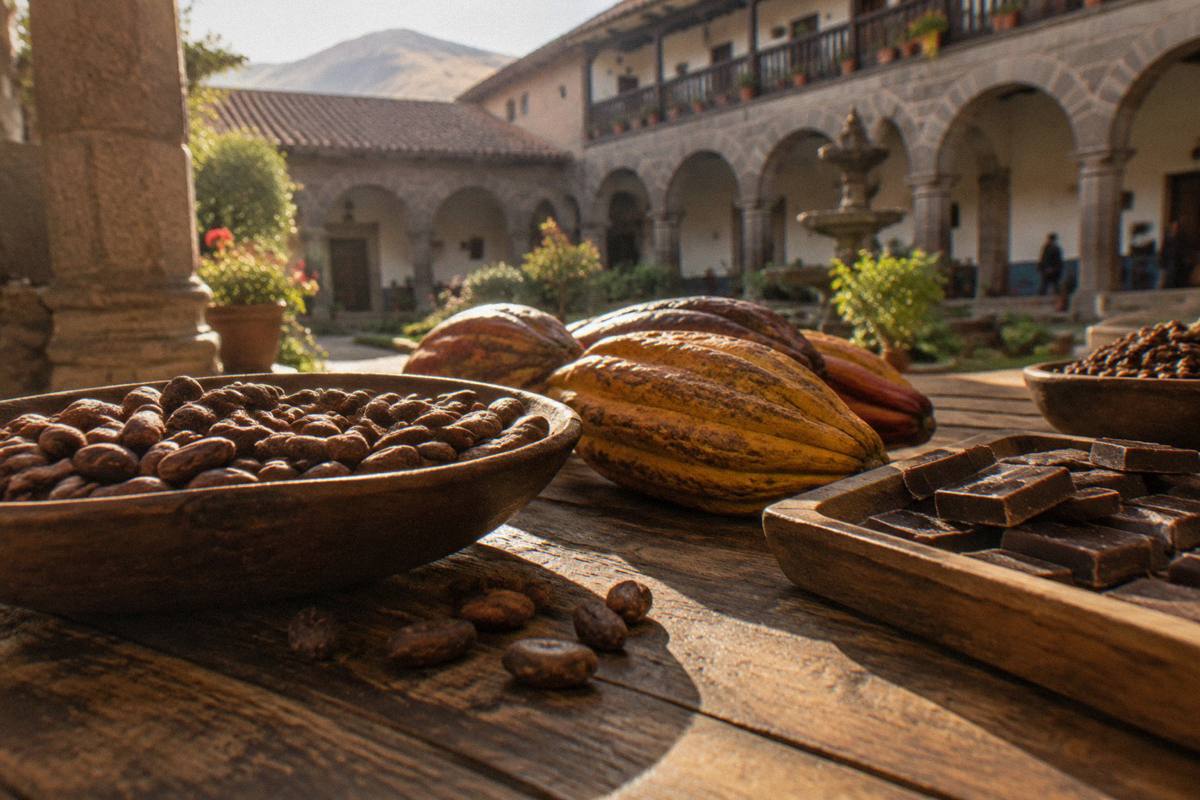
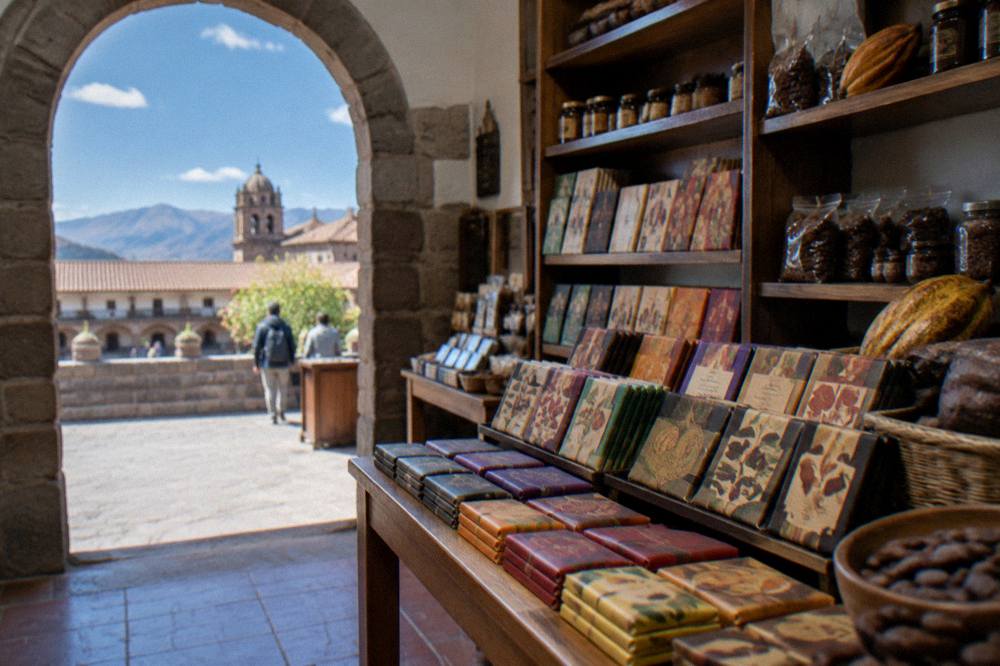
ChocoMuseo Cusco, a short walk from the Plaza de Armas, mixes a free walk-through museum about Peruvian cacao with paid workshops where visitors roast, grind and mould their own chocolate.
Short answer
ChocoMuseo Cusco is a bean-to-bar chocolate museum and workshop near the Plaza de Armas in Cusco, Peru. The exhibits and tastings are free to browse, and the paid workshops walk participants through the full process from raw cacao bean to a moulded bar.
ChocoMuseo Cusco is a chocolate museum and workshop space in the historic centre of Cusco, the Andean city in southern Peru whose Plaza de Armas sits at 3,335 m. The venue combines a walk-through museum about Peruvian cacao, a shop and a cafe with hands-on workshops in which participants turn raw beans into their own moulded chocolate. It sits a short walk from the Plaza de Armas, which makes it one of the easiest indoor stops to fold into a day of sightseeing, and its two-hour format suits the acclimatisation window that many visitors build into a first day at altitude.
What Is ChocoMuseo Cusco?
ChocoMuseo Cusco is a bean-to-bar chocolate museum, shop and workshop venue in central Cusco, part of a small chain of chocolate museums that operates in Peru. Entry to the museum exhibits and tastings is free, and the paid workshop takes participants through roasting, grinding, tempering and moulding their own chocolate from cacao grown in Peru.
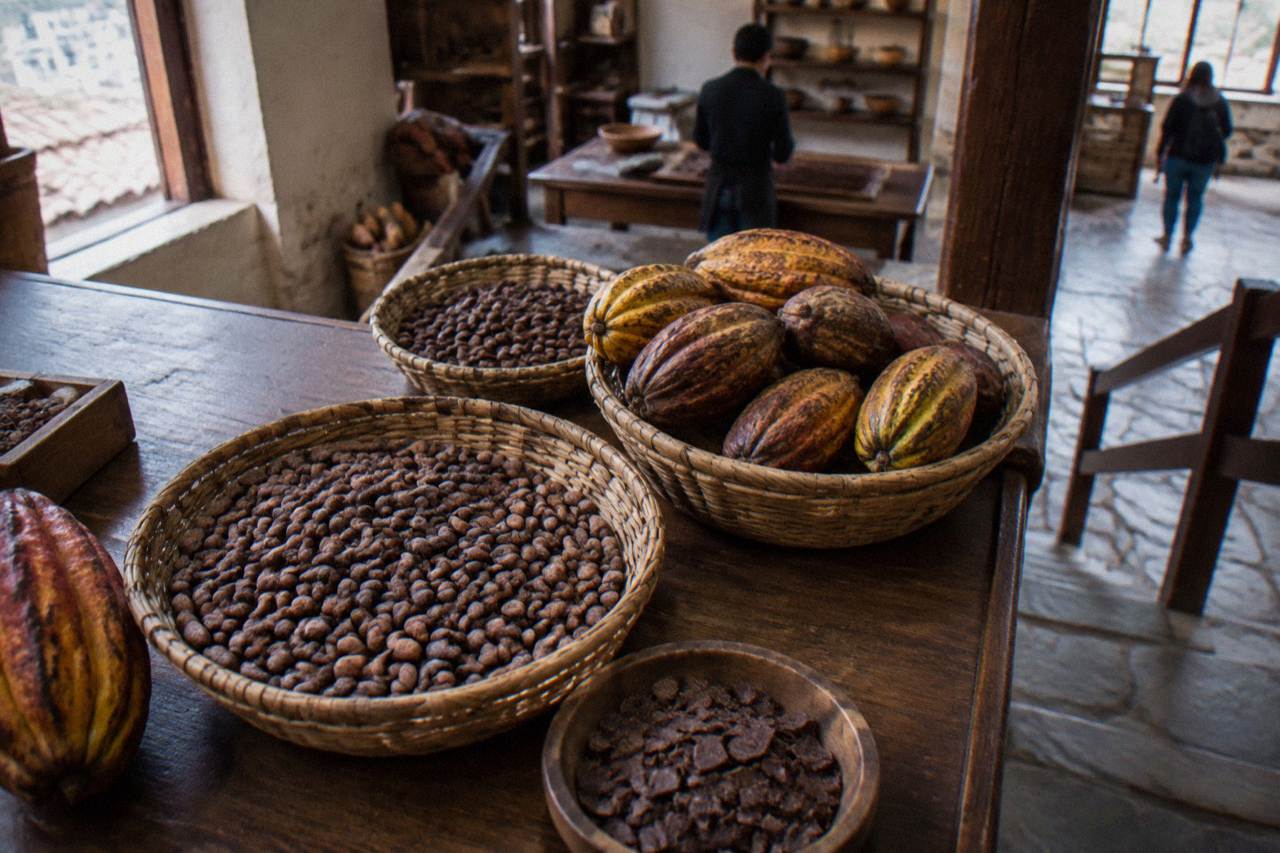
The museum side of the venue explains where cacao comes from and how it becomes chocolate. Displays cover the cacao tree itself, the fermentation and drying of the harvested pods, and the roasting and winnowing that turn dried beans into nibs ready for grinding. Tastings let visitors sample drinking chocolate in the style drunk in the region for centuries, alongside bars made on site. The shop sells the same bars, along with truffles and cacao-based products.
The workshop side is the main draw for families and for travellers who want a two-hour indoor activity between heavier days of ruins and hikes. Participants work in small groups with an instructor, roast beans over a heat source, peel and grind them into a paste, then temper and mould that paste into bars or figures to take away. No prior skill is involved, and the session is designed so that children can take part alongside adults. The operator's live listing carries the current price, rating and duration.
For visitors planning the rest of the city, the venue pairs naturally with the Plaza de Armas and the walk up to San Pedro Market, both within easy reach on foot. This site's Cusco Historic Centre guide lays out a walking order for the whole old quarter.
How Much Does The ChocoMuseo Workshop In Cusco Cost?
The workshop's price, rating and duration are printed on the operator's live listing rather than fixed on this page, because the venue sells several formats and the figures change with season and availability. The museum exhibits and tastings carry no entry charge, so a visit with no workshop costs nothing beyond anything bought in the shop or cafe.
Two workshop products from this venue appear on this site's roster. The listing described as Cusco: ChocoMuseo's Chocolate Workshop covers the full bean-to-bar process in a two-hour session, and the listing described as Bean to Bar Chocolate Workshop in ChocoMuseo Cusco covers the same format with a slightly different package. Both run as bookable experiences with everything provided, from the raw beans to the moulds, and both state free cancellation in their listing terms.
The honest way to compare them is on the tour cards themselves, which show the live price, the current rating and the review count side by side. This site does not type those figures into prose, because a workshop price moves with the season and with the package, and a stale number printed on a static page helps nobody.
Alongside the chocolate workshop, Cusco carries a wider food-and-drink scene that this site covers elsewhere: the cooking classes guide compares the market-tour-and-cook formats, and the Cusco food and eating guide explains the dishes worth ordering once the workshop is done.
Is The Chocolate Museum In Cusco Worth Visiting With Kids?
Yes, the workshop is one of the more reliable child-friendly activities in Cusco, because it is indoors, seated, short and hands-on, and it needs no walking at altitude beyond the stroll to the door. The museum exhibits are free to browse, and children can join the workshop alongside adults, which makes the venue a practical pick for a first acclimatisation day.
The first day in Cusco is a delicate one for families. The city sits at about 3,300 to 3,400 m, and the CDC Yellow Book advises a graded approach to altitude, which makes a low-effort indoor activity a sensible use of the hours when a hike would be a mistake. A chocolate workshop fits that window well: there is a chair, a table, a warm drink and a finished bar to carry home at the end.
The Cusco With Kids guide on this site lists the workshop among the city's family options, alongside the Cusco Planetarium and the Awana Kancha textile centre, both of which also work as gentle half-day stops. For a fuller acclimatisation plan, the acclimatisation day guide sets out what a first 24 hours in the city can hold.
A practical note on timing: the workshop is a fixed-length session, and its exact duration and start times are shown on the operator's live listing. Visitors should book the slot they want in advance in high season, when the city is at its busiest, and check the meeting point details on the booking confirmation.
Where Is ChocoMuseo Cusco And How Do You Get There?
ChocoMuseo Cusco sits in the historic centre of Cusco, within a short walk of the Plaza de Armas, the square that marks the old city's centre at 3,335 m. No transport is needed from the central hotels: the venue is reached on foot, and the walk from the square involves the gentle stone streets and a few steps typical of the old quarter.
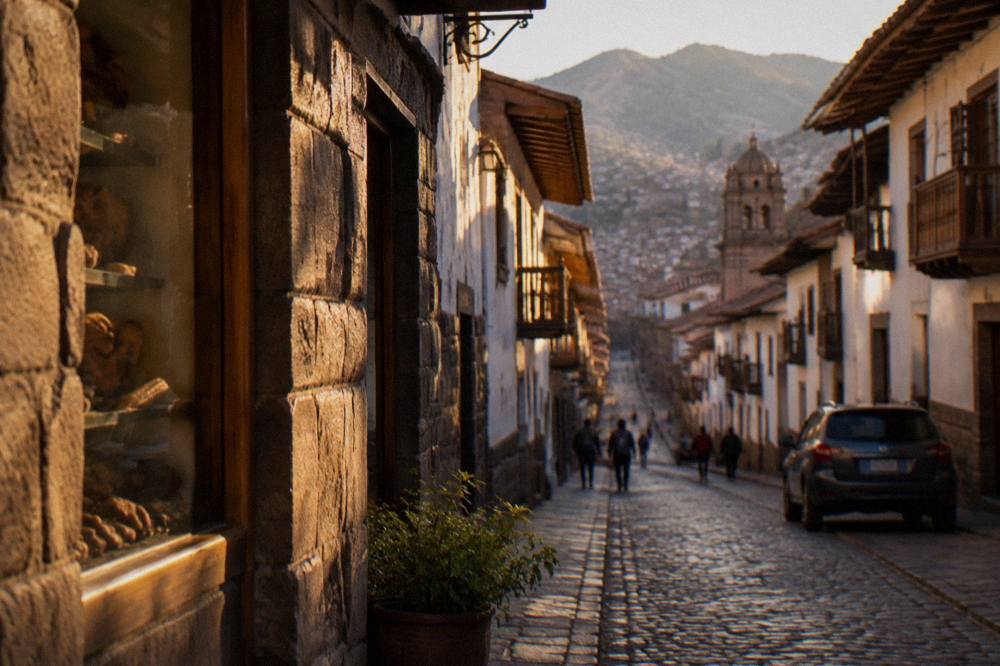
The historic centre is compact, and this site's is Cusco walkable answer covers the terrain in detail: the centre is walkable, but the hills are real, and the streets around San Blas climb. A visitor staying near the square reaches the chocolate museum in minutes. A visitor staying in the Sacred Valley and commuting in for the day should allow more time, since the valley towns sit lower and the road climbs.
The nearest big landmarks for orientation are the Cusco Cathedral on the Plaza de Armas and the Qorikancha site a few blocks south, both of which appear on the Cusco map page. San Pedro Market lies downhill toward the old quarter's edge, and the three stops can be chained into one walk.
What Do You Actually Make In A Bean-To-Bar Workshop?
Participants make their own chocolate from raw cacao beans, following the same sequence a small chocolate maker uses: roasting the beans, peeling and crushing them into nibs, grinding the nibs into a paste, then tempering and pouring the paste into moulds to set. The finished bars and figures go home with the participant at the end of the session.
The session starts with the raw material. Cacao grows in the low, warm valleys of Peru, not at Cusco's altitude, so the beans used in the workshop arrive from growing regions and are worked on site. The instructor walks the group through fermentation and drying, the two steps that happen at the farm and that create most of the flavour before roasting begins. Everything else covered here is indexed on Things To Do In Cusco Peru.
Roasting happens over heat in the workshop room. The beans are then cracked and winnowed, which separates the nib from the husk, and the nibs are ground into a paste. Depending on the format, the group may also prepare a drinking chocolate in the traditional style, which involves no tempering at all and is simply the ground paste whisked into hot liquid.
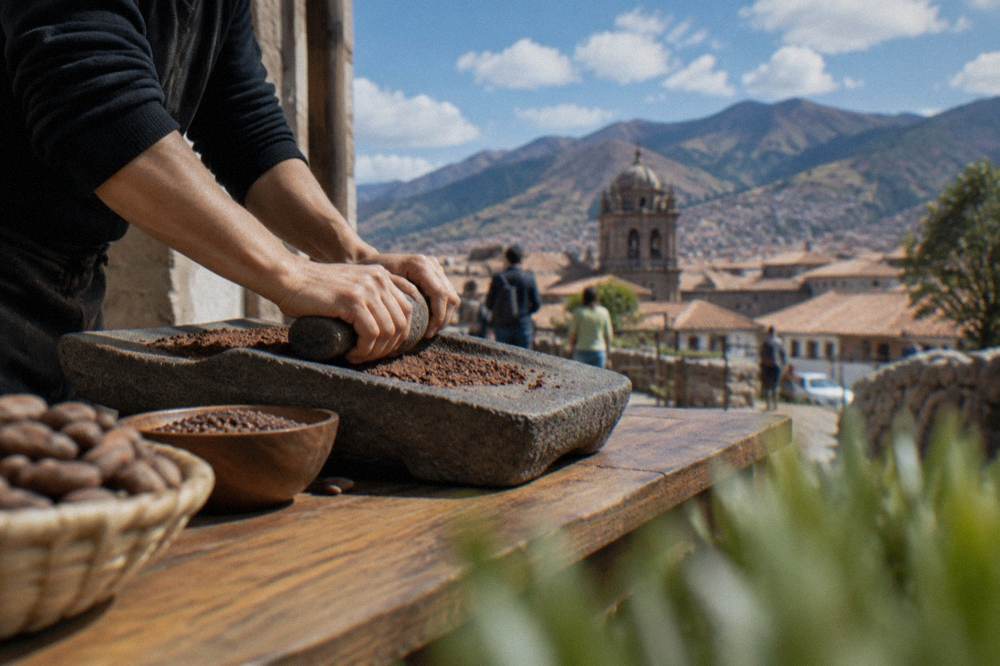
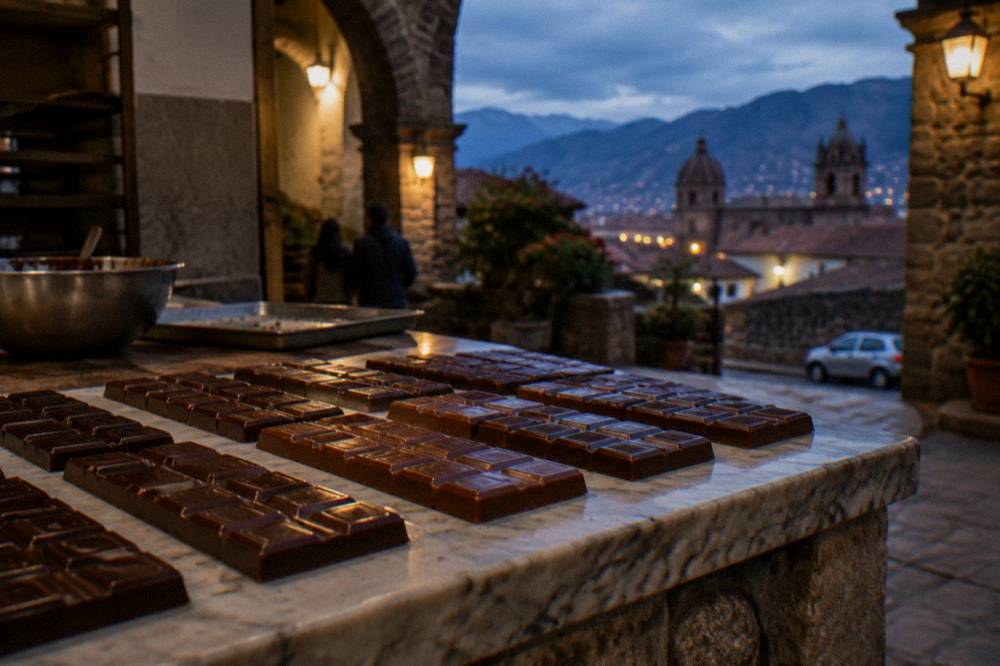
Tempering is the step that gives a finished bar its snap and gloss. The paste is heated and cooled on a marble surface to align the cocoa butter crystals, then poured into moulds. The moulds go into a cooler to set, and the session ends when the bars are firm enough to wrap and take away. The whole sequence is designed to be completed by an absolute beginner.
How Does The Workshop Compare With Other Cusco Food Experiences?
The chocolate workshop is the shortest and most child-friendly of Cusco's bookable food experiences, while the cooking classes and street-food walks run longer and centre on full dishes rather than a single ingredient. The workshop suits a first day at altitude; the cooking classes suit visitors who want to cook Peruvian food at home afterwards.
The table below compares the food-and-drink products on this site's roster by format. Prices, ratings and durations are printed on the tour cards, not in this table, because those figures render from verified data and change with the season.
| Experience | Format | What You Take Away | Best For |
|---|---|---|---|
| ChocoMuseo chocolate workshop | Hands-on bean-to-bar session | Your own moulded chocolate | Families, first day at altitude |
| Cooking class plus San Pedro Market tour | Market visit then cooking | The dishes you cooked | Visitors who want recipes to repeat |
| Peruvian cooking class with cocktails and market tour | Market visit, cooking, cocktail making | Dishes and cocktail skills | Adults wanting a longer session |
| Central market food walking tour | Guided tasting walk | A full stomach, no cooking | Short visits, food-first travellers |
| Street food walking tour | Small-group street tasting walk | Regional snacks and sweets | Adventurous eaters |
The cooking classes guide compares the class formats in depth, and the Cusco markets guide covers the market side. For the drinking half of the city's food scene, the Cusco nightlife guide lists the bar and pub-crawl products, including a pisco sour mixology session.
What Can You Combine With A Visit To ChocoMuseo Cusco?
A visit to ChocoMuseo Cusco combines naturally with the Plaza de Armas, the Cusco Cathedral, San Pedro Market and the Qorikancha site, all of which sit within the walkable historic centre, and with the Sacsayhuaman hill sites above the city for a half-day that mixes chocolate with archaeology.
The classic pairing is chocolate in the morning and ruins in the afternoon, or the reverse. The four ruins above the city, Sacsayhuaman, Qenqo, Puka Pukara and Tambomachay, are covered by the Boleto Turistico's Circuit I, priced at S/ 70 for foreign tourists, and the four ruins of Cusco page explains the half-day format. The full integral Boleto costs S/ 130 and is valid 10 days, sold in person only at Av. El Sol 103 and at most included sites.
A quieter pairing keeps everything on the flat: the twelve-angled stone on Hatunrumiyoc street, the Inca Museum and San Pedro Market can be walked in a loop with the chocolate museum in the middle. The 1 day in Cusco and 2 days in Cusco itineraries place these stops in a working order.
| Pairing | Stops | Ticket Needed |
|---|---|---|
| Chocolate and the old quarter | ChocoMuseo, Plaza de Armas, Cathedral, twelve-angled stone | Cathedral entry separate; no Boleto site on this loop |
| Chocolate and the hill ruins | ChocoMuseo, Sacsayhuaman, Qenqo, Puka Pukara, Tambomachay | Boleto Circuit I, S/ 70 |
| Chocolate and the museums | ChocoMuseo, Inca Museum, MAP | Inca Museum S/ 20; MAP S/ 20 general, S/ 10 students |
| Chocolate and the market | ChocoMuseo, San Pedro Market, Qorikancha | Qorikancha museum on Boleto Circuit II |
For visitors heading out of the city afterwards, the Sacred Valley and Machu Picchu dominate the itineraries, and the second half of this page turns to those.
When Is The Best Time To Visit ChocoMuseo Cusco?
The museum and workshop run year-round, and the best time to slot them in is the dry season window of roughly May to September, when Cusco's days are clear and the indoor session can be paired with outdoor sightseeing, though the wet season months of November to March bring fewer crowds at the city's busiest sites.
Cusco's seasons are inverted relative to the northern hemisphere, so June to August is winter here: dry, clear days with cold nights and frost in June and July, while December to March carries 71.9 percent of the year's 707.8 mm of rain at the WMO and SENAMHI "Cuzco" station's historical normal. Mean daily maximums stay between 18.8 and 20.9 C all year, so a walk to the chocolate museum is comfortable in any month.
The practical argument for the wet season is space. The best time to visit Cusco guide and the Cusco weather by month guide break the trade-offs down month by month. A chocolate workshop is one of the few Cusco activities that loses nothing to a rainy afternoon, which makes it a useful wet-season reserve.
| Period | Cusco Conditions | Workshop Fit |
|---|---|---|
| May to September | Dry season, clear days, cold nights, frost June and July | Book ahead, city is busiest |
| October | Transition month, rain rising | Good balance of weather and space |
| November to March | Wet season, December to March holds most of the year's rain | Easy availability, rain-proof activity |
| April | Rain falling off, valley greening | Comfortable, fewer crowds than mid-year |
Is Cacao Actually Grown Near Cusco?
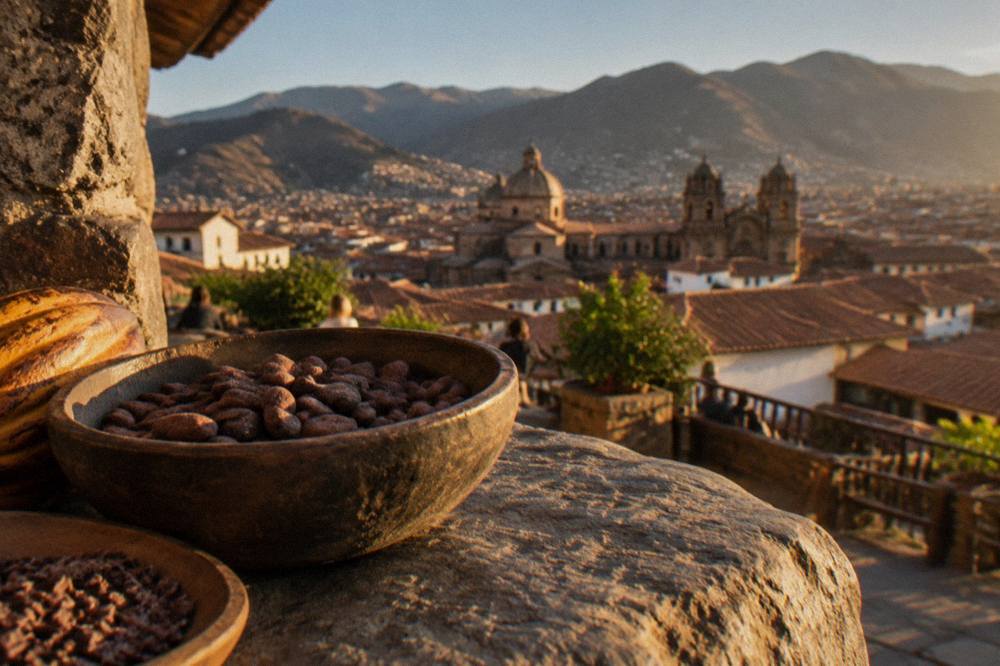
No, cacao is not grown near Cusco, because the crop needs the warm, low valleys of the Peruvian jungle and Cusco sits at about 3,300 to 3,400 m in the high Andes. The beans worked with in the workshop come from growing regions at far lower altitude, and the museum explains that journey from valley farm to Andean workshop.
This is one of the points the museum makes well, and it is the kind of detail that a first page of search results does not spell out. Cusco is a mountain city; cacao is a tropical tree. The chocolate story in Cusco is therefore a story of trade routes that long predate the museum, moving goods between the highlands and the low valleys, the same geography that once fed the Inca road network.
The workshop leans into this. Participants handle beans that were fermented and dried at altitude far below the city, and the instructor explains how the flavour develops in those first farm-side steps before any chocolate maker touches them. The what is Cusco known for page on this site covers the wider food-and-culture picture, and the Cusco travel tips guide collects the practical notes.
What Else Can You Do Around Cusco After The Chocolate?
After a chocolate session in the city, the standard next steps are the Sacred Valley day trips, the Machu Picchu visit and the high-altitude mountain hikes, with Rainbow Mountain, Palccoyo, Humantay Lake and the Ausangate lakes all reachable as full-day tours from Cusco.
The Sacred Valley sits lower than Cusco, which is why many itineraries move down to Ollantaytambo or Pisac after a first acclimatisation day in the city. The valley's Moray terraces and Maras salt mines make a half-day pairing, and the salt mines carry a separate community fee of about S/ 15 to S/ 20, outside the Boleto. The Sacred Valley guide and the stay in Cusco or the Sacred Valley answer cover the base decision.
Machu Picchu has exactly one page on this site, the Machu Picchu day-trip guide, which covers the citadel at 2,430 m, lower than Cusco, and the three circuits and ten routes in force since 1 June 2024. Tickets are sold on the Ministry of Culture's platform or in person at Machu Picchu Pueblo, and a guide is recommended rather than mandatory under the current rules. The train journey and the ticketing details belong to that page.
| Day Trip From Cusco | Area | Altitude Note |
|---|---|---|
| Sacred Valley tour | Pisac, Ollantaytambo, Maras, Moray | Valley towns sit lower than Cusco |
| Machu Picchu | Citadel at 2,430 m | Lower than Cusco, reached by train and bus |
| Rainbow Mountain (Vinicunca) | About 5,000 m | Higher than Cusco, community fee S/ 25 to S/ 30 in cash |
| Palccoyo | Viewpoint at 4,900 m | Lower climb than Vinicunca, fee about S/ 20 |
| Humantay Lake | About 4,200 m | Steep final walk, fee reported S/ 10 to S/ 20 |
The mountain hikes are covered in depth on the day hikes from Cusco and Rainbow Mountain pages, and the Rainbow Mountain vs Palccoyo comparison settles the most common either-or question.
Common Questions About ChocoMuseo Cusco
Is ChocoMuseo Cusco free to enter?
The museum exhibits and tastings are free to browse. The workshops are paid experiences, and their current prices are shown on the operator's live listing rather than printed here.
How long does the chocolate workshop in Cusco take?
The workshop's duration is printed on the tour card from the operator's live listing. The session is designed as a short, seated indoor activity that fits into a half-day in the historic centre.
Can children join the ChocoMuseo workshop in Cusco?
Yes. The workshop is a hands-on, seated format that children can take part in alongside adults, which makes it one of the more practical family activities in a city where much of the sightseeing involves walking at altitude.
Where is ChocoMuseo Cusco located?
The venue sits in the historic centre of Cusco, within a short walk of the Plaza de Armas, the square at the heart of the old city. No transport is needed from central hotels.
Do you need to book the ChocoMuseo workshop in advance?
Booking ahead is sensible in the dry season months of roughly May to September, when Cusco is at its busiest. The operator's live listing shows current availability and the cancellation terms, which include free cancellation up to 24 hours before the start on the standard product.
Is cacao grown in Cusco?
No. Cacao grows in the warm, low valleys of the Peruvian jungle, not at Cusco's altitude of about 3,300 to 3,400 m. The beans used in the workshop come from growing regions far below the city, and the museum explains that journey.