Cusco Planetarium
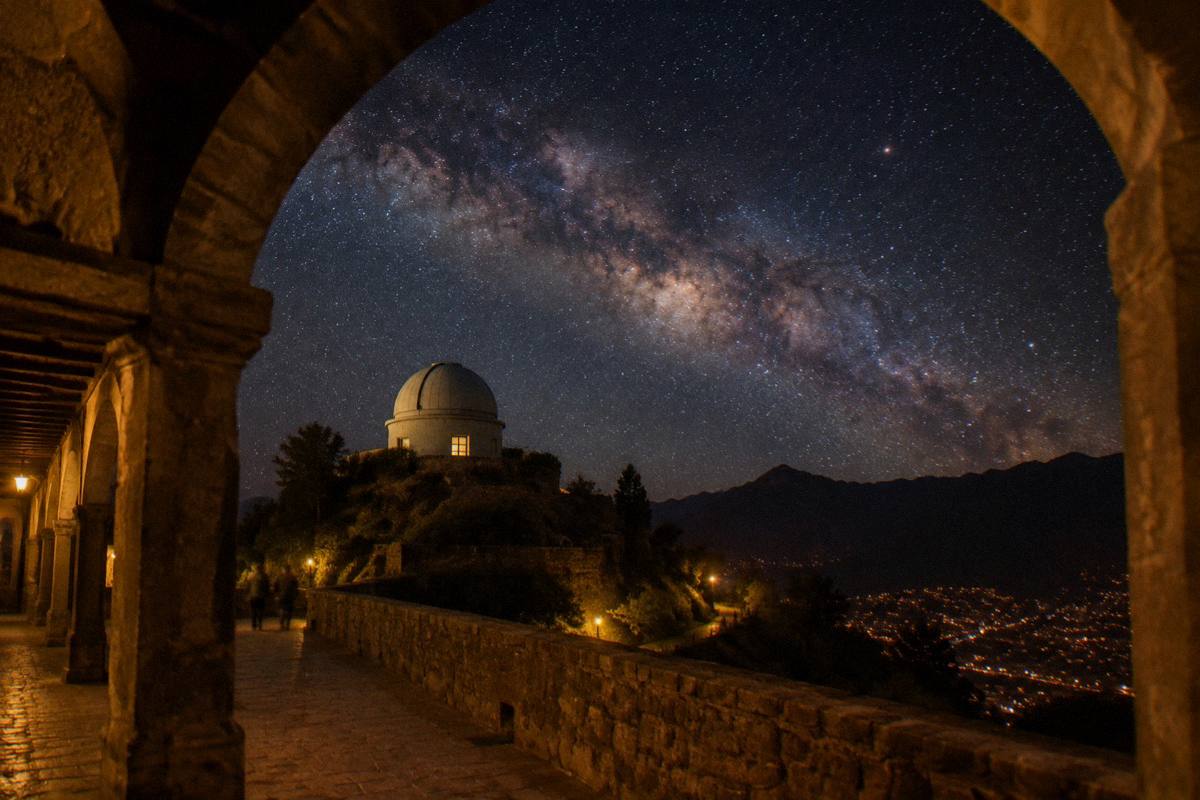
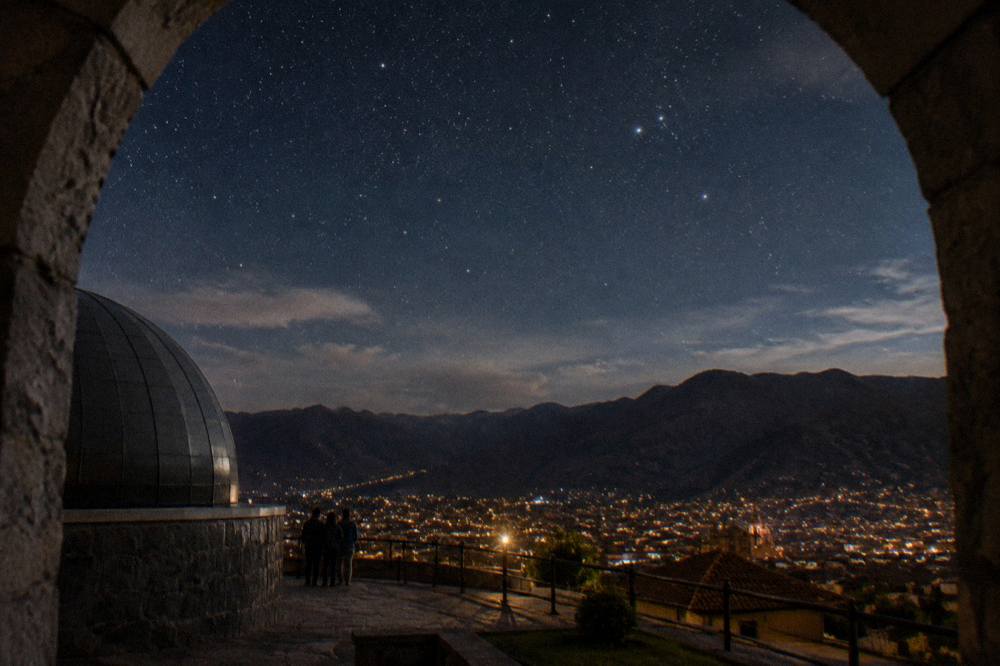
The Cusco Planetarium is a small, family-friendly astronomy attraction on the hills above the city, where visitors look at the night sky through telescopes and hear how Andean cultures read the stars.
Short answer
The Cusco Planetarium is an astronomy attraction above the city of Cusco, Peru, offering evening shows with telescopes and explanations of the southern sky. Its admission listing states that prebooking guarantees a visit and round-trip transport from central Cusco.
Cusco, the historic city in the Andes of southern Peru, sits at 3,335 m on the Plaza de Armas, and its high, thin, dry air gives it something few big tourist cities can offer: a night sky. The Cusco Planetarium is the city's dedicated astronomy attraction, a small operation that runs evening sessions combining a presentation, telescope viewing and stories about how the Andean world read the heavens. The admission listing for the planetarium describes it as suited to families and groups interested in astronomy, and states that prebooking guarantees both the visit and round-trip transport.
What Is The Cusco Planetarium?
The Cusco Planetarium is a privately run astronomy attraction on the outskirts of Cusco, Peru, that stages evening sessions about the southern sky and Andean astronomy, followed by telescope viewing when the weather allows. Its own listing presents it as a destination for families and groups curious about astronomy, with round-trip transport from central Cusco included in a prebooked visit.
It is not a government observatory and not a museum in the conventional sense. The session format, as the listing describes it, pairs an indoor presentation with outdoor viewing, which suits Cusco's climate: evenings are cold much of the year, but the dry season, roughly May to September, delivers exceptionally clear skies. The southern hemisphere location matters too. Visitors from Europe or North America see constellations from Cusco that never rise at home, and the Milky Way runs overhead with a brightness that lowland city dwellers rarely experience.
The cultural thread of the presentation is the one that distinguishes a Cusco planetarium from a generic one. Andean societies read the sky closely, and widely documented qualitative accounts describe how Inca astronomy paid as much attention to the dark patches inside the Milky Way as to the bright stars around them, seeing shapes such as a llama in those clouds of dust. The planetarium's session connects that worldview to the same sky visitors then see through the telescope. For readers planning the wider city, the Qorikancha page covers the Inca sun temple at the heart of the historic centre, the single best companion piece to an astronomy evening.
| Cusco fact | Figure | Source basis |
|---|---|---|
| Plaza de Armas elevation | 3,335 m | PromPeru |
| Airport elevation | 3,310 m | OpenStreetMap record |
| Time zone | UTC-5, no daylight saving | WMO station record |
| Currency | Peruvian sol (PEN), written S/ | Central Reserve Bank of Peru |
| Dry season | Roughly May to September | WMO/SENAMHI monthly normals |
| Wet season | Roughly November to March | WMO/SENAMHI monthly normals |
Where Is The Cusco Planetarium And How Do You Get There?
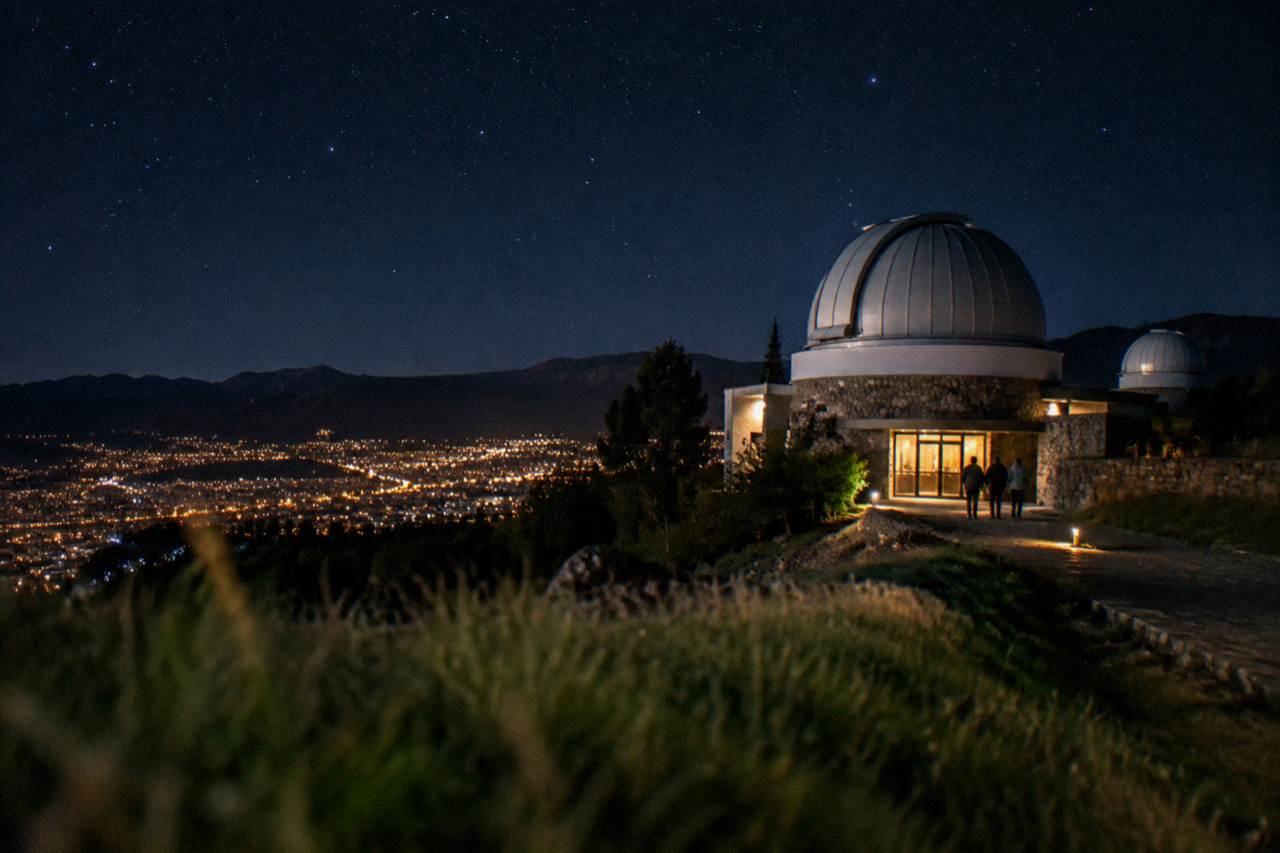
The Cusco Planetarium sits on the hills above the city, away from the light of the historic centre, and a prebooked visit includes round-trip transport from central Cusco, according to its admission listing. That transport matters: the whole point of the location is darker sky than the Plaza de Armas, and the listing states the transfer is part of the booked experience.
The transport arrangement is the practical answer visitors need. Evening sessions end late, Cusco nights are cold, and the planetarium's value depends on being outside the worst of the city glow, so the included pickup and return spare visitors the work of arranging taxis in the dark. Anyone booking independently rather than through the featured listing should confirm the meeting point and the return time before the evening, since schedules can change with the season and the operator.
Altitude is worth a word here. The planetarium sits above a city that already stands at 3,335 m, and the hills around it climb higher still; Sacsayhuaman, the Inca site on the hills to the north, stands at 3,701 m. An evening visit involves no climbing of that kind, but the CDC Yellow Book names Cusco as a rapid-ascent destination and advises graded ascent where possible, so visitors in their first day or two in the city should dress warmly, move slowly and treat the evening as a gentle one. The Sacsayhuaman page covers the daytime side of those same hills.
Can You Book The Cusco Planetarium In Advance?
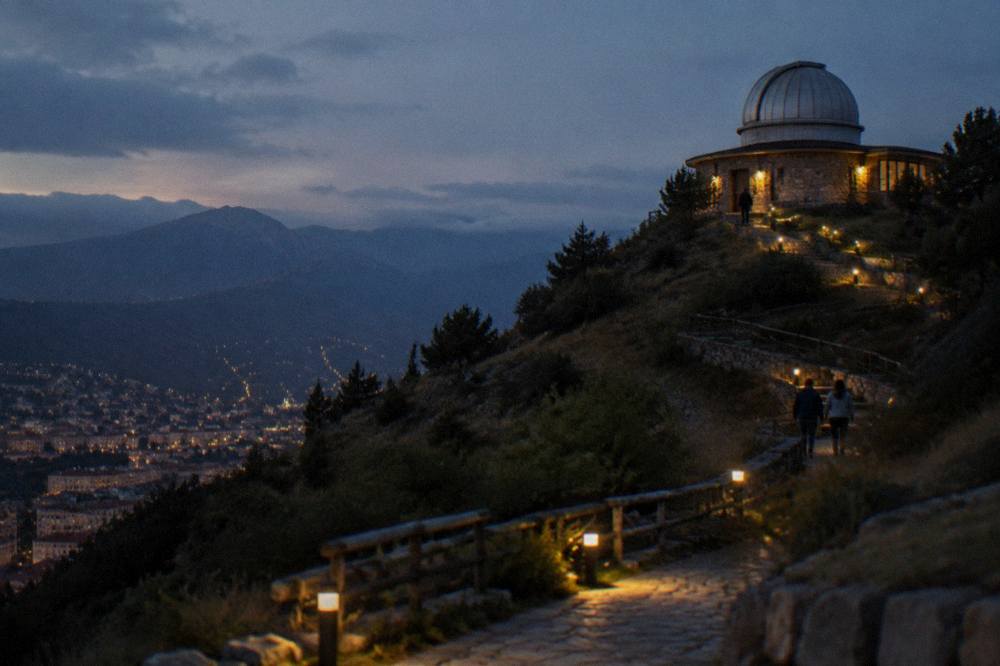
Yes, and the planetarium's own listing says prebooking is the way to guarantee the visit: the admission product reserves the session and includes round-trip transport from central Cusco. Because sessions run in the evening and capacity is small, the listing's guarantee of a reserved place is the main practical argument for booking ahead rather than walking up.
The featured admission ticket on this site is the official-site listing for the planetarium. Its description states that prebooking guarantees the visit and the round-trip transport, and the product card below prints the live price, rating and review figures from the operator's listing. Cancellation terms are shown on the operator's live listing at the point of booking, and the general pattern for this kind of product is that flexibility is stated clearly before payment.
For visitors building a full evening plan rather than a single booking, the planetarium pairs naturally with an early dinner around the Plaza de Armas or a late-afternoon stop at the San Pedro Market before the session. The transfer time is set by the operator, so the practical sequence is to book the planetarium first and fit dinner around the stated pickup.
What Will You See At The Cusco Planetarium?
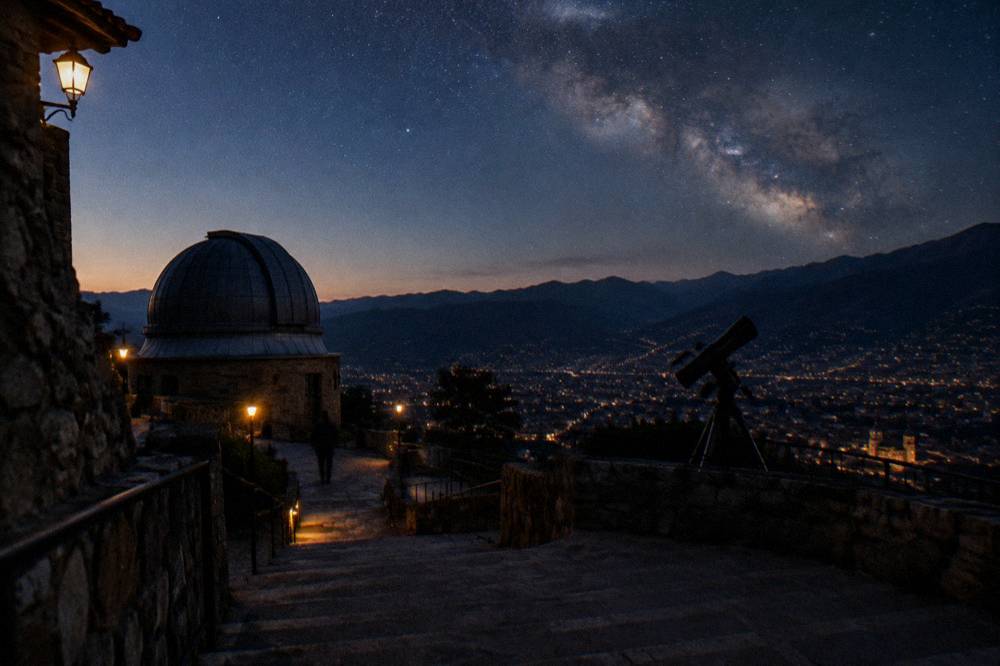
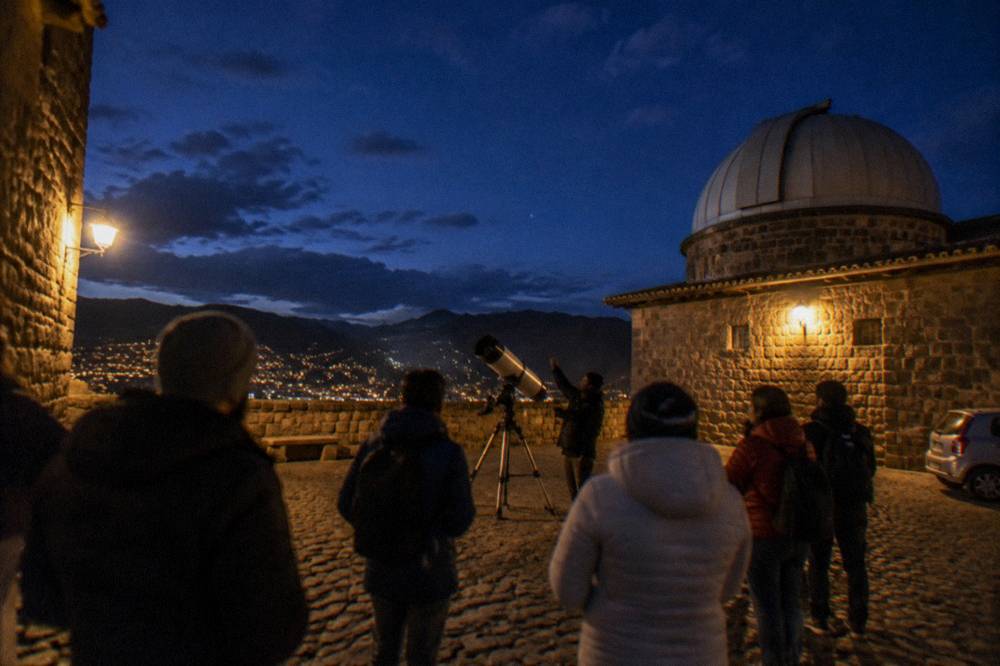
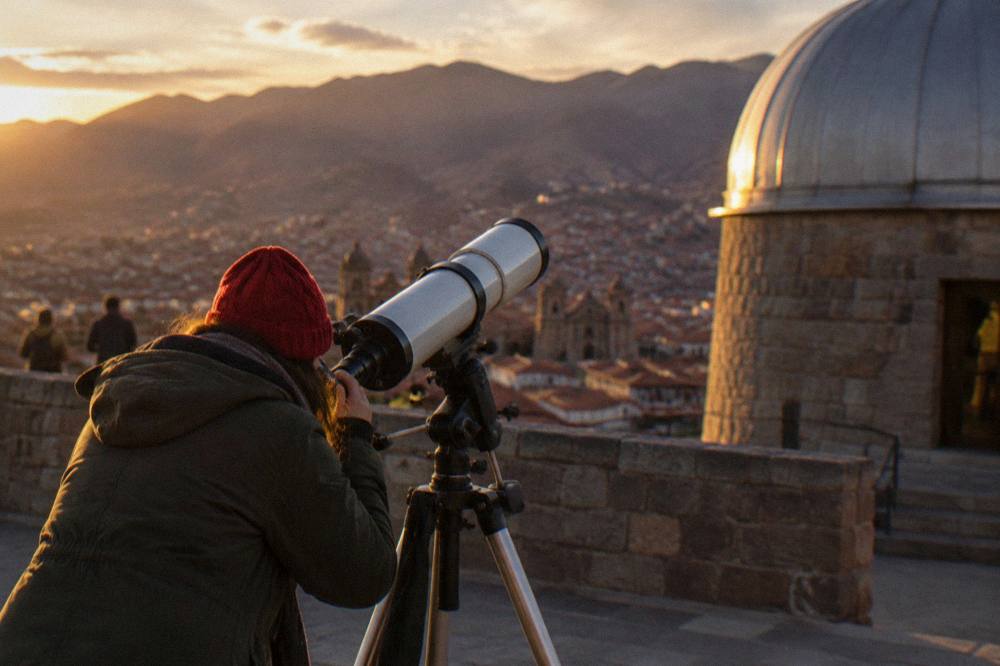
A session at the Cusco Planetarium combines an indoor presentation on the southern sky and Andean astronomy with outdoor telescope viewing, weather permitting. The listing frames it as an attraction for families and groups interested in astronomy, so the content is built for general visitors rather than specialists, and the telescopes are the centrepiece of the outdoor portion.
The indoor half explains what the southern hemisphere sky looks like from Cusco's latitude and how Andean cultures interpreted it. Widely documented accounts of Inca astronomy describe a tradition that treated the dark lanes within the Milky Way as figures in their own right, animal shapes traced in the absence of light rather than in the bright stars, and that worldview is the cultural heart of the presentation. No sourced date, builder or measurement attaches to that tradition, and the planetarium's telling keeps to the qualitative story.
The outdoor half depends on the sky. In the dry season the odds are strongly in the visitor's favour: June brings a historical monthly average of just 1.5 mm of rain at the WMO/SENAMHI "Cuzco" station, and July 4.0 mm. In the wet season, December to March, clouds can close the viewing portion, and visitors booking between November and March should expect that the indoor presentation may carry the evening. The monthly table in the stargazing section below shows the full pattern.
Is The Cusco Planetarium Good For Families?
The planetarium's own listing calls it a perfect attraction for families or groups interested in astronomy, and the session format supports that: a seated presentation followed by telescope viewing, with no demanding walking involved. The main planning consideration for children is the hour, since sessions run in the evening and Cusco nights are cold, especially between May and August.
The cold is real and worth planning around. The WMO/SENAMHI historical normals for the "Cuzco" station put the mean July minimum at 0.1 C and June at 0.3 C, with frost nights common in those months, while afternoons in the same months average a mild 19.1 to 19.5 C maximum. A family visit in the dry season means warm jackets, hats and gloves for the outdoor portion even though the day felt warm, and the same layers advice applies to adults. The site's general guidance on dressing for Cusco evenings applies here as much as anywhere in the city.
Families combining the planetarium with daytime sightseeing have plenty of child-friendly options on the same hills and streets. The ChocoMuseo page covers the chocolate attraction in the historic centre, and the Awana Kancha page covers the textile centre where visitors see alpacas and traditional weaving, both gentler companions to an astronomy evening than a second ruin.
| Month | Mean max C | Mean min C | Rain mm |
|---|---|---|---|
| Jan | 18.9 | 6.6 | 145.3 |
| Feb | 18.8 | 6.5 | 133.7 |
| Mar | 19.1 | 6.2 | 107.0 |
| Apr | 19.7 | 4.9 | 43.2 |
| May | 19.8 | 2.5 | 8.7 |
| Jun | 19.5 | 0.3 | 1.5 |
| Jul | 19.1 | 0.1 | 4.0 |
| Aug | 19.8 | 1.6 | 8.6 |
| Sep | 19.8 | 3.9 | 21.8 |
| Oct | 20.9 | 5.5 | 39.4 |
| Nov | 20.7 | 6.1 | 71.9 |
| Dec | 19.4 | 6.4 | 122.7 |
The table is the WMO World Weather Information Service historical normal for the "Cuzco" station, data supplied by SENAMHI, the Peruvian weather service. It shows the pattern a stargazing visitor cares about: the rain collapses almost to nothing from May to August, and the nights are coldest exactly when the sky is clearest.
When Is The Best Time Of Year For Stargazing In Cusco?
The best months for stargazing in Cusco are May to September, the Southern Hemisphere dry season, when the WMO/SENAMHI historical normals show as little as 1.5 to 8.7 mm of rain per month and clear, cold nights. June and July offer the clearest skies and the sharpest frost, while November to March clouds over: December alone averages 122.7 mm of rain.
Cusco is in the Southern Hemisphere, so its seasons are inverted relative to Europe and North America, and June to August is winter here: dry, clear and cold at night, never "summer". The dry months carry a trade-off. The same high pressure that scrubs the sky also drives night temperatures to around freezing on the hills, so the best stargazing nights are the coldest ones, and visitors should pack for both facts at once.
The shoulder months deserve a look too. April averages 43.2 mm of rain and September 21.8 mm at the "Cuzco" station, both far below the December-to-March peak, with milder nights than midwinter. A visitor in April, September or early October gets most of the clarity with less of the bite, and October's mean maximum of 20.9 C is the warmest of the year. The MINCETUR open dataset shows the same pattern in visitor behaviour across the region's sites: October 2025 drew 154,105 visitors to Machu Picchu against February's 79,806, a ratio of 1.93 to 1.
| Season in Cusco | Months | Rain at the Cuzco station | Night character |
|---|---|---|---|
| Dry (winter) | May to Aug | 22.8 mm total, 3.2 percent of annual | Clear, frost common June and July |
| Shoulder | Apr, Sep, Oct | 21.8 to 43.2 mm per month | Mostly clear, less cold |
| Wet (summer) | Nov to Mar | 508.7 mm total, 71.9 percent of annual | Frequent cloud, mild nights |
How Does Cusco's Altitude Affect A Planetarium Visit?
Cusco stands at 3,335 m on the Plaza de Armas, and the CDC Yellow Book names it as a rapid-ascent destination, advising graded ascent where feasible and noting that acetazolamide is a prescription decision to make with a doctor. A planetarium evening is a low-exertion activity, which makes it a reasonable choice for early acclimatisation days when longer walks feel hard.
The CDC's graded-ascent advice, citing the Wilderness Medical Society, is to avoid going from low altitude to a sleeping altitude of 2,750 m or more in a single day, and once above 3,000 m to raise sleeping altitude by no more than 500 m a night. Cusco's airport sits at 3,310 m, so arriving by air breaks that rule by definition, which is why the CDC also notes that in rapid-ascent destinations travellers should consider acetazolamide and avoid alcohol for the first 48 hours at altitude. Nobody publishes a day count for acclimatisation, but the practical reading is simple: an evening of sitting, listening and looking through a telescope is far gentler on day one than a mountain hike.
One altitude fact works in the planetarium's favour. Thinner air above 3,300 m scatters less light, and the dry-season absence of rain and the city's modest size combine to keep the hillside sky genuinely dark. Visitors should still expect to feel the cold more than at sea level and to breathe harder on any slope between the transfer vehicle and the viewing area, however short.
| Place | Elevation | Source basis |
|---|---|---|
| Cusco Plaza de Armas | 3,335 m | PromPeru |
| Cusco airport | 3,310 m | OpenStreetMap record |
| Sacsayhuaman | 3,701 m | Wikipedia |
| Machu Picchu citadel | 2,430 m | Official Machu Picchu site |
| Aguas Calientes town | about 2,040 m | Wikipedia |
The comparison matters for itinerary planning: Cusco is higher than Machu Picchu, roughly 900 m higher, so the planetarium evening is one of the higher-altitude experiences on a typical trip, even though it asks the least physical effort of almost anything on the list.
What Else Can You Do In Cusco At Night?
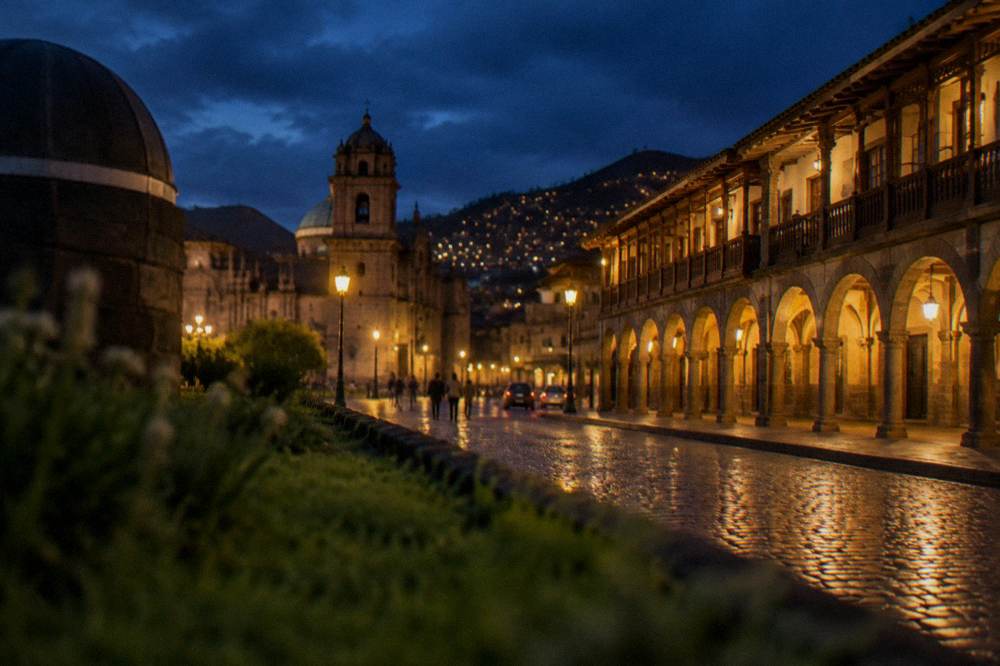
Cusco's evening options beyond the planetarium are mostly food, drink and a handful of late-closing cultural venues: the Inca Museum lists hours to 16:00 on weekdays, so genuine night attractions are few, which is exactly why the planetarium stands out. The city's known after-dark scene is concentrated on dinner, bars and the lit historic centre around the Plaza de Armas.
The honest picture is that Cusco is an early city for sightseeing. The Inca Museum, for instance, lists Monday to Friday 09:15 to 16:00 and Saturday 09:15 to 14:00, per peru.travel, and most site-based attractions close with the daylight. The Cusco Cathedral and the Museo Inka pages cover what those venues hold; hours change, and visitors should check on the day rather than trust a fixed timetable. What remains reliably evening-friendly is the food scene around the historic centre, the San Pedro Market area for an early supper before a planetarium pickup, and the planetarium itself.
| Cusco venue | Listed admission | Notes |
|---|---|---|
| Inca Museum | S/ 20 foreign adult, about US$6 | Mon to Fri 09:15 to 16:00, Sat to 14:00, per peru.travel |
| Museo de Arte Precolombino (MAP) | S/ 20 general, S/ 10 students | per peru.travel |
| Qorikancha site museum | On the Boleto Turistico Circuit II | peru.travel also lists S/ 20 for the Santo Domingo museum entry |
| Saqsaywaman | On the Boleto Turistico Circuit I | Opens 07:00 to 18:00, per peru.travel |
| Cusco Planetarium | Rendered on the operator's live listing | Evening sessions, transport included per the listing |
How Does The Planetarium Fit Into A Cusco Itinerary?
An evening planetarium session slots most naturally into an acclimatisation day or a day-trip day: it needs no daylight hours, ends the night, and pairs with any daytime plan. Visitors usually place it on day one or two in the city, when gentle activities are the right call, or on the evening before an early Machu Picchu or Sacred Valley departure, when a late night is the only risk.
The acclimatisation logic comes straight from the CDC's framing of Cusco as a rapid-ascent destination. The first 24 to 48 hours are best spent at the city's own altitude with light activity, and a seated evening under the sky fits that brief perfectly. The Sacsayhuaman and Qorikancha pages cover the classic gentle daytime pair, and the Plaza de Armas page covers the walkable heart of the city that fills the hours before a planetarium pickup.
The one itinerary mistake to avoid is stacking the planetarium the night before a very early start, such as a dawn Rainbow Mountain departure, and then wondering why the day feels hard. Rainbow Mountain stands at about 5,000 m, and the day trips to it leave Cusco in darkness. A planetarium evening is mild, but sleep still counts at 3,335 m. Visitors heading to Machu Picchu should also remember the citadel is lower, at 2,430 m, and that this site's Machu Picchu coverage lives on a single day-trip page.
For visitors who prefer a guided structure around the city itself, the half-day city tour below covers Sacsayhuaman and Q'enco with a guide, and the Sacred Valley tour fills a full day among Pisac, Ollantaytambo, Moray and the Maras salt mines. Both are products on this site's roster, and the cards print their own live prices and ratings.
What Should You Wear And Bring To The Cusco Planetarium?
Warm layers are the single most important thing to bring: Cusco's dry-season nights drop to around freezing on the hills, with the WMO/SENAMHI normals showing a mean July minimum of 0.1 C, so a jacket, hat and gloves belong in the bag even after a warm afternoon. Beyond clothing, the listing's included round-trip transport means visitors need only themselves, their booking and a little patience for the dark.
The day-to-night swing is the trap. Mean daily maximums sit between 18.8 and 20.9 C all year, so an afternoon on the Plaza de Armas feels mild, and then the sun drops and the temperature falls by roughly 19 C between day and night in the coldest months. Visitors who dress for the afternoon freeze at the telescope. Sturdy shoes and a headlamp or phone light for the outdoor path are sensible; the Machu Picchu code of conduct, on the unrelated subject of that site, at least shows how Andean authorities treat drones, tripods and noise, and the same quiet, low-impact etiquette fits a small planetarium gathering.
Wet-season visitors should add a rain layer and lower expectations for the telescope portion. Between December and March the station normals show 107.0 to 145.3 mm of rain per month, and the indoor presentation is the reliable half of the evening in those months. Whatever the month, the operator's live listing states the current session terms, and that is where the exact schedule and cancellation policy belong.
Is The Cusco Planetarium Worth It?
For visitors with a free evening in Cusco, the planetarium is one of the few genuinely nocturnal attractions in a city that otherwise empties its sites by late afternoon, and its listing pitches exactly that audience: families and groups interested in astronomy. It is worth it most for travellers who want the dry-season sky explained, and least for those visiting in the wettest months, when clouds can take the telescope half away.
The value case rests on three things this page has already sourced. First, the sky itself: 22.8 mm of rain across the whole of May to August makes Cusco one of the more reliable stargazing bases a visitor will ever stand in. Second, the cultural framing: the Andean reading of the dark constellations inside the Milky Way is a story the standard daytime itinerary never tells, and the planetarium tells it under the sky it describes. Third, the practicality: round-trip transport from central Cusco is included in the prebooked visit, per the listing, which removes the one logistical headache an out-of-centre evening would otherwise create.
The counter-case is honest and short. A visitor in January or February is betting against 133.7 to 145.3 mm of monthly rain. A visitor with no interest in astronomy will get more from an evening meal. And nobody should book the planetarium expecting a large institutional observatory; the listing describes a small, family-scale attraction, and that is what the evening delivers. For the rest, this site's Things To Do In Cusco Peru coverage has the full range of what the city and region offer.
Common Questions About The Cusco Planetarium
Is the Cusco Planetarium inside the city of Cusco?
The planetarium sits on the hills above the city, outside the historic centre, which is deliberate: the location trades a short transfer for darker sky. Its admission listing states that round-trip transport from central Cusco is included with a prebooked visit, so the distance is handled for the visitor.
How much does the Cusco Planetarium cost?
The live price, rating and review figures for the planetarium's admission listing render on the product card on this page, and the operator's live listing shows the current figure at booking. This page does not print a separate official admission tariff, and hours and prices can change, so the listing is the source of truth.
Is the Cusco Planetarium good for kids?
Yes. The planetarium's own listing describes it as a perfect attraction for families or groups interested in astronomy. The format is a seated presentation plus telescope viewing with no demanding walking, though sessions run in the evening, so parents should plan for the cold and the late hour.
What should I wear to the Cusco Planetarium?
Warm layers, a hat and gloves. Cusco's mean July minimum is 0.1 C at the WMO/SENAMHI "Cuzco" station, with frost nights common in June and July, even though afternoons average a mild 19.1 to 19.5 C. The day-to-night swing in the coldest months is roughly 19 C, so dress for the night, not the afternoon.
Can you see the Milky Way from Cusco?
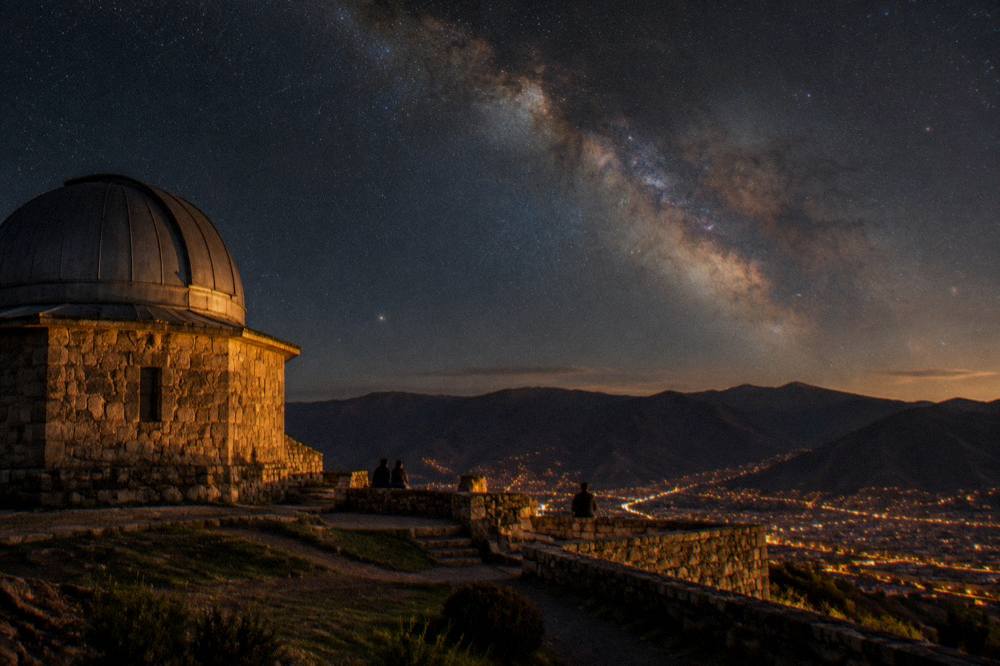
Yes, especially from May to September, when the WMO/SENAMHI historical normals show as little as 1.5 to 8.7 mm of rain per month. Cusco's 3,335 m altitude, thin air and modest light pollution on the hillsides make the Milky Way a naked-eye feature on clear nights, which is the core of the planetarium's outdoor viewing.
When is the best time to visit the Cusco Planetarium?
The dry season, roughly May to September, offers the clearest skies and the coldest nights. April, September and October are milder shoulder months with 21.8 to 43.2 mm of rain each at the Cuzco station. December to March, the wet season, carries 71.9 percent of the year's rain, so the telescope portion is less reliable then.
The Cusco Planetarium earns its place on an evening for one simple reason: it is the only attraction in the city that needs the night. Book it for a dry-season evening, wear everything warm, and let the southern sky do the rest.