When Not To Visit Cusco?
When not to visit Cusco? The wet season months of December to March, the February Inca Trail closure, and the crowded June-to-August peak each carry trade-offs, and this guide sets out what the climate record and visitor data actually show.
Cusco, the historic city in the Andes of southern Peru, keeps a southern-hemisphere calendar: its summer from December to March is the wet season, and its winter from June to August is the dry, frost-cold, crowded high season. The question of when not to visit Cusco therefore has no single answer, because the month that ruins a trek can be a fine month for museums, markets and cooking classes. What the record does show is that rain, cold nights and crowd pressure each cluster in specific months, and the World Meteorological Organization station data for the city, supplied by SENAMHI, makes those clusters easy to see before any ticket is bought.
When Not To Visit Cusco?
The months to think twice about are December to March, when 71.9 percent of Cusco's annual 707.8 mm of rain falls, and February in particular, when the Inca Trail closes completely for its annual maintenance month. June to August is the driest stretch but also the most crowded, so travellers avoiding crowds should treat the winter peak with the same caution as the wet season.
Those three windows carry different problems. The wet season brings rain and muddy trails; February adds a hard closure on the most famous trek in the region; the June-to-August peak brings dry weather but the year's thickest crowds at Machu Picchu, whose monthly visitor counts peaked at 153,655 in August 2025 against 79,806 in February, according to the MINCETUR open dataset. None of these months is impossible, and none closes the city. The choice is about which inconvenience fits the trip being planned, and the sections below set out what each window actually involves, with the climate record doing the arguing.
For a fuller month-by-month picture, the companion guide on the best time to visit Cusco covers the positive case, and the question of how many days to spend in Cusco shapes how much weather risk any single itinerary carries.
Why The Wet Season Tests Patience In Cusco
December, January, February and March together deliver 508.7 mm of rain at the Cuzco WMO station, 71.9 percent of the annual 707.8 mm, with January alone at 145.3 mm. The same months stay mild, with mean maximums of 18.8 to 19.4 C, so the problem is water underfoot and cloud overhead rather than temperature. Travellers whose plans depend on viewpoints, hikes and long overland days should treat these months as the riskiest of the year.
The rain does not fall evenly through the day or the week, and the climate record, a historical normal supplied by SENAMHI to the World Weather Information Service, says nothing about hours or downpours. What it does establish is concentration: December carries 122.7 mm, January 145.3 mm and March 107.0 mm, against 1.5 mm in June and 4.0 mm in July. SENAMHI's own framing goes further, describing October to April as carrying 94 percent of annual precipitation in the high Cusco basin. A four-day trek in that window is a gamble on luck rather than a plan.
| Month | Mean Max C | Mean Min C | Rain mm |
|---|---|---|---|
| Jan | 18.9 | 6.6 | 145.3 |
| Feb | 18.8 | 6.5 | 133.7 |
| Mar | 19.1 | 6.2 | 107.0 |
| Apr | 19.7 | 4.9 | 43.2 |
| May | 19.8 | 2.5 | 8.7 |
| Jun | 19.5 | 0.3 | 1.5 |
| Jul | 19.1 | 0.1 | 4.0 |
| Aug | 19.8 | 1.6 | 8.6 |
| Sep | 19.8 | 3.9 | 21.8 |
| Oct | 20.9 | 5.5 | 39.4 |
| Nov | 20.7 | 6.1 | 71.9 |
| Dec | 19.4 | 6.4 | 122.7 |
The practical reading of that table is not "stay away" but "match the plan to the month". City sightseeing absorbs rain better than a mountain does. The Boleto Turistico's sixteen sites include museums in the historic centre that work in any weather, and the half-day city tour of Sacsayhuaman and Q'enqo, this site's featured tour for wet-day planning, keeps its ruins within a short drive of a warm cafe. The wet season is also the cheapest and quietest stretch of the year at many properties, which is why some travellers take the trade knowingly.
Two further wet-season cautions come from the transport record rather than the rain gauge. PeruRail's own news page reports that Cusco-area track has been out of service at times, with a bimodal bus-plus-train combination via Ollantaytambo used when the Poroy stretch closes in the wet season, and the UK Foreign Office notes that train services to Machu Picchu are occasionally suspended or disrupted by protests. The train topic belongs to a sibling guide, so the short version here is: wet-season travellers should build a spare day into any Machu Picchu leg and check the operator's notices before locking an itinerary. The question of what to avoid in Cusco collects the rest of the classic planning mistakes.
June To August: Dry Days, Frost Nights And The Year's Biggest Crowds
June to August is Cusco's winter and its driest stretch, with just 22.8 mm of rain across the four months from May combined with June at 1.5 mm and July at 4.0 mm, but mean minimums fall to 0.3 C in June and 0.1 C in July. The same window is the peak: Machu Picchu recorded 151,550 visitors in July 2025 and 153,655 in August, against 79,806 in February, per MINCETUR.
The winter trade is therefore dry against crowded, plus cold at night. Frost nights, heladas in SENAMHI's vocabulary, peak in June and July and run from April to September, while daytime maximums hold between 19.1 and 19.8 C, a day-night swing of about 19 C in July. Packing for that window means layers for evenings that would not be out of place in a European winter and a jacket for mornings, a topic covered in detail in the guide on what to wear in Cusco. Travellers who hate the cold at night, or whose accommodation is thin-walled, should weigh the winter months as carefully as the wet ones.
Crowds are the bigger cost. The MINCETUR dataset shows October 2025 drawing 1.93 times the visitors of February at Machu Picchu, and the June-to-November stretch carries the raised daily capacity of 5,600 set by the Ministry of Culture for 19 June to 2 November, against 4,500 on ordinary days. Inti Raymi, the winter-solstice festival on 24 June each year, fills the city further, with its main ceremony at Sacsayhuaman and grandstand tickets sold through Teleticket. For travellers whose priority is solitude, the winter peak is the wrong end of the calendar, and the shoulder months of April, May, September and October are the ones to examine instead.
One scheduled event worth flagging for the 2026 calendar specifically: Pope Leo XIV is due in Cusco and Sacsayhuaman on 15 November 2026, with an encounter with the faithful at 10:30, per Vatican News and the Peruvian government's announcements. That is a November date, not a winter one, but it will concentrate crowds and access controls around the Sacsayhuaman explanada in a month normally considered shoulder season, so anyone booked for that week should watch the local notices. The free things to do in Cusco guide includes the sites that cost nothing, which softens the sting when peak-season prices bite.
Why February Deserves Its Own Warning
February is the one month with a hard closure: the Inca Trail shuts completely for its annual maintenance, and permits are not sold for it at all. It is also the second wettest month at 133.7 mm of rain. Machu Picchu itself stays open, and February 2025 recorded 79,806 visitors there, the year's lowest monthly figure, so the city and the citadel remain workable for travellers who accept the weather.
The February closure matters most to trekkers, because the Inca Trail permit, capped at 500 people per day including porters and guides and sold only through licensed agencies, simply does not exist that month. The alternative treks, Salkantay, Lares and the Inca Jungle route, do not share the closure, and the pack records no February closure for them, but a traveller set on the classic trail arriving in February has no workaround. The Inca Trail guide covers the permit system, and the Salkantay trek page covers the main alternative in full.
For everyone else, February is a quiet, wet, cheap month. The MINCETUR figures make it the least-visited month at Machu Picchu in 2025, and the rain record makes the reason plain. Photography-focused travellers lose the clearest light of the dry season, and high-altitude day trips such as Rainbow Mountain, at about 5,000 m, become weather lotteries. The trade is real and some travellers take it deliberately: fewer queues, lower demand, and a city that feels like it belongs to its residents. The rest of the planning pages sit on Things To Do In Cusco Peru.
| Cusco Window | Main Drawback | Main Advantage |
|---|---|---|
| December to March (wet summer) | 71.9 percent of annual rain, muddy trails | Mild nights, lowest crowds |
| February | Inca Trail fully closed, 133.7 mm rain | Quietest month at Machu Picchu |
| June to August (dry winter) | Frost nights near 0.1 C, peak crowds | 1.5 to 8.6 mm rain, clearest days |
| April, May, September, October | Occasional rain, 21.8 to 43.2 mm | Balance of weather and space |
Should Altitude Change The Timing Decision?
Altitude does not create a wrong month, but it sharpens the ones that exist: the CDC Yellow Book names Cusco, at approximately 3,350 m by its figure, as a rapid-ascent destination and advises graded ascent where feasible, and cold winter nights make the first days feel harder for some travellers. The timing rule that matters is building easy days at the start, not picking a different month.
The CDC's advice is about the speed of arrival, not the season: avoid sleeping above 2,750 m on the first day when coming from low altitude, move sleeping altitude by no more than 500 m per night once above 3,000 m, and consider acetazolamide, a prescription decision with a doctor, when abrupt ascent is unavoidable. The full reasoning is in the guide on how likely altitude sickness is in Cusco, and the practical pacing question in how long to acclimatise. What timing adds is only this: a wet-season afternoon stuck indoors and a frost-night bedroom each make the first 48 hours less pleasant, and the CDC advises avoiding alcohol for the first 48 hours at high altitude regardless.
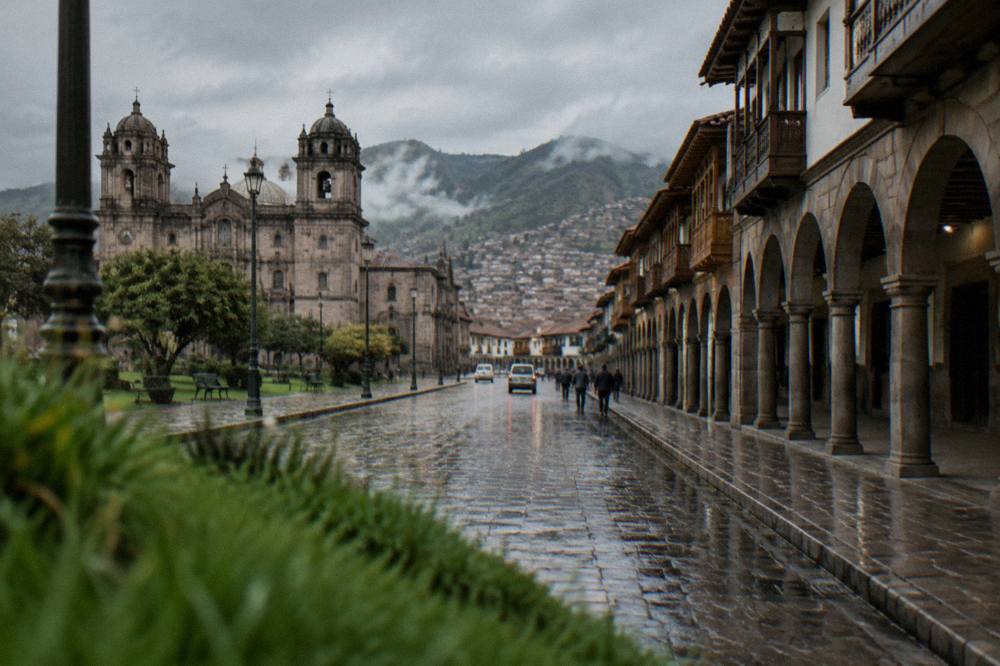
A sensible pattern, consistent with the CDC's graded-ascent preference, is to spend the first day on flat city ground: the Plaza de Armas, San Pedro Market, the museums on the Boleto's city circuit, and a walking tour, before heading up to Sacsayhuaman at 3,701 m or out to higher day trips. Whether that first day lands in sunshine or drizzle is the weather's decision, but the plan holds either way.
So Which Month Should A Cautious Traveller Actually Pick?
The months that fail the fewest itineraries are April, May, September and October, which carry 21.8 to 43.2 mm of rain each, sit outside the deepest frost, and fall outside the 5,600-capacity high-season window that runs 19 June to 2 November. October 2025 was Machu Picchu's busiest month at 154,105 visitors, so late shoulder months still carry crowds, and no month is both empty and dry.
That is the honest shape of the answer: the dry season and the crowd season overlap almost exactly, and the quiet months are the wet ones. A traveller who hates rain picks June and accepts queues. A traveller who hates crowds picks February and accepts the closed Inca Trail and 133.7 mm of rain. A traveller who wants a compromise picks the shoulder edges and accepts that October, the busiest month in the 2025 MINCETUR data, is no longer the secret it may once have been. The companion piece on Cusco weather by month carries the full table, and the question of cold versus altitude is treated separately in is Cusco colder than Machu Picchu.
Common Questions About When Not To Visit Cusco
When not to visit Cusco?
Avoid December to March if rain would ruin the plan, since those months carry 71.9 percent of the year's 707.8 mm at the WMO station, and avoid February specifically if the Inca Trail is the goal, because it closes every February. Treat June to August as the crowded peak despite the dry weather, with frost nights near 0.1 C in July.
Is February A Bad Month To Visit Cusco?
February is the wettest-risk month for trekkers because the Inca Trail closes completely, but the city stays open and Machu Picchu recorded its lowest 2025 monthly figure that month, 79,806 visitors. Travellers who accept 133.7 mm of rain get the quietest version of the region in return.
Is The Rainy Season Unbearable In Cusco?
The climate record does not describe misery, it describes concentration: December to March delivers 508.7 mm of the annual 707.8 mm, while daytime maximums stay between 18.8 and 19.4 C. Whether that is unbearable depends on the itinerary, since museums, markets and cooking classes absorb rain better than mountain viewpoints do.
Are June To August The Worst Months For Crowds?
Yes, the MINCETUR data puts July at 151,550 and August at 153,655 Machu Picchu visitors in 2025, and the Ministry of Culture raises the daily capacity to 5,600 from 19 June to 2 November. The same months are the driest of the year, so the trade is clear skies against the year's thickest queues.
Does Cusco Ever Close For Weather?
The city does not close, and Rainbow Mountain and every city site remain open. The one standing seasonal closure is the Inca Trail every February, and individual Machu Picchu routes have closed for short maintenance windows in the past, so checking official notices before booking remains worthwhile.
What Is The Best Compromise Month For Cusco?
April, May and September carry 21.8 to 43.2 mm of rain each, sit outside the deepest frost months, and fall outside the raised 5,600-capacity window that starts 19 June. October is drier still at 39.4 mm but was Machu Picchu's busiest month of 2025, so the early shoulder is the safer compromise.
The short version: there is no month in which Cusco turns visitors away, only months that charge for their good side in rain, in cold, or in queues, and the climate and visitor records above let any traveller price that trade before booking a thing.