Cusco Weather By Month
Cusco sits at 3,335 m in the southern Peruvian Andes, and its year is inverted relative to Europe and North America: the dry season runs roughly May to September, while December to March delivers 71.9 percent of the year's rain.
Short answer
Cusco has two seasons, not four: a dry winter from roughly May to September with clear days, cold nights and frost in June and July, and a wet summer from roughly November to March, when December to March alone delivers 71.9 percent of the year's 707.8 mm of rain. Mean daily maxima stay between 18.8 and 20.9 C all year.
Cusco, the historic city in the Andes of southern Peru, also spelled Cuzco, keeps a climate with only two real seasons rather than four. The Plaza de Armas sits at 3,335 m, high enough that the sun warms the day to a mean maximum of 18.8 to 20.9 C in every month of the year, while the thin, dry air lets the night fall close to freezing in the winter months. The figures in this guide come from the World Weather Information Service station record for "Cuzco", supplied by SENAMHI, Peru's national weather service, a historical normal rather than a modern 1991 to 2020 average. Because Cusco is in the Southern Hemisphere, its summer is December to March and that summer is the wet season; its winter is June to August, dry and cold at night. This page walks through what that means month by month, and how the calendar shapes the rest of a trip: the best time to visit Cusco, the crowds at Machu Picchu, and what to pack for a place where a single day can swing 19 C between afternoon and dawn.
What Is The Weather Like In Cusco Through The Year?
Cusco has a dry season that runs roughly May to September and a wet season that runs roughly November to March, with the two shoulder months of April and October sitting between them. December to March delivers 508.7 mm of the year's 707.8 mm of rain, which is 71.9 percent, while May to August together bring just 22.8 mm, or 3.2 percent. Mean daily maxima stay between 18.8 and 20.9 C in every month.
That concentration is the single most useful thing to understand about Cusco weather. The WMO and SENAMHI station record shows a city where rain does not fall evenly across the year: it arrives in a concentrated burst across the austral summer, then almost stops. SENAMHI frames the high Cusco basin as receiving 94 percent of annual precipitation between October and April. A traveller who visits in July has a very different experience from one who visits in February, even though the daytime temperature barely moves between the two months.
The second thing to understand is the day-night swing. Because the air is thin at 3,335 m and the humidity drops in the dry months, the temperature falls steeply after sunset. In July, the mean maximum is 19.1 C and the mean minimum is 0.1 C, a swing of about 19 C within a single day. In January, the wet season keeps nights milder and the swing narrows to 12.3 C. This is why packing for Cusco is about layers rather than a season: the day is warm in the sun in any month, and the night is cold in every month, more brutally so in winter.
What Is The Rainiest Month In Cusco?
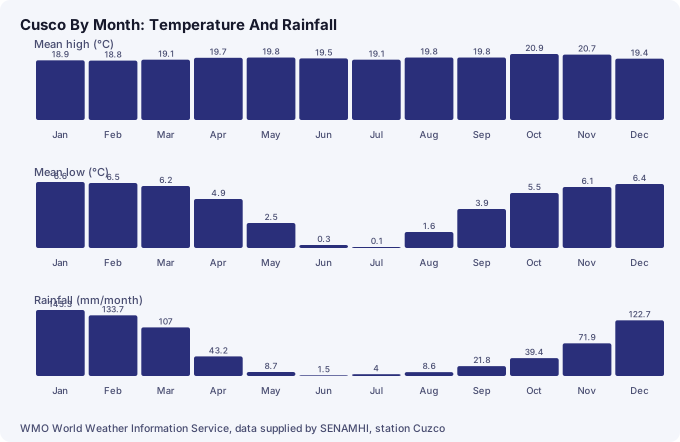
January is the rainiest month in Cusco, with a mean of 145.3 mm of rain at the WMO and SENAMHI station, followed by February at 133.7 mm and December at 122.7 mm. The four months from December to March together deliver 508.7 mm, which is 71.9 percent of the annual 707.8 mm. By contrast June averages just 1.5 mm and July 4.0 mm.
The full ranking of months by mean rainfall makes the pattern plain.
| Month | Mean rain mm | Season |
|---|---|---|
| Jan | 145.3 | Wet |
| Feb | 133.7 | Wet |
| Mar | 107.0 | Wet |
| Dec | 122.7 | Wet |
| Nov | 71.9 | Wet, building |
| Apr | 43.2 | Shoulder, fading |
| Oct | 39.4 | Shoulder, building |
| Sep | 21.8 | Dry, ending |
| May | 8.7 | Dry |
| Aug | 8.6 | Dry |
| Jul | 4.0 | Dry |
| Jun | 1.5 | Dry |
Rain in the wet season in Cusco tends to arrive as afternoon showers and cloud rather than all-day drizzle, but the pack holds no hourly breakdown, so this guide stays with what the monthly normals state. What the numbers do show is that February is a complicated month for planning beyond the rain itself: the Inca Trail closes every February for maintenance, so that trek is simply not an option then, and Machu Picchu recorded 79,806 visitors in February 2025 against 154,105 in October of the same year, the lowest and highest months of that year in the MINCETUR open data. Anyone weighing the trade-off between dry skies and thin crowds can see both sides in the numbers: the wettest months are the quietest.
A wet afternoon in the city also has indoor answers. A market visit and cooking class works in any weather, and the Cusco Cooking Classes and San Pedro Market Tour is the site's featured pick for exactly that kind of day.
How Cold Does Cusco Get At Night?
July is the coldest month in Cusco, with a mean minimum of 0.1 C, followed by June at 0.3 C and May at 2.5 C. Frosts, called heladas, peak in June and July and the frost season runs from April to September. Yet the mean maximum in July is still 19.1 C, so a winter day in Cusco is sunny and mild while the night falls to around freezing.
The frost season is a documented phenomenon, not a figure of speech: SENAMHI's own material on heladas states that they peak in June and July and that the season runs from April to September. SENAMHI's tourist forecast page reports July minimums lower than the WMO table shows, a difference of station and period, so this guide quotes the WMO normals for the numbers and says only that frost nights are common in winter.
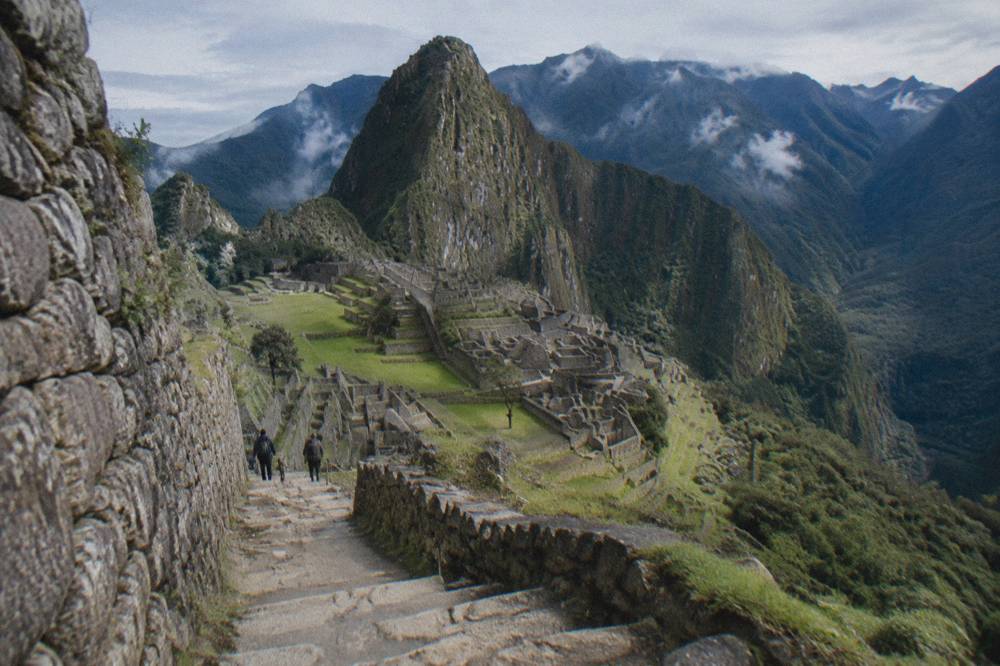
The practical consequence is that "cold in Cusco" means night cold, not day cold. A visitor in July can stand in the sun at midday in a shirt and be freezing by 20:00. Buildings in the historic centre are not built around central heating, and the pack holds no sourced statement about how hotels heat their rooms, so this guide makes no claim about it. What the climate data does support is the packing logic: warm layers for the evening, sun protection for the day, in every month of the year.
| Month | Mean max C | Mean min C |
|---|---|---|
| Jan | 18.9 | 6.6 |
| Apr | 19.7 | 4.9 |
| Jul | 19.1 | 0.1 |
| Oct | 20.9 | 5.5 |
The table shows why altitude changes the packing question more than the calendar does. Winter days are not colder in the afternoon than summer days; winter nights are. The two sourced swing figures make the point: about 19 C between day and night in July, and 12.3 C in January. For the physiology of arriving at 3,335 m in the first place, the Cusco altitude guide covers acclimatisation separately.
What Is The Best Month To Visit Cusco?
May and September sit in the sweet spot for most itineraries: both are dry-season months with modest rain, 8.7 mm and 21.8 mm respectively, and mean maxima of 19.8 C in both. June and July offer the driest, clearest skies, 1.5 mm and 4.0 mm of rain, but the coldest nights, 0.3 C and 0.1 C, and the biggest crowds at Machu Picchu.
The visitor numbers from the MINCETUR open dataset show how strongly the calendar drives travel to the region. Machu Picchu recorded 151,550 visitors in July 2025 and 153,655 in August, against 79,806 in February. October, at 154,105, drew 1.93 times the visitors of February. The dry months and the shoulder month of October carry the year's peak traffic, and the wet months carry the lowest.
| Month | Machu Picchu visitors 2025 | Mean rain mm in Cusco |
|---|---|---|
| Jan | 108,966 | 145.3 |
| Feb | 79,806 | 133.7 |
| Mar | 102,218 | 107.0 |
| Apr | 128,369 | 43.2 |
| May | 132,020 | 8.7 |
| Jun | 125,615 | 1.5 |
| Jul | 151,550 | 4.0 |
| Aug | 153,655 | 8.6 |
| Sep | 142,579 | 21.8 |
| Oct | 154,105 | 39.4 |
| Nov | 110,429 | 71.9 |
| Dec | 90,194 | 122.7 |
There is no single best month, only a set of trade-offs. June is dry, clear and cold at night, and it contains Inti Raymi on 24 June, the city's major festival, whose main ceremony takes place at Sacsayhuaman; the Inti Raymi guide covers it in full. September offers nearly dry weather with slightly milder nights and thinner crowds than July and August. November and April are gamble months: wetter than the dry season but far quieter, and April at 43.2 mm is much closer to dry than to the February peak.
For a full treatment of the trade-offs, including festivals and prices, see the dedicated best time to visit Cusco guide. For where to base a stay in the city, the where to stay in Cusco guide covers the neighbourhoods.
What Is Cusco Weather Like Month By Month?
The month-by-month normals from the WMO and SENAMHI station show mean maxima between 18.8 and 20.9 C all year, mean minimums falling from 6.6 C in January to 0.1 C in July and rising again, and rain running from 145.3 mm in January down to 1.5 mm in June. No month is hot and no month is warm at night.
Here is the complete table, exactly as the station record holds it.
| Month | Mean max C | Mean min C | Rain mm | Season |
|---|---|---|---|---|
| Jan | 18.9 | 6.6 | 145.3 | Wet, warmest nights |
| Feb | 18.8 | 6.5 | 133.7 | Wet, Inca Trail closed |
| Mar | 19.1 | 6.2 | 107.0 | Wet, easing |
| Apr | 19.7 | 4.9 | 43.2 | Shoulder, drying |
| May | 19.8 | 2.5 | 8.7 | Dry, cold nights begin |
| Jun | 19.5 | 0.3 | 1.5 | Dry, frost nights |
| Jul | 19.1 | 0.1 | 4.0 | Dry, frost nights, Inti Raymi |
| Aug | 19.8 | 1.6 | 8.6 | Dry, frost easing |
| Sep | 19.8 | 3.9 | 21.8 | Dry, ending |
| Oct | 20.9 | 5.5 | 39.4 | Shoulder, warmest maxima |
| Nov | 20.7 | 6.1 | 71.9 | Wet, building |
| Dec | 19.4 | 6.4 | 122.7 | Wet, Santurantikuy |
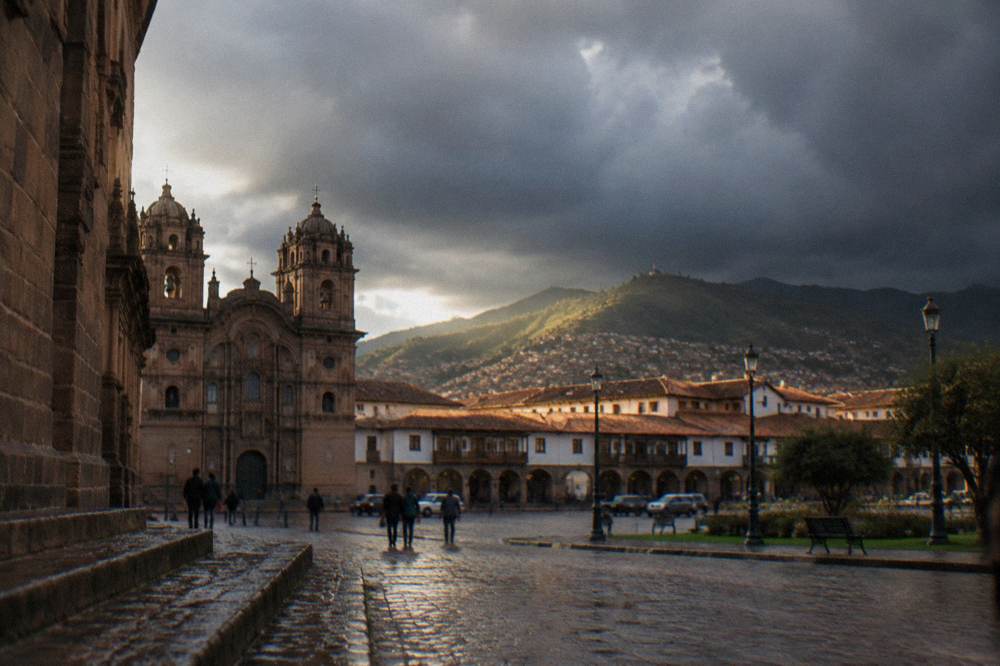
A few notes on reading it. October and November hold the year's warmest mean maxima, 20.9 C and 20.7 C, which surprises visitors who assume the dry winter months must be the warm ones; the sun is near-vertical in the austral spring, and the rain has not yet built. January and February hold the warmest nights, 6.6 C and 6.5 C, because cloud cover at night traps heat that the clear winter sky lets escape. The two coldest months, June and July, are also the two driest, and the frost season that peaks in those months runs from April to September. Everything else covered here is indexed on Things To Do In Cusco Peru.
Each month also carries its own character beyond the numbers. December holds Santurantikuy, the craft fair on the Plaza de Armas on 24 December. June holds Inti Raymi. February is the one month with no Inca Trail at all. The Cusco festivals guide lays out the calendar of events, and the table above is the base to plan around.
Does The Weather Affect Trips To Machu Picchu And The Sacred Valley?
Yes, and in two directions: the wet season brings cloud, rain and a higher chance of obscured views over Machu Picchu, while the dry season brings the clearest skies and also the biggest crowds, with Machu Picchu recording 154,105 visitors in October 2025 against 79,806 in February. The train route to Machu Picchu can also be disrupted in the wet season, when operators use a bus plus train combination.
There is no sourced temperature or rainfall figure for Machu Picchu itself, for Aguas Calientes, for Rainbow Mountain or for the Sacred Valley: the only verified climate normals on this site are the Cusco station record quoted above. What can be said is structural. The Machu Picchu citadel sits at 2,430 m, lower than Cusco, and the town of Aguas Calientes at about 2,040 m, so the cloud forest around it is a different, milder environment than the city. The train operators run from the Cusco-side stations at Poroy and San Pedro, and PeruRail's own notices describe the bimodal bus plus train option used when Cusco-area track is out of service, with Poroy closable in the wet season.
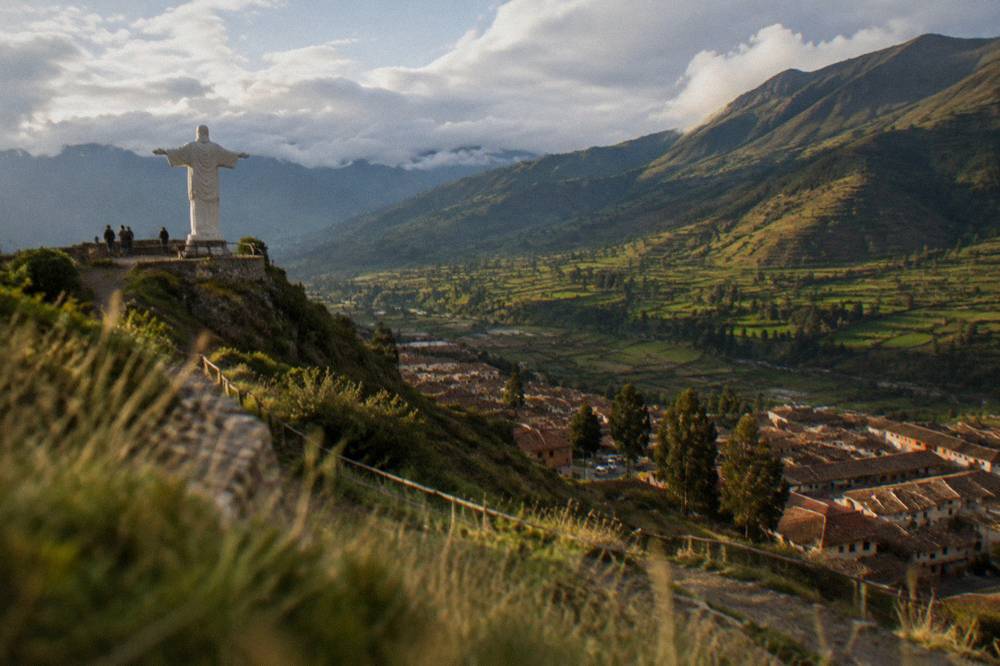
For Rainbow Mountain, at about 5,000 m, the weather question is sharper still. The community entry fee for foreigners is S/ 25 to S/ 30 in cash, and the site sits high enough that a wet-season day can mean snow rather than rain; the pack holds no weather figure for the mountain, so this guide states none. The Rainbow Mountain versus Palccoyo guide compares the two routes, and the day hikes from Cusco guide covers what each trail involves.
The one Machu Picchu page on this site, Machu Picchu, covers the citadel itself, and the Sacred Valley guide covers the valley route through Pisac, Ollantaytambo, Chinchero and Moray. For the train journey, a short honest note: the Cusco to Machu Picchu train is covered by a sibling site, and this page only points to it.
What Should You Pack For Cusco Weather?
Pack for two climates in one day: sun protection and a warm layer for the afternoon, and a real jacket, hat and warm sleepwear for nights that can fall to 0.1 C in July. Rain gear matters from November to March, when monthly rain runs 71.9 mm to 145.3 mm, and matters much less from May to August, when it runs 1.5 mm to 8.7 mm.
The layering logic follows directly from the temperature table earlier in this guide. A July day warms to a mean maximum of 19.1 C in strong high-altitude sun, then falls about 19 C to a mean minimum of 0.1 C. A January day reaches a similar 18.9 C but only falls 12.3 C to 6.6 C, and then it rains. The sun itself is a factor the temperature table cannot show: at 3,335 m the ultraviolet exposure is strong in any month, and the what to wear in Cusco guide treats clothing in full.
| Season | Months | Rain reality | Night reality | Packing priority |
|---|---|---|---|---|
| Dry winter | May to Aug | 1.5 to 8.7 mm per month | 0.1 to 2.5 C means, frost common | Warm layers, sun protection |
| Shoulder | Apr, Sep, Oct | 21.8 to 43.2 mm per month | 3.9 to 5.5 C means | Layers plus a light rain shell |
| Wet summer | Nov to Mar | 71.9 to 145.3 mm per month | 6.1 to 6.6 C means | Rain jacket, waterproof shoes, quick-dry clothing |
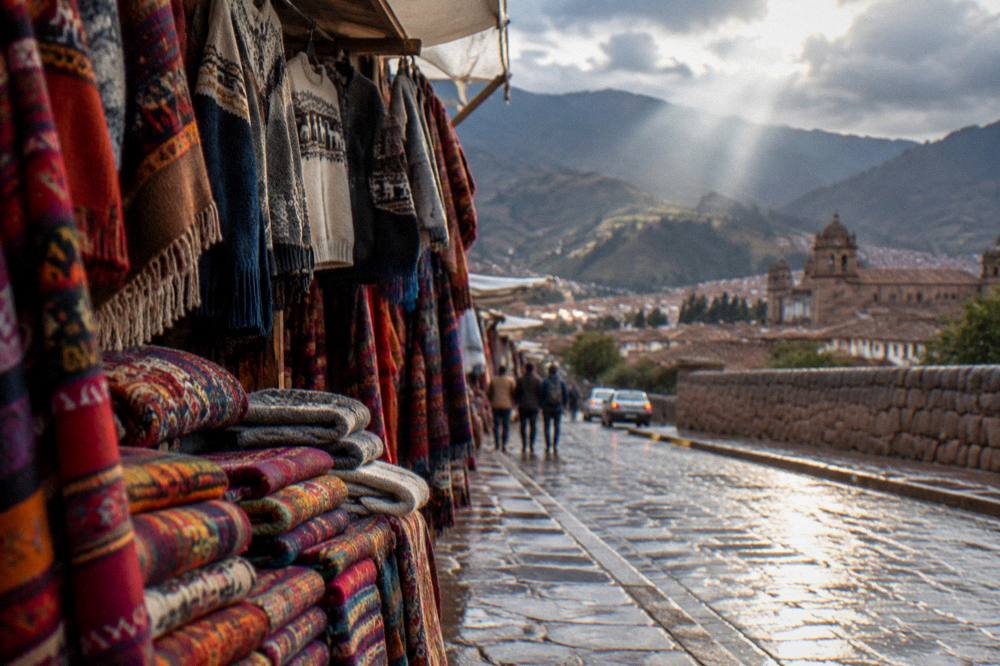
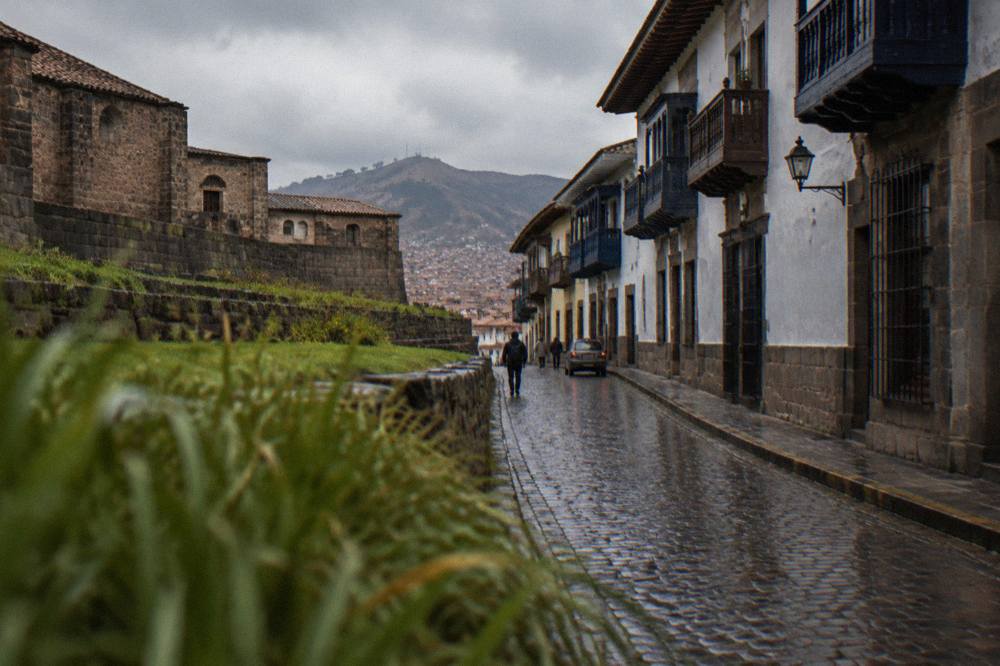
One practical note on the wet season: rain in Cusco falls on cobblestones and adobe, and the historic centre's streets run with water in heavy spells. Waterproof footwear earns its place in the bag from November to March. Warm clothing can also be bought locally, and the what to buy in Cusco and buying alpaca in Cusco guides cover textiles and alpaca wool without quoting a price, because no verified price band for them exists on this site.
How Does The Weather Shape What You Can Do Each Season?
The dry season from May to September is the window for high treks, festivals and photography, with June holding Inti Raymi and the clearest skies, while the wet season from November to March pushes plans toward the city's indoor side: museums, markets, cooking classes and food, with the Inca Trail closed every February. The mean maximum never leaves the 18.8 to 20.9 C band, so the calendar changes what you do far more than how warm you will be.
A dry-season itinerary leans outward. The Sacred Valley circuit, the day hikes from Cusco, and the multi-day treks to Salkantay, Lares and the Inca Trail all sit best in the months when rain runs in single-digit millimetres. The Inca Trail permits 500 people per day including porters and guides, is sold only through licensed agencies, and closes every February without exception. June's Inti Raymi on 24 June draws grandstand crowds to Sacsayhuaman, and July and August carry the year's peak visitor numbers to Machu Picchu.
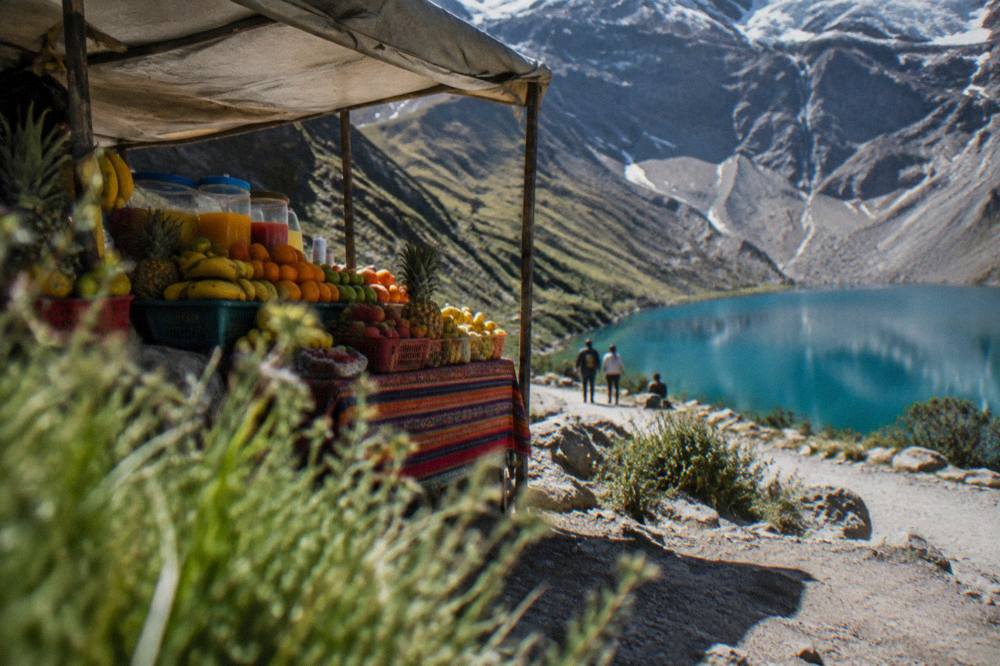
A wet-season itinerary leans inward, and the city rewards it. The Cusco museums guide lists the indoor options, the Cusco markets and what to eat in Cusco guides cover the food side, and the best restaurants in Cusco guide covers where to sit out a shower. A cooking class with a market visit is the classic rainy-afternoon answer, and the cooking classes guide compares the options. The free things to do in Cusco guide also holds several covered options.
For families, the Cusco with kids guide notes which activities bend with the weather, and the getting around Cusco guide covers transport when the rain arrives. The site's own homepage carries a live weather sentence for Cusco alongside monthly visitor figures, so a reader deciding between two specific months can pair the climate normals above with the current-month picture there.
Common Questions About Cusco Weather
What Is The Rainiest Month In Cusco?
January, with a mean of 145.3 mm at the WMO and SENAMHI station. December and February follow at 122.7 mm and 133.7 mm. The four months from December to March deliver 71.9 percent of the year's 707.8 mm of rain.
What Is The Coldest Month In Cusco?
July, with a mean minimum of 0.1 C. Frosts peak in June and July, and the frost season runs from April to September. The July mean maximum is still 19.1 C, so winter days are sunny and mild.
Does It Ever Get Hot In Cusco?
Not by lowland standards. The mean daily maximum stays between 18.8 and 20.9 C in every month of the year, with October holding the highest mean maximum at 20.9 C. The altitude of 3,335 m keeps daytime temperatures in a narrow band all year.
When Is Dry Season In Cusco?
Roughly May to September. May brings 8.7 mm of rain, June 1.5 mm, July 4.0 mm and August 8.6 mm, together just 22.8 mm or 3.2 percent of the annual total. September stays nearly dry at 21.8 mm.
Is Cusco Colder Than Machu Picchu?
Yes. Cusco's Plaza de Armas sits at 3,335 m and the Machu Picchu citadel at 2,430 m, roughly 900 m lower. This site's climate normals cover Cusco only; no sourced temperature figure exists for Machu Picchu itself.
What Should I Pack For Cusco?
Layers for a single day that can swing about 19 C in July: sun protection and a warm layer for the afternoon, a real jacket for the night, and rain gear from November to March. Warm sleepwear matters most in June and July, when frost nights are common.
The climate normals in this guide come from the World Weather Information Service station record for Cusco, supplied by SENAMHI, and are a historical normal rather than a modern 1991 to 2020 average; the visitor figures come from the MINCETUR open dataset. Together they sketch a city where the calendar decides the rain, the altitude decides the cold, and the afternoon sun stays remarkably constant from January to December.