Ollantaytambo
Ollantaytambo is a living Inca town in the Sacred Valley of Peru's Cusco region, at 2,792 m, on the Boleto Turistico's Circuit III and on the rail line toward Machu Picchu.
Short answer
Ollantaytambo is a living Inca town in the Sacred Valley of Peru's Cusco region at 2,792 m, covered by Boleto Turistico Circuit III (S/ 70 partial, S/ 130 integral, sold in person only) and served by trains toward Machu Picchu, about 1 h 45 away.
Ollantaytambo is the Sacred Valley town that nearly every Cusco itinerary touches: a living Inca settlement at 2,792 m in Peru's Cusco region, lower than the Plaza de Armas at 3,335 m, with a hillside archaeological park above it and a train station below that carries travellers on toward Machu Picchu. The COSITUC Boleto Turistico lists it among the sixteen sites of its three circuits. MINCETUR's open dataset counted 891,526 visits to the town's archaeological park in 2025.
What Is Ollantaytambo And Where Does It Sit In The Cusco Region?
Ollantaytambo is a town in the Sacred Valley of the Incas, in Peru's Cusco region, sitting at 2,792 m, lower than Cusco's Plaza de Armas at 3,335 m. Its Inca street plan, water channels and steep farming terraces survive in daily use, and the archaeological park above the town is one of the four Circuit III sites on the COSITUC Boleto Turistico.
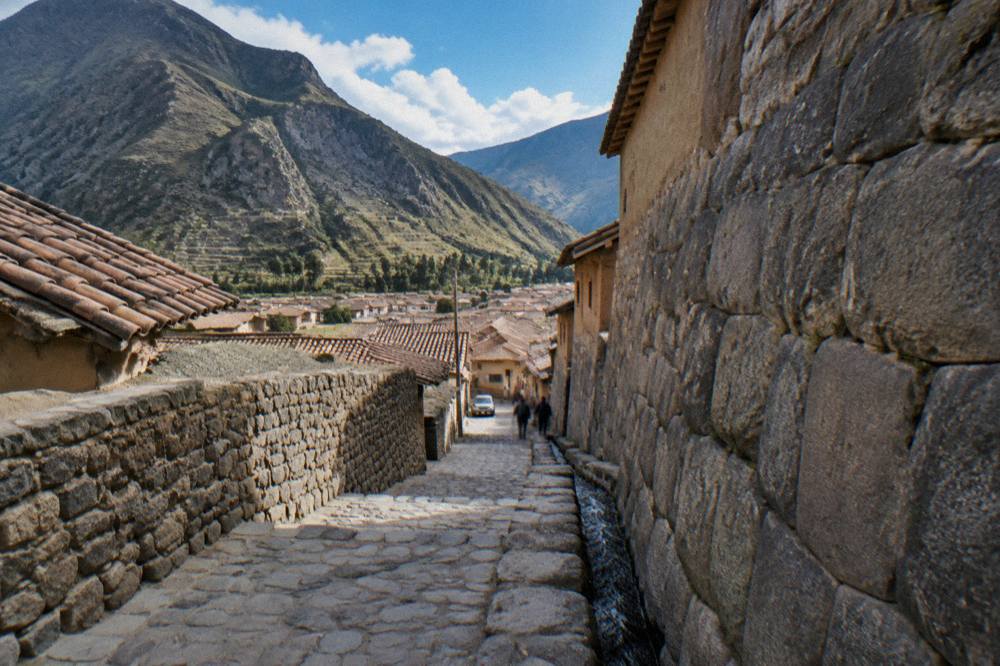
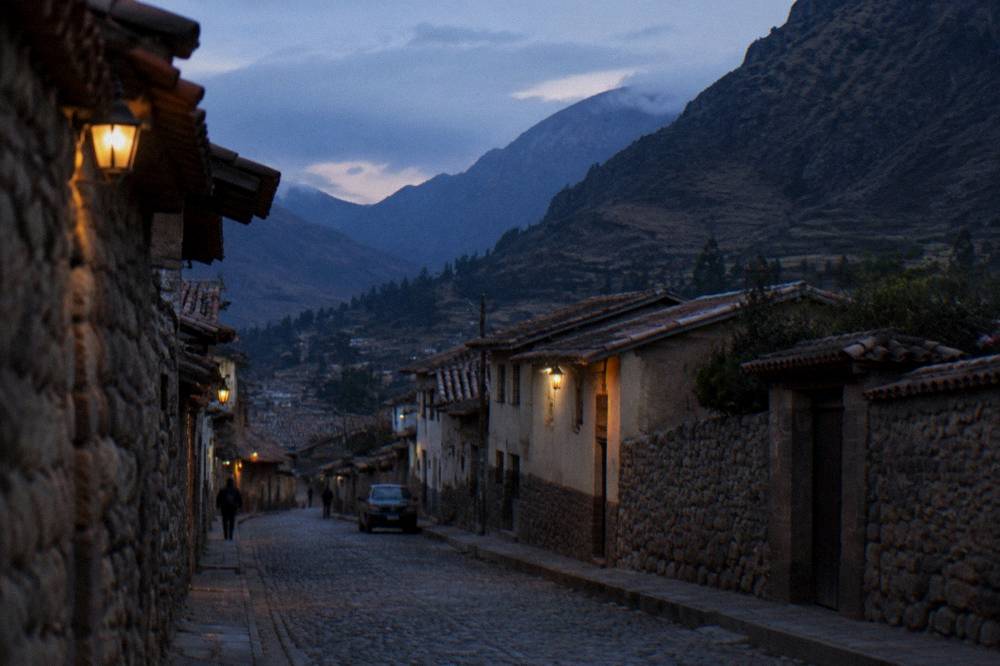
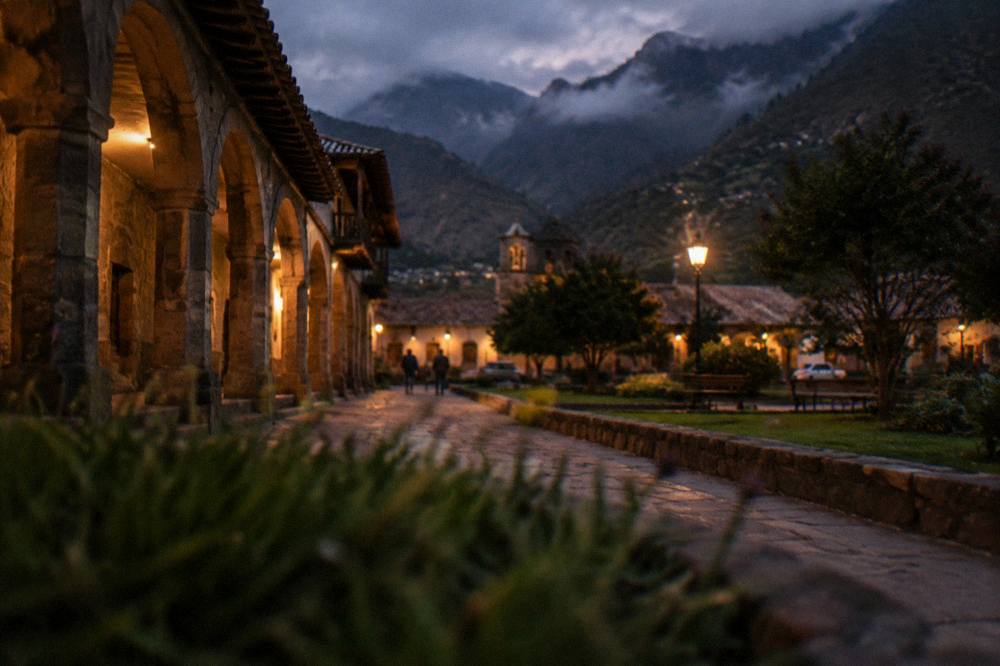
The town sits in the valley of the Urubamba river, the same watercourse that the rafting operators of the region run further downstream. Its streets still follow the Inca layout: narrow lanes, walls of fitted stone, channels carrying water alongside the paving. People live in it. That is the distinction the qualitative sources keep returning to, that Ollantaytambo is not a cleared ruin but a working town on Inca foundations, the kind of place where the archaeological park and the everyday market street sit a few minutes' walk apart.
The valley setting matters for planning more than the town's individual buildings do. Pisac sits at 2,972 m, Urubamba at 2,870 m, Moray at 3,385 m and Maras at 3,300 m, so the whole valley floor runs lower than Cusco. The Machu Picchu citadel, at 2,430 m, is lower again, and the town of Aguas Calientes below it sits at about 2,040 m. Elevation shapes every decision in this region, from where to sleep on the first night to which order to visit the sites in.
How Do You Get From Cusco To Ollantaytambo?
Ollantaytambo is reached from Cusco by road or by train, and the town has its own station on the line toward Machu Picchu. PeruRail's FAQ lists two Cusco-side stations, Poroy and San Pedro, and shared vans and private transfers also run out to the Sacred Valley. Many visitors arrive on a Sacred Valley day tour that links the valley's sites in one loop.
The train detail catches people out. There is not one Cusco station for the valley line: Poroy and San Pedro both exist, roughly 20 minutes and 10 minutes by taxi from the centre respectively, per the times PeruRail's own FAQ gives. In wet-season disruptions, when the Cusco-side track goes out of service, the operators use a bimodal option, bus from Cusco to Ollantaytambo and train from there. PeruRail's news page records that train travel between Cusco and Ollantaytambo resumed from 1 September 2026 after an earlier suspension.
By road, shared vans run between Cusco and the valley towns in general terms, and the site's own Cusco to Ollantaytambo route guide sets out the options, the stations and the trade-offs in full.
The bundled alternative is the day tour. A guided loop from Cusco typically pairs Ollantaytambo with Pisac, Moray and the Maras salt mines, which covers three of the four Circuit III sites and the one separate-fee stop in a single day. The site's featured option is the Sacred Valley, Pisac and Ollantaytambo day tour, and its live listing shows the current price and departure details: Check availability.
What Do You See At The Ollantaytambo Archaeological Park?
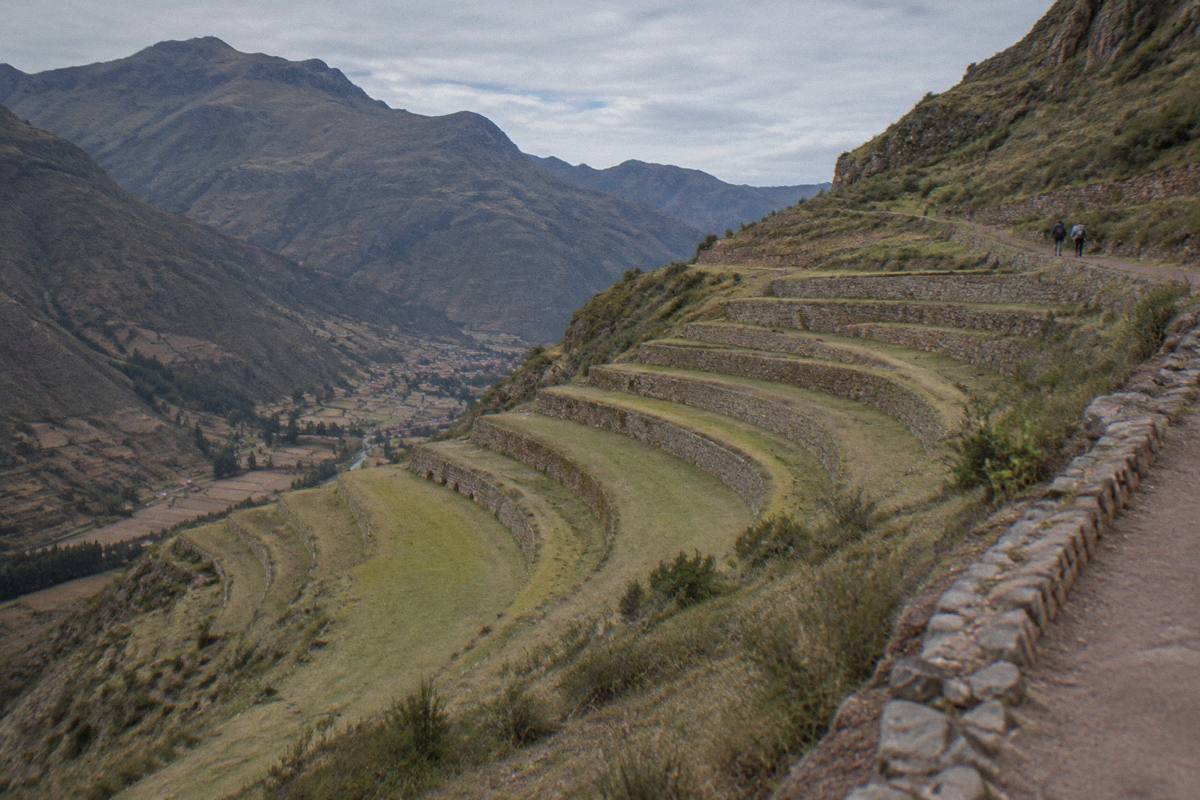
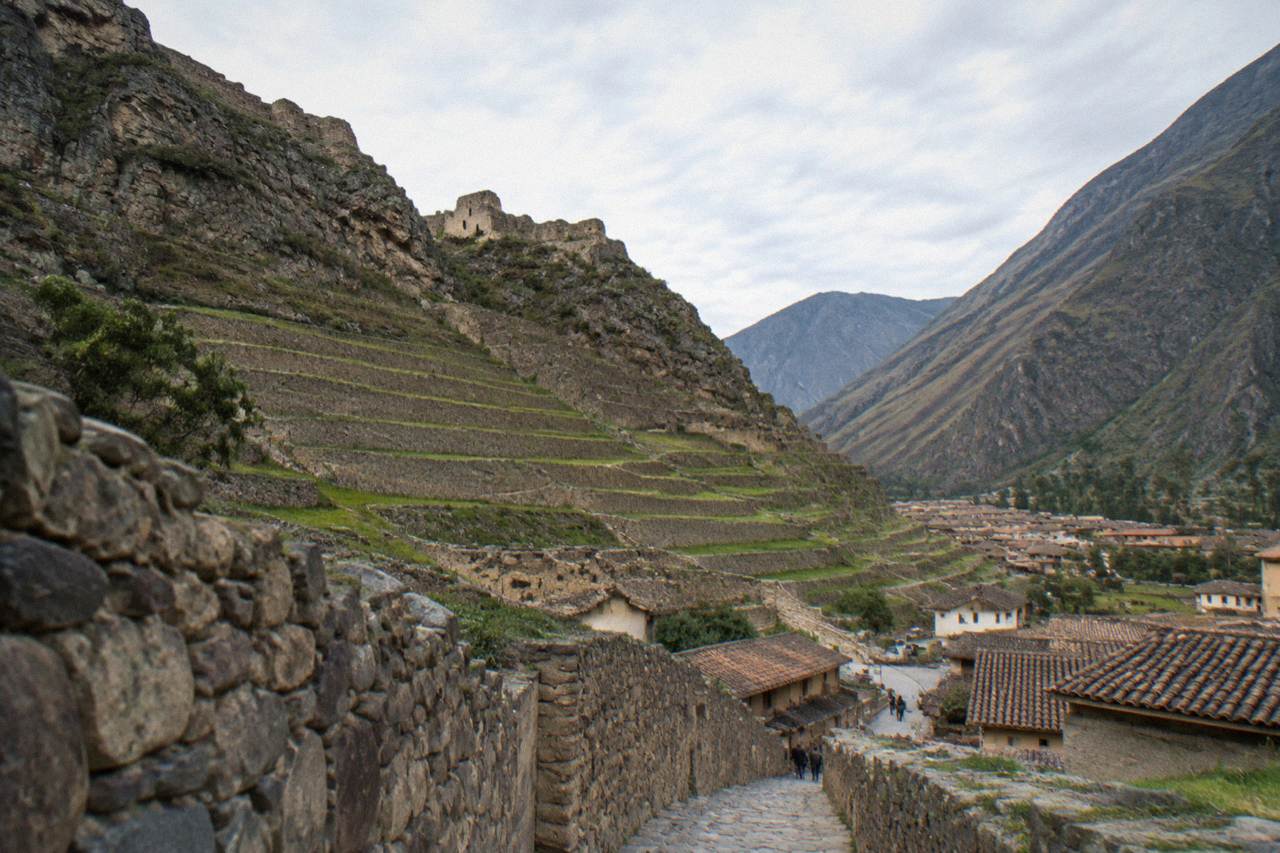
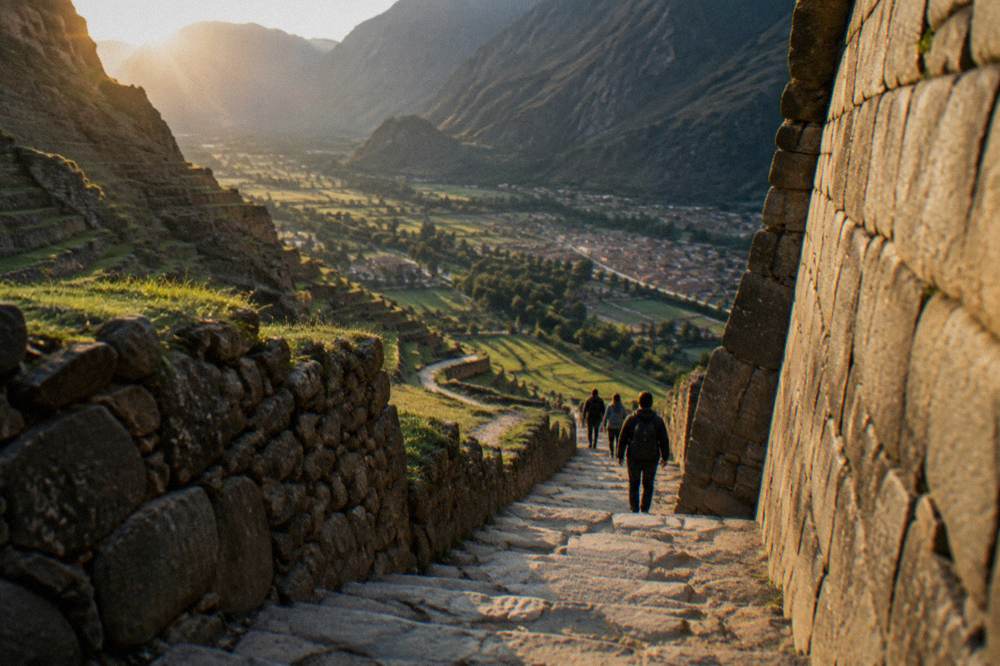
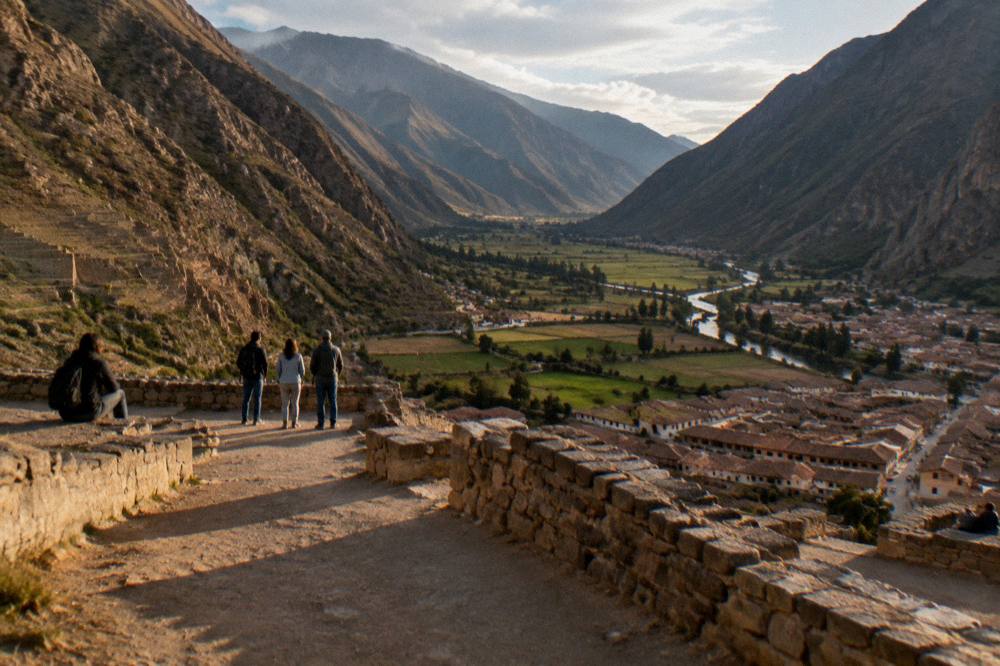
The park is a steep hillside complex of farming terraces, staircases and an upper temple platform that looks out over the town and the valley. Unfinished stone blocks lie part of the way up the stair route, and small storehouse structures stand on the hillside opposite. The Inca town below keeps its street plan and running channels, still lived in today.
The climb is the experience. The terraces rise in tight, deep tiers up the hill at the northern edge of town, and the stair route between them is the only way up. At the top, the upper platform opens a view across the whole valley floor, over the tile roofs below and the river line beyond.
Opposite the terraced hill, across the town, small storehouse structures stand on a high spur. The standard qualitative description of the site pairs the two: storage above, production and ceremony on the terraced hillside, everyday life in the grid between. Nothing in the verified sources gives a construction date, a ruler or a stone count for any of it, and inventing any of those would be the single easiest way to get this town wrong.
The town itself is the second half of the visit. The streets near the plaza keep their Inca walls and water channels, and walking them costs nothing beyond the shoe leather. Visitors who want the same layer of Inca masonry inside Cusco can pair this trip with the Qorikancha temple site or the twelve-angled stone street in the historic centre, both of which show the same fitted-stone craft in a city setting.
Is Ollantaytambo Included In The Boleto Turistico?
Yes. Ollantaytambo is one of the four Circuit III sites on the Boleto Turistico del Cusco, alongside Pisac, Chinchero and Moray. The Circuit III partial ticket for a foreign tourist is S/ 70 (about US$20), and the integral ticket at S/ 130 (about US$38) covers all 16 sites across the three circuits for 10 days. COSITUC sells the ticket in person only.
The tarifario on COSITUC's own site sets the prices, and the FAQ sets the mechanics. The integral ticket covers all sixteen sites across the three circuits and runs for 10 days from the day of purchase. Each partial circuit costs S/ 70 for foreign tourists, with validity of 1 day for Circuit I and 2 days for Circuits II and III. COSITUC's FAQ notes that covering all sixteen sites takes a minimum of three days, which tells you the integral ticket is for a fuller stay, not a single loop.
| Ticket | Foreign adult price | Validity | What it covers |
|---|---|---|---|
| Integral (BTCI) | S/ 130 (about US$38) | 10 days | All 16 sites across the three circuits |
| Partial Circuit I, Saqsaywaman | S/ 70 (about US$20) | 1 day | Saqsaywaman, Q'enqo, Puka Pukara, Tambomachay |
| Partial Circuit II, City | S/ 70 (about US$20) | 2 days | Qorikancha site museum, city museums, Tipon, Pikillaqta |
| Partial Circuit III, Sacred Valley | S/ 70 (about US$20) | 2 days | Pisac, Ollantaytambo, Chinchero, Moray |
| Foreign student integral | S/ 70 (about US$20) | 10 days | Same 16 sites, with student ID |
Two purchase rules matter. First, the ticket is not sold online: the counter is at Av. El Sol 103, Galerias Turisticas, open daily 07:30 to 18:00, and most included sites sell it too. Second, the circuit boundaries are strict. Circuit III covers Pisac, Ollantaytambo, Chinchero and Moray, and nothing else: it does not cover Machu Picchu, whose tickets sell on the Ministry of Culture's platform or in person at Machu Picchu Pueblo, and it does not cover the Maras salt mines, which charge their own community fee. Children are free to age 9, and ages 10 to 17 pay the student price with ID.
Why Does Ollantaytambo Suit The First Night Of A Cusco Trip?
Because it is lower. Ollantaytambo sits at 2,792 m against Cusco's 3,335 m, and the CDC Yellow Book prefers graded ascent over arriving straight into a high sleeping altitude, naming Cusco as a rapid-ascent destination. Sleeping a night or two in the valley before Cusco is the pattern the CDC describes for exactly this kind of route, though medication is a decision for a doctor.
The CDC Yellow Book's high-altitude chapter is the source to quote here, reported as what it says rather than as medical instruction. It advises against going from low altitude to a sleeping altitude of 2,750 m or more in a single day, and once above 3,000 m it suggests moving sleeping altitude by no more than 500 m per night. It names Cusco, at approximately 3,350 m in its own listing, as a rapid-ascent destination, and it notes that in some cases travellers can descend to elevations lower than the airport to sleep for the first night or two and then begin their ascent. Ollantaytambo at 2,792 m is one of the places that pattern points to.
| Place | Elevation |
|---|---|
| Cusco, Plaza de Armas | 3,335 m |
| Moray | 3,385 m |
| Maras | 3,300 m |
| Pisac | 2,972 m |
| Urubamba | 2,870 m |
| Ollantaytambo | 2,792 m |
| Machu Picchu citadel | 2,430 m |
| Aguas Calientes town | about 2,040 m |
The practical version of the pattern is simple. Fly into Cusco, drop straight down into the valley, sleep a night or two in Ollantaytambo or Urubamba, then return up to the city. The CDC also advises avoiding alcohol for the first 48 hours at high altitude and raises acetazolamide as a prescription option to speed acclimatisation where abrupt ascent is unavoidable, which is a conversation for a doctor before travel, not a decision for a web page. The site's stay in Cusco or Ollantaytambo answer works through the same trade-off in detail.
How Does The Train From Ollantaytambo To Machu Picchu Work?
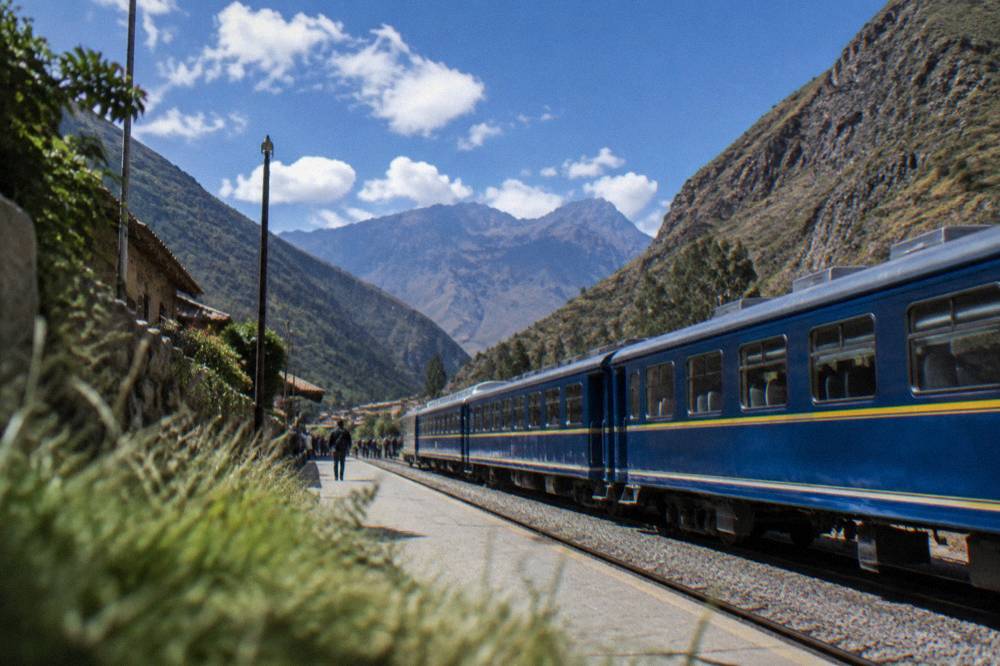
Ollantaytambo station is the main boarding point for the onward train to Machu Picchu. PeruRail's own FAQ gives the journey from Ollantaytambo to Machu Picchu as about 1 h 45, against about 4 h 30 from San Pedro in Cusco and about 3 h 30 from Poroy. Two operators, PeruRail and Inca Rail, run the line, and tickets are shown on their own sites before you ride.
That time difference is why so many Machu Picchu itineraries route through this town. Boarding at Ollantaytambo cuts hours off the rail day compared with either Cusco station, and the town is where the bimodal bus-plus-train option lands in any case during wet-season disruptions. The full picture of the Cusco to Machu Picchu rail options, the stations and the service classes belongs to the site's Machu Picchu day-trip coverage, so this page keeps to the town's own role: it is the valley's rail hub.
| Rail journey | Time per PeruRail's FAQ |
|---|---|
| San Pedro, Cusco, to Machu Picchu | about 4 h 30 |
| Poroy, Cusco, to Machu Picchu | about 3 h 30 |
| Ollantaytambo to Machu Picchu | about 1 h 45 |
| Taxi, Cusco centre to San Pedro station | 10 min |
| Taxi, Cusco centre to Poroy station | 20 min |
For visitors who want the whole rail-and-citadel day arranged in one booking, a panoramic-train day tour from Cusco runs through Ollantaytambo and includes a Circuit 2 route at the citadel. Its live listing carries the current price and dates.
When Is The Best Time Of Year To Visit Ollantaytambo?
The dry season, roughly May to September, is the settled window: at the WMO's Cuzco station May to August together bring just 22.8 mm of rain against an annual 707.8 mm. The wet months, roughly November to March, carry most of the year's rain, with December to March alone delivering 71.9 percent. Mean daily maxima stay between 18.8 and 20.9 C all year.
This is a Southern Hemisphere, high-Andes climate, and the seasons sit opposite to Europe and North America. June to August is winter: dry, clear in the day, cold at night, with frost common in June and July. The Cuzco station record, supplied by SENAMHI to the World Meteorological Organization and treated as a historical normal, shows the July mean minimum at 0.1 C against a mean maximum of 19.1 C, a daily swing of about 19 C. Pack for both halves of the day.
| Month | Mean max C | Mean min C | Rain mm |
|---|---|---|---|
| Jan | 18.9 | 6.6 | 145.3 |
| Feb | 18.8 | 6.5 | 133.7 |
| Mar | 19.1 | 6.2 | 107.0 |
| Apr | 19.7 | 4.9 | 43.2 |
| May | 19.8 | 2.5 | 8.7 |
| Jun | 19.5 | 0.3 | 1.5 |
| Jul | 19.1 | 0.1 | 4.0 |
| Aug | 19.8 | 1.6 | 8.6 |
| Sep | 19.8 | 3.9 | 21.8 |
| Oct | 20.9 | 5.5 | 39.4 |
| Nov | 20.7 | 6.1 | 71.9 |
| Dec | 19.4 | 6.4 | 122.7 |
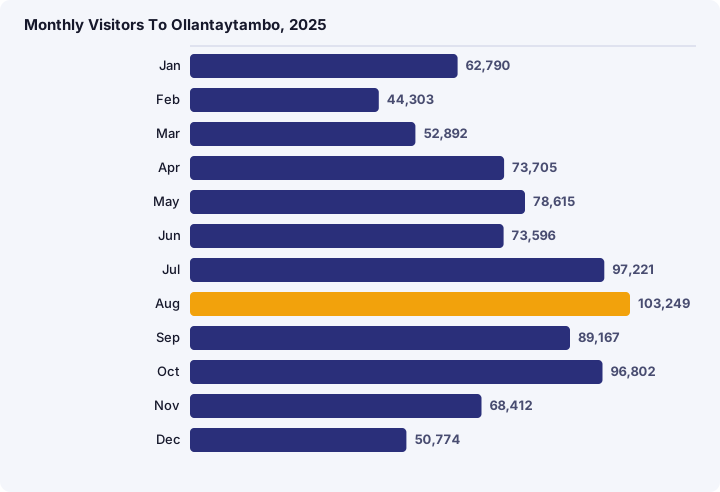
The wet season is not a write-off. The rain falls in a concentrated share of the year, December to March carries 71.9 percent of the annual 707.8 mm at that station, and daytime maxima barely move. What changes is the ground under it: valley roads, trail conditions and the Cusco-side rail track, which is when the bimodal option appears. October stands out in the visitor data as a heavy month despite sitting on the shoulder, which suggests the dry shoulder months carry crowds of their own.
How Busy Is Ollantaytambo Compared With Cusco's Other Sites?
MINCETUR's open dataset counted 891,526 visits to the Parque Arqueologico de Ollantaytambo in 2025, fourth among Cusco-region sites behind the two Machu Picchu counting units and the Saqsaywaman esplanade at 944,008. The same file puts Moray at 773,916 and Pisaq at 560,578, all six-figure counts in the same dataset.
The numbers come from the Ministry of Culture and Tourism's open dataset on visitors to Peru's tourist sites, cut in April 2026 with December 2025 as the latest month. They count entries, not unique travellers, and the two Machu Picchu rows use different counting units, the whole sanctuary and the citadel alone, so they are listed side by side rather than ranked against each other.
| Cusco-region site, MINCETUR 2025 | Visits |
|---|---|
| Santuario Historico de Machupicchu | 1,542,350 |
| Ciudad Inka de Machupicchu | 1,479,506 |
| Explanada de Saqsaywaman | 944,008 |
| Parque Arqueologico de Ollantaytambo | 891,526 |
| Moray | 773,916 |
| Pisaq | 560,578 |
For crowd planning, the monthly pattern matters more than the annual total. The dataset's Machu Picchu monthly rows show October 2025 drawing 154,105 visits against February's 79,806, and the valley sites track the same rhythm: the dry months and the shoulder around them carry the weight. Early morning at the terraces, before the day-tour buses arrive from Cusco, is the standard advice shape for this town, and the train timetable gives it structure, since the station below the ruins fills and empties with each service.
What Else Can You Visit Around Ollantaytambo In The Sacred Valley?
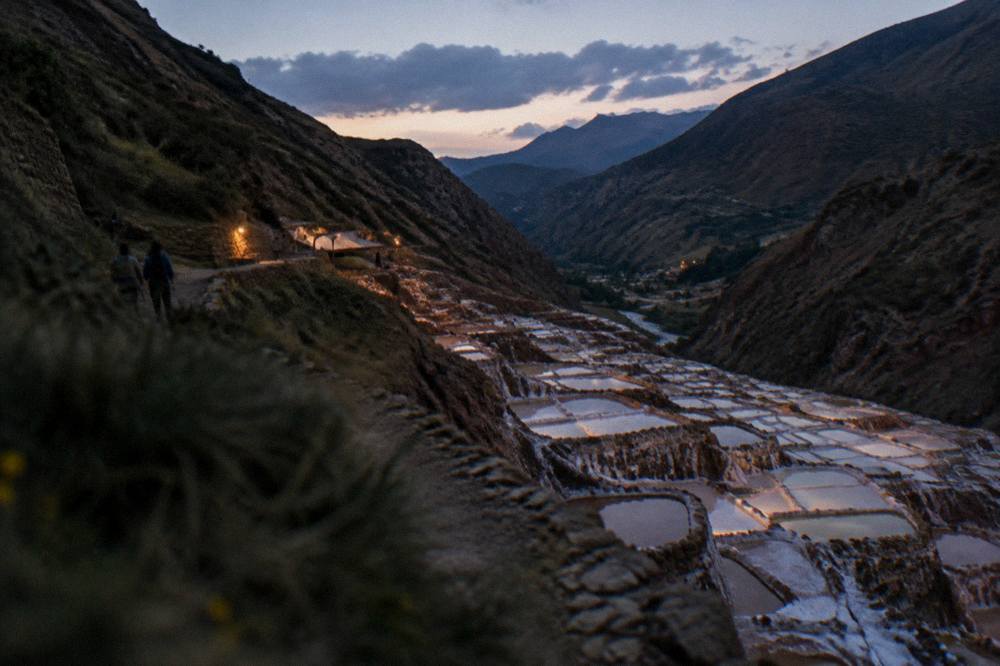
The Circuit III neighbours are Pisac, Moray and Chinchero, all on the same partial ticket as Ollantaytambo, with the Maras salt mines charged separately at a reported S/ 15 to S/ 20. Urubamba sits between them at 2,870 m. A new 8 km asphalt road between Maras and Moray was handed over in late December 2025, which links two of the closest stops in one drive.
Each neighbour has its own character. Pisac's ruins and market pair a hilltop site above the town at 2,972 m with one of the valley's craft markets. Moray's circular terraces are the concentric rings carved into a hillside bowl, on the same Circuit III ticket. Chinchero, the weaving town, sits highest of the three at its own altitude and is the third Circuit III stop. The Maras salt mines are the exception on the ticket: the salt pans charge a community fee reported at S/ 15 to S/ 20, in cash, and they are not among the Boleto's sixteen sites.
| Site | Ticket | Price |
|---|---|---|
| Ollantaytambo | Boleto Turistico Circuit III | S/ 70 partial, or S/ 130 integral |
| Pisac | Boleto Turistico Circuit III | covered by the same partial |
| Moray | Boleto Turistico Circuit III | covered by the same partial |
| Chinchero | Boleto Turistico Circuit III | covered by the same partial |
| Maras salt mines | own community fee, not on the Boleto | reported S/ 15 to S/ 20 |
The whole set is what Things To Do In Cusco Peru covers across its Sacred Valley pages, because the valley rewards a plan rather than a scramble. A half-day trip focused on Moray, the Maras salt pans and the Chinchero weavers is the compact version, and it exists as a booked product from Cusco with the current price on its live listing.
Should You Visit Ollantaytambo On A Tour Or On Your Own?
Both work, and the choice turns on the train. An independent visit pairs well with a Boleto Turistico bought in Cusco and a night in the town before an onward rail ticket; a guided day tour from Cusco bundles Ollantaytambo with Pisac, Moray and the Maras salt mines in one loop, and a two-day tour adds Machu Picchu by train with the valley first.
Independent travel suits the valley well. The Boleto counter is in Cusco, the town has places to stay at a sleeping altitude the CDC's graded-ascent pattern favours, and the station puts Machu Picchu about 1 h 45 away by rail. The trade-off is coordination: the ticket, the train and the valley links all sit on you, and the wet season can reshuffle the rail options without much notice.
The tour route trades that coordination for a fixed shape. The featured Sacred Valley, Pisac and Ollantaytambo day tour covers the Circuit III core in one guided loop from Cusco, and the card below prints its figures. Visitors with two days to give can take the valley first and Machu Picchu second, with the train and the citadel arrangements handled in the same booking, an option the roster carries as a two-day package whose figures render on its own card below.
Common Questions About Ollantaytambo
Is Ollantaytambo included in the Boleto Turistico?
Yes. It is one of the four Circuit III sites, alongside Pisac, Chinchero and Moray. The Circuit III partial ticket costs S/ 70 for a foreign tourist, about US$20, and the integral ticket at S/ 130, about US$38, covers all 16 sites for 10 days. COSITUC sells the ticket in person only, at the Av. El Sol 103 counter in Cusco, daily 07:30 to 18:00, and at most included sites.
How high is Ollantaytambo compared with Cusco?
Ollantaytambo sits at 2,792 m and the Plaza de Armas in Cusco at 3,335 m, so the town is the lower of the two. The CDC Yellow Book names Cusco as a rapid-ascent destination and prefers graded ascent, and sleeping in the valley for the first night or two is the pattern it describes for routes like this.
How long is the train from Ollantaytambo to Machu Picchu?
About 1 h 45, per PeruRail's own FAQ. The same source gives about 4 h 30 from San Pedro station in Cusco and about 3 h 30 from Poroy, which is why many Machu Picchu itineraries route through the valley town.
Is Ollantaytambo worth an overnight stay?
For many itineraries, yes. The town combines a lower sleeping altitude with the valley's main rail station, so a night here shortens the Machu Picchu rail day and fits the CDC's graded-ascent approach in one move. The site's stay-in-Cusco-or-Ollantaytambo answer works through the choice in full.
What is the best month to visit Ollantaytambo?
The dry season, roughly May to September, is the settled window. At the WMO's Cuzco station, May to August together bring just 22.8 mm of the year's 707.8 mm of rain, while December to March alone carries 71.9 percent. June and July nights fall to frost, and mean daily maxima stay between 18.8 and 20.9 C all year.
Do the Maras salt mines accept the Boleto Turistico?
No. The salt mines are not among the Boleto's sixteen sites and charge their own community fee, reported at S/ 15 to S/ 20 in cash. Moray, the other half of that pairing, is on Circuit III of the Boleto.