What Are The 4 Ruins Of Cusco?
The four ruins of Cusco are Saqsaywaman, Q'enqo, Puka Pukara and Tambomachay, the four Inca sites on Circuit I of the Boleto Turistico. Here is what each one is, what the ticket costs and how to fit them into a trip.
The hill country immediately north of central Cusco holds the four Inca sites that nearly every visitor to the city ends up discussing. The Ministry of Culture's COSITUC committee, which runs the Boleto Turistico, groups them together as Circuit I, and the open MINCETUR visitor dataset counted 944,008 visits to the Saqsaywaman explanade in 2025, more than any Cusco-site entry in that dataset except Machu Picchu itself. This page answers the verbatim question directly: what the four ruins are, what they hold, what the ticket costs and how to see them without losing a whole day. For the wider picture of Inca sites in and around the city, the companion guide to Inca ruins in Cusco covers the sites beyond the hill circuit.
What Are The 4 Ruins Of Cusco?
The four ruins of Cusco are Saqsaywaman, Q'enqo, Puka Pukara and Tambomachay, the four Inca sites on the hills north of the historic centre that together form Circuit I of the Boleto Turistico. A single S/ 70 partial ticket, about US$20, covers all four, or the S/ 130 integral ticket, about US$38, folds them into the wider 16-site list. They sit along one road and are normally visited as one half-day loop.
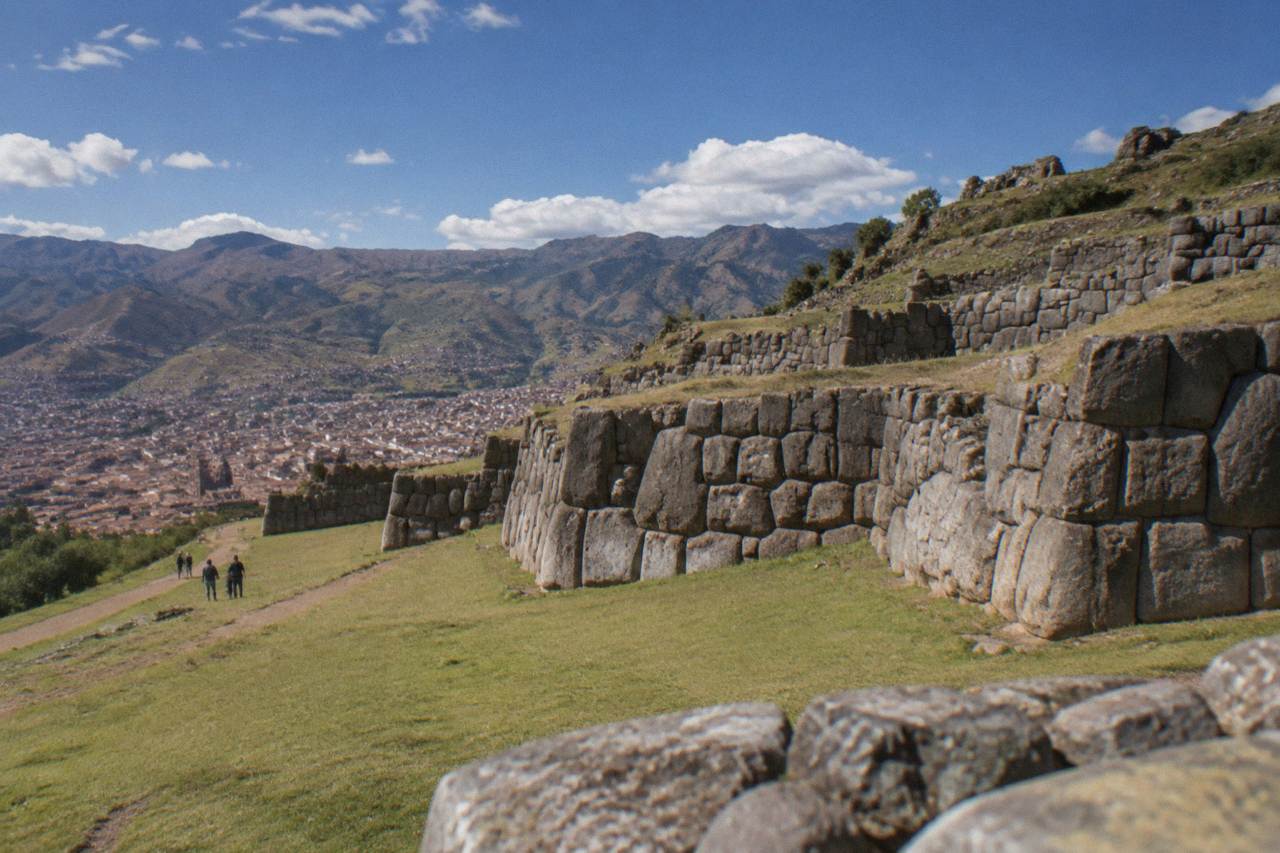
Saqsaywaman is the headliner. peru.travel lists its elevation at 3,701 m and gives daily opening hours of 07:00 to 18:00. The site is known for its monumental fitted-stone terraces and for the wide explanade where the city's Inti Raymi ceremony holds its main event each 24 June. The MINCETUR dataset recorded 944,008 visits to that explanade in 2025, a figure that makes the site one of the busiest in the whole Cusco department.
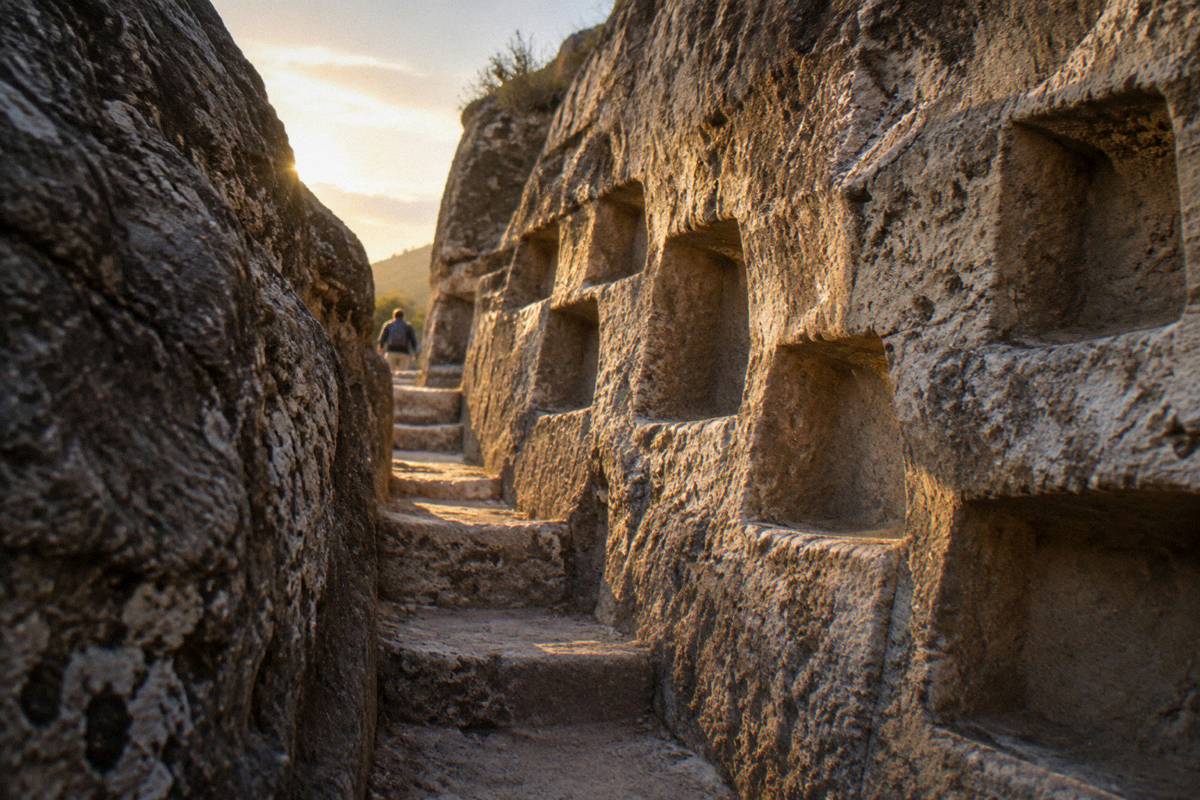
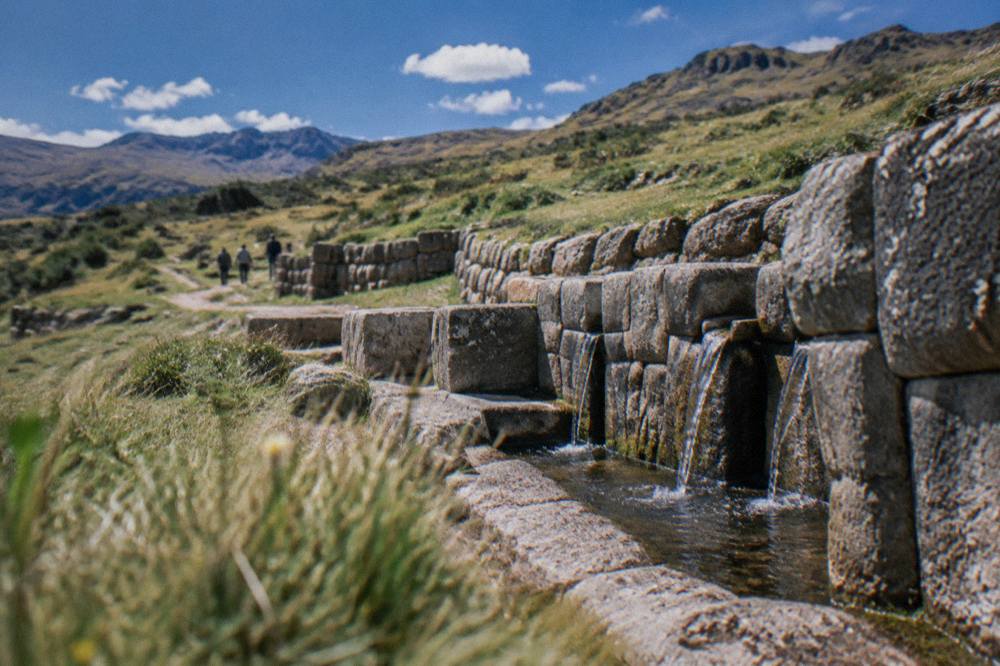
Q'enqo sits a short distance down the same road. It is a limestone outcrop cut with passages, steps and carved surfaces, and it is the site most often described in connection with ceremonial use, so this page assigns it no date or builder. Puka Pukara, whose name refers to the colour of its stone, is a smaller walled complex overlooking the road, and Tambomachay is the farthest of the four, a site of water channels and stone-fed springs associated with bathing and water worship in the standard descriptions. All four are on the COSITUC Circuit I list, read from the official tarifario and FAQ pages.
The order matters less than the logic. The road climbs from the city to Saqsaywaman first, then runs past Q'enqo, Puka Pukara and Tambomachay in sequence, so a visit in either direction covers all four in one loop. peru.travel's city material notes that the airport sits about 6 km from the Plaza de Armas; the four ruins are closer to the centre than that, on the hill directly behind the San Blas and San Cristobal side of town.
| Site | Boleto circuit | Verified detail from the sources |
|---|---|---|
| Saqsaywaman | Circuit I | 3,701 m elevation; hours 07:00 to 18:00; 944,008 explanade visits in 2025 |
| Q'enqo | Circuit I | Carved limestone site on the Saqsaywaman road |
| Puka Pukara | Circuit I | Walled overlook complex above the road |
| Tambomachay | Circuit I | Stone water channels and springs, farthest of the four |
Where Are The Four Cusco Ruins And Can You Walk To Them?
The four ruins sit on the hills immediately north of central Cusco, strung along the one road that climbs from the historic centre toward Saqsaywaman at 3,701 m, above the Plaza de Armas at 3,335 m. Walking up from the city is possible on the paved route from San Cristobal, and peru.travel gives Saqsaywaman hours of 07:00 to 18:00, so a morning on foot with an afternoon return is a normal shape for the day.
The climb deserves respect, not fear. The Plaza de Armas sits at 3,335 m per PromPeru, and Saqsaywaman sits higher still, so the walk up is a genuine altitude effort on the first days of a trip. The CDC Yellow Book names Cusco as a rapid-ascent destination and prefers graded ascent, and its practical line for travellers who cannot stage their arrival is to consider acetazolamide as a prescription decision with a doctor and to avoid alcohol for the first 48 hours. Readers working out their first days should read the site's answer on how likely altitude sickness is and the guide to how long to acclimatise in Cusco before locking in a schedule.
Most itineraries put the four ruins on day two or three, after a first low-key day in the centre, and that matches the site's own acclimatisation day advice. The historic-centre walk, the markets and the museums fill day one; the hill circuit fills a half day once breathing has settled. Travellers deciding how long to stay can weigh this against the site's answer to how many days to spend in Cusco, where the four-ruins loop is one of the fixed blocks every longer itinerary is built from.
For visitors who would rather not organise the loop themselves, the featured city tour covers all four sites in the standard half-day format:
The band above shows the half-day four-ruins city tour alongside two day trips that pair naturally with it: a Sacred Valley circuit that reaches Pisac and Ollantaytambo, and a premium Rainbow Mountain trip for the day after the valley. Together those three cover the hill loop, the valley floor and one high mountain, which is the shape of most first visits.
What Does The Boleto Turistico Cover For The Four Ruins?
The Boleto Turistico covers all four ruins on one partial ticket: Circuit I costs S/ 70 for a foreign adult, about US$20, and the integral ticket costs S/ 130, about US$38, and is valid for 10 days. COSITUC sells the ticket in person only, at the counter on Av. El Sol 103, daily 07:30 to 18:00, and at most included sites. Children are free to age 9, and ages 10 to 17 pay the student price with ID.
The four ruins never carry separate entry fees of their own. Saqsaywaman is not free, contrary to a claim that circulates widely: it is on the ticket, and the ticket is the entry. The official COSITUC FAQ states that only students receive a discount, with no teacher or youth-card rate, and that the integral ticket's validity runs from the day of purchase. The FAQ also states that covering all 16 sites on the integral ticket needs a minimum of three days, which tells a reader how much the full list actually holds. The wider set of guides lives on Things To Do In Cusco Peru.
| Ticket | Price (foreign adult) | Validity | What it covers |
|---|---|---|---|
| Integral (BTCI) | S/ 130, about US$38 | 10 days | All 16 sites on the three circuits |
| Circuit I partial | S/ 70, about US$20 | 1 day | Saqsaywaman, Q'enqo, Puka Pukara, Tambomachay |
| Circuit II partial (City) | S/ 70, about US$20 | 2 days | Qorikancha site museum, city museums, Tipon, Pikillaqta |
| Circuit III partial (Sacred Valley) | S/ 70, about US$20 | 2 days | Pisac, Ollantaytambo, Chinchero, Moray |
| Foreign student integral | S/ 70, about US$20 | 10 days | All 16 sites, with student ID |
Two boundaries of the ticket matter. First, Machu Picchu is not on it in any form: the Ministry of Culture sells Machu Picchu entry on its own platform or in person at Machu Picchu Pueblo, and the site's single page on Machu Picchu covers that process. Second, the Maras salt mines are not among the 16 sites either; they carry a separate community fee reported at S/ 15 to 20, and the Maras salt mines guide covers that separately. A traveller holding only the Circuit I partial should also know that the partial is reported as valid for one day, so the four-ruins loop needs to happen in a single outing.
Do You Need A Tour To See The Four Cusco Ruins?
No rule requires a guide or a tour for the four Cusco ruins. The sites are open to any ticket holder during the posted hours, peru.travel gives Saqsaywaman hours of 07:00 to 18:00, and independent visits by taxi or on foot are normal. A tour instead buys logistics: transport between the four sites, a guide's commentary and a fixed half-day shape, which is why the organised loop remains the common choice.
Independent travel to the four sites is straightforward in structure. The road between them is paved and short, taxis between the centre and Saqsaywaman are a standard ride, and the ticket can be bought at the counter on Av. El Sol 103 before setting out. The trade-off is interpretation: the stones at Saqsaywaman and the carved passages at Q'enqo do not carry on-site explanation on the scale of a museum, so a guided visit returns more per hour for most first-time visitors. The site's answer on what Cusco is known for sets out how much of the city's identity rests on exactly this Inca layer.
The featured half-day city tour above is the roster's dedicated four-ruins product, covering the full Circuit I loop with a guide and transport. Its live listing carries the current price, rating and review figures. Travellers who prefer to start free can read the site's guide to free walking tours in Cusco, which covers the GuruWalk tip-based walks; those walks concentrate on the historic centre rather than the hill sites, so they complement the four ruins rather than replace them. For the tour itself, the operator's live listing is the place to confirm the day's price and availability: Check availability.
How Do The Four Ruins Fit Into A Longer Cusco Trip?
The four ruins work best as the half-day block of a first or second full day in Cusco, paired with an afternoon in the historic centre. The standard shape runs the hill loop in the morning when the light is clear, returns to the city for lunch, and spends the afternoon at Qorikancha or the museums on Boleto Circuit II. From there the Sacred Valley, Machu Picchu and one high-mountain day fill out the rest of a first visit.
The four-day itinerary on this site makes the sequencing explicit: acclimatisation and the centre first, the four ruins and the city museums second, the Sacred Valley third, Machu Picchu last. Readers weighing where to sleep can check the site's answers on staying in Cusco or the Sacred Valley and Cusco or Ollantaytambo, since a valley base changes the order in which the four ruins and the Circuit III sites get visited. The four ruins sit above the city, so a Cusco base keeps them within a short ride of the hotel.
Timing within the year matters less than timing within the day. The WMO and SENAMHI historical normals for the Cuzco station show a dry stretch from May to August with just 22.8 mm of rain across those four months, against 71.9 percent of the year's 707.8 mm falling from December to March. Mean daily maximums stay between 18.8 and 20.9 C all year, but June and July nights drop to around freezing, so a morning visit in the dry season means clear views and cold starts. The site's month-by-month weather guide breaks this down for every month.
For the rest of the trip, the same trio of tours covers the three blocks most first visits need:
A traveller who books the four-ruins half-day, one Sacred Valley day and one Rainbow Mountain day has the city, the valley and the high mountain covered, with Machu Picchu added as its own separate decision. That is the pattern the itineraries section of this site builds on, and the four ruins are always its opening block.
Common Questions About The Four Ruins Of Cusco
What are the 4 ruins of Cusco?
Saqsaywaman, Q'enqo, Puka Pukara and Tambomachay. They are the four Inca sites on the hills north of the historic centre, grouped as Circuit I of the Boleto Turistico, and they are normally visited as one half-day loop along a single road.
Is Saqsaywaman free to enter?
No. Saqsaywaman is on the Boleto Turistico, on Circuit I. Entry is with the S/ 70 partial ticket, about US$20, or the S/ 130 integral ticket, about US$38, both sold in person at the COSITUC counter on Av. El Sol 103 and at most included sites.
Can you walk from central Cusco to the four ruins?
Yes. The road climbs from the San Cristobal side of the centre to Saqsaywaman at 3,701 m, above the Plaza de Armas at 3,335 m. It is a real altitude climb, so the CDC Yellow Book's advice on staged ascent applies, and most walkers allow a slow morning for it.
Does the Boleto Turistico cover Machu Picchu?
No. Machu Picchu is not among the 16 Boleto sites. The Ministry of Culture sells Machu Picchu entry separately on its own ticket platform and in person at Machu Picchu Pueblo, and the citadel sits at 2,430 m, lower than Cusco.
Do the four ruins need a whole day?
No. The four sites sit close together on one road, and the standard visit is a half-day loop, usually in the morning. The integral ticket is valid for 10 days and the Circuit I partial for one day, so a half-day outing fits the ticket's own validity.
Which of the four ruins is the most important?
Saqsaywaman, by every measure in the record: it is the largest of the four, it stands at 3,701 m, the MINCETUR dataset counted 944,008 visits to its explanade in 2025, and it hosts the main Inti Raymi ceremony each 24 June. The other three are smaller and are usually seen on the same loop.
The four ruins are the compact answer to what Inca Cusco left on the ground above the colonial city, and one S/ 70 ticket, one road and one half-day loop are all a visitor needs to see them.