Is It Better To Stay In Cusco Or Sacred Valley?
Cusco sleeps at 3,335 m while the Sacred Valley towns sit lower and nearer the Machu Picchu train. Elevations, journey times and ticket coverage compared from official sources.
Cusco, the historic city in the Andes of southern Peru, holds its Plaza de Armas at 3,335 m, and the Sacred Valley of the Incas spreads north-west of it at lower elevations, with Pisac town at 2,972 m, Urubamba at 2,870 m and Ollantaytambo at 2,792 m. The choice of where to sleep comes down to altitude, train times and what each ticket covers. Everything below traces to figures the official sources publish: PromPeru's elevations, the PeruRail FAQ's journey times, the COSITUC tarifario's prices and the CDC Yellow Book's altitude guidance.
Is It Better To Stay In Cusco Or Sacred Valley?
Neither base is better for every trip. Cusco, at 3,335 m, keeps the Cathedral, Qorikancha, the museums and the Boleto Turistico's Circuit II sites within walking distance of one another, while the Sacred Valley sleeps lower, at Pisac 2,972 m, Urubamba 2,870 m and Ollantaytambo 2,792 m, and Ollantaytambo sits about 1 h 45 from Machu Picchu by train. The right answer depends on itinerary order, altitude tolerance and how much of the city matters to the visit.
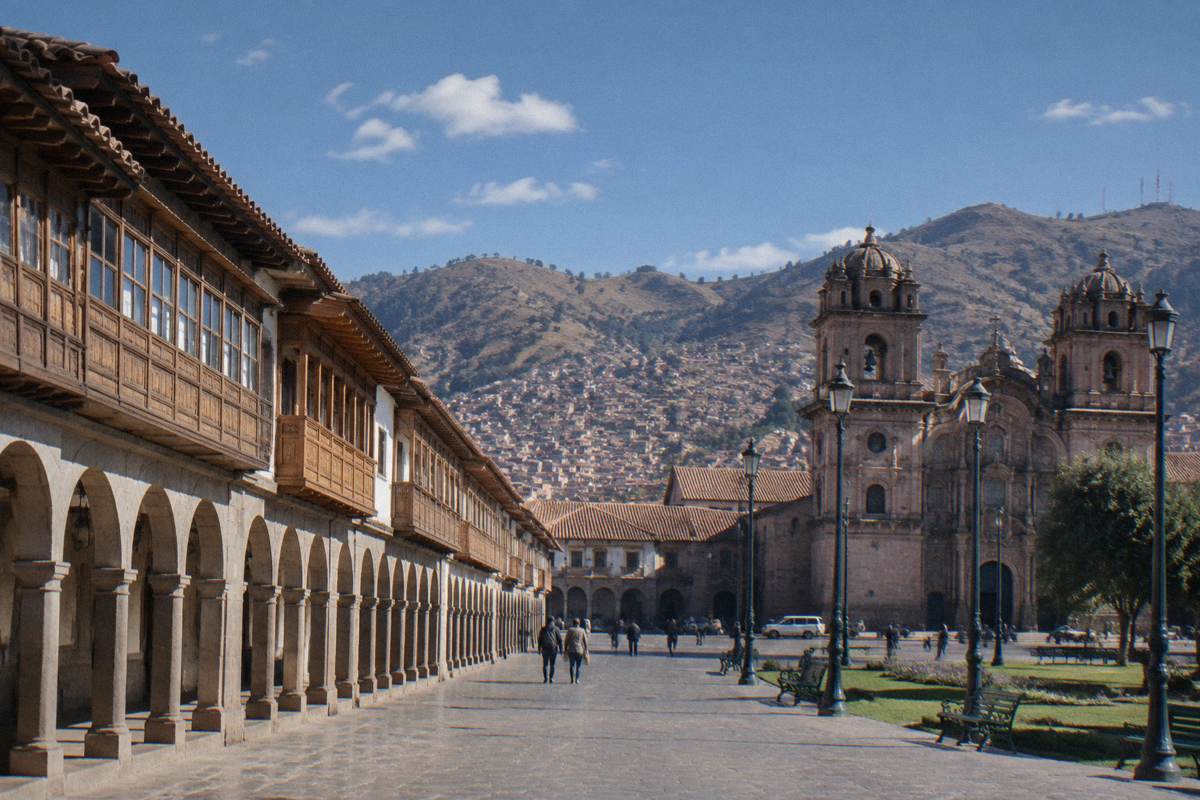
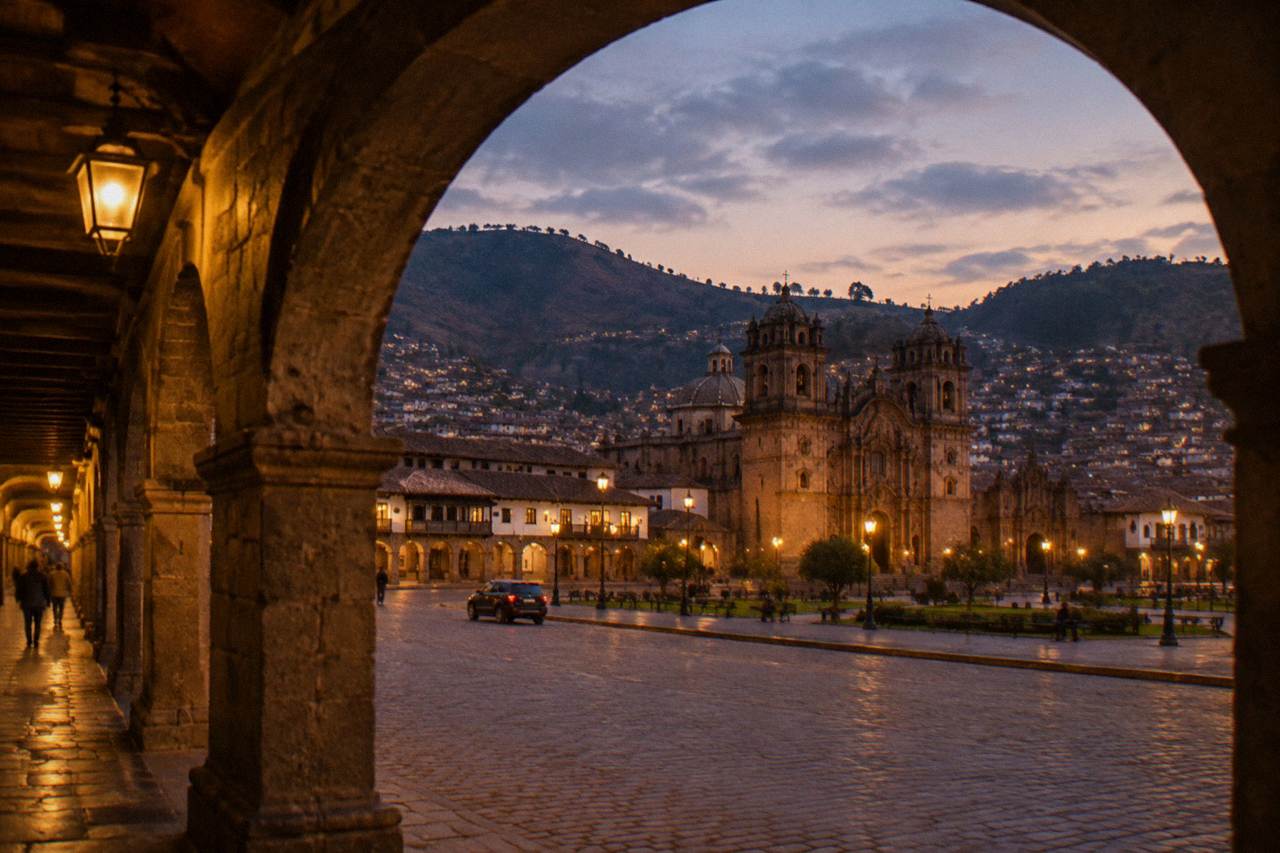
The case for Cusco is concentration. The city carries the bulk of the region's restaurants, churches and museums, the airport sits about 6 km from the Plaza de Armas, and the Boleto's Circuit II groups the Qorikancha site museum, the regional history museum and the contemporary art museum inside the historic centre. Anyone whose list leans toward city sights, food and nightlife loses time by sleeping an hour away in the valley.
The case for the valley is physiology and geography. The CDC Yellow Book treats Cusco as a rapid-ascent destination and prefers graded ascent wherever it is feasible, and its own text notes that in cities such as Cusco travellers can descend to lower elevations to sleep before continuing upward. The valley also shortens the rail run to Machu Picchu: the PeruRail FAQ gives about 1 h 45 from Ollantaytambo, against about 4 h 30 from Cusco's San Pedro station. A deeper treatment of that trade-off sits in the Cusco or Ollantaytambo comparison.
Why Does Elevation Matter When Choosing A Cusco Or Sacred Valley Base?
Elevation is the main physical difference between the two bases. PromPeru puts Cusco's Plaza de Armas at 3,335 m, while the valley towns sit lower: Pisac at 2,972 m, Urubamba at 2,870 m and Ollantaytambo at 2,792 m. The CDC Yellow Book names Cusco as a rapid-ascent destination and prefers graded ascent, which makes sleeping in the valley the gentler option after a flight into the Andes.
The CDC's ascent rules give the numbers behind that advice. The Yellow Book advises against going from low altitude to a sleeping altitude of 2,750 m or more in a single day, and once above 3,000 m it suggests moving sleeping altitude by no more than 500 m per night, with an extra night for every 1,000 m gained. It also lists Cusco at approximately 3,350 m and observes that travellers in cities like it can sleep at elevations lower than the airport before resuming their ascent. Every valley base qualifies as that lower sleep. Travellers who want the incidence background can read how likely altitude sickness is in Cusco.
| Place | Elevation | Recorded by |
|---|---|---|
| Sacsayhuaman | 3,701 m | Wikipedia |
| Cusco, Plaza de Armas | 3,335 m | PromPeru |
| Cusco airport | 3,310 m | OpenStreetMap |
| Moray | 3,385 m | Wikipedia |
| Maras | 3,300 m | Wikipedia |
| Pisac town | 2,972 m | Wikipedia |
| Urubamba | 2,870 m | Wikipedia |
| Ollantaytambo | 2,792 m | Wikipedia |
| Machu Picchu citadel | 2,430 m | Machu Picchu official site |
| Aguas Calientes | about 2,040 m | Wikipedia |
Two details in that table surprise people. Moray and Maras, usually sold as Sacred Valley stops, actually sit near Cusco's own elevation, so a valley base does not lower the sleeping altitude on a Maras and Moray day unless the night is spent in Pisac, Urubamba or Ollantaytambo. And the Machu Picchu citadel, at 2,430 m, sits lower than every base on this list, which is why the last night often moves downhill.
For travellers who keep Cusco as their base and visit the valley on a day trip, the Sacred Valley Full Day Tour covers the main sites in one guided circuit from the city, and Check availability on the operator's live listing before locking in dates.
To hand the valley circuit to a guide, book a Sacred Valley day tour here.
Which Sacred Valley Towns Work As Overnight Bases?
Pisac, Urubamba and Ollantaytambo are the three Sacred Valley towns that work as overnight bases, and each plays a different role. Ollantaytambo holds a train station for Machu Picchu and an Inca site on the Boleto's Circuit III. Urubamba sits near the middle of the valley and keeps the widest spread of lodging and kitchens. Pisac pairs its own ruins with a market town atmosphere and a quieter stay than Cusco.
Ollantaytambo is the logistics pick. The PeruRail FAQ gives about 1 h 45 from its station to Machu Picchu, against about 4 h 30 from San Pedro in Cusco and about 3 h 30 from Poroy, with taxis taking about 10 minutes to San Pedro and about 20 minutes to Poroy from the centre. The town itself holds an Inca site counted at 891,526 visits in 2025 by MINCETUR's dataset, and its stone streets sit at 2,792 m, the lowest of the three valley bases. The full area-by-area breakdown lives in the guide to where to stay in the Sacred Valley.
| Rail journey to Machu Picchu | Time given by PeruRail's FAQ |
|---|---|
| From San Pedro station, Cusco | about 4 h 30 |
| From Poroy station, Cusco | about 3 h 30 |
| From Ollantaytambo station | about 1 h 45 |
| Taxi, Cusco centre to San Pedro | about 10 minutes |
| Taxi, Cusco centre to Poroy | about 20 minutes |
Urubamba is the comfort pick. At 2,870 m it is marginally higher than Ollantaytambo but still well below the city, and its position near the middle of the valley puts Pisac, Moray and the Maras salt mines all within reach without changing base. Pisac is the slow-travel pick: the town gives its name to the Circuit III ruins above it and to a market that draws day visitors from Cusco, and at 2,972 m it is the highest of the three valley sleeps.
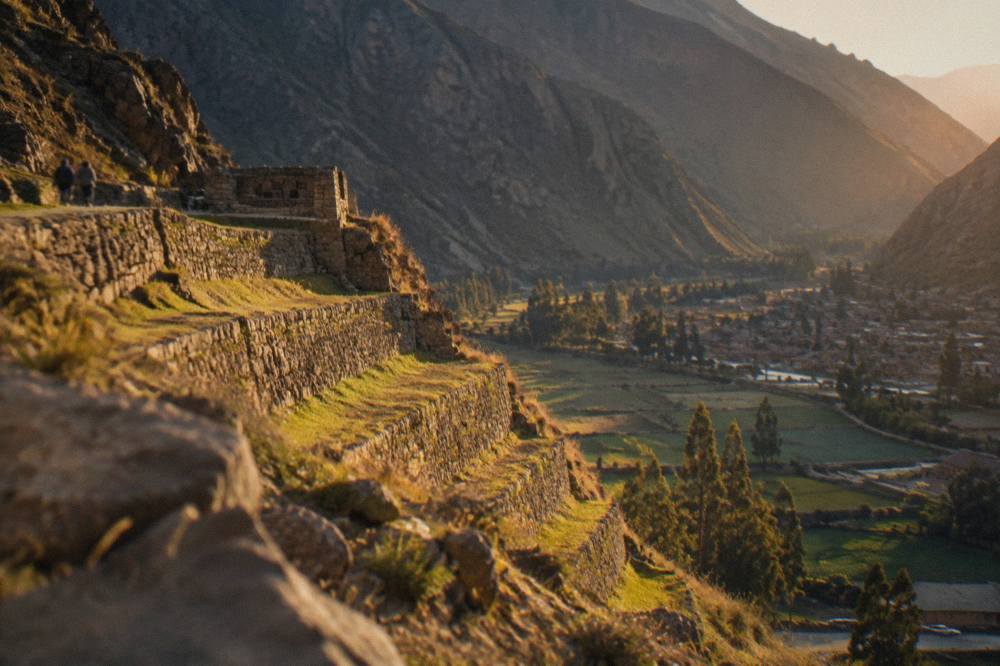
A valley base does not lock anyone out of the city. Colectivos and tours run the corridor constantly, and a Cusco visit can be done from Urubamba or Ollantaytambo as easily as the reverse. What a valley base does change is the morning of a Machu Picchu day, which starts later and closer to the station.
What Does The Boleto Turistico Cover Around Cusco And The Sacred Valley?
The Boleto Turistico's Circuit III covers four Sacred Valley sites, Pisac, Ollantaytambo, Chinchero and Moray, and nothing else in the valley. COSITUC sells that partial circuit for S/ 70, about US$20, or the integral ticket for S/ 130, about US$38, valid 10 days. Machu Picchu and the Maras salt mines appear on no Boleto circuit and need separate payment.
COSITUC sells the ticket in person only, at its counter on Av. El Sol 103 in Cusco, open 07:30 to 18:00 daily, and at most included sites. The FAQ on the COSITUC site states plainly that there is no online sale. The integral ticket covers 16 sites across all three circuits; the partials cover one circuit each, with Circuit III valid 2 days. That coverage map matters for base choice: a Cusco base puts Circuit II's museums at the door, while a valley base puts three of Circuit III's four sites within a short drive.
| Ticket or site | Cost | Coverage notes |
|---|---|---|
| Boleto integral, foreign adult | S/ 130, about US$38 | 16 sites, valid 10 days |
| Boleto Circuit III partial | S/ 70, about US$20 | Pisac, Ollantaytambo, Chinchero, Moray, valid 2 days |
| Boleto Circuit II partial | S/ 70, about US$20 | City museums and Qorikancha site museum, valid 2 days |
| Rainbow Mountain community fee | S/ 25 to S/ 30 | Cash, route dependent |
| Palccoyo community fee | about S/ 20 | Operator reported |
| Maras salt mines | S/ 15 to S/ 20 | Operator reported, 2026 |
| Humantay Lake | S/ 10 to S/ 20 | Sources disagree, no single figure |
The valley's biggest draws outside the Boleto are the Maras salt mines, which charge their own entry, and the mountain day trips, which pass through community checkpoints that take cash. None of that changes with the choice of base, but the cash requirement does favour whichever town has reliable ATM access, and Cusco holds the widest choice there.
Travellers who would rather not assemble the valley themselves can hand the circuit to a guided product. The Sacred Valley Full Day Tour runs the main sites from Cusco with a guide and transport included.
When Should You Split A Stay Between Cusco And The Sacred Valley?
A split stay suits an itinerary that includes Machu Picchu: nights in Cusco first for the city, the Cathedral and the Circuit II museums, then a move down to Ollantaytambo or Urubamba before a Machu Picchu morning. The CDC's graded-ascent logic runs the same direction, sleeping lower as the trip goes on. A single Cusco base still works for shorter visits built on day trips.
The order matters. Flying into Cusco puts the body straight to 3,335 m, and the CDC Yellow Book advises graded ascent wherever possible, so the gentler pattern sleeps in the city while adjusting, then drops to the valley, then finishes at Machu Picchu's citadel at 2,430 m or in Aguas Calientes at about 2,040 m, the lowest bed in the region. The reverse order, valley first, is the other documented approach: the CDC text itself notes that travellers in Cusco can descend to sleep lower before ascending again, and a valley-first arrival does that from day one.
Seasons shape the split too. The dry season runs roughly May to September, with clear days and frost common on June and July nights, while the wet season runs roughly November to March, and December to March carries 71.9 percent of the year's 707.8 mm of rain at the WMO and SENAMHI station record for Cuzco. Mean daily maximums stay between 18.8 and 20.9 C all year, so the choice is less about temperature than about rain and about what a wet road does to a valley itinerary. The two-day Sacred Valley itinerary shows how the split looks in practice, and the question of Sacred Valley or Machu Picchu first settles the other half of the ordering debate.
For lodging detail on the city side, the guide to where to stay in Cusco maps the neighbourhoods, and the wider planning resources on Things To Do In Cusco Peru cover the rest of the region. Whichever base wins, the valley's sites and the city's museums both stay reachable, and the Boleto's 10-day integral window is built for exactly this kind of split.
- Tunupa Lodge HotelhotelCheck rates
Common Questions About Staying In Cusco Or The Sacred Valley
The short answers below cover the questions that come up around this choice: whether the valley sits lower than the city, whether Machu Picchu is reachable from a valley base, what the Boleto covers, and where to sleep before a Machu Picchu morning. Each answer draws on the same sourced figures used above, with no guessed numbers and no invented timings.
Is it better to stay in Cusco or Sacred Valley?
For a first visit that includes Machu Picchu, a split serves the itinerary well: Cusco first for the city, the Cathedral and the Circuit II museums, then the valley, lower and closer to the train, for the final nights. Cusco alone suits short visits built on day trips, and the valley alone suits relaxed stays that skip the city's museum circuit.
Is the Sacred Valley lower than Cusco?
Yes. PromPeru puts Cusco's Plaza de Armas at 3,335 m, while Pisac town sits at 2,972 m, Urubamba at 2,870 m and Ollantaytambo at 2,792 m. Moray, at 3,385 m, and Maras, at 3,300 m, stand near the city's level, so the valley floor is the lower part and the sleeping elevations follow the town chosen.
Can you visit Machu Picchu from a Sacred Valley base?
Yes. Ollantaytambo has a station, and the PeruRail FAQ gives about 1 h 45 from there to Machu Picchu. The same FAQ gives about 4 h 30 from Cusco's San Pedro station and about 3 h 30 from Poroy, so a valley base shortens the rail leg on a Machu Picchu day.
Does the Boleto Turistico cover Machu Picchu?
No. COSITUC's 16-site ticket covers Pisac, Ollantaytambo, Chinchero and Moray on Circuit III, but Machu Picchu sells separately on the Ministry of Culture's ticket platform or in person at Machu Picchu Pueblo, where a daily counter allocation is held for the following day's entry.
Where should you sleep before a Machu Picchu morning?
Ollantaytambo puts the train about 1 h 45 away and keeps the evening at 2,792 m. Aguas Calientes, the town at the foot of the site, sits at about 2,040 m, the lowest sleep in the region, and puts the entry gate within reach on foot or by the shuttle bus.
Is Ollantaytambo a good base for the Sacred Valley?
It is the valley's transport hub: a station about 1 h 45 from Machu Picchu, an Inca site on Boleto Circuit III, and a lower sleeping elevation than either Cusco or Pisac. MINCETUR's dataset counted 891,526 visits to the Ollantaytambo archaeological park in 2025, second only to Saqsaywaman among the region's non-Machu Picchu sites.