Cooking Classes In Cusco
Cooking classes in Cusco teach the dishes of the Andes at 3,335 m, from market shopping to pisco sours, and this guide reports what the classes, the sources and the climate data say.
Short answer
A Cusco cooking class pairs a market visit with hands-on Andean cooking, and the featured option on this site is the Cusco Cooking Classes and San Pedro Market Tour, from $65 per person.
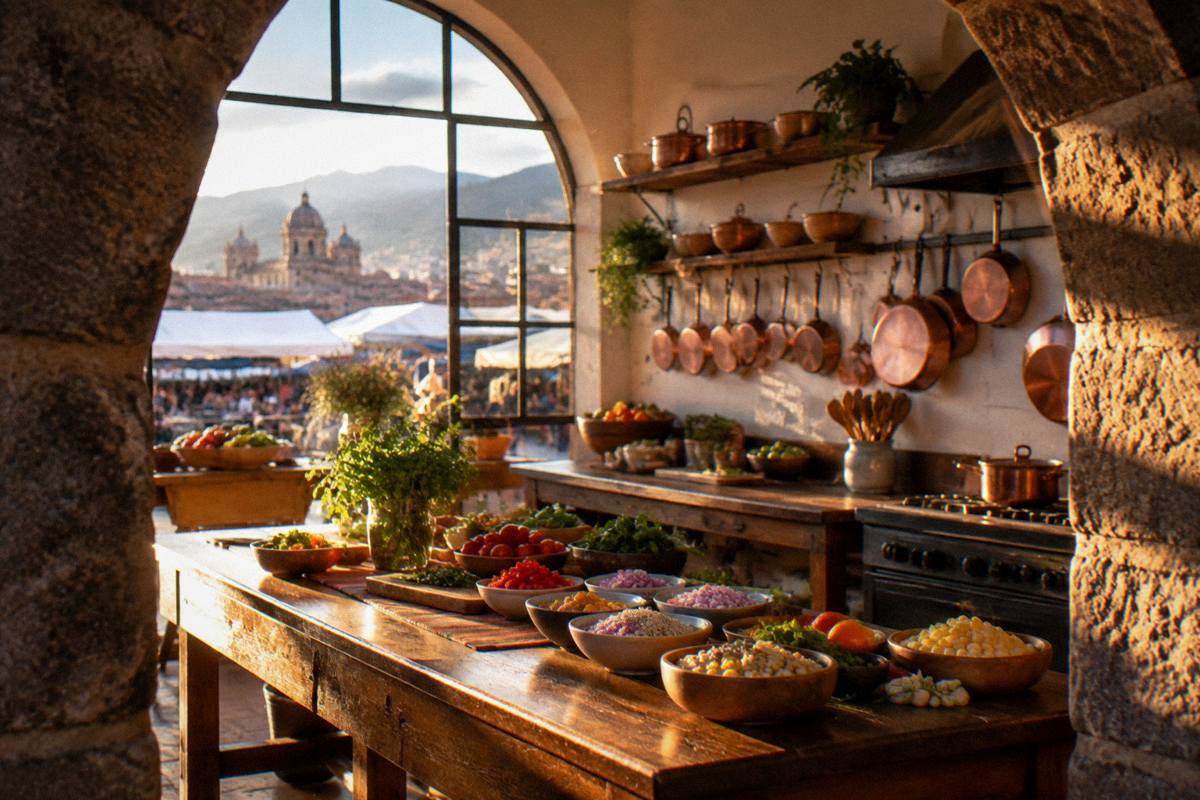
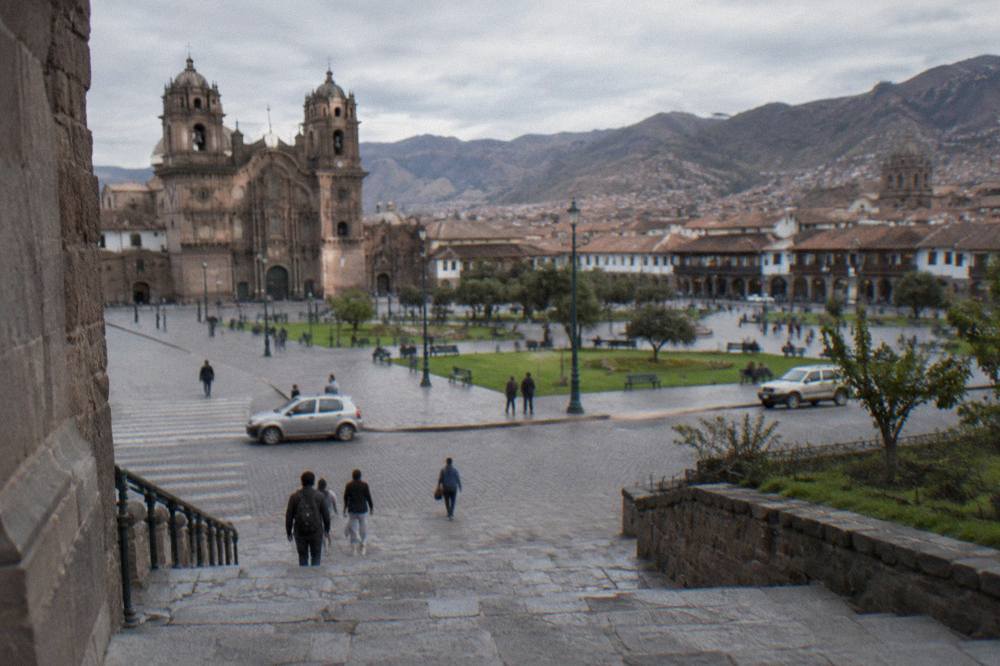
Cusco, the historic city in the Andes of southern Peru, also spelled Cuzco, sits at 3,335 m at its Plaza de Armas, and its kitchens turn out some of the most distinctive food in South America. A cooking class there is one of the few ways to get behind the restaurant menu and learn how the Andean pantry actually works: the potatoes, the maize, the chillies, the cacao. Nothing here is a first-person trip report.
What Can You Learn In A Cusco Cooking Class?
A Cusco cooking class teaches the everyday dishes of the Peruvian Andes, hands on, usually in a single session built around a starter, a main and a drink. Classes cover market shopping, knife work, Andean ingredients such as potatoes and maize, and classics like lomo saltado, causa and cebiche, though the exact menu varies by operator. The roster on this site lists several options, and the featured one is the Cusco Cooking Classes and San Pedro Market Tour, a small-group class that the listing describes as a hands-on way to discover Peru's food heritage. It has its own page at Cusco Cooking Classes and San Pedro Market Tour, and live availability can be checked through Check availability.
The listing copy for that class says it exists for people who would rather skip the restaurant reservation and cook instead. That framing matters, because the point of a class in Cusco is not fine dining. It is learning how a high-altitude pantry works: dozens of potato varieties, giant-kernel maize, aji peppers, grains such as quinoa and kiwicha, and herbs that do not travel well, which is why the shopping part of the class is part of the lesson.
Peru's food culture is the reason the class format works so well here. The country's cuisine draws on Andean, Spanish and other influences, and Cusco's version leans toward the Andean side. A class gives the vocabulary for what a visitor then sees on every menu for the rest of the trip, which is why many travellers put one early in the itinerary rather than late. For a wider picture of the city's food, see what to eat in Cusco.
What Dishes Do Cusco Cooking Classes Usually Cover?
Most Cusco cooking classes teach a set of Peruvian classics that travel well to a home kitchen: cebiche or its highland variants, causa, lomo saltado, aji de gallina, and a pisco sour to finish, with some Andean classes adding soups, quinoa dishes or cuy. The featured class on this site pairs the cooking with a San Pedro Market visit, so the shopping and the cooking are one lesson. The listing for the Cusco Cooking Classes and San Pedro Market Tour describes a small-group format in which participants cook rather than watch, which is the standard shape of a good class: demonstration classes exist, but the hands-on ones teach more.
Cebiche deserves a note, because the highlands complicate it. The dish of raw fish cured in citrus is coastal, and Cusco is a long way from the sea at 3,335 m. Classes inland often teach it anyway, sometimes with trout, which is farmed in the region's lakes and rivers, or they substitute other starters. The Andean mains are the ones that really belong to Cusco: dishes built on potatoes, maize and grains, slow stews, and the roasted meats of the region.
Cuy, guinea pig, is the Andean dish that visitors ask about most, and the Andes is where it is eaten. Classes occasionally include it, but no price, restaurant or origin year can be stated here, because none of that is sourced on this site. The honest general picture is on the site's dedicated page, cuy in Cusco. A class is actually a good place to understand what the dish means in the region, whether or not it appears on the class menu.
How Does A Market Tour Fit Into A Cusco Cooking Class?
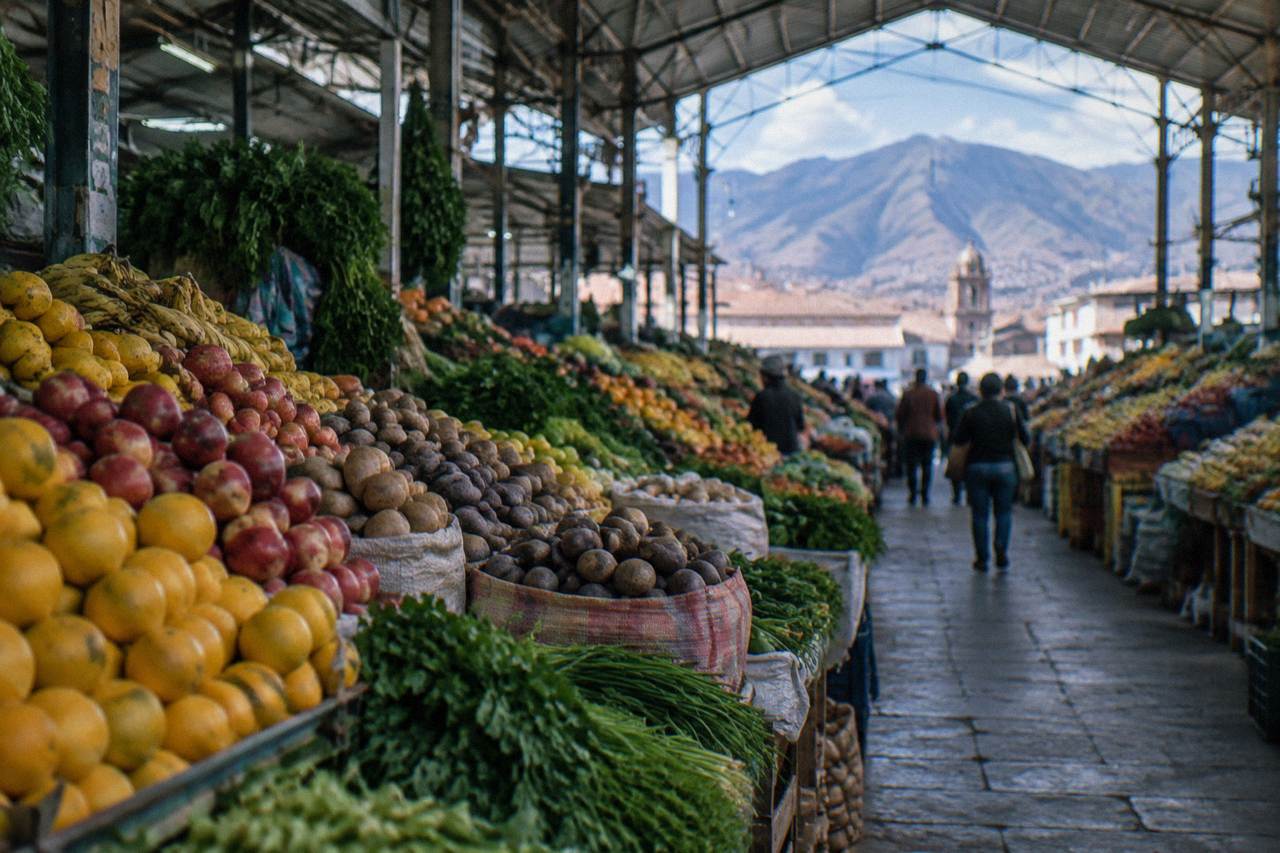
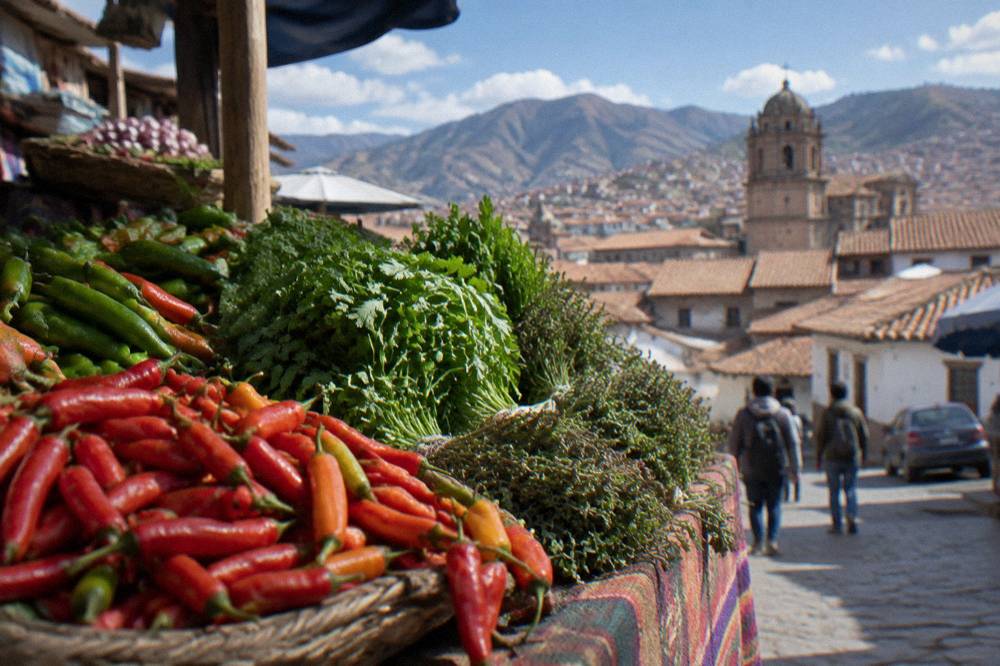
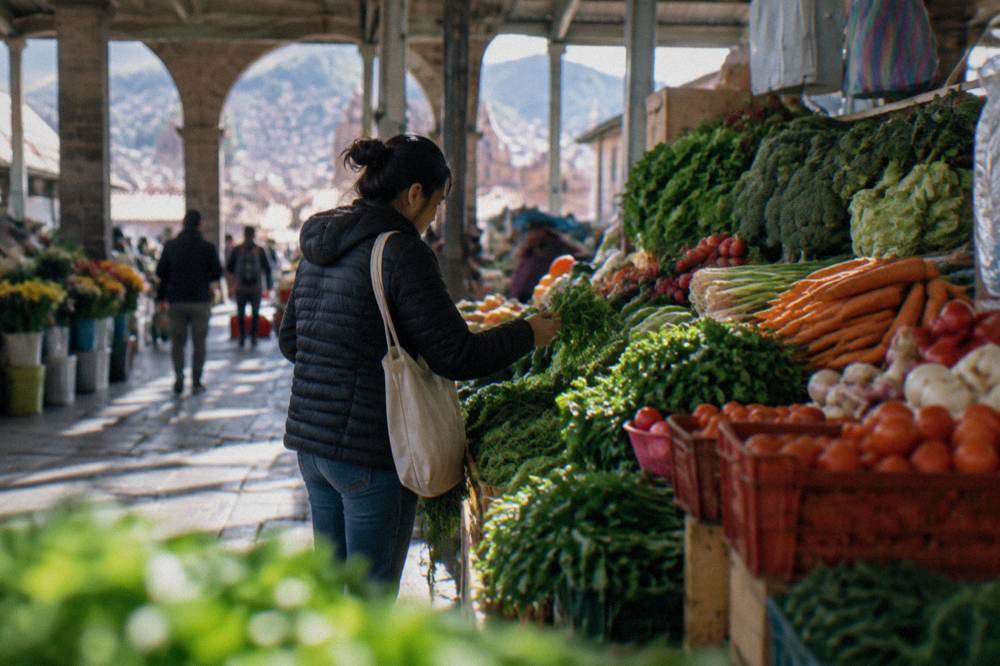
The market tour is the first half of many Cusco cooking classes: the group walks to San Pedro Market, buys the ingredients for the menu, and then cooks what it bought. The featured class on this site is built exactly this way, pairing the market walk with the cooking session, and the format turns shopping into part of the lesson rather than an errand. San Pedro Market is a real market near San Pedro at the edge of the old quarter, and it is where the city's cooks buy fruit, vegetables, grains, bread, meat and juices. The site's own record of the market gives no opening hours, stall count or founding year, and none of those details can be stated here, but the market's role in the food supply is not in doubt.
Walking the stalls with a guide does two things a restaurant meal cannot. It puts names and faces to the ingredients, and it shows the scale of the Andean pantry: the potato varieties alone are a lesson in themselves. The juice counters and the hot-food section are part of the same market culture, and a class that shops there teaches the layout a visitor can then reuse independently. The site has a fuller page on the subject, Cusco markets.
Want a guide to walk the stalls with you? Book a food walking tour here.
The featured class is not the only cooking product on the roster that works this way. The Peruvian Cooking Class Cocktails and Market Tour in Cusco also combines a market visit with cooking, and its listing describes a small-group cookery class focused on Peru's culinary heritage. It has its own page at Peruvian Cooking Class, Cocktails and Market Tour.
What Other Food And Drink Workshops Run In Cusco?
Beyond savoury cooking, Cusco runs chocolate workshops, pisco mixology sessions and food walking tours, and the roster on this site lists all three. The ChocoMuseo workshops teach bean-to-bar chocolate making, the pisco session teaches the national cocktail hands on, and the food walks taste the street food of the historic centre with the vendors who sell it. The chocolate workshop at ChocoMuseo takes participants from the cacao tree to the moulding, according to its listing, and the Curious Monkey street food walk is a small-group tasting tour limited to ten people or fewer that talks with the street food vendors.
Chocolate is the surprise for many visitors: Peru grows cacao, and the workshop format turns that into something a visitor can do in a couple of hours in the city. The ChocoMuseo class has its own page at Bean to Bar Chocolate Workshop in ChocoMuseo Cusco. A second ChocoMuseo workshop also appears on the roster with a similar format.
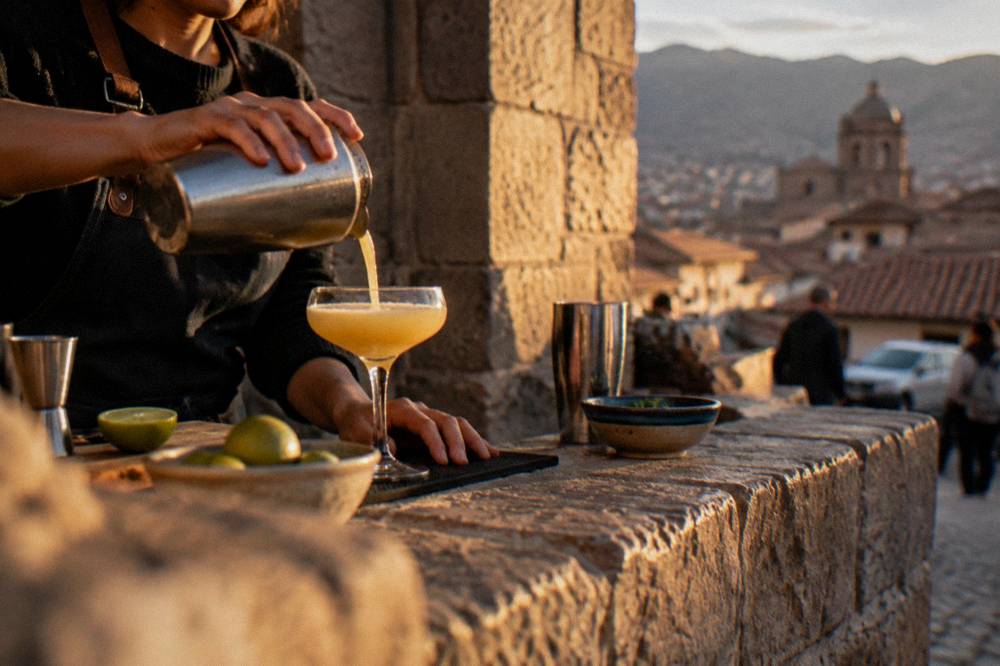
The pisco sour option is the evening counterpart. Pisco Sour Secrets is a small-group mixology session in the historic centre, limited to twelve people per its listing, and it teaches Peru's national drink hands on. Its page is at Pisco Sour Secrets: Hands-On Mixology in Historic Cusco. For the city's bar and restaurant scene after class, see Cusco nightlife.
When Is The Best Time Of Year To Book A Cusco Cooking Class?
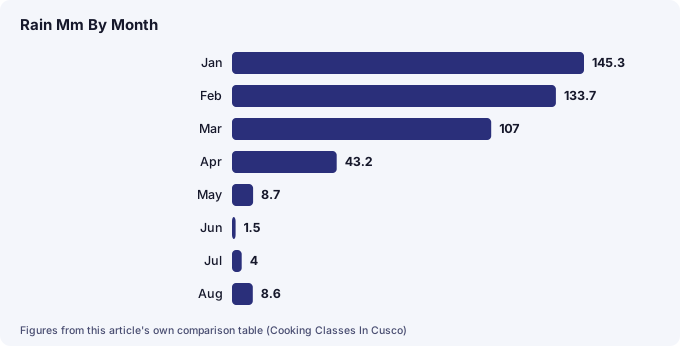
A cooking class in Cusco works in every month, because the mean daily maximum stays between 18.8 and 20.9 C all year at the city's weather station, but the dry season from roughly May to September is the most comfortable time to walk to market and back. The wet season, roughly November to March, brings rain concentrated in December to March, and a class is an indoor activity that keeps working through it. The numbers behind that come from the WMO and SENAMHI station record for Cuzco, a historical normal, and they are worth reading in full.
| Month | Mean Max C | Mean Min C | Rain mm |
|---|---|---|---|
| Jan | 18.9 | 6.6 | 145.3 |
| Feb | 18.8 | 6.5 | 133.7 |
| Mar | 19.1 | 6.2 | 107.0 |
| Apr | 19.7 | 4.9 | 43.2 |
| May | 19.8 | 2.5 | 8.7 |
| Jun | 19.5 | 0.3 | 1.5 |
| Jul | 19.1 | 0.1 | 4.0 |
| Aug | 19.8 | 1.6 | 8.6 |
| Sep | 19.8 | 3.9 | 21.8 |
| Oct | 20.9 | 5.5 | 39.4 |
| Nov | 20.7 | 6.1 | 71.9 |
| Dec | 19.4 | 6.4 | 122.7 |
Two patterns matter for planning. December to March carries 71.9 percent of the year's 707.8 mm of rain at that station, while May to August together bring just 22.8 mm, so the dry months are the ones for combining a class with everything else on a Cusco itinerary. And June to August is winter in the Southern Hemisphere: dry, clear days, cold nights, with frost common in June and July, so a warm kitchen is not a bad place to be in the Andean winter. The site's month-by-month page has the full picture, Cusco weather by month, and the broader planning page is the best time to visit Cusco.
How Does Cusco's Altitude Affect A Cooking Class?
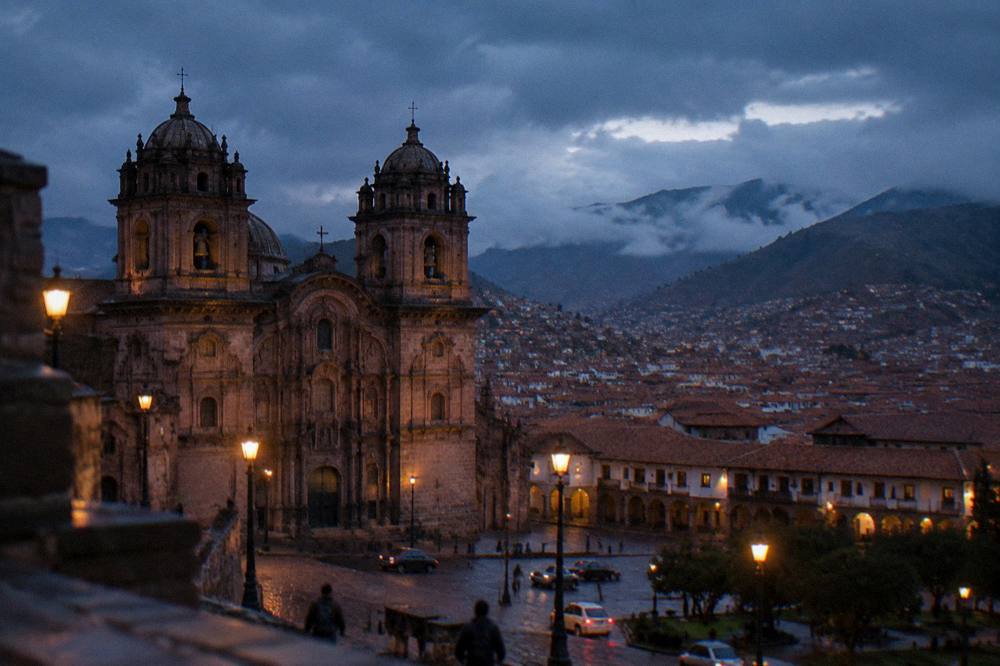
Cusco's Plaza de Armas sits at 3,335 m, and the CDC Yellow Book names Cusco as a rapid-ascent destination where altitude illness rates approach 50 percent in abrupt-ascent situations, so a cooking class is a gentler first day than a mountain hike. The CDC advises a graded ascent where feasible, and notes that travellers in Cusco can sleep at elevations lower than the airport for a night or two before ascending further. Those are the CDC's own words about the city, and they are the reason a class, a market walk and a slow afternoon are a sound first-day plan. The full acclimatisation detail is on the site's dedicated page, Cusco altitude.
The practical connection to cooking is simple. A class keeps a visitor at the city's own elevation, indoors, with frequent breaks, which is a reasonable shape for the first day or two while the body adjusts. The CDC also advises avoiding alcohol for the first 48 hours at high altitude, which is worth knowing before booking a pisco mixology session: the class teaches the cocktail, but the first days at 3,335 m are not the days to drink several of them. Nobody publishes a day count for acclimatisation, so the honest planning advice is to keep the first days gentle and let the class be the gentle thing. Everything else covered here is indexed on Things To Do In Cusco Peru.
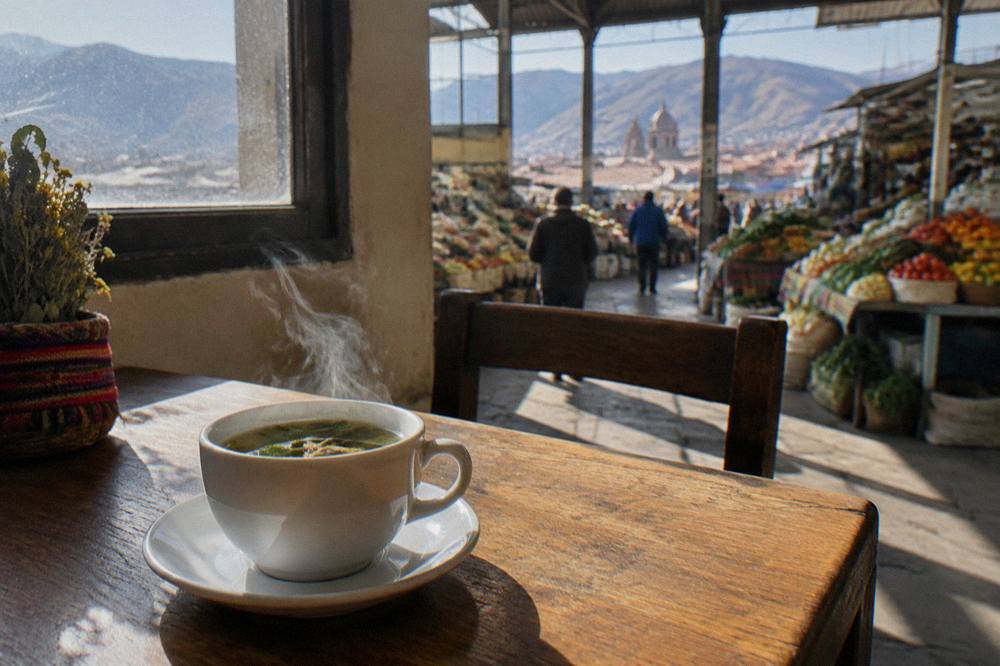
A cup of coca tea is the traditional welcome drink in the region, and the reported on-the-ground price is about S/ 2 to 5, roughly under US$2 at about S/ 3.4 to the dollar. Its effect at altitude has no sourced figure on this site, so none is offered. The tea is simply part of the hospitality a class or a market stall may hand over.
What Does Eating Out In Cusco Cost Around A Class?
The verified on-the-ground food ranges for Cusco are these: a menu del dia, the set lunch, is reported at about S/ 8 to 15, and a cup of coca tea at about S/ 2 to 5, both secondary reported ranges rather than official tariffs. Class prices themselves are printed on each product card, never typed into prose here. The menu del dia is the number that matters around a class, because it is the benchmark for what a cooked meal costs in the city.
| Item | Reported Range | Approx US$ At About S/ 3.4 |
|---|---|---|
| Menu del dia (set lunch) | S/ 8 to 15 | about US$2 to 4 |
| Cup of coca tea | S/ 2 to 5 | about US$1 |
| Tourist SIM | S/ 5 to 15 | about US$2 to 4 |
| Data pack | S/ 20 to 40 | about US$6 to 12 |
| Airport taxi to centre | S/ 15 to 25 | about US$4 to 7 |
The exchange rate is about S/ 3.4 to the US dollar, and the site uses only that rounded conversion, never a precise rate. Tipping has its own reported ranges from one Peru travel guide: free walking tours run on tips of about S/ 20 to 40 per person, day-tour guides about S/ 10 to 20, drivers about S/ 5 to 10, and in restaurants up to 10 percent only if no service charge is already on the bill. A cooking class falls somewhere in the tour-guide pattern, and the guide's own advice is the reference point.
For the wider cost picture of a Cusco trip, the money pages on this site cover where to stay in Cusco and the practical side of getting around. None of those figures is a promise, only a reported range, and the class card prints the live price.
Can You Do A Cooking Class With Kids In Cusco?
Yes, cooking classes are among the most workable Cusco activities with children, because they are indoors, seated or standing at a counter, and shorter than a full-day excursion, and chocolate workshops in particular are built around a process kids can join. The roster lists the ChocoMuseo workshops in this mould, and the class-and-market format can be walked slowly with a family that paces itself at 3,335 m. The site's family page covers the broader picture, Cusco with kids, and the same altitude cautions apply: the CDC's graded-ascent advice is the reference for any family itinerary, and a class is an activity that fits a gentle first day.
The market walk is the part that works least predictably with small children, simply because markets are crowded and the walk adds standing time. The cooking half is the reliable part. Chocolate classes avoid knives and heat almost entirely, which is why they are the usual family pick, and the bean-to-bar format ends with each participant moulding their own chocolate to take away, per the listing's description of the process from the cacao tree to the moulding.
For a free, tip-based way to fill the rest of a family day, the site's page on free things to do in Cusco lists the GuruWalk free walking tours, which are named for their platform because they are free or pay-what-you-want and are not this site's products.
How Do You Choose Between The Cusco Cooking Classes?
Choose by format, not by price alone: the class-and-market products teach shopping and cooking as one lesson, the cocktail-and-market class adds mixology, the chocolate workshops are shorter and family-friendly, and the street food walks taste the city without cooking. Every price, rating and duration for these products prints on its own card from verified listing data, so the comparison below describes formats only. The roster carries several distinct formats, and they suit different travellers.
| Format | What It Centres On | Best Fit |
|---|---|---|
| Class plus market tour | Shopping at San Pedro Market, then cooking the menu | First-time visitors who want the full lesson |
| Cooking class with cocktails | Market visit, cooking and pisco mixology | Groups, couples, an evening plan |
| Bean-to-bar chocolate workshop | Cacao to moulded chocolate in one session | Families, short visits, chocolate lovers |
| Street food walk | Tasting at stalls with the vendors | Eaters who would rather walk than cook |
| Pisco mixology session | The national cocktail, hands on | An evening out with a skill attached |
The featured class on this site, the Cusco Cooking Classes and San Pedro Market Tour, is the all-rounder of the first row, and its card carries its live price and rating. The Peruvian Cooking Class Cocktails and Market Tour is the second-row option. The chocolate workshops and the street food walks fill the rest. Whichever format fits, the class is one of the few Cusco activities that ends with a skill and a recipe rather than a photograph, which is a fair closing argument for putting it early in the trip.
Common Questions About Cusco Cooking Classes
What do you cook in a Cusco cooking class?
Classes teach Peruvian classics such as cebiche or its highland trout variants, causa, lomo saltado and aji de gallina, plus Andean staples built on potatoes, maize and grains, and a pisco sour to finish. The exact menu varies by operator, and the featured class on this site pairs the cooking with a San Pedro Market shopping trip.
Do Cusco cooking classes include the market tour?
Several do. The featured Cusco Cooking Classes and San Pedro Market Tour is built as one lesson: the group shops at San Pedro Market first, then cooks what it bought. The Peruvian Cooking Class Cocktails and Market Tour follows the same pattern with cocktails added.
How much does a Cusco cooking class cost?
Each product's price prints on its own card from verified listing data, and this site does not type product prices into prose or invent a price band. For context, a menu del dia in Cusco is reported at about S/ 8 to 15, which shows how inexpensive eating in the city is; the class price is the lesson, the ingredients and the guide, and the live figure is on the operator's listing.
Is a cooking class a good first-day activity at altitude?
It is a reasonable one. The CDC Yellow Book names Cusco, at roughly 3,350 m in its listing, as a rapid-ascent destination and advises a graded ascent where feasible. A class is indoors, at the city's own elevation, with breaks, which fits a gentle first day better than a mountain hike. The CDC also advises avoiding alcohol for the first 48 hours at high altitude, worth noting before a pisco session.
Are there cooking classes in Cusco for kids?
Yes. Chocolate workshops are the usual family pick, because the bean-to-bar process avoids knives and heat and ends with each participant moulding chocolate to take away. The ChocoMuseo workshops on this site's roster are built in that format, and the site's Cusco with kids page covers the wider family picture.
What else can you do in Cusco besides a cooking class?
The site covers the full range, from what to eat in Cusco and the city's best restaurants to Cusco nightlife, the Boleto Turistico and the day trips beyond the city. A cooking class pairs well with all of it, because it teaches the vocabulary of every menu that follows.
The short version: a cooking class in Cusco is a half-day that teaches the Andean pantry, the market that supplies it and a few dishes to cook at home, and the featured class-and-market product on this site is the format most first-time visitors choose.