What To Eat In Cusco
Cusco food runs from highland market stalls to set-lunch kitchens and pisco sour bars. Here is what the sources say about the dishes, the prices and the eating culture of the Andes at 3,335 m.
Short answer
The core of Cusco food is Andean: potatoes, corn, quinoa, soups, roasted meats and cuy, with ceviche and Lima-style cooking arriving with tourism. A reported set lunch costs S/ 8 to S/ 15, San Pedro Market is the classic first stop, and a guided food walk or cooking class is the fastest way into it.
Cusco sits at 3,335 m in the Andes of southern Peru, and the food of the city reflects that altitude. The historic city, inscribed by UNESCO in 1983, was the Inca capital, and its kitchens still cook the highland staples that landscape produces: potatoes in dozens of varieties, large-kernelled Andean corn, quinoa, soups built for cold nights, and roasted meats. The sources on this page come from the verified facts pack behind Things To Do In Cusco Peru, and the prices below are reported ranges from operators and travel sites in 2026, not official tariffs.
What Should You Eat In Cusco?
The dishes that define Cusco food are the Andean staples: quinoa soup, lomo saltado, aji de gallina, roasted cuy, chicharron, cuy-style pork crackling, humitas, and the endless family of potatoes and Andean corn, plus ceviche and other coastal dishes that arrived on the tourist trail. The unifying thread is altitude cooking: hearty, starchy, warm, and built for nights that drop near freezing.
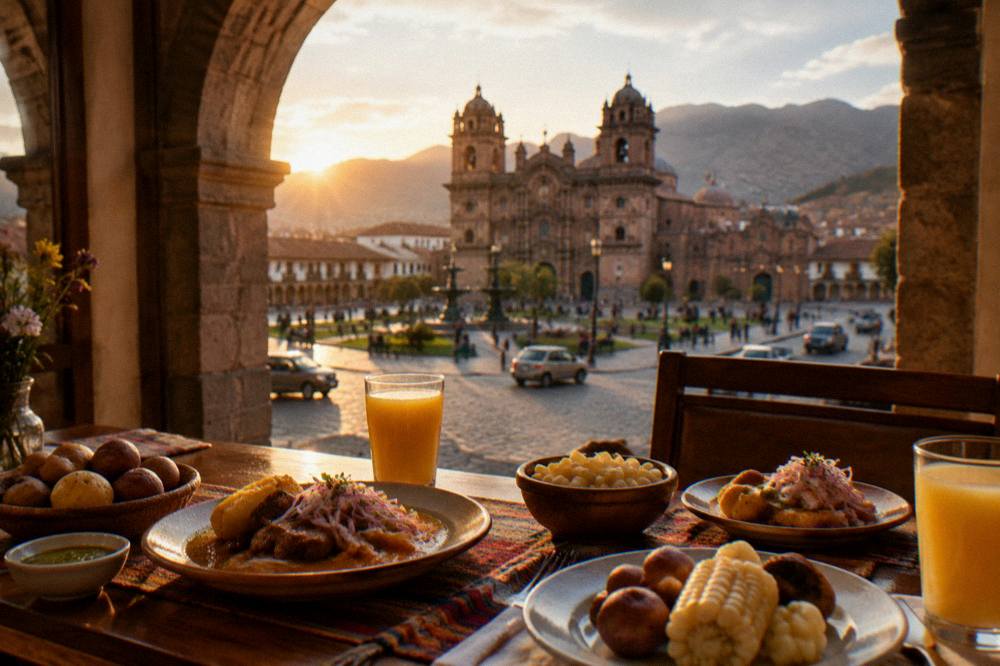
Cusco was the Inca capital, and the highland base of the cuisine has not changed. Potatoes are the anchor. Peru's Andes are the potato's home region, and a Cusco market stall will serve several varieties in one dish, boiled with a sharp local cheese sauce in the dish called causa or papas a la huancaina. Andean corn, with kernels far larger than the North American kind, appears boiled on the cob, toasted as a snack, and drunk as the fermented chicha.
The meat plates follow the same logic. Lomo saltado, strips of beef stir-fried with onion, tomato and fries, is the national crossover dish, found on every Cusco menu. Aji de gallina, shredded chicken in a creamy yellow-pepper sauce over rice, sits beside it. Chicharron, slow-fried pork, is a highland plate served with mote, the boiled husked corn. Cuy, roasted guinea pig, is the Andean ceremonial dish, covered in depth on the site's cuy guinea pig guide.
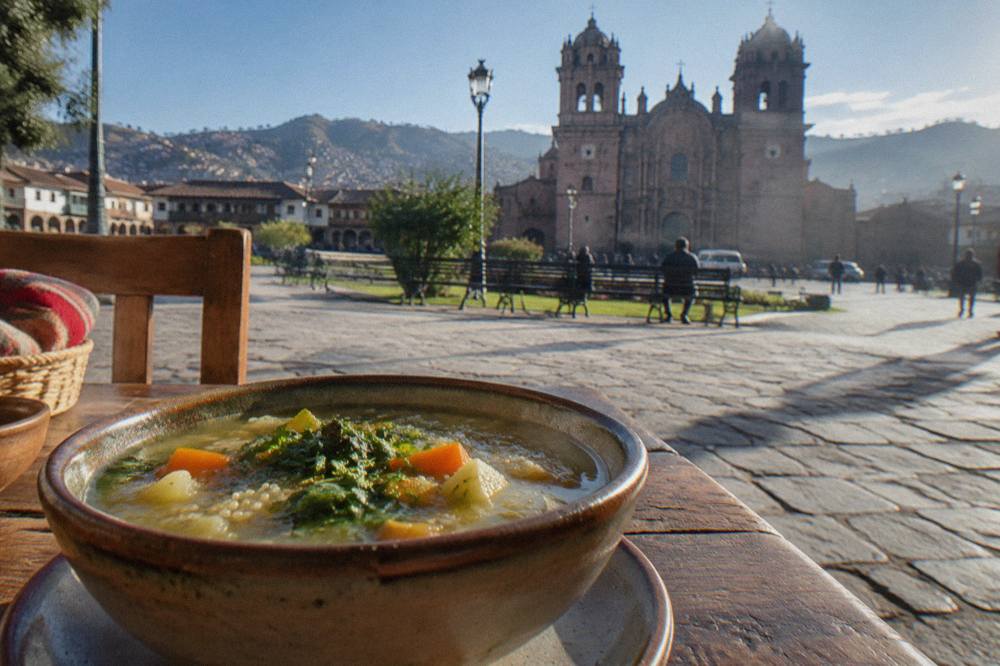
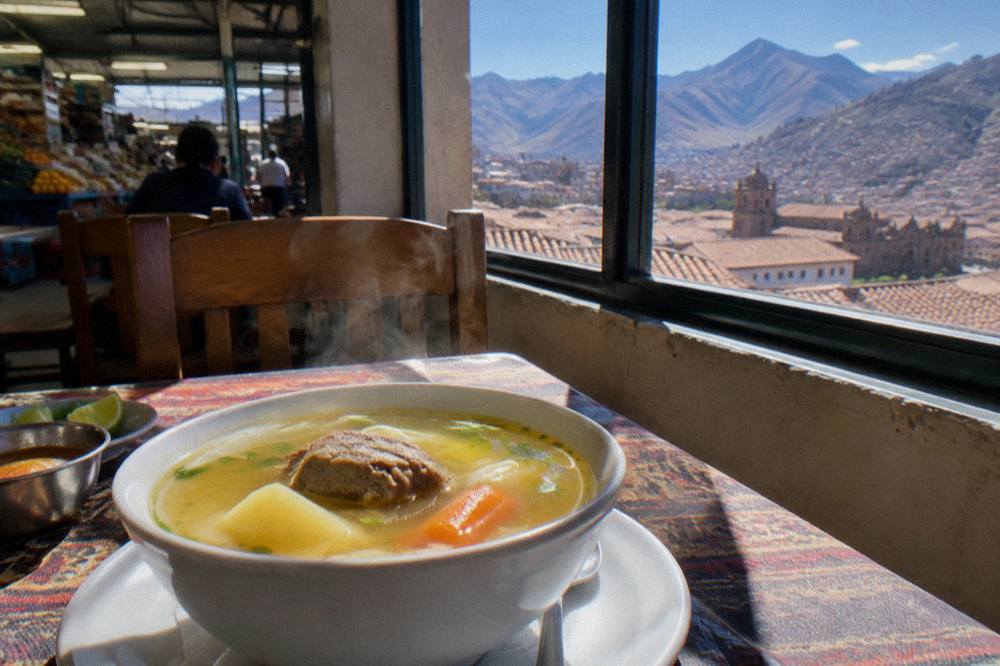
Soups deserve their own paragraph. A highland lunch in Cusco commonly opens with a caldo, a clear broth with a piece of meat, a potato and a piece of corn, and the quinoa soup that follows is filling enough to be a meal on its own. The set menus built around these soups are the everyday eating of the city, and they are the cheapest complete meals a visitor will find, at the reported S/ 8 to S/ 15 range for a menu del dia covered below.
The dishes and where they fit:
| Dish | What it is | Where it fits |
|---|---|---|
| Quinoa soup (sopa de quinua) | Broth with quinoa, potato, vegetables | Market stalls and set lunches |
| Papas a la huancaina | Boiled potatoes in yellow pepper cheese sauce | Starter on most menus |
| Lomo saltado | Beef stir-fried with onion, tomato, fries | Standard main everywhere |
| Aji de gallina | Chicken in creamy yellow pepper sauce over rice | Standard main |
| Chicharron | Slow-fried pork with boiled mote | Highland plate, weekends |
| Cuy | Roasted guinea pig | Andean ceremonial dish, ordered whole |
| Humitas | Steamed corn parcels, sweet or savoury | Street snack |
| Chicha | Fermented corn drink | Traditional drink, markets and festivals |
Where Do Locals Eat In Cusco?
Locals in Cusco eat at the markets, at the set-lunch kitchens serving a menu del dia, and at the picanterias and family restaurants of the older barrios, with San Pedro Market the classic central stop. A reported set lunch costs S/ 8 to S/ 15, about US$2 to US$4, and the market juice and lunch counters are where the city feeds itself. The site's answer page on this question goes deeper.
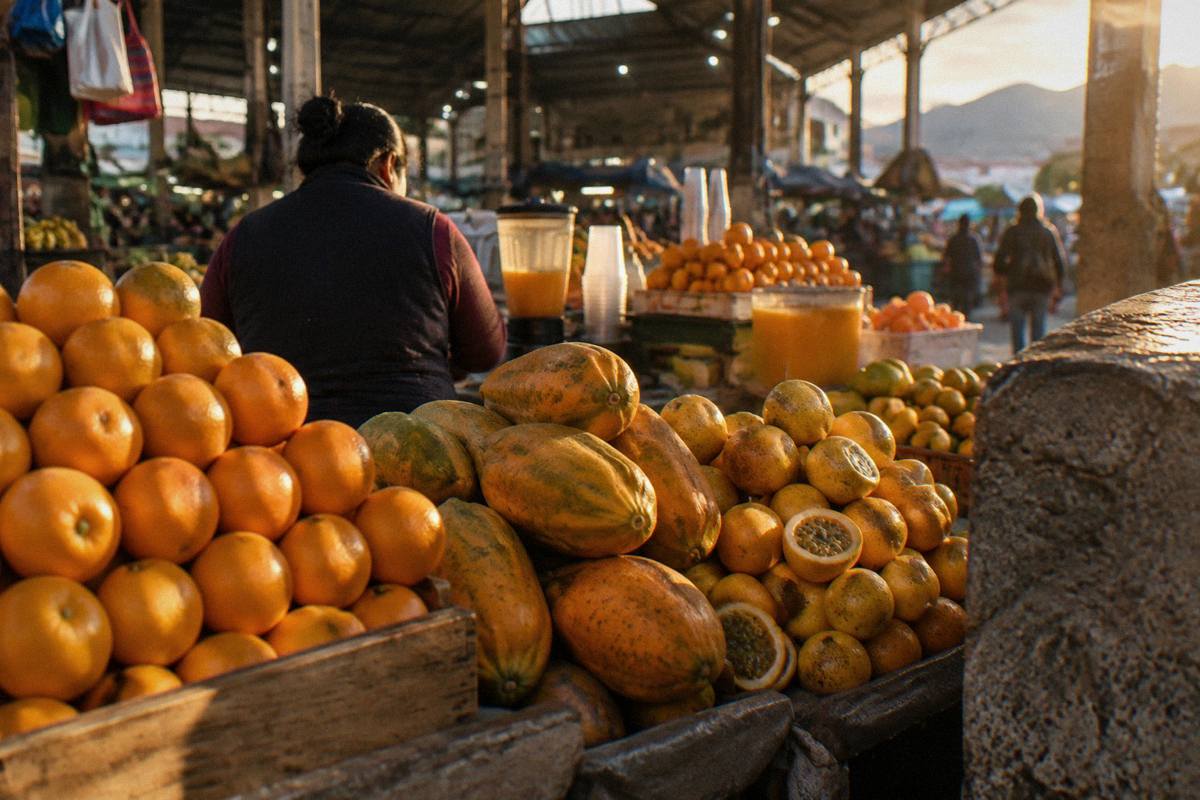
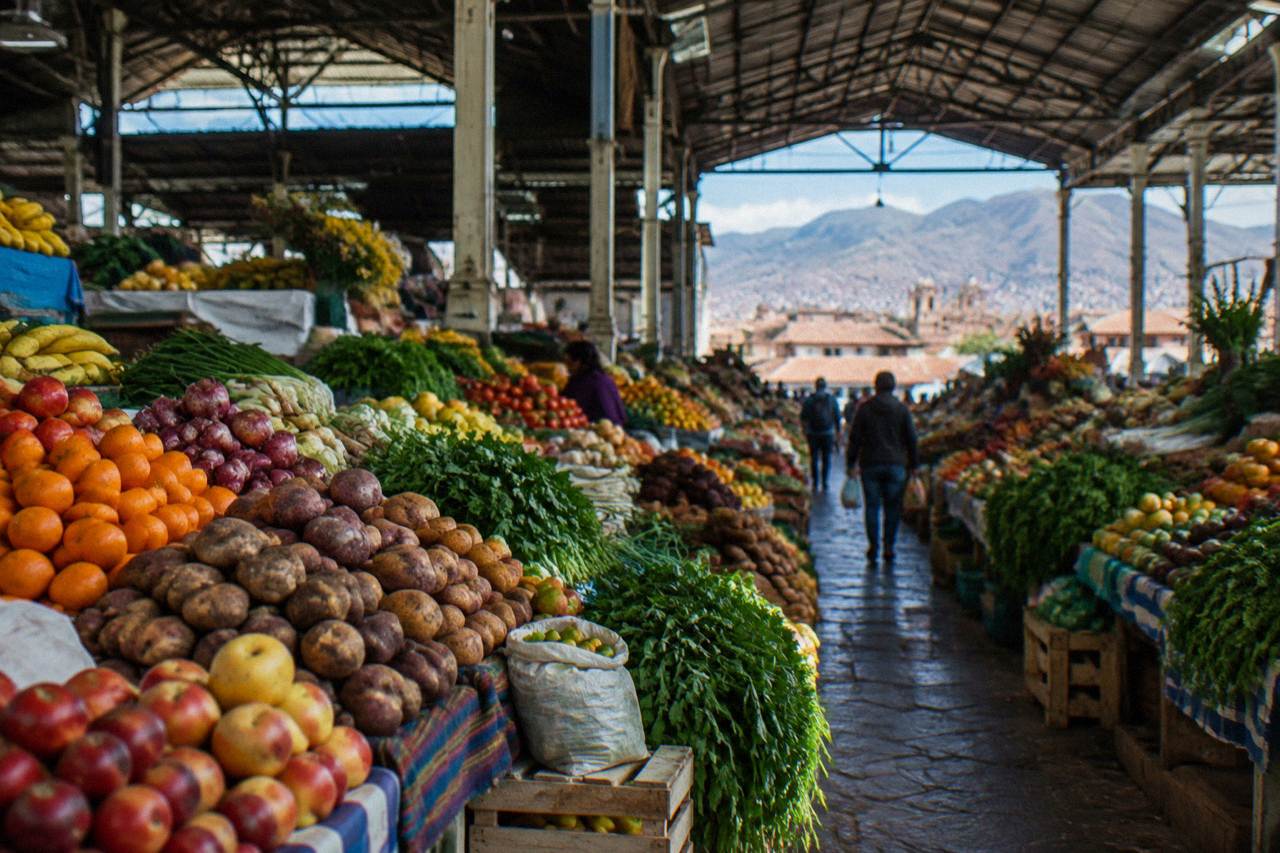
San Pedro Market, the covered market at the edge of the old quarter, is the busiest eating address in the centre. The site's own Cusco markets guide covers it in full; for food, the relevant part is the row of lunch counters serving set meals, juices pressed to order from the fruit of the lower valleys, and bread and snack stalls. The pack holds no opening hours, stall count or founding year for the market, and none is needed: the eating is the point.
The menu del dia is the working lunch of Cusco. A soup, a main, sometimes a small dessert and a drink, at a reported S/ 8 to S/ 15. The range comes from operator and travel-site prices gathered in 2026, so treat it as reported, not official. Outside the centre, in the barrios where tourists do not wander at lunch, the same structure holds at the same kind of price.
For visitors who want the local eating explained rather than decoded alone, a guided food walk is the direct route. The roster carries a small-group street food walk, limited to ten people or fewer, that tastes papas, meats and sweets while talking with the vendors, and a central-market walking tour built around San Pedro's stalls. The Curious Monkey street food walk is the site's featured food tour for this page: Check availability. More on where locals actually eat is on the site's where do locals eat answer page.
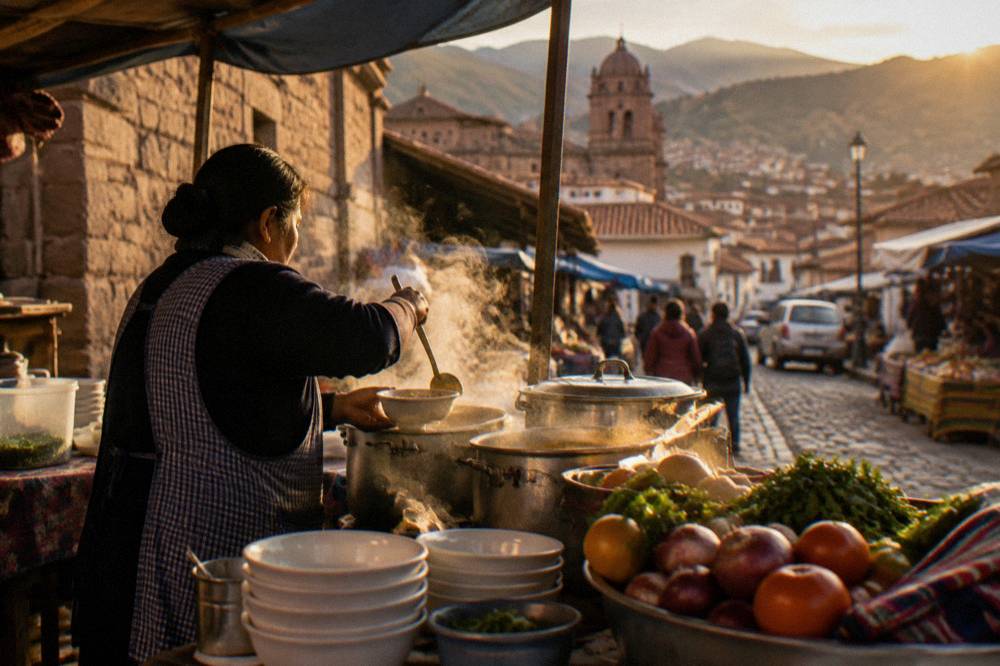
Is Street Food In Cusco Safe To Eat?
The honest answer is that the CDC's Peru guidance covers food and water habits rather than street food specifically: it advises safe food and water practices and avoiding contaminated water by drinking bottled, boiled or treated water. Cooked, hot, busy-stall food is the standard advice pattern for any destination, and the site's food-poisoning answer page applies the sources to Cusco in detail. No source rates Cusco's street food.
The CDC Peru destination page, checked for this site, carries a Level 1 travel notice, Practice Usual Precautions, and its food and water guidance is the standard one: avoid contaminated water, drink bottled, boiled or treated water. It does not single out street food, and no source rates individual stalls or markets. What a reader can do with that is on the site's avoiding food poisoning in Cusco answer page, which works through the guidance dish by dish.
Two Cusco-specific points are worth stating. First, altitude changes appetite and digestion before any food does; the CDC's altitude guidance for Cusco is summarised on the site's Cusco altitude guide. Second, the juice counters at San Pedro Market are a Cusco institution, and the water question applies to them as much as to any tap water: the CDC's line on bottled, boiled or treated water is the relevant rule.
A guided walk also answers the safety question practically: a local guide steers a small group to the stalls with fast turnover and high heat, which is the pattern any traveller applies anywhere. The Curious Monkey walk's listing carries its own cancellation terms, shown at booking.
What Is Cuy And Should You Try It?
Cuy is roasted guinea pig, the ceremonial dish of the Andes, eaten at festivals and family occasions across the highlands including Cusco, and it is part of the region's food heritage rather than a tourist invention. Whether to try it is a matter of taste: it is served whole, it is one of the pricier local dishes, and no sourced price, restaurant or origin year exists in the verified pack, so this page gives none.
The dish is real and local. Cuy is eaten across the Andes, and in Cusco it appears on festival tables and on the menus of restaurants that serve traditional highland cooking. The site's dedicated cuy guinea pig page covers what it is, how it is served and the cultural context, and this food guide defers to it rather than repeating it.
What the pack does not hold matters as much as what it does. No sourced price for a cuy plate exists, so this page prints none. No restaurant is named as the place to eat it, because the pack supports no such ranking. The honest framing is simple: it is a dish to order knowingly, whole and roasted, at a place that cooks it for locals as well as visitors.
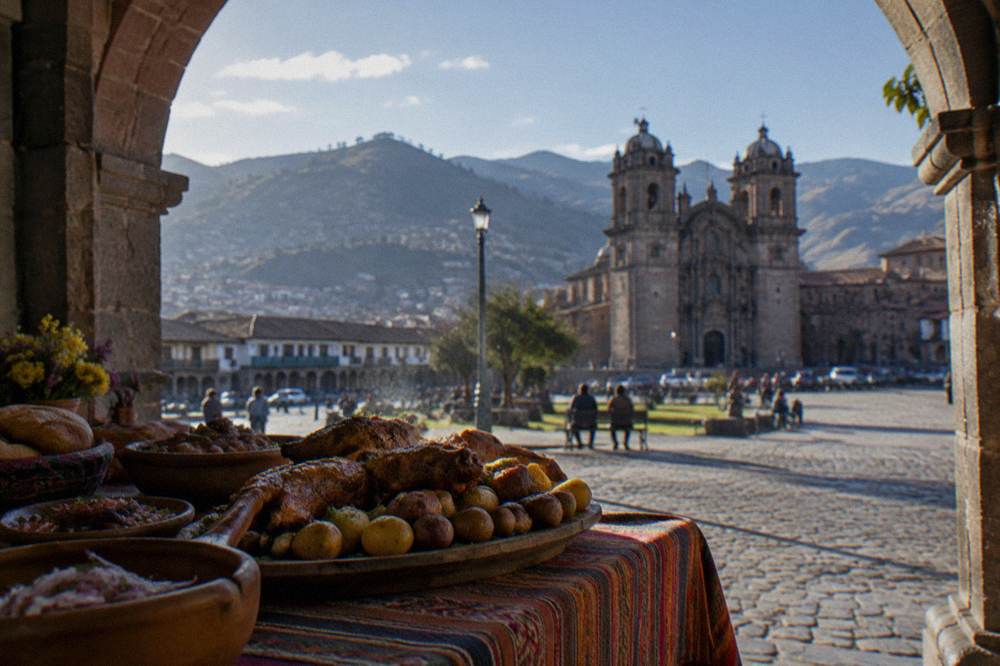
What Should You Drink In Cusco?
The drinks of Cusco are coca tea, chicha morada, the pisco sour and local beers, with coca tea the standard altitude welcome at a reported S/ 2 to S/ 5 a cup, and the pisco sour the national cocktail that every bar in the city pours. Chicha, the fermented corn drink, is the traditional one, tied to the markets and the festival calendar.
Coca tea is a drink handed to visitors in Cusco, and the reported range for a cup is S/ 2 to S/ 5. The pack holds no sourced figure for the physiological effect of coca tea at altitude, so this page states none; the CDC's altitude advice is about graded ascent and, where abrupt ascent is unavoidable, a prescription conversation with a doctor about acetazolamide. The tea is a cultural constant regardless.
Chicha morada, the sweet purple corn drink served cold, is the everyday non-alcoholic companion to a set lunch. Chicha, the fermented original, is older: it is the drink of the Andes, poured at markets and festivals. The Q'eswachaka bridge renewal each July, with the festival on 5 July in 2026, is one of the traditional settings where it appears.
The pisco sour is the cocktail of Peru, and Cusco's bars pour it well; the site's Cusco nightlife guide covers where the evenings go. For visitors who want the cocktail learned rather than drunk, the roster carries a small-group pisco sour mixology class in the historic centre, and a pub crawl that moves through bars and a club without queueing. Both listings print their own prices and terms at booking.
| Drink | What it is | Reported price or context |
|---|---|---|
| Coca tea | Infusion of coca leaf, served hot | S/ 2 to S/ 5 a cup, reported |
| Chicha morada | Sweet purple corn drink, cold | Included or a few soles with set lunches |
| Chicha | Fermented corn drink | Markets and traditional festivals |
| Pisco sour | Pisco, lime, egg white, bitters | The national cocktail, citywide |
| Cusquena | Local lager | Standard bottled beer |
How Much Does Food Cost In Cusco?
Everyday food in Cusco is cheap by visitor standards: a reported menu del dia runs S/ 8 to S/ 15, about US$2 to US$4, a cup of coca tea S/ 2 to S/ 5, and the exchange rate runs about S/ 3.4 to the US dollar. Restaurant meals above the set-lunch level vary widely and no verified band for them exists, so this page prints none. Tourist restaurants are priced on their own listings.
The reported ranges below are the only everyday food figures the verified pack holds, gathered from operators and travel sites in 2026. They are ranges, flagged as reported, and never a single official price. The conversions use the site's fixed guard of about S/ 3.4 to the dollar.
| Item | Reported range (soles) | About US$ |
|---|---|---|
| Menu del dia (set lunch) | S/ 8 to S/ 15 | US$2 to US$4 |
| Cup of coca tea | S/ 2 to S/ 5 | US$1 to US$2 |
| Tourist SIM card | S/ 5 to S/ 15 | US$2 to US$5 |
| Data pack for the SIM | S/ 20 to S/ 40 | US$6 to US$12 |
| Airport taxi to the centre | S/ 15 to S/ 25 | US$4 to US$7 |
What sits outside the table is everything the pack does not verify: restaurant mains, tasting menus, alpaca goods and any hotel rate. The Cusco costs overview is not on this page's link list, so the honest pointer here is that bookable food experiences below render their own prices from the operator listings, and no band for them is stated on this page. The full restaurant picture, with the same sourcing discipline, is on the site's best restaurants in Cusco guide.
Should You Take A Food Tour Or A Cooking Class In Cusco?
A food tour or cooking class is the fastest structured route into Cusco food, and the roster carries several: a street food walk limited to ten people or fewer, a central market walking tour, a cooking class paired with a San Pedro Market visit, a cooking class with cocktails, and two chocolate workshops. The right choice depends on whether the goal is eating, cooking or both, and the class listings carry their own prices and terms.
The eating-first option is the guided walk. The Curious Monkey street food walk, this site's featured tour for Cusco food, moves through the street kitchens with tastings and vendor conversations; the central-market walking tour does the same around San Pedro's stalls with regional dishes and fresh juices. Either turns the market from an intimidating hall into a menu.
The cooking-first options are the classes. The roster carries a small-group cooking class that starts with a San Pedro Market tour and cooks the meal from the shopping, and a Peruvian cooking class with cocktails that adds the pisco sour to the syllabus. The site's cooking classes guide compares them in detail. For the sweet tooth, the ChocoMuseo bean-to-bar workshop takes a cacao bean to a finished chocolate bar in a hands-on session; the ChocoMuseo itself has its own site page.
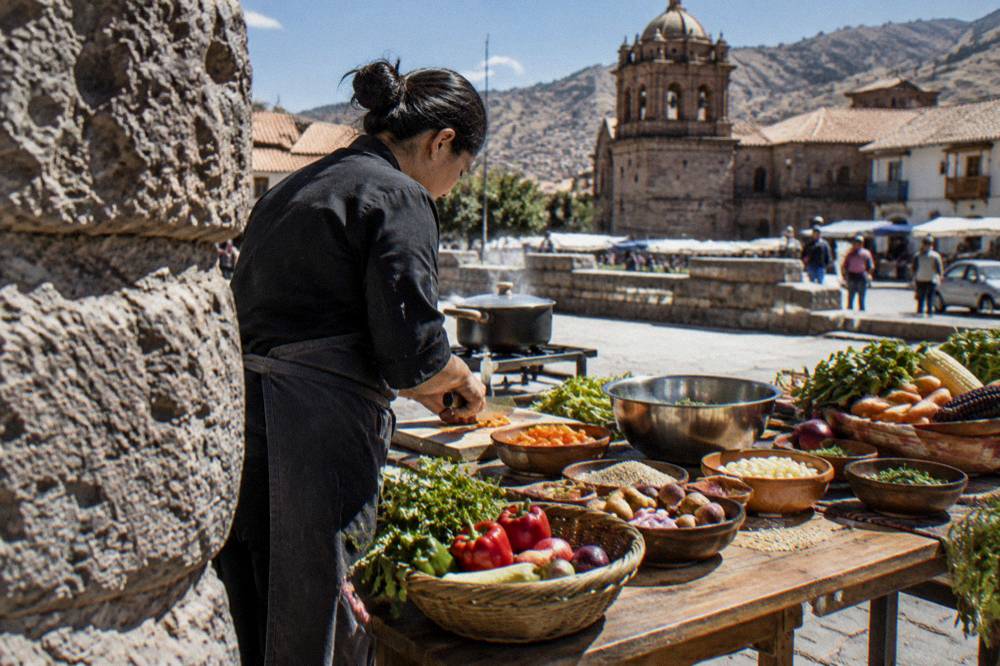
When Is The Best Time Of Year To Eat In Cusco?
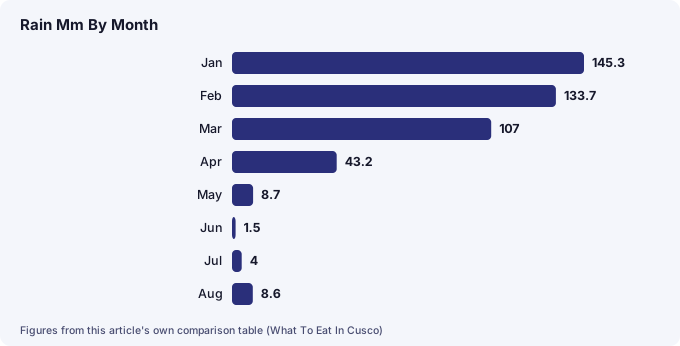
The eating calendar of Cusco follows the Southern Hemisphere highland year: dry season runs roughly May to September with clear days and frost nights in June and July, and wet season roughly November to March, with December to March carrying 71.9 percent of the year's 707.8 mm of rain at the WMO/SENAMHI Cuzco station. Festival food peaks around Inti Raymi on 24 June and Santurantikuy on 24 December.
The climate table below is the historical normal from the WMO/SENAMHI "Cuzco" station record, supplied by SENAMHI. It matters for eating because the wet months change the market stalls and the festival calendar, while the dry months bring the visitor high season and the outdoor eating. Mean daily maximums stay between 18.8 and 20.9 C all year, so a lunch on a terrace works in any month; the nights are the variable, with July's mean minimum at 0.1 C.
| Month | Mean max C | Mean min C | Rain mm |
|---|---|---|---|
| Jan | 18.9 | 6.6 | 145.3 |
| Feb | 18.8 | 6.5 | 133.7 |
| Mar | 19.1 | 6.2 | 107.0 |
| Apr | 19.7 | 4.9 | 43.2 |
| May | 19.8 | 2.5 | 8.7 |
| Jun | 19.5 | 0.3 | 1.5 |
| Jul | 19.1 | 0.1 | 4.0 |
| Aug | 19.8 | 1.6 | 8.6 |
| Sep | 19.8 | 3.9 | 21.8 |
| Oct | 20.9 | 5.5 | 39.4 |
| Nov | 20.7 | 6.1 | 71.9 |
| Dec | 19.4 | 6.4 | 122.7 |
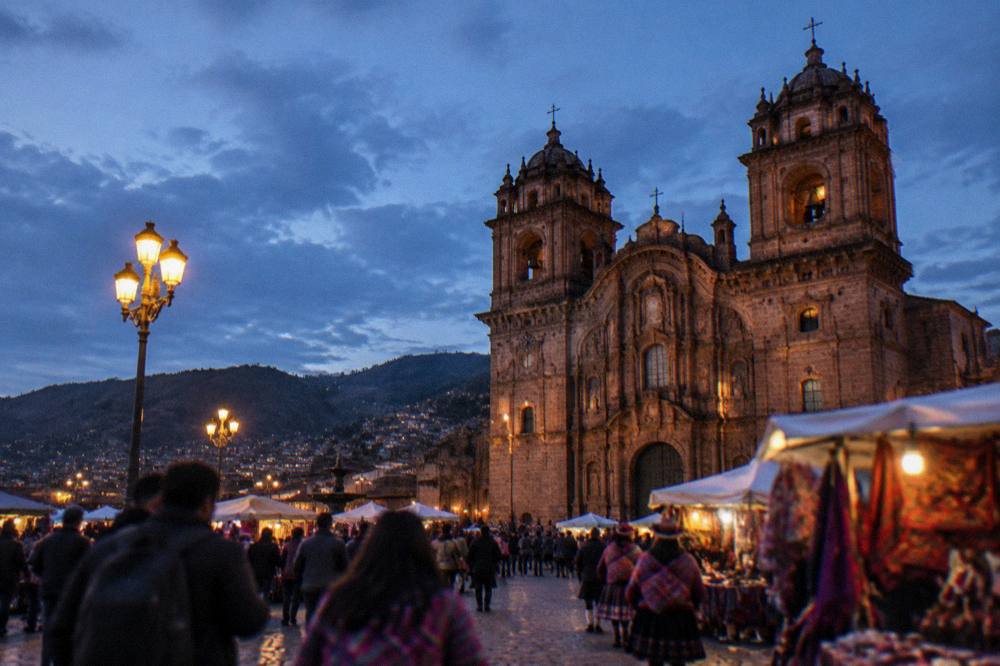
The festival dates are the food dates. Inti Raymi, the winter solstice ceremony, runs each 24 June from Qorikancha to the Plaza de Armas to Sacsayhuaman, and the site's Inti Raymi guide covers the eating and viewing around it. Santurantikuy, the craft fair on the Plaza de Armas on 24 December, fills the square with food stalls and nativity figures. The Q'eswachaka bridge renewal, 2 to 4 July in 2026 with the festival on 5 July, is a rural food occasion an hour's drive beyond the city. The full timing picture, including the wet-season trade-offs, is on the site's best time to visit Cusco guide.
How Does Altitude Change Eating In Cusco?
Altitude changes appetite before it changes anything on the plate: the CDC lists Cusco at approximately 3,350 m as a high-altitude destination, prefers graded ascent, and advises that where abrupt ascent is unavoidable travellers discuss acetazolamide with a doctor and avoid alcohol for the first 48 hours at altitude. No sourced figure exists for how many days acclimatisation takes or how coca tea affects it, so this page states none.
The CDC Yellow Book's framing is the one this site uses. Cusco is named as a rapid-ascent destination, the kind travellers fly into directly, and the Yellow Book advises a low threshold for chemoprophylaxis in situations where rates of altitude illness approach 50 percent, meaning abrupt arrivals without staged acclimatisation, not all visitors. The site's acclimatisation day guide builds a first-day plan around the principle, and the Cusco altitude guide is the fuller reference.
For eating specifically, the practical translation is light, warm and unhurried. The highland soup-and-main set lunch fits that pattern naturally, which is one reason the menu del dia endures. The 48-hour alcohol line belongs to the CDC, and it interacts directly with Cusco's bar scene: the pisco sour tasting and the pub crawl are better placed after the first two days than before them. The pub crawl on the roster, with drinks and club entry and no queueing, prints its own price and terms on the operator's listing.
What Food Souvenirs Should You Bring Home From Cusco?
The food souvenirs of Cusco are chocolate and cacao from the bean-to-bar makers, Andean grains and salts bought in packaged form, and the roasted coffee of the region, all covered on the site's what to buy guide. Alpaca textiles are the non-food souvenir, and no verified price band for them or for any market good exists, so this page quotes no figures and points instead to what drives quality.
The chocolate is the easiest carry. The ChocoMuseo workshops on the roster end with the participant's own finished bars, and packaged cacao and chocolate travel well. Grains, chuno, the freeze-dried potato of the Andes, and the Maras salt from the salt pans covered in the site's Maras salt mines guide, all travel and all say more about the region than a fridge magnet.
For textiles, the honest position is that quality, not price, is the variable: fibre grade, weaving and whether the piece is hand-made decide what an alpaca purchase is worth, and the site's buying alpaca in Cusco guide walks through it with no invented price band. The broader shopping picture, food and fibre together, is on the what to buy in Cusco guide.
Common Questions About Cusco Food
What is the most traditional food in Cusco?
The most traditional plates are the Andean staples: potatoes in their many varieties, Andean corn, quinoa soup, chicharron and roasted cuy, the ceremonial dish of the highlands. Cusco was the Inca capital, and the highland base of the cuisine has carried through to the present menus.
How much does a meal cost in Cusco?
A reported set lunch, the menu del dia, runs S/ 8 to S/ 15, about US$2 to US$4, and a cup of coca tea S/ 2 to S/ 5. Restaurant meals above the set-lunch level vary widely and no verified band for them exists, so no figure for them is printed here.
Is Cusco food safe for visitors?
The CDC's Peru guidance advises safe food and water habits and drinking bottled, boiled or treated water. It does not single out street food, and no source rates Cusco's stalls. The site's food poisoning answer page applies the guidance to Cusco in detail.
What time do people eat dinner in Cusco?
No sourced figure exists for when Cusco eats dinner, so this page states no clock times. The set-lunch culture means the main meal of the day for many locals is at midday, and the evening is the lighter meal.
Should you book a food tour in Cusco?
A guided food walk is the fastest structured way into the market and street kitchens, and the roster carries a small-group street food walk, a central-market tour, cooking classes and chocolate workshops. The listings carry their own prices, ratings and cancellation terms.
What drink is Cusco known for?
Coca tea is the standard welcome at altitude, chicha morada the everyday lunch drink, chicha the fermented corn drink of the Andes, and the pisco sour the national cocktail poured across the city's bars.
The second half of a Cusco food trip is usually the part that leaves the table: the Sacred Valley day trips that pass through the salt pans of Maras and the markets of Pisac, and the cooking classes that turn a market shop into a meal. The dishes stay the same out there, potatoes and corn and slow-cooked meat, and the reported set-lunch range travels with them.