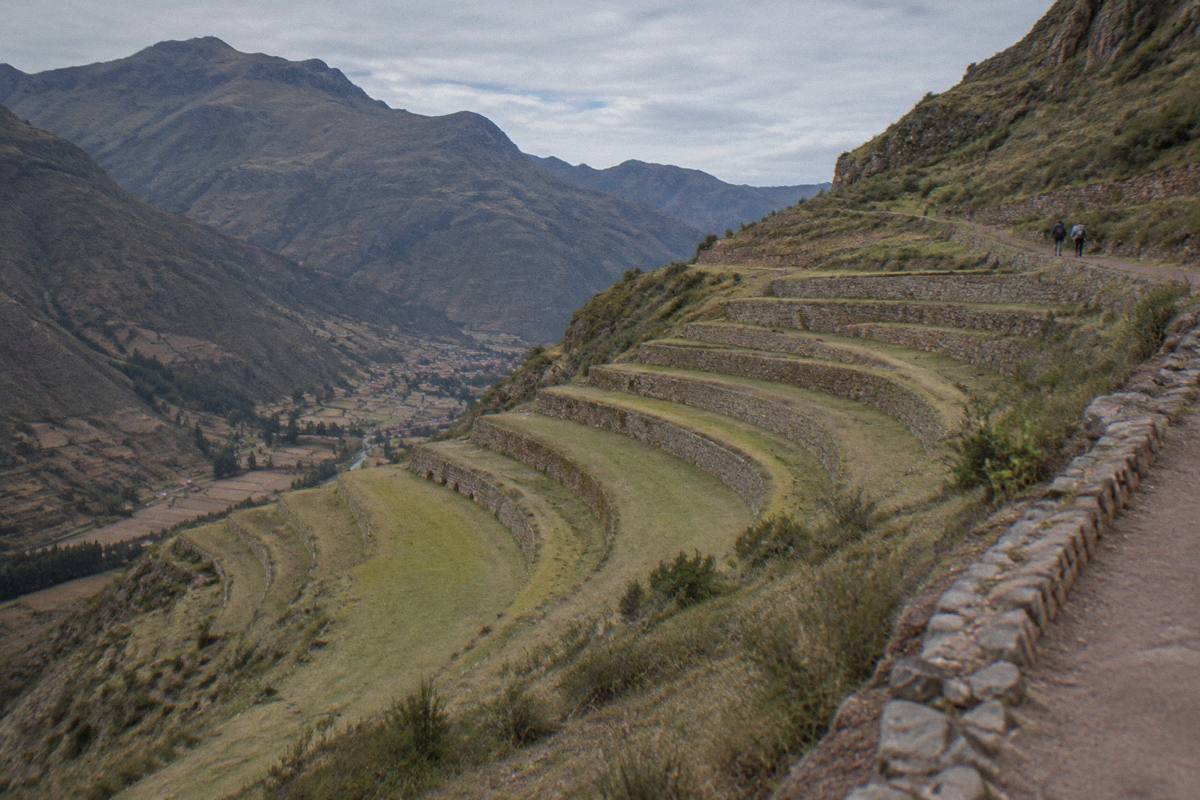
Awana Kancha Alpaca Farm
Awana Kancha sits in the countryside outside Cusco, and it does two things at once: it keeps herds of South American camelids, and it shows visitors, step by step, how Andean weavers turn raw fleece into finished cloth.
Short answer
Awana Kancha is a living weaving centre in the hills outside Cusco, Peru. Visitors walk among alpacas and llamas, watch weavers shear, spin and dye fleece with natural plant colourings, and see finished textiles for sale. It is a working demonstration of a craft that the Cusco region is known for, and it fits naturally into a day trip through the Sacred Valley.
Awana Kancha sits in the countryside outside Cusco, the historic city in the Andes of southern Peru whose Plaza de Armas stands at 3,335 m. The centre keeps herds of South American camelids and, alongside them, runs a living demonstration of Andean weaving: visitors can watch fleece being spun, dyed with natural colourings, and worked into cloth on traditional looms. It is one of the few places in the region where the whole chain of a textile, from animal to finished piece, can be seen in a single visit. For anyone planning time in the Sacred Valley, it pairs naturally with the weaving villages further along the valley road, and this guide from Things To Do In Cusco Peru sets out what to expect, how a visit fits a day trip, and what matters when buying alpaca wool in the region.
What Is Awana Kancha And Why Do Visitors Stop There?
Awana Kancha is a living weaving centre in the hills outside Cusco where South American camelids are kept and Andean weavers demonstrate their craft in front of visitors. It is not a ruin and not a conventional museum: the point of a stop is to see fleece shorn, spun, dyed and woven into finished cloth, and to meet the animals that produce the fibre.
The name describes the idea: a place of the loom. The centre functions as a bridge between the city and the weaving communities of the Cusco region, and the craft it demonstrates is one the region is famous for. Cusco was the capital of the Inca state, and while the great stone sites such as Sacsayhuaman draw the crowds, textile making has its own deep roots here, and a visit shows it as a living practice rather than a display case.
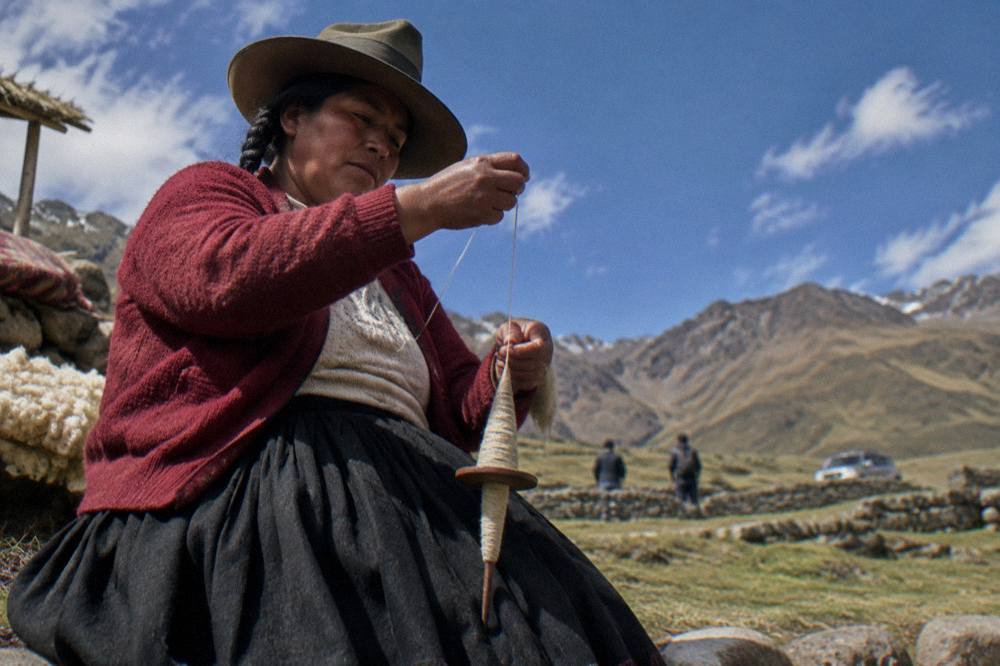
What a visitor actually encounters is simple and tactile. There are animals to see at close range, weavers at work with drop spindles and looms, pots of natural dyes, and finished textiles hanging in the shop area. The demonstration format matters: rather than reading labels, visitors watch each stage happen, which is why the stop is popular with families and with travellers who want to understand what they are buying rather than just buy it. The same logic runs through this site's longer guide to buying alpaca in Cusco.
What Can You Actually See And Do At Awana Kancha?
The visit has three parts: the animal enclosures with alpacas and llamas, the weaving demonstration where fleece is spun and dyed in front of you, and the finished-textile area where woven pieces are displayed and sold. Together they show the full journey of a cloth, from the animal to the finished piece, in one short walk.
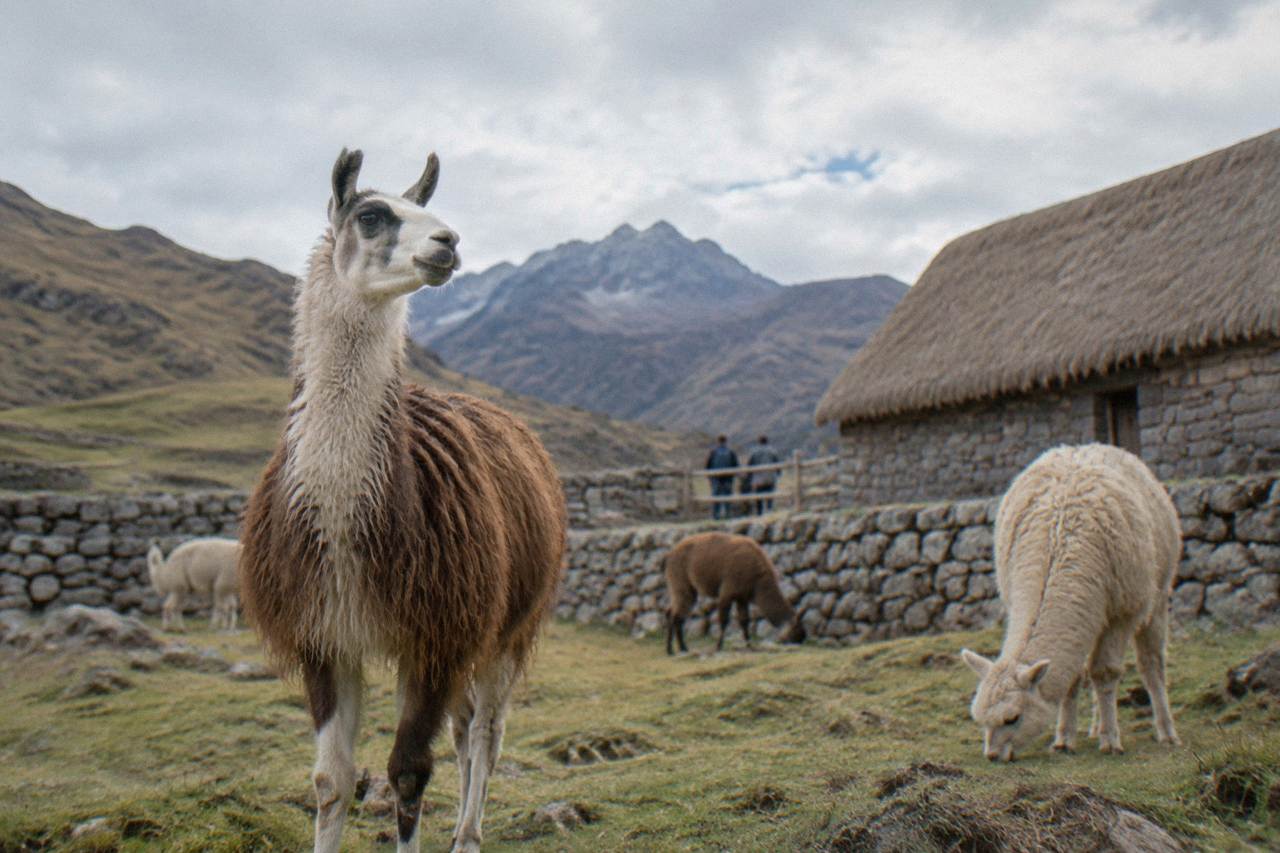
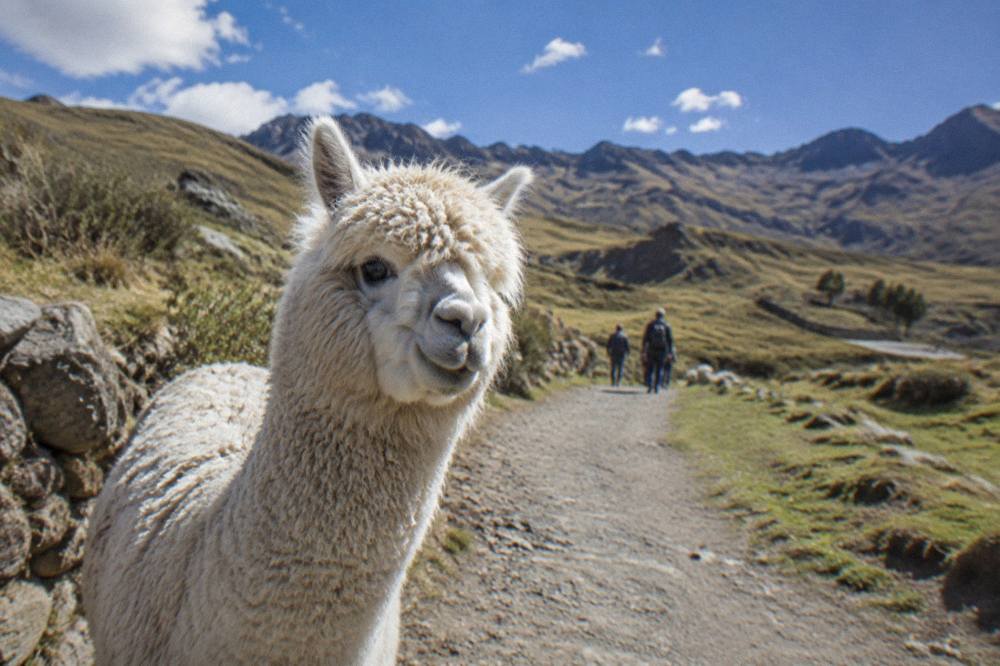
The animals come first for most visitors. Alpacas and llamas are the main herd animals of the high Andes, and the centre keeps them where visitors can see them at close range, often with the chance to feed them. The two species are distinct: llamas are larger pack animals, alpacas are smaller and bred for their fleece. Some centres in the region also keep vicunas, the wild relative whose fibre is the finest and most tightly controlled. Watching the animals is the easy part; the instructive part is what happens next.
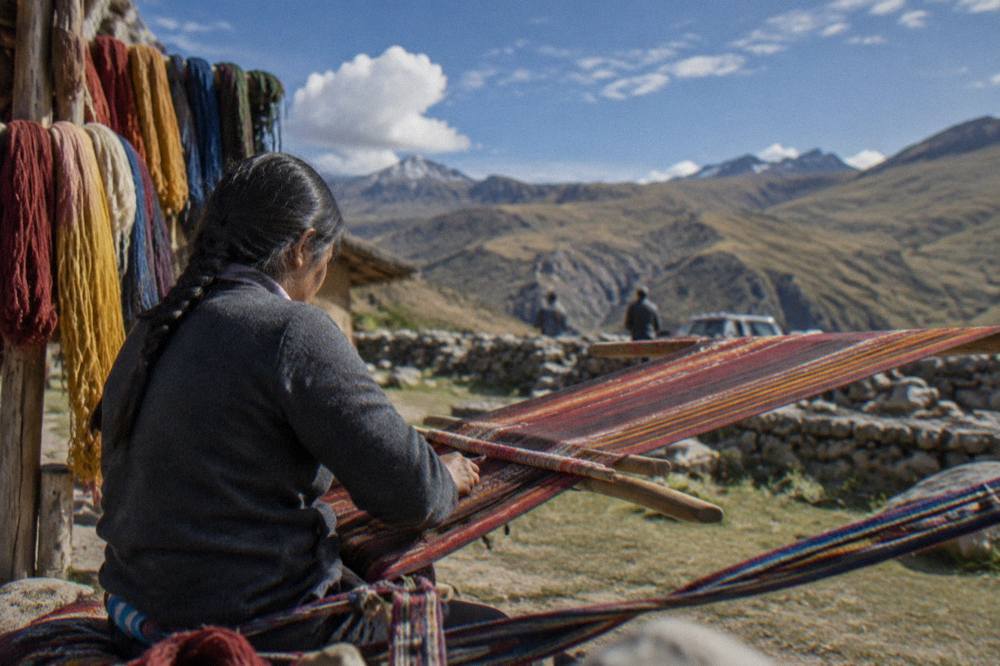
The demonstration is the heart of the stop. Weavers show how raw fleece is cleaned and spun into thread using drop spindles, how natural dyes are made from plants, and how thread becomes cloth on a backstrap loom. Natural dyeing is the detail that stays with visitors: the same plant material can yield different colours depending on what is added to the pot, and the demonstration makes visible a knowledge that otherwise stays inside weaving households. Nothing about the craft requires a guidebook to follow, which is why the stop works for children as well as adults.
The finished pieces close the loop. Woven scarves, ponchos, blankets and belts hang in the display area, and seeing them after watching the work makes the difference between handwoven cloth and factory knitwear obvious at a glance. For the question of what a woven piece should cost, and why the price of real alpaca varies so much, this site's answer page on the price of an alpaca blanket goes through the factors without inventing figures.
A structured alternative exists for visitors who want more than a stop on a drive. The Cusco region has a private textile workshop product where visitors work with Andean women themselves, learning the craft hands on rather than watching it, and the roster carries it alongside the valley day trips:
For travellers who would rather bundle the weaving theme into a full valley circuit, the same roster carries three options that pair it with the region's headline sites, from the salt mines and Moray to Machu Picchu itself and the city's nightlife:
How Does A Visit Fit Into A Sacred Valley Day Trip From Cusco?
Awana Kancha fits best as one stop on a Sacred Valley circuit, usually on the stretch between Cusco and the valley's main sites. A typical day combines it with Pisac, Ollantaytambo, Moray and the Maras salt mines, and organised day trips bundle the weaving stops with the ruins so visitors do not have to arrange transport between them.
The Sacred Valley is the string of towns and Inca sites along the valley floor north of Cusco, and its towns sit noticeably lower than the city, which is why many travellers sleep a night there before continuing to Machu Picchu. The pack's verified elevations tell the story clearly:
| Place | Elevation |
|---|---|
| Cusco, Plaza de Armas | 3,335 m |
| Moray | 3,385 m |
| Maras | 3,300 m |
| Pisac | 2,972 m |
| Urubamba | 2,870 m |
| Ollantaytambo | 2,792 m |
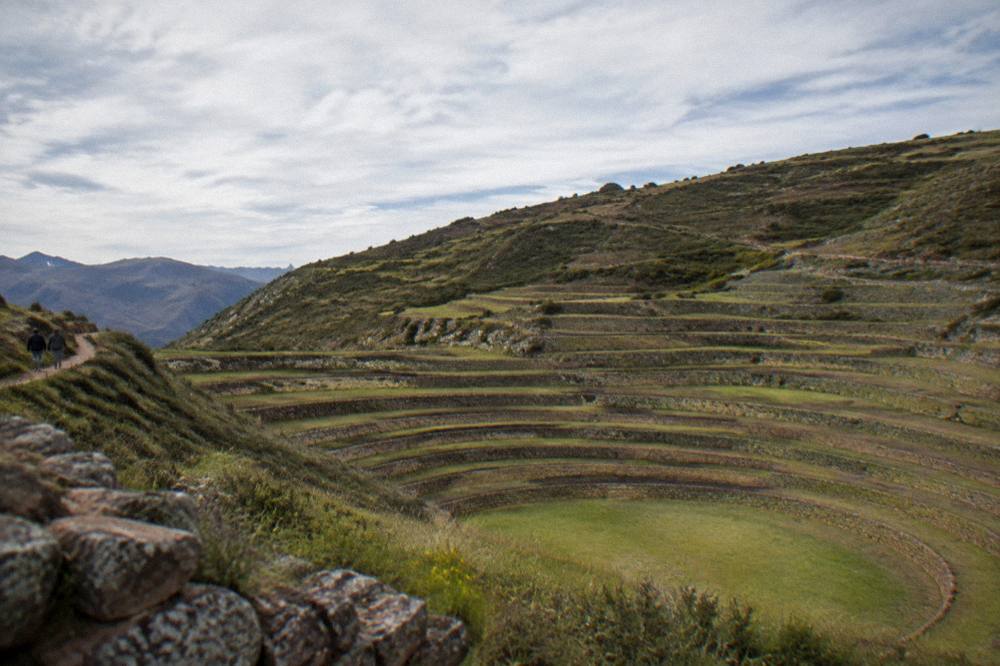
The weaving theme continues along the valley. Chinchero, in particular, is known for its weaving tradition and its community of textile makers, and the town also holds an Inca site covered by the Boleto Turistico. A day that stops at a camelid and weaving centre and then continues to Chinchero, Moray and the Maras salt mines covers the craft and the archaeology in one loop, and this site's guides to Pisac and Ollantaytambo describe the two flagship ruins at either end of the valley.
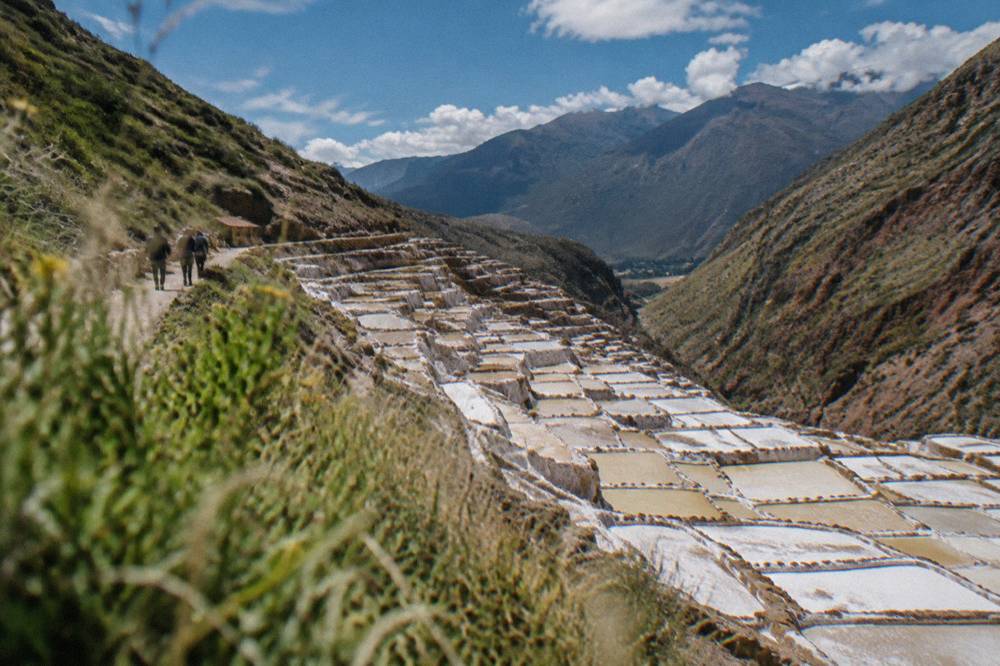
Organised trips do the driving. The featured trip on this page covers Moray, the Maras salt mines and the Chinchero weavers in one half-day circuit from Cusco, with the operator's live listing carrying the current price, rating and review figures: Check availability.
What Should You Know About Buying Alpaca Wool In Cusco?
Real alpaca is a natural fibre from the alpaca, and the honest way to buy it is to feel the piece, check how it is made and compare like with like, because the Cusco market carries everything from handwoven alpaca to synthetic knitwear sold at tourist prices. Awana Kancha and the valley weaving communities are the places where the difference is visible, because the production happens in front of you.
The first distinction is fibre versus knit. A handwoven piece on a loom, of the kind demonstrated at weaving centres, is a different product from a machine-knitted sweater, and both are sold in Cusco. The second distinction is alpaca versus blends: much of what is sold cheaply as alpaca in street stalls is wool or acrylic, and the feel of the cloth is the fastest test a buyer has. This site publishes no verified price band for alpaca garments, and the honest position is that quality, not a number, drives the price: fibre grade, whether the piece is handwoven, the dyeing method and the finishing all move it.
Where to buy matters as much as what. The weaving centres and the workshops attached to them sell pieces whose production the buyer can watch, which removes most of the guesswork. In the city itself, the area around the San Pedro Market and the streets off the Plaza de Armas carry the full range from artisan to factory, and the buyer's protection is the same everywhere: handle the piece, ask what it is made of, and be sceptical of a bargain price on something labelled pure alpaca.
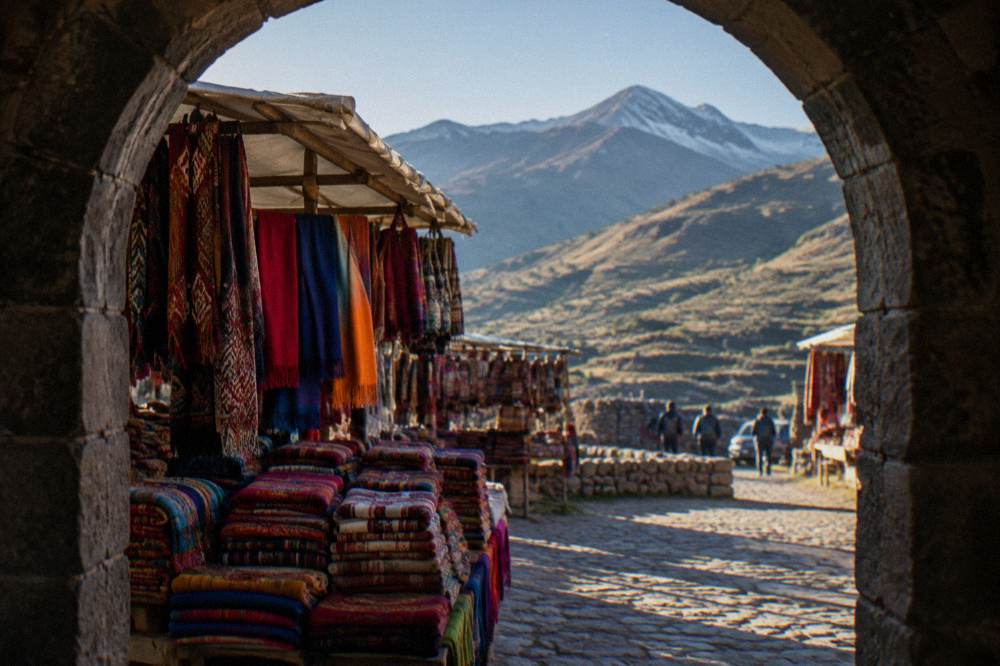
The craft context is worth knowing before shopping anywhere in the region. Weaving in the Cusco region is a household and community practice, and the natural dyes used in demonstrations are the same ones used for the best finished pieces. A buyer who has watched a demonstration knows what a handwoven edge looks like, and that knowledge travels: it is just as useful in a valley workshop as in a city shop. The deeper background on fibre grades, labelling and what to check before paying is in the site's guide to buying alpaca in Cusco.
When Is The Best Time Of Year To Visit Awana Kancha?
The dry season, roughly May to September, is the most comfortable window for a visit, because the weaving stops and the Sacred Valley drives are all outdoor activities and the skies are reliably clear then. The trade-off is crowds: the same months are the busiest for the whole Cusco region, so visitors who come in the shoulder months trade a small risk of rain for thinner traffic.
The climate record for Cusco, a historical normal from the WMO's "Cuzco" station supplied by SENAMHI, shows how sharply the year splits. December to March carries 71.9 percent of the year's 707.8 mm of rain, while May to August together bring just 22.8 mm. Temperatures tell a different story: mean daily maximums stay between 18.8 and 20.9 C all year, so the difference between seasons is rain, not heat.
| Month | Mean max C | Mean min C | Rain mm |
|---|---|---|---|
| Jan | 18.9 | 6.6 | 145.3 |
| Feb | 18.8 | 6.5 | 133.7 |
| Mar | 19.1 | 6.2 | 107.0 |
| Apr | 19.7 | 4.9 | 43.2 |
| May | 19.8 | 2.5 | 8.7 |
| Jun | 19.5 | 0.3 | 1.5 |
| Jul | 19.1 | 0.1 | 4.0 |
| Aug | 19.8 | 1.6 | 8.6 |
| Sep | 19.8 | 3.9 | 21.8 |
| Oct | 20.9 | 5.5 | 39.4 |
| Nov | 20.7 | 6.1 | 71.9 |
| Dec | 19.4 | 6.4 | 122.7 |
Two practical notes follow from the table. First, June and July are winter in the Southern Hemisphere, with mean minimums around zero and frost nights common: a weaving stop in those months is a cold-morning experience, and layering is the answer, as this site's guide to what to wear in Cusco sets out. Second, the dry months are the high season, and the visitor numbers show it: the MINCETUR open dataset records 154,105 visits to Machu Picchu in October 2025 against 79,806 in February 2025, a nearly two-to-one spread that repeats across the region's sites.
The crowd picture across the region's sites, from the same MINCETUR dataset for 2025, gives a sense of how the year runs:
| Site (2025 visits) | Total |
|---|---|
| Santuario Historico de Machupicchu | 1,542,350 |
| Ciudad Inka de Machupicchu | 1,479,506 |
| Explanada de Saqsaywaman | 944,008 |
| Parque Arqueologico de Ollantaytambo | 891,526 |
| Moray | 773,916 |
| Pisaq | 560,578 |
A weaving stop is less exposed to crowding than a ticketed citadel, but the same calendar moves the whole valley: transport, restaurants and the road itself are busiest in the dry months. Visitors with flexible dates who want quiet roads and do not mind the chance of an afternoon shower will find the shoulder edges of the season a reasonable compromise.
What Does The Boleto Turistico Cover Around The Sacred Valley?
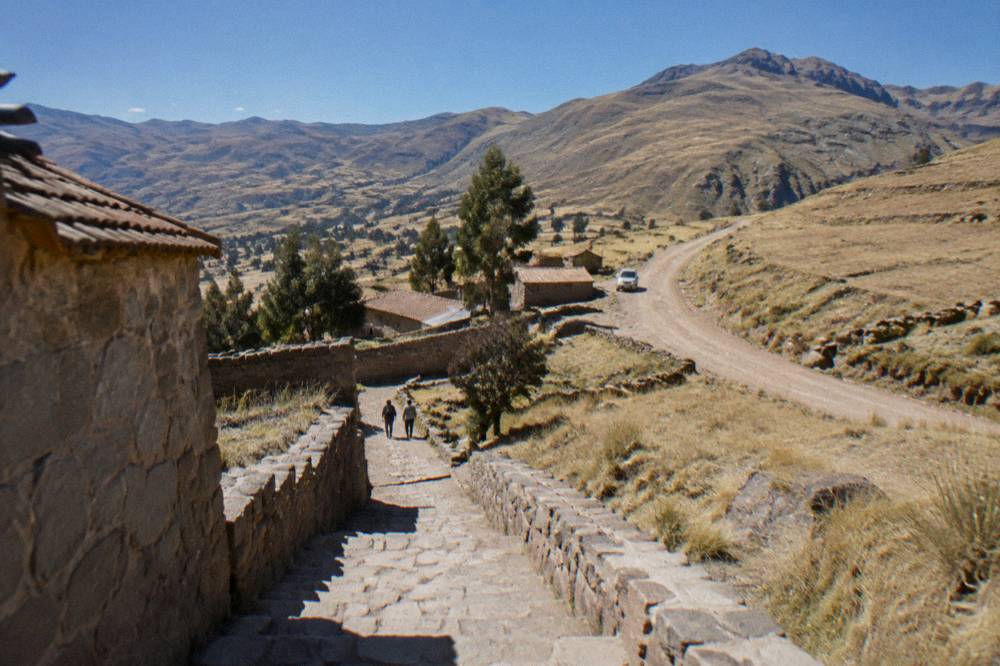
The Boleto Turistico does not cover Awana Kancha itself, which is a private centre, but it does cover the Inca sites of the Sacred Valley, including Pisac, Ollantaytambo, Chinchero and Moray, through its Circuit III partial ticket at S/ 70, or through the S/ 130 integral ticket valid for 10 days.
The ticket is sold by COSITUC, and its own tarifario and FAQ pages carry the current prices. The integral ticket for a foreign adult is S/ 130 (about US$38) and covers 16 sites across three circuits; each partial circuit costs S/ 70 (about US$20). Foreign students pay S/ 70 for the integral ticket. The ticket is sold in person only, at the counter on Av. El Sol 103 in Cusco, open daily 07:30 to 18:00, and at most included sites; COSITUC does not sell it online.
| Ticket | Price (foreign adult) | Validity | Sites |
|---|---|---|---|
| Integral (BTCI) | S/ 130 | 10 days | All 16 |
| Partial Circuit I (Saqsayhuaman) | S/ 70 | 1 day | Saqsayhuaman, Q'enqo, Puka Pukara, Tambomachay |
| Partial Circuit II (City) | S/ 70 | 2 days | Qorikancha site museum, city museums, Tipon, Pikillaqta |
| Partial Circuit III (Sacred Valley) | S/ 70 | 2 days | Pisac, Ollantaytambo, Chinchero, Moray |
For a visitor building a day around a weaving stop, the practical read is this: the weaving centres are private and charge separately, while the ruins along the same road sit behind the Boleto. Circuit III is the one that matches a Sacred Valley weaving day, pairing naturally with visits to Moray and Chinchero. Machu Picchu is a separate system entirely: it is not covered by the Boleto and sells on the Ministry of Culture's own platform, and this site keeps its single Machu Picchu page at /day-trips/machu-picchu/ for that side of the trip.
Everyday costs on the ground, for the parts of a day that are not ticketed, run modestly. The figures below are reported ranges from operators and travel sites in 2026, not official tariffs:
| Item | Reported range |
|---|---|
| Menu del dia (set lunch) | S/ 8 to S/ 15 (about US$2 to US$4) |
| Cup of coca tea | S/ 2 to S/ 5 |
| Tourist SIM card | S/ 5 to S/ 15 plus a data pack S/ 20 to S/ 40 |
| Airport taxi to the centre | about S/ 15 to S/ 25 |
Is A Stop At Awana Kancha Worth It For A Short Cusco Visit?
For a visitor with only one or two full days in Cusco, a weaving stop is a worthwhile add-on rather than a must-see in its own right: it adds an hour of something the ruins cannot show, and it teaches the eye needed to buy textiles honestly anywhere in the region. Visitors with three days or more, or anyone already driving the Sacred Valley, should treat it as an easy inclusion.
The honest case for the stop is the craft, not the animals. Llamas and alpacas can be photographed in several places around Cusco, but a working demonstration of spinning and natural dyeing is rarer, and it changes how a visitor sees every textile stall afterwards. For families it is one of the most reliable short activities in the region, because the animals hold small children's attention while the demonstration holds the adults'.
The case against is time. A short visit means choosing between the city's own sites, among them the Cusco Cathedral and the twelve-angled stone, and a drive out to the valley. Visitors on a tight schedule who will not shop for textiles may prefer to spend the same hour at Qorikancha or in the San Blas quarter and leave the weaving for a longer trip. This site's itineraries, including the guide to three days in and around Cusco, show where the stop slots into each length of stay.
For visitors who do want the full weaving day with everything arranged, the featured trip pairs the salt mines, Moray and the Chinchero weavers in one guided circuit from Cusco, and the operator's listing carries the live price, rating and review figures.
Beyond the weaving day itself, the same roster carries two other options that round out a Cusco stay: a full-day group visit to Machu Picchu for the headline site, and an evening bar and club crawl for the night after a cold morning in the valley.
Common Questions About Awana Kancha In Cusco
What is Awana Kancha?
Awana Kancha is a living weaving centre in the countryside outside Cusco, Peru. It keeps herds of alpacas and llamas and demonstrates Andean weaving in front of visitors, from raw fleece through spinning and natural dyeing to finished cloth on traditional looms.
Can you feed or touch the alpacas at Awana Kancha?
The animals are kept where visitors can see them at close range, and feeding is commonly part of the visit. The centre is a working site rather than a petting zoo, so the animals are handled on the staff's terms; visitors should follow the routine the centre sets on the day.
Is Awana Kancha covered by the Boleto Turistico?
No. The Boleto Turistico sold by COSITUC covers 16 public sites across three circuits, and a private weaving centre is not among them. The ticket that overlaps a weaving day is Circuit III, at S/ 70 for a foreign adult, which covers Pisac, Ollantaytambo, Chinchero and Moray.
How long does a visit take?
A stop is a short add-on rather than a half-day destination: the animals, the demonstration and the finished-textile area can be walked in a single visit of an hour or so. It is commonly paired with other Sacred Valley stops on the same drive, which is how the organised day trips structure it.
Is it worth buying textiles there rather than in Cusco city?
The advantage of buying at a weaving centre is that the production is visible: the buyer watches the fleece become cloth, which removes most of the guesswork about whether a piece is handwoven and naturally dyed. City shops carry the full range from artisan to factory, so the same knowledge travels: what a visitor learns at a demonstration is exactly what protects them in a city stall.
Is Awana Kancha suitable for children?
Yes, it is one of the more reliable short activities in the region for families. The animals hold small children's attention, the dyeing demonstration is visual and hands-on, and the whole visit runs at walking pace without long queues or long transfers.
A weaving stop will never compete with the citadels on a postcard, and it does not need to. What it offers is the layer of the Cusco region that the ruins leave out: the animals, the plants and the hands that turn both into cloth, seen close enough to recognise again in every stall you pass for the rest of the trip.