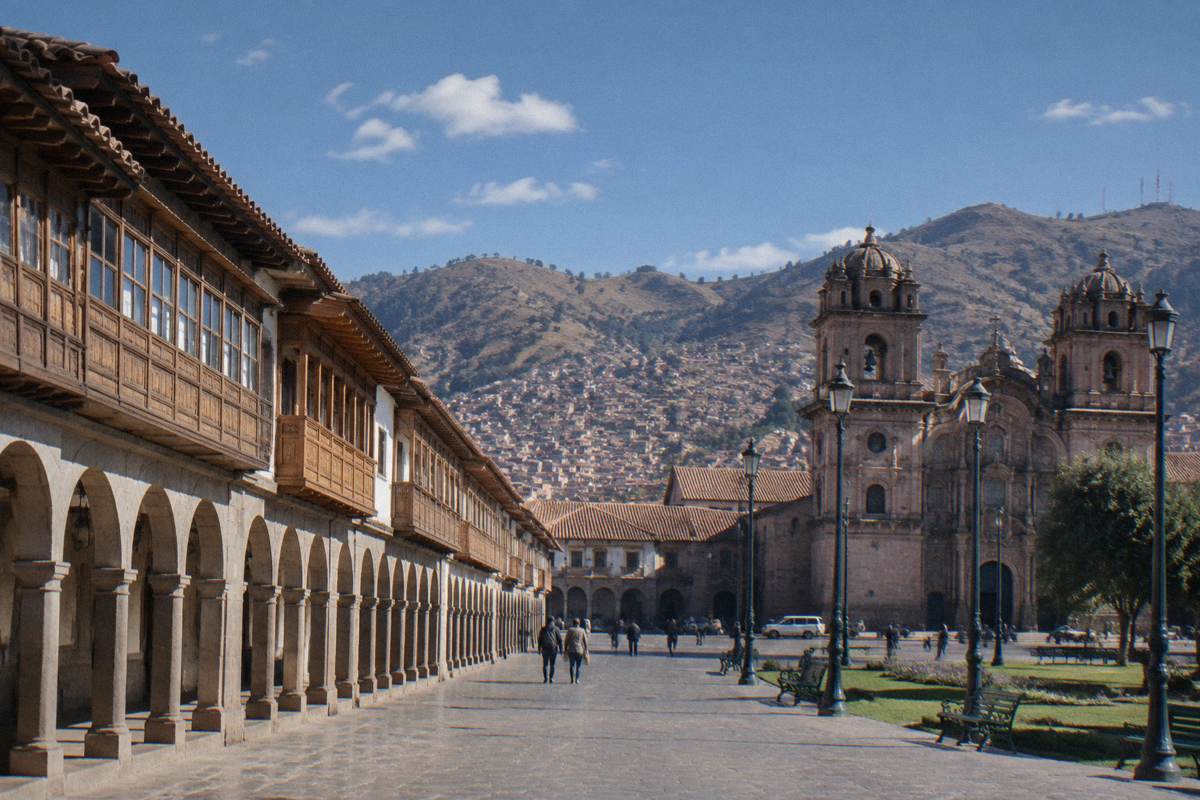
Cusco Historic Centre
The Cusco Historic Centre is the UNESCO-inscribed core of the old Inca capital, a compact walkable district of Inca walls, colonial churches and museums at 3,335 m in the Andes of southern Peru. This guide reports what the official sources say about its sites, tickets and seasons.
Short answer
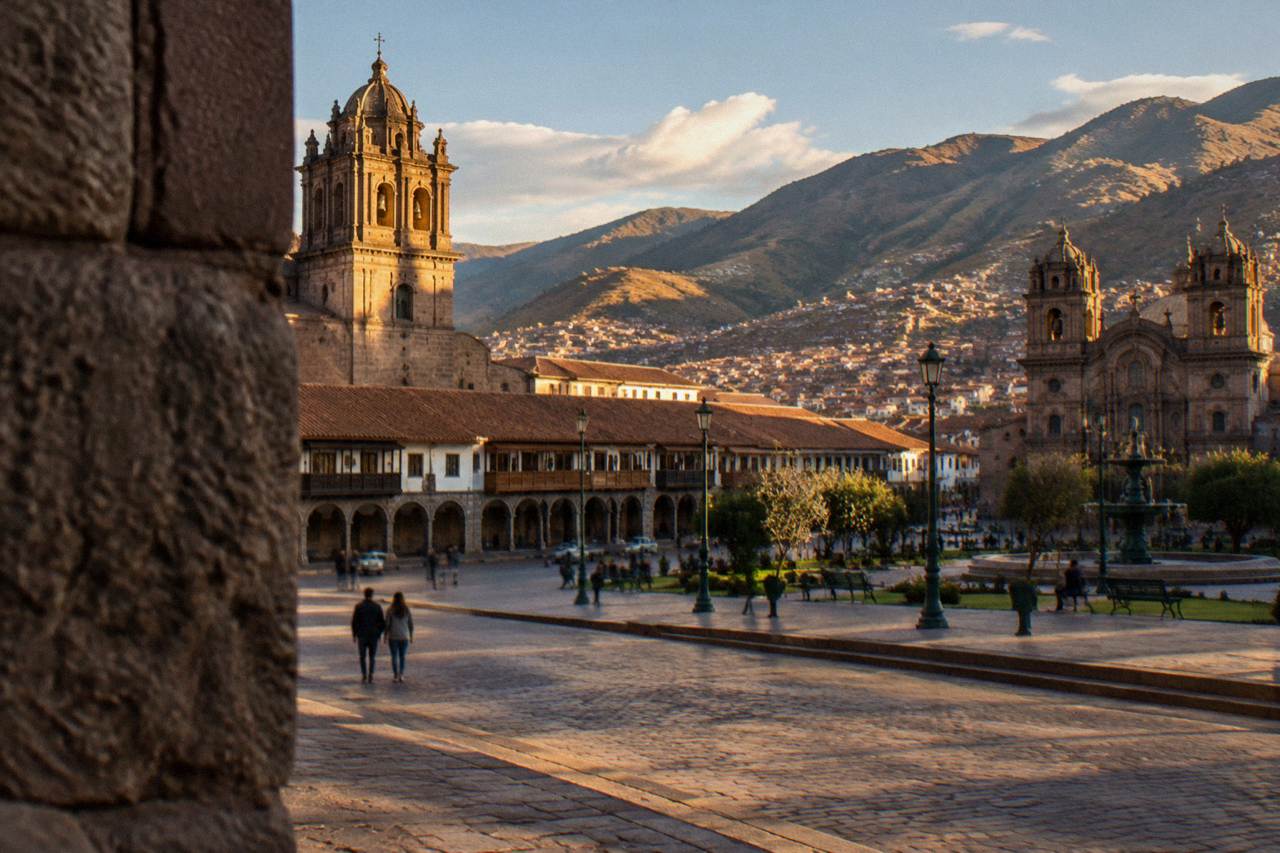
The Cusco Historic Centre is the UNESCO-inscribed old core of Cusco, Peru, at about 3,335 m. Its main sights are the Plaza de Armas, the Cathedral, Qorikancha, Inca walls such as the twelve-angled stone, and the city museums, most of which are covered by the COSITUC Boleto Turistico, sold in person only.
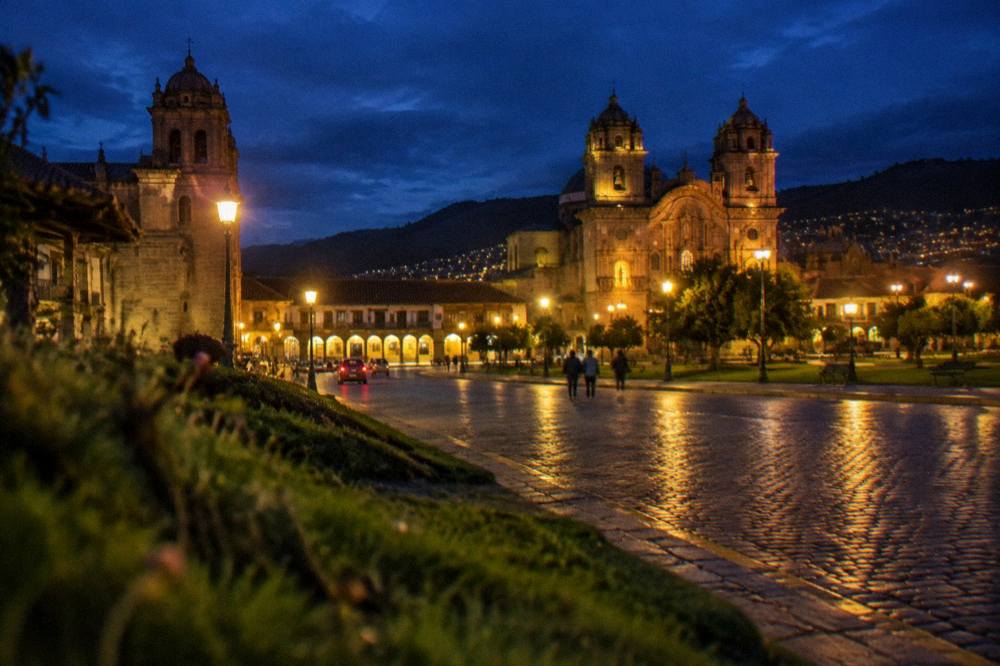
Cusco, spelled Cuzco in older texts, is the historic city in the Andes of southern Peru, and its old core is the part nearly every visitor sees first. The Plaza de Armas sits at 3,335 m according to PromPeru, the Peruvian tourism board, and the streets around it hold the densest concentration of Inca stonework and colonial architecture anywhere in the country. UNESCO inscribed the City of Cusco on the World Heritage List in 1983, the same year it inscribed the Historic Sanctuary of Machu Picchu, on 9 December 1983. UNESCO's own listing text describes a pre-Inca occupation process of over 3,000 years and calls the city the sum of 3,000 years of indigenous and autonomous cultural development. That wording matters: it is what the source actually says, not the looser claim that Cusco is the oldest city in the Americas, which no source in this site's verified pack supports.
It is written by Oleg for Things To Do In Cusco Peru in a research voice, which means every figure below traces to an official or verified source, and where a figure does not exist in the verified pack, this page stays silent rather than guessing.
What Is The Cusco Historic Centre?
The Cusco Historic Centre is the UNESCO-inscribed old core of Cusco, Peru, the former Inca capital, at about 3,335 m above sea level in the southern Andes. UNESCO listed the City of Cusco in 1983 and describes over 3,000 years of pre-Inca occupation before the Inca period, and the district today combines Inca stone foundations with colonial churches, museums and arcaded plazas.
Cusco was the Inca capital, and that qualitative fact is one of the few pieces of history the verified sources carry without a number attached. The rest of what a visitor sees is layered: colonial churches stand on Inca stone foundations, and the Inca walls survive because later builders used them as ready-made bases. The 2017 census counted 428,450 people in Cusco city and 1,205,527 in the Cusco department, and those are the newest figures the pack holds, so no later estimate appears on this page.
Geographically the centre is compact. The Plaza de Armas marks the old heart; San Blas climbs the hill to its east; and Saqsayhuaman and the Cristo Blanco statue sit on the hills to the north, per this site's own place records. The city keeps Peru time, UTC-5, with no daylight saving, per the WMO station record for Cuzco. The currency is the Peruvian sol, written S/, quoted by the central bank against the US dollar at roughly S/ 3.4 to the dollar across recent months.
What Can You See Inside The Cusco Historic Centre?
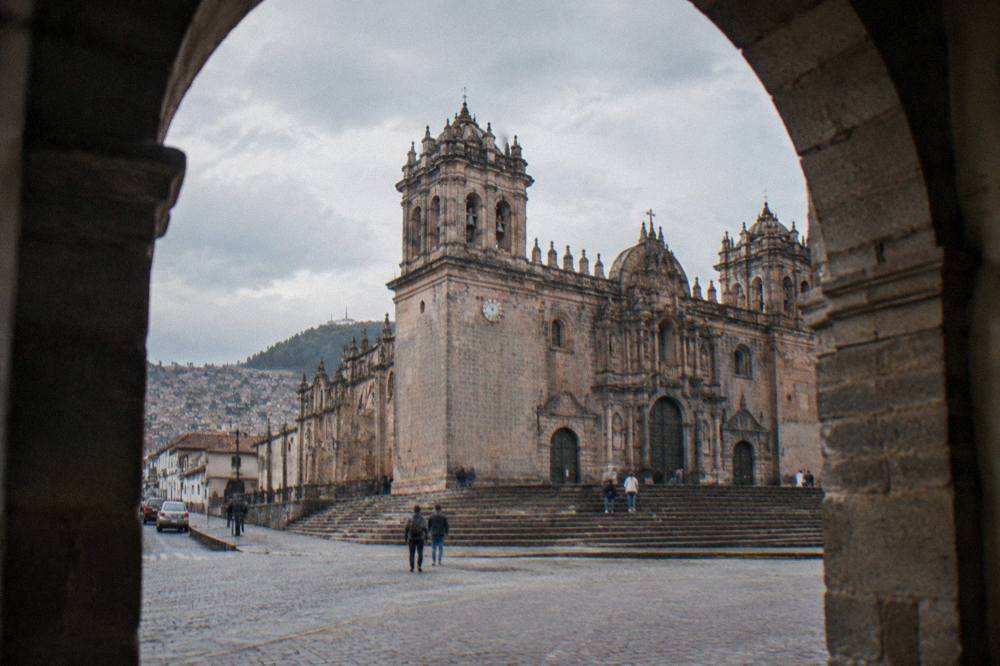
The main sights inside the Cusco Historic Centre are the Plaza de Armas, the Cathedral, the Qorikancha museum in the Santo Domingo complex, Inca walls including the twelve-angled stone on Hatunrumiyoc street, the San Pedro market, the city museums on the Boleto Turistico's Circuit II, and the San Blas hill district to the east, with Saqsayhuaman on the hill above.
The Plaza de Armas is the natural starting point and the old centre of the city. The Cathedral faces it; PromPeru lists its admission at S/ 25, about US$7, though that figure sits on a page dated 2021, so treat it as a reported price rather than a live tariff. The Cathedral is not one of the 16 Boleto Turistico sites, so the boleto does not cover it.
Qorikancha, the Inca temple site now inside the Santo Domingo complex, is covered in two ways: PromPeru lists its museum admission at S/ 20, about US$6, and the COSITUC tarifario counts the Museo de Sitio Qorikancha as a Boleto Circuit II site, so the boleto covers it too. The Qorikancha guide on this site covers it in depth.
The Inca walls are the district's signature. The twelve-angled stone is a large, finely fitted polygonal stone in an Inca wall on Hatunrumiyoc street, near the Plaza de Armas and San Blas; the verified pack holds no weight, dimension or builder for it, so this page states none. Nearby, the San Pedro market anchors the district's daily food life, and the hill district of San Blas holds the craft workshops and viewpoints. Above the city, Saqsayhuaman at 3,701 m, per Wikipedia's sourced entry, sits on the northern hills; PromPeru lists its hours as 07:00 to 18:00, and it is covered by the Boleto Turistico's Circuit I, not free.
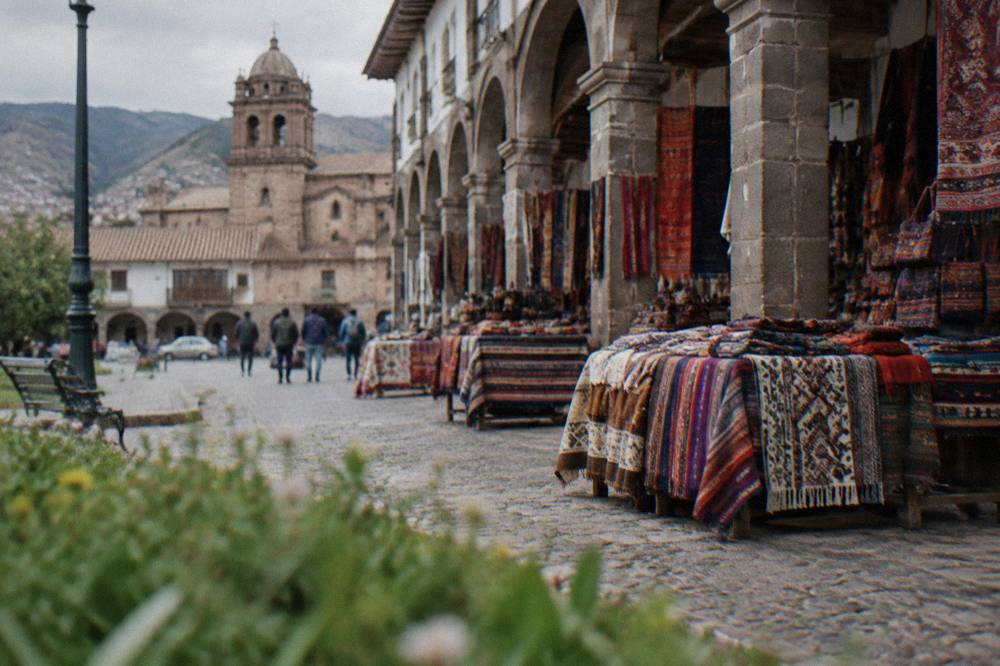
Several ways exist to see the district with a guide, and the roster on this site includes free options. GuruWalk lists free, tip-based walking tours of the historic core, among them the Free Tour in Cusco with local guide Frank Emerson and the YANA walking tour of the historic centre run by Yana Tour Operator; both are free or pay-what-you-want, so no price appears here. Paid options include the city's half-day tours and food walks, and the selection below shows three products from this site's verified roster.
The district also works as a base for wider trips. The Sacred Valley and its sites, from Pisac to Ollantaytambo, lie downhill from the city, and Machu Picchu is the region's headline destination, a day trip or overnight away rather than a city sight; the citadel sits at 2,430 m, lower than Cusco. A two-day itinerary is the shortest frame this site suggests for combining the centre with the valley.
How Much Does The Cusco Historic Centre Cost To Visit?
The Boleto Turistico del Cusco, sold by COSITUC in person only, costs S/ 130, about US$38, for the integral ticket valid 10 days, or S/ 70, about US$20, per partial circuit, and its Circuit II covers the city museums inside the historic centre. The Cathedral and Qorikancha museum carry their own reported admissions of S/ 25 and S/ 20.
The COSITUC tarifario, read from the official site, gives the full price structure. The integral ticket for a foreign adult is S/ 130 and covers 16 sites across three circuits. Partial tickets cost S/ 70 each for foreign tourists: Circuit I covers Saqsayhuaman, Q'enqo, Puka Pukara and Tambomachay and is valid 1 day; Circuits II and III are valid 2 days. Foreign students pay S/ 70 for the integral ticket with ID. Children are free to age 9, and ages 10 to 17 pay the student price with ID.
| Ticket | Foreign adult | Foreign student | Validity |
|---|---|---|---|
| Integral (all 16 sites) | S/ 130 | S/ 70 | 10 days |
| Partial Circuit I (Saqsayhuaman area) | S/ 70 | S/ 70 | 1 day |
| Partial Circuit II (city museums) | S/ 70 | S/ 70 | 2 days |
| Partial Circuit III (Sacred Valley) | S/ 70 | S/ 70 | 2 days |
Circuit II is the one that matters inside the historic centre. Its sites, per the COSITUC FAQ, are the Museo de Sitio Qorikancha, the Museo Historico Regional, the Museo de Arte Contemporaneo, the Museo de Arte Popular, the Centro Qosqo de Arte Nativo, the Monumento a Pachacutec, Tipon and Pikillaqta, the last two lying outside the city itself.
| Circuit II site | Location | Notes |
|---|---|---|
| Museo de Sitio Qorikancha | Historic centre, Santo Domingo | Also listed by PromPeru at S/ 20 alone |
| Museo Historico Regional | Historic centre | Not a boleto sales point |
| Museo de Arte Contemporaneo | Historic centre | Not a boleto sales point |
| Museo de Arte Popular | Historic centre | Not a boleto sales point |
| Centro Qosqo de Arte Nativo | Historic centre | Charges children from age 6 |
| Monumento a Pachacutec | Historic centre | On the boleto |
| Tipon | South Valley, outside the centre | On the boleto |
| Pikillaqta | South Valley, outside the centre | On the boleto |
Two practical rules from the COSITUC FAQ shape every plan. First, the boleto is not sold online; purchase is in person only, at the counter at Av. El Sol 103, open daily 07:30 to 18:00, or at most included sites. Second, validity starts the day you buy it, and the FAQ notes that covering all 16 sites needs a minimum of three days, so buying on arrival day can waste a day of validity.
Beyond the boleto, the pack holds reported admissions for several city museums, all from PromPeru pages: the Inca Museum at S/ 20, about US$6, open Mon to Fri 09:15 to 16:00 and Sat 09:15 to 14:00, and the Museo de Arte Precolombino at S/ 20 general and S/ 10 for students.
| Site | Reported admission | Source note |
|---|---|---|
| Cusco Cathedral | S/ 25 | PromPeru, page dated 2021 |
| Qorikancha museum | S/ 20 | PromPeru; also on Boleto Circuit II |
| Inca Museum | S/ 20 | PromPeru, hours listed Mon to Sat |
| Museo de Arte Precolombino | S/ 20 general, S/ 10 students | PromPeru |
| Saqsaywaman | On Boleto Circuit I | PromPeru hours 07:00 to 18:00 |
Everyday on-the-ground costs inside the centre stay low by international standards. The verified pack reports a menu del dia at about S/ 8 to 15, a cup of coca tea at about S/ 2 to 5, and an airport taxi to the centre at about S/ 15 to 25; these are reported ranges, not official tariffs.
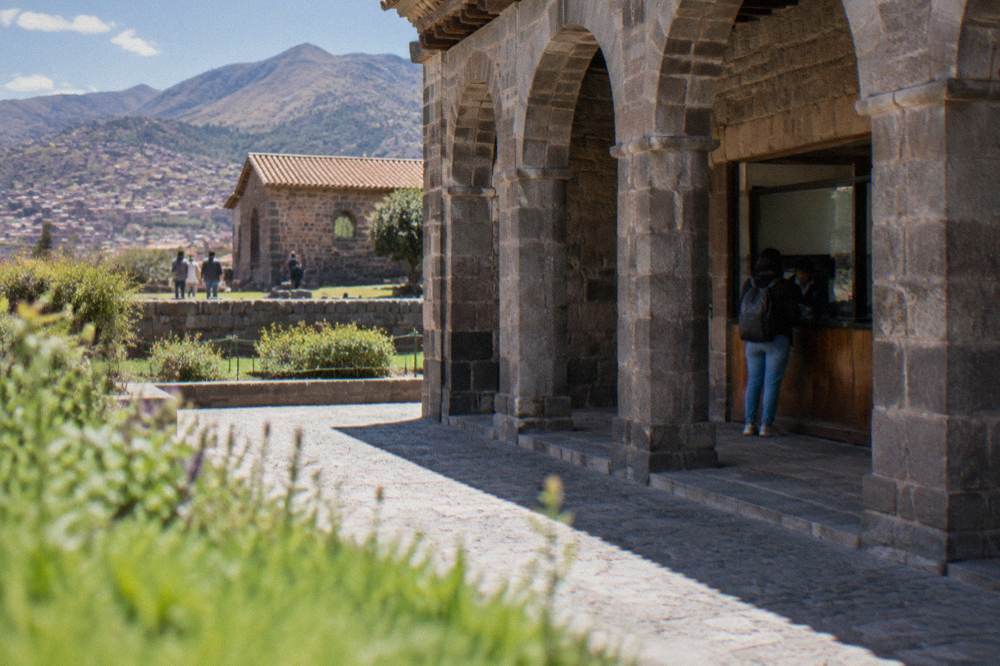
For a different kind of evening cost, the district's food-and-drink products render their own prices and ratings from their listings, never from this page's keyboard. The mixology session below is the one this site features for the historic centre.
Where To Stay In And Around The Cusco Historic Centre?
Many travellers to Cusco sleep inside the historic centre itself, at 3,335 m, but the verified elevation data shows the Sacred Valley towns sit lower: Urubamba at 2,870 m, Ollantaytambo at 2,792 m and Pisac at 2,972 m, and the CDC Yellow Book advises graded ascent over abrupt arrival, which reporting on those figures supports as a reason some travellers sleep lower.
The choice is between atmosphere and altitude. The historic centre puts the Plaza de Armas, the museums and the restaurants within walking distance, at full city elevation. The Sacred Valley towns sit several hundred metres lower and closer to the valley sites; the where to stay in the Sacred Valley guide and the Urubamba area guide cover those options without quoting any hotel rate, which this site's rules forbid anyway.
| Place | Elevation | Position relative to the historic centre |
|---|---|---|
| Cusco, Plaza de Armas | 3,335 m | The centre itself |
| Saqsaywaman | 3,701 m | Northern hills above the city |
| Pisac town | 2,972 m | Sacred Valley, downhill from Cusco |
| Urubamba | 2,870 m | Sacred Valley |
| Ollantaytambo | 2,792 m | Sacred Valley, train hub |
| Machu Picchu citadel | 2,430 m | Beyond Ollantaytambo |
| Aguas Calientes town | about 2,040 m | Below the citadel |
The CDC Yellow Book names Cusco as a rapid-ascent destination at approximately 3,350 m and advises against going from low altitude to a sleeping altitude of 2,750 m or more in a single day where that can be avoided; once above 3,000 m it suggests moving sleeping altitude by no more than 500 m per night. It also notes that in cases like Cusco travellers can descend to lower elevations to sleep for the first nights. That is reporting of the CDC's advice, not a medical instruction, and the pack holds no sourced figure for how likely altitude illness is for any individual.
Arrival logistics are simple. All Cusco flights use Alejandro Velasco Astete International Airport, about 6 km from the Plaza de Armas, 15 to 20 minutes by taxi, per PromPeru; the new Chinchero airport is not operating, with completion targeted 2028 and flights expected 2028 to 2029. The Cusco airport guide and the airport taxi cost answer cover the transfer in detail, and a private transfer is one of the products in this site's roster.
For travellers continuing south, the historic centre is also the departure point for the road to Puno and Lake Titicaca, a bus journey of about 389 km and about 6 hours per PromPeru. A scenic day trip along that route, with lunch, is another roster product.
- Pariwana Hostel CuscohostelCheck rates
- Union Hotel CuscohotelCheck rates
- Palacio Nazarenas, A Belmond HotelhotelCheck rates
When Is The Best Time To Visit The Cusco Historic Centre?
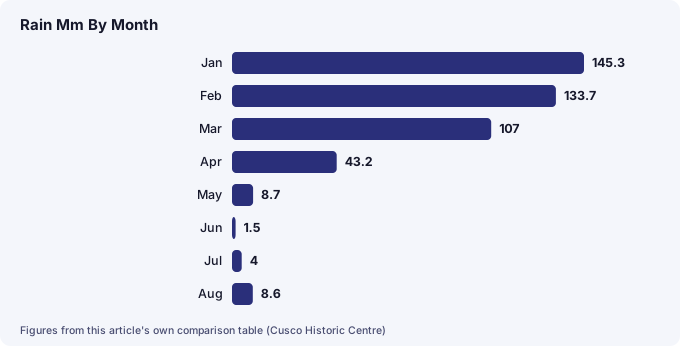
The dry season, roughly May to September, is the statistically driest window for the Cusco Historic Centre: the WMO and SENAMHI historical normals for the Cuzco station show May to August bringing just 22.8 mm of rain, 3.2 percent of the annual 707.8 mm, while December to March alone carries 71.9 percent. Mean daily maxima stay between 18.8 and 20.9 C all year, but June and July nights fall to frost.
The full monthly table below is the WMO World Weather Information Service record for the Cuzco station, data supplied by SENAMHI, the Peruvian member. The Southern Hemisphere seasons matter here: June to August is winter in Cusco, dry with clear days, cold nights and frost in June and July per SENAMHI, never a northern summer.
| Month | Mean max C | Mean min C | Rain mm |
|---|---|---|---|
| Jan | 18.9 | 6.6 | 145.3 |
| Feb | 18.8 | 6.5 | 133.7 |
| Mar | 19.1 | 6.2 | 107.0 |
| Apr | 19.7 | 4.9 | 43.2 |
| May | 19.8 | 2.5 | 8.7 |
| Jun | 19.5 | 0.3 | 1.5 |
| Jul | 19.1 | 0.1 | 4.0 |
| Aug | 19.8 | 1.6 | 8.6 |
| Sep | 19.8 | 3.9 | 21.8 |
| Oct | 20.9 | 5.5 | 39.4 |
| Nov | 20.7 | 6.1 | 71.9 |
| Dec | 19.4 | 6.4 | 122.7 |
The daily swing is the detail the table makes obvious. In July the mean minimum is 0.1 C and the mean maximum 19.1 C, a swing of about 19 C within a single day; in January the swing is 12.3 C. SENAMHI's own tourist forecast page puts the July average minimum at -1.6 C, a different station and period, which this page reports only as evidence that frost nights are common in the Cusco winter.
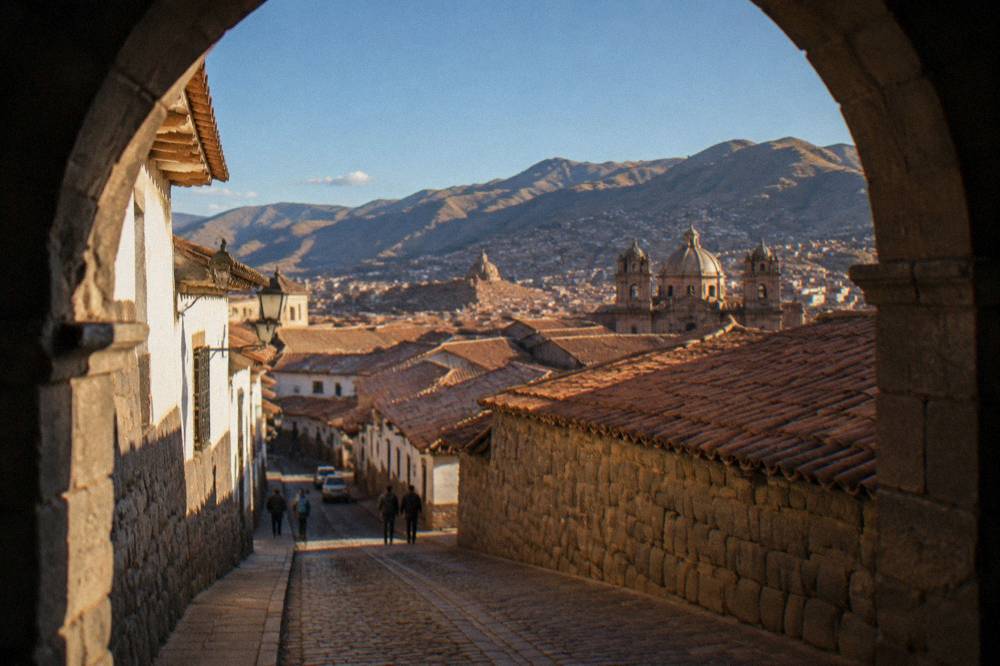
Crowds follow the calendar, and the MINCETUR open dataset gives the hard numbers. In 2025 the Machu Picchu citadel recorded 1,479,506 visits, and its monthly figures peaked in October at 154,105 against a February low of 79,806; October drew 1.93 times February's visitors. Across the Cusco department, the sum of recorded site entries in 2025 was 10,704,938, a sum across 29 listed sites rather than a count of unique visitors.
The festival calendar also shapes the year. Inti Raymi falls on 24 June each year, the winter solstice, starting at Qorikancha and ending with the main ceremony at Saqsaywaman, per PromPeru; grandstand tickets for the 2026 edition sold through Teleticket with general seats listed from S/ 490. Santurantikuy, the craft fair, fills the Plaza de Armas on 24 December. Both pull large crowds into the historic centre on their dates, and the Pope Leo XIV visit scheduled for Cusco and Saqsaywaman on 15 November 2026 is a planned event likely to bring the same effect.
Is The Cusco Historic Centre Walkable?
Yes, the Cusco Historic Centre is compact and walkable: the Plaza de Armas, the Cathedral, Qorikancha, the twelve-angled stone, the city museums and San Blas all sit within a short walk of each other, though the district is steep, cobbled and at 3,335 m, so the walking itself is slower than at sea level, and Saqsaywaman sits at 3,701 m on the hill above.
The layout makes walking the natural mode. The streets between the Plaza de Armas, Hatunrumiyoc and San Blas rise and fall over Inca foundation stones, and the pack holds no sourced figure for how long any walk takes, so none is stated. What the sources do support is the elevation picture: the centre sits at 3,335 m, Saqsaywaman at 3,701 m, and the CDC's graded-ascent advice applies to the arrival, not to a stroll between squares.
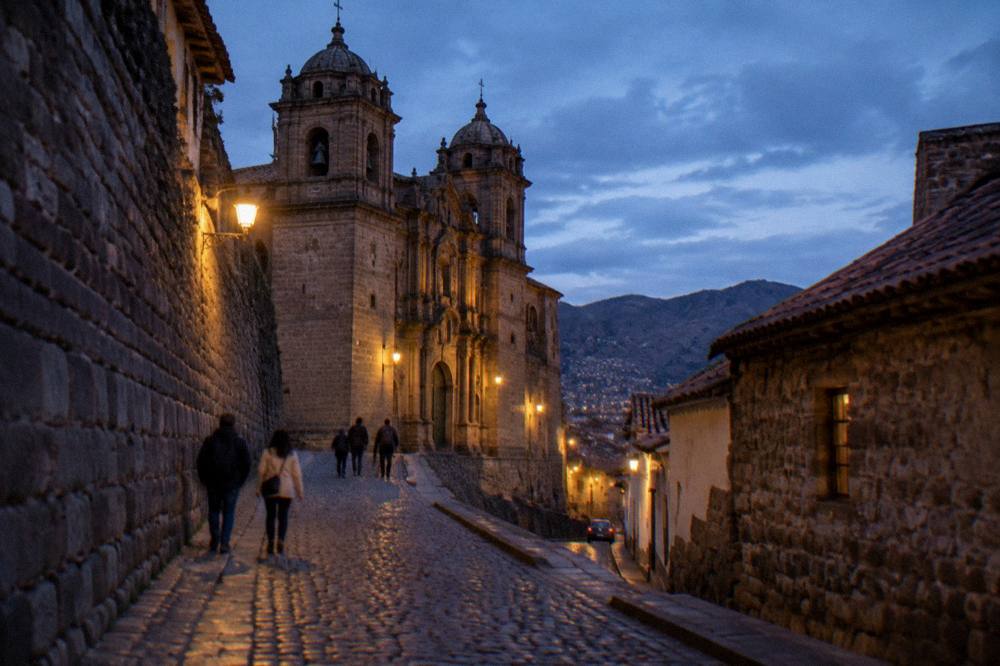
Practical walking notes from the verified pack: the tourist police run a 24-hour phone and WhatsApp line, 980 122 335, and iPeru, the official tourist information service, answers WhatsApp and phone around the clock. The UK FCDO's Peru safety page states that street crime including muggings is a significant problem in major cities and advises against walking alone in quiet areas or at night; the US State Department advisory for Peru stands at Level 2, Exercise Increased Caution, with Cusco city outside the Do Not Travel areas. Those are the sourced safety statements, and this page adds no anecdote to them.
For travellers who prefer a guide while walking, the free GuruWalk tours already mentioned cover the historic core, and paid walking tours run daily; the products' own listings carry their durations and ratings. The district's walkability also means a half-day city tour can bundle the centre with the four ruins above it, a product this site covers on its city-tour pages.
What To Do In The Cusco Historic Centre After Dark?
Evening options in the Cusco Historic Centre centre on food, drink and the small number of scheduled night activities the verified sources name: restaurant dinners, pisco-based mixology sessions, pub crawls, and the Planetarium Cusco, whose own site lists daily shows from S/ 90 for adults with round-trip transport included, starting in the early evening.
The Planetarium is the clearest documented case: its own site states shared group shows from S/ 90, about US$26 at this site's conversion table. It sits outside the immediate core, and the booking is what guarantees a seat, per the operator's own listing text.
Food and drink products in the centre include cooking classes with market visits, chocolate workshops and pub crawls, all rendered from their own listings. The featured product on this page is the pisco sour mixology session, which runs in the historic core and teaches Peru's national drink hands-on; its listing carries its own price, rating and review figures, which the card below renders.
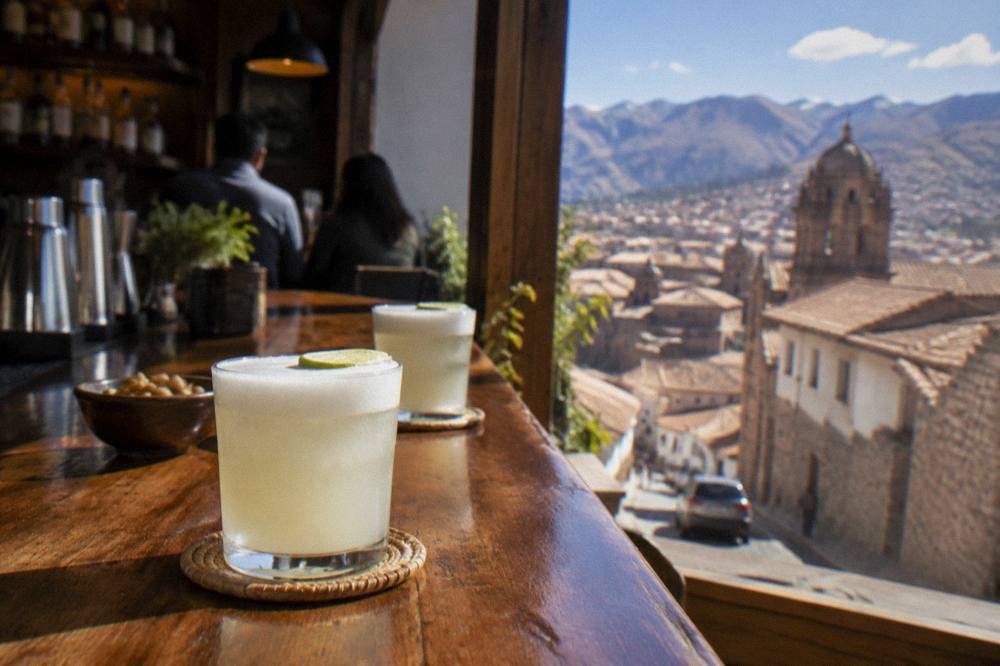
For eating, the what to eat in Cusco guide and the best restaurants guide cover the district's kitchens. One sourced fact frames the fine-dining picture: the Michelin Guide lists no restaurants in Peru at all, its Peruvian-cuisine list being entirely abroad, while Latin America's 50 Best Restaurants 2025 placed Mil, in the Sacred Valley at Moray, at number 49, outside the historic centre itself. The pack holds no sourced figure for typical dinner times, so this page states none.
Nightlife products, bar tours and club crawls among them, run from the centre in the evenings; their listings carry their own details. The FCDO's advice about quiet areas at night, quoted above, is the sourced caution that applies.
Common Questions About The Cusco Historic Centre
Is The Cusco Historic Centre The Same As Machu Picchu?
No. The Cusco Historic Centre is the UNESCO-inscribed old core of Cusco city at 3,335 m; Machu Picchu is a separate citadel at 2,430 m, reached from Cusco by train and bus, a day trip or overnight away. Cusco is the higher of the two. Machu Picchu tickets sell on the Ministry of Culture platform or in person at Machu Picchu Pueblo, and the Boleto Turistico does not cover them.
How High Is The Cusco Historic Centre?
The Plaza de Armas sits at 3,335 m per PromPeru, the airport at 3,310 m, and the CDC describes Cusco as approximately 3,350 m. Saqsaywaman, on the hill above the centre, stands at 3,701 m. The CDC Yellow Book names Cusco a rapid-ascent destination and prefers graded ascent where feasible.
Can You Buy The Boleto Turistico Online?
No. COSITUC sells the Boleto Turistico in person only, at the counter at Av. El Sol 103, open daily 07:30 to 18:00, and at most included sites. The integral ticket costs S/ 130 for a foreign adult and is valid 10 days from the day of purchase; each partial circuit costs S/ 70.
What Does The Boleto Turistico Circuit II Cover?
Circuit II covers the city sites: the Museo de Sitio Qorikancha, the Museo Historico Regional, the Museo de Arte Contemporaneo, the Museo de Arte Popular, the Centro Qosqo de Arte Nativo, the Monumento a Pachacutec, plus Tipon and Pikillaqta outside the city. It does not cover the Cathedral, the Inca Museum or the Museo de Arte Precolombino, which carry their own reported admissions.
Is Cusco The Oldest City In The World?
No source in the verified pack supports that claim. UNESCO's listing for the City of Cusco describes a pre-Inca occupation process of over 3,000 years and 3,000 years of indigenous cultural development, which is what can be stated; the superlative cannot.
When Is The Cusco Historic Centre Crowded?
The MINCETUR dataset shows the regional pattern: in 2025 the Machu Picchu citadel recorded 154,105 visits in October against 79,806 in February, and department-wide site entries totalled 10,704,938. Inti Raymi on 24 June and Santurantikuy on 24 December fill the centre itself on their dates.
The Cusco Historic Centre rewards a slow pace, a boleto bought in person on a planned day, and a jacket for the nights, whatever the month. The rest of this site carries the detail: the attraction pages for each site, the guides for tickets and seasons, and the itineraries that stitch the centre into a wider trip through the Sacred Valley and beyond.