Inca Ruins In And Around Cusco
Cusco was the Inca capital, and the ruins around it range from ceremonial terraces a short walk from the Plaza de Armas to whole hilltop towns in the Sacred Valley. This guide sets out which sites exist, what the Boleto Turistico actually covers, and what the official sources say about fees, altitude and timing.
Short answer
The main Inca ruins in and around Cusco are the four sites above the city (Sacsayhuaman, Q'enqo, Puka Pukara and Tambomachay), the Sacred Valley sites of Pisac, Ollantaytambo, Moray and Chinchero, and the city sites such as Qorikancha and the Inca walls of the historic centre. Most are covered by the COSITUC Boleto Turistico, which a foreign adult buys in person for S/ 130.
Cusco, the historic city in the Andes of southern Peru, sits at 3,335 m at its Plaza de Armas, and it was the capital of the Inca state. That single fact explains the density of ruins around it: ceremonial terraces begin at the edge of the city, a full hilltop fortress sits above it, and whole Inca towns line the Sacred Valley downstream toward Machu Picchu. UNESCO inscribed the City of Cusco on the World Heritage List in 1983, the same year the Historic Sanctuary of Machu Picchu entered the list on 9 December 1983. This guide, written from official sources and the verified site research, covers the ruins a visitor can actually reach from Cusco, what each ticket costs, and how the altitude and the Andean calendar shape a visit. For the wider picture of the city's layout, the companion guide to the Cusco historic centre is the place to start.
What Inca Ruins Can You See In And Around Cusco?
The Inca ruins around Cusco fall into four groups: the four sites immediately above the city (Sacsayhuaman, Q'enqo, Puka Pukara and Tambomachay), the Sacred Valley sites of Pisac, Ollantaytambo, Chinchero and Moray, the city sites inside the historic centre led by Qorikancha and the Inca walls, and the further afield destinations such as Tipon, Pikillacta and Machu Picchu. The first three groups are all on the Boleto Turistico; Machu Picchu is not, and it sells separately on the Ministry of Culture's ticket platform or in person at Machu Picchu Pueblo. This site keeps exactly one page for Machu Picchu, at Machu Picchu day trip from Cusco, and tickets are one of three topics covered in more depth by sibling pages, so this guide keeps its focus on the ruins of the city and the valley.
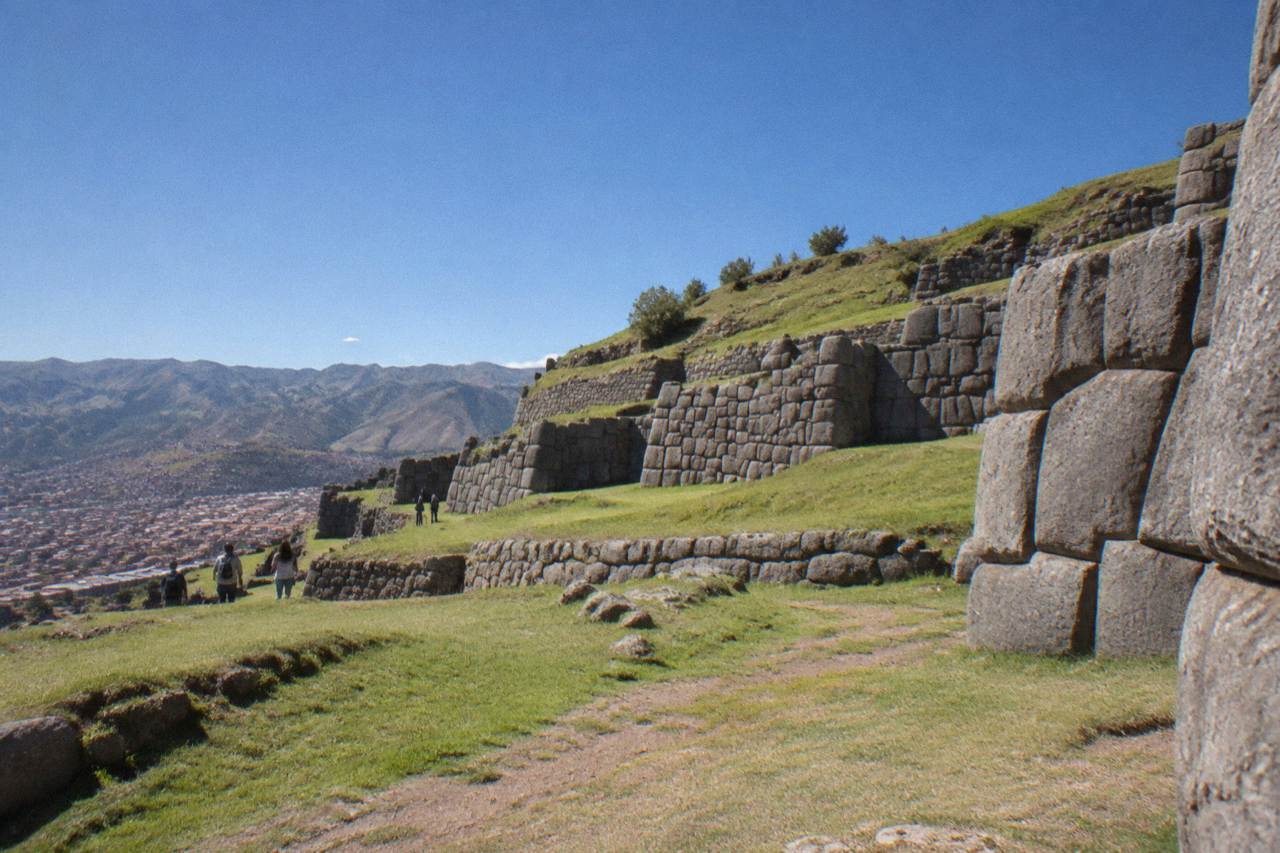
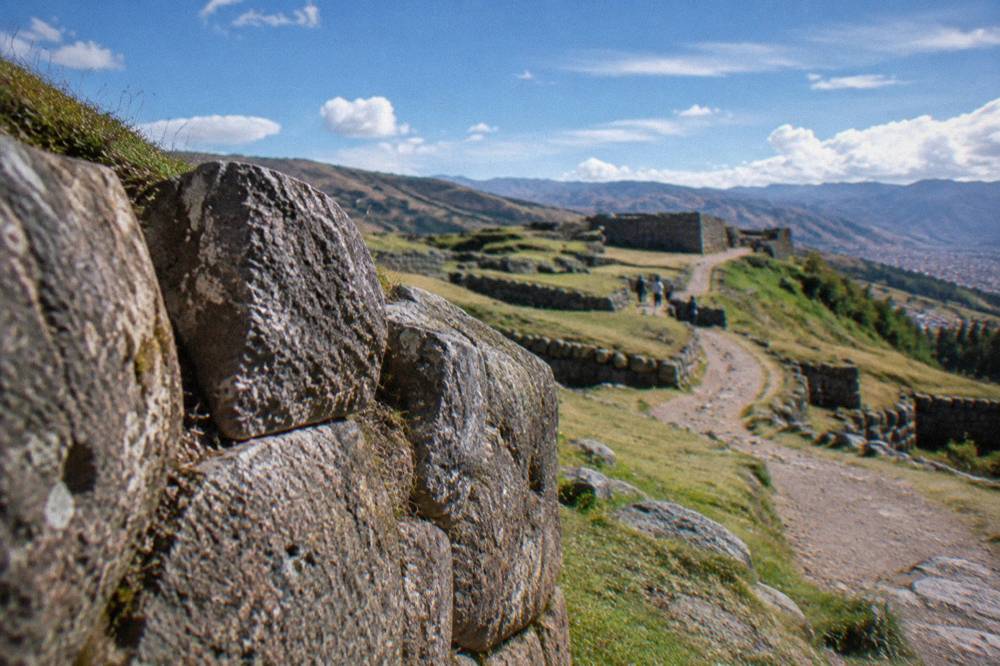
The four-ruins circuit above Cusco is the classic half-day. Sacsayhuaman, the largest of them, sits at 3,701 m, higher than the Plaza de Armas below it, and peru.travel lists its hours as 07:00 to 18:00. Q'enqo, Puka Pukara and Tambomachay follow along the same road out of the city, each a short stop, each on the same ticket. One popular question on this site, the four ruins of Cusco, answers exactly which sites that phrase covers and in what order a half-day visit works.
The Sacred Valley group is a day trip. Pisac town sits at 2,972 m, Ollantaytambo at 2,792 m, and Moray at 3,385 m, all lower than Cusco itself, which surprises visitors who assume the valley must be higher. The city group needs no transport at all: Qorikancha, the Inca temple complex beneath the colonial church of Santo Domingo, and the finely fitted polygonal stones of the historic centre's Inca walls are inside walking distance of the Plaza de Armas.
Which Cusco Ruins Does The Boleto Turistico Cover?
The COSITUC Boleto Turistico covers 16 sites across three partial circuits, sold in person only, never online: Circuit I holds Sacsayhuaman, Q'enqo, Puka Pukara and Tambomachay; Circuit II holds the city museums and sites including the Museo de Sitio Qorikancha, Tipon and Pikillacta; Circuit III holds Pisac, Ollantaytambo, Chinchero and Moray. A foreign adult pays S/ 130 (about US$38) for the integral ticket, valid 10 days, or S/ 70 (about US$20) per partial circuit. Foreign students pay S/ 70 for the integral ticket. Children are free to age 9, and ages 10 to 17 pay the student price with ID.
The tarifario on the COSITUC site states the prices, and the FAQ states where to buy: the counter at Av. El Sol 103 (Galerias Turisticas), open daily 07:30 to 18:00, plus the ticket offices at most included sites. Only students receive a discount; there is no teacher or youth-card rate. The partial circuits are reported as valid 1 to 2 days, with validity starting the day of purchase, and the FAQ notes that covering all 16 sites needs a minimum of three days. The full price detail, including what the ticket does not cover, is on the companion guide to the Boleto Turistico.
What the ticket does not cover matters as much as what it does. Machu Picchu is not one of the 16 sites, and neither are the Maras salt mines, the Rainbow Mountain community fee, the Cathedral or the Qorikancha museum's own separate admission listing. The table below is the complete official circuit map.
| Circuit | Sites included | Price, foreign tourist | Validity |
|---|---|---|---|
| I, Saqsayhuaman | Saqsaywaman, Q'enqo, Puka Pukara, Tambomachay | S/ 70 (about US$20) | 1 day |
| II, City | Museo de Sitio Qorikancha, Museo Historico Regional, Museo de Arte Contemporaneo, Museo de Arte Popular, Centro Qosqo de Arte Nativo, Monumento a Pachacutec, Tipon, Pikillacta | S/ 70 (about US$20) | 2 days |
| III, Sacred Valley | Pisac, Ollantaytambo, Chinchero, Moray | S/ 70 (about US$20) | 2 days |
| Integral (all 16) | All of the above | S/ 130 (about US$38) | 10 days |
The choice between the integral ticket and a partial circuit is arithmetic. Anyone planning both the four ruins above the city and the Sacred Valley sites has already spent S/ 140 on two partials, more than the S/ 130 integral, and the integral adds the museums and ten days of flexibility. A visitor with one day in the city and no valley trip needs only Circuit I.
How Do You Visit The Four Ruins Above Cusco In Half A Day?
The four ruins above Cusco, Sacsayhuaman, Q'enqo, Puka Pukara and Tambomachay, all sit on one road north of the historic centre and all take the same Boleto Turistico Circuit I ticket, so a half-day loop by road, or a walk up and a drive back, is the standard pattern. Sacsayhuaman is the headline site and the largest; the other three are smaller stops along the same route. peru.travel lists Sacsayhuaman's hours as 07:00 to 18:00, and the site sits at 3,701 m, so the climb from the Plaza de Armas is a real altitude effort rather than a stroll.
Walking up is possible, and the question of walking from Cusco to Sacsayhuaman is answered in detail on that site's own page. The return on foot is easier on the lungs. For anyone short on time or wary of the uphill at altitude, a group tour handles the transport between the four sites; the site's featured option is the Half-Day City Tour, Four Ruins listing, which covers exactly these four sites with a guide and transport.
The tour question is a convenience question, not a requirement. Every one of the four sites can be entered with the Boleto alone, and taxis reach the same road. What a group tour adds is the interpretation at each stop and the fixed half-day rhythm, which suits a first visit or a tight schedule; the solo listing below shows the live price and availability for the same product.
The four sites differ in character, and the table below sets out what each one is and what the verified research records for it. No founding year, builder or stone count appears here, because the site's research verified none of those figures; what the sources do give is elevation, ticket circuit and the basic character of each site.
| Site | Elevation | Ticket | What it is |
|---|---|---|---|
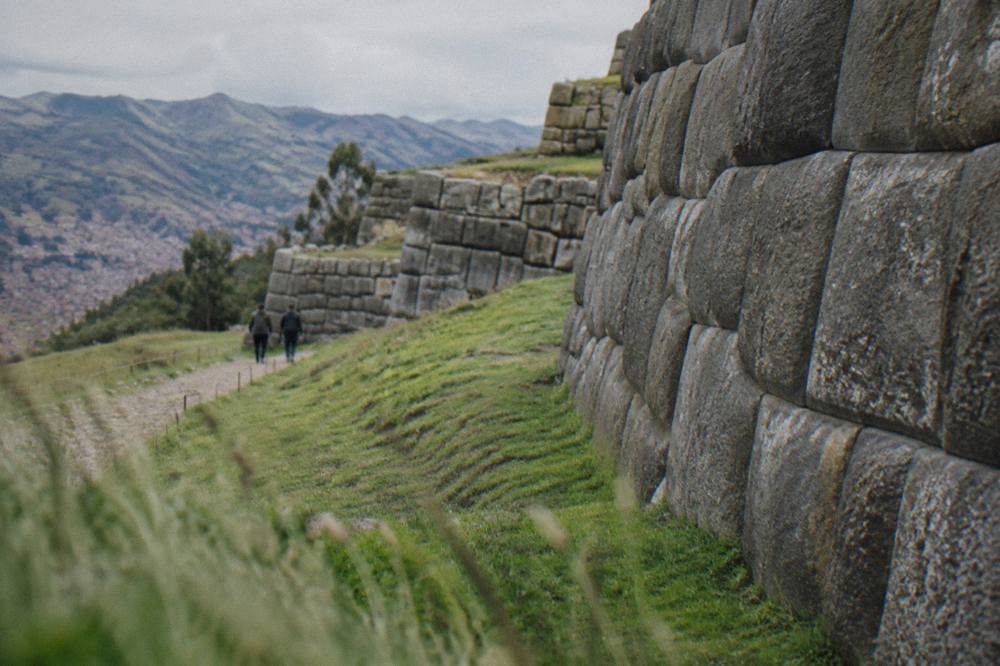
| Sacsayhuaman | 3,701 m | Boleto Circuit I | Large walled complex of fitted stone terraces above the city, the main ceremony site of the Inti Raymi festival each 24 June |
| Q'enqo | Above the city road | Boleto Circuit I | Carved rock outcrop with passages and a ceremonial amphitheatre |
| Puka Pukara | Above the city road | Boleto Circuit I | Small walled outpost with views over the valley |
| Tambomachay | Above the city road | Boleto Circuit I | Finely built water channels, baths and stone fittings |
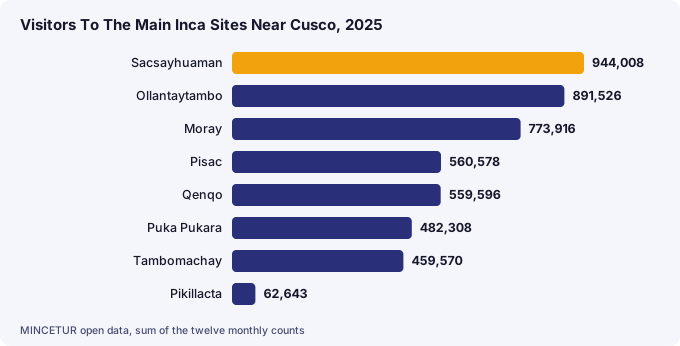
Inti Raymi, the winter-solstice ceremony, uses this ground: it starts at Qorikancha, moves to the Plaza de Armas and holds its main ceremony at Sacsayhuaman on 24 June each year. The site's guide to Inti Raymi covers the festival and its tickets. The MINCETUR open dataset records 944,008 visits to the Explanada de Saqsaywaman in 2025, which places it among the most-visited sites in the Cusco department after Machu Picchu itself.
What Are The Sacred Valley Ruins Near Cusco?
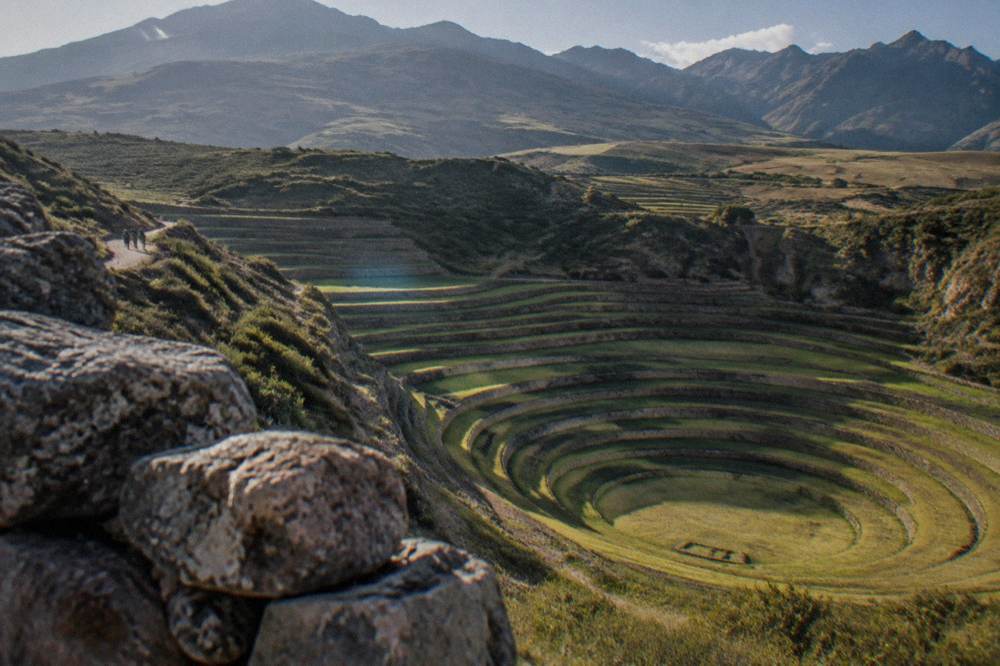
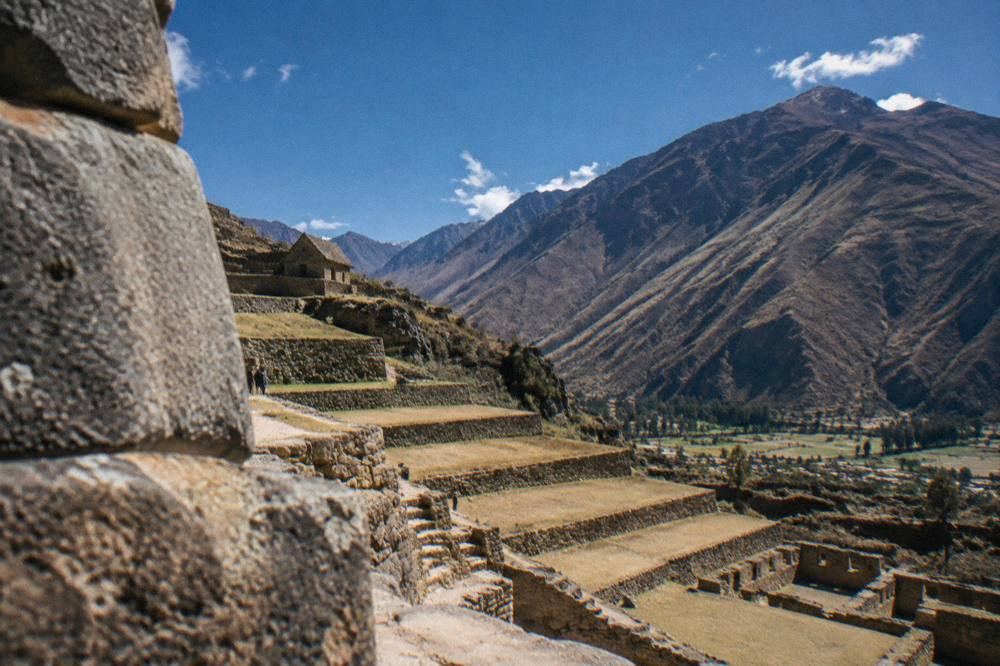
The Sacred Valley ruins on the Boleto's Circuit III are Pisac, Ollantaytambo, Chinchero and Moray, and the valley also holds the Maras salt mines, which are not on the ticket and charge a separate reported fee of S/ 15 to S/ 20. Pisac town sits at 2,972 m, Ollantaytambo at 2,792 m, Moray at 3,385 m and Maras at 3,300 m, so every one of them is lower than Cusco, which is the reason many visitors sleep in the valley to acclimatise. The question of staying in Cusco or the Sacred Valley has its own page.
Pisac pairs a hillside ruin of terraces and stone structures with a town famous for its market; the site's page on Pisac covers both. Ollantaytambo is a living Inca town plan with a fortress above it, and it doubles as the valley's train hub for Machu Picchu, a topic this guide leaves to the Cusco to Ollantaytambo page and the sibling pages that cover the train in depth. Moray is the circular terrace complex, its concentric rings cut into a high plateau; the Maras salt mines, the evaporation pans still worked by local families, sit a short drive away and are the reason so many valley tours pair the two.
The MINCETUR dataset gives a sense of scale: Moray recorded 773,916 visits in 2025, the Parque Arqueologico de Ollantaytambo 891,526, and Pisaq 560,578. Those are entries, not unique visitors, but they show the valley sites draw numbers comparable to a major museum district, not quiet backwaters.
| Sacred Valley site | Elevation | Ticket | Separate fee reported |
|---|---|---|---|
| Pisac ruin and town | 2,972 m | Boleto Circuit III | None |
| Ollantaytambo | 2,792 m | Boleto Circuit III | None |
| Chinchero | On the plateau | Boleto Circuit III | None |
| Moray | 3,385 m | Boleto Circuit III | None |
| Maras salt mines | 3,300 m | Not on the Boleto | S/ 15 to S/ 20 |
A half-day valley trip to Moray and the salt mines is one of the cheapest structured options from the city, and the site's listing for Moray, Maras, Chinchero Weavers covers Moray, the Maras mines and the Chinchero weavers in one outing.
Which Inca Sites Sit Inside The City Of Cusco Itself?
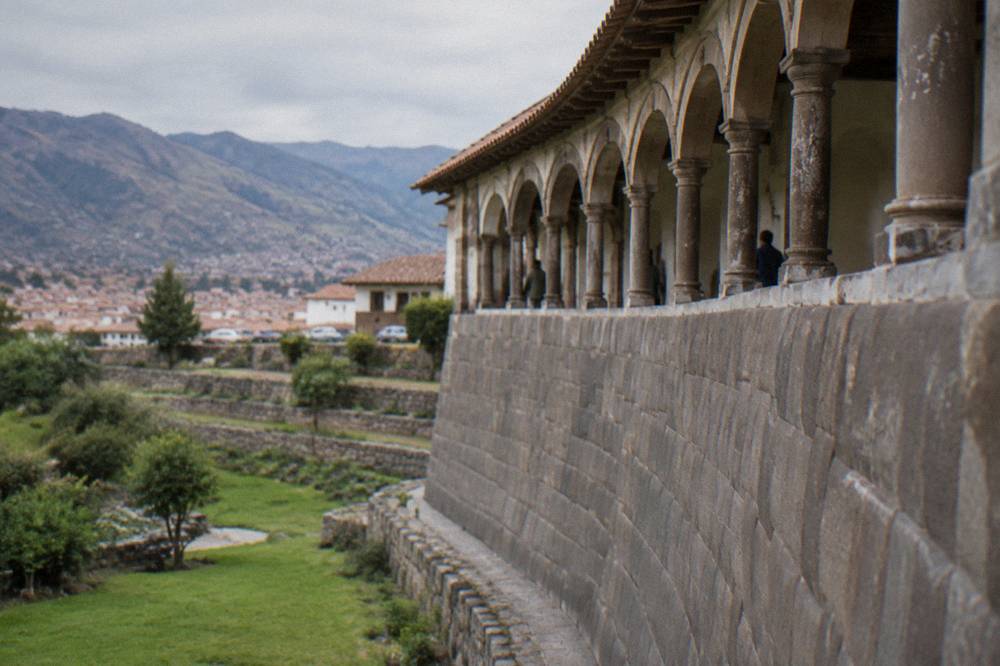
The Inca sites inside Cusco city are Qorikancha, the temple complex beneath the church of Santo Domingo, and the Inca walls of the historic centre, including the large finely fitted polygonal stone on Hatunrumiyoc street near the Plaza de Armas and San Blas. Qorikancha's museum admission is listed by peru.travel at S/ 20 for an adult, and the site also appears on the Boleto's Circuit II as the Museo de Sitio Qorikancha. The street walls need no ticket at all; they are the city itself.
Qorikancha is the most consequential single site in the city: the Inca temple whose curved dressed-stone walls still stand beneath and around the colonial church built on top of it, the clearest example of the pattern the UNESCO listing describes, colonial churches standing on Inca stone foundations. The site's own page on Qorikancha goes deeper. The famous twelve-angled stone is a large, finely fitted polygonal stone in an Inca wall on Hatunrumiyoc street; the site's page on the twelve-angled stone describes it and its street, and this guide adds no measurements, weight or builder, because the verified research holds none.
The city museums round out Circuit II. The Inca Museum charges S/ 20 for a foreign adult, the Museo de Arte Precolombino S/ 20 general and S/ 10 for students, and the Museo Historico Regional and the smaller collections are all on the ticket. The Cathedral is not: its admission is listed at S/ 25 by peru.travel, on a page dated 2021, and it is not among the Boleto's 16 sites.
| City site or museum | Admission | On the Boleto |
|---|---|---|
| Qorikancha museum (Santo Domingo) | S/ 20 (peru.travel listing) | Yes, Circuit II |
| Inca Museum | S/ 20, foreign adult | Yes, Circuit II |
| Museo de Arte Precolombino (MAP) | S/ 20 general, S/ 10 students | Not listed among the 16 |
| Cusco Cathedral | S/ 25 (peru.travel, dated page) | No |
| Inca street walls (Hatunrumiyoc, San Blas lanes) | Free to walk | No ticket needed |
The further-afield sites on Circuit II deserve a mention too. Tipon, the water-terraced site in the South Valley, and Pikillacta, the large pre-Inca walled settlement beside it, are both on the ticket and both reachable as a half-day trip from the city; the site's pages on Tipon and Pikillacta cover them. And the one Inca structure in the region that is neither ruin nor museum is the Q'eswachaka bridge, the woven grass bridge renewed each year by the local communities, which the site covers at Q'eswachaka.
When Is The Best Time Of Year To Visit The Cusco Ruins?
The best months for the Cusco ruins are the dry season, roughly May to September, when the Cuzco station's historical normal shows May to August delivering just 22.8 mm of rain between them, about 3.2 percent of the year's 707.8 mm total, while December to March alone carries 71.9 percent. June to August is the Southern Hemisphere winter here: dry, clear days with mean maximums of 19.1 to 19.8 C, cold nights with mean minimums of 0.1 to 0.3 C, and frost common in June and July. Never a northern-hemisphere year: this is the high Andes, and June to August is winter, not summer.
The trade-off is crowds and cold nights. The MINCETUR monthly figures for Machu Picchu in 2025 show October drawing 154,105 visits against February's 79,806, and the same seasonality shapes the Cusco and valley sites. The shoulder months of April, May, September and October split the difference: the April normal is 43.2 mm of rain, September's is 21.8 mm, and the mean maximum stays between 19.7 and 20.9 C. The site's month-by-month breakdown lives on Cusco weather by month, and the full planning picture, including the festival calendar, on the best time to visit Cusco.
| Month | Mean max C | Mean min C | Rain mm | Season |
|---|---|---|---|---|
| Jan | 18.9 | 6.6 | 145.3 | Wet |
| Feb | 18.8 | 6.5 | 133.7 | Wet |
| Mar | 19.1 | 6.2 | 107.0 | Wet |
| Apr | 19.7 | 4.9 | 43.2 | Shoulder |
| May | 19.8 | 2.5 | 8.7 | Dry |
| Jun | 19.5 | 0.3 | 1.5 | Dry, winter |
| Jul | 19.1 | 0.1 | 4.0 | Dry, winter |
| Aug | 19.8 | 1.6 | 8.6 | Dry, winter |
| Sep | 19.8 | 3.9 | 21.8 | Dry |
| Oct | 20.9 | 5.5 | 39.4 | Shoulder |
| Nov | 20.7 | 6.1 | 71.9 | Wet |
| Dec | 19.4 | 6.4 | 122.7 | Wet |
These figures come from the "Cuzco" station record supplied by SENAMHI, the Peruvian weather service, to the World Weather Information Service; it is a historical normal, not a 1991-2020 table. One practical note for the ruins above the city: the dry-season nights drop to around freezing, but the daytime maximums barely move all year, so a morning at Sacsayhuaman is cold at the start and warm in the sun within an hour.
How Hard Are The Cusco Ruins At 3,335 Metres?
The ruins above Cusco sit higher than the city itself, Sacsayhuaman at 3,701 m, and the CDC Yellow Book names Cusco, at about 3,350 m, as a rapid-ascent destination where rates of altitude illness approach 50 percent in abrupt-ascent situations, so the first day at the sites should be gentle and the CDC's graded-ascent advice is the reference. The CDC's rule, citing the Wilderness Medical Society, is to avoid going from low altitude to a sleeping altitude of 2,750 m or more in a single day, and once above 3,000 m to raise sleeping altitude by no more than 500 m a night with an extra night for every 1,000 m gained. The CDC also notes that travellers at Cusco can sleep a night or two at a lower elevation before beginning the ascent.
That last point is the practical one for a ruins itinerary. The Sacred Valley sites are all lower than Cusco, so a plan that sleeps in the valley first and climbs to the city second follows the graded-ascent pattern the CDC prefers. The site's full treatment of the topic, including the medication question, which the CDC frames as a prescription decision with a doctor, is on Cusco altitude. Nobody publishes a day count for acclimatisation; the honest planning rule is the CDC's own, go up gradually, and the first day's ruin walk is shorter than the second's.
The ruins themselves are not technical. Sacsayhuaman involves sloping grass terrain and stone steps; Moray is a rim walk around concentric terraces; Tambomachay and Puka Pukara are small. The effort is the altitude, not the terrain, and the guide to getting around Cusco covers the transport options for reaching the sites without the uphill walk.
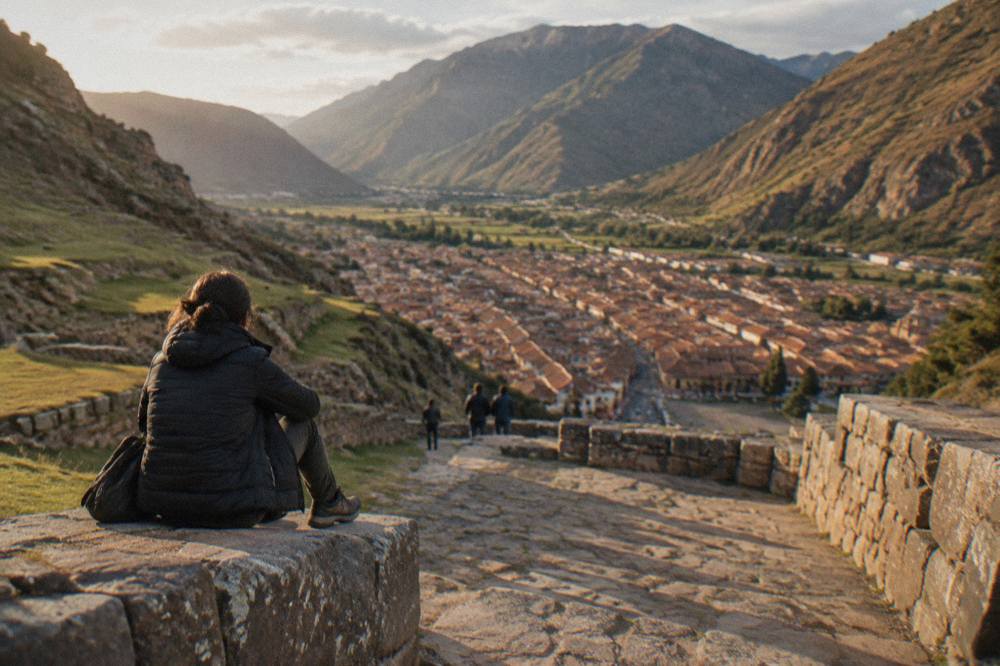
Do You Need A Tour For The Cusco Ruins, Or Can You Go Independently?
The Cusco ruins can be visited independently with the Boleto Turistico and public or private transport, and a tour is a convenience rather than a requirement; the official rule change of September 2026 made a guide recommended, not mandatory, at Machu Picchu, and no Cusco or Sacred Valley site requires one. The four ruins above the city are walkable or a short taxi ride; the valley sites need a bus, a colectivo or an organised day trip, and the trade-offs of each are on the Sacred Valley in one day page.
For independent visits the two essentials are the ticket, bought in person at Av. El Sol 103 or at the sites, and cash for the fees that sit outside the Boleto. The table below gathers the off-ticket fees the verified research holds as reported ranges; each is paid at the site, in cash, in soles.
| Site or fee | Amount | Notes |
|---|---|---|
| Maras salt mines | S/ 15 to S/ 20 | Not on the Boleto |
| Rainbow Mountain (Vinicunca) community fee | S/ 25 to S/ 30 | Cash, depending on route; peru.travel states S/ 30 foreign |
| Palccoyo | About S/ 20 | Operator-reported 2026 figure |
| Humantay Lake | S/ 10 to S/ 20 | Sources disagree; no single verified figure |
| Q'eswachaka bridge | About S/ 20 | Community fee, operator-reported |
The Rainbow Mountain comparison, which of the two coloured-mountain day trips suits which visitor, has its own page at Rainbow Mountain or Palccoyo. Those sites are Inca-adjacent rather than Inca ruins, but they share the same day-trip logistics from the city, and the same cash-fee pattern.
Where a tour earns its price is on the multi-day routes. The Inca Trail, the licensed-agency trek whose permits include Machu Picchu entry and which closes every February, is covered on the site's Inca Trail page; permits sell only through licensed agencies, with 500 people a day on the trail including porters and guides. For the ruins in this guide, though, a tour is a transport-and-context decision, and the free walking tours of the historic centre, listed on the site's free walking tours page, cover the city walls and Qorikancha's exterior at no fixed price.
To walk a stretch of the sacred paths toward the Antisuyo yourself, book a free walking tour here.
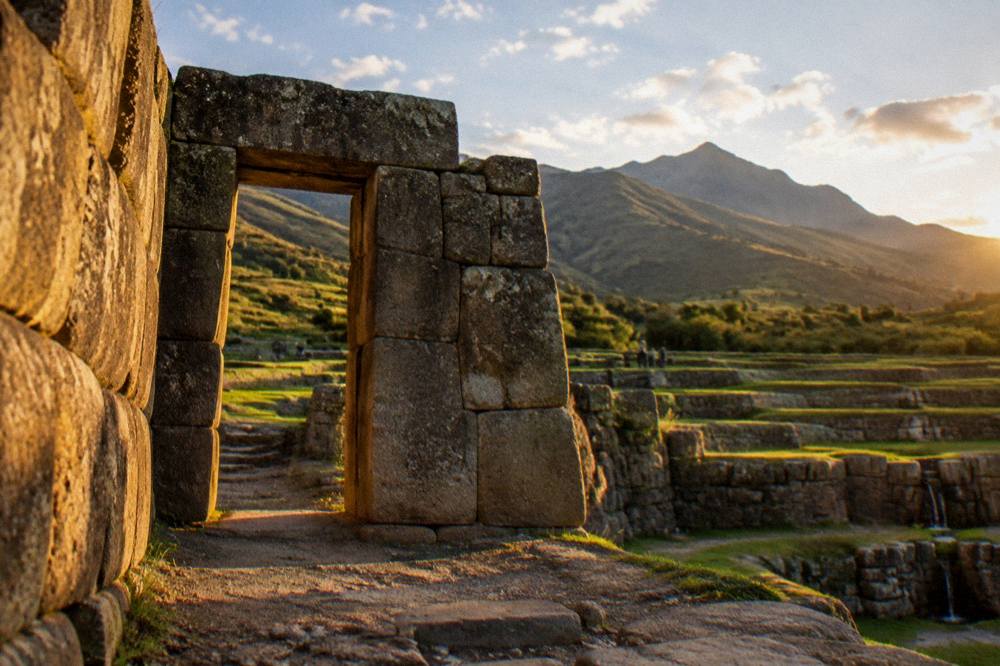
Common Questions About Inca Ruins In Cusco
Are The Inca Ruins In Cusco Covered By One Ticket?
The Boleto Turistico covers 16 sites across three circuits, including Sacsayhuaman, Q'enqo, Puka Pukara, Tambomachay, the Qorikancha museum, Tipon, Pikillacta, Pisac, Ollantaytambo, Chinchero and Moray. It does not cover Machu Picchu, the Maras salt mines or the Cathedral. A foreign adult pays S/ 130 for the integral ticket, valid 10 days, or S/ 70 per circuit, and it is sold in person only, at Av. El Sol 103 or at most included sites.
Can You Walk To The Ruins Above Cusco From The City Centre?
Yes. Sacsayhuaman sits above the historic centre and the walk up from the Plaza de Armas is a steady climb to 3,701 m, higher than the city itself. Q'enqo, Puka Pukara and Tambomachay lie further along the same road, so a loop on foot works for the fit and acclimatised, and a taxi or tour handles the rest. The site's page on walking to Sacsayhuaman covers the route.
Is Machu Picchu One Of The Inca Ruins Covered Here?
Machu Picchu is the region's most famous Inca site, but it is not in Cusco and not on the Boleto Turistico. The citadel sits at 2,430 m, lower than Cusco, and its tickets sell separately on the Ministry of Culture's platform or in person at Machu Picchu Pueblo. This site keeps one page for it, the Machu Picchu day trip guide, and the ticket detail belongs to the sibling pages that cover it in depth.
How Many Days Do You Need For The Cusco Ruins?
The four ruins above the city fit in a half-day, the city sites and museums fit in another day, and the Sacred Valley circuit needs a full day. The COSITUC FAQ states that covering all 16 Boleto sites needs a minimum of three days. A first Cusco visit of three or four days covers the ruins comfortably, with the acclimatisation pattern the CDC prefers, and the site's itinerary pages lay out day-by-day plans.
Do You Need A Guide At The Inca Ruins Around Cusco?
No site in this guide requires a guide, and the September 2026 Ministry of Culture resolution made a guide recommended rather than mandatory even at Machu Picchu. Tours remain popular for the transport and the interpretation, and the half-day four-ruins tour is the site's featured option, but an independent visit with the Boleto and a good guidebook is entirely workable.
Which Cusco Ruins Are Best If You Only Have One Day?
Sacsayhuaman in the morning, the Qorikancha museum and the Inca walls of the historic centre in the afternoon. That pairing uses one Boleto circuit plus one museum stop, needs no long transport, and gives the two most consequential sites in the city. If the day allows more, Q'enqo, Puka Pukara and Tambomachay complete Circuit I on the same road above the city.
The ruins in and around Cusco are unusual among the world's archaeological destinations in that the best of them sit inside a living city: the walls on Hatunrumiyoc street hold up buildings people walk past every day, and the festival of Inti Raymi still ends at Sacsayhuaman each 24 June. Plan the ticket, respect the altitude, pick the dry months, and the rest is walking. For everything else in the region, Things To Do In Cusco Peru keeps the full index.