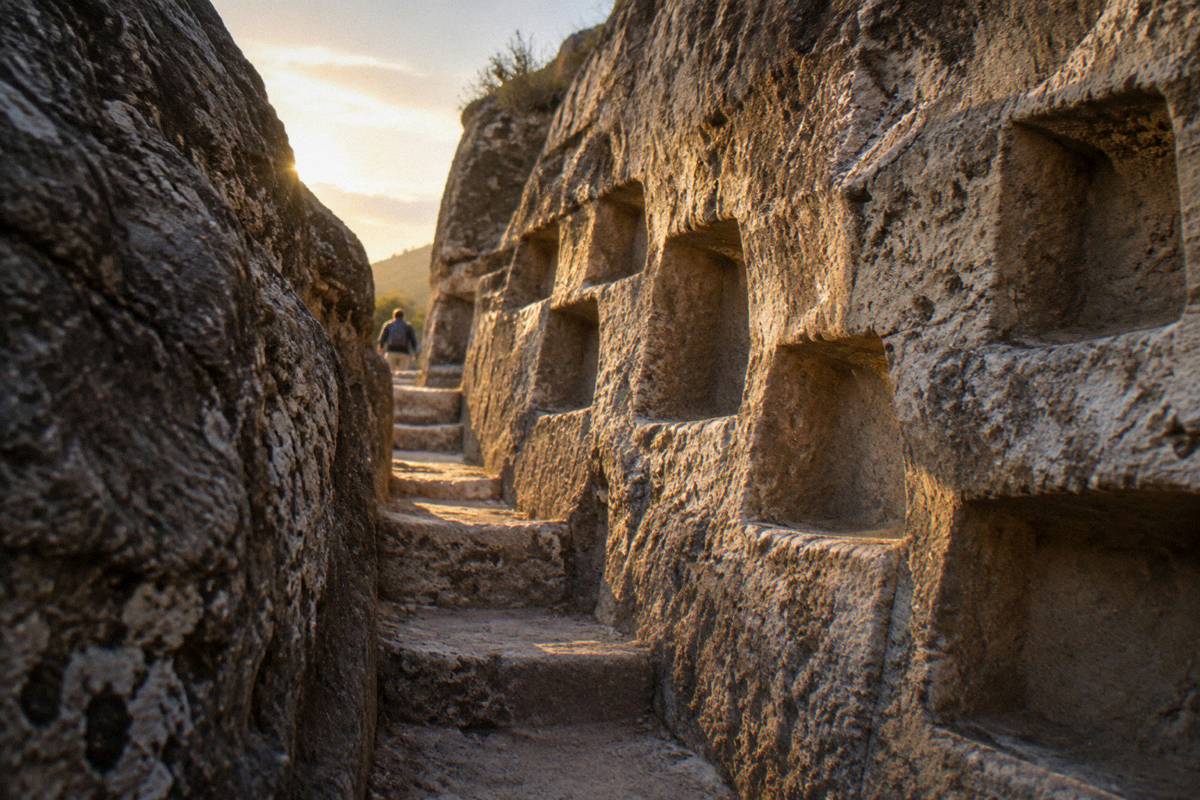
Sacsayhuaman
The great walled Inca site on the hill north of central Cusco, anchor of the Boleto Turistico's first circuit and stage of the Inti Raymi ceremony every 24 June.
Short answer
Sacsayhuaman is a walled Inca site on the hill to the north of central Cusco, listed at 3,701 m. Entry runs through the Boleto Turistico: the S/ 70 Circuit I partial or the S/ 130 integral, both sold in person only. peru.travel lists the hours as 07:00 to 18:00.
Sacsayhuaman holds the high ground on the hill to the north of Cusco, the historic city in the Andes of southern Peru whose Plaza de Armas sits at 3,335 m. The site itself is listed at 3,701 m, and its esplanade recorded 944,008 visits in 2025 in the Ministry of Commerce and Tourism's open dataset, third among the region's recorded sites behind the two Machu Picchu counting units. Cusco was the Inca capital, and this walled complex at the city's northern edge anchors the first circuit of the Boleto Turistico and stages the Inti Raymi ceremony every 24 June. This guide sets out entry and prices, opening hours, the walk up from the old city, weather at altitude and the festival calendar.
What Is Sacsayhuaman In Cusco?
Sacsayhuaman is a walled Inca site on the hill to the north of Cusco's historic centre, listed at 3,701 m while the Plaza de Armas below sits at 3,335 m. Its stepped zigzag walls, broad esplanade and circular stone foundations form one of the 16 sites on the Boleto Turistico, and its esplanade recorded 944,008 visits in 2025 in the MINCETUR open dataset.
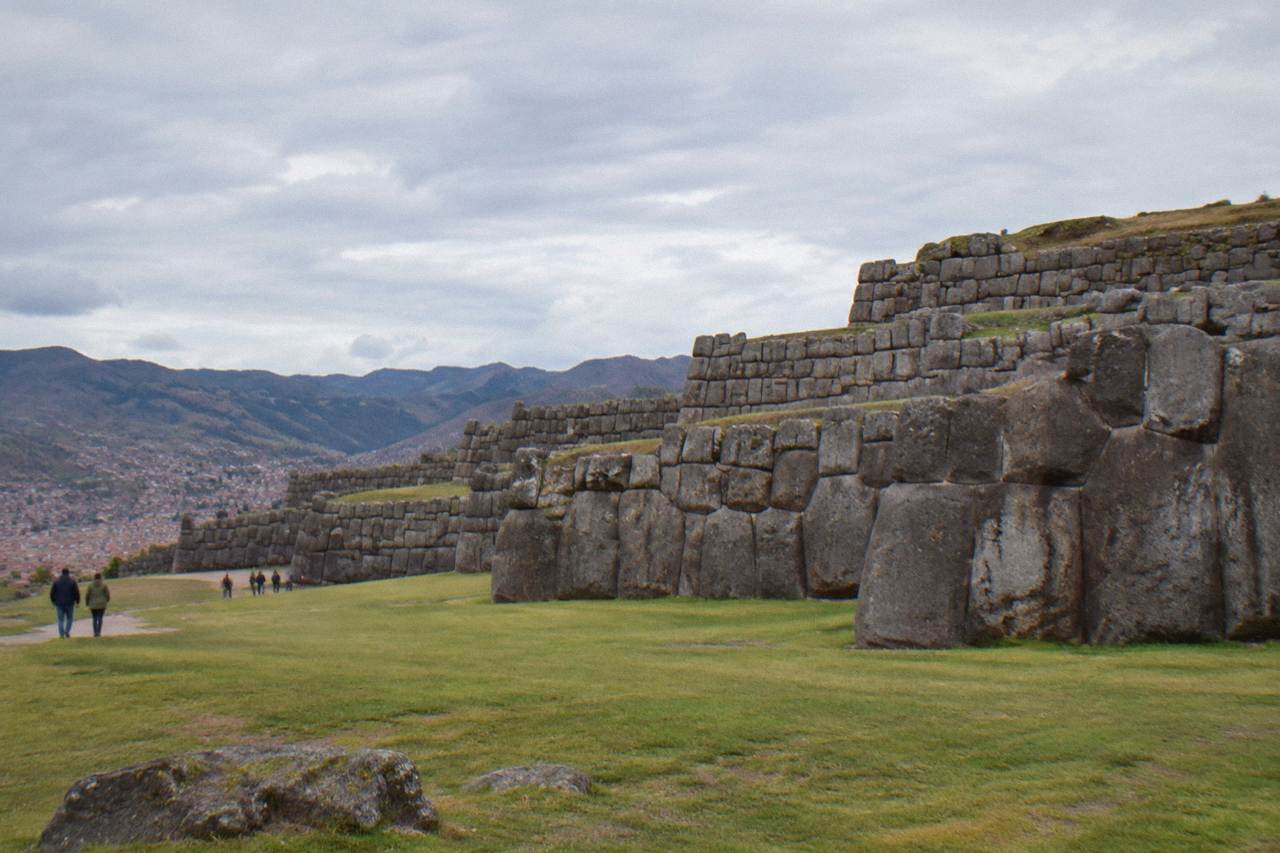
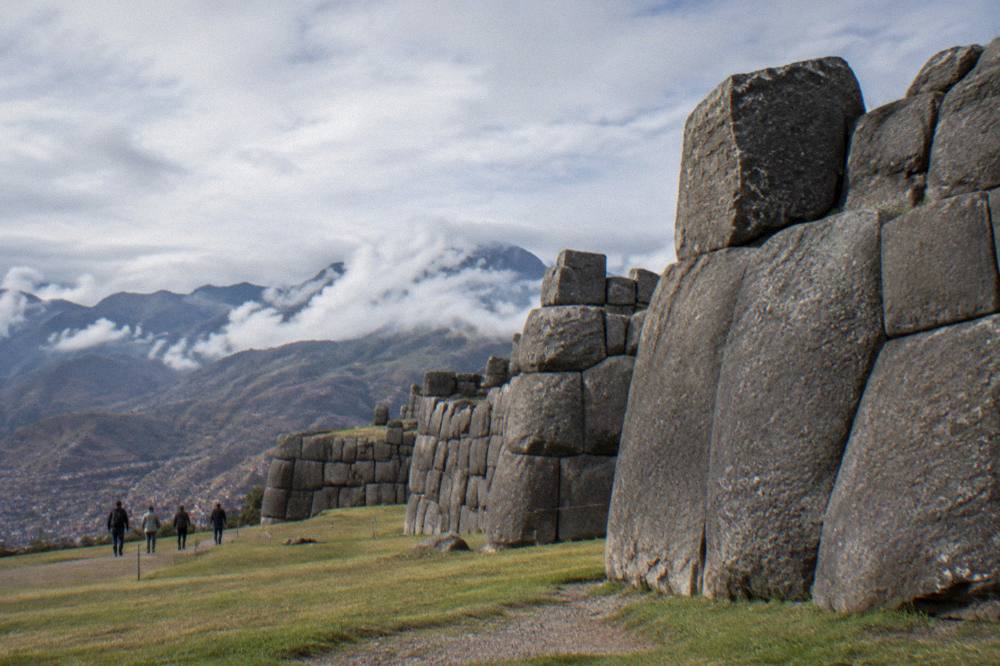
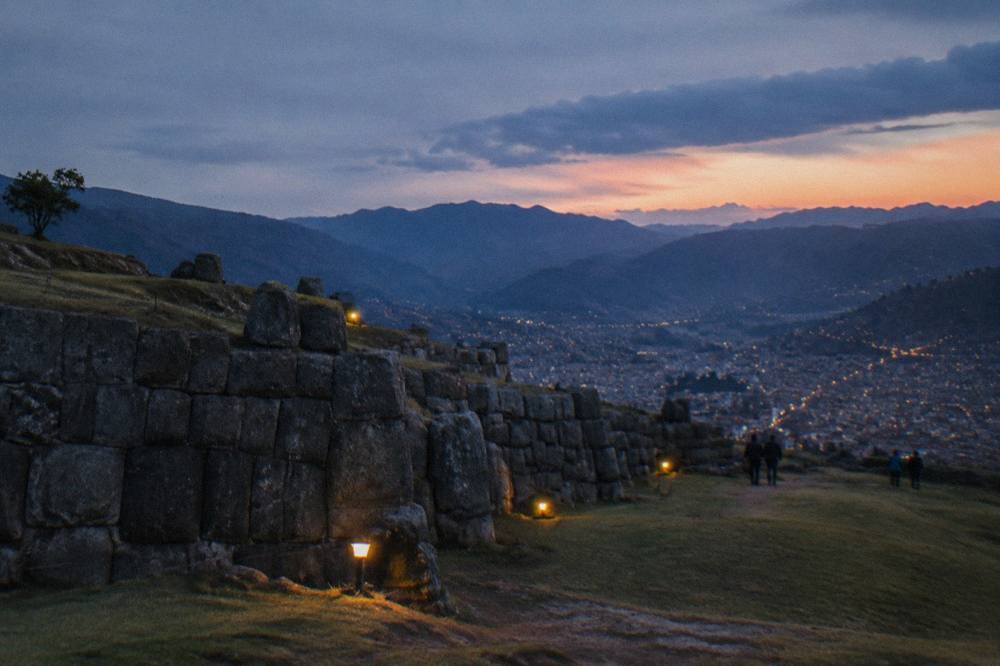
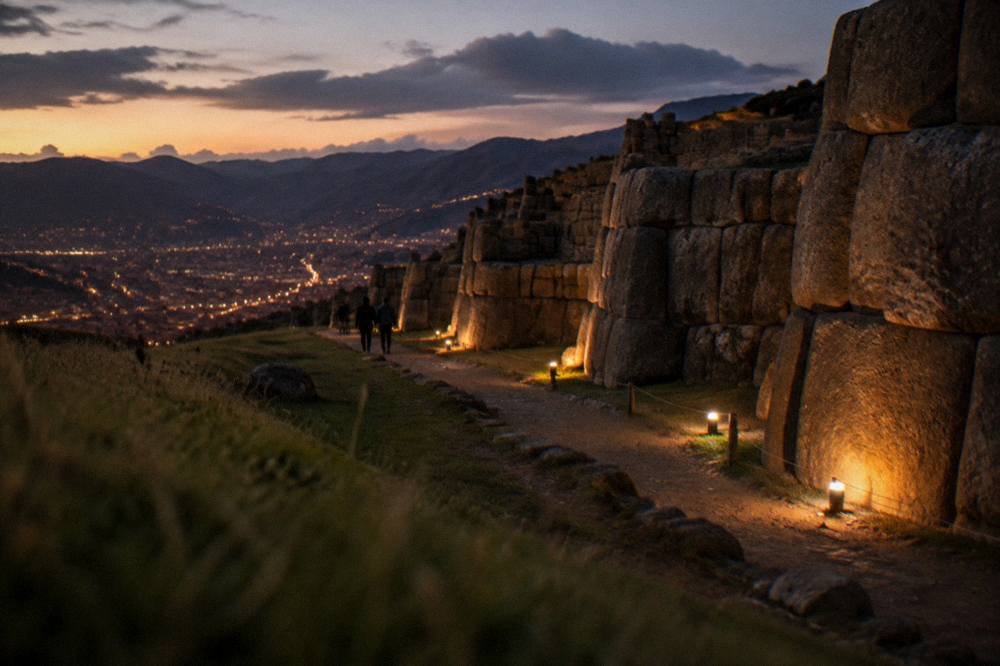
The walls run in stepped zigzag lines across the slope that faces the city, built of massive polygonal blocks fitted together without mortar. The joints are so tight that a blade is the standard image used to describe them, and the blocks themselves range from pieces two people could move to monoliths that no published source in this site's record weighs. No builder is named here, no construction year is stated and no stone count is given, because none of those figures is verified. What the record does hold is the site's position: the hills to the north of the old city, above the San Blas quarter and the Plaza de Armas below.
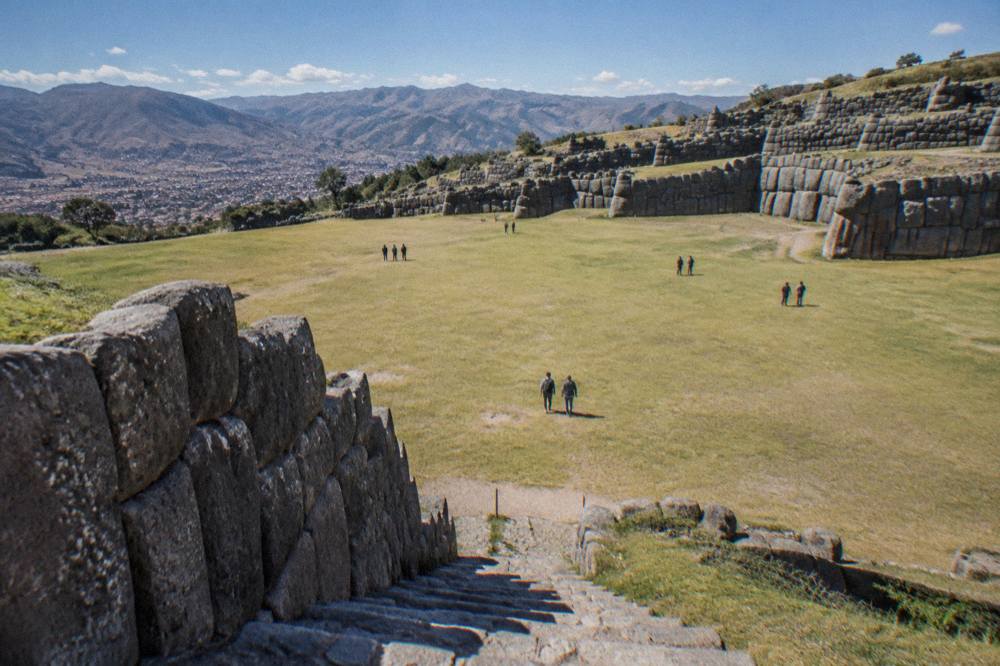
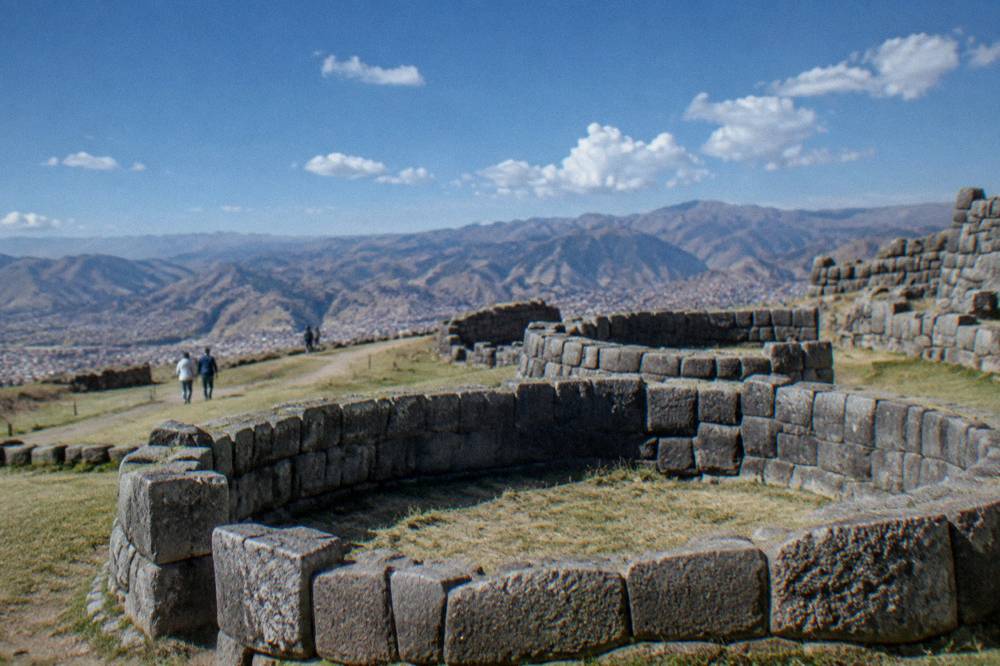
Above the walls spreads the esplanade, a broad grassed terrace that serves today as the ceremonial stage for Inti Raymi each June and as open ground for the rest of the year. Circular stone foundations stand on the hilltop, the remains of structures whose purpose the qualitative record describes only in general terms. UNESCO inscribed the City of Cusco on the World Heritage List in 1983, and the site looks directly down on that historic centre, with colonial churches standing on Inca stone foundations in the streets below. The full city story, from the Qorikancha temple site outward, sits within the wider coverage at Things To Do In Cusco Peru.
| Feature | Figure | Where it comes from |
|---|---|---|
| Site elevation | 3,701 m | published listing for the site |
| Plaza de Armas elevation | 3,335 m | PromPeru |
| Opening hours | 07:00 to 18:00 | peru.travel |
| Entry ticket | Boleto Circuit I partial, S/ 70 | COSITUC tarifario |
| Inti Raymi date | 24 June each year | peru.travel |
| UNESCO inscription, City of Cusco | 1983 | UNESCO record |
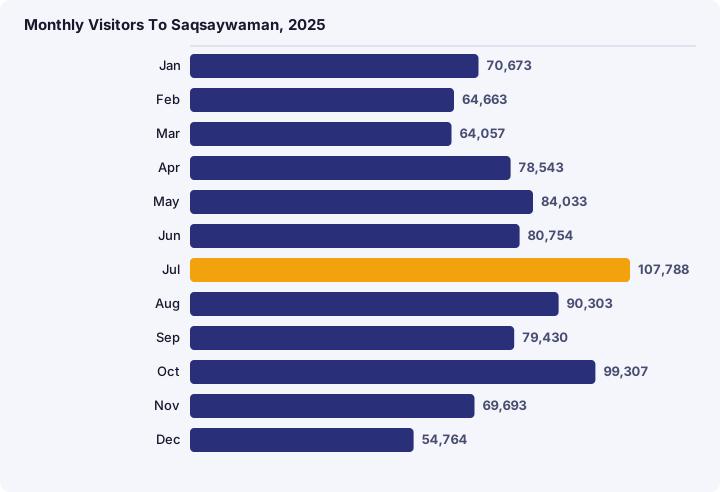
The scale of visitation is worth a table of its own, because the MINCETUR open dataset counts entries at every recorded site in the region. The figures below are the 2025 totals, and they place the Sacsayhuaman esplanade ahead of every archaeological site in the department except the two Machu Picchu counting units, the sanctuary and the citadel itself.
| Recorded Cusco site, 2025 | Visits |
|---|---|
| Santuario Historico de Machupicchu | 1,542,350 |
| Ciudad Inka de Machupicchu | 1,479,506 |
| Explanada de Saqsaywaman | 944,008 |
| Parque Arqueologico de Ollantaytambo | 891,526 |
| Moray | 773,916 |
| Pisaq | 560,578 |
How Much Does Sacsayhuaman Cost To Visit?
Entry to Sacsayhuaman runs through the Boleto Turistico del Cusco: the integral ticket for a foreign adult costs S/ 130, about US$38, and is valid for 10 days, while the Circuit I partial covering Saqsaywaman, Q'enqo, Puka Pukara and Tambomachay costs S/ 70, about US$20. COSITUC sells the ticket in person only, at the Av. El Sol 103 counter daily from 07:30 to 18:00 and at most included sites.
That in-person rule is the detail that catches out the most preparation. The COSITUC FAQ states plainly that the ticket is not sold online, so the counter at Av. El Sol 103 in the Galerias Turisticas, open every day of the week, is the reliable purchase point, and most of the included sites sell it at their own gates as well. Children are free to age 9, ages 10 to 17 pay the student price with ID, and the only discount category COSITUC lists is students: no teacher or youth card is honoured. Foreign students pay S/ 70 for the integral ticket with valid student ID.
| Boleto Turistico ticket | Price | Validity | Coverage |
|---|---|---|---|
| Integral, foreign adult | S/ 130 | 10 days | all 16 sites |
| Integral, foreign student | S/ 70 | 10 days | all 16 sites |
| Partial Circuit I | S/ 70 | 1 day, reported | Saqsaywaman, Q'enqo, Puka Pukara, Tambomachay |
| Partial Circuit II | S/ 70 | 2 days, reported | 8 city museums and sites |
| Partial Circuit III | S/ 70 | 2 days, reported | Pisac, Ollantaytambo, Chinchero, Moray |
| Integral, national tourist | S/ 70 | 10 days | all 16 sites |
| Partial, national tourist | S/ 40 | 1 to 2 days | per circuit |
The COSITUC FAQ adds two planning notes. Validity begins on the day of purchase, and covering all 16 sites needs a minimum of three days even on the integral ticket, because the circuits spread across the city, the northern hills and the Sacred Valley. Two things the boleto does not cover deserve one line each: Machu Picchu sells separately on the Ministry of Culture's ticket platform or in person at Machu Picchu Pueblo, and the Maras salt mines are not among the 16 sites, carrying their own community fee.
| Circuit I site | What the visitor sees |
|---|---|
| Saqsaywaman | stepped zigzag walls, esplanade, circular foundations |
| Q'enqo | carved rock chambers and passages |
| Puka Pukara | walled lookout structures |
| Tambomachay | stone water channels and terraces |
For visitors who would rather not manage tickets, transport and timing alone, guided products cover the same ground, and the three below are the site's featured picks for this page.
What Can You See At Sacsayhuaman?
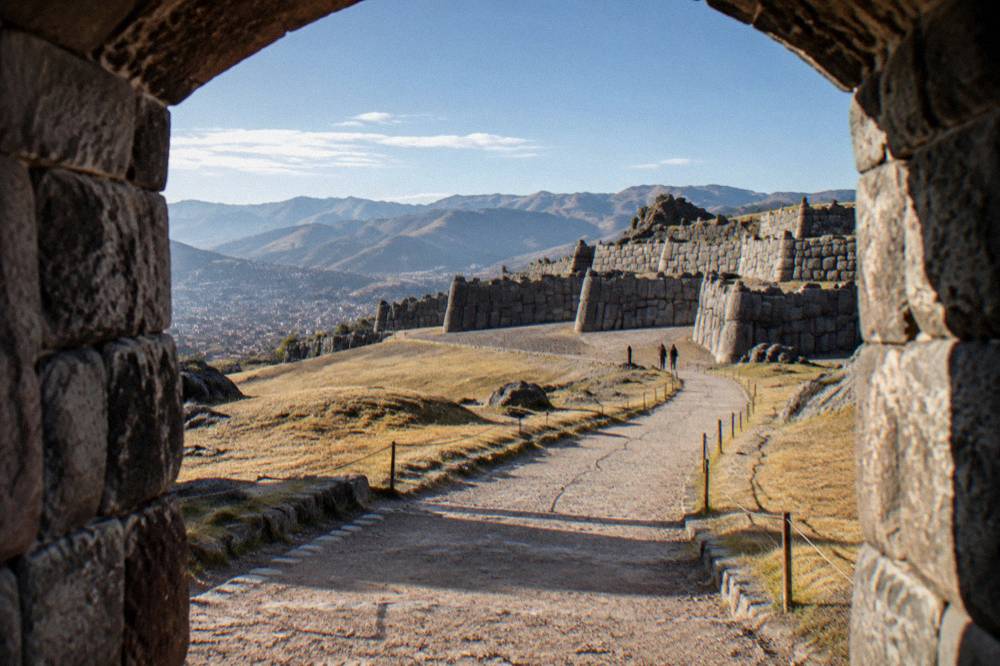
The visit is an open-air walk: the stepped zigzag walls on the Cusco-facing side, the broad grassed esplanade that hosts Inti Raymi each 24 June, and the circular stone foundations on the hilltop above. peru.travel lists the opening hours as 07:00 to 18:00 daily. The whole route is outdoors, so dry-season clarity and the 3,701 m elevation shape the visit more than anything indoors.
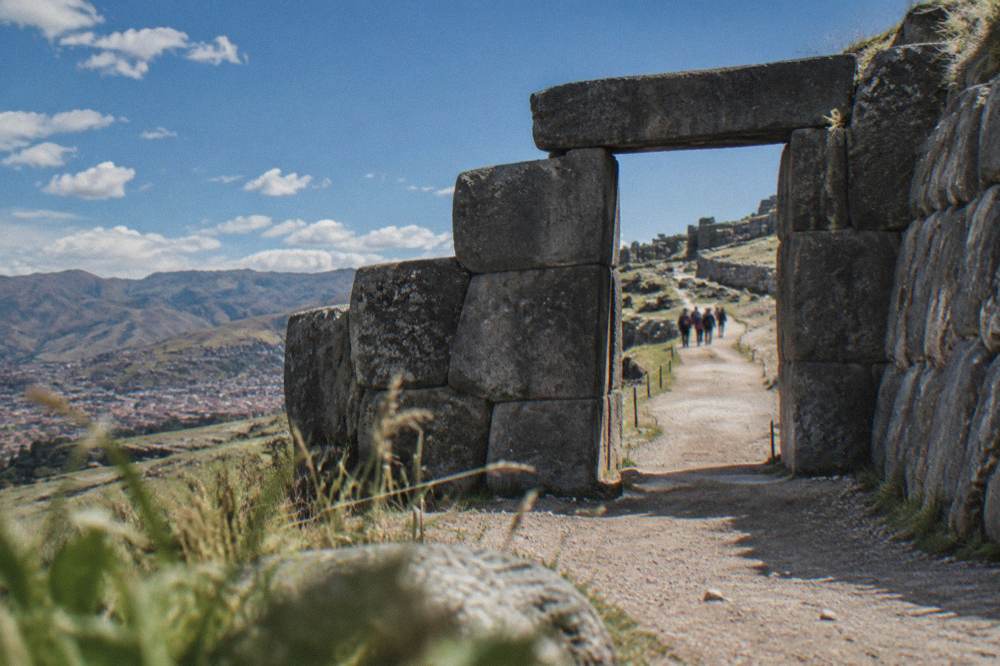
The walls are the reason most people climb the hill. They rise in stepped tiers, and the largest blocks sit in the lowest courses, fitted polygon against polygon with no mortar anywhere in the visible joints. The masonry style matches the finest stonework in the old city below, the same school of fitting that produced the twelve-angled stone on Hatunrumiyoc street, near the Plaza de Armas and San Blas. Walking the base of the walls and then the terrace above them gives two completely different reads of the same structure: mass from below, geometry from above.
The esplanade is the second act. It is a wide, flat, grassed space, and it is simply open ground with long views over the red roofs of the city and the valley beyond. Once a year it becomes an amphitheatre, when the Inti Raymi procession ends its route here for the main ceremony. The circular foundations sit at the top of the site, a cluster of stone rings whose original superstructure the visible record does not reconstruct.
For visitors who want the site explained rather than just seen, a guided half-day city tour pairs Sacsayhuaman with Q'enqo under a local guide, with the product card printing the current price, rating and review count from the verified roster.
How Do You Get To Sacsayhuaman From Central Cusco?
Sacsayhuaman lies on the hill to the north of the Plaza de Armas, and visitors reach it on foot by the path that climbs from the San Blas side of the old city, or by road as the half-day city tours do. There is no cable car and no railway; access is on foot or by road. The full walking route and its demands are covered in this site's dedicated answer page on walking from Cusco to Sacsayhuaman.
The walk is the classic approach from the old city, and it is a steady climb from street level to a site listed 3,701 m above the sea. The CDC names Cusco as a high-altitude destination at about 3,350 m and its Yellow Book prefers a graded ascent where one is feasible, so the climb is best treated as part of the acclimatisation plan rather than a test on arrival day. The dedicated walking from Cusco to Sacsayhuaman page on this site covers the route in full detail, with no invented distances or times.
By road, the site sits on the circuit that city tours drive between the four ruins, and a private transfer or taxi from the centre is the standard alternative for anyone short on time or wary of the climb. Anyone buying the Boleto on the way will find the COSITUC counter at Av. El Sol 103 in the centre, open daily from 07:30 to 18:00. Visitors who prefer a guide for the whole loop can Check availability on the half-day city tour through the operator's live listing.
Whichever way the visit is made, the practical pattern is the same: buy the ticket first in the centre or at the gate, carry passport or ID for the boleto check, and keep the climb for a day that is not the first in the city.
What Is The Weather Like At Sacsayhuaman?
Sacsayhuaman stands at 3,701 m, higher than central Cusco at 3,335 m, and shares the city's Southern Hemisphere pattern: dry season runs roughly May to September with frost common on June and July nights, while December to March delivers 71.9 percent of the year's 707.8 mm of rain at the WMO's Cuzco station. Mean daily maximums stay between 18.8 and 20.9 C all year.
The climate record below is a historical normal supplied by SENAMHI, Peru's weather service, to the World Meteorological Organization's World Weather Information Service for the Cuzco station. Two things stand out for an open hilltop site. First, the rain is not spread evenly: December to March carries 71.9 percent of the annual total, while May to August together bring just 22.8 mm. Second, the days barely change: mean maximums sit between 18.8 and 20.9 C in every month of the year, so it is the nights and the rain, not the daytime heat, that decide the experience.
| Month | Mean max C | Mean min C | Rain mm |
|---|---|---|---|
| Jan | 18.9 | 6.6 | 145.3 |
| Feb | 18.8 | 6.5 | 133.7 |
| Mar | 19.1 | 6.2 | 107.0 |
| Apr | 19.7 | 4.9 | 43.2 |
| May | 19.8 | 2.5 | 8.7 |
| Jun | 19.5 | 0.3 | 1.5 |
| Jul | 19.1 | 0.1 | 4.0 |
| Aug | 19.8 | 1.6 | 8.6 |
| Sep | 19.8 | 3.9 | 21.8 |
| Oct | 20.9 | 5.5 | 39.4 |
| Nov | 20.7 | 6.1 | 71.9 |
| Dec | 19.4 | 6.4 | 122.7 |
June and July are the frost months, when mean minimums sit a fraction above zero at the city station, and the site, higher again, will feel it after sunset. SENAMHI's own tourist pages describe frost nights as common in June and July, with the frost season running more broadly from April to September. For a visit built around clear photographs of the walls and the city below, the dry months from May to September are the window the data supports; for a visit built around Inti Raymi on 24 June, the cold is simply part of the occasion, and warm layers are the standard advice for a Southern Hemisphere winter day at this altitude.
What Is Inti Raymi At Sacsayhuaman?
Inti Raymi, the Inca sun festival, takes place every 24 June, the Southern Hemisphere winter solstice: the procession starts at Qorikancha, moves through the Plaza de Armas and ends with the main ceremony on the Sacsayhuaman esplanade. Grandstand tickets for the Sacsayhuaman sector are sold through Teleticket, historically from mid-April; the 2026 edition listed general seats in the Illapa sector at S/ 490.
The festival is the one day a year when the esplanade changes character entirely. peru.travel describes the route in three stages: the ceremony opens at Qorikancha in the morning, the procession then moves down to the Plaza de Armas, and the main ceremony unfolds on the Sacsayhuaman esplanade in the afternoon. The event is organised by EMUFEC, the municipal celebrations body, and grandstand seating at the Sacsayhuaman sector is sold through Teleticket, with sales historically opening in mid-April. The 2026 edition listed Zona Illapa general seats at S/ 490 with children's seats at S/ 250, and Zona Chaska general seats at S/ 680; those are 2026 prices and should not be read as a standing tariff.
| Inti Raymi fact | Detail |
|---|---|
| Date | 24 June each year, winter solstice |
| Route | Qorikancha, then Plaza de Armas, then Sacsayhuaman esplanade |
| Organiser | EMUFEC, the municipal celebrations body |
| Ticket seller | Teleticket |
| Sales window | historically from mid-April |
| 2026 Illapa general seat | S/ 490 |
| 2026 Illapa child seat | S/ 250 |
| 2026 Chaska general seat | S/ 680 |
| Next edition | 24 June 2027 |
A 24 June visit needs planning beyond the ticket. The esplanade hosts the ceremony, so ordinary sightseeing gives way to the event, and the surrounding hills and roads carry the crowds that a solstice festival in a city of this size draws. Anyone whose trip does not hinge on the festival can treat the day as a spectacle from the Plaza de Armas stage of the route, and anyone who wants the grandstand view watches Teleticket for the sales window in the months before.
What Else Sits Near Sacsayhuaman?
Three more Boleto Circuit I sites wait on the hills beyond Sacsayhuaman: Q'enqo, Puka Pukara and Tambomachay, all covered by the same S/ 70 partial ticket. The Cristo Blanco statue stands on a neighbouring hilltop with views back over the city, and the Temple of the Moon area on the far side of the ridge is the destination of a horseback riding tour from Cusco.
The four ruins are visited as a set, and the same Circuit I ticket covers all of them on its reported one-day validity. The carved chambers of Q'enqo sit closest, a rock complex of passages and carved surfaces. Further along the hill road, the walled lookout of Puka Pukara and the stone water channels of Tambomachay complete the circuit, each a compact site that rewards a short stop rather than a long stay. The Cristo Blanco statue stands on a neighbouring hilltop, a white landmark visible from across the city, with the whole red-roofed centre laid out below it.
On the quiet side of the ridge, the Temple of the Moon and the Chacan mountain area are the destination of a horseback riding tour from the city, a different way to see the high country above Cusco without a long climb on foot.
For visitors pairing the northern hills with the valley to the north-west, the same boleto's Circuit III covers Pisac, Ollantaytambo, Chinchero and Moray, and the tours below are the site's featured picks for combining the two directions.
A half-day tour focused on the valley's western sites pairs Moray and the Maras salt mines with the weavers of Chinchero, whose community is also on the boleto's third circuit, and the terraced rings of Moray make the natural counterpart to Sacsayhuaman's walls for anyone comparing Inca earthworks with Inca masonry.
Common Questions About Sacsayhuaman
The short answers on Sacsayhuaman: entry runs through the Boleto Turistico Circuit I ticket, the site is listed open 07:00 to 18:00, the walk up from the centre is a dedicated topic on this site, and Inti Raymi fills the esplanade every 24 June. The details below give each answer in full.
Is Sacsayhuaman included in the Boleto Turistico?
Yes. Sacsayhuaman is one of the 16 sites on the COSITUC ticket and anchors Circuit I, the S/ 70 partial that also covers Q'enqo, Puka Pukara and Tambomachay. The S/ 130 integral ticket covers it as well and is valid for 10 days. COSITUC sells the ticket in person only, at the Av. El Sol 103 counter daily from 07:30 to 18:00 and at most included sites; there is no online sale.
Can you walk from Cusco to Sacsayhuaman?
Yes. The site sits on the hill to the north of the centre and is reachable on foot from the old city, with the San Blas quarter on the climb's lower side. This site's dedicated answer page on walking from Cusco to Sacsayhuaman covers the route, its demands and the alternatives in full.
Is Sacsayhuaman free to enter?
No. The site is on the Boleto Turistico, and COSITUC lists no free category for foreign adults beyond children up to age 9. A Circuit I partial at S/ 70 or the integral at S/ 130 is the entry route, and the partial's reported validity is one day.
What are the opening hours at Sacsayhuaman?
peru.travel lists Sacsayhuaman as open 07:00 to 18:00. Access can change around the 24 June Inti Raymi ceremony and around scheduled events on the esplanade, so it is worth confirming locally on festival dates.
When is Inti Raymi held at Sacsayhuaman?
Every 24 June, the Southern Hemisphere winter solstice. The procession starts at Qorikancha, passes through the Plaza de Armas and ends with the main ceremony on the Sacsayhuaman esplanade. Grandstand tickets are sold through Teleticket, historically from mid-April; the 2026 edition listed Illapa general seats at S/ 490.
Is Sacsayhuaman higher than Cusco itself?
Yes. The site is listed at 3,701 m while the Plaza de Armas sits at 3,335 m. The CDC names Cusco as a high-altitude destination at about 3,350 m and its Yellow Book prefers a graded ascent where feasible, so the climb to the site deserves the same pacing as arrival in the city.