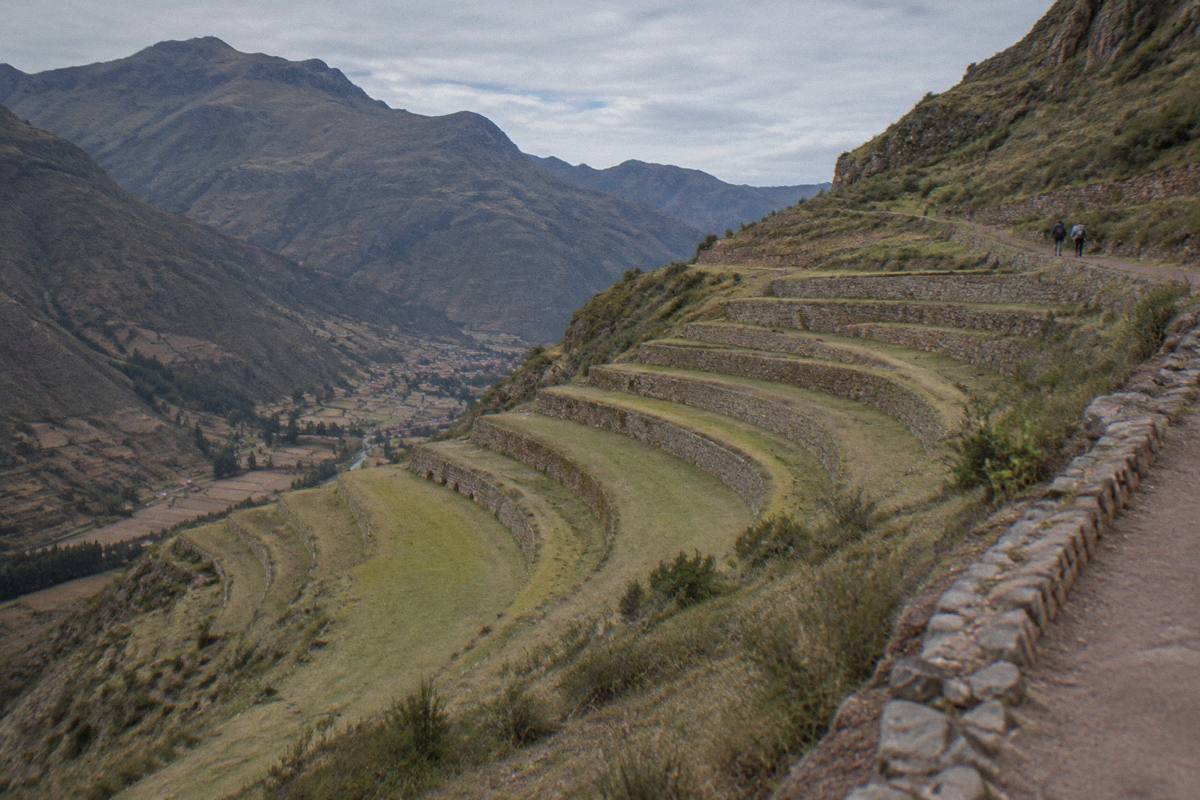
Cusco To Ollantaytambo
Ollantaytambo, at 2,792 m in Peru's Sacred Valley, is the classic first stop out of Cusco and the rail gateway for Machu Picchu. Here is what the official sources say about getting there, the ticket you need and what the town offers.
Short answer
Ollantaytambo sits in the Sacred Valley at 2,792 m, lower than Cusco at 3,335 m. It is reached by road from Cusco or by train from the Poroy or San Pedro stations, and its Inca site is covered by the S/ 70 Circuit III partial of the Boleto Turistico.
Cusco, the historic city in the Andes of southern Peru at 3,335 m on the Plaza de Armas, sends almost every visitor down the valley to Ollantaytambo sooner or later. The town sits at 2,792 m in the Sacred Valley, roughly 500 m lower than Cusco, and it is the place where the road network of the valley meets the railway to Machu Picchu. PeruRail's own frequently asked questions page lists Ollantaytambo as one of its four stations alongside Poroy, San Pedro and Aguas Calientes, which tells you most of what matters about the town's role in a Peruvian itinerary. This page reports what the official sources say about the route, the ticketing and the sights, from COSITUC's tarifario to the Ministry of Culture's platform.
How Do You Get From Cusco To Ollantaytambo?
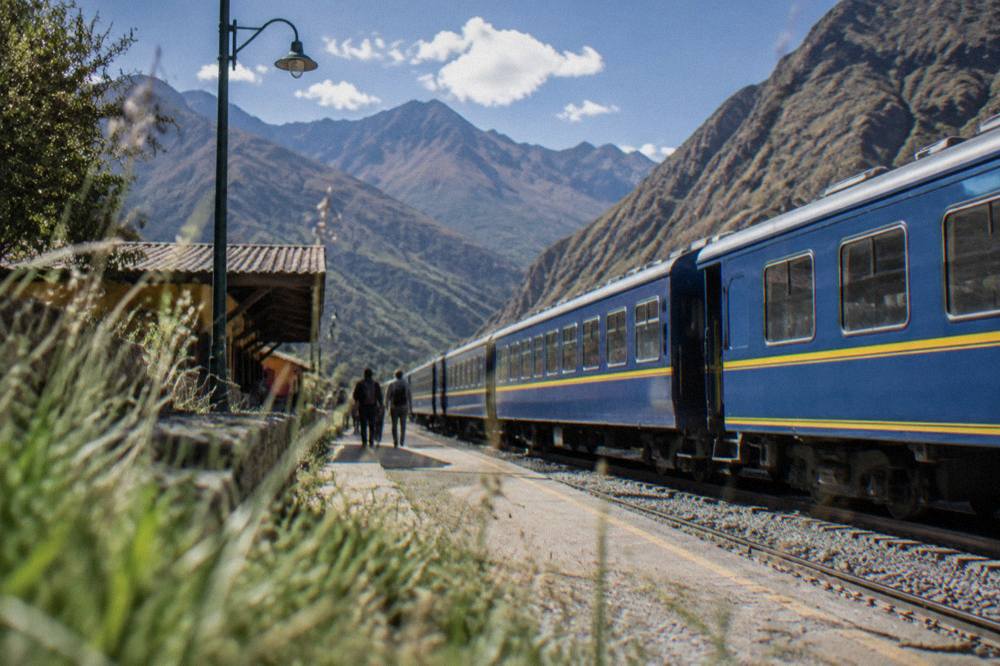
Ollantaytambo is reached from Cusco either by road, with public transport and day tours running out of the city, or by rail, since PeruRail lists Ollantaytambo as a station served from the Poroy and San Pedro stations on the Cusco side. The two rail operators serving the valley are PeruRail and Inca Rail, and PeruRail's FAQ gives the taxi transfer from central Cusco to San Pedro as about 10 minutes and to Poroy as about 20 minutes.
The road option is the everyday one. Colectivos and private vehicles run the route, and day tours from Cusco fold Ollantaytambo into a wider Sacred Valley loop, typically pairing it with Pisac, the Maras salt mines and Moray. What the sources do fix is the elevation profile, and it matters: the trip drops from 3,335 m at the Plaza de Armas to 2,792 m in Ollantaytambo, which is why the CDC Yellow Book's advice on sleeping altitude is relevant to anyone planning where to spend their nights. The Sacred Valley orientation guide covers the seasonal side of the drive.
The rail option is really two options, and this is where a lot of guides go wrong by describing a single "Cusco station". PeruRail's FAQ names both Poroy and San Pedro on the Cusco side. In wet-season disruptions, when Cusco-area track can be out of service, the operators use a bimodal combination: a bus from Cusco to Ollantaytambo, then the train from there. PeruRail's news page records that train travel between Cusco and Ollantaytambo resumed from 1 September 2026, after earlier disruption.
| Route | What the source says | Source |
|---|---|---|
| Cusco Plaza de Armas elevation | 3,335 m | PromPeru |
| Ollantaytambo town elevation | 2,792 m | Wikipedia (secondary) |
| Taxi, central Cusco to San Pedro station | about 10 minutes | PeruRail FAQ |
| Taxi, central Cusco to Poroy station | about 20 minutes | PeruRail FAQ |
| Ollantaytambo to Machu Picchu by train | about 1 h 45 | PeruRail FAQ |
| San Pedro to Machu Picchu by train | about 4 h 30 | PeruRail FAQ |
| Poroy to Machu Picchu by train | about 3 h 30 | PeruRail FAQ |
The practical reading of that table: anyone starting the rail leg from Cusco spends several hours on the train before the valley even begins, while anyone who sleeps in Ollantaytambo boards a journey of about an hour and three quarters. That asymmetry shapes most of the advice on this page.
What Is There To See In Ollantaytambo?
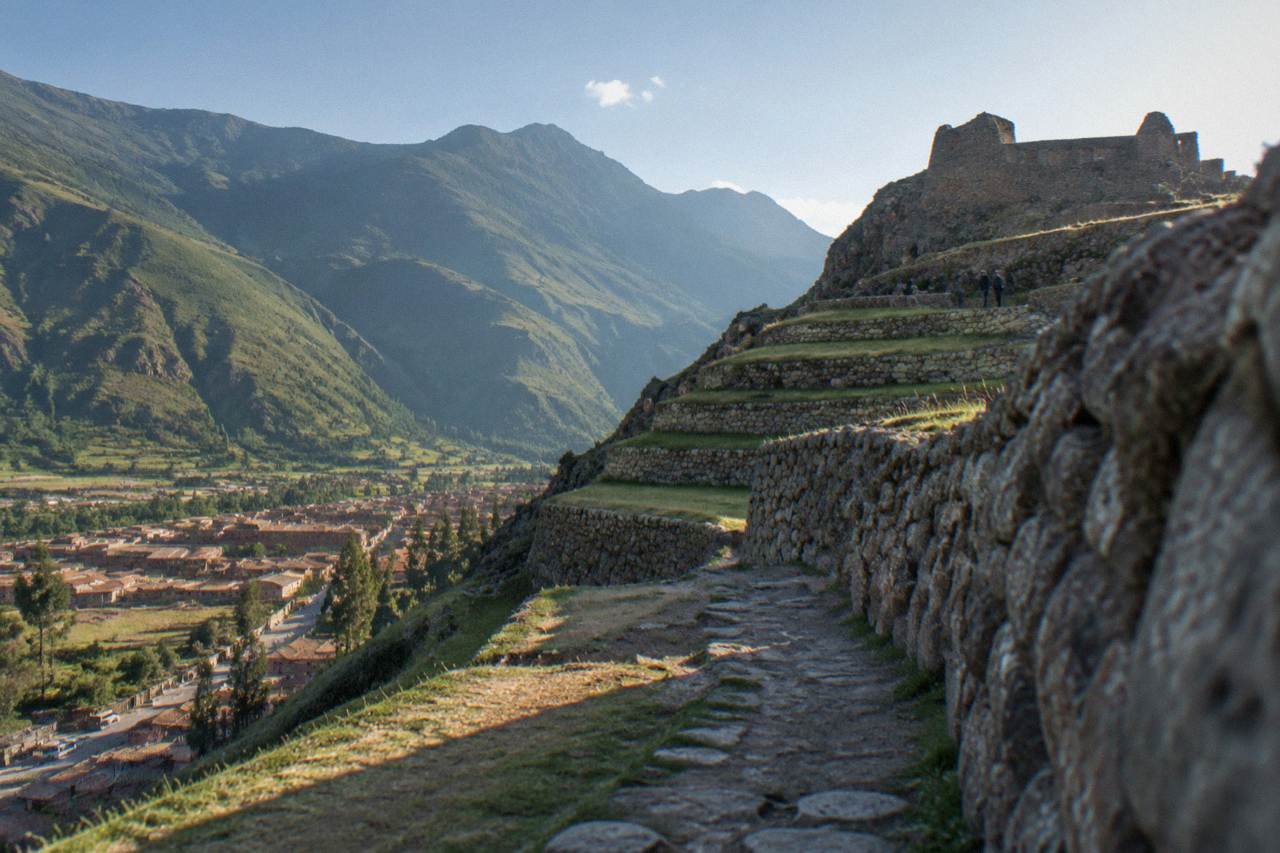
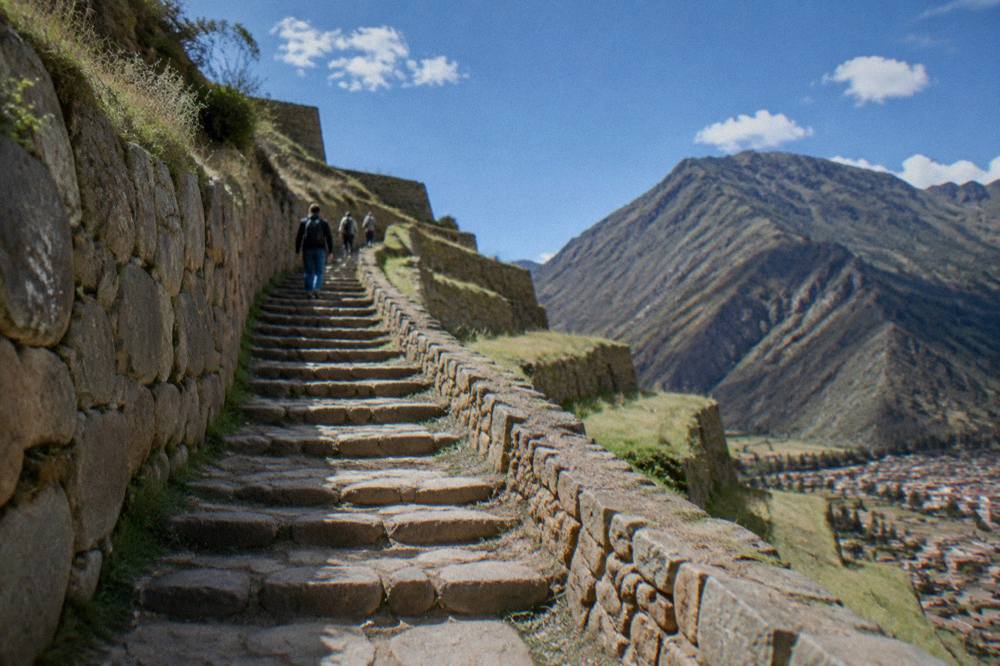
Ollantaytambo's main sight is its Inca archaeological site, a fortified complex of stone terraces climbing the hillside above the town, and it is one of the four Sacred Valley sites on Circuit III of the Boleto Turistico alongside Pisac, Chinchero and Moray. The town below is one of the few places in Peru where Inca street layouts and wall foundations still shape everyday blocks, and the surrounding valley carries the Maras salt mines and the Moray terraces within easy reach.
The site itself is the headline. COSITUC's official site list puts Ollantaytambo in Circuit III, the Sacred Valley partial ticket, so it is never a free entry and never covered by the city circuits. The Ollantaytambo attraction page on this site describes the terraces and the temple area in detail. The MINCETUR open dataset recorded 891,526 visits to the Parque Arqueologico de Ollantaytambo in 2025, making it one of the most-visited sites in the Cusco department after Machu Picchu and Saqsayhuaman's explanada, which is a useful reality check for anyone imagining an empty ruin.
Below the terraces, the town works as a destination in its own right. The grid of streets near the plaza sits on Inca foundations, a qualitative point every source repeats without a construction date, because none is verified. Around it, the valley's other paid and free sights stack up quickly: Pisac's terraces and market, the salt pans of Maras, and the circular terraces of Moray, all on the same Circuit III ticket except the salt mines, which charge separately. A guided loop is the way many visitors see the lot in one day, and the site's featured Sacred Valley tour covers Pisac, Ollantaytambo, the salt mines and Moray in a single outing from Cusco; the operator's live listing carries the current price, rating and review count.
For a fuller picture of the valley's sites, the Boleto Turistico guide explains the ticket mechanics, and the Cusco altitude guide explains why the valley's lower elevation matters on day one.
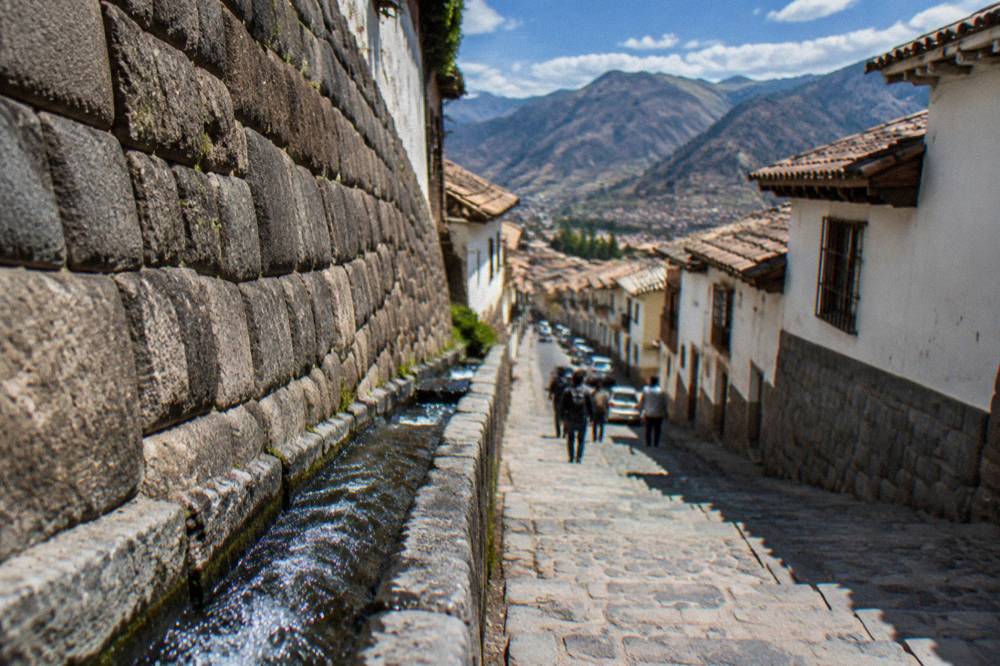
Does The Boleto Turistico Cover Ollantaytambo?
Yes. Ollantaytambo is one of the 16 sites on the Boleto Turistico del Cusco, on Circuit III, the Sacred Valley partial, which costs S/ 70 for foreign tourists and is reported as valid for 2 days. The integral ticket at S/ 130 for a foreign adult is reported as valid 10 days and covers all 16 sites, and COSITUC sells the ticket in person only, never online, at its counter on Av. El Sol 103 in Cusco daily from 07:30 to 18:00 and at most included sites.
Those are the official figures from COSITUC's own tarifario and FAQ pages. The one nuance worth flagging: the Maras salt mines, which most Ollantaytambo itineraries include, are not among the 16 boleto sites. Operators quote a separate salt mines entry of about S/ 15 to 20 in 2026, paid in cash at the pans. Moray, by contrast, is on Circuit III, so the boleto covers it.
| Ticket | Price, foreign tourist | Validity (reported) | Sites |
|---|---|---|---|
| Integral (BTCI) | S/ 130, about US$38 | 10 days | All 16 |
| Integral, foreign student | S/ 70, about US$20 | 10 days | All 16 |
| Circuit I Saqsaywaman | S/ 70, about US$20 | 1 day | Saqsaywaman, Q'enqo, Puka Pukara, Tambomachay |
| Circuit II City | S/ 70, about US$20 | 2 days | 8 city museums and sites |
| Circuit III Sacred Valley | S/ 70, about US$20 | 2 days | Pisac, Ollantaytambo, Chinchero, Moray |
Children are free to age 9, and ages 10 to 17 pay the student price with ID, per the COSITUC FAQ. Only students get a discount; there is no teacher or youth card rate. COSITUC's FAQ also states that validity begins the day you buy the ticket and that covering all 16 sites needs a minimum of three days, which is why the integral makes sense for a longer trip and a single Circuit III partial makes sense for a one-day valley run.
Should You Stay In Ollantaytambo Or In Cusco?
Ollantaytambo sits at 2,792 m against Cusco's 3,335 m, and the CDC Yellow Book advises graded ascent, naming Cusco as a rapid-ascent destination and noting that travellers can sometimes descend to lower elevations to sleep before climbing higher. Sleeping in the valley therefore shortens the next morning's rail leg to Machu Picchu to about 1 h 45 from Ollantaytambo, against about 4 h 30 from San Pedro in Cusco, which is the trade-off in one sentence.
That is the honest framing: the CDC's material supports sleeping lower as an acclimatisation strategy, reported here as what the source says rather than as medical instruction, and the rail times come from PeruRail's FAQ. The deeper comparison, including the atmosphere of each base and the food scenes, is laid out in the site's dedicated answer page, Stay In Cusco Or Ollantaytambo.
The case for Cusco as a base is concentration: the city's museums, the Plaza de Armas, the San Blas bars and the restaurant scene, covered across the where to stay in Cusco guide and the best restaurants in Cusco guide. The case for Ollantaytambo is position: it is the last town on the rail line before Aguas Calientes, the lowest sleeping option in the immediate area, and a place where the morning departure does not eat half the day. Pisac at 2,972 m and Urubamba at 2,870 m sit between the two.
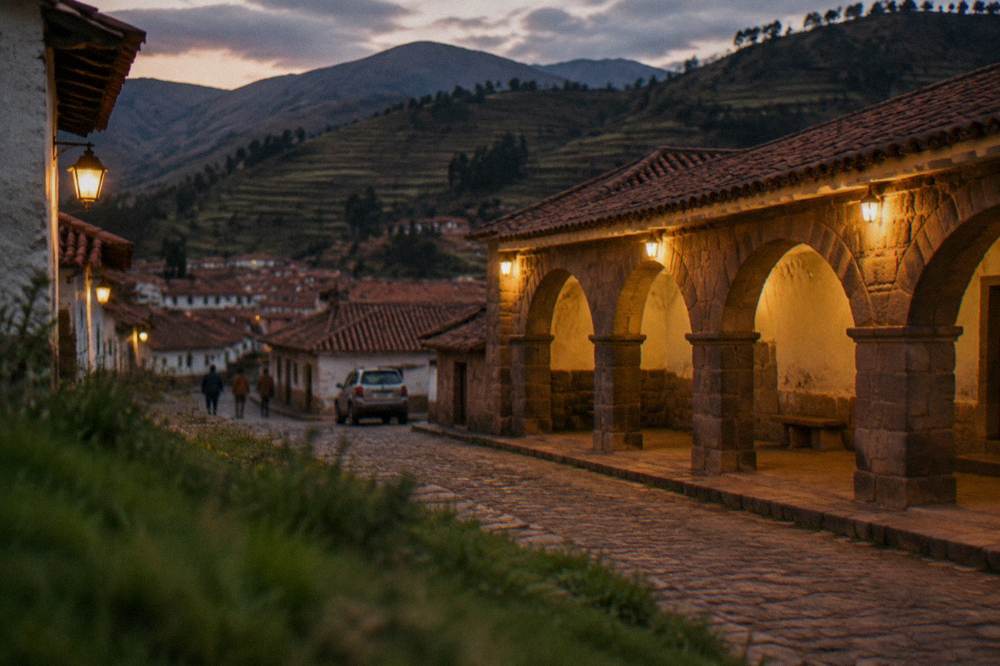
No hotel rate, nightly price or star rating appears on this page, because the pack verifies none. What the sources do support is the elevation table:
| Place | Elevation | Sleeping position |
|---|---|---|
| Cusco, Plaza de Armas | 3,335 m | Highest common base |
| Pisac | 2,972 m | Valley, east side |
| Urubamba | 2,870 m | Valley, central |
| Ollantaytambo | 2,792 m | Valley, rail gateway |
| Aguas Calientes | about 2,040 m | Lowest, at Machu Picchu |
When Is The Best Time To Travel From Cusco To Ollantaytambo?
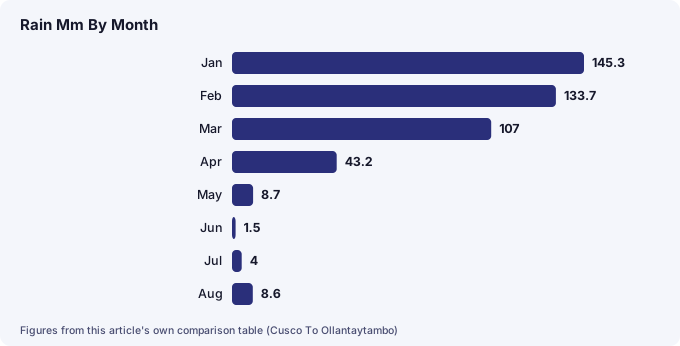
The dry season runs roughly May to September in this part of Peru, with the Cuzco WMO/SENAMHI station recording just 22.8 mm of rain across May to August against 707.8 mm for the full year, while December to March alone carries 71.9 percent of the annual total. June to August is winter in the Southern Hemisphere: dry, clear days, but cold nights, with frost common in June and July.
Those figures come from the World Weather Information Service record for the "Cuzco" station, data supplied by SENAMHI, treated as a historical normal. The month-by-month detail, including the October peak in visitor numbers at Machu Picchu, is unpacked on the Cusco weather by month guide and the best time to visit Cusco guide.
| Month | Mean max C | Mean min C | Rain mm |
|---|---|---|---|
| Jan | 18.9 | 6.6 | 145.3 |
| Feb | 18.8 | 6.5 | 133.7 |
| Mar | 19.1 | 6.2 | 107.0 |
| Apr | 19.7 | 4.9 | 43.2 |
| May | 19.8 | 2.5 | 8.7 |
| Jun | 19.5 | 0.3 | 1.5 |
| Jul | 19.1 | 0.1 | 4.0 |
| Aug | 19.8 | 1.6 | 8.6 |
| Sep | 19.8 | 3.9 | 21.8 |
| Oct | 20.9 | 5.5 | 39.4 |
| Nov | 20.7 | 6.1 | 71.9 |
| Dec | 19.4 | 6.4 | 122.7 |
One route-specific note follows from the wet season: this is when the bimodal bus-plus-train combination appears, because Cusco-area track can be out of service. Anyone travelling between November and March should expect the possibility that the rail leg starts from Ollantaytambo itself rather than from Poroy or San Pedro, and check the operator's notices before travelling. Other pages covering the same trip are gathered on Things To Do In Cusco Peru.
Can You Visit Ollantaytambo And Machu Picchu On The Same Trip?
Yes, and that is the classic pairing, because Ollantaytambo is the rail gateway: PeruRail's FAQ gives the train from Ollantaytambo to Machu Picchu as about 1 h 45, against about 3 h 30 from Poroy and about 4 h 30 from San Pedro. Machu Picchu itself is not on the Boleto Turistico; its entry sells on the Ministry of Culture's tuboleto platform or in person at Machu Picchu Pueblo, with 2026 daily capacity of 4,500 on normal days and 5,600 on listed high-season dates.
That capacity figure comes from RM 000285-2025-MC as reported by Andina, the state news agency. The citadel sits at 2,430 m, below Ollantaytambo and far below Cusco, so the whole rail journey is a descent. Foreign adult entry runs from about S/ 163 on standard routes and about S/ 211 on the mountain routes, secondary figures that include the S/ 11 SERNANP fee in force since 1 May 2026; the official platform shows the live price. Tickets are nominal, tied to the stated date, hour and circuit, and the only correction allowed is a single passport-number typo.
Since 1 June 2024 the citadel has run three circuits and ten routes, not the five circuits older guides describe. A guide is recommended, not mandatory. The site's own Machu Picchu day-trip page carries the full detail, and this page keeps its Machu Picchu coverage to that one mention and link, because ticketing and the rail journey are covered there. The pairing works in either order: a valley day first, sleeping in Ollantaytambo, then the short train the next morning, or a two-day guided tour that strings the Sacred Valley and Machu Picchu together without the traveller coordinating anything.
The two-day option in that band is the one that turns this route into a single booked product: the Sacred Valley and Machu Picchu by train across two days, with the listing showing its own price, rating and review count. The textile workshop is the valley's quieter cultural complement, a private class with Andean weavers that fits an Ollantaytambo-area afternoon.
What Else Is Near Ollantaytambo?
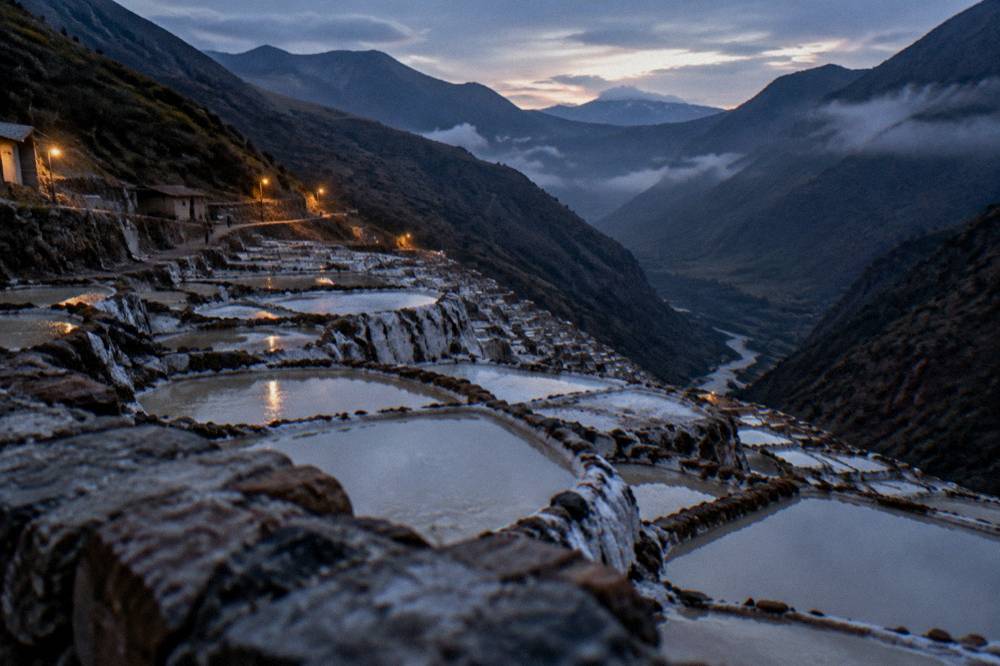
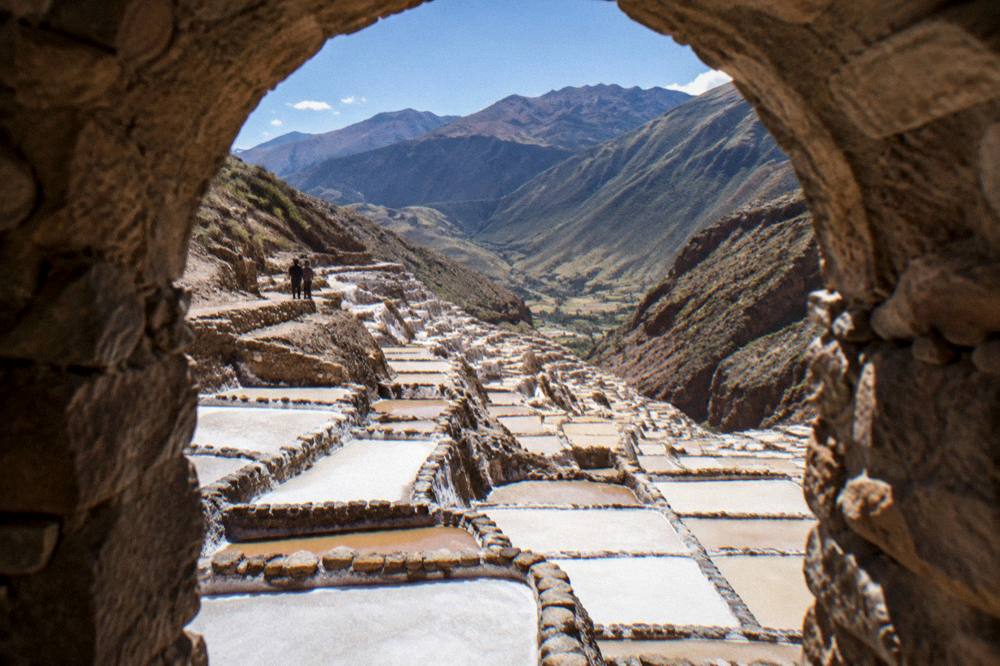
The Sacred Valley cluster around Ollantaytambo includes Pisac's terraces and market at 2,972 m, the circular Moray terraces at 3,385 m, the working salt pans of Maras at about 3,300 m, and the town of Chinchero, all four boleto Circuit III sites except the salt mines, which charge about S/ 15 to 20 separately. Further afield, the valley connects toward Machu Picchu by rail and back up to Cusco by road, with Urubamba at 2,870 m as the central valley town.
The salt pans are the one entry people expect to be included and is not. COSITUC's 16-site list omits Maras, so the cash fee at the pans is separate, reported by 2026 operator guides at about S/ 15 to 20. Moray, by contrast, is on the ticket. Pisac holds both an archaeological site above the town and a market day below it, and the correct internal pages for this section are the Boleto Turistico guide for ticket mechanics and the Cusco markets guide for the market side of the valley.
| Site near Ollantaytambo | Elevation | Entry |
|---|---|---|
| Pisac | 2,972 m | Boleto Circuit III |
| Ollantaytambo | 2,792 m | Boleto Circuit III |
| Chinchero | on Circuit III | Boleto Circuit III |
| Moray | 3,385 m | Boleto Circuit III |
| Maras salt mines | about 3,300 m | Separate, about S/ 15 to 20, cash |
The 2025 MINCETUR dataset shows the scale of these sites' pull: Moray recorded 773,916 visits and Pisac 560,578 across the year, both behind Ollantaytambo's 891,526 but far ahead of most other department sites. Those are recorded entries, not unique visitors, but the ranking is real.
Is The Cusco To Ollantaytambo Trip Worth It Without A Tour?
Yes, the route works independently: the boleto is bought in person in Cusco or at the sites, public transport runs the valley road, and the train can be booked directly with PeruRail or Inca Rail from Poroy, San Pedro or Ollantaytambo. The tour-free version asks more of the traveller on timing and tickets, though, because the boleto is never sold online and the rail's wet-season bimodal changes are announced by the operators rather than by any central body.
The honest division of labour is this: independent travel gives control and costs less in fees, while a tour compresses Pisac, Ollantaytambo, Maras and Moray into one driver-handled day. The site's featured Sacred Valley tour is the middle path many take, and its live listing carries the current price, rating and review count; Check availability on the operator's page. The free-walking-tour scene is a Cusco-city phenomenon rather than a valley one, so the valley's budget option is the do-it-yourself colectivo-and-boleto day.
For the practical layer around the trip, three of this site's guides do the work: getting around Cusco for the transport picture, the Cusco altitude guide for the acclimatisation science as the CDC states it, and is Cusco safe for the current advisory picture, with the US State Department at Level 2, Exercise Increased Caution, and Cusco city, the Sacred Valley, the Inca Trail and Machu Picchu outside the Do Not Travel areas.
Common Questions About Cusco To Ollantaytambo
How far is Ollantaytambo from Cusco?
Ollantaytambo sits at 2,792 m in the Sacred Valley, about 500 m lower than Cusco's Plaza de Armas at 3,335 m. This site prints no road distance or driving time for the route, because the verified sources do not state one; the tour listings carry their own durations, and the train timings that are verified are the rail legs: about 1 h 45 from Ollantaytambo to Machu Picchu and about 4 h 30 from San Pedro.
Does the Boleto Turistico cover Ollantaytambo?
Yes. Ollantaytambo is one of the 16 sites on COSITUC's Boleto Turistico, on Circuit III, the Sacred Valley partial, which costs S/ 70 for foreign tourists and is reported as valid for 2 days. The integral ticket at S/ 130 for a foreign adult is reported as valid 10 days. The ticket is sold in person only, at Av. El Sol 103 in Cusco daily from 07:30 to 18:00 and at most included sites, never online.
Can you take a train from Cusco to Ollantaytambo?
Yes. PeruRail lists Ollantaytambo among its stations, served from the Cusco-side stations of Poroy and San Pedro, and Inca Rail also operates in the valley. In wet-season disruptions the operators use a bimodal option, a bus from Cusco to Ollantaytambo followed by the train, and PeruRail's news page records that Cusco to Ollantaytambo train travel resumed from 1 September 2026. Fares are shown on the operators' pages at booking.
Is Ollantaytambo lower than Cusco?
Yes, substantially. Ollantaytambo sits at 2,792 m against 3,335 m for Cusco's Plaza de Armas, a difference of roughly 500 m. The CDC Yellow Book advises graded ascent and notes that travellers in rapid-ascent situations can sometimes descend to lower elevations to sleep before climbing higher, which is why sleeping in the valley is a common acclimatisation tactic.
How long is the train from Ollantaytambo to Machu Picchu?
About 1 h 45, per PeruRail's own FAQ. From the Cusco side the same journey takes about 3 h 30 from Poroy or about 4 h 30 from San Pedro, which is why many travellers sleep in Ollantaytambo the night before visiting Machu Picchu. Machu Picchu entry is separate from the Boleto Turistico and sells on the Ministry of Culture's tuboleto platform.
Is one day enough for Ollantaytambo from Cusco?
One day covers the Ollantaytambo site and town comfortably, and a guided Sacred Valley loop typically adds Pisac, the Maras salt mines and Moray in the same day. Travellers who want the town at walking pace, the surrounding hills and an early rail start toward Machu Picchu generally sleep there at least one night; the site's answer page on staying in Cusco or Ollantaytambo compares the two bases in full.
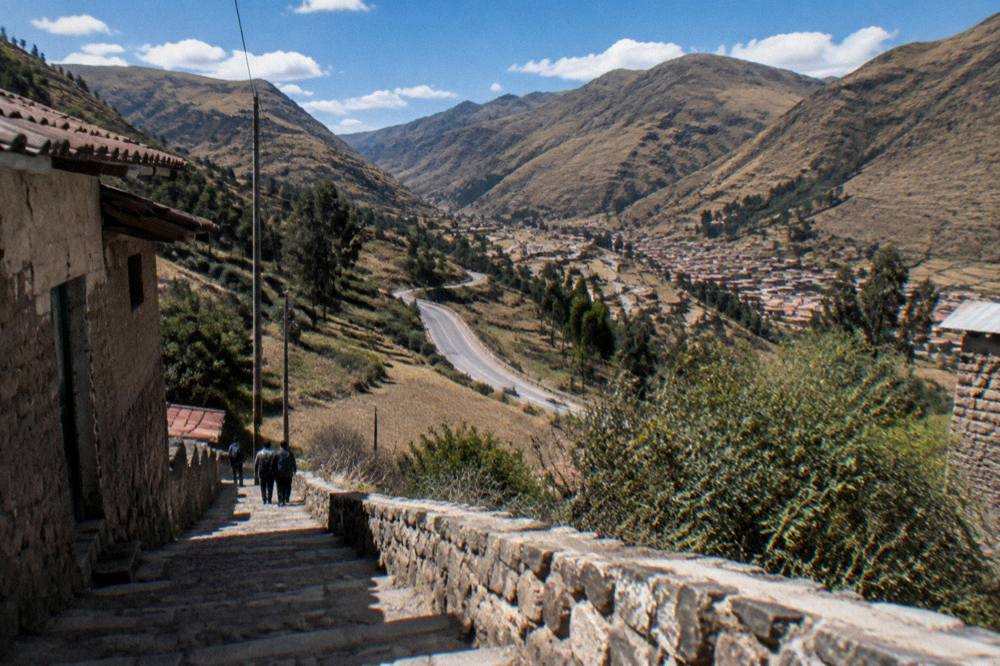
The Cusco to Ollantaytambo route is the spine of any Sacred Valley itinerary: a descent of roughly 500 m, a boleto-covered Inca site, a rail gateway to Machu Picchu and a cluster of valley sights that the official sources price, time and list with unusual clarity. Plan the ticket in person, watch the operator notices in the wet season, and the valley does the rest.