Pisac Ruins And Market
Pisac pairs Inca terraces on the ridge above town with a street market below, all of it on the Boleto Turistico's Sacred Valley circuit and reached from Cusco.
Short answer
The Pisac ruins sit on the Boleto Turistico's Circuit III, S/ 70 for a foreign adult partial ticket or S/ 130 for the 10-day integral, sold in person only in Cusco. The market below needs no ticket. The town stands at 2,972 m in the Sacred Valley, and the dry season from May to September is the clearest window.
Pisac, a town in the Sacred Valley of the Incas reached from Cusco, the historic city in the Andes of southern Peru, holds two of the valley's draws in one place: an Inca archaeological site of terraces and stone structures strung along the ridge above the town, and a street market in the lanes below. The ruins sit on the Boleto Turistico's Sacred Valley circuit, the market needs no ticket at all, and the whole visit plays out at 2,972 m, lower than Cusco's Plaza de Armas at 3,335 m but still high enough that the season matters. This page, part of the coverage at Things To Do In Cusco Peru, sets out the ticket, the site, the stalls, the independent route from Cusco and the timing, using the COSITUC tarifario, the MINCETUR visitor dataset and the WMO climate record for the valley.
What Is Pisac And Where Does It Sit In The Sacred Valley?
Pisac is a town in the Sacred Valley of the Incas, reached from Cusco by road, recorded at 2,972 m, and it holds two attractions in one place: an Inca archaeological site of agricultural terraces and stone structures spread along the ridge above the town, and a market of weaving and produce stalls in the streets below. The ruins sit on the Boleto Turistico's Circuit III, the Sacred Valley partial.
The Sacred Valley is a chain of towns and sites along the valley floor and its upper ground, and Pisac is the stop visitors reach first when they head out of Cusco. The figures come from the site's verified records: the Plaza de Armas in Cusco stands at 3,335 m, Pisac town at 2,972 m, and further along the valley Urubamba sits at 2,870 m and Ollantaytambo at 2,792 m. Two other names on every valley itinerary sit higher than the town itself: Moray at 3,385 m and Maras at 3,300 m. A visitor leaving Cusco therefore drops a few hundred metres of altitude on the way out, which is worth knowing when the day also involves walking a ridge path in open sun.
| Place | Elevation |
|---|---|
| Cusco, Plaza de Armas | 3,335 m |
| Pisac town | 2,972 m |
| Urubamba | 2,870 m |
| Ollantaytambo | 2,792 m |
| Maras | 3,300 m |
| Moray | 3,385 m |
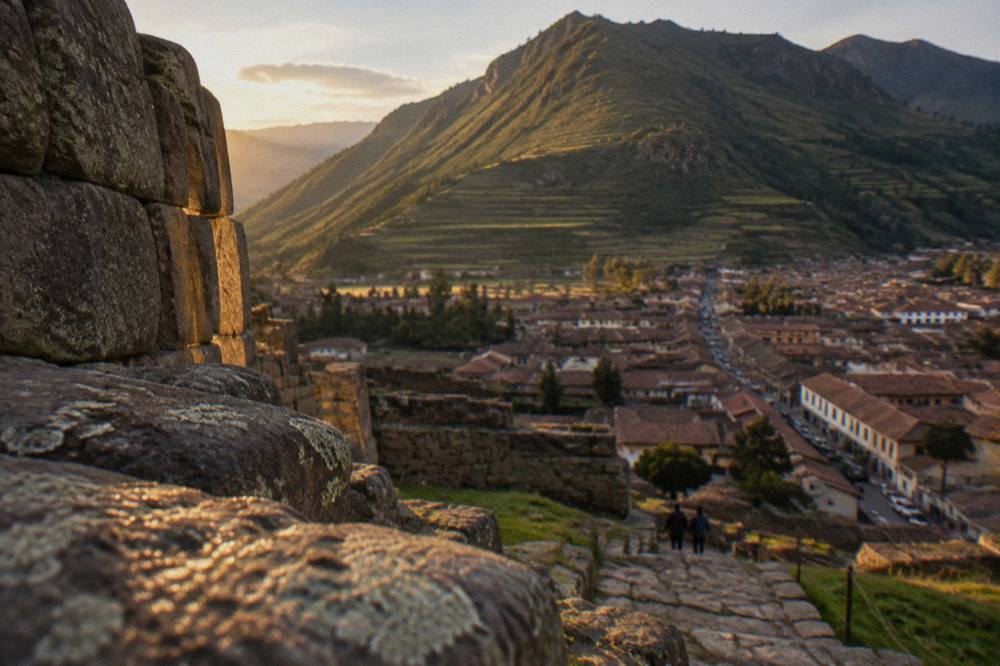
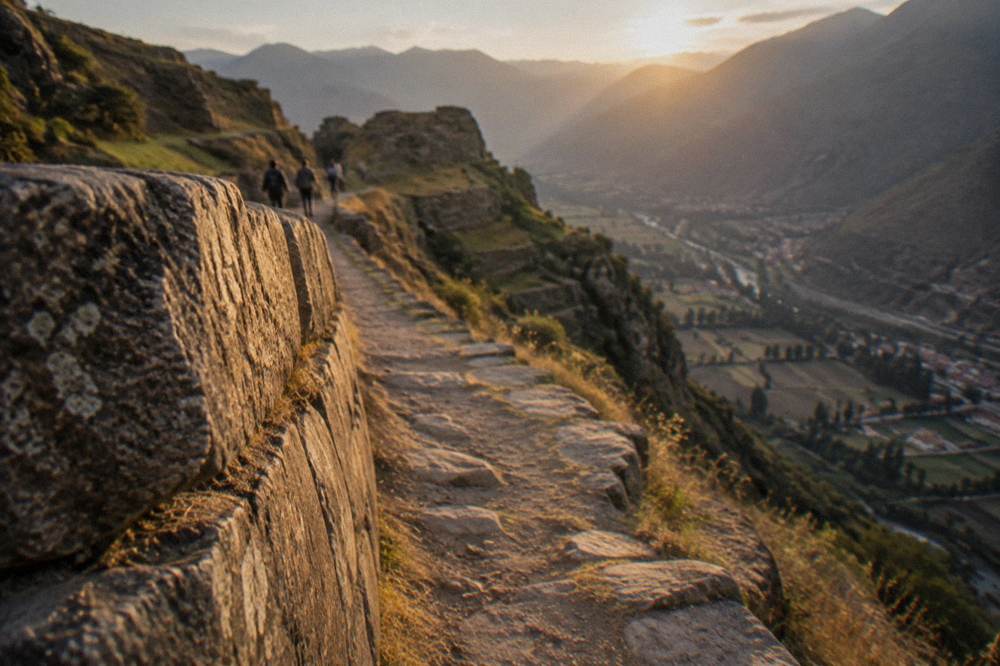
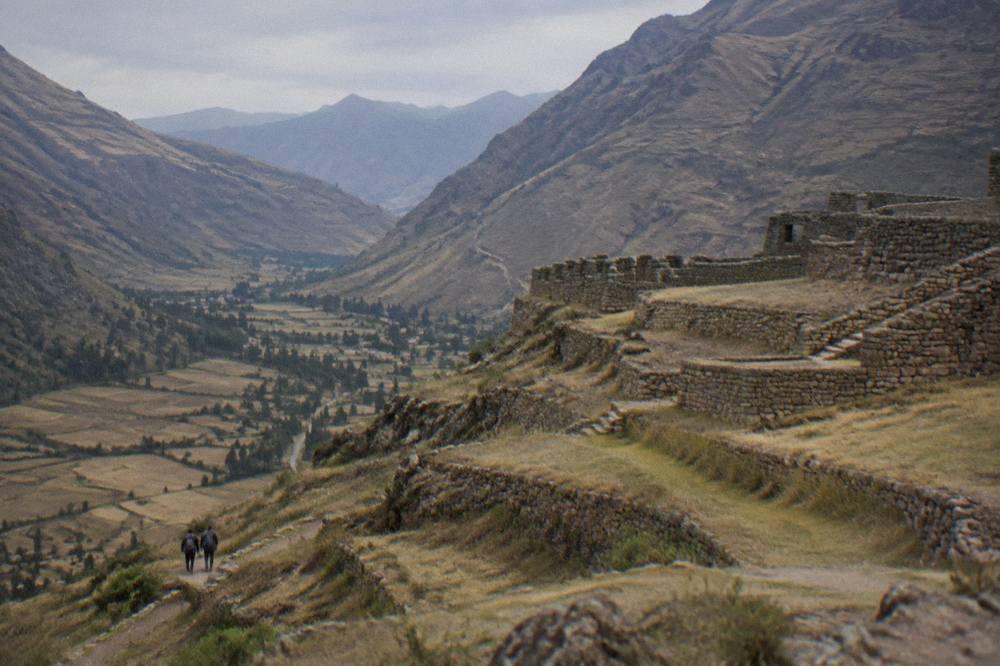
The site above the town is Inca work: terraces stacked down a steep slope, stone-walled sectors on the high ground, and a path that runs along the ridge with the valley on one side and the town on the other. What the record does show is scale of a different kind: in 2025 the Pisaq site recorded 560,578 visits in the MINCETUR open dataset, a number that puts the town firmly on the valley circuit without making it the busiest stop in it.
The layout suits a single day. The ruins sit above the town, the stalls sit below, and the two connect on foot, so a visitor can climb the ridge in the clearer morning hours and come down to the market streets afterwards. That order is not a rule, only a shape the geography suggests. Plenty of visitors do the reverse, market first and ridge after, and the town absorbs both without strain.
How Much Are Pisac Ruins Tickets And What Does The Boleto Turistico Cover?
The Pisac ruins are covered by the Boleto Turistico del Cusco, Circuit III, the Sacred Valley partial, which COSITUC prices at S/ 70 for a foreign adult, about US$20, with a reported validity of two days. The integral ticket at S/ 130, about US$38, covers all 16 sites across the three circuits and lasts 10 days. COSITUC sells both in person only, at the Av. El Sol 103 counter in Cusco, daily 07:30 to 18:00, and at most included sites.
The ticket is the single most misunderstood part of a Pisac visit, so the details matter. COSITUC, the committee that runs the Boleto, does not sell it online at all: the purchase happens at the counter on Av. El Sol 103 in Cusco, or at most of the included sites. Children are free to age 9, ages 10 to 17 pay the student price with ID, and the only discount COSITUC grants is the student one, so no teacher or youth card reduces the figure. Foreign students pay S/ 70 for the integral ticket.
| Ticket | Foreign adult price | Validity | What it covers |
|---|---|---|---|
| Integral, all 16 sites | S/ 130, about US$38 | 10 days | Every site on all three circuits |
| Circuit I, Saqsayhuaman | S/ 70, about US$20 | 1 day, reported | Saqsaywaman, Q'enqo, Puka Pukara, Tambomachay |
| Circuit II, City | S/ 70, about US$20 | 2 days, reported | Qorikancha site museum, the city museums, Centro Qosqo de Arte Nativo, Monumento a Pachacutec, Tipon, Pikillaqta |
| Circuit III, Sacred Valley | S/ 70, about US$20 | 2 days, reported | Pisac, Ollantaytambo, Chinchero, Moray |
Two traps catch visitors here. The first: the partial circuits are separate tickets, and covering all 16 sites needs a minimum of three days even on the integral, because the sites spread across the city, the hills above it and the whole valley. The second: Circuit III covers Pisac, Ollantaytambo ruins and town, Chinchero church and plaza and Moray Inca farming terraces, and nothing else. The Maras salt mines sit beside that list but are not among the 16 Boleto sites, and neither is Machu Picchu, whose entrance is sold separately on the Ministry of Culture's platform.
| Site | Entry | Fee |
|---|---|---|
| Pisac ruins | Boleto Turistico Circuit III | S/ 70 partial, S/ 130 integral |
| Ollantaytambo | Boleto Turistico Circuit III | Covered by the same partial |
| Chinchero | Boleto Turistico Circuit III | Covered by the same partial |
| Moray | Boleto Turistico Circuit III | Covered by the same partial |
| Maras salt mines | Separate community fee, not on the Boleto | S/ 15 to 20, reported |
| Rainbow Mountain, Vinicunca | Separate community fee, cash | S/ 25 to 30 |
| Palccoyo | Separate community fee | About S/ 20 |
| Machu Picchu | Ministry of Culture platform, not on the Boleto | From about S/ 163, standard routes |
For a visitor whose Cusco stay is short, the arithmetic is simple. One valley day on a Circuit III partial at S/ 70 covers four sites, and the salt mines fee on top is small and paid in cash at the gate. A longer stay points to the integral at S/ 130, which adds the city museums, Qorikancha site museum and Saqsaywaman above the city to the valley set. Whichever way the day is built, the tour options below string the valley together with transport and a guide included.
What Do You See At The Pisac Ruins?
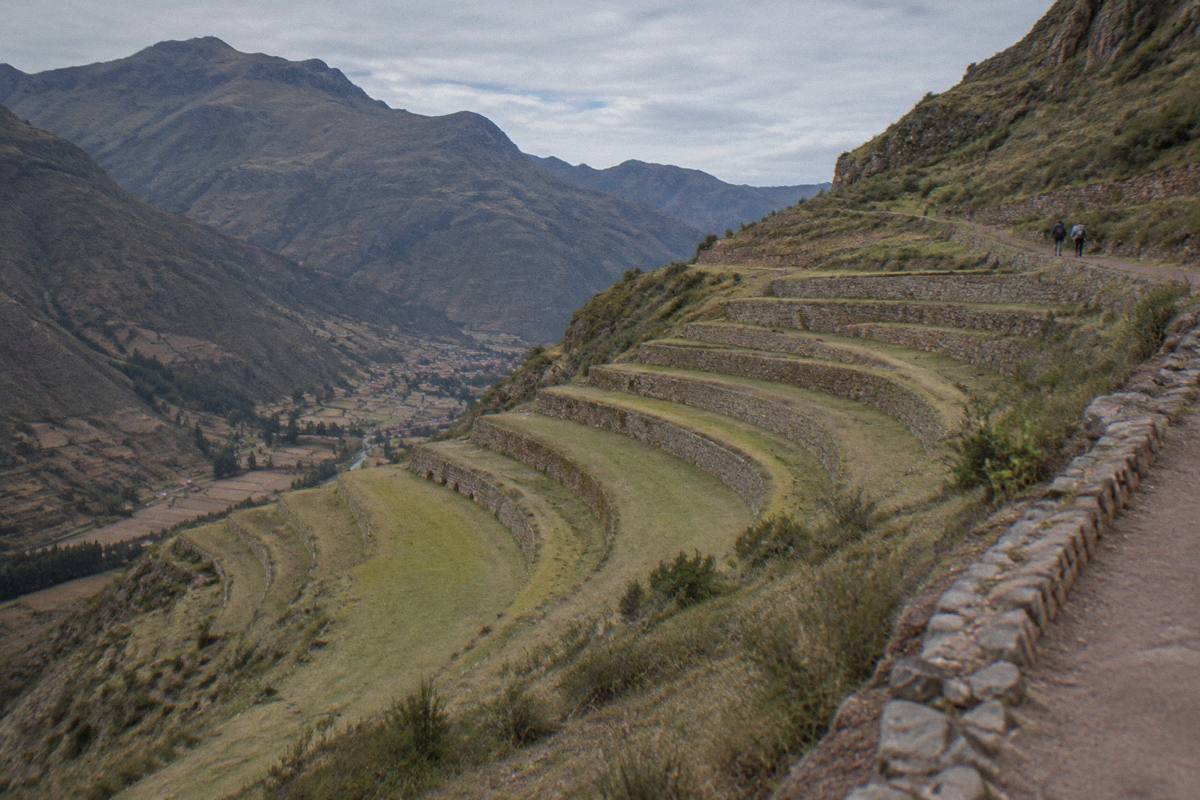
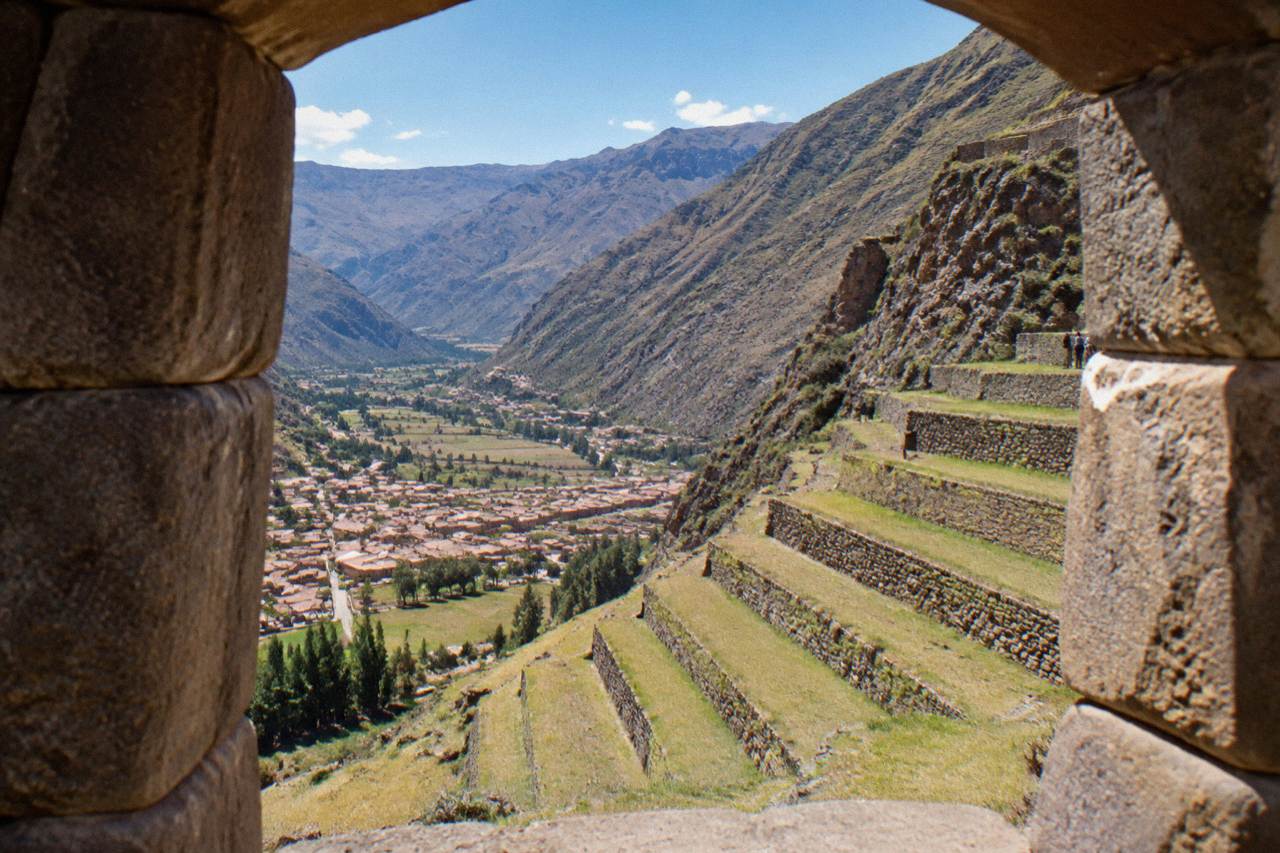
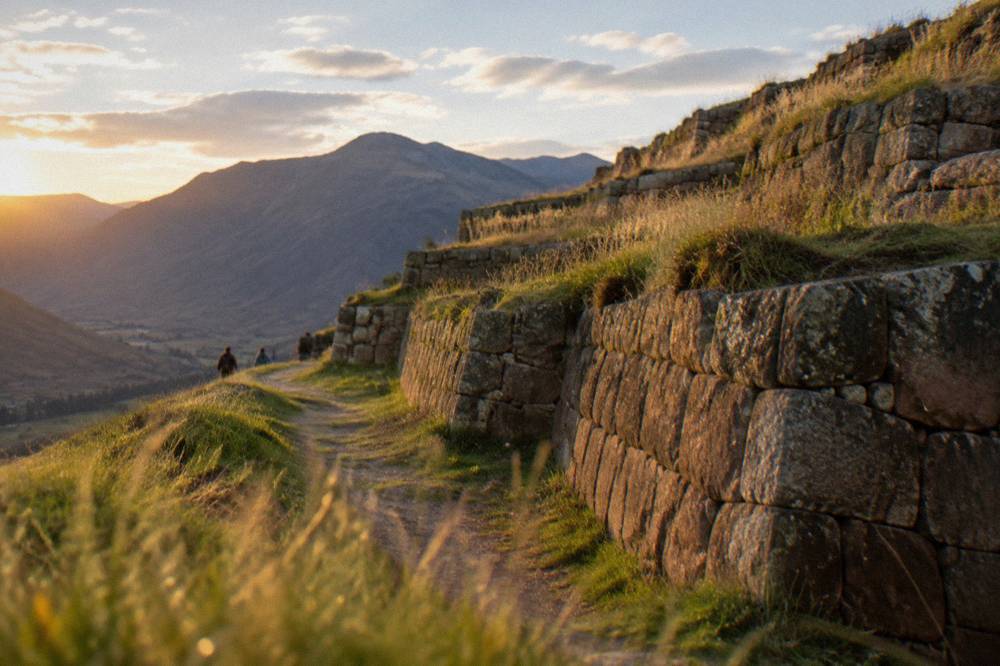
The Pisac site is a spread of agricultural terraces, stone-walled structures and ridge paths above the modern town, Inca work cut into a steep hillside at the top of the Sacred Valley. Visitors walk terraces stacked down the slope, pass stone sectors on the high ground, and follow the path along the ridge with views over the rooftops, the market streets and the valley farmland. There is no shelter anywhere on the site.
The terraces are the signature. They run down the mountainside in deep, even bands, each one a retained shelf of soil and stone, and they frame every view from the paths above. The stone sectors sit on the high ground of the ridge, low-walled and roofless, and the walking route between them follows the spine of the hill with the valley on one side. Readers who want the wider picture of Inca building around the city can follow the guide to Inca ruins around Cusco, which places Pisac in the same tradition as the sites on the city's own circuit.
That city circuit is a different set. The four ruins above Cusco, Saqsaywaman, Q'enqo, Puka Pukara and Tambomachay, sit on the Boleto's Circuit I and are reached from the city in minutes, while Pisac belongs to the valley's Circuit III. Visitors with the integral ticket can do both on the same 10-day window; visitors on a single partial choose between the hills above the city and the valley beyond it.
The site rewards the early hours for a plain physical reason. The ridge is exposed, the walking is steady rather than severe, and the sun at 2,972 m is strong even when the air is cool. Coming down, the path returns to the town and the market streets, which is where the second half of a Pisac day happens. Between the two halves, the town square and its lanes hold the lunch stops and the stalls that make the wait for a return colectivo easy to fill.
What Can You Find At The Pisac Market?
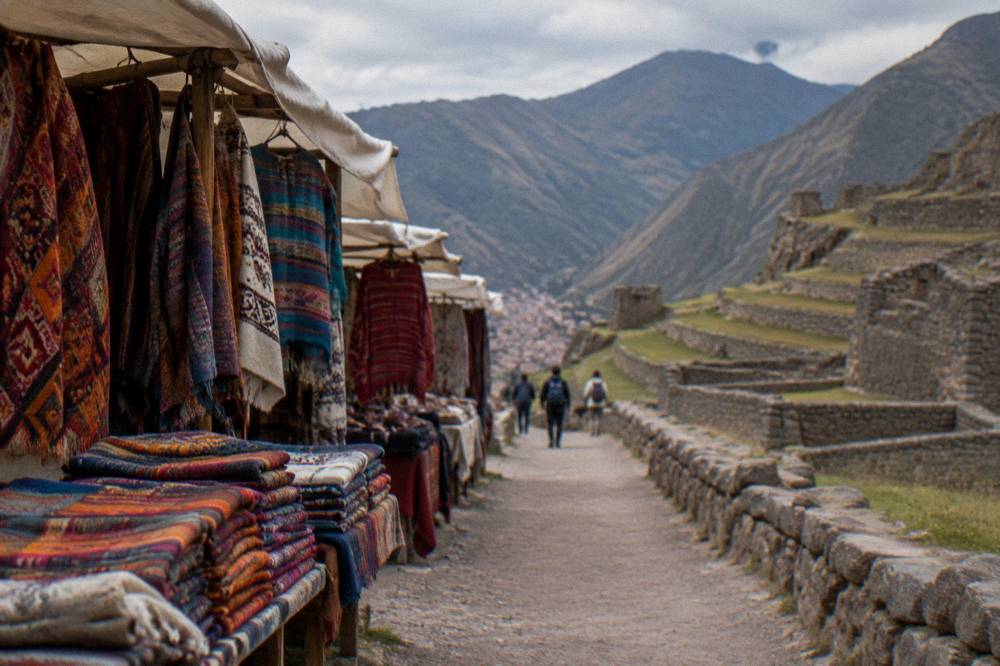
The Pisac market is a town market of stall-lined lanes selling weavings and textiles, alpaca-wool jumpers and scarves, ceramics, silverwork, spices and produce from valley farms, plus food stalls cooking local dishes. It sits in the streets of the town, below the ruins, and browsing costs nothing: no ticket covers the market and none is needed, unlike the archaeological site on the ridge above.
The weaving is the heart of it. Stacks of blankets, table runners and scarves in alpaca wool fill the stalls, in the strong reds, ochres and blues of valley dyeing, alongside ceramics and silverwork. Visitors who want to understand the weaving before buying can pair the market with the Awana Kancha weaving centre, where the process from fleece to loom is shown rather than sold.
The produce side is the local half of the market. Valley farms supply the fruit, grain and vegetable stalls, and the food stalls cook Andean dishes in the open air. Cusco has its own version of the same scene at San Pedro Market in Cusco, a covered market at the edge of the old quarter, and the two make a natural pair: one in the city, one in the valley, both built around what the surrounding farms send in. A market lunch in the lanes is one of the cheaper meals a visitor can find in the region, and the stalls take cash.
For visitors who want to go deeper than buying, the kitchen is the next stop. A cooking class with a market visit runs in Cusco itself, pairing a market walk with hands-on cooking and cocktails in a small group. It is a city experience rather than a Pisac one, but it answers the question the Pisac stalls open: what all this food becomes when it leaves the market.
Can You Visit Pisac From Cusco Without A Tour?
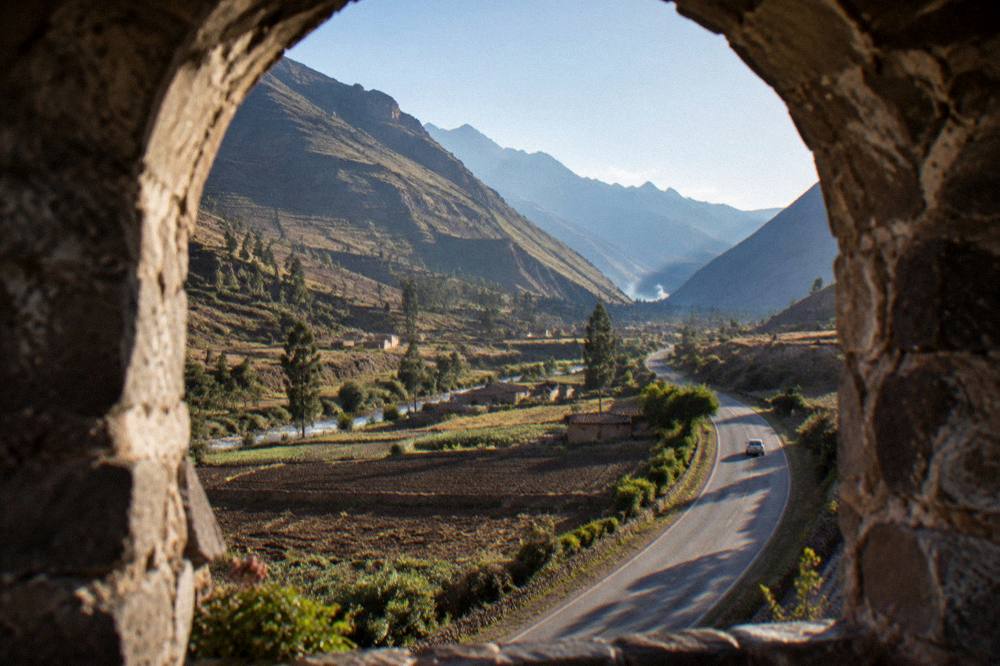
Yes. Colectivos and taxis make the run from Cusco to Pisac, with the fare shown or agreed before the ride, and the ruins stand directly above the town, reachable on foot from the streets below. An independent visit needs the Boleto Turistico bought in person, at the Av. El Sol 103 counter in Cusco or at most included sites, and a plan for splitting the day between the ridge and the market.
The independent route is a real option and a common one. The fare for the ride is shown or agreed before it starts, and once in Pisac everything is walkable: the town is small, the ruins rise directly above it, and the market sits in the streets at the base. The one fixed cost is the ticket, and the one fixed rule is that COSITUC sells it in person only, so the Av. El Sol counter in Cusco is the surest stop on the way out of the city.
| Item | Cost |
|---|---|
| Boleto Turistico Circuit III partial | S/ 70, about US$20 |
| Maras salt mines, if combined | S/ 15 to 20, reported |
| Menu del dia lunch | S/ 8 to 15, reported |
| Cup of coca tea | S/ 2 to 5, reported |
| Tourist SIM | S/ 5 to 15, plus about S/ 20 to 40 for data, reported |
The alternative is to hand the logistics over. A Sacred Valley group tour strings Pisac, Ollantaytambo, the Maras salt mines and Moray into one outing from Cusco, which removes the ticket counter, the return leg and the question of how the four Circuit III sites fit together; Check availability to see the live dates and the cancellation terms. The tour suits a first valley day; the independent route suits a slow one, with the market given the hours it deserves and the ridge walked at whatever pace the altitude allows. Both end in the same place, back in Cusco with a weaving in the bag and a ticket stub in a pocket.
When Is The Best Time Of Year To Visit Pisac?
The clearest window for Pisac is the dry season, roughly May to September, when the WMO and SENAMHI historical record for the Cuzco station shows May to August bringing just 22.8 mm of rain between them against a 707.8 mm annual total. December to March carries 71.9 percent of the year's rain. Mean daily maximums stay between 18.8 and 20.9 C all year, so the choice is about rain and night cold, not heat.
The climate record for the region comes from the WMO World Weather Information Service station named "Cuzco", with data supplied by SENAMHI, the Peruvian weather service, and it is a historical normal rather than a recent one. The pattern it shows is the Southern Hemisphere high Andes pattern: a dry stretch from May into September, a wet stretch from November into March, and shoulder months on either side. June to August is winter in this hemisphere, dry and clear by day, cold by night, with frost common in June and July. Calling those months summer, as a northern hemisphere habit would, gets the season exactly backwards.
| Month | Mean max C | Mean min C | Rain mm |
|---|---|---|---|
| Jan | 18.9 | 6.6 | 145.3 |
| Feb | 18.8 | 6.5 | 133.7 |
| Mar | 19.1 | 6.2 | 107.0 |
| Apr | 19.7 | 4.9 | 43.2 |
| May | 19.8 | 2.5 | 8.7 |
| Jun | 19.5 | 0.3 | 1.5 |
| Jul | 19.1 | 0.1 | 4.0 |
| Aug | 19.8 | 1.6 | 8.6 |
| Sep | 19.8 | 3.9 | 21.8 |
| Oct | 20.9 | 5.5 | 39.4 |
| Nov | 20.7 | 6.1 | 71.9 |
| Dec | 19.4 | 6.4 | 122.7 |
For a ridge walk with no shelter, the table reads plainly. The June and July columns pair the lowest rain of the year with the coldest nights, near freezing on average, so a dry-season visit trades a warm start for a near-certain clear sky. The wet season columns bring more than a hundred millimetres a month, which on an exposed hillside path means mud, cloud and a walk that can turn wet in an afternoon. The shoulder months of April, September and October sit between the two, with moderate rain and milder nights.
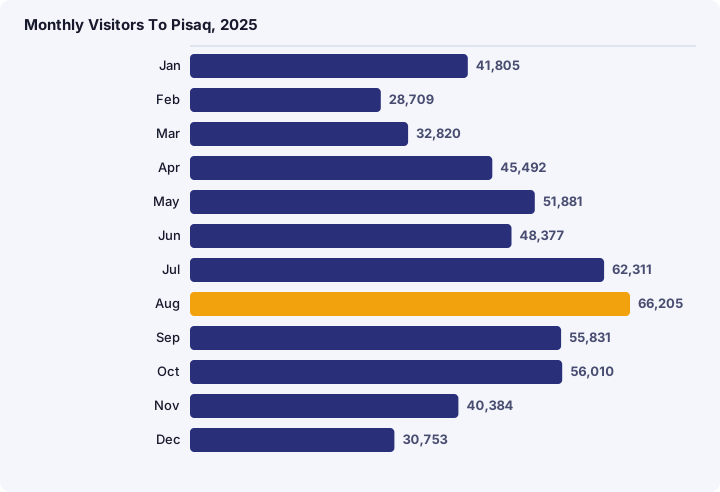
The crowd side of timing is separate from the weather side, and the MINCETUR dataset shows it at the Machu Picchu scale rather than the Pisac scale: across the region's sites, October 2025 drew 1.93 times the February 2025 visitors at Machu Picchu, 154,105 against 79,806. Pisac's own monthly split is not held in the verified sources, so no month-by-month claim is made for the town itself. What can be said is that the dry season is when the valley circuit runs fullest, and a visitor who wants the ridge quiet should start early within it.
How Does Pisac Fit Into A Wider Sacred Valley Or Machu Picchu Trip?
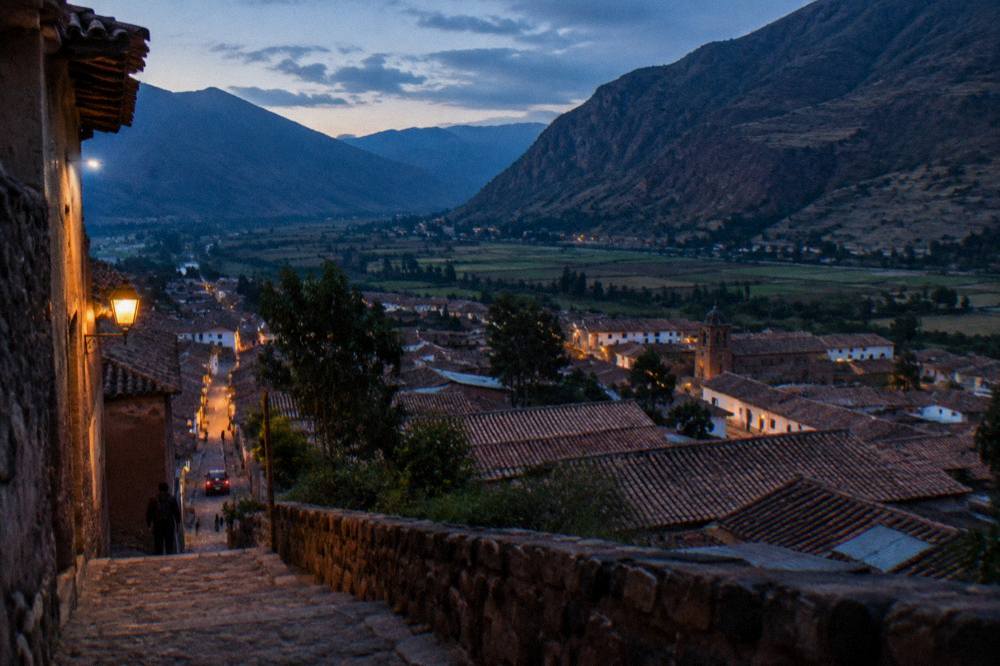
Pisac works as the first stop of a Sacred Valley day that continues to Urubamba, the Maras salt mines, Moray and Ollantaytambo, all of it on the Boleto's Circuit III apart from the salt mines. With the 10-day integral ticket, the valley pairs with the city circuit and the hills above Cusco. Machu Picchu is a separate ticket on the Ministry of Culture's platform and a separate trip from the valley.
The classic valley day runs Pisac first, then the salt mines and Moray, then Ollantaytambo last, and the geography supports the order: the towns sit along the valley in that line, and the road links them without backtracking. The Boleto's Circuit III covers three of the four archaeological stops, with the salt mines paid separately in cash at the gate. A visitor carrying the integral ticket instead of the partial can fold the valley into a longer stay that also takes in the city museums, Qorikancha's site museum and the four ruins on the hills above Cusco, all inside the 10-day window.
Machu Picchu is the other half of most Cusco itineraries, and it does not share the valley's ticket. Its entrance is sold on the Ministry of Culture's platform or in person at Machu Picchu Pueblo, at from about S/ 163 for a foreign adult on the standard routes, and the citadel sits at 2,430 m, lower than both Cusco and Pisac. The train from the valley and the ticketing rules for the citadel are covered in depth on this site's Machu Picchu page, so this page keeps to the valley and leaves the citadel there. For visitors pairing the two, the valley day is usually placed before the Machu Picchu day, since the valley towns sit lower than Cusco and make a gentler start to a high-altitude stay.
The guided version of the valley day is the one to book, and the featured tour below is the site's own pick for it.
For the Machu Picchu half of the trip, the official entrance ticket is the booking that everything else hangs on, and it can be secured on its own.
Between the two, the full set of options for the region, from the valley tour to the cooking class and the citadel ticket, sits in one place.
Common Questions About Pisac
Is Pisac covered by the Boleto Turistico?
Yes. The Pisac ruins are one of the four sites on the Boleto Turistico's Circuit III, the Sacred Valley partial, priced at S/ 70 for a foreign adult with a reported validity of two days. The 10-day integral at S/ 130 also covers Pisac along with all 15 other sites. The market below the ruins needs no ticket of any kind.
Can you buy the Boleto Turistico at Pisac?
COSITUC sells the Boleto at its counter at Av. El Sol 103 in Cusco, daily 07:30 to 18:00, and at most of the included sites, so a purchase at the site is possible in principle. The surest option is the Cusco counter, bought on the way out of the city, because it removes any question of the site booth on the day. There is no online sale of the Boleto anywhere.
How far is Pisac from Cusco?
No distance or journey time for the Cusco to Pisac run appears in the verified sources behind this page, so none is printed. The run is made by colectivo or taxi, with the fare shown or agreed before the ride, and the town sits at 2,972 m against Cusco's 3,335 m, a few hundred metres lower on the valley side of the climb.
Do you need a guide for the Pisac ruins?
No rule in the verified sources requires a guide at Pisac. The site is walked on the Boleto ticket alone, and the ridge paths are the visit. Guided Sacred Valley tours include Pisac as one stop among four, with a guide covering the site's terraces and stone sectors as part of the day; the independent visitor walks the same ground with the same ticket and no guide.
Is the Pisac market open every day?
The verified sources behind this page hold no opening hours and no market days for Pisac, so this page states none. What the record supports is what the market is: stall-lined streets below the ruins selling weavings, ceramics, silverwork and valley produce, plus food stalls cooking local dishes. A visitor planning the day around the stalls should treat the hours as something to confirm on arrival in Cusco rather than a figure to rely on in advance.
Is Pisac or Ollantaytambo the better Sacred Valley stop?
The two are different rather than ranked. Pisac pairs a ridge site of terraces and stone sectors with a market town below it, while Ollantaytambo holds a fortress site above a town whose Inca street plan survives. The MINCETUR dataset for 2025 records 891,526 visits at the Ollantaytambo archaeological park against 560,578 at Pisaq, so the crowds lean toward Ollantaytambo. Both sit on the same Circuit III partial, so a Boleto holder does not have to choose.