Where To Stay In The Sacred Valley
The Sacred Valley sits hundreds of metres below Cusco, and the town chosen as a base changes the whole shape of a trip: this guide compares Pisac, Urubamba, Ollantaytambo and Chinchero on altitude, transport and tickets.
Short answer
For most trips Ollantaytambo is the strongest Sacred Valley base: at 2,792 m it is the lowest of the main towns, it holds its own Inca site, and the train to Machu Picchu takes about 1 h 45 from there versus about 4 h 30 from Cusco. Urubamba suits travellers who want a quieter, spread-out stay, Pisac suits a market-and-ruins day, and Chinchero works as a weaving stop between Cusco and the valley.
The Sacred Valley of the Incas spreads west and north of Cusco, the historic city in the Andes of southern Peru, and every one of its main towns sits lower than the city itself. Cusco's Plaza de Armas stands at 3,335 m, while Pisac town is at 2,972 m, Urubamba at 2,870 m and Ollantaytambo at 2,792 m. That elevation gap is the single biggest reason travellers split a stay between the city and the valley: sleeping lower is what the CDC Yellow Book calls graded ascent, and the valley towns also sit on the rail line toward Machu Picchu. This guide compares the towns as places to stay, using the verified elevation, train and ticket facts, and it is part of the coverage on Things To Do In Cusco Peru.
Where Should You Stay In The Sacred Valley?
The strongest single base for most itineraries is Ollantaytambo: it is the lowest of the main towns at 2,792 m, it has its own major Inca site, and the train from there to Machu Picchu takes about 1 h 45, against about 4 h 30 from Cusco's San Pedro station. Urubamba is the quieter, more spread-out alternative, Pisac pairs a famous market with hillside ruins, and Chinchero sits highest of the four and works best as a stop rather than a base.
The choice really comes down to what a trip is built around. A Machu Picchu-centred itinerary favours Ollantaytambo plainly, because the town is the valley's rail hub: PeruRail's own FAQ gives the Ollantaytambo to Machu Picchu journey as about 1 h 45, while the two Cusco-side stations are much further out, San Pedro at about 4 h 30 and Poroy at about 3 h 30. Staying in Ollantaytambo also removes the need to cross back up to Cusco, at 3,335 m, between valley sightseeing and the train.
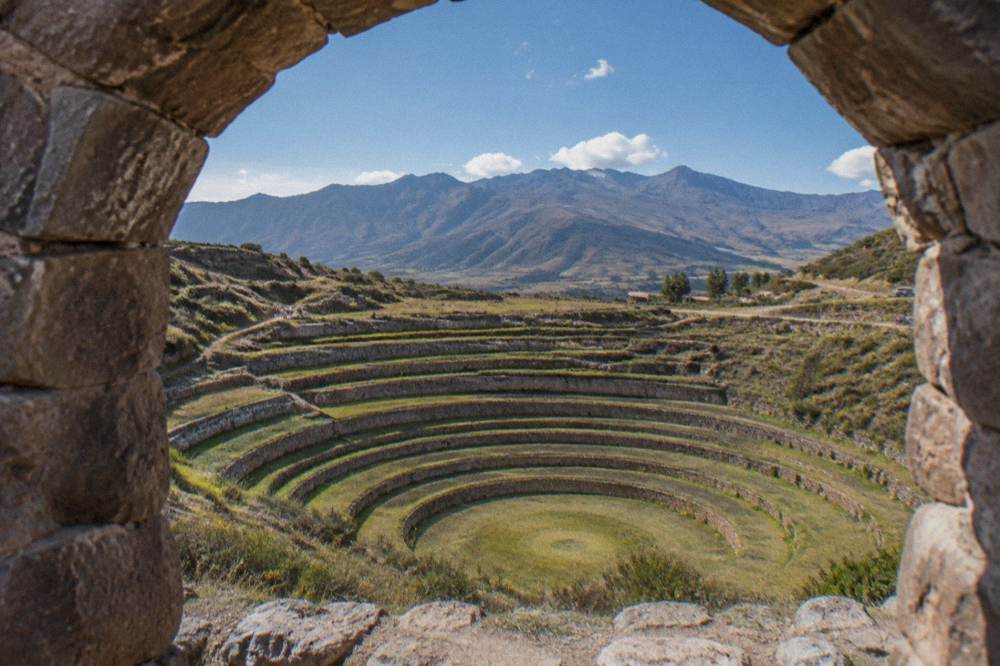
Urubamba, at 2,870 m, is the geographic middle of the valley and the town most often chosen for a slower stay. It is close to the Moray archaeological site, at 3,385 m, and to the Maras salt mines, at 3,300 m, and an 8 km asphalt road linking Maras to Moray was handed over in late December 2025, which makes moving between the two easier than it was. Pisac, at 2,972 m, draws visitors mainly for its market and its terraced ruins on the hillside above the town. Chinchero, which the Boleto Turistico lists alongside the other three, sits higher still and is best known for its weaving tradition; travellers often pass through it on the road between Cusco and the valley rather than overnighting.
Which Sacred Valley Town Suits Your Trip?
Match the town to the itinerary: Ollantaytambo for Machu Picchu access and an Inca town that still follows its original street plan, Urubamba for a central, relaxed base near Moray and Maras, Pisac for market days and hillside ruins, and Chinchero for textiles and a stop on the Cusco road. Every one of them is lower than Cusco, so none of them works against acclimatisation the way a return to 3,335 m does.
The comparison table below holds the verified elevations and the role each town plays. Note what is deliberately absent: no hotel rates appear anywhere on this page, because nightly prices change constantly and are shown on the booking listings themselves.
| Town | Elevation | Best for | On the Boleto Circuit III |
|---|---|---|---|
| Ollantaytambo | 2,792 m | Train to Machu Picchu, Inca site, original town plan | Yes |
| Urubamba | 2,870 m | Central base, quiet stay, Moray and Maras access | No site of its own |
| Pisac | 2,972 m | Market, hillside ruins, artisan stalls | Yes |
| Chinchero | Highest of the four | Weaving, adobe church, road stop | Yes |
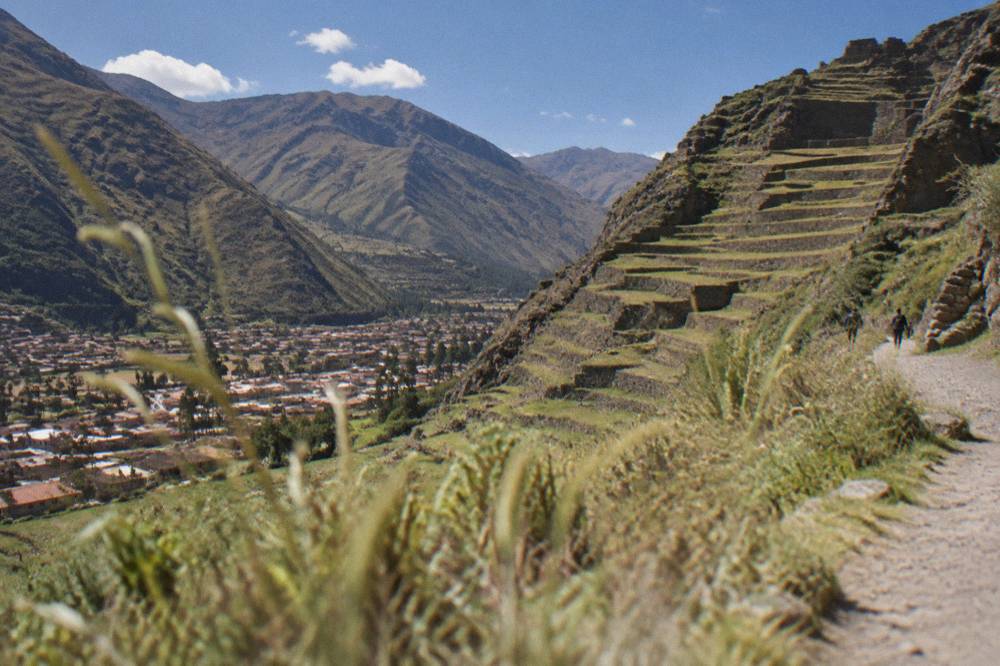
Ollantaytambo rewards the most itinerary weight. The town preserves its Inca street plan, the Ollantaytambo archaeological site is one of the four Circuit III sites on the Boleto Turistico, and the station handles trains toward Machu Picchu Pueblo, the town also called Aguas Calientes at about 2,040 m. Pisac pairs its ruins with a market scene that fills the town, and the Pisac site terraces climb the hill above it. Urubamba holds no major ruin inside the town, which is exactly why some travellers like it: it is a place to sleep and eat between the Moray circles and the salt pans of Maras. Chinchero's weaving tradition is its draw, and its adobe church stands on Inca foundations, a pattern repeated across the region where colonial churches rose on Inca stone.
For a first look at the whole valley in one day, the Sacred Valley Full Day Tour from Cusco covers the main towns and sites in a single loop, which is a practical way to scout before committing to a base:
Travellers who want the valley and Machu Picchu together can also compare a two-day Sacred Valley plus Machu Picchu option, which handles the train and the connection in one package.
- Tunupa Lodge HotelhotelCheck rates
Is Sleeping In The Sacred Valley Better For Altitude Than Cusco?
On the numbers, yes: every main valley town sits lower than Cusco's 3,335 m, from Pisac at 2,972 m down to Ollantaytambo at 2,792 m, and the CDC Yellow Book advises graded ascent over rapid jumps in sleeping altitude. The CDC names Cusco, at about 3,350 m by its own figure, as a rapid-ascent destination precisely because travellers tend to fly straight in.
The CDC's ascent guidance, which the Yellow Book bases on Wilderness Medical Society advice, is to avoid going from low altitude to a sleeping altitude of 2,750 m or more in a single day, and once above 3,000 m to raise sleeping altitude by no more than 500 m a night with an extra night for every 1,000 m gained. A flight into Cusco breaks that rule by definition. The CDC even notes that for destinations like Cusco and La Paz, travellers can descend to lower elevations to sleep for the first night or two and then begin the ascent. The Sacred Valley is that lower elevation, and it comes with the sights already in place.
This is reporting, not a medical instruction. Acetazolamide is a prescription decision for a doctor, as the CDC frames it, and the Yellow Book advises avoiding alcohol for the first 48 hours at high altitude. What the elevation table does show is the size of the gap between the city and the valley:
| Place | Elevation | Role in an acclimatisation plan |
|---|---|---|
| Cusco, Plaza de Armas | 3,335 m | Arrival city, highest sleeping option of the trip |
| Pisac town | 2,972 m | Valley base, lower than Cusco |
| Urubamba | 2,870 m | Valley base, central |
| Ollantaytambo | 2,792 m | Lowest main town, rail hub |
| Machu Picchu citadel | 2,430 m | Day visit, lower again |
| Aguas Calientes town | about 2,040 m | Overnight near the citadel, lowest of all |
A common pattern the elevations support is Cusco first for the city sights, the Plaza de Armas, the Cathedral and Qorikancha, then down into the valley, then on to Machu Picchu, which at 2,430 m is lower than every town on this page. The reverse order, valley first and Cusco last, matches the CDC's graded-ascent preference even better, though it depends on flight times. The dedicated Cusco altitude guide covers the acclimatisation question in depth, and the question of city versus valley as a base is argued out in Cusco or the Sacred Valley.
How Do You Get From Sacred Valley Towns To Machu Picchu?
Ollantaytambo is the valley's rail gateway: PeruRail's FAQ gives the train from there to Machu Picchu as about 1 h 45, compared with about 4 h 30 from San Pedro station in Cusco and about 3 h 30 from Poroy. PeruRail and Inca Rail are the two operators, and in wet-season disruptions a bimodal bus-plus-train option via Ollantaytambo is used.
The station choice matters as much as the town choice. Both Cusco-side stations exist, San Pedro and Poroy, and PeruRail's own FAQ lists the taxi connections as about 10 minutes to San Pedro and about 20 minutes to Poroy. When Cusco-area track is out of service, which can happen in the wet season, the operators switch to the bimodal service: a bus from Cusco to Ollantaytambo, then the train onward. PeruRail announced that Cusco to Ollantaytambo train travel resumed from 1 September 2026, so the full rail route from the city was working again.
| Rail leg | Journey time per PeruRail's FAQ |
|---|---|
| San Pedro (Cusco) to Machu Picchu | about 4 h 30 |
| Poroy (Cusco) to Machu Picchu | about 3 h 30 |
| Ollantaytambo to Machu Picchu | about 1 h 45 |
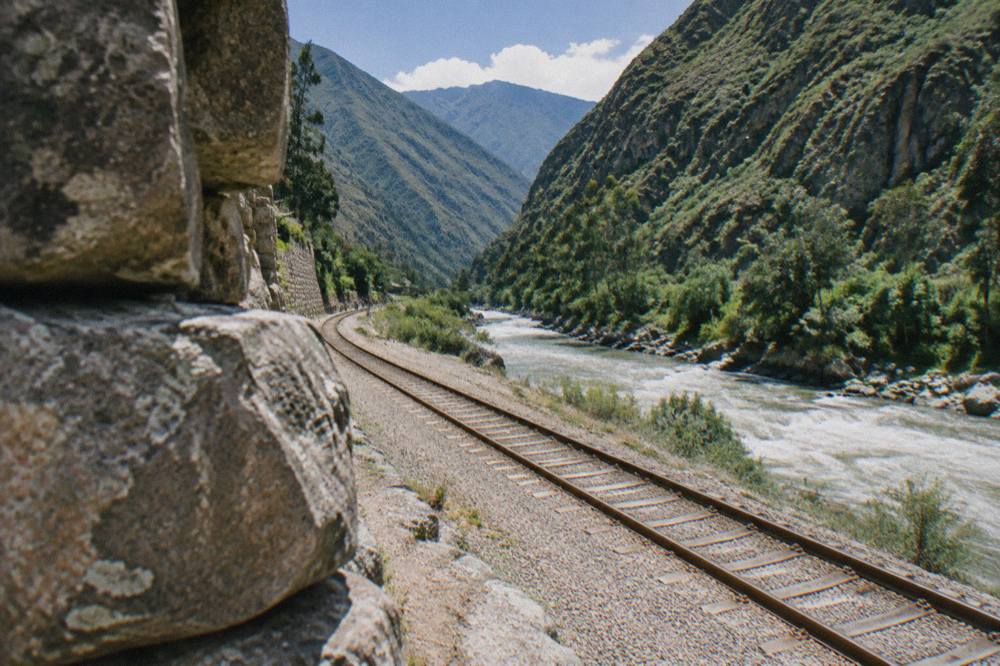
For a traveller based in Ollantaytambo, the Machu Picchu day becomes short and early rather than long and pre-dawn. The citadel sits at 2,430 m and the town of Aguas Calientes at about 2,040 m, so the train ride is also a descent. Tickets for Machu Picchu itself are a separate system from anything in the valley: they are sold on the Ministry of Culture's platform or in person at Machu Picchu Pueblo, and the Machu Picchu day trip guide and the sibling coverage handle that in detail. The Cusco to Machu Picchu train is a topic with its own dedicated coverage, so this page keeps to the valley-side facts: two operators, one hub town, and the journey times above.
What Does The Boleto Turistico Cover In The Sacred Valley?
The Boleto Turistico's Circuit III covers exactly four valley sites, Pisac, Ollantaytambo, Chinchero and Moray, and the partial ticket costs S/ 70 (about US$20) and is valid for 2 days. The integral ticket at S/ 130 (about US$38) covers all 16 COSITUC sites for 10 days, but it does not cover Machu Picchu or the Maras salt mines.
COSITUC, the body that runs the ticket, sells it in person only, at the counter on Av. El Sol 103 in Cusco daily from 07:30 to 18:00 and at most included sites, and its FAQ states that validity begins the day of purchase. That in-person rule shapes where a valley stay fits: the ticket is bought in Cusco or at the sites, not online, so a traveller arriving straight into a valley town should plan to buy the partial at the first covered site.
| Boleto option | Price, foreign adult | Validity | Valley sites covered |
|---|---|---|---|
| Partial Circuit III | S/ 70 (about US$20) | 2 days | Pisac, Ollantaytambo, Chinchero, Moray |
| Integral (all 16 sites) | S/ 130 (about US$38) | 10 days | Circuit III plus Circuits I and II, city and Saqsaywaman sites |
| Foreign student integral | S/ 70 | 10 days | Same as integral |
Two exclusions trip people up. The Maras salt mines are not on the Boleto at all; operators report their entry at about S/ 15 to 20 in cash. And Machu Picchu is never on the Boleto, whatever a partial circuit covers: Circuit III is a Sacred Valley grouping, not a Machu Picchu route. Children enter free to age 9, and ages 10 to 17 pay the student price with ID, per the COSITUC FAQ. The full ticket breakdown is in the Boleto Turistico guide.
When Is The Best Time Of Year To Stay In The Sacred Valley?
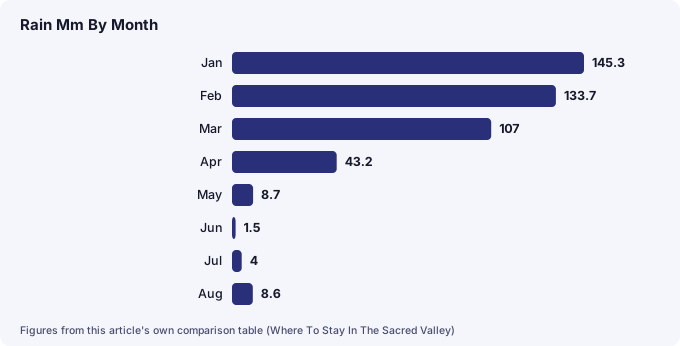
The dry season, roughly May to September, is the safest window for a valley stay: at the Cusco station the four months from May to August bring just 22.8 mm of rain, 3.2 percent of the year's 707.8 mm, while December to March carries 71.9 percent. June to August is winter, dry with clear days and frost-prone nights, and mean daily maxima stay between 18.8 and 20.9 C all year.
The climate record behind that is the WMO World Weather Information Service station "Cuzco", supplied by SENAMHI, a historical normal rather than a 1991-2020 table. It shows how lopsided the Andean year is: the wet months are not gently wetter, they hold seven tenths of everything that falls.
| Month | Mean max C | Mean min C | Rain mm |
|---|---|---|---|
| Jan | 18.9 | 6.6 | 145.3 |
| Feb | 18.8 | 6.5 | 133.7 |
| Mar | 19.1 | 6.2 | 107.0 |
| Apr | 19.7 | 4.9 | 43.2 |
| May | 19.8 | 2.5 | 8.7 |
| Jun | 19.5 | 0.3 | 1.5 |
| Jul | 19.1 | 0.1 | 4.0 |
| Aug | 19.8 | 1.6 | 8.6 |
| Sep | 19.8 | 3.9 | 21.8 |
| Oct | 20.9 | 5.5 | 39.4 |
| Nov | 20.7 | 6.1 | 71.9 |
| Dec | 19.4 | 6.4 | 122.7 |
Two practical readings follow for a valley stay. First, the shoulder months, April, September and October, trade a little rain for thinner crowds, and October's mean maximum of 20.9 C is the warmest of the year at this station. Second, winter nights are cold anywhere in the region: the July mean minimum is 0.1 C, and SENAMHI reports frost nights peaking in June and July, so packing for cold evenings matters more in the dry season than the daytime figures suggest. The monthly picture, including what it means for crowds, is in the Cusco weather by month and best time to visit guides.
Can You Visit The Sacred Valley Without A Tour?
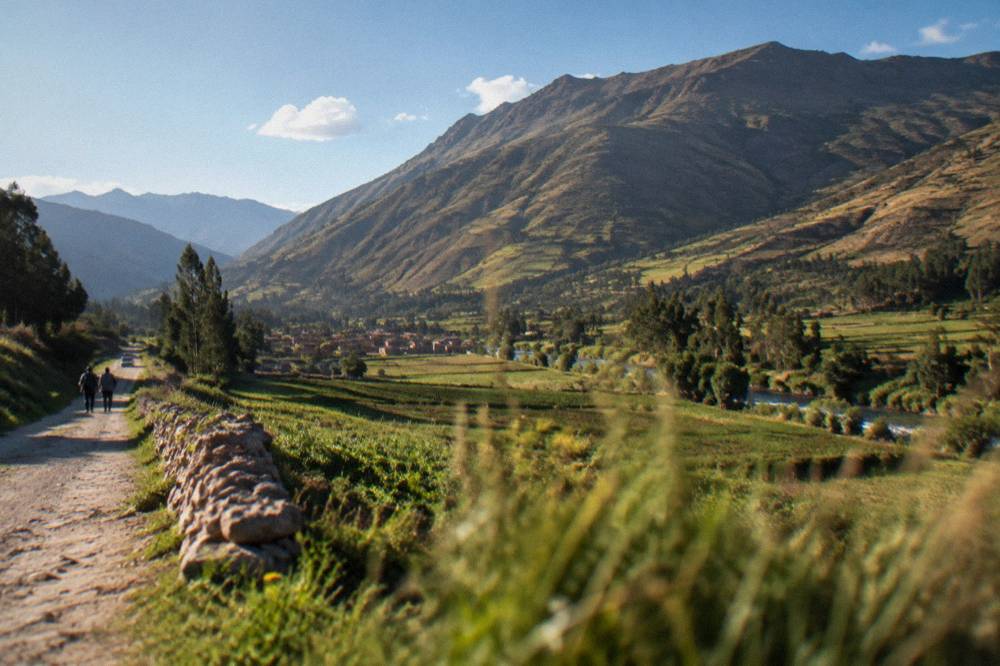
Yes, the valley is one of the more do-it-yourself-friendly parts of the Cusco region: the four Circuit III sites are covered by one S/ 70 partial ticket, the towns are connected by road, and the train times from Ollantaytambo are published. What a tour removes is the coordination of transport, tickets and timing across towns that a single day cannot comfortably link alone.
Independent travel in the valley works best with a base and a plan. Pisac's ruins and market, the Moray circles and the Maras salt pans cluster near Urubamba, and Ollantaytambo stands at the rail end, so a two-night stay splits naturally into a ruins day and a train day. The question of whether the valley justifies the trip at all is answered in is the Sacred Valley worth visiting, and the one-day version, with or without a guide, is worked through in Sacred Valley in one day and Sacred Valley without a tour.
Rather skip the logistics of driving between towns? Book a Sacred Valley day trip here.
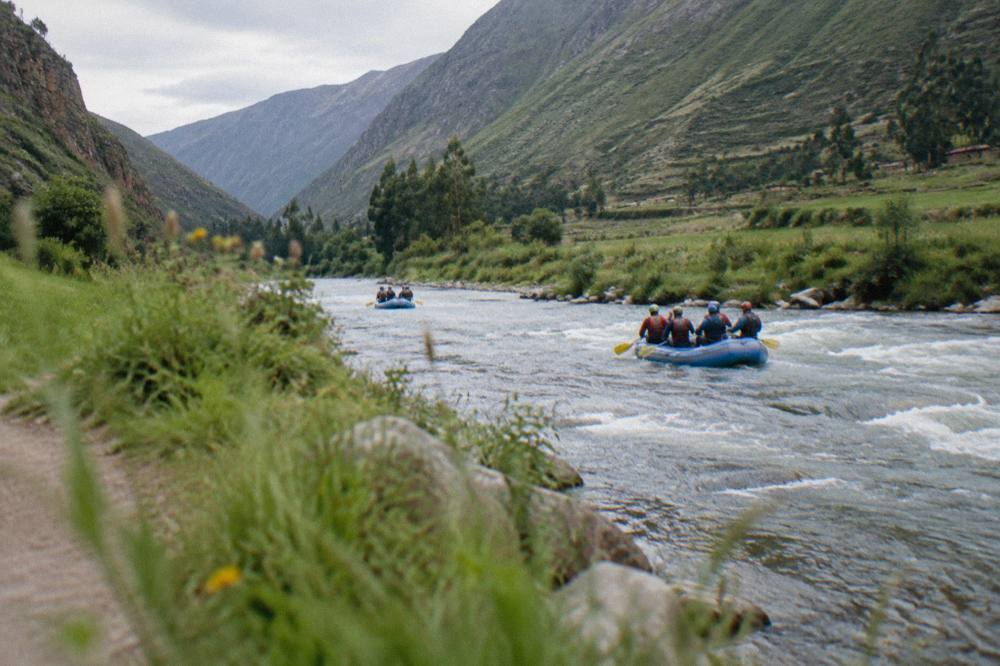
For travellers who would rather not drive the logistics themselves, the guided options below cover the same ground, from the full-day loop to a two-day combination with Machu Picchu and a rafting and zip-line day on the Urubamba river:
A two-day Sacred Valley and Machu Picchu guided tour is the other strong packaged option, since it removes the Cusco-to-valley-to-train shuffle entirely:
The sequencing question, valley first or Machu Picchu first, matters for where the nights go, and it has its own answer page at Sacred Valley or Machu Picchu first. A two-day valley itinerary, with the town-by-town order, is laid out in the Sac Valley two-day plan.
Common Questions About Staying In The Sacred Valley
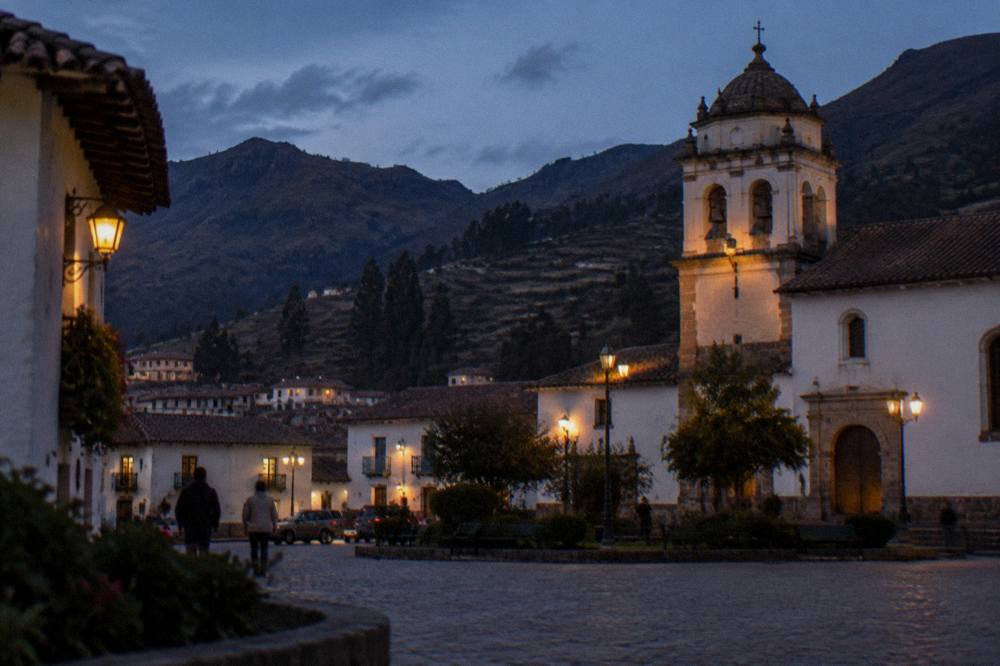
Is It Better To Stay In Cusco Or The Sacred Valley?
It depends on the itinerary. Cusco, at 3,335 m, holds the city sights and the flight connections, while the valley towns sit lower, from Pisac at 2,972 m to Ollantaytambo at 2,792 m, and sit on the rail line to Machu Picchu. A split stay, city first and valley after, is the pattern the elevations and the CDC's graded-ascent advice both support. The full comparison is at Cusco or the Sacred Valley.
Which Sacred Valley Town Is Closest To Machu Picchu?
Ollantaytambo. PeruRail's FAQ gives the train from Ollantaytambo to Machu Picchu as about 1 h 45, against about 3 h 30 from Poroy and about 4 h 30 from San Pedro, both on Cusco's side. Ollantaytambo is also the lowest of the main valley towns at 2,792 m.
Is The Sacred Valley Lower Than Cusco?
Yes, every main town is. Cusco's Plaza de Armas stands at 3,335 m, while Pisac is at 2,972 m, Urubamba at 2,870 m and Ollantaytambo at 2,792 m. Moray, at 3,385 m, is the exception among the valley sites and sits higher than the city, though it is a day visit rather than a sleeping option.
Does The Boleto Turistico Cover The Sacred Valley?
Partly. Circuit III of the Boleto Turistico covers Pisac, Ollantaytambo, Chinchero and Moray, and the partial ticket costs S/ 70, about US$20, valid for 2 days. It does not cover Machu Picchu or the Maras salt mines, and COSITUC sells the ticket in person only, not online.
How Many Days Should You Stay In The Sacred Valley?
Two nights is the working minimum for a valley-plus-Machu Picchu plan: one day for the Circuit III sites and Maras, one for the train. A single night in Ollantaytambo can work if Machu Picchu is the only goal. The town-by-town order for a two-day stay is set out in the Sacred Valley two-day itinerary.
Can You Stay In Ollantaytambo Instead Of Aguas Calientes For Machu Picchu?
Yes, and many travellers do. The train from Ollantaytambo to Machu Picchu takes about 1 h 45, so a day trip from an Ollantaytambo base is practical, while Aguas Calientes, at about 2,040 m, is the town at the citadel's foot. The trade-offs between the two are compared at Ollantaytambo or Aguas Calientes.
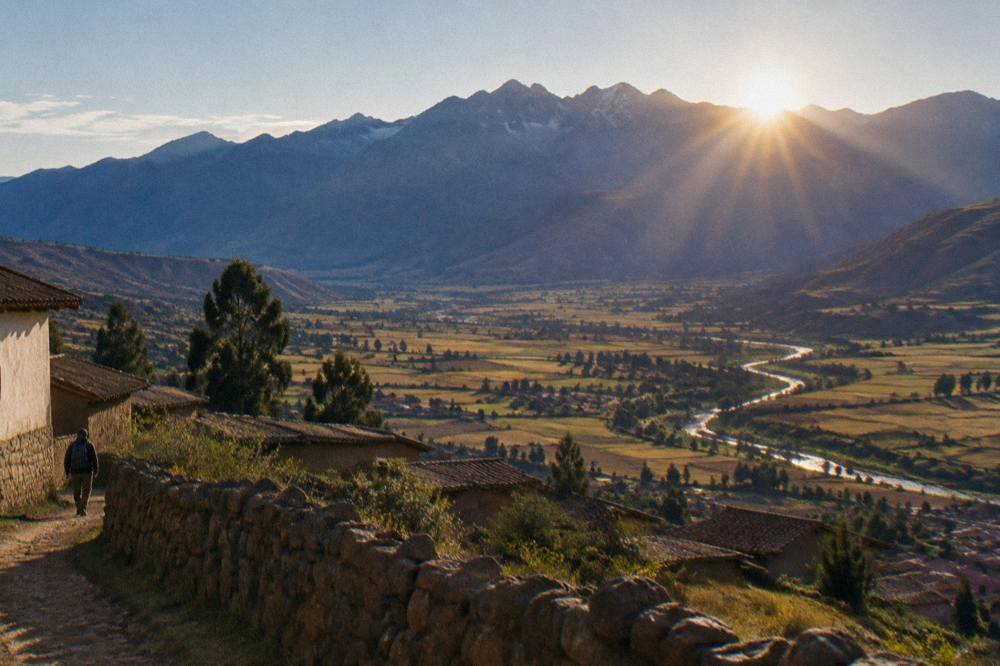
The short version: pick Ollantaytambo when the train to Machu Picchu is the point, Urubamba when the stay itself is the point, and Pisac when the market and the terraces are the draw, and let the elevation table, not a hotel price, make the first cut.