Pikillacta
Pikillacta is a pre-Inca walled site on the South Valley road southeast of Cusco, and it is one of the sixteen places covered by the Boleto Turistico del Cusco, on the ticket's Circuit II together with Tipon and the city museums.
Short answer
Pikillacta is a large pre-Inca walled archaeological site near Lucre in the South Valley southeast of Cusco. It is included on the COSITUC Boleto Turistico Circuit II, which costs S/ 70 for foreign tourists, or on the S/ 130 integral ticket valid 10 days. The Boleto is sold in person only, at Av. El Sol 103 in Cusco and at most included sites.
Pikillacta is a pre-Inca walled archaeological site in the South Valley southeast of Cusco, the historic city in the Andes of southern Peru, and it is one of the sixteen places covered by the COSITUC Boleto Turistico del Cusco. The site sits on the ticket's Circuit II, the city-and-South-Valley circuit, alongside Tipon, the Qorikancha site museum and the city museums. The site is often reached as part of a South Valley day trip that strings Pikillacta together with Tipon and the painted church at Andahuaylillas, and its low, straight walls and grid of streets make it one of the most unusual ruins in the Cusco region: it looks nothing like the Inca stonework visitors know from Sacsayhuaman or Ollantaytambo.
What Is Pikillacta And Why Is It Different From Inca Cusco?
Pikillacta is a vast pre-Inca administrative site near the town of Lucre in the South Valley southeast of Cusco, built of rough stone and adobe laid out in a strict grid of straight walls, streets and rectangular enclosures rather than the fitted polygonal masonry and terraces of the Inca sites around Cusco. It is included on the Boleto Turistico del Cusco, on Circuit II, and it is the clearest example near Cusco of a built landscape that predates the Inca city.
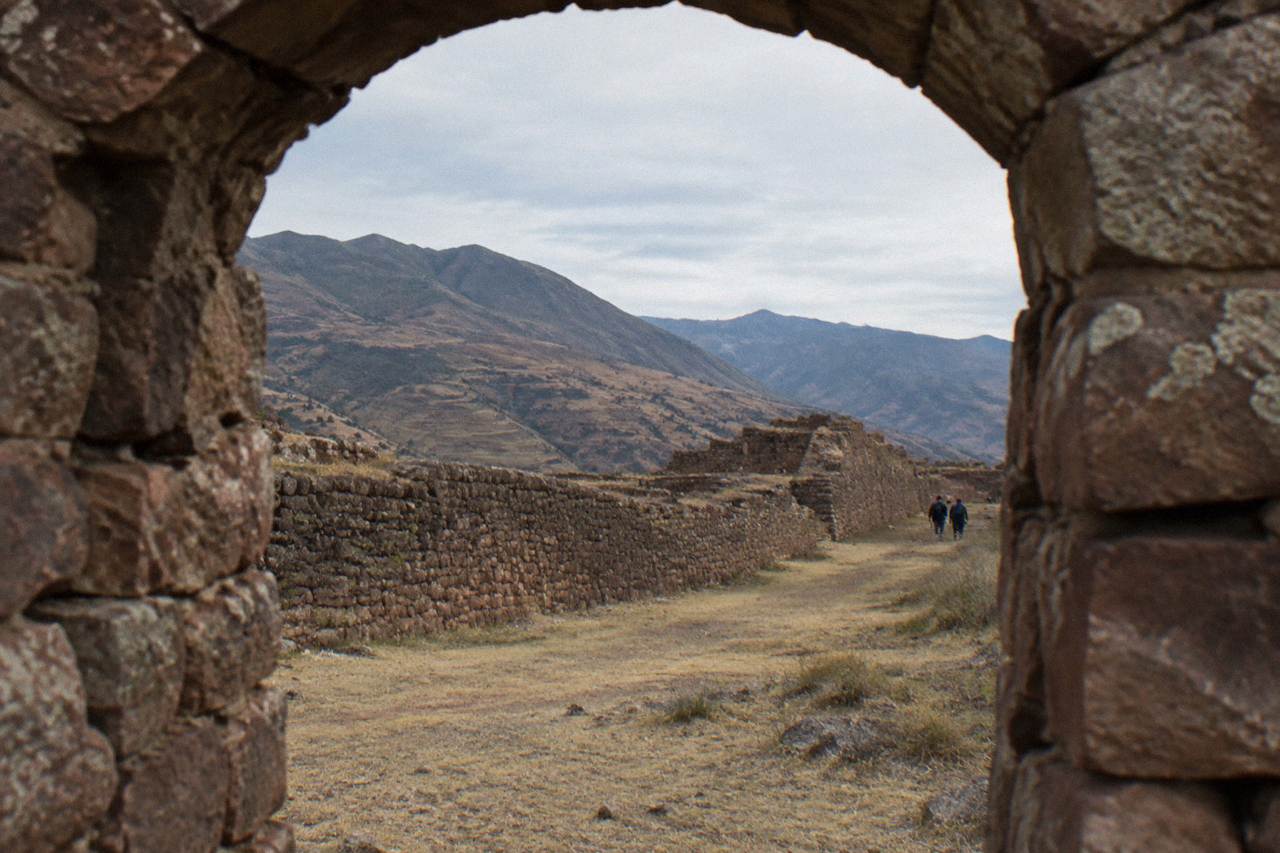
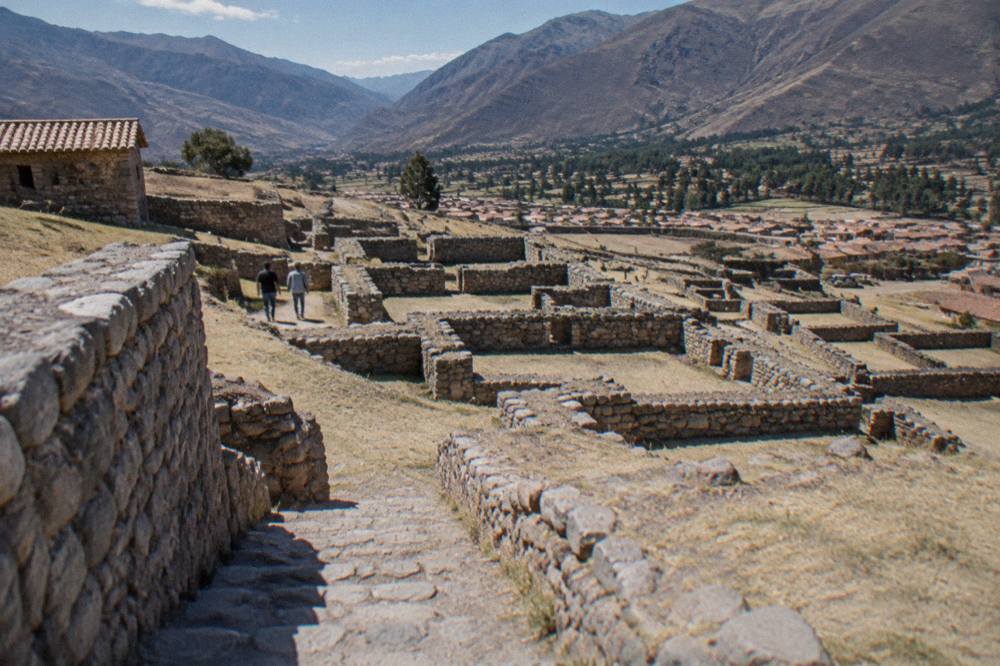
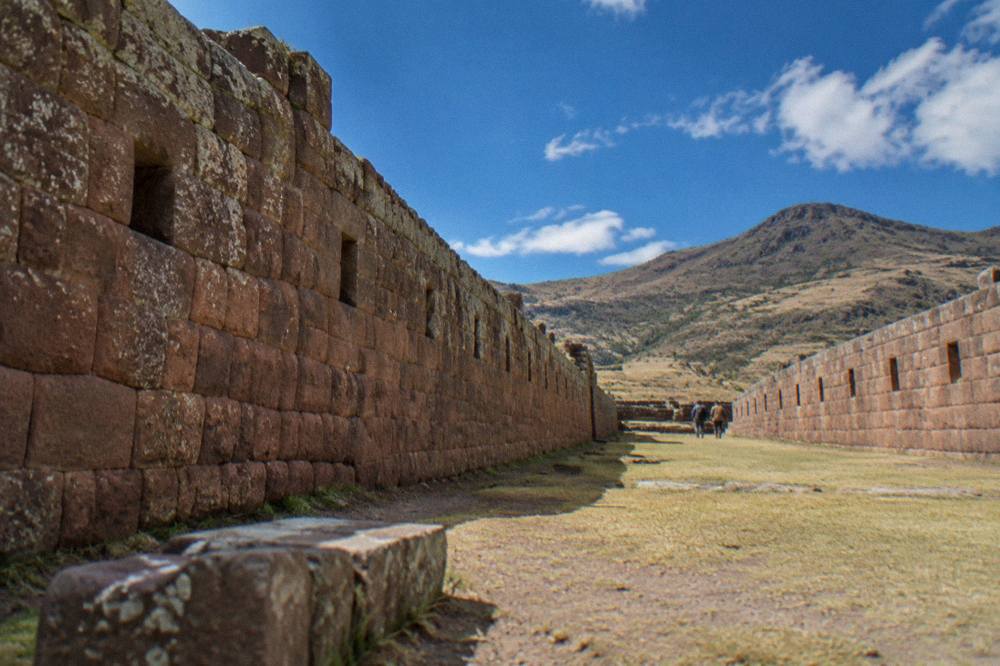
The difference is the first thing any visitor notices. Inca sites around Cusco, from Qorikancha to the ruins above the city, are famous for finely fitted stone. Pikillacta instead is a planned compound: low walls of unshaped stone set in mud mortar, long straight streets, and hundreds of small rectangular rooms packed into rectangular blocks. The scale is the surprise. The walls run on and on across a dry, gentle slope, and from any raised point the grid reads clearly, a city-sized layout laid out in one scheme rather than growing organically.
The site's name is usually given as a Quechua compound meaning "flea town", a reference to the smallness and density of its rooms, and the spelling on this page, Pikillacta, is the one used by COSITUC on the Boleto Turistico's own site list. The ruins stand near the modern town of Lucre and the wetlands of the Lucre lagoon area, an agricultural corner of the Cusco region that sits lower and warmer than the city itself. Cusco's Plaza de Armas sits at 3,335 m; Pikillacta's valley floor is gentler walking ground than the steep hills of the city's northern ruins.
No construction date, builder, ruler or dimension appears in the verified facts for Pikillacta, so none appears here. What can be said plainly is qualitative: this is a pre-Inca site, it was built to a single plan, and its architecture is unlike the Inca monuments that dominate the region's tourist circuit. That contrast alone is the reason many visitors rank it among the most interesting half-hours in the Cusco region.
How Much Does Pikillacta Cost, And Which Boleto Covers It?
Pikillacta is covered by the Boleto Turistico del Cusco, and there is no separate listed entry fee in the verified sources. Foreign tourists pay S/ 70 for the Circuit II partial ticket (about US$20) or S/ 130 for the integral ticket (about US$38) valid 10 days. The COSITUC sells the Boleto in person only, at the counter at Av. El Sol 103 in Cusco, daily 07:30 to 18:00, and at most included sites.
Circuit II is the city-and-South-Valley circuit, and it carries eight of the ticket's sixteen sites: the Museo de Sitio Qorikancha, the Museo Historico Regional, the Museo de Arte Contemporaneo, the Museo de Arte Popular, the Centro Qosqo de Arte Nativo, the Monumento a Pachacutec, Tipon and Pikillacta. The partial ticket for Circuit II is reported as valid for 1 to 2 days, and the integral ticket is valid 10 days from the day of purchase. Children are free to age 9, and ages 10 to 17 pay the student price with ID. Only students receive a discount; there is no teacher or youth-card reduction.
Two practical points from the COSITUC's own FAQ matter for Pikillacta specifically. First, the ticket is never sold online: any site claiming to sell the Boleto Turistico is not the COSITUC, and the purchase has to happen at the Av. El Sol counter or at a participating site's ticket office. Second, covering all sixteen sites needs a minimum of three days, so a visitor whose only South Valley stop is Pikillacta can reasonably buy the partial Circuit II ticket rather than the integral.
| Boleto Turistico option | Price, foreign tourist | Validity | Covers Pikillacta? |
|---|---|---|---|
| Integral ticket (BTCI) | S/ 130 (about US$38) | 10 days | Yes, all 16 sites |
| Circuit II partial (city and South Valley) | S/ 70 (about US$20) | Reported 1 to 2 days | Yes, with Tipon and the city museums |
| Circuit I partial (Saqsaywaman) | S/ 70 (about US$20) | Reported 1 day | No |
| Circuit III partial (Sacred Valley) | S/ 70 (about US$20) | Reported 1 to 2 days | No |
| Circuit II site | Type |
|---|---|
| Pikillacta | Pre-Inca walled archaeological site, South Valley |
| Tipon | Inca terraces and water channels, South Valley |
| Museo de Sitio Qorikancha | Site museum at the Qorikancha, central Cusco |
| Museo Historico Regional | City museum, central Cusco |
| Museo de Arte Contemporaneo | City museum, central Cusco |
| Museo de Arte Popular | City museum, central Cusco |
| Centro Qosqo de Arte Nativo | Folk dance and art centre, central Cusco |
| Monumento a Pachacutec | City monument, central Cusco |
The full ticket, its prices and its rules are laid out in detail on this site's Things To Do In Cusco Peru home page and in the Boleto Turistico guide. What matters here is simple: nobody should drive out to Pikillacta without a Boleto already in hand, because the ticket office situation at individual sites varies and the reliable purchase point is the Av. El Sol counter in Cusco.
How Do You Get To Pikillacta From Cusco?
Pikillacta lies on the South Valley road southeast of Cusco, reached by the same route that serves Tipon and Andahuaylillas, and the verified sources give no journey time, distance or colectivo fare for the trip, so this page states none. Visitors can arrive on a South Valley day tour, which bundles the driving, the sites and lunch; independent travellers reach the area by local transport toward the town of Lucre and walk in from the road.
The honest position on logistics is that the pack holds no figures for this specific journey: no kilometres, no minutes, no colectivo price. What is verified is the shape of the trip. The South Valley is the corridor of towns and sites southeast of the city that includes Tipon's terraces, the church at Andahuaylillas and Pikillacta near Lucre, and tour operators sell it as a single day loop from Cusco. A guided option from this site's roster is the Puno Route of the Sun day trip, which travels the Cusco to Puno corridor with lunch included and passes through the same southern highlands; visitors heading onward to Lake Titicaca can see the South Valley direction as part of that transfer.
For a visitor staying in Cusco and planning the South Valley as a day trip, the practical choice is between a small-group tour that handles the road and a self-guided trip using local transport. The tour route is the common one: Tipon in the morning, Andahuaylillas and its painted church, then Pikillacta before the return to the city. Independent travel is possible but slower, and the Boleto must be bought in Cusco beforehand, since the ticket is sold in person only and site offices are not guaranteed to hold stock.
What Will You Actually See At Pikillacta?
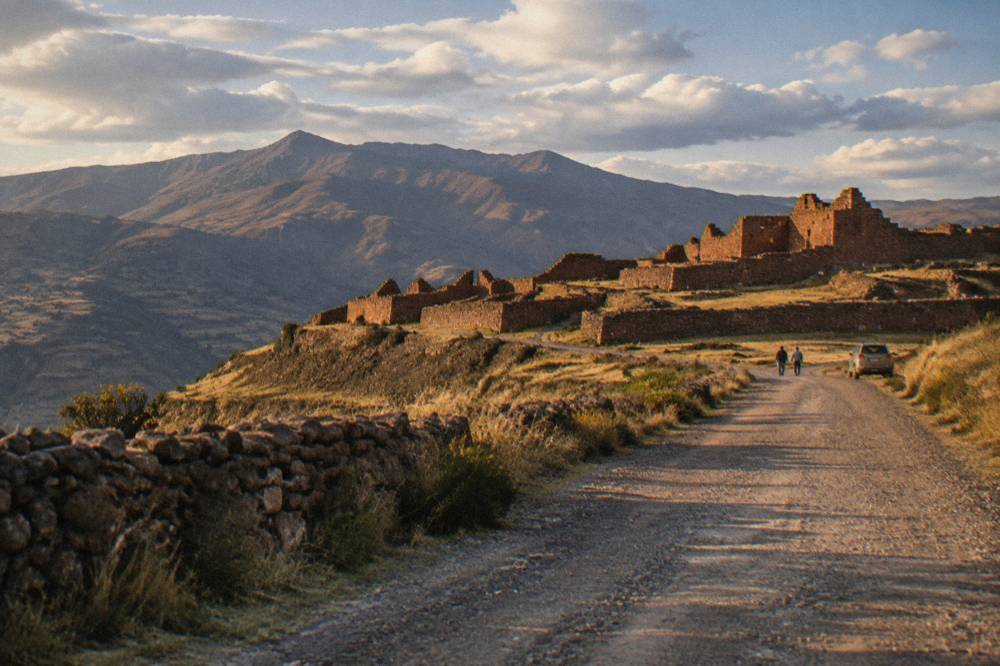
Visitors see a single planned enclosure of low stone walls laid out in a grid: long straight streets, rectangular compounds, hundreds of small chambers, and corners and gateways built to the same scheme across the whole site, with views over the Lucre valley and its wetlands. There are no finely fitted Inca blocks, no terraced agriculture and no temple masonry; the interest is in the layout, the scale and the contrast with every other ruin on the Cusco ticket.
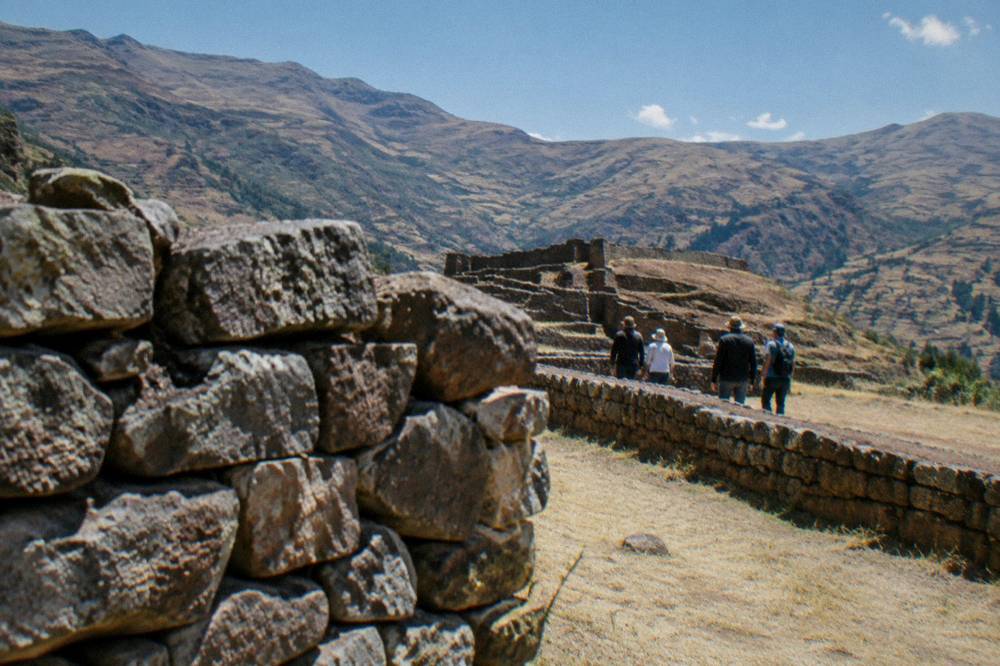
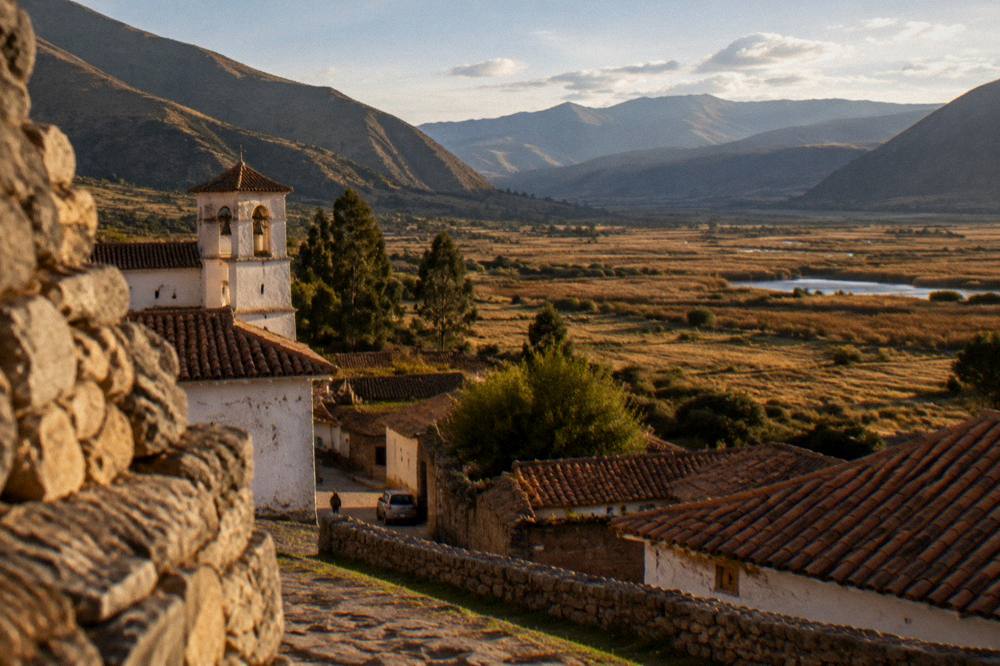
A walk through the site follows the grid. Walls of rough stone and mud mortar rise to roughly chest height or lower, and the streets run long and dead straight, which is precisely what makes the place feel unlike anywhere else in the region. Some structures stand two storeys, with beam holes visible in the walls. Small rooms open off small rooms, and the density of the plan is what earned the site its name. From the upper parts of the enclosure the valley reads clearly: the flat floor near Lucre, the lagoon area's reeds and birdlife, and the far ridgelines of the southern Cusco region.
The visit itself is unhurried. Pikillacta is an open-air site with no museum hours or interior spaces to schedule around, and a full circuit of the walls is a gentle walk on dry ground. There is little shade, and the South Valley floor is warmer and lower than the city, so water and sun protection are the practical kit.
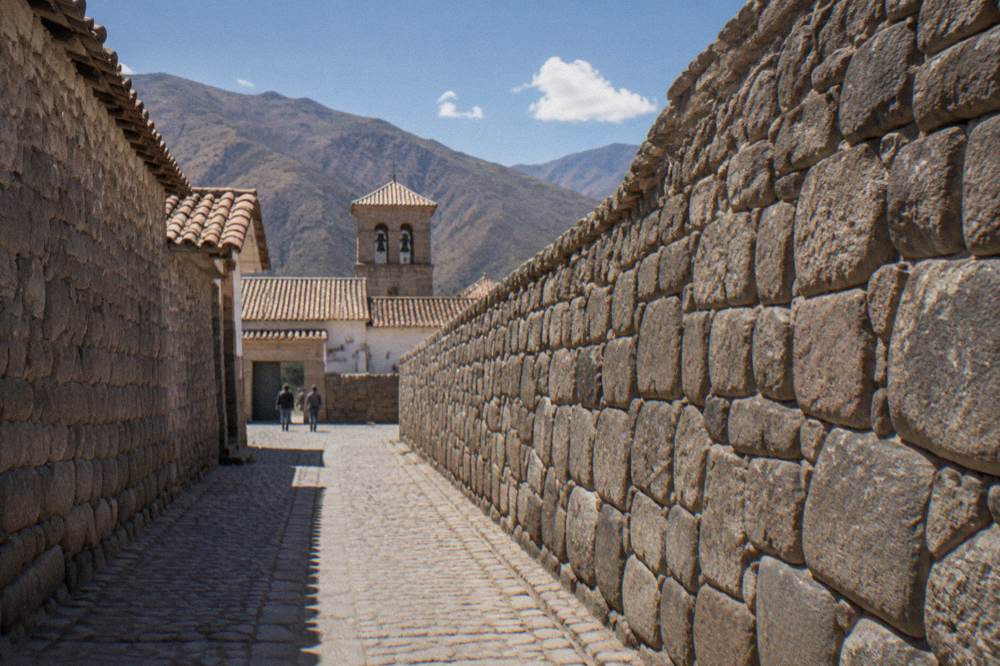
The comparison visitors draw most often is with Tipon, the other South Valley site on Circuit II. Tipon is Inca work: terraces, water channels and stone fountains set into a steep hillside. Pikillacta is the opposite, flat, gridded and pre-Inca. Doing both on one day shows two entirely different ideas of how to build, and the pair makes the South Valley loop more rewarding than either site alone.
When Is The Best Time Of Year To Visit Pikillacta?
The dry season, roughly May to September, is the best time to visit Pikillacta, an exposed open-air walk with little shade where the ground is driest then. December to March carries 71.9 percent of the year's 707.8 mm of rain at the Cuzco station's historical normal, while May to August together bring just 22.8 mm, and mean daily maximums stay between 18.8 and 20.9 C all year.
The climate data behind that answer comes from the WMO World Weather Information Service record for the "Cuzco" station, supplied by SENAMHI, a historical normal. The pattern is strongly seasonal: the wet months concentrate rain between December and March, and the June and July nights are cold enough that frost is common in the Cusco basin, even though daytime maximums barely move all year. Pikillacta's exposed grid offers no shelter from either rain or sun, which is why the shoulder months of April, May, September and October suit many visitors: dry underfoot, fewer crowds than the June-to-August peak, and daytime temperatures in the same mild band.
| Month | Mean max C | Mean min C | Rain mm |
|---|---|---|---|
| Jan | 18.9 | 6.6 | 145.3 |
| Feb | 18.8 | 6.5 | 133.7 |
| Mar | 19.1 | 6.2 | 107.0 |
| Apr | 19.7 | 4.9 | 43.2 |
| May | 19.8 | 2.5 | 8.7 |
| Jun | 19.5 | 0.3 | 1.5 |
| Jul | 19.1 | 0.1 | 4.0 |
| Aug | 19.8 | 1.6 | 8.6 |
| Sep | 19.8 | 3.9 | 21.8 |
| Oct | 20.9 | 5.5 | 39.4 |
| Nov | 20.7 | 6.1 | 71.9 |
| Dec | 19.4 | 6.4 | 122.7 |
One seasonal note specific to the wider region: the Inca Trail closes every February, and February is among the wettest months on the Cuzco record, so visitors planning a February trip around Cusco should expect the wettest ground conditions of the year at every open-air site, Pikillacta included. The site itself has no verified seasonal closure, and no current closure of any kind should be assumed.
How Does Pikillacta Compare With The Other Sites On The Cusco Ticket?
Pikillacta is the only pre-Inca grid-planned city on the Boleto Turistico, and it shares Circuit II with Tipon and the city museums rather than the famous Inca terraces of the Sacred Valley. Compared with the headliners, it is quieter, flatter and quicker to walk, which makes it a strong second or third stop on a South Valley day rather than a destination visitors travel for alone.
The Boleto's sixteen sites split into three experiences. Circuit I holds the ruins above the city: Saqsaywaman, Q'enqo, Puka Pukara and Tambomachay. Circuit III holds the Sacred Valley: Pisac, Ollantaytambo, Chinchero and Moray. Circuit II, Pikillacta's circuit, holds the city museums plus Tipon and Pikillacta in the South Valley. A visitor with only two or three days in Cusco will usually see Circuits I and III first, and that is a reasonable priority; the visitor with a fourth day, or a traveller heading toward Puno, has the perfect window for the South Valley.
| Boleto circuit | Region | Sites | Character |
|---|---|---|---|
| Circuit I | Hills above Cusco | Saqsaywaman, Q'enqo, Puka Pukara, Tambomachay | Inca masonry and viewpoints near the city |
| Circuit II | Cusco city and South Valley | Pikillacta, Tipon, Qorikancha site museum, four museums, Centro Qosqo, Pachacutec monument | Museums plus two South Valley sites |
| Circuit III | Sacred Valley | Pisac, Ollantaytambo, Chinchero, Moray | Inca terraces, towns and valley landscapes |
Within that map, Pikillacta's role is contrast. Every other archaeological site on the ticket is Inca or colonial. Pikillacta is neither, and a day that pairs it with Tipon shows the visitor two building traditions in one afternoon. The trade-off is plain: it is farther from the city than the Circuit I ruins and less spectacular than the Sacred Valley terraces, but it is also among the least crowded large sites on the ticket.
Should You Visit Pikillacta On A Guided Tour Or Independently?
A guided South Valley day trip is the practical choice, because Pikillacta sits at the end of a road with no verified public-transport figures, the Boleto must be bought in person in Cusco anyway, and a tour bundles Tipon and Andahuaylillas into one loop with lunch. Independent visits suit travellers with time, a rented car or a willingness to use local transport toward Lucre, and both approaches need the same Boleto Circuit II coverage.
The guided route has one more advantage that is easy to miss: interpretation. A site with no museum and no printed figures rewards a guide who can explain what a grid-planned compound is doing in a valley better known for Inca terraces. Among this site's rostered options, the Sacred Valley plus Machu Picchu two-day tour covers the opposite direction from the city, the classic valley and citadel loop, and pairs naturally with a South Valley day for a fuller week; a walking tour of central Cusco covers the Circuit II museums in the city itself, a sensible companion to the South Valley day since the same partial ticket covers both.
Independent travellers should plan the Boleto purchase for the day before, not the morning of the trip. The Av. El Sol counter is open daily 07:30 to 18:00, which sounds generous until a South Valley departure is competing with it for the same early hours. Buying the ticket the previous afternoon, with a stroll through the Plaza de Armas or the San Pedro market afterwards, removes the morning risk entirely.
What Should You Bring To Pikillacta?
Bring the Boleto itself, sun protection and water, because the site is an exposed grid of walls with little shade and the South Valley floor is warmer than Cusco; add a warm layer for the return to the city, where mean nightly minimums drop to between 0.1 and 6.6 C depending on the month, and cash in soles for anything bought en route in the towns of the South Valley.
The kit list is short because the visit is short. The sun at Cusco-region altitude is intense on clear days, and the dry season, the best time to visit, is precisely when the skies are clearest. Footwear can be ordinary walking shoes: the ground is flat and dry in the May-to-September window, unlike the steep stone staircases of the city's hilltop ruins. A hat, sunscreen, a refillable bottle and a light jacket cover almost every scenario.
| Item | Why it matters at Pikillacta |
|---|---|
| Boleto Turistico (Circuit II or integral) | Entry coverage; sold in person only, Av. El Sol 103, Cusco |
| Sun hat and sunscreen | Little shade across the exposed grid, especially May to September |
| Water | Dry air and warm walking on the valley floor |
| Light warm layer | Cold nights in the Cusco basin, frost common June and July |
| Soles in cash | Small towns en route; card surcharge details are unverified, so cash is simpler |
How Does Pikillacta Fit Into A Longer Cusco Itinerary?
Pikillacta fits best as the South Valley half-day inside a four-day-or-longer Cusco itinerary: the first day for the city and its Circuit II museums, the second for the hills of Circuit I, the third for the Sacred Valley on Circuit III, and the South Valley loop with Tipon and Andahuaylillas as the fourth day, ideally before or after a Machu Picchu visit, since the 10-day integral ticket covers all sixteen sites across every one of those days.
The integral ticket's 10-day validity is what makes the full sequence work. A visitor who buys the S/ 130 integral on arrival can spread the sixteen sites across a week without watching a clock, and the COSITUC's own FAQ notes that covering all sixteen needs a minimum of three days. The South Valley day slots in wherever the weather or the train schedule leaves a gap, and it is a natural fit before a Puno departure, since the road south is the same direction.
For the city day that precedes it, a guided walking tour of central Cusco is the rostered option that covers the historic centre and its stories, and it pairs with the Circuit II museums that the same partial ticket admits.
Common Questions About Pikillacta
Is Pikillacta included in the Boleto Turistico?
Yes. Pikillacta is one of the sixteen sites on the COSITUC Boleto Turistico del Cusco, on Circuit II, the city and South Valley circuit, together with Tipon and the city museums. The Circuit II partial ticket for foreign tourists is S/ 70, and the integral ticket is S/ 130, valid 10 days.
Can you buy the Boleto Turistico online before visiting Pikillacta?
No. The COSITUC sells the Boleto Turistico in person only, at its counter at Av. El Sol 103 in Cusco, daily 07:30 to 18:00, and at most included sites. The COSITUC's own FAQ states that online sales do not exist.
How far is Pikillacta from Cusco?
Pikillacta lies in the South Valley southeast of Cusco, near the town of Lucre, on the same road corridor that serves Tipon and Andahuaylillas. The verified sources give no distance or journey time for the trip, so none is stated here; visitors typically reach it on a South Valley day tour.
Who built Pikillacta?
Pikillacta is a pre-Inca site, built to a single grid plan with rough stone and adobe walls, unlike the fitted masonry of the Inca monuments around Cusco. The verified sources for this page carry no construction date, builder or ruler, so this page names none.
Is Pikillacta worth visiting compared with the Sacred Valley sites?
It depends on the shape of the trip. The Sacred Valley terraces at Pisac, Ollantaytambo, Chinchero and Moray are the region's headliners, and a short visit should see them first. Pikillacta rewards the visitor with a fourth day or a Puno-bound route: it is quiet, flat, quick to walk and architecturally unlike every other site on the ticket.
What is the best time of year to visit Pikillacta?
The dry season, roughly May to September, is the most reliable window. At the Cuzco station's historical normal, December to March carries 71.9 percent of the year's 707.8 mm of rain, while May to August bring just 22.8 mm, and mean daily maximums stay between 18.8 and 20.9 C all year.