Tipon
Tipon is an Inca agricultural and water site in the South Valley near Cusco, Peru, included on the Boleto Turistico Circuit II at S/ 70 for foreign tourists.
Short answer
Tipon is an Inca terraced site with working stone water channels in the South Valley about 40 minutes by road from Cusco. Foreign tourists enter with the Boleto Turistico Circuit II partial ticket at S/ 70 (about US$20) or the S/ 130 integral ticket.
Tipon, in the South Valley south of Cusco, the historic city in the Andes of southern Peru, is one of the least crowded of the sixteen sites on the Boleto Turistico, and the one built entirely around water. Wide stone terraces step down a dry Andean hillside, and a carefully cut channel system still carries water through the site, feeding fountains that run more than four centuries after the engineers who shaped them finished their work. The Ministry of Culture administers it as part of the Circuit II city ticket, which means a visitor holding the Boleto Turistico can walk in without paying anything at the gate. This guide sets out what the official ticket covers, what the site actually shows, how to reach it, and how it fits into a wider South Valley day alongside Pikillacta and Andahuaylillas.
What Is Tipon And Where Is It?
Tipon is an Inca archaeological site in the South Valley, the valley that runs south of Cusco toward the Pomacanchi lake district, and it is one of the sixteen sites on the official Boleto Turistico Circuit II ticket. Its terraces, plazas and stone water channels cover a hillside above the small town of Tipon, and the site is administered by Peru's Ministry of Culture as part of the same ticket system that covers Qorikancha and the city museums.
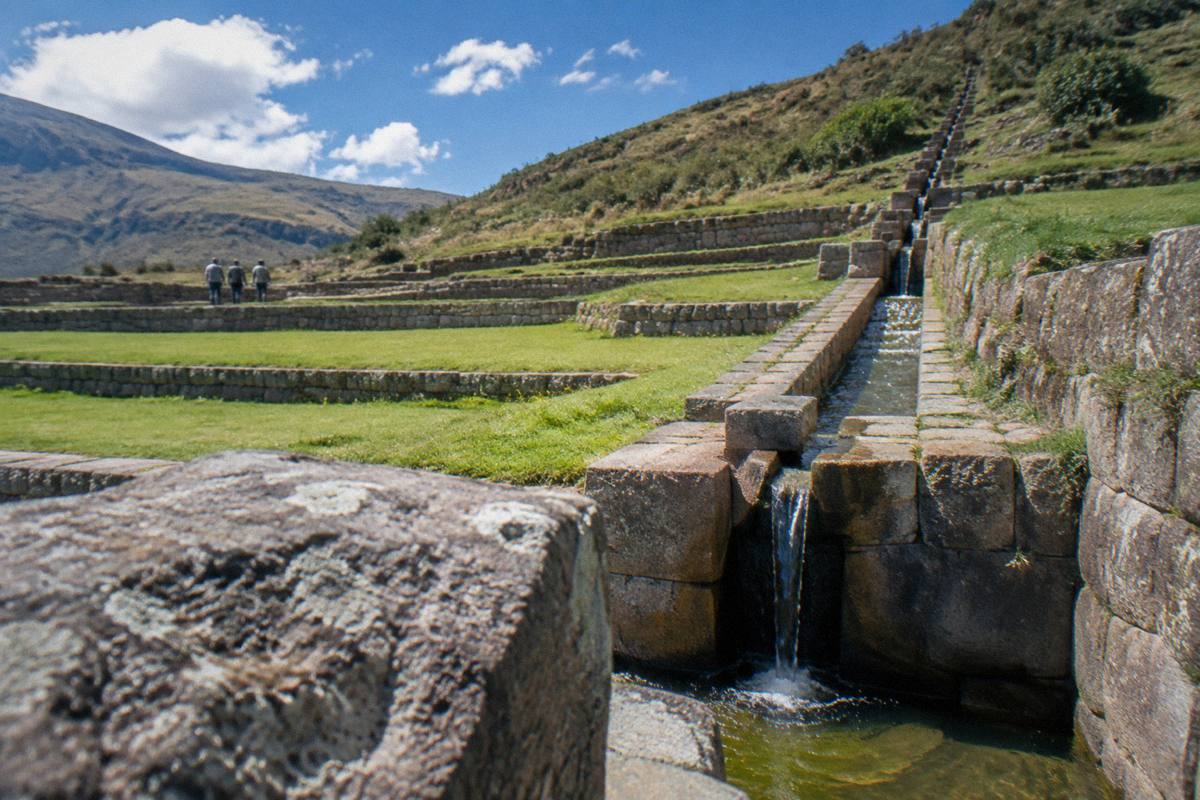
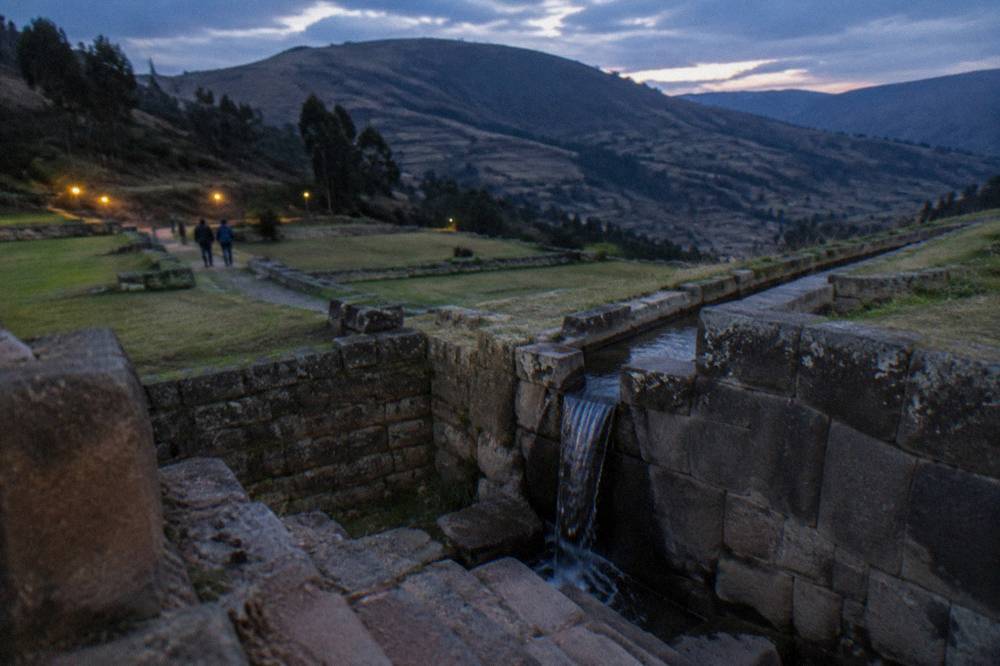
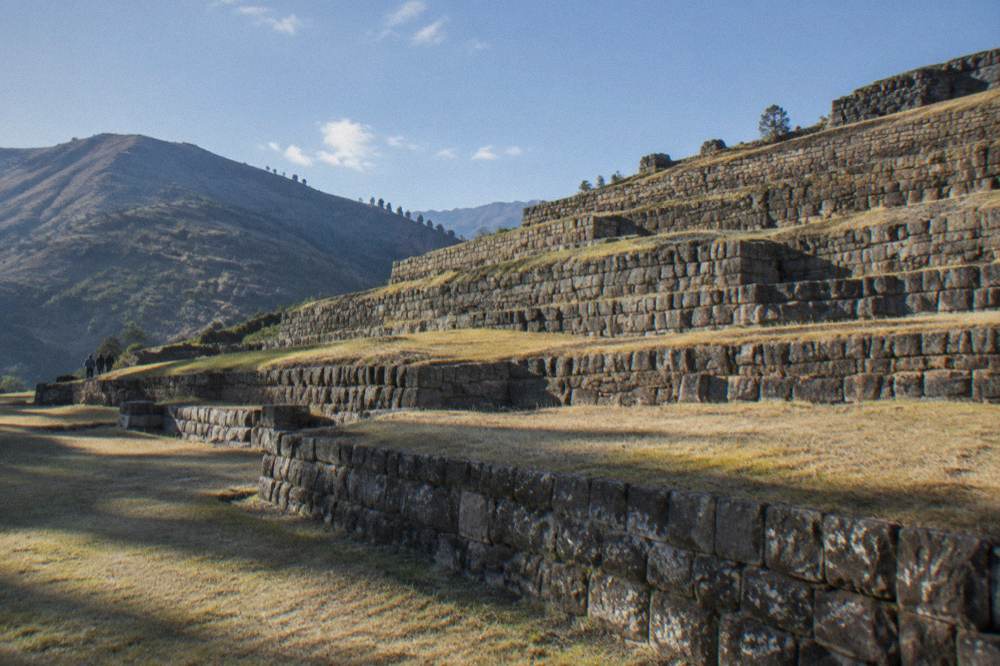
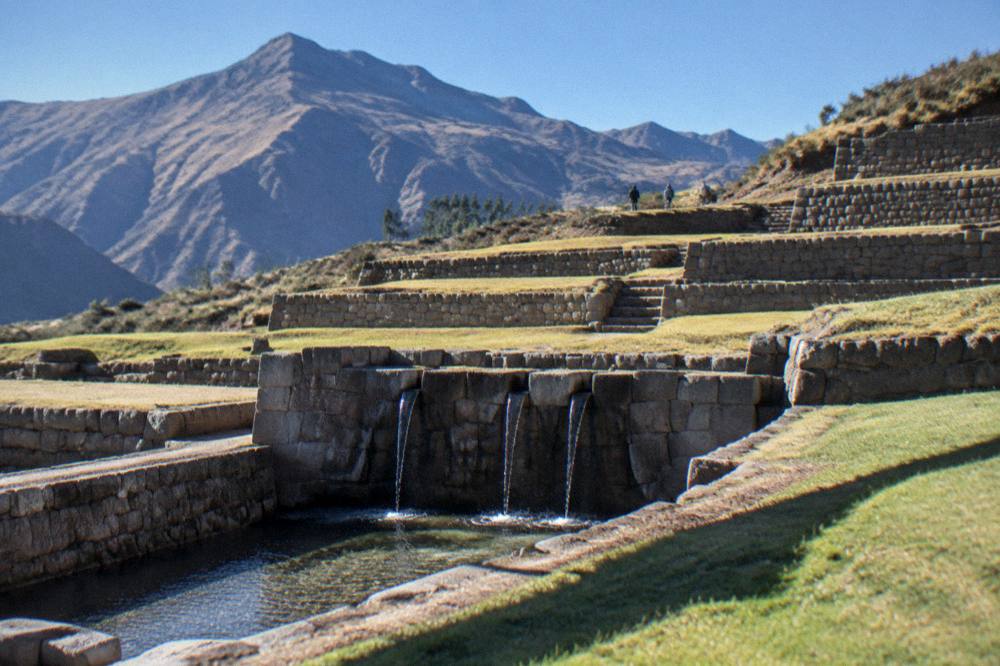
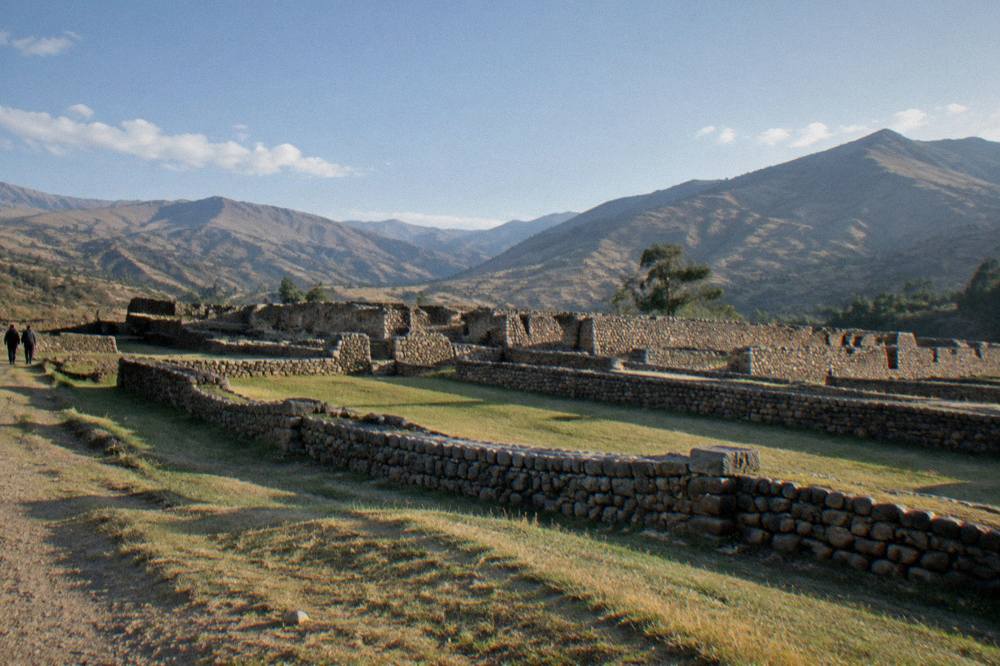
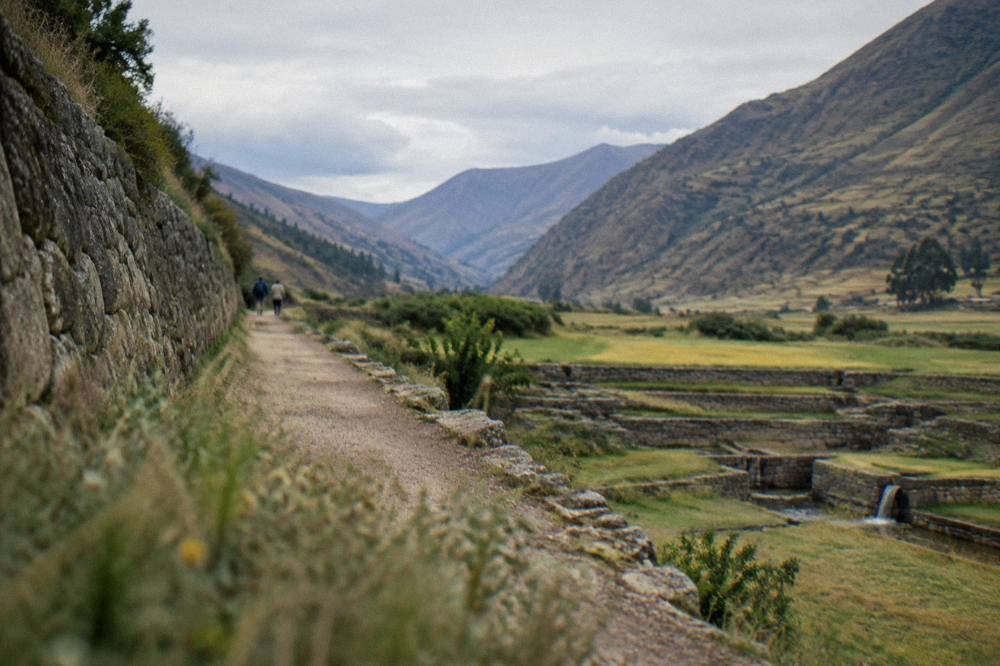
The site is best understood as an agricultural and ceremonial complex. The terraces are built in stone, cut and fitted without mortar in the Inca manner, and they rise in stepped levels up the slope. What separates Tipon from the better-known terraces at Pisac and Moray is the water. A spring above the site feeds a network of stone-lined channels and small fountains that run through the terraces continuously, and the channels are cut with a precision that still draws engineers and archaeologists to study them. The pack holds no founding date, no builder and no measurement for Tipon, and no year should be attached to it; the qualitative statement that survives is simply that this is Inca stonework and that the water system still functions.
Cusco sits at 3,335 m at the Plaza de Armas, and the South Valley lies below the city on the road toward Puno. The pack gives no elevation figure for Tipon itself, so none is printed here. What the sources do support is the geography: Tipon, Pikillacta and Andahuaylillas all lie along the same southern corridor, which is why tour operators sell them together as a South Valley day trip and why the Boleto groups two of them, Tipon and Pikillacta, on the same Circuit II ticket.
How Much Does Tipon Cost, And Which Ticket Covers It?
Tipon is covered by the Boleto Turistico Circuit II partial ticket, which COSITUC prices at S/ 70 for foreign tourists, about US$20, valid for the partial circuit's reported one to two days. The alternative is the integral ticket at S/ 130 for a foreign adult, about US$38, valid 10 days and covering all sixteen sites across the three circuits. There is no separate Tipon-only ticket in the official tarifario.
COSITUC, the committee that runs the Boleto Turistico, publishes the tarifario and the frequently asked questions page, and both were read for this site's facts file. The prices are official and current: the integral ticket for a foreign adult is S/ 130, foreign students pay S/ 70 for the integral, and each of the three partial circuits costs a foreign tourist S/ 70. Children enter free up to age 9, and ages 10 to 17 pay the student price with identification. Only students receive a discount; the FAQ states plainly that there is no teacher or youth-card reduction.
One detail catches many visitors: the Boleto Turistico is sold in person only. COSITUC does not sell it online. The central counter is at Av. El Sol 103, the Galerias Turisticas, open daily 07:30 to 18:00, and most included sites also sell the ticket at their own entrances. A traveller planning a South Valley morning should either buy the ticket the day before at the El Sol counter or budget a stop at the first site of the day. Validity starts the day of purchase, and COSITUC's own FAQ notes that covering all sixteen sites needs a minimum of three days, which is why the 10-day integral ticket exists.
| Ticket | Price, foreign tourist | Validity | Sites covered |
|---|---|---|---|
| Integral (BTCI) | S/ 130 (about US$38) | 10 days | All 16 sites, all three circuits |
| Integral, foreign student | S/ 70 (about US$20) | 10 days | All 16 sites |
| Partial Circuit I, Saqsaywaman | S/ 70 (about US$20) | 1 day (reported) | Saqsaywaman, Q'enqo, Puka Pukara, Tambomachay |
| Partial Circuit II, City | S/ 70 (about US$20) | 2 days (reported) | Qorikancha site museum, regional history museum, contemporary art museum, popular art museum, Centro Qosqo de Arte Nativo, Pachacutec monument, Tipon, Pikillacta |
| Partial Circuit III, Sacred Valley | S/ 70 (about US$20) | 2 days (reported) | Pisac, Ollantaytambo, Chinchero, Moray |
The Circuit II partial is the one that matters for Tipon. It bundles the site with Pikillacta, the Wari-era ruin further down the same valley, and with six city locations including the Qorikancha site museum. A visitor spending two days in Cusco who wants the South Valley and the city museums gets real value from the S/ 70 partial; a visitor also heading to Pisac and Ollantaytambo in the Sacred Valley should compare that against the S/ 130 integral, because two partials at S/ 140 already exceed it. The Sacred Valley and the South Valley sit on different circuits, which is a point the tarifario makes structurally but that no marketing summary tends to spell out.
The valley sites are the busiest part of the region's ticketed circuit, and a guided day is the way to see them. The Sacred Valley day tour with Pisac and Ollantaytambo covers the Circuit III side, and the operator's live listing shows the current dates and price.
What Do You Actually See At Tipon?
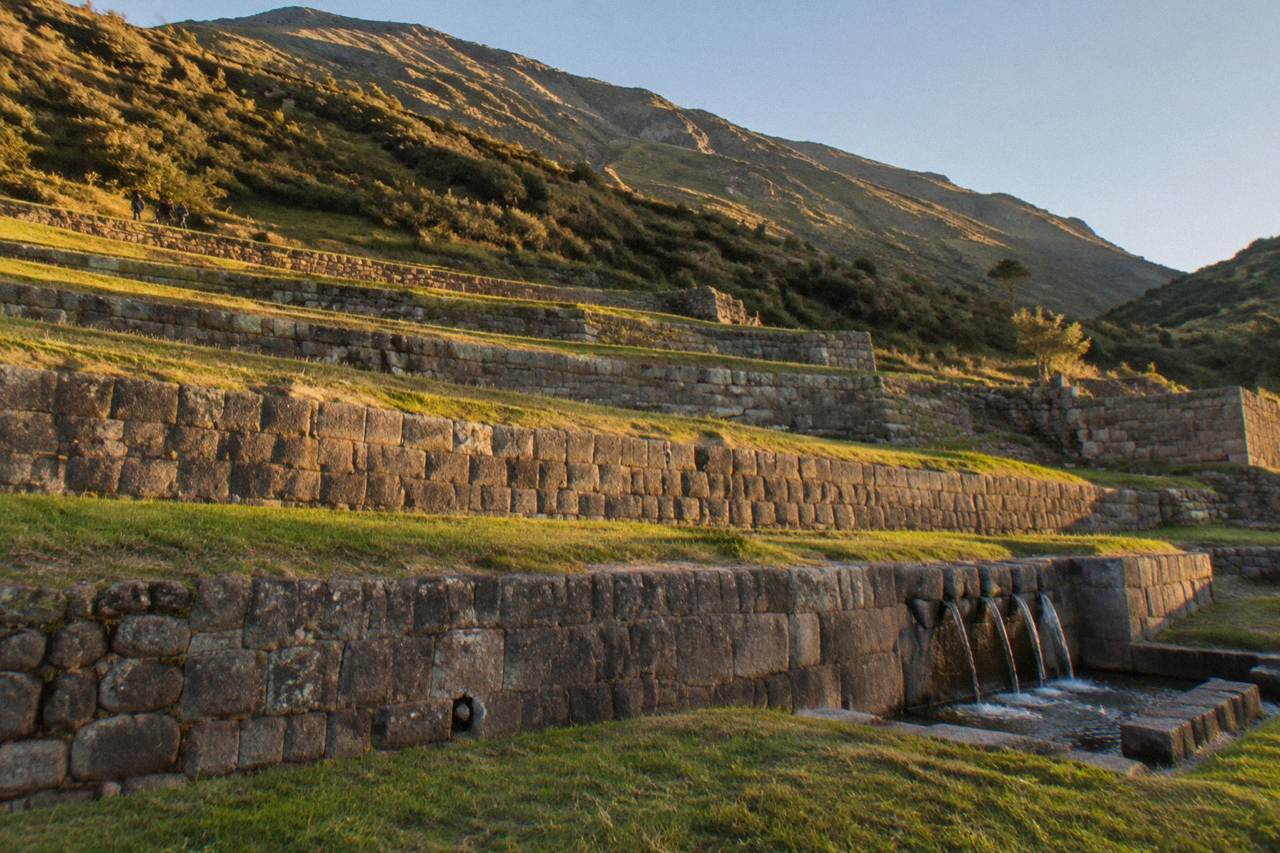
The visitor sees a hillside of finely fitted stone terraces climbing in stepped levels, a set of working stone water channels and fountains fed by a spring above the site, the remains of rooms and enclosures around a central sector, and wide views over the South Valley's farmland. The water system is the site's signature: it runs through the terraces continuously, and it is the reason Tipon is studied as an engineering site as much as an archaeological one.
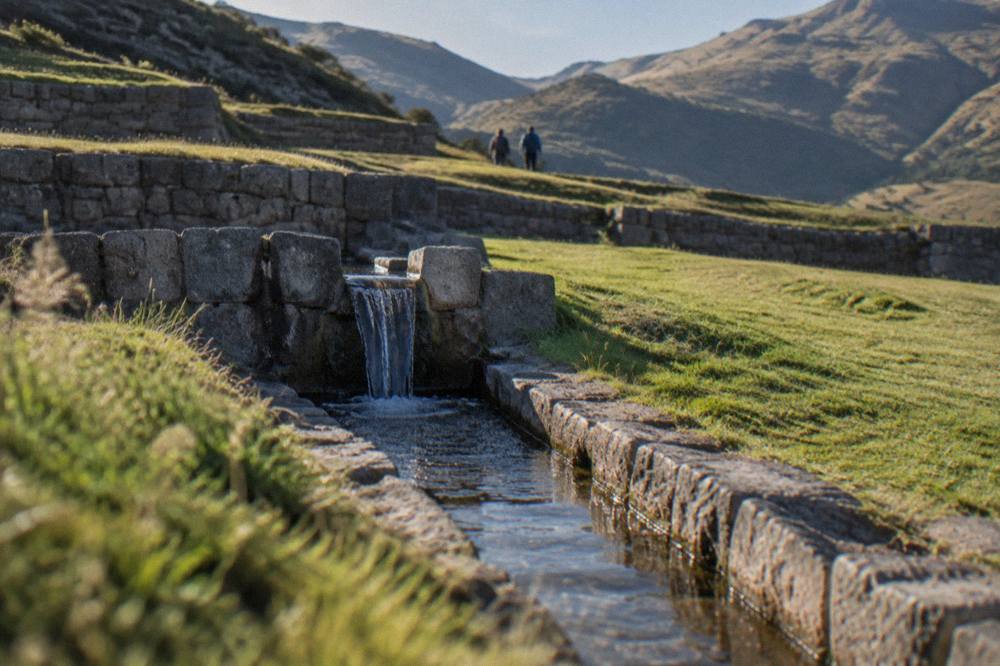
The terraces are the first thing the road delivers. They are long, high-walled and built with the inclined Inca face that drains water and sheds soil pressure, and they hold soil to this day. Walking up through them, the visitor passes the fountains: small stone basins set into walls, fed by channels cut along the terrace edges. The pack gives no dimensions, no stone counts and no construction dates for any of this, and those figures would not be honest here; what can be said is that the channels still flow, that the stonework is Inca in technique, and that the site reads as a planned whole rather than a village that grew.
Above the terraces sits the Intiwatana sector, a higher group of walls and rooms with a view over the whole complex, and to one side the remains of a larger enclosure that archaeologists describe in general terms as elite or ceremonial in character. The site is quiet by Cusco-region standards. The MINCETUR visitor dataset for 2025 lists the region's most-visited sites, and Tipon does not appear among the top entries, which matches what the ticket structure implies: the South Valley receives a fraction of the traffic that the Sacred Valley and Machu Picchu absorb. A visitor at mid-morning in the shoulder season can plausibly have the terraces to themselves.
| Sector at Tipon | What the visitor sees | Notes from the site's own presentation |
|---|---|---|
| Terraces | Stepped stone farming terraces climbing the hillside | Still holding soil; inclined wall faces, fitted stonework |
| Water channels and fountains | Stone-lined channels feeding small basins | Fed by a spring above the site; still flowing |
| Intiwatana sector | Walls, rooms and a viewpoint enclosure | Higher part of the site overlooking the terraces |
| Central enclosure | Larger walled complex | Described in general terms as ceremonial or elite in character |
| Surrounding valley | Farmland and hills of the South Valley | Views from the upper sectors toward the valley floor |
For context on how Inca sites around the city compare, the guides to Sacsayhuaman, Qorikancha and the Inca ruins in and around Cusco cover the circuit above the city, while Pikillacta, Tipon's neighbour on the same ticket, is covered on its own page.
How Do You Get To Tipon From Cusco?
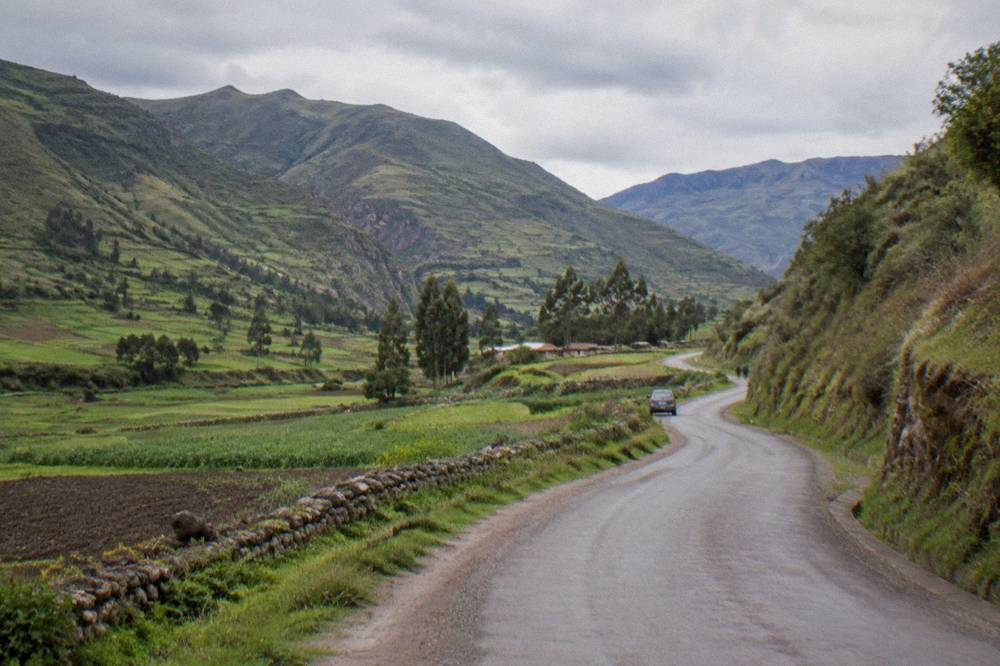
Tipon is reached by road south from Cusco through the South Valley corridor, and a visitor without a car has three realistic options: a booked South Valley day tour that includes it, a taxi or private driver hired for the circuit, or local public transport toward the towns of the southern valley, getting off at the Tipon turnoff and walking up to the site entrance. The pack verifies no bus fare, no colectivo fare and no journey time for this route, so none is printed.
The road south from Cusco is the same corridor that carries travellers toward Puno, and the towns of the South Valley sit along it. Tipon the town gives the site its name, and the archaeological park sits on the hillside above it. The site's position on the Circuit II ticket, alongside Pikillacta and the city museums, is the strongest practical signal: COSITUC expects visitors to reach it under their own steam or on a tour, and the ticket counter arrangement means the entrance itself is simple once the visitor is there. The wider set of guides lives on Things To Do In Cusco Peru.
The fare guard on this site is strict. No colectivo fare, bus fare or taxi price for the South Valley route is verified in the facts file, so this page states none, and a visitor should agree any taxi or driver price before the ride. What can be said is structural: the tour option bundles transport, ticket logistics and the sequencing of Tipon with Pikillacta and Andahuaylillas in one day, which is the pattern most operators sell, while independent travel leaves the visitor to manage the connections themselves. The South Valley day trip is the roster's dedicated product for that circuit, and the operator's live listing carries the current dates and price.
For the wider logistics of arriving in the region and moving around it, the site's guides to getting around Cusco, the Cusco airport and an acclimatisation day cover the practical sequence that travellers typically follow.
When Is The Best Time Of Year To Visit Tipon?
The dry season, roughly May to September, is the most reliable window for Tipon, because the terraces and the water channels are best appreciated with clear skies and firm paths, and because the Cusco region's rain is concentrated in the wet months of December to March, which carry 71.9 percent of the year's 707.8 mm at the WMO and SENAMHI historical station record for Cuzco.
The climate table below is the WMO World Weather Information Service record for the Cuzco station, supplied by SENAMHI, and it is a historical normal rather than a 1991-2020 series. It shows the pattern that shapes every visit to the region: mean daily maxima barely move, staying between 18.8 and 20.9 C across the whole year, while rainfall swings from under 2 mm in June to more than 145 mm in January. The seasons are inverted relative to the northern hemisphere, and June to August is winter here: dry, clear in the day, and cold at night, with frost common in June and July when mean minima sit at or below 0.3 C.
| Month | Mean max C | Mean min C | Rain mm |
|---|---|---|---|
| Jan | 18.9 | 6.6 | 145.3 |
| Feb | 18.8 | 6.5 | 133.7 |
| Mar | 19.1 | 6.2 | 107.0 |
| Apr | 19.7 | 4.9 | 43.2 |
| May | 19.8 | 2.5 | 8.7 |
| Jun | 19.5 | 0.3 | 1.5 |
| Jul | 19.1 | 0.1 | 4.0 |
| Aug | 19.8 | 1.6 | 8.6 |
| Sep | 19.8 | 3.9 | 21.8 |
| Oct | 20.9 | 5.5 | 39.4 |
| Nov | 20.7 | 6.1 | 71.9 |
| Dec | 19.4 | 6.4 | 122.7 |
For Tipon specifically, the wet season is not a closure; the site's terraces simply become muddier and the views more often clouded. The dry season's trade-off is crowds elsewhere in the region: the MINCETUR dataset shows Machu Picchu's October 2025 visitation at 1.93 times its February figure, and the same seasonality presses on the Sacred Valley's sites. The South Valley is the region's pressure valve in both directions, quieter in the high season and greener in the wet months, and a visitor weighting their whole trip toward the dry window should book the headline sites well ahead while treating Tipon as the flexible day.
Can You Combine Tipon With Pikillacta And Andahuaylillas In One Day?
Yes, and that combination is the standard South Valley day: Tipon's terraces and water channels, the pre-Inca walled compound at Pikillacta on the same Circuit II ticket, and the painted church at Andahuaylillas, which is not on the Boleto. The three sites sit along the same southern corridor, and a single day with a driver or a booked tour covers all of them comfortably.
Pikillacta is the second archaeological stop. It is a vast, grid-planned walled settlement of a culture older than the Inca, and its low stone walls and straight avenues look nothing like Tipon's fitted terraces; the contrast is the point, and the fact that one ticket covers both makes the pairing natural. Andahuaylillas closes the day with a small church whose interior is covered in painted decoration, a site the pack describes in qualitative terms only, with no hours, no fee and no dates stated. The Andahuaylillas page covers it in full.
The sequencing question is really a transport question. Tipon and Pikillacta both need the Boleto, so the ticket should be bought in Cusco the day before or at the first stop. Andahuaylillas lies further along the same road, past Pikillacta, which sets the natural order: Tipon first while the morning is clear, Pikillacta second, Andahuaylillas third, and back to Cusco in the late afternoon. Independent travellers with a hired driver control that order themselves; tour passengers follow the operator's version of it. Either way, the day is a genuine alternative to a second Sacred Valley outing for a visitor who has already seen Pisac and Ollantaytambo, and the 3-day Cusco itinerary shows how both valleys slot into a short trip.
Is Tipon Worth Visiting Without A Tour?
Tipon rewards independent visitors who want quiet and are willing to arrange their own transport and ticket, and it rewards tour visitors who want the South Valley's three sites sequenced and explained in one day. The site's water engineering and terrace design benefit from interpretation, but the official rule set imposes no guide requirement at Tipon, and the Boleto Turistico admits holders on the ticket alone.
The honest framing is about what the visitor wants from the day. An independent trip means buying the Circuit II partial at the El Sol counter or at the site, agreeing a driver's price before setting off, and carrying the day's timing in their own hands; in exchange, the terraces can be walked slowly and the quiet is total. A tour trades that control for logistics, narrative and the bundling of three sites whose stories span cultures and centuries, and for many visitors that narrative is the difference between seeing old walls and understanding what the water system represents.
For visitors building the wider trip, the site's guides to the Sacred Valley, Moray and the best time to visit Cusco carry the planning detail, and the Cusco costs guide sets out the everyday price ranges, reported by operators and travel sites, that frame a budget for the region. Whatever the choice, Tipon belongs on the short list of Cusco's quieter ticketed sites, and its water still runs.
For a visitor pairing the South Valley with the headline sites, the two-day option that strings the Sacred Valley and Machu Picchu together in one booked sequence is the roster's most direct route to both, and the operator's live listing shows the current dates and price.
Common Questions About Tipon
Is Tipon Included In The Boleto Turistico?
Yes. Tipon is one of the sixteen sites on the Boleto Turistico, sitting on the Circuit II city partial ticket alongside Pikillacta and six Cusco city locations. The Circuit II partial costs a foreign tourist S/ 70, about US$20, and the integral ticket covering all sixteen sites costs S/ 130, about US$38, valid 10 days.
Can You Buy The Boleto Turistico Online Before Visiting Tipon?
No. COSITUC sells the Boleto Turistico in person only, at the central counter on Av. El Sol 103 in Cusco, open daily 07:30 to 18:00, and at most included sites. There is no official online sales channel for the ticket.
How Far Is Tipon From Cusco?
Tipon lies south of Cusco in the South Valley corridor, reached by road. The facts file verifies no distance or journey time for this route, so no figure is printed; a visitor should treat it as a short road trip from the city, typically bundled with Pikillacta and Andahuaylillas in a single day.
What Is Tipon Famous For?
Tipon is known for its stone agricultural terraces and, above all, for its water: a spring-fed network of stone channels and fountains that still runs through the site. The engineering of that system is what gives the site its reputation among archaeologists and visitors alike.
Is A Guide Required At Tipon?
No guide requirement applies to Tipon; a valid Boleto Turistico admits the holder. Visitors who want interpretation can join a South Valley day tour that includes the site with a guide, or explore independently with the ticket alone.
What Else Should You See With Tipon In The South Valley?
Pikillacta, the walled pre-Inca settlement on the same Circuit II ticket, and the painted church at Andahuaylillas are the standard companions. All three sit along the same southern road from Cusco, and a single day covers them in that order.