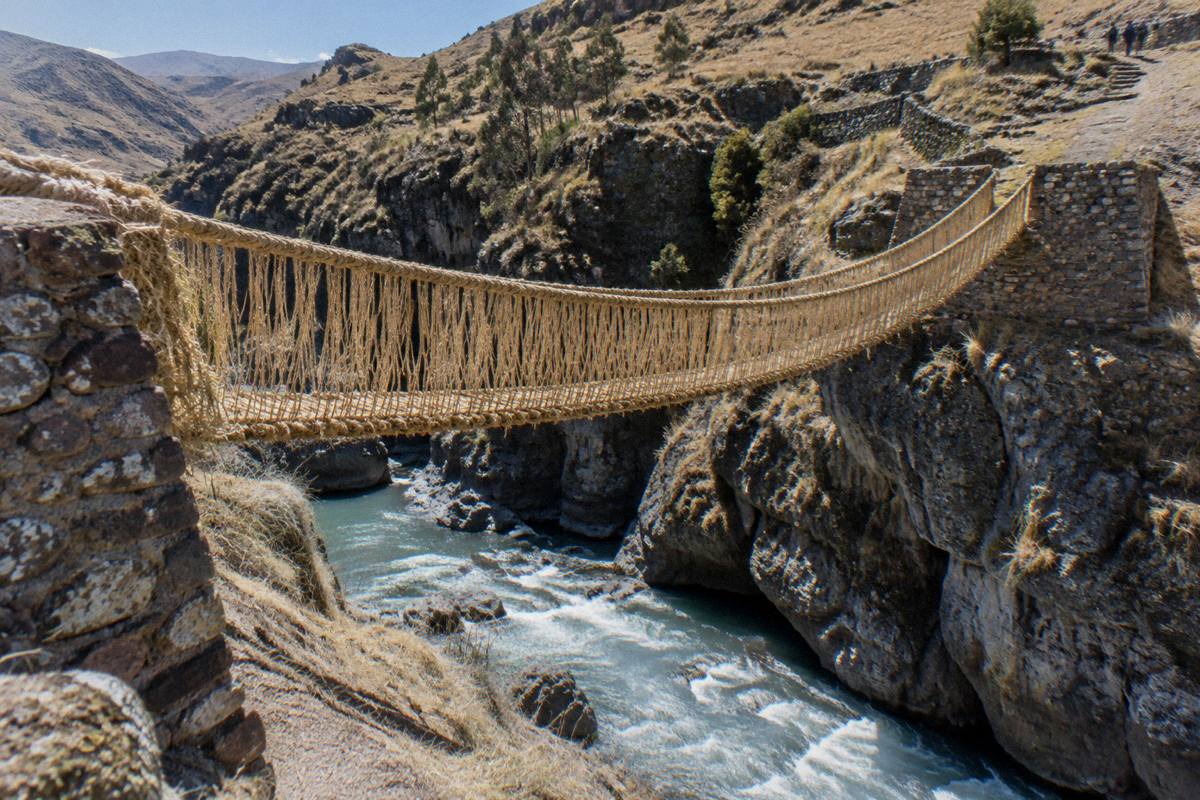
Qeswachaka, The Inca Rope Bridge
Qeswachaka is the last surviving Inca rope bridge, rebuilt from scratch every year by Quechua communities near Cusco, and it is one of the most unusual day trips in the region.
Short answer
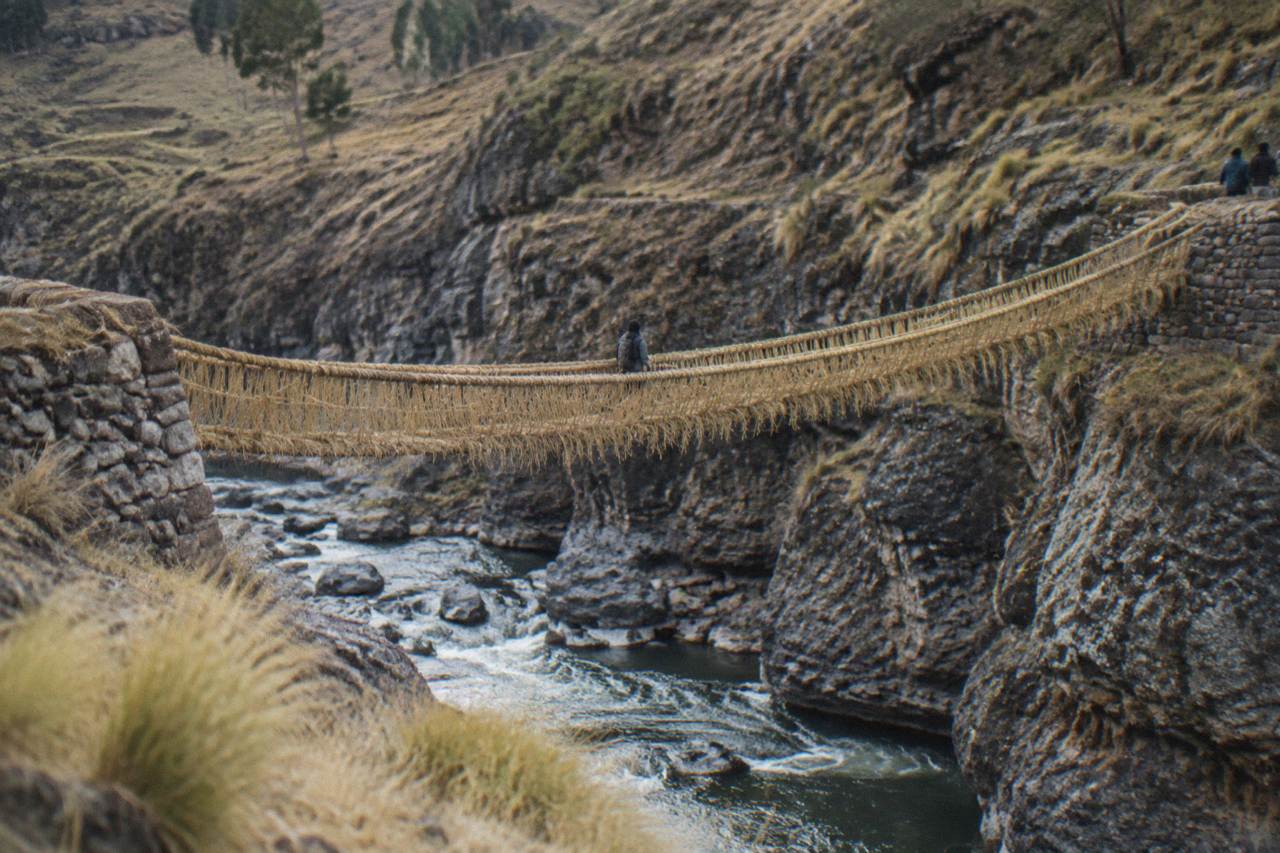
Qeswachaka is a hand-woven grass rope bridge over the Apurimac River, rebuilt annually by four Quechua communities, about a day trip from Cusco. The community fee is about S/ 20 in cash, and the 2026 renewal ran 2 to 4 July with the festival on 5 July.
Qeswachaka is a hand-woven rope bridge of twisted grass fibres spanning the Apurimac River in the high Andes of southern Peru, reached as a day trip from Cusco, the historic Inca capital at 3,335 m. It is the last bridge of its kind still renewed every year by hand, and the rebuild is not a performance for visitors: it is a working obligation that four Quechua communities have carried across centuries. For travellers based in Cusco it offers something none of the marquee day trips can, a living engineering tradition rather than a set of ruins, and this guide sets out what the sources say about the bridge, the fee, the festival and the practicalities of the visit.
What Is The Qeswachaka Inca Rope Bridge?
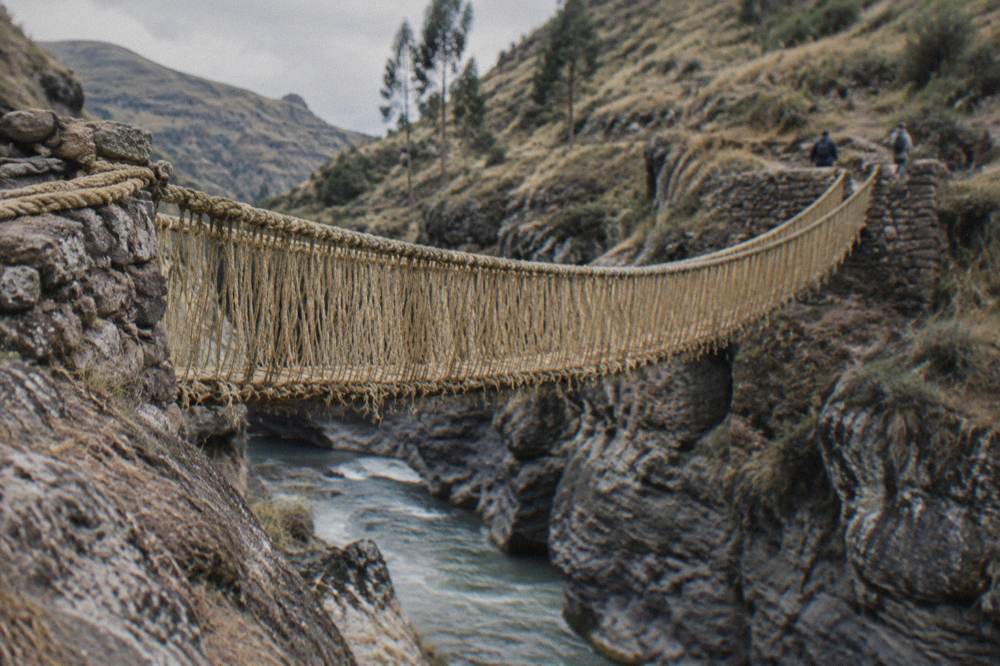
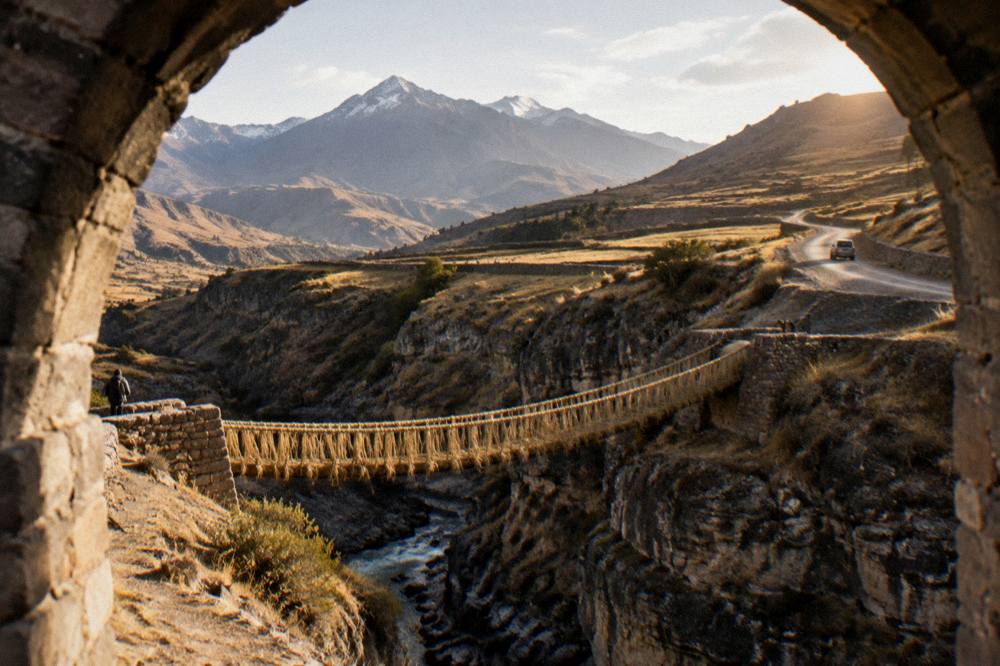
Qeswachaka is a suspension bridge woven from Andean grass, rebuilt from new fibre every single year by four Quechua communities on either side of the Apurimac River, and it is the last bridge of the Inca road network still renewed by hand. The name is usually rendered in Spanish and Quechua spelling as Q'eswachaka, and it sits in the Cusco region, far from the city itself.
The bridge is the survivor of a much larger system. The Inca road network, the Qhapaq Nan, crossed the Andes with the help of woven bridges where stone was impossible, and Qeswachaka is the one whose annual rebuild never stopped. The rebuild is communal work: the communities harvest the grass, twist it into rope by hand, and then dismantle the old bridge and weave the new one in place, a cycle that repeats every year. Peru's official tourism promotion describes the bridge as the last of these woven crossings, and the tradition is recognised well beyond Peru, which is why the renewal draws both locals and visitors.
What makes the bridge remarkable to engineers is the method rather than the span. There are no metal fastenings and no timber deck in the traditional build, only twisted vegetable fibre anchored to stone abutments on each bank. The rope is woven into larger cables, the cables are carried across the gorge, and the deck is lashed into place over the void. Each year the old bridge is cut away and dropped into the river, and the new one takes its place, so the bridge a visitor crosses is never more than a year old in its fibres even though the tradition behind it is ancient.
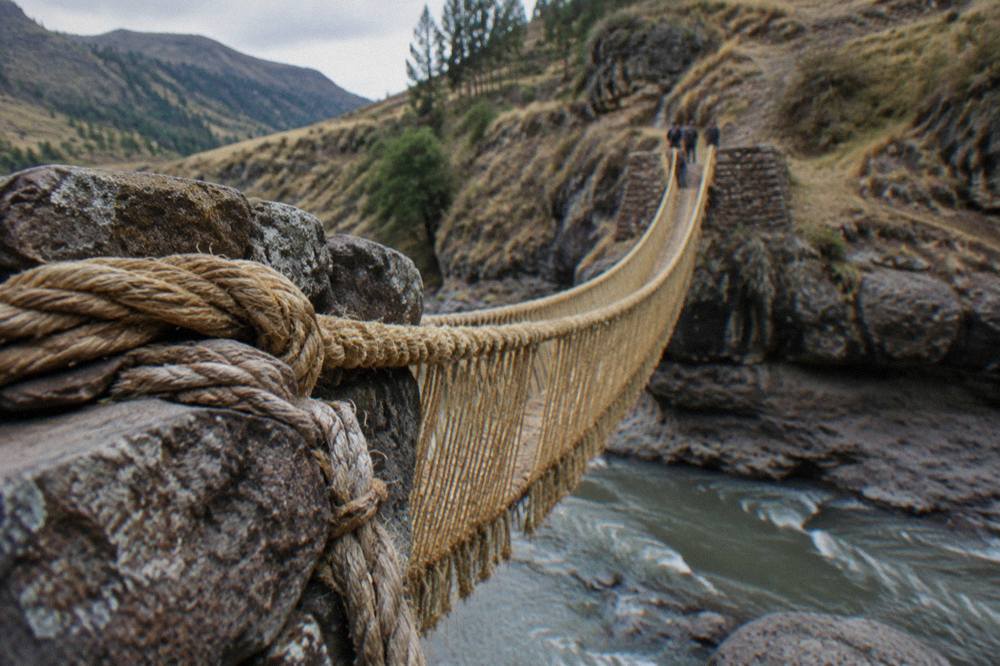
The bridge is not a museum piece under glass. Local people use it, and during the renewal the whole gorge becomes a worksite and a festival ground at once. Visitors who arrive on the renewal days watch the final weaving and the first crossings, while visitors on ordinary days walk out onto the span with a community fee paid in cash at the site. The tradition is a living one, and that distinction is what separates it from every archaeological park in the region.
How Do You Visit Qeswachaka From Cusco?
Qeswachaka is visited as a full-day trip from Cusco, either with a guided tour that handles the transport and the route or independently with a private driver, because the bridge lies in a rural area of the Cusco region reached by road. The featured private day trip on this site covers the drive, stops at four local lagoons on the way, and finishes at the Apurimac River gorge where the bridge hangs.
The route matters as much as the destination. The featured listing describes the outing as a journey through rural Peru with stops at four local lagoons before the descent to the Apurimac River, which means the day is a cross-section of the high Andean plateau rather than a single-site dash. That profile suits travellers who have already seen the archaeological parks around Cusco and want the countryside between them. The listing for the private trip shows the full itinerary, the inclusions and the live price on the operator's page, and the button below opens it directly.
Independent travel is possible but demands planning. The site sits in a sparsely populated district, public transport is thin, and the road passes through high-altitude country where weather changes quickly. A hired car or a private driver arranged from Cusco is the realistic self-guided option, and the community at the bridge collects its fee on arrival. Guided options remove the route-finding and the negotiation, which is why many visitors to this corner of the region arrive on an organised outing. The private bridge trip below is the site's featured product for this destination.
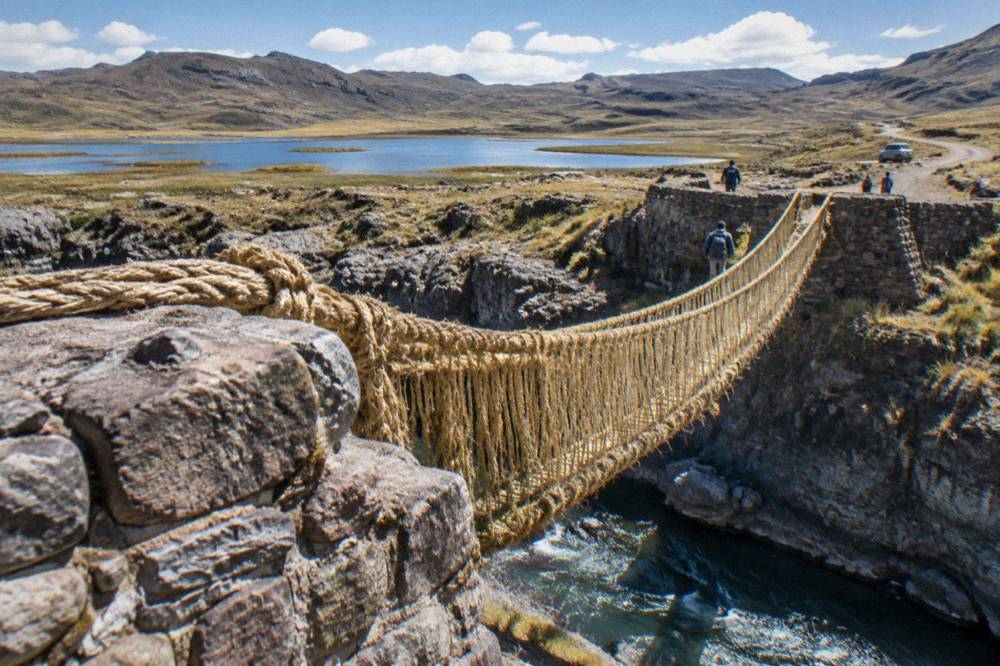
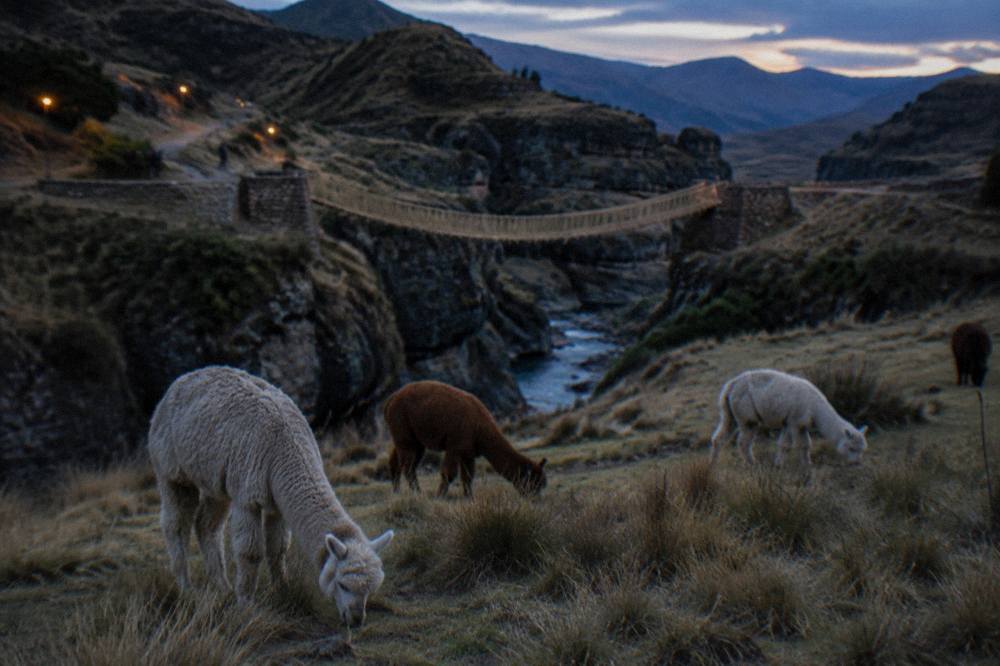
The four-lagoon stretch before the gorge is worth the drive on its own. The listing describes rural Peru unfolding between Cusco and the river, and the lagoons sit in open country where vicugnas and alpacas are part of the scenery rather than a curated attraction. Travellers comparing this trip against the region's other rural day trips, such as the Waqrapukara archaeological complex reached on a similar profile of high plateau and gorge, will find the two make a natural pairing for a longer stay; the Waqrapukara day trip guide covers that alternative in detail.
How Much Does Qeswachaka Cost To Visit?
The community fee at Qeswachaka is about S/ 20 per person, roughly US$6, paid in cash at the site according to operator reports from 2026. There is no Boleto Turistico coverage and no combined ticket: the COSITUC boleto lists its 16 sites and Qeswachaka is not among them, so the fee stands alone.
The cash detail matters more here than at most Cusco attractions. The bridge sits in rural country where card terminals and ATM access cannot be assumed, and operators are explicit that the community collects in soles. Visitors should carry small notes in Peruvian currency for the fee, for any food bought at the site, and for tips. The Boleto Turistico, which covers Saqsayhuaman, the city museums and the Sacred Valley sites, is a separate purchase entirely, and travellers often buy it for other days of the same trip; nothing about it touches the rope bridge.
| Cusco-region site | Entry cost for foreign visitors | Notes |
|---|---|---|
| Qeswachaka bridge | About S/ 20 (about US$6) | Community fee, cash, per 2026 operator reports |
| Rainbow Mountain (Vinicunca) | S/ 25 to S/ 30 (about US$7 to US$9) | Cash, route-dependent: Cusipata S/ 25, Pitumarca S/ 30 |
| Palccoyo | About S/ 20 (about US$6) | 2026 operator figure; older official pages gave S/ 10 to S/ 15 |
| Humantay Lake | S/ 10 to S/ 20 | Sources disagree, so no single figure is printed |
| Maras salt mines | S/ 15 to S/ 20 | 2026 operator reports, cash |
| Waqrapukara | No ticket, or S/ 10 to S/ 20 | Community contribution at the site |
The table shows the pattern across the region's community-managed sites: fees are modest, they are paid in cash, and they go to the communities rather than to a central ticketing platform. That is a deliberate contrast with the state system. The Ministry of Culture's platform handles Machu Picchu, and COSITUC handles the boleto sites, but the rural attractions operate on direct local payment. Visitors who plan only card payments will be stuck at the trailhead, so the rule of thumb for any of these day trips is to leave Cusco with soles in small denominations.
When Is The Qeswachaka Bridge Renewal Festival?
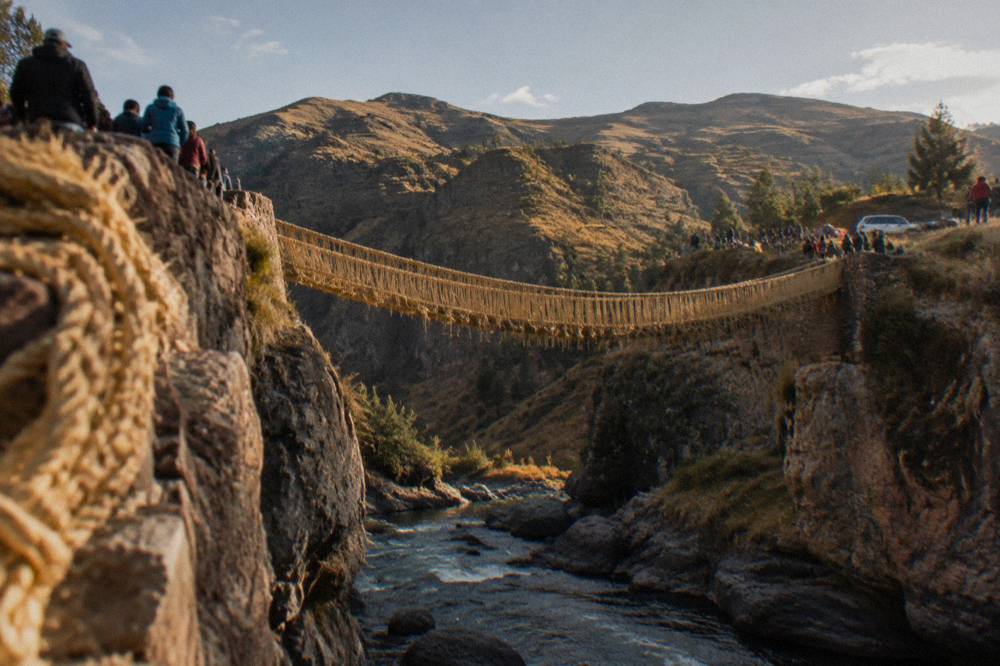
The 2026 renewal of the bridge ran from 2 to 4 July, with the cultural festival on 5 July, dates confirmed by Cusco press reporting and moved from the earlier June slot that older accounts describe. The renewal happens every year, but each year's dates are set by the communities, so no standing date should be assumed for later years.
The renewal is the single best time to see the bridge, and the worst time to expect a quiet visit. Over three days the communities harvest and twist the new fibre, dismantle the old span and weave the replacement, and the work ends with the first crossings of the new bridge. The fourth day in 2026 was given over to the festival, with food, music and dance around the site. Press coverage from Cusco confirmed the 2026 dates, including the shift from June, which shows why the calendar needs checking fresh each year rather than being carried over. Other pages covering the same trip are gathered on Things To Do In Cusco Peru.
Visitors who want the festival should plan around it rather than hope for it. The site fills with locals and with visitors who timed their trip deliberately, and accommodation in the area is limited compared with Cusco, so most people come for the day. Operators run festival-day departures, and the private trip featured on this page is the vehicle for that: the listing shows what the outing includes and the live availability on the operator's page.
| Renewal detail | 2026 fact | Source basis |
|---|---|---|
| Weaving days | 2 to 4 July 2026 | Cusco press, June 2026 |
| Festival day | 5 July 2026 | Same reporting |
| Change from prior years | Moved from June | Noted in the same coverage |
| Later years | Dates not sourced | Set annually by the communities |
The annual cycle is also why the bridge survives. Because the fibre is replaced every year, the structure never rots in place, and because the work belongs to the communities, the knowledge of how to build it is renewed with the bridge. Preservation here means repetition, not conservation of old material. That is the deepest difference between Qeswachaka and the stone sites of the region, and it is the reason the renewal days, not the quiet Tuesdays, are when the bridge shows what it is.
What Is It Like To Cross The Qeswachaka Bridge?
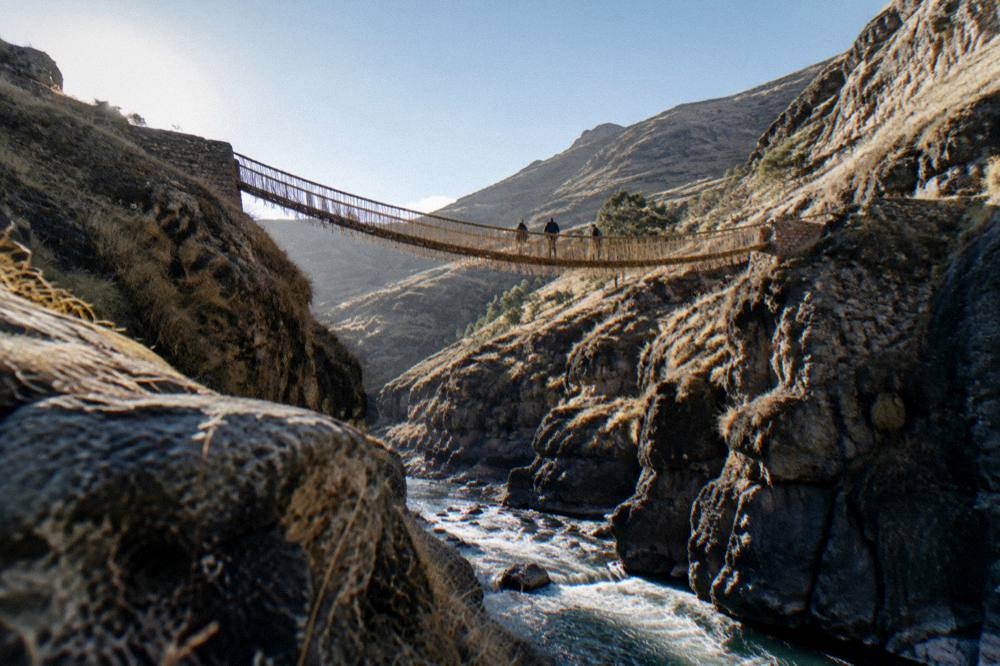
Crossing the bridge means walking a woven grass deck that flexes underfoot above the Apurimac River, holding the rope handrails, with the gorge visible through the weave below; the deck moves with every step, and the communities on both banks treat the crossing as an everyday connection rather than a dare.
The experience is tactile before it is visual. The fibre is rough under the hands, the deck sways, and the river runs far below through the open weave of the floor. Visitors who expect a polished tourist attraction find something rawer: a working bridge, a cold river gorge, and wind that comes up the valley without warning. The crossing itself is short, but it is the kind of short that people remember, and it rewards sturdy shoes and both hands free.
The setting is high Andean country throughout. The route out from Cusco crosses the plateau well above the city, and the gorge of the Apurimac cuts down from it, so the day involves serious altitude even before any walking. The CDC's Yellow Book names Cusco itself as a rapid-ascent destination at roughly 3,350 m and advises a doctor's input on medication decisions, and the same caution extends outward to the rural day trips. Nobody publishes a day count for acclimatisation, but the sensible reading of the guidance is to spend time in Cusco before heading to the higher corners of the region.
Photography at the bridge is straightforward in the dry season and frustrating in the wet one. The WMO station record for Cusco, a historical normal supplied by SENAMHI, shows the rain pattern clearly: December to March carries 71.9 percent of the year's 707.8 mm, while May to August together bring just 22.8 mm. Mean daily maximums stay between 18.8 and 20.9 C all year, so the cold that matters is the night and early-morning cold, not the afternoon. A departure that leaves Cusco before dawn will be a cold one, whatever the month.
| Month | Mean daily maximum C | Mean daily minimum C | Mean rain mm |
|---|---|---|---|
| January | 18.9 | 6.6 | 145.3 |
| April | 19.7 | 4.9 | 43.2 |
| July | 19.1 | 0.1 | 4.0 |
| October | 20.9 | 5.5 | 39.4 |
The seasonal logic follows from the table. The dry months, roughly May to September, give the clear days and the cold nights; the wet months, roughly November to March, give green country and a real chance of a soaked outing on exposed roads. The bridge is woven and crossed year round, and operators run the trip in both seasons, but the odds of a comfortable day sit firmly with the dry stretch. Travellers chasing festivals should note that the renewal lands in the dry season, which is one more argument for timing a visit around it.
Can You Combine Qeswachaka With Other Cusco Day Trips?
Qeswachaka works best as a standalone day trip from Cusco, because the drive out and back consumes the day, but it pairs naturally with a second rural outing such as Waqrapukara, and it sits logically on an extended route toward Puno, where a scenic day trip with lunch runs the same direction through the high plateau.
The standalone logic is arithmetic. A full-day outing to the gorge uses the daylight, so squeezing a second site into the same day is not realistic for visitors on a short stay. The better play is to give the bridge its own day and to spend other days on the region's other rural draws: Rainbow Mountain at about 5,000 m, Palccoyo's viewpoint at 4,900 m, or the Humantay Lake hike at about 4,200 m. Each of those has its own guide on this site, and each is a different kind of day: a high pass, an easier rainbow ridge, or a lake basin.
| Rural day trip from Cusco | Altitude | Entry cost for foreigners | Character of the day |
|---|---|---|---|
| Qeswachaka | Gorge of the Apurimac River | About S/ 20 | Living tradition, woven bridge, lagoons en route |
| Rainbow Mountain (Vinicunca) | About 5,000 m | S/ 25 to S/ 30 | High pass, coloured ridge, big crowds in season |
| Palccoyo | 4,900 m viewpoint | About S/ 20 | Quieter rainbow alternative, shorter walking |
| Humantay Lake | About 4,200 m | S/ 10 to S/ 20 | Lake hike, early start, steep final stretch |
| Waqrapukara | High plateau and gorge | S/ 10 to S/ 20 contribution | Archaeological complex, remote hiking |
The Puno connection deserves its own paragraph, because it is the one genuine combination. The scenic day trip from Cusco toward Puno, the Route of the Sun, crosses the same high plateau country and is sold as a full-day outing with lunch included, so travellers heading to Lake Titicaca after Cusco can fold a day of Andean sightseeing into the transfer. The listing below shows the itinerary and the live price on the operator's page, and the button opens it directly.
For a rest day between the rural outings, the city itself carries the load. The Plaza de Armas, the Cusco Cathedral and the Inca walls around the historic centre fill an easy acclimatisation day, and the wider set of sites is covered in the Inca ruins in Cusco guide. Visitors with a free afternoon can also book a shorter city activity; the chocolate workshop below is a popular indoor option that needs no altitude fitness at all.
What Should You Know Before You Go?
Visitors need cash soles for the community fee, layers for a day that starts cold and ends in strong sun, sturdy shoes for the bridge deck, and a realistic sense of altitude: the outing crosses high country well above Cusco's own 3,335 m, and the CDC advises graded ascent and a doctor's input on acetazolamide rather than self-medication.
Packing follows the terrain. Sun protection matters at altitude even on cold mornings, because the UV is unforgiving across the open plateau, and wind protection matters at the gorge, where the valley funnels the weather through. Water and snacks should come from Cusco, since the site is rural and supply there is limited to what local vendors bring. Shoes with grip matter for the bridge deck, where the woven surface is uneven underfoot and the handrails are the security. The fee is cash, the tips are cash, and the exchange rate runs about S/ 3.4 to the US dollar, so a modest amount of soles covers the whole day's local spending.
Altitude is the one variable that deserves respect rather than worry. The CDC Yellow Book prefers graded ascent, names Cusco as a rapid-ascent destination, and frames acetazolamide as a prescription decision to make with a doctor; it also notes that in cases like Cusco, travellers can descend to lower elevations to sleep for the first night or two before beginning their ascent. Nobody publishes a guaranteed day count for acclimatisation, so the honest planning move is to schedule the bridge day, and any other high outing, after the first days in Cusco rather than on arrival morning.
Booking follows the same logic as every rural day trip in the region. The private bridge trip is the featured product for this destination, and its listing shows the full itinerary, the inclusions and the cancellation terms on the operator's live page. Travellers who prefer to build their own day can hire a driver in Cusco and pay the community fee at the site, but they take on the route-finding, the timing and the festival-calendar checking themselves. Either way, the bridge itself asks very little: cash, grip on your shoes, and an appreciation for the fact that the thing under your feet was woven by hand, this year, as it is every year.
Common Questions About Qeswachaka
The questions below cover what visitors ask most about the last Inca rope bridge near Cusco: the fee and how to pay it, the renewal dates, whether the crossing is safe, and how the day compares with the region's other rural trips. Each answer sticks to what the sources state, and where a figure is not published, the answer says so plainly.
Is Qeswachaka worth visiting from Cusco?
For travellers with four or more days in the region, yes: it is the only day trip from Cusco built around a living tradition rather than ruins, and the four lagoons on the route add high-plateau scenery the archaeological parks cannot match. Visitors on a tight schedule who want the headline sites should prioritise Machu Picchu and the Sacred Valley first; the guide to Machu Picchu as a day trip covers that decision.
How much does it cost to cross the Qeswachaka bridge?
The community fee is about S/ 20 per person, roughly US$6, paid in cash at the site according to 2026 operator reports. There is no card payment to rely on and no Boleto Turistico coverage, so visitors should carry soles in small notes.
When is the bridge rebuilt?
The 2026 renewal ran 2 to 4 July, with the festival on 5 July, and those dates were moved from the June slot described in older accounts. The renewal happens every year, but each year's dates are set by the communities, so travellers should confirm the current year's dates before planning around the festival.
Is the Qeswachaka bridge safe to cross?
The bridge is rebuilt from new fibre every year and is used by the local communities as an everyday crossing, which is the strongest practical reassurance available. The deck flexes underfoot and the weave is open, so sturdy shoes and both hands on the rails are the sensible approach. No published safety statistic exists for the crossing, and none is needed to plan sensibly.
Can you visit Qeswachaka without a tour?
Yes, with a hired car or private driver from Cusco and cash for the community fee, though public transport to the area is thin and the route-finding falls on the traveller. The private day trip featured on this page handles the drive, the lagoon stops and the timing, and its listing shows the live price and inclusions on the operator's page.
What else is near Qeswachaka?
The route out from Cusco passes four local lagoons in open high-altitude country, and the same rural profile connects to Waqrapukara, an archaeological complex reached across comparable plateau and gorge terrain. Travellers heading onward to Lake Titicaca can take the scenic Cusco to Puno day trip, which crosses the high plateau with lunch included, and the Rainbow Mountain and Palccoyo guides cover the region's other high-altitude draws.