Cusco Travel Tips
Cusco, the historic Inca capital in the Andes of southern Peru, sits at 3,335 m and rewards a little planning. These Cusco travel tips cover altitude, tickets, money, weather and transport, drawn from official sources.
Short answer
Arrive ready for altitude at 3,335 m, buy the Boleto Turistico in person at Av. El Sol 103, carry soles in cash for small fees, and plan around a dry season from roughly May to September.
Cusco, sometimes spelled Cuzco, is the historic city in the Andes of southern Peru that served as the Inca capital before the Spanish colonial churches rose on its stone foundations. The Plaza de Armas sits at 3,335 m, per PROMPERU, and the city's weather, ticketing and transport all follow rules that catch first-time visitors off guard. This page collects the Cusco travel tips that matter before a trip: how to handle the altitude, how the Boleto Turistico works, what everyday costs look like, what to pack, and which official rules apply at Machu Picchu. Every figure here comes from an official or verified source, and where sources disagree, that disagreement is stated rather than smoothed over.
What Should You Sort Out Before You Arrive In Cusco?
Three things deserve attention before the flight: a passport valid for at least six months from entry, an arrival plan that accounts for the 3,335 m elevation, and a realistic sense of how many days the region needs. Peru requires no tourist visa for US, UK, EU, Canadian and Australian passport holders, and the border officer sets the length of stay, typically up to 90 days.
The US State Department advisory for Peru stands at Level 2, Exercise Increased Caution, and Cusco city, the Sacred Valley, the Inca Trail and Machu Picchu all sit outside the Do Not Travel areas named in that advisory. The UK Foreign Office adds a simpler street-level warning: street crime is a significant problem in major cities, and nobody should walk alone in quiet areas or at night. Those two statements, not rumour, are the current baseline for safety planning.
Time in the region matters more than most itineraries admit. The Ministry of Culture's own ticketing structure, the COSITUC ticket office hours and the February closure of the Inca Trail all shape what is possible in a given week. A first day in the city, a day in the Sacred Valley and a day at Machu Picchu is the minimum honest frame, and the site's Cusco itinerary guides break down longer versions.
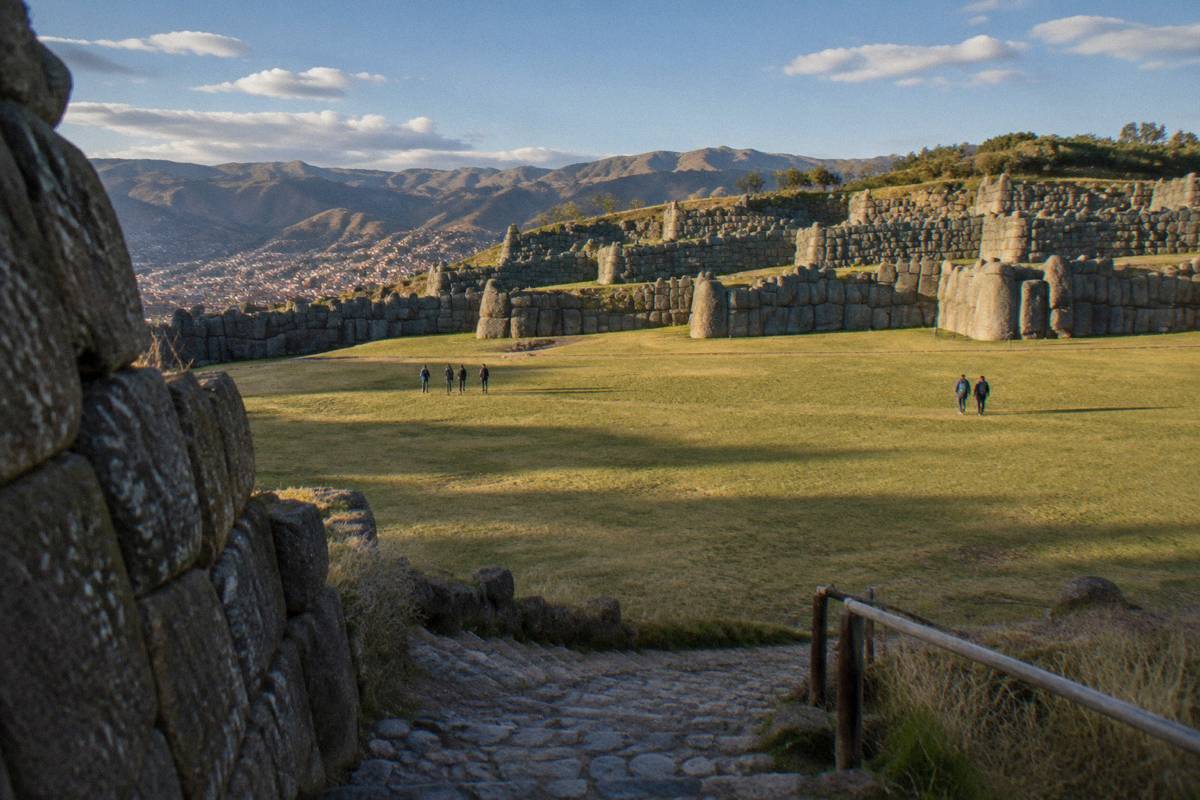
For a first orientation, a guided half-day city tour is the practical option. The Cusco City Tour Four Ruins in Half-Day covers Sacsayhuaman and the other ruins above the city in one loop, which is otherwise a slow series of taxi rides, and it pairs well with the deeper planning pages gathered at Things To Do In Cusco Peru.
For a guided first walk through the Inca city, book a free walking tour here.
How Do You Handle The Altitude When You Arrive In Cusco?
The CDC Yellow Book names Cusco as a rapid-ascent destination at about 3,350 m and advises graded ascent where possible, a low threshold for asking a doctor about acetazolamide when ascent is abrupt, and no alcohol for the first 48 hours at high altitude. Nobody publishes a guaranteed acclimatisation day count, so plan the first day as gentle and see how it goes.
The CDC's specific line on Cusco is worth reading closely: travellers can descend to elevations lower than the airport to sleep for one or two nights and then begin their ascent, which in some cases removes the need for medication. The Sacred Valley towns sit lower than the city, Ollantaytambo at 2,792 m and Urubamba at 2,870 m, which is why many itineraries sleep in the valley first and finish in Cusco.
Acetazolamide is a prescription decision, not a travel-shop purchase. The CDC Yellow Book lists prophylaxis doses, but the same page frames it as a conversation with a clinician before travel, and the CDC's Peru notice repeats the advice to talk to a doctor about high-altitude destinations. The site's dedicated Cusco altitude guide covers symptoms, medication questions and day-by-day planning in detail.
A cup of coca tea is reported at about S/ 2 to 5 around the city, and it is a normal welcome drink rather than a treatment. The practical first-day pattern is simple: arrive, eat lightly, walk slowly, sleep well, and save Sacsayhuaman, at 3,701 m, for a day when breathing at the Plaza de Armas feels ordinary.
What Does The Boleto Turistico Cover And Where Do You Buy It?
COSITUC's integral Boleto Turistico costs S/ 130 for a foreign adult, about US$38, covers 16 sites and lasts 10 days; the three partial circuits cost S/ 70 each, and the ticket is sold in person only, at the counter on Av. El Sol 103, open daily 07:30 to 18:00. There is no online sale.
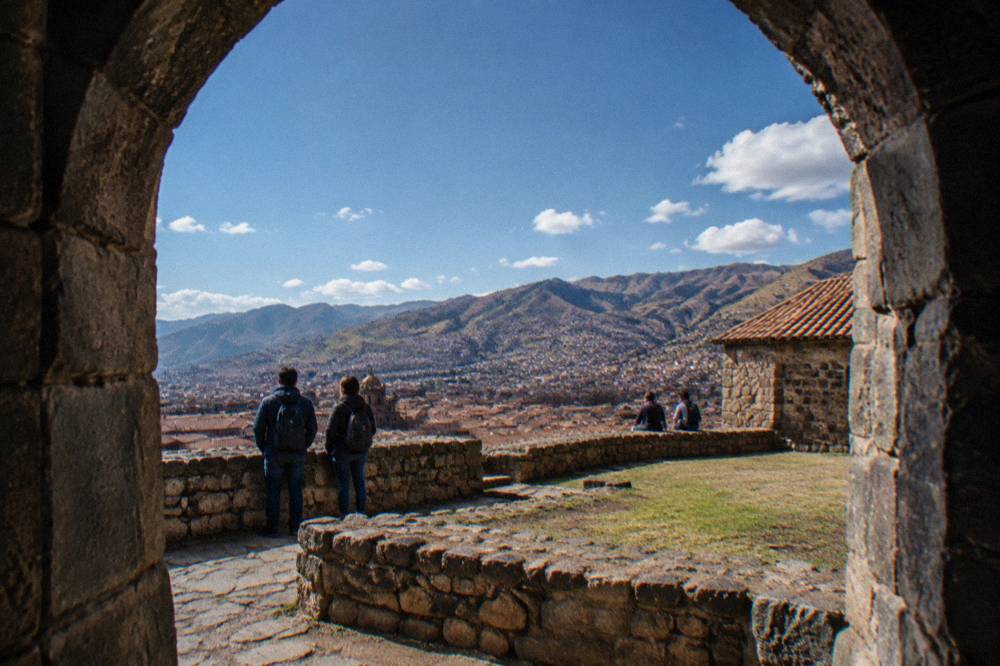
The 16 sites split across three circuits. Circuit I covers Saqsayhuaman, Q'enqo, Puka Pukara and Tambomachay above the city. Circuit II covers the city museums and sites including the Museo de Sitio Qorikancha, the Museo Historico Regional and Tipon. Circuit III covers the Sacred Valley: Pisac, Ollantaytambo, Chinchero and Moray. The partial tickets last one to two days depending on the circuit, and validity starts the day of purchase.
Two traps catch people. First, Machu Picchu is not on the Boleto Turistico: it sells separately on the Ministry of Culture's ticket platform or in person at Machu Picchu Pueblo. Second, the Cusco Cathedral is not in the 16-site list either, so a Cathedral visit needs its own admission. The full breakdown, including student pricing and child rules, sits on the site's Boleto Turistico guide.
| Ticket | Foreign adult price | Validity | Sites |
|---|---|---|---|
| Integral (BTCI) | S/ 130 (about US$38) | 10 days | All 16 |
| Partial Circuit I, Saqsayhuaman | S/ 70 (about US$20) | 1 day | 4 ruins above the city |
| Partial Circuit II, City | S/ 70 (about US$20) | 2 days | City museums and sites |
| Partial Circuit III, Sacred Valley | S/ 70 (about US$20) | 2 days | Pisac, Ollantaytambo, Chinchero, Moray |
| Integral, foreign student (BEE) | S/ 70 (about US$20) | 10 days | All 16 |
Children are free to age 9, and ages 10 to 17 pay the student price with ID, per the COSITUC FAQ. Students get the only discount; there is no teacher or youth-card rate. If the plan is Sacsayhuaman plus the city museums plus the valley, the integral ticket pays for itself quickly.
How Much Does Everyday Life In Cusco Cost?
The currency is the Peruvian sol, written S/, at about S/ 3.4 to the US dollar, and the reported everyday ranges are: a menu del dia set lunch S/ 8 to 15, a cup of coca tea S/ 2 to 5, a tourist SIM S/ 5 to 15 plus a data pack S/ 20 to 40, and an airport taxi to the centre about S/ 15 to 25. All are reported operator ranges, not official tariffs.
Those small figures are the honest ceiling of what can be stated. Train fares, flight fares, bus-company fares and hotel rates are shown and agreed at the point of booking, and no verified range for them belongs on a planning page. The same discipline applies to tipping percentages, ATM fees and exchange-house rates: no sourced figure exists, so none is printed here.
What the sol buys at official sites is well documented, though. The museums off the boleto carry their own admissions: the Inca Museum lists S/ 20 for a foreign adult, the Museo de Arte Precolombino lists S/ 20 general and S/ 10 for students, and the Qorikancha museum lists S/ 20, per PROMPERU's museum pages. The site's Cusco costs guide and the what to eat in Cusco page carry the fuller money picture.
| Everyday item | Reported range | Notes |
|---|---|---|
| Menu del dia (set lunch) | S/ 8 to 15 (about US$2 to 4) | Reported by operators and travel sites, 2026 |
| Cup of coca tea | S/ 2 to 5 | Common welcome drink in hotels and cafes |
| Tourist SIM card | S/ 5 to 15 | Plus a data pack at S/ 20 to 40 |
| Airport taxi to the centre | About S/ 15 to 25 | Reported range; agree the fare before the ride |
| Inca Museum, foreign adult | S/ 20 (about US$6) | PROMPERU listing |
| Museo de Arte Precolombino | S/ 20 general, S/ 10 students | PROMPERU listing |
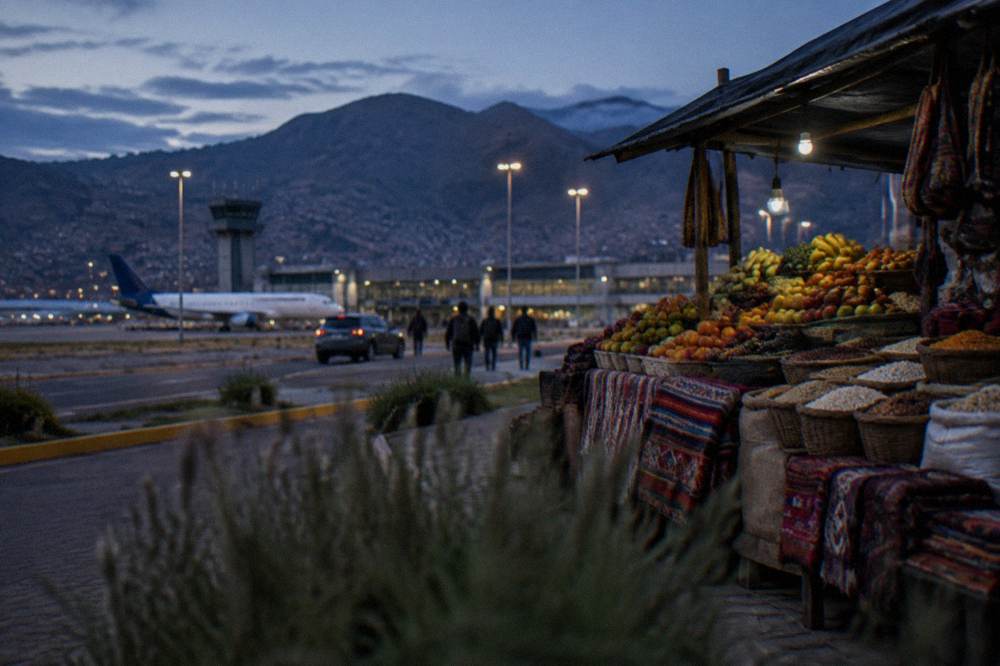
Cash matters more than cards at the small end. Community entry fees at Rainbow Mountain run S/ 25 to 30 for foreigners in cash, the Maras salt mines list S/ 15 to 20, and Humantay Lake sources disagree within a S/ 10 to 20 band, so no single figure is printed for it. Carry small sol notes for these, and see the Cusco markets guide for what the city's own stalls sell.
What Should You Pack For Cusco's Weather?
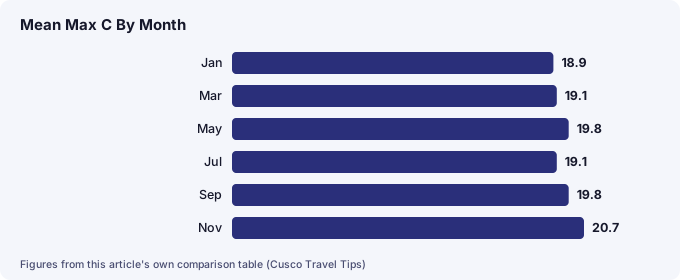
Cusco is a Southern Hemisphere high-Andes city with a dry season roughly May to September and a wet season roughly November to March, so pack layers for cold nights and a rain layer for the wet months: mean daily maximums stay between 18.8 and 20.9 C all year, while June and July mean minimums sit near freezing.
The numbers behind that summary come from the WMO World Weather Information Service record for the "Cuzco" station, data supplied by SENAMHI. July's mean minimum is 0.1 C against a mean maximum of 19.1 C, a daily swing of about 19 degrees; January's swing is smaller, 6.6 C to 18.9 C, but January also carries 145.3 mm of rain. Frost nights, per SENAMHI's heladas guidance, peak in June and July.
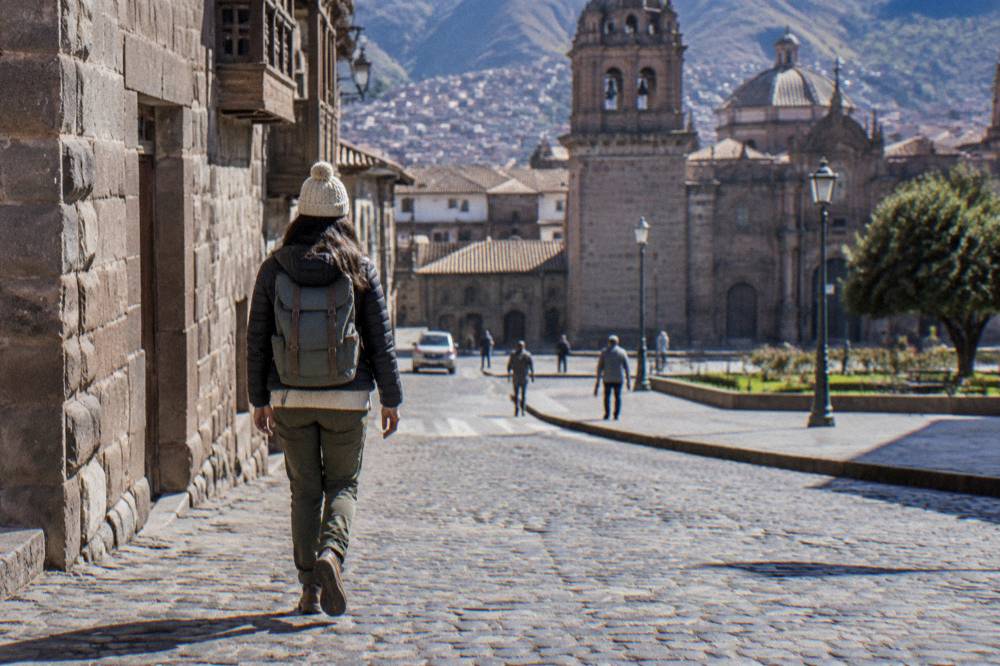
June to August is winter, not summer, and writing it the other way round is the single most common seasonal error on this destination. Days are dry and clear, nights are cold, and the same packing logic applies: a warm layer for the evening, sun protection for the afternoon, and shoes that handle cobbles. The month-by-month breakdown lives on the Cusco weather by month page, and the timing trade-offs on the best time to visit Cusco.
| Month | Mean max C | Mean min C | Rain mm |
|---|---|---|---|
| Jan | 18.9 | 6.6 | 145.3 |
| Mar | 19.1 | 6.2 | 107.0 |
| May | 19.8 | 2.5 | 8.7 |
| Jul | 19.1 | 0.1 | 4.0 |
| Sep | 19.8 | 3.9 | 21.8 |
| Nov | 20.7 | 6.1 | 71.9 |
How Do You Get Around Cusco And The Sacred Valley?
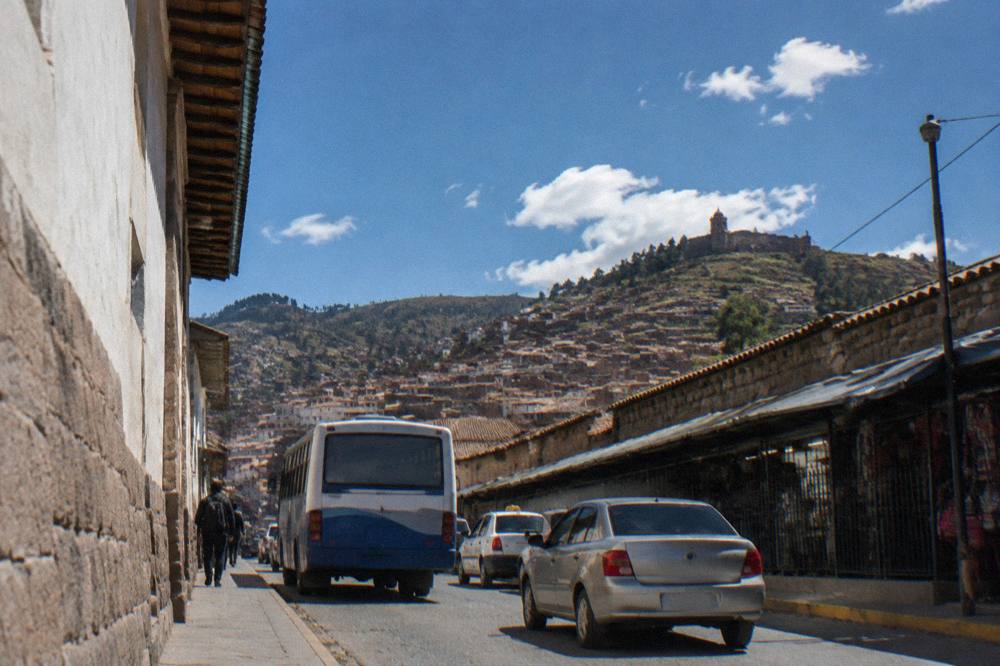
Cusco's airport, Alejandro Velasco Astete, sits about 6 km from the Plaza de Armas, 15 to 20 minutes by taxi, and every Cusco flight uses it because the new Chinchero airport is not operating; in the city, the practical choices are taxis, colectivos and walking, with trains to Machu Picchu leaving from the Poroy and San Pedro stations via PeruRail or Inca Rail.
The Chinchero airport point deserves its own sentence because wrong versions circulate widely: it is not open, reported progress was about 38.9 percent in mid-2026, completion is targeted for 2028 and flights are expected in 2028 to 2029. Any source claiming it receives flights now is out of date.
Getting around the city itself is covered in detail on the getting around Cusco guide, and the airport arrival process on the Cusco airport page. For the Sacred Valley, colectivos run from city terminals toward Pisac and Ollantaytambo, and fares are shown and agreed before the ride; the Cusco to Ollantaytambo page explains the options. PeruRail's own FAQ gives the train journey times: about 4 h 30 from San Pedro to Machu Picchu, about 3 h 30 from Poroy, and about 1 h 45 from Ollantaytambo, and in wet-season disruptions a bimodal bus-plus-train combination via Ollantaytambo is used.
For valley sites under one ticket, a guided day trip is the alternative to patching colectivos together. The Moray, Maras Salt Mines and Chinchero Weavers tour covers three Circuit III and fee-based stops in one loop.
| Journey | Operator or mode | Sourced detail |
|---|---|---|
| Airport to Plaza de Armas | Taxi | About 6 km, 15 to 20 minutes |
| San Pedro to Machu Picchu | PeruRail train | About 4 h 30 |
| Poroy to Machu Picchu | PeruRail train | About 3 h 30 |
| Ollantaytambo to Machu Picchu | PeruRail train | About 1 h 45 |
| Cusco to Ollantaytambo | Road | Options on the dedicated guide |
| Chinchero airport | Under construction | Not operating; completion targeted 2028 |
What Rules Apply At Machu Picchu?
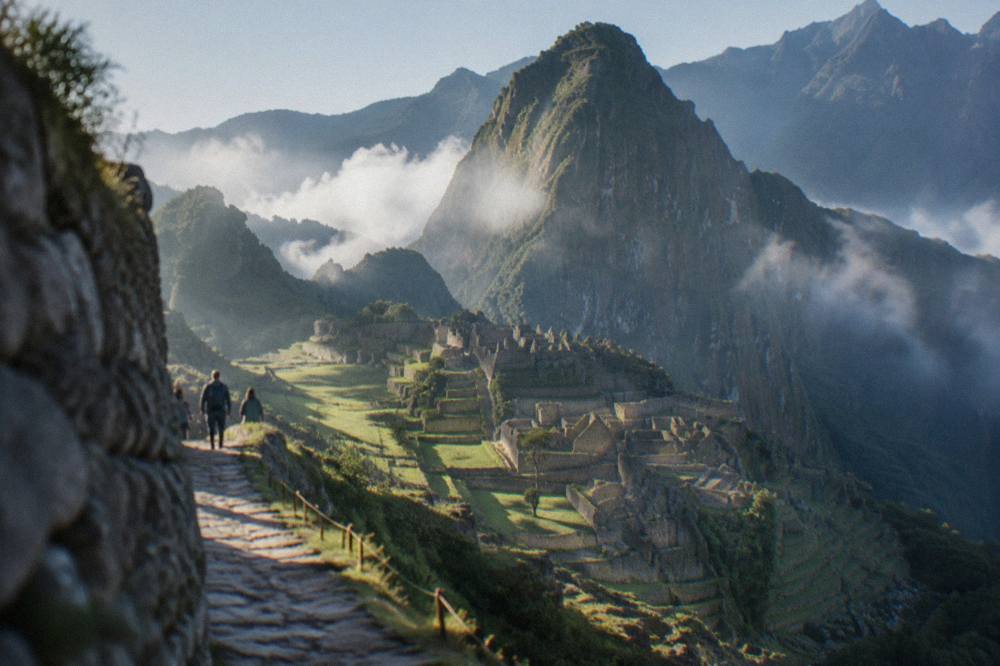
Machu Picchu has run three circuits and ten routes since 1 June 2024, tickets are nominal and valid only for the stated date, hour, circuit and holder, a guide is recommended but not mandatory under the September 2026 ministerial resolution, and 2026 capacity is 4,500 visitors a day, rising to 5,600 on listed high-season dates.
The ticket rules are strict. The resolution allows a single correction for a passport-number typo and nothing else; an unused ticket loses validity. Foreign adult tickets run from about S/ 163 on standard routes and about S/ 211 on mountain routes, secondary figures that include the S/ 11 SERNANP fee in force since 1 May 2026, and the official platform shows the live price. Hourly entry slots run 06:00 to 15:00, the citadel closes at 17:30, and the maximum stay on standard routes is 2 h 30 from entry time.
The code of conduct bans bags over 40x35x20 cm, food, tripods, selfie sticks, umbrellas, drones, hard-sole shoes, strollers and leaving the circuit. The citadel stands at 2,430 m, lower than Cusco, and the town of Aguas Calientes below it sits at about 2,040 m. The site's one Machu Picchu page, the Machu Picchu day trip guide, carries the full planning detail; tickets, the Lima flight and the train belong to dedicated pages and get only this honest mention here.
| Machu Picchu rule | Current detail | Source basis |
|---|---|---|
| Circuits | 3 circuits, 10 routes | Official site, since 1 June 2024 |
| Daily capacity 2026 | 4,500 normal, 5,600 on listed dates | Ministry resolution via Andina |
| Guide | Recommended, not mandatory | RM 000334-2026-MC, September 2026 |
| Ticket changes | One passport-number typo correction only | Same resolution |
| Foreign adult price | From about S/ 163 standard, S/ 211 mountain | Secondary sources; live price on official platform |
| Timed entry | Hourly slots 06:00 to 15:00, closes 17:30 | Official hours page |
| Maximum stay | 2 h 30 on standard routes | Secondary, consistent |
How Do You Stay Safe And Healthy In Cusco?
The US advisory for Peru is Level 2, Exercise Increased Caution, with Cusco city and the main tourist routes outside the Do Not Travel areas; the UK Foreign Office warns against walking alone at night or in quiet areas; and on health, the CDC does not recommend yellow fever vaccination for travel limited to Cusco city, the Inca Trail or Machu Picchu, and no yellow fever certificate is required for entry.
The health line is often misstated. The CDC's recommendation covers areas below 2,300 m in Cusco region and other jungle zones, so a trip that adds the Amazon needs a different conversation with a doctor than a trip that stays in the highlands. On water, the CDC's Peru page advises safe food and water habits, so bottled or treated water is the practical default.
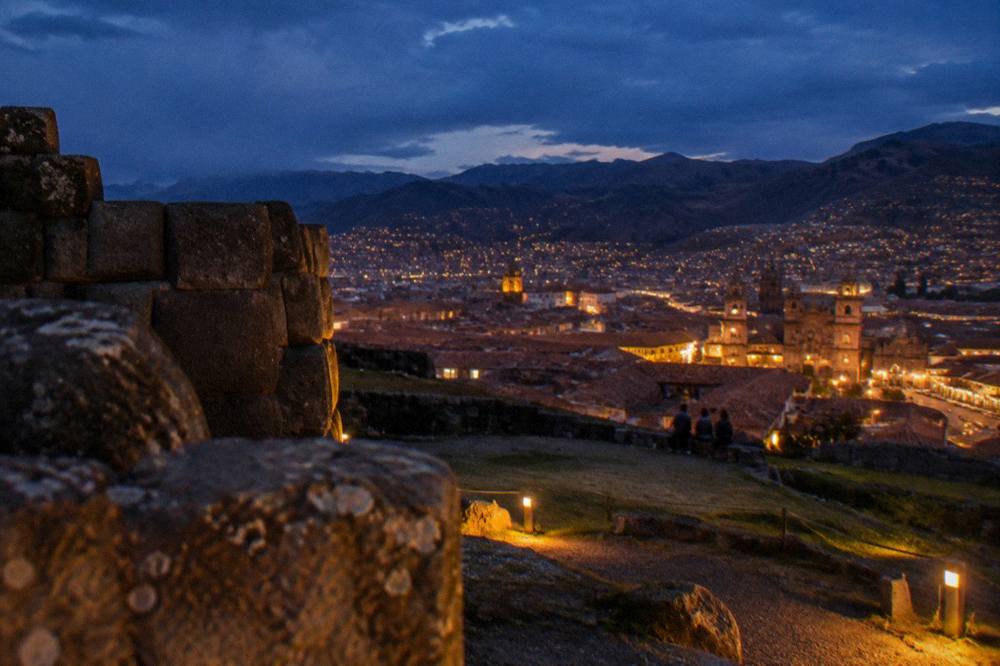
The tourist police run a 24-hour phone and WhatsApp line, and iPeru, the official tourist information service, answers a WhatsApp line around the clock; both numbers sit on PROMPERU's emergencies page. For the fuller picture on neighbourhoods, night safety and common scams, read is Cusco safe, and for evening planning the Cusco nightlife guide keeps the same sourced discipline.
Entry formalities close the loop. Visa-free holders get a stay set by the border officer, typically up to 90 days, with a legal ceiling of 183 days in 365; the arrival card is the TAM, paper or virtual. None of this needs preparation beyond a valid passport, but knowing the shape of it prevents surprises at the counter.
Common Questions About Cusco Travel Tips
How Many Days Do You Need In Cusco?
Plan at least three: one acclimatisation and city day, one Sacred Valley day and one Machu Picchu day. COSITUC's own FAQ notes that covering all 16 boleto sites needs a minimum of three days, which is a good official anchor for the region's pace.
Is Cusco Higher Than Machu Picchu?
Yes. The Plaza de Armas sits at 3,335 m per PROMPERU, while the Machu Picchu citadel stands at 2,430 m. The town of Aguas Calientes below the citadel sits at about 2,040 m.
Can You Buy The Boleto Turistico Online?
No. COSITUC sells it in person only, at the counter on Av. El Sol 103, open daily 07:30 to 18:00, and at most included sites. Any site offering an online boleto is a reseller, not the official channel.
When Is The Wet Season In Cusco?
Roughly November to March. At the WMO/SENAMHI "Cuzco" station, December to March carries 71.9 percent of the year's 707.8 mm of rain, while May to August together bring just 22.8 mm.
Do You Need A Guide At Machu Picchu?
No. Under the September 2026 ministerial resolution, a guide is recommended, not mandatory. Tickets are nominal, valid only for the stated date, hour, circuit and holder.
What Currency Does Cusco Use?
The Peruvian sol, written S/, at about S/ 3.4 to the US dollar. Product prices on this site display in US dollars; small on-the-ground costs are paid in soles, often in cash.