Maras Salt Mines
The Maras salt mines are a hillside of terraced evaporation pans above the Sacred Valley, about an hour's road travel from Cusco, with a reported entry fee of S/ 15 to S/ 20 in cash and a visit most often paired with Moray.
Short answer
The Maras salt mines sit on a hillside above the Urubamba valley in Peru's Sacred Valley, reached by road from Cusco. Entry is reported at S/ 15 to S/ 20 for foreigners in 2026, paid in cash. Most visits are paired with the Moray archaeological site, which is covered by the Boleto Turistico Circuit III, and many travellers go on a Sacred Valley day tour.
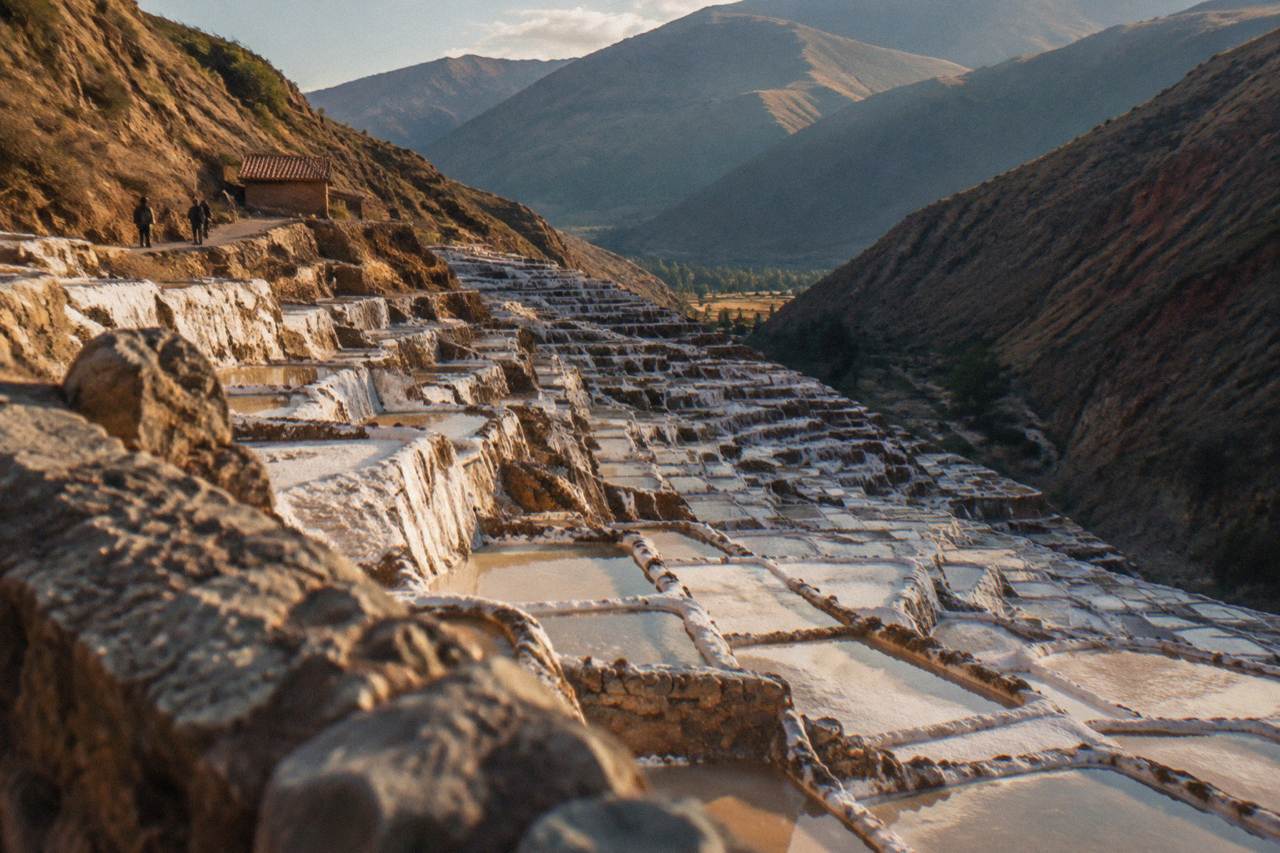
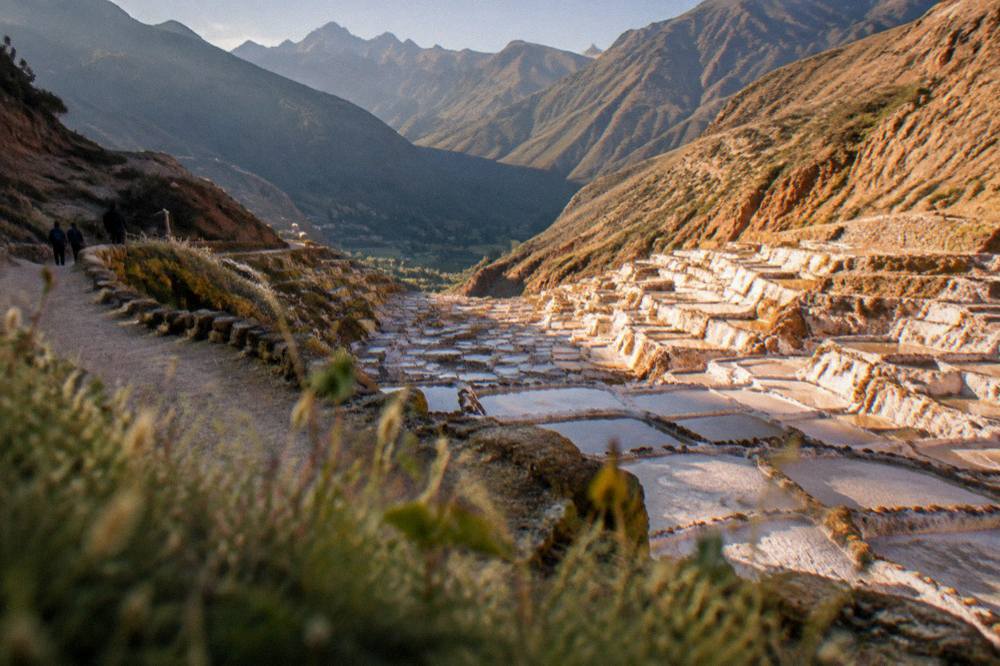
The Maras salt mines are a hillside of small, terraced evaporation pans above the Urubamba valley in the Sacred Valley of Cusco, the historic city in the Andes of southern Peru. Warm brine runs into the shallow ponds, the Andean sun and wind do the drying, and families from the Maras community harvest the salt by hand, pan by pan, as they have done for generations of working seasons. The site sits near the town of Maras at about 3,300 m, a short drive from Moray and the colonial village of Chinchero, which makes it one of the easiest additions to any Sacred Valley day. This page from Things To Do In Cusco Peru sets out the reported entry fee, the transport options, the seasonal picture and the honest answer on whether to visit independently or on a tour.
What Are The Maras Salt Mines And Where Exactly Are They?
The Maras salt mines are a working salt-harvesting landscape of hundreds of small, rectangular evaporation pans terraced down a hillside near the town of Maras, at about 3,300 m in the Sacred Valley of the Cusco region of southern Peru. The pans sit above the Urubamba valley, close to the Moray archaeological site and the village of Chinchero, and they are worked by members of the local community rather than managed as a museum.
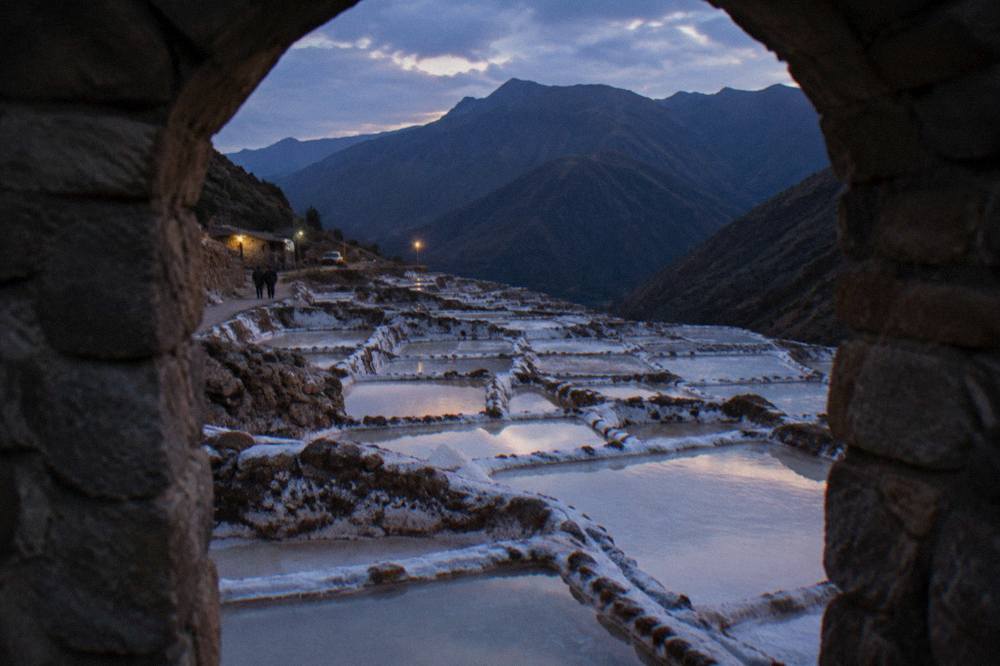
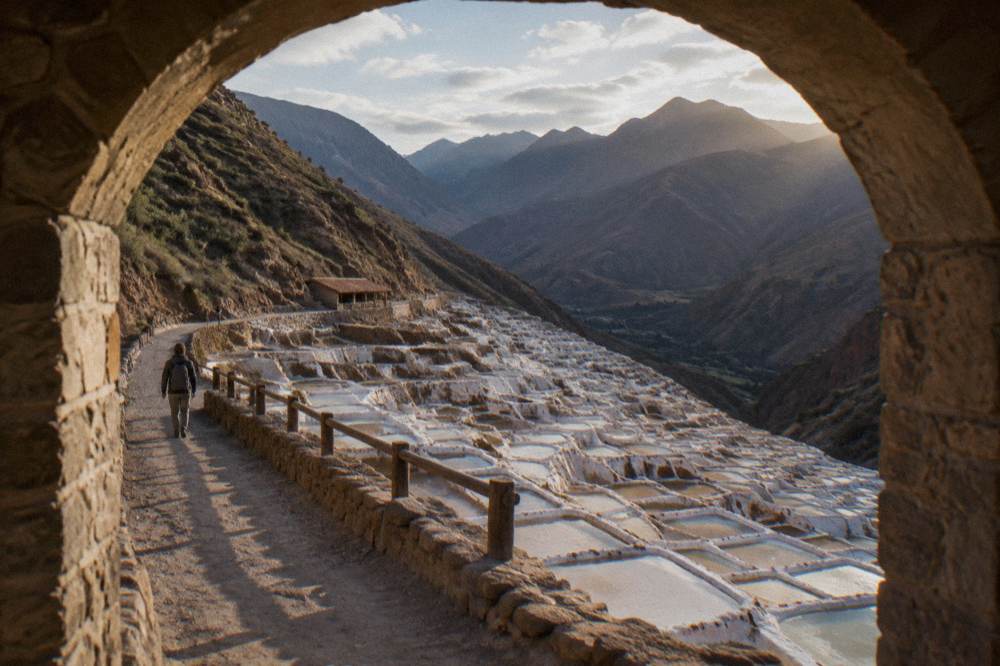
The first thing that surprises many visitors is that the pans are still in production. This is not a roped-off ruin. Salt water emerges at the site, is channelled into the shallow ponds, and evaporates in the dry Andean air until a crust of salt can be raked out by hand. The result is a patchwork of white, beige and ochre terraces that changes character with the light: brilliant at midday, warm and golden in the late afternoon. Photographers tend to prefer the hours when the low sun picks out the walls between the ponds.
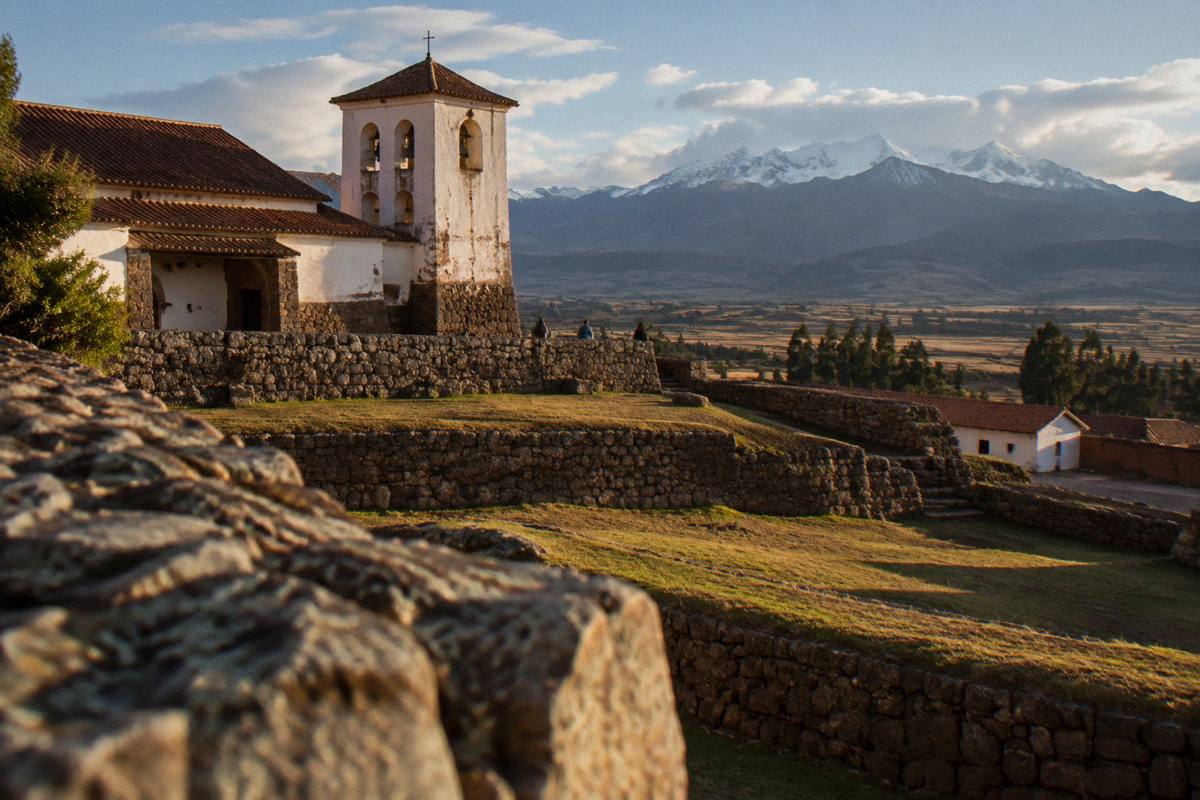
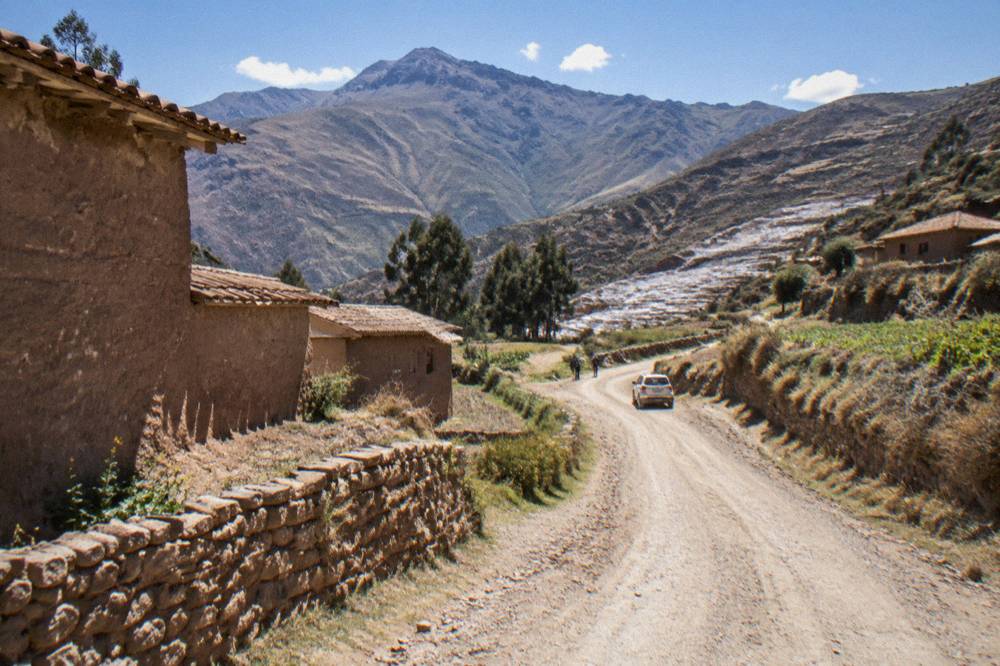
The setting matters as much as the salt. Maras the town sits at about 3,300 m, slightly lower than Cusco's Plaza de Armas at 3,335 m, and looks out over the valley towards the snow-capped range that includes the high country beyond. The road between the sites is rural and agricultural, passing adobe villages and fields, which is a different Cusco from the historic centre's colonial churches and Inca walls. Visitors who only see the city often describe this stretch of the Sacred Valley as the moment the region starts to make sense.
How Much Does It Cost To Visit The Maras Salt Mines?
Entry to the Maras salt mines is reported at S/ 15 to S/ 20 per foreign visitor in 2026, about US$4 to US$6, paid in cash at the site. The salt mines are not part of the 16-site Boleto Turistico: that ticket covers Moray, Pisac, Ollantaytambo and Chinchero on its Sacred Valley circuit, but the salt pans charge their own community fee.
The fee figure comes from tour operators reporting current prices, so treat S/ 15 to S/ 20 as a reported range rather than an official tariff, and carry soles in cash. The reason is structural: the pans are a community asset, and the fee goes to the families and the local administration rather than to the regional ticketing system. That also explains why the site is not on the COSITUC ticket, a point worth checking before you assume one ticket covers the whole valley.
| Site near Maras | Entry in 2026 | Covered by the Boleto Turistico? |
|---|---|---|
| Maras salt mines | S/ 15 to S/ 20, cash, reported | No, separate community fee |
| Moray | On Boleto Turistico Circuit III | Yes, integral or Circuit III partial |
| Chinchero | On Boleto Turistico Circuit III | Yes, integral or Circuit III partial |
| Pisac | On Boleto Turistico Circuit III | Yes, integral or Circuit III partial |
| Ollantaytambo | On Boleto Turistico Circuit III | Yes, integral or Circuit III partial |
For the sites that are ticketed, the COSITUC tarifario is the reference. The integral Boleto Turistico for a foreign adult is S/ 130, about US$38, valid for 10 days, and covers all 16 sites across the three circuits. The partial tickets are S/ 70 each, about US$20: Circuit I for the Sacsayhuaman-area ruins, Circuit II for the city museums and Qorikancha, and Circuit III for the Sacred Valley sites including Moray. COSITUC sells the ticket in person only, at the counter on Av. El Sol 103 in Cusco, daily 07:30 to 18:00, and at most included sites. It is not sold online.
| Boleto Turistico option | Price, foreign adult | Validity | What it covers |
|---|---|---|---|
| Integral (BTCI) | S/ 130, about US$38 | 10 days | All 16 sites on all three circuits |
| Partial Circuit I | S/ 70, about US$20 | 1 day | Sacsayhuaman, Q'enqo, Puka Pukara, Tambomachay |
| Partial Circuit II | S/ 70, about US$20 | 2 days | City museums, Qorikancha site museum, Tipon, Pikillacta |
| Partial Circuit III | S/ 70, about US$20 | 2 days | Pisac, Ollantaytambo, Chinchero, Moray |
The practical takeaway: budget cash for Maras itself, and decide separately whether a Boleto makes sense for the rest of your valley day. If you are visiting Pisac, Ollantaytambo, Chinchero and Moray in one loop, the integral or the Circuit III partial pays for itself quickly. If Maras is your only Sacred Valley stop, you may not need the Boleto at all, since the salt pans are the main draw and they charge independently.
For travellers who would rather not juggle tickets, transport and timing, the site's featured Sacred Valley day tour handles the whole loop, and the Sacred Valley and Salt Mines tour with buffet lunch includes Moray, the Maras salt mines, Pisac, Urubamba and Ollantaytambo with a buffet lunch.
How Do You Get From Cusco To Maras?
Maras is reached by road from Cusco, most often as part of a Sacred Valley loop that continues to Moray and either Chinchero or Ollantaytambo. The options are a booked day tour with transport included, a private driver, or local transport towards the valley towns, and a new 8 km asphalt road between Maras and Moray, handed over in late December 2025, has smoothed the link between the two sites.
The road geography is the thing to understand. From Cusco you descend towards the valley, passing Chinchero on the plateau before dropping towards Maras and Moray, then continuing down to Urubamba and Ollantaytambo if you are doing the full loop. Tour minibuses follow this route daily; a private driver covers the same roads on your own schedule. The site's own featured tour, the Sacred Valley and Salt Mines day trip, runs the full circuit with a buffet lunch, Check availability.
Independent travel is possible but takes patience. Local transport runs from Cusco towards the valley towns, and from Urubamba or Maras you can arrange a short ride up to the pans; the last stretch is uphill from the town to the site itself. The trade-off is time and flexibility rather than cost alone: a tour compresses the loop into one day, while independent travel lets you linger at the pans and skip the stops that do not interest you. Either way, carry cash for the entry fee, since the community collectors do not take cards.
The elevations along the route are gentler than many visitors expect, because the loop mostly holds between the city and the valley floor rather than climbing high.
| Place on the Maras loop | Elevation |
|---|---|
| Cusco, Plaza de Armas | 3,335 m |
| Maras | 3,300 m |
| Moray | 3,385 m |
| Pisac | 2,972 m |
| Urubamba | 2,870 m |
| Ollantaytambo | 2,792 m |
That table explains a common planning insight: a Maras and Moray day is not an altitude day. You start at 3,335 m, touch 3,385 m at Moray, and spend the rest of the day slightly lower than Cusco, which is why the Sacred Valley is the standard recommendation for the first days of a trip while the body adjusts. The CDC Yellow Book prefers graded ascent and names Cusco as a rapid-ascent destination, so days spent at valley elevations rather than higher are useful planning.
What Do You Actually See At The Salt Pans?
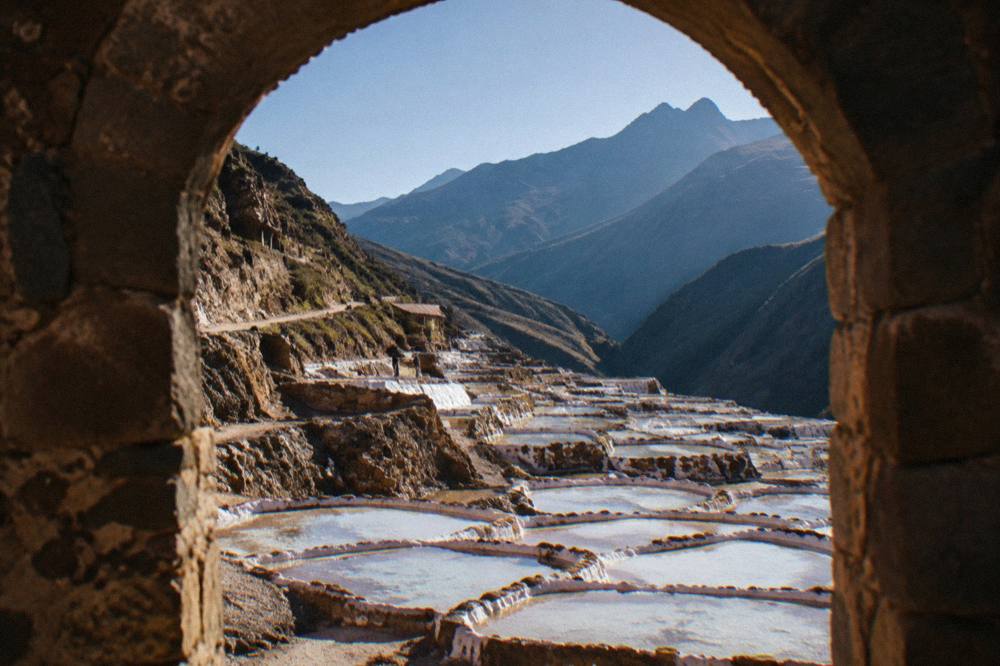
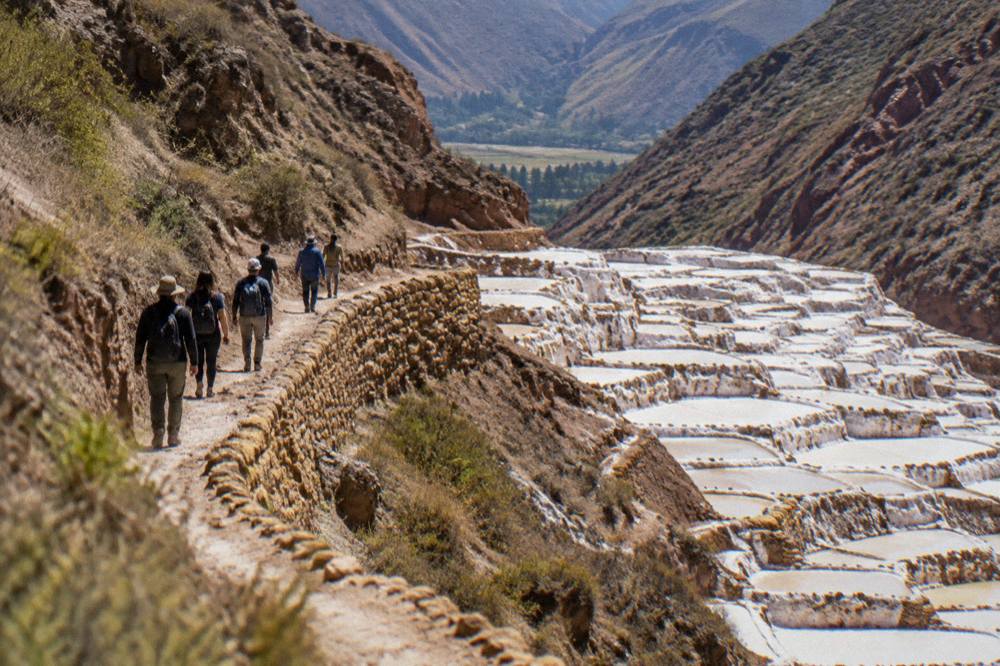
Visitors walk a path along the edge of the terraces and look down over hundreds of small, white-crusted evaporation ponds stepped down the hillside, with brine channels feeding the pans and, on working days, people raking and bagging salt by hand. There are viewpoints, a walkway above the pans, and a small outlet where the community's salt is sold.
The visual is genuinely unlike anything else in the region. Where Pisac and Ollantaytambo give you stone terraces built for farming, Maras gives you a working landscape of mud-walled ponds, each a few metres across, stained white and cream by the salt crust. The brine enters at the top of the system and is moved from pond to pond; as water evaporates, the salt thickens until it can be broken up and piled at the pan's edge. Walk the upper path slowly and you can watch the whole cycle in one view.
What you can buy at the site is the salt itself, sold in coarse and fine grades, sometimes flavoured with local herbs, and it makes one of the more honest souvenirs in the region: a product of the place, harvested by the community that runs it. The salt is also sold in Cusco's shops and markets, but buying at the source puts the money closer to the producers.
Two honest notes on the experience. First, the pans are narrow and the walkways are unfenced in places, so the visit is a look-from-the-edge rather than a scramble through the terraces, and the path can be dusty in the dry season. Second, the site is a workplace: harvesting is seasonal and weather-dependent, so you may see full activity or quiet ponds depending on the day. Neither note is a reason to skip it, but they set fair expectations.
Why Is Maras Almost Always Paired With Moray?
Maras and Moray are paired because they sit a short drive apart on the same road, because they contrast completely, and because Moray is covered by the Boleto Turistico while the salt mines charge their own fee, so one loop covers both. Moray is a set of enormous circular terraced depressions, and the 8 km asphalt road handed over in late December 2025 connects the two sites directly.
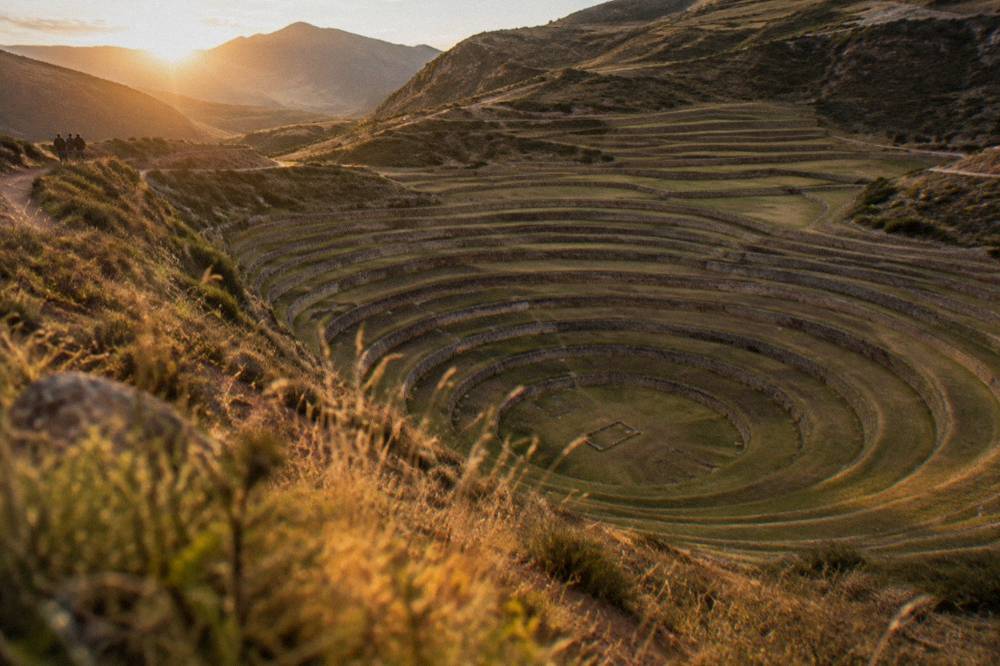
The contrast is the point. Moray, at 3,385 m, is a spectacular set of concentric agricultural terraces sunk into a plateau, with ring after ring of stone retaining walls stepping down into the basin. The salt mines are small, white, angular and industrial. Seeing both in one morning gives you two completely different answers to the same question, how did people in this valley make a living from this land, and the drive between them takes minutes on the new road.
Moray's visitor numbers show how established the pairing has become. The MINCETUR open dataset counted 773,916 visits to Moray in 2025, more than Pisac at 560,578 and behind only the Machu Picchu sites, the Saqsaywaman esplanade at 944,008 and Ollantaytambo at 891,526 among the region's recorded sites. Those are counts of site entries, not unique visitors, but the scale is clear: Moray is one of the busiest stops in the department, and the salt mines next door absorb a large share of the same traffic.
| Recorded Cusco-region site, 2025 | Visits |
|---|---|
| Santuario Historico de Machupicchu | 1,542,350 |
| Ciudad Inka de Machupicchu | 1,479,506 |
| Explanada de Saqsaywaman | 944,008 |
| Parque Arqueologico de Ollantaytambo | 891,526 |
| Moray | 773,916 |
| Pisaq | 560,578 |
The full loop, usually sold as the classic Sacred Valley day, runs Pisac, Urubamba, Ollantaytambo, Moray and Maras, or a shorter half-day version that does only Moray, Maras and Chinchero. Chinchero itself deserves the stop it usually gets: a small town on the plateau with a colonial church on Inca foundations and a weaving tradition, and it sits right on the road back towards Cusco. A half-day option focused on the weaving villages is the Moray, Maras Salt Mines and Chinchero Weavers tour.
When Is The Best Time Of Year To Visit Maras?
The best months to visit the Maras salt mines are the dry season, roughly May to September, when clear skies and low rain give the brightest light on the white pans, though June and July bring frost-cold nights and the busiest visitor period. The wet season, roughly November to March, carries most of the year's rain and turns the access roads and the pans themselves wetter and muddier.
The climate record for the Cusco basin explains the shape of the year. At the WMO and SENAMHI "Cuzco" station, a historical normal, December to March delivers 71.9 percent of the year's 707.8 mm of rain, while May to August together bring just 22.8 mm. Mean daily maximums stay between 18.8 and 20.9 C all year, so the difference between seasons is rain and night cold, not daytime heat. In June and July the mean minimum sits around 0.1 to 0.3 C, and SENAMHI notes that frost nights are common in those months.
| Month | Mean max C | Mean min C | Rain mm |
|---|---|---|---|
| Jan | 18.9 | 6.6 | 145.3 |
| Feb | 18.8 | 6.5 | 133.7 |
| Mar | 19.1 | 6.2 | 107.0 |
| Apr | 19.7 | 4.9 | 43.2 |
| May | 19.8 | 2.5 | 8.7 |
| Jun | 19.5 | 0.3 | 1.5 |
| Jul | 19.1 | 0.1 | 4.0 |
| Aug | 19.8 | 1.6 | 8.6 |
| Sep | 19.8 | 3.9 | 21.8 |
| Oct | 20.9 | 5.5 | 39.4 |
| Nov | 20.7 | 6.1 | 71.9 |
| Dec | 19.4 | 6.4 | 122.7 |
Two practical readings follow from that table. Shoulder months, April to May and September to October, split the difference: less rain than the wet season, fewer people than the June to August peak, and longer daylight for photography at the pans. And the salt harvest itself follows the weather, since evaporation slows in the wet months, so the ponds look fullest and most active in the dry half of the year.
Crowds track the wider Sacred Valley calendar. The MINCETUR monthly figures for Machu Picchu in 2025 show October drawing 154,105 visitors against February's 79,806, a factor of about 1.93, and valley sites follow the same rhythm: the June to October stretch is the busy period, February the quietest. If you want the pans largely to yourself, a wet-season morning is the trade: soft light, possible showers, and a good chance of having the walkway to yourself.
Should You Visit The Maras Salt Mines On A Tour Or On Your Own?
A tour suits many visitors for Maras, because the site sits on a rural loop with no single direct public route, because a day tour bundles Moray, the valley towns and lunch for one price, and because the roads and ticket logistics take time to arrange independently. Independent travel suits longer stays, confident Spanish and travellers who want to linger at the pans.
The honest case for the tour is arithmetic. Maras, Moray, Chinchero and Ollantaytambo sit on different roads with different entry systems, and doing them independently means negotiating each leg. A group tour compresses the day and hands the logistics to a driver and guide who runs the loop daily. The featured option on this page, the Sacred Valley and Salt Mines tour, covers Moray, the salt mines, Pisac, Urubamba and Ollantaytambo with a buffet lunch. For a shorter version focused on the weaving villages, the Moray, Maras and Chinchero Weavers half-day trip is the lighter choice.
The independent case is real too. With a rental or a private driver, you can reach the pans early, before the tour buses arrive mid-morning, and stay as long as the light lasts. You will still pay the community fee in cash, and you will still need the Boleto for Moray if you continue there, bought in person in Cusco or at an included site. Travellers combining the valley with a few days in Ollantaytambo or Urubamba often do Maras and Moray on a free afternoon rather than as a full-day excursion from the city.
A third route suits travellers who want the valley's rural feel with some adventure in it: the quad bike tour to Moray and the Salt Mines reaches the same two sites by ATV.
Fancy reaching Moray and the salt pans by ATV? Book a quad bike tour here.
What Should You Combine With Maras If You Have More Than One Day?
With more than one day, the strongest combination is Maras and Moray on one day and the rest of the Sacred Valley, Pisac, Ollantaytambo and Chinchero, on another, with Machu Picchu as the separate day trip it has to be since the citadel lies far from the valley road loop. Two days let you see the pans in the best morning light instead of midday and give each archaeological site the time a shared tour schedule cannot.
The one-day loop works, but it is a march: Pisac's terraces, Urubamba lunch, Ollantaytambo's fortress and then Moray and Maras at the end of the afternoon, when the light is golden but the energy is spent. Split across two days, the same content becomes two comfortable trips. Day one can run Pisac and Ollantaytambo, the eastern valley; day two can run Chinchero, Moray and Maras, the western plateau, in that order, which puts the salt pans in the late-afternoon light they are famous for.
For the Machu Picchu leg, this site keeps everything on a single page, Machu Picchu, because the citadel is its own destination: it lies at 2,430 m, below Cusco, reached by train or trek rather than by the valley road, and its ticketing, circuits and entry rules are a separate system run by the Ministry of Culture. The short version for planning: foreign adult entry is from about S/ 163 on standard routes, tickets are nominal and valid only for the stated date, hour, circuit and holder, and a guide is recommended rather than mandatory under the current rules. The details live on the dedicated page.
If the valley is your base rather than a day trip, the surrounding towns reward the slower pace. Urubamba at 2,870 m has become the valley's comfortable base, Ollantaytambo preserves its Inca street plan in the town itself, and Chinchero's weaving cooperatives show the textile traditions the region is known for. The Sacred Valley overview on this site covers where to stay and how to split the days.
Common Questions About The Maras Salt Mines
How much does it cost to visit the Maras salt mines?
Entry is reported at S/ 15 to S/ 20 per foreign visitor in 2026, about US$4 to US$6, paid in cash at the site. The salt mines are not part of the Boleto Turistico; the nearby Moray site is, on Circuit III of the COSITUC ticket.
Are the Maras salt mines covered by the Boleto Turistico?
No. The Boleto Turistico covers 16 sites, including Moray, Pisac, Ollantaytambo and Chinchero on Circuit III, but the salt pans charge their own community fee in cash. The integral Boleto is S/ 130 for a foreign adult, valid 10 days, and the Circuit III partial is S/ 70, valid 2 days.
How far are the salt mines from Cusco?
Maras sits on the Sacred Valley loop reached by road from Cusco, typically visited as part of a day tour that also covers Moray and often Chinchero, Pisac or Ollantaytambo. The town sits at about 3,300 m, slightly below the Plaza de Armas at 3,335 m, and an 8 km asphalt road handed over in late December 2025 links Maras directly to Moray.
Can you buy salt at the Maras salt mines?
Yes. The community sells its salt at the site, in coarse and fine grades and sometimes flavoured with local herbs, and it is one of the region's most direct souvenirs, bought from the producers themselves.
Is Maras worth visiting in the wet season?
Yes, with the right expectations. The wet season, roughly November to March, carries most of the year's rain at the Cuzco station, so the access road and the pans can be wet and muddy, but the crowds are far smaller and the site is fully open. The dry season, roughly May to September, gives the brightest light on the white pans.
Should you visit Maras independently or on a tour?
Many travellers choose a tour, because the site sits on a rural loop with no single direct public route and a day tour bundles Moray, the valley towns and lunch into one price. Independent travel by private driver or rental suits longer stays and travellers who want to reach the pans early, before the mid-morning tour buses.
The Maras salt mines earn their place on any Sacred Valley itinerary for a simple reason: they are a working landscape, not a roped-off one, and the white terraces against the brown valley hills look like nothing else within a day's drive of Cusco. Pay the community fee in cash, pair the pans with Moray on the new road between them, and aim for the hours when the sun is low enough to make the salt glow.