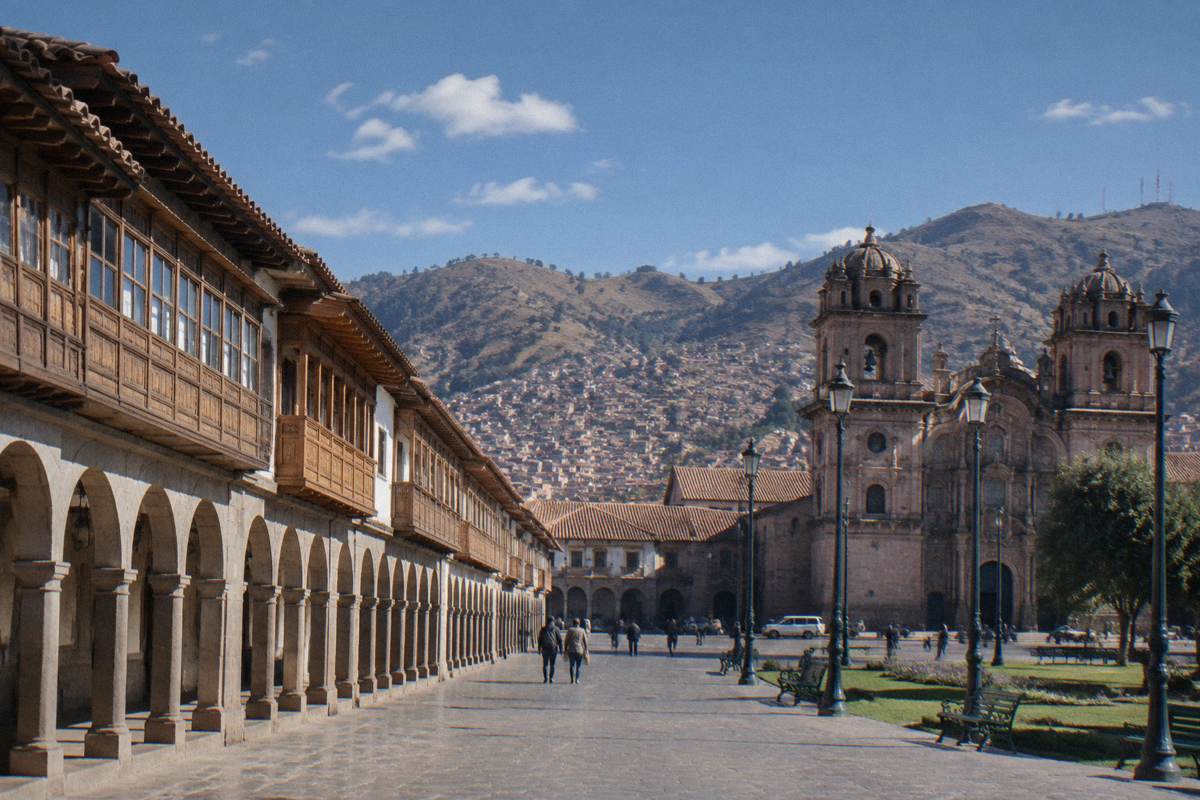
Cusco Airport (CUZ) And Getting To The Centre
Cusco, the historic city in the Andes of southern Peru, runs on a single airport: Alejandro Velasco Astete International, about 6 km from the Plaza de Armas and 15 to 20 minutes by taxi. This guide covers the recorded transfer options and fares, the state of the Chinchero replacement airport, and how altitude and the inverted Andean season should shape the first day in the city.
Short answer
Cusco Airport (CUZ) is Alejandro Velasco Astete International, about 6 km from the Plaza de Armas, with a taxi ride of 15 to 20 minutes reported at about S/ 15 to 25, agreed before the ride. The new Chinchero airport is not operating and is not expected to carry flights before 2028. Every flight to Cusco currently lands at Velasco Astete, at 3,310 m.
Cusco, the historic city in the Andes of southern Peru, is served by a single airport: Alejandro Velasco Astete International, which sits about 6 km from the Plaza de Armas at 3,310 m above sea level. PromPeru's destination pages give both the distance and the 15 to 20 minute taxi time into the centre, and those two figures sit behind almost every arrival question that follows. This guide sets out what the airport is, what the recorded transfer options cost, where the much-discussed Chinchero replacement actually stands, and how altitude and the inverted Andean season should shape a first day in the city.
What And Where Is Cusco Airport (CUZ)?
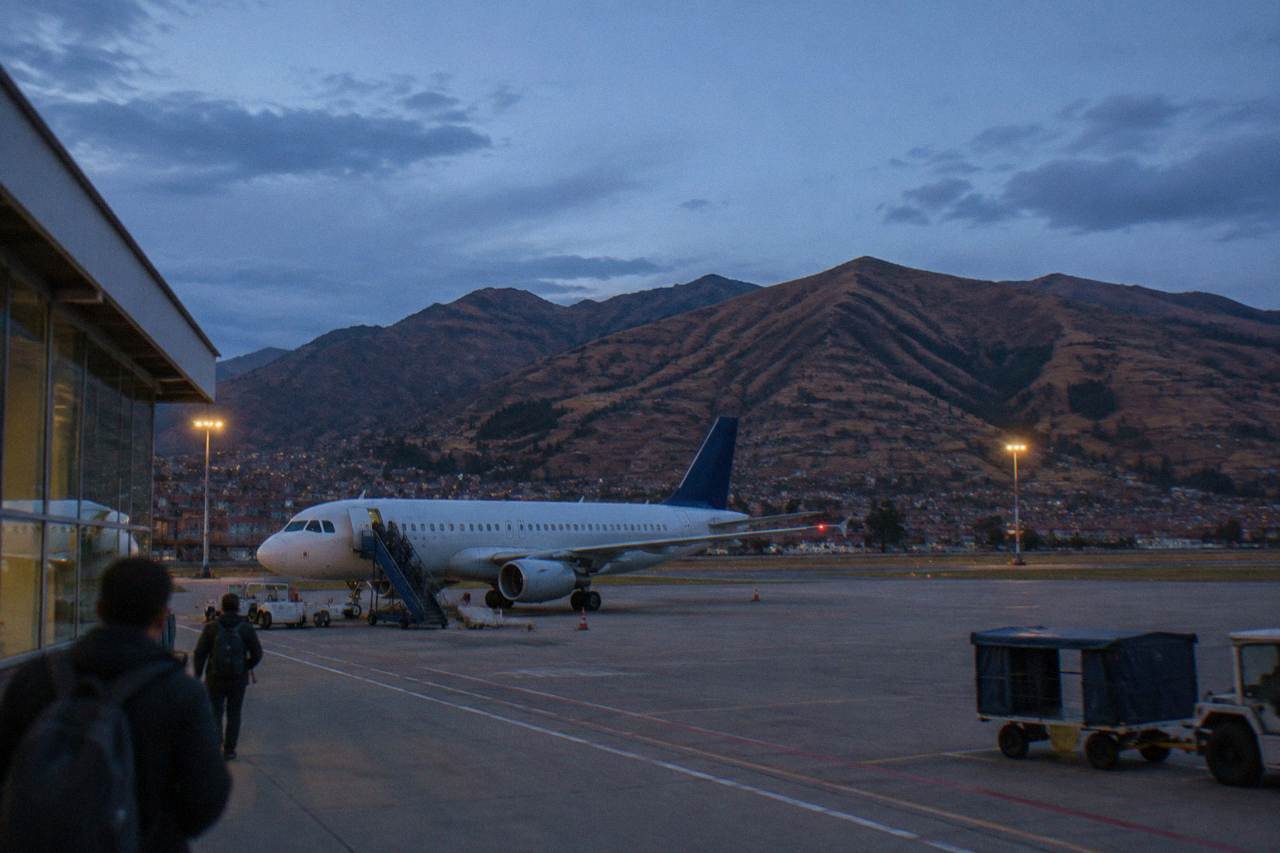
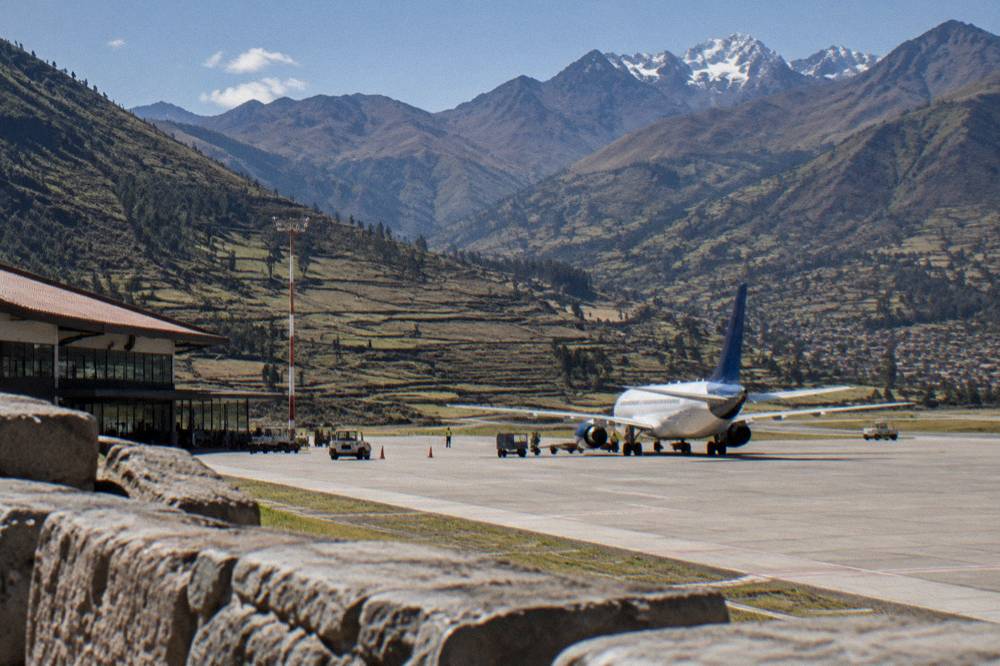
Cusco Airport, officially Alejandro Velasco Astete International Airport, is the single airport serving the city of Cusco in the Andes of southern Peru. PromPeru places it about 6 km from the Plaza de Armas, with a taxi ride of 15 to 20 minutes, and the airport sits at 3,310 m, slightly below the historic centre at 3,335 m.
The three-letter code CUZ is the one travellers see on bookings, and it belongs to this airport alone. The site record lists the operator as CORPAC S.A., Peru's state airport corporation. There is no second terminal, no city airport and no low-cost satellite field: every scheduled flight into the Cusco region lands here, on a plateau squeezed between the city and the hills above it.
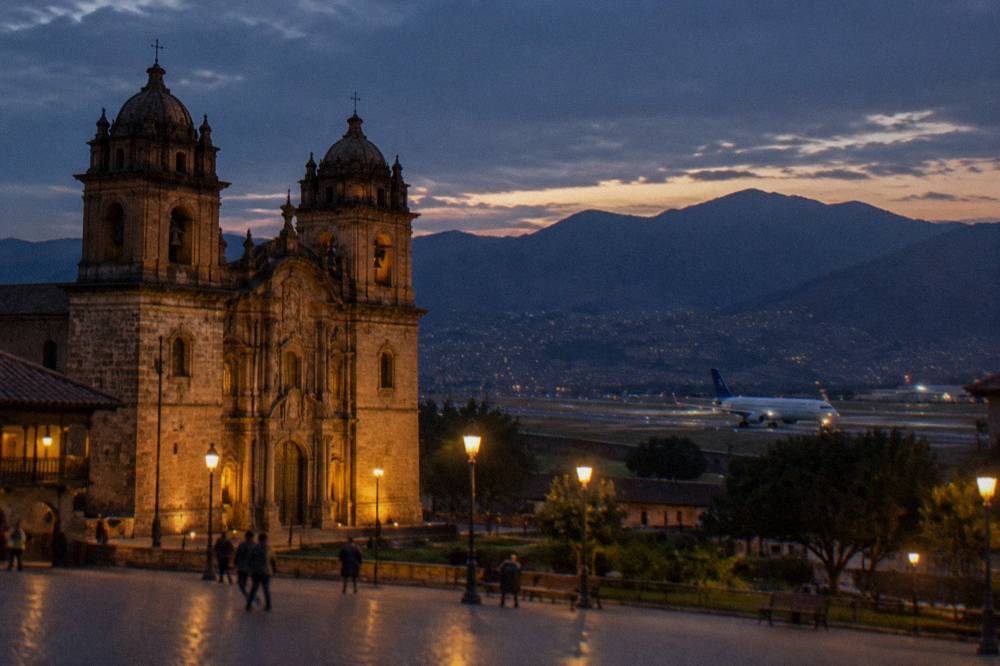
The airport's position shapes the arrival more than its size does. At 3,310 m it is only slightly lower than the Plaza de Armas, so there is no gentle descent between the runway and the hotel. The city it serves is substantial: the 2017 census counted 428,450 people in Cusco city and 1,205,527 in the Cusco department, the last official figures published. Cusco is also spelled Cuzco in older sources, and the airport's own WMO station record uses the older spelling, which occasionally confuses searches.
Reaching Cusco from Lima is short by air. PromPeru gives the Lima to Cusco flight at about 1 h 15, against about 21 to 26 hours by bus on the same route. International visitors usually connect through Lima rather than flying into Cusco directly, and that connection is covered in depth on a sibling page. Time in the city runs on UTC-5 year round, with no daylight saving, so flight times in local listings need no seasonal adjustment.
| Detail | What The Records Show |
|---|---|
| Official name | Alejandro Velasco Astete International Airport |
| Code | CUZ |
| Distance to Plaza de Armas | about 6 km |
| Taxi time to the centre | 15 to 20 minutes |
| Airport elevation | 3,310 m |
| Plaza de Armas elevation | 3,335 m |
| Time zone | UTC-5, no daylight saving |
| Operator | CORPAC S.A. |
How Do You Get From Cusco Airport To The Historic Centre?
The reported cost of an airport taxi to the centre is about S/ 15 to 25, agreed with the driver before the ride, and the journey takes 15 to 20 minutes. The alternatives are a transfer arranged by a hotel and a private transfer booked in advance, whose fare and pickup details are shown on the live listing before payment rather than negotiated at the kerb.
The taxi is the default, and the recorded price band is narrow. Travel-currency guides covering Cusco in 2026 report rides between the airport and the centre at about S/ 15 to 25, a secondary figure rather than an official tariff, so treat it as a range to expect rather than a fixed fare. The fare is agreed before the ride starts. The full airport taxi question, including what the band covers and how it is paid, has its own answer page on what an airport taxi costs.
The safety case for planning the ride is not invented. The UK Foreign, Commonwealth and Development Office states that street crime, including muggings and thefts, is a significant problem in Lima, Cusco, Arequipa and other major cities, advises against walking alone in quiet areas or at night, and notes express kidnappings by fake taxi drivers, usually at night. The US State Department advisory for Peru stands at Level 2, Exercise Increased Caution, and places Cusco city outside its Do Not Travel zones. Both point the same way: use the official rank, a hotel-arranged car or a pre-booked transfer rather than an unmarked vehicle, a subject developed on staying safe in Cusco.
Shared road options exist for the onward journey, but no colectivo or bus fare is verified in the sources behind this page, so none is quoted here: those fares are shown or agreed before the ride, and the product card on this site carries the bookable alternative. The wider transport picture, including city transport once the bags are dropped, is laid out in getting around Cusco.
| Option | Fare Basis | What The Sources Say |
|---|---|---|
| Official taxi | agreed before the ride, reported at about S/ 15 to 25 | 15 to 20 minutes to the centre |
| Pre-booked private transfer | fare shown on the live listing before payment | driver meets arrivals, drop-off at centrally located hotels |
| Hotel-arranged transfer | fare set by the hotel at the time of booking | pickup point and time confirmed with the hotel |
For travellers heading onward by rail, one note covers the train question: trains toward Machu Picchu leave from the Poroy and San Pedro stations on the Cusco side, about 10 to 20 minutes by taxi from the centre, per PeruRail's own FAQ. That route, and the tickets for the citadel itself, belong to a separate guide and are only flagged here so the arrival plan does not double-book the same morning.
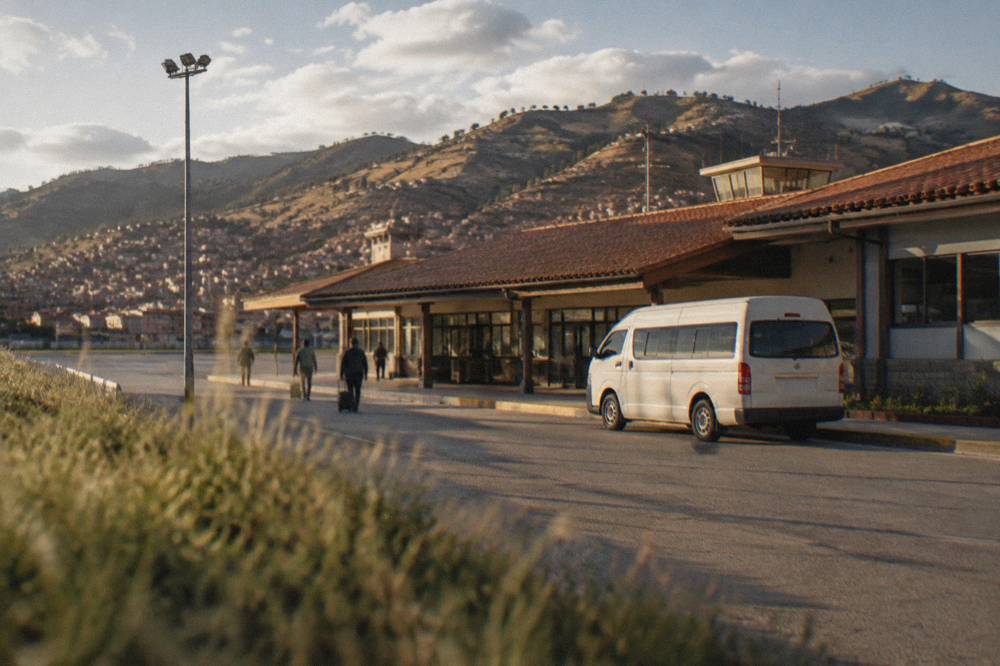
The private transfer listed on this site is the option whose terms are fixed before departure. It covers arrivals at Cusco Airport with drop-off at centrally located hotels, and its listing states the fare, the vehicle and the meeting arrangement in advance, which removes the only negotiation of the arrival.
A pre-booked car also answers the two problems the rank cannot: late changes of arrival time, since the operator holds the booking rather than a queue position, and the first-hour fog of altitude, when comparing a fare in soles at a kerb is the last job anyone wants. The card above prints the verified price, rating and review count from the operator's live listing.
Should You Book A Private Airport Transfer Before You Land?
A pre-booked private transfer is the one arrival option whose price, vehicle and meeting point are all fixed before the plane lands, which matters for anyone stepping off a flight straight into 3,310 m of Andean altitude. The featured transfer on this site runs from Cusco Airport to centrally located hotels, and its live listing shows the current fare and the pickup arrangements.
The argument is mostly about sequence. A flight into Cusco ends at 3,310 m, and the CDC Yellow Book treats exactly this kind of abrupt arrival as the situation where altitude illness risk climbs, so the fewer decisions left to the first hour, the better the first day goes. A booked transfer converts the airport from a negotiation into a walk to a named car. The operator's listing states the fare and the cancellation terms before payment, and the meeting point is arranged in the booking rather than found on arrival.
It is also the option that travels well with a group or with luggage. The listing describes a private vehicle to centrally located hotels rather than a shared shuttle, so the price is per booking rather than per seat on a schedule, and the drop-off is the hotel door rather than a stop on a loop. For anyone arriving in the wet season, when evening rain is part of the climate normal, that difference is practical rather than cosmetic.
The alternative is not wrong. The official taxi band of about S/ 15 to 25 is a fair recorded range, and the rank works for a traveller with a working phone and no symptoms. The honest comparison is between a small saving and a fixed plan, and the fixed plan wins mainly for night arrivals, family groups and anyone who has read the altitude section below. Check availability on the operator's live listing to see the current fare and pickup window.
What Is The New Chinchero Airport And When Does It Open?
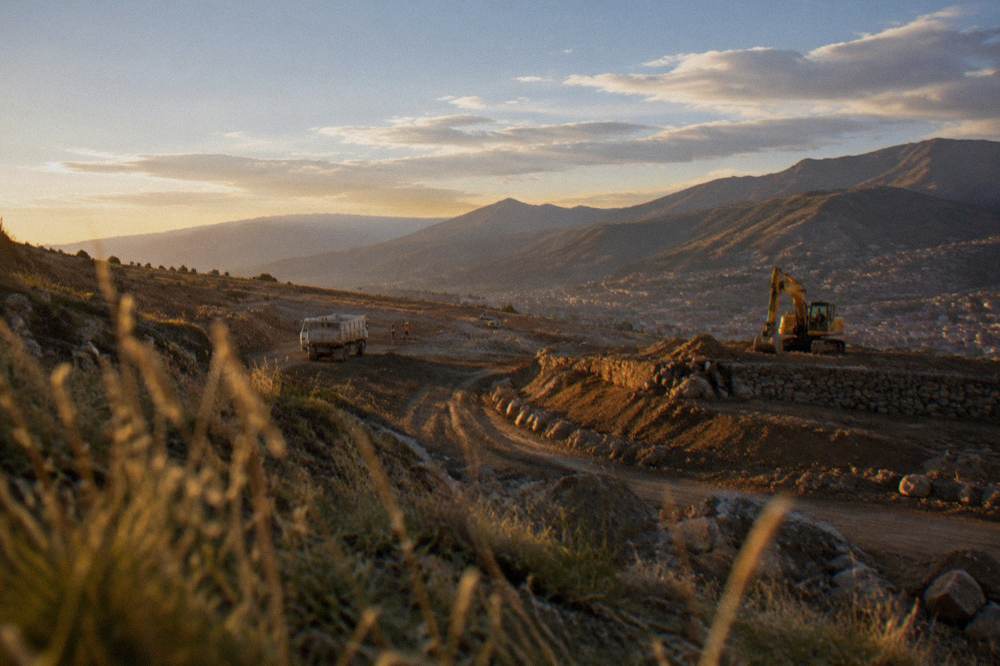
The new Chinchero airport is not operating. Reported progress stood at about 38.9 percent in mid-2026, completion is targeted for 2028, and the first flights are expected between 2028 and 2029. Until it opens, every flight to Cusco uses Alejandro Velasco Astete, the existing airport about 6 km from the Plaza de Armas in the city itself.
The replacement airport is a real project, and that is where the honest version of the story both starts and stops. Chinchero is a town in the Sacred Valley, and the new airport is being built on a site there. News reporting and the Ministry of Transport and Communications place the reported progress at about 38.9 percent in mid-2026, with the control tower under a contract with Acciona and the terminal with a consortium led by the region. The ministry has announced the preparatory works for the tower. None of that amounts to an operating airport, and openstreetmap still records the site as construction land, which matches the reporting.
The completion target is 2028, with flights expected between 2028 and 2029. Any itinerary booked for 2026 or 2027 lands at Velasco Astete, and any claim that the new airport has opened, or opens this year or next, is simply out of date. The practical consequences are small for visitors: the drive from the current airport is 15 to 20 minutes, whereas Chinchero sits in the valley, so the arrival logistics in the sections above will hold for some years yet.
| Question About Chinchero | Reported Answer |
|---|---|
| Is it operating? | No, not operating |
| Reported progress | about 38.9 percent in mid-2026 |
| Completion target | 2028 |
| Expected first flights | 2028 to 2029 |
| Where Cusco flights land now | Alejandro Velasco Astete, about 6 km from the Plaza de Armas |
When Is The Best Time Of Year To Fly Into Cusco?
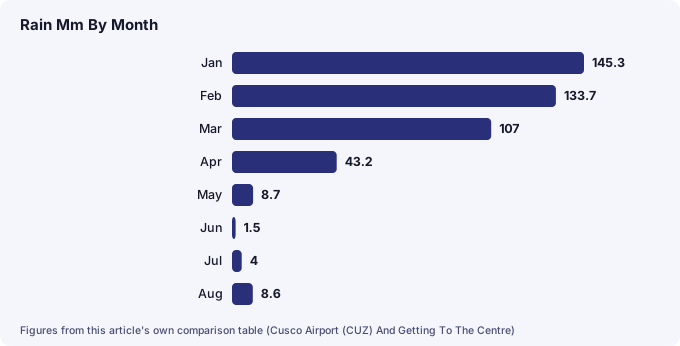
Cusco's dry season runs roughly May to September and its wet season roughly November to March, because the city sits in the Southern Hemisphere high Andes. In the WMO station record supplied by SENAMHI, December to March delivers 71.9 percent of the year's 707.8 mm of rain, while May to August together bring just 22.8 mm.
The inversion matters more than visitors expect. June to August is winter in Cusco: dry, clear and cold at night, with frost common in June and July, when the mean minimum in the station record sits near zero. Calling those months summer, as a northern-hemisphere habit would, is the single most common climate mistake in Cusco planning. Daytime is mild all year, with mean daily maxima between 18.8 and 20.9 C in every month, so the packing question is about nights and rain rather than heat.
The rain is not evenly spread. December, January, February and March together carry 508.7 mm of the 707.8 mm annual normal, and SENAMHI's own framing puts 94 percent of annual precipitation in the October to April half of the year across the high Cusco basin. A wet-season arrival is workable, and the valley is greener for it, but flight delays and washed-out road mornings are part of the deal in ways the dry months mostly avoid.
Crowding follows the dry season. The MINCETUR open dataset shows October 2025 drawing 1.93 times the February 2025 visitor count at Machu Picchu, and the high-season daily cap there rises to 5,600 visitors on the flagged dates from 19 June to 2 November. In the city itself, Inti Raymi fills Cusco on 24 June each year, a festival with its own guide on Inti Raymi. One dated item for late 2026: a papal visit is scheduled to bring Pope Leo XIV to Cusco and Sacsayhuaman on 15 November 2026, which is likely to tighten accommodation and access around that weekend. The month-by-month detail, including the full normals table, sits in Cusco weather month by month, and the season-by-season trade-offs in the best time to visit Cusco.
| Month | Mean Max C | Mean Min C | Rain mm |
|---|---|---|---|
| Jan | 18.9 | 6.6 | 145.3 |
| Feb | 18.8 | 6.5 | 133.7 |
| Mar | 19.1 | 6.2 | 107.0 |
| Apr | 19.7 | 4.9 | 43.2 |
| May | 19.8 | 2.5 | 8.7 |
| Jun | 19.5 | 0.3 | 1.5 |
| Jul | 19.1 | 0.1 | 4.0 |
| Aug | 19.8 | 1.6 | 8.6 |
| Sep | 19.8 | 3.9 | 21.8 |
| Oct | 20.9 | 5.5 | 39.4 |
| Nov | 20.7 | 6.1 | 71.9 |
| Dec | 19.4 | 6.4 | 122.7 |
The figures are a historical normal supplied by SENAMHI, Peru's weather service, to the World Meteorological Organization for the Cuzco station. The record does not state its averaging period, so it is quoted here as a long-run normal rather than a dated one.
How Does The Altitude Affect Your Arrival In Cusco?
Cusco Airport sits at 3,310 m and the Plaza de Armas at 3,335 m, and the CDC Yellow Book names Cusco, at approximately 3,350 m, as a rapid-ascent destination where rates of altitude illness approach half in abrupt-ascent situations. The CDC prefers graded ascent, advises avoiding alcohol for the first 48 hours at high altitude, and treats acetazolamide as a prescription decision made with a doctor.
Flying into Cusco is, in the CDC's own framing, the situation it warns about: a rapid ascent by air to high altitude where staged acclimatisation is not feasible. The Yellow Book's ascent rules are written for exactly this case. It advises avoiding a jump from low altitude to a sleeping altitude of 2,750 m or more in a single day, and once above 3,000 m, moving the sleeping altitude up by no more than 500 m per night with an extra night for every 1,000 m gained. A direct flight into Cusco breaks that rule by definition, which is why the book names the city alongside La Paz as a case where travellers can descend to lower elevations to sleep for a night or two before climbing again.
The descent option is real and nearby. The Sacred Valley towns sit lower than the city: Pisac at 2,972 m, Urubamba at 2,870 m and Ollantaytambo at 2,792 m. Sleeping a first night in the valley instead of the city is the one structural fix available to a Cusco arrival, and it is the reason many itineraries start low and finish high. Nobody publishes a day count for acclimatisation, so any itinerary claiming a fixed number of days is guessing; the CDC's advice is about the shape of the ascent, not a timetable.
The medication line is a doctor's call, not a travel writer's. The Yellow Book lists acetazolamide prophylaxis at 125 mg twice daily, doubled for travellers over 100 kg, but frames it as something to consider when abrupt ascent is unavoidable, and the CDC's Peru notice simply advises talking to a doctor about high-altitude destinations. What the sources do state plainly: avoid alcohol for the first 48 hours, and prefer a graded route whenever the itinerary allows one. The full symptom picture and the valley-first strategy are expanded in Cusco altitude in detail.
| Place | Elevation |
|---|---|
| Plaza de Armas, Cusco | 3,335 m |
| Cusco Airport | 3,310 m |
| CDC figure for Cusco | approximately 3,350 m |
| Sacsayhuaman | 3,701 m |
| Machu Picchu citadel | 2,430 m |
| Aguas Calientes (Machu Picchu Pueblo) | about 2,040 m |
One comparison the sources do support: Cusco sits roughly 900 m above Machu Picchu, so the citadel is a descent from the city, not a climb. The airport, at 3,310 m, is already higher than the famous end of the trip.
Where Should You Stay After Landing In Cusco?
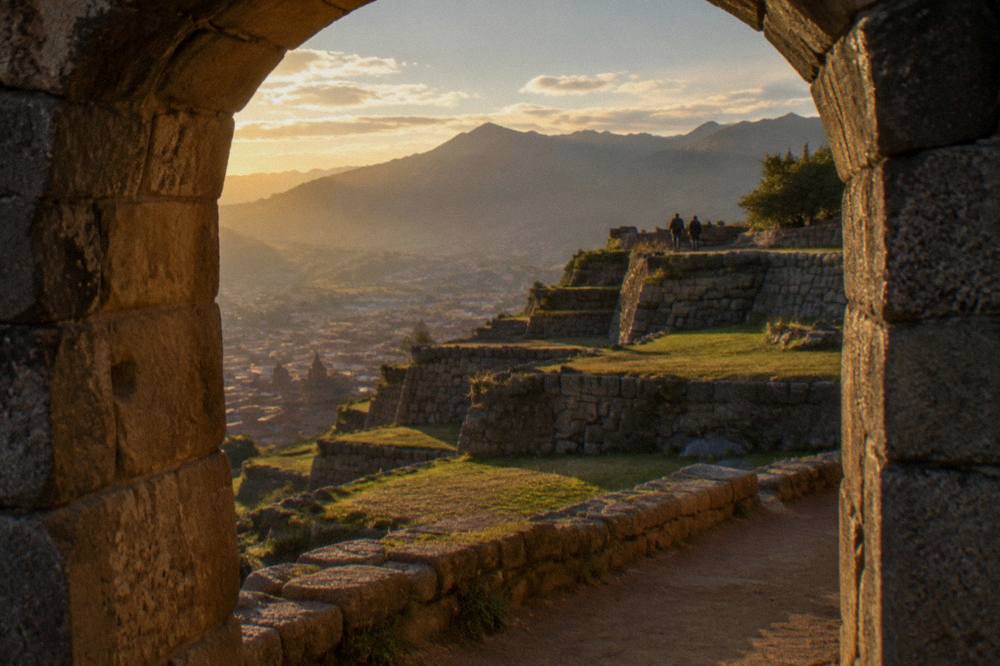
The historic centre holds the Plaza de Armas, the Cathedral and the Qorikancha museum within walking distance of one another, so a central base keeps the slow first days of acclimatisation manageable on foot. The practical choice is between the historic centre itself, the San Blas quarter above it, and the modern districts nearer the airport.
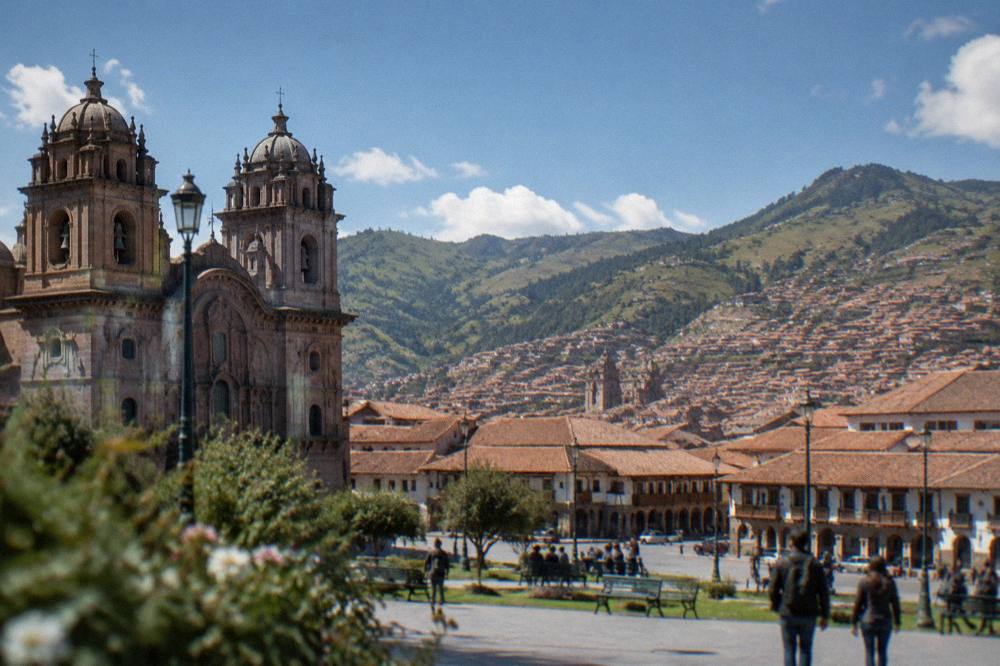
The default answer is the historic centre, and the reason is structural rather than fashionable. UNESCO inscribed the City of Cusco in 1983, and the area the inscription covers is the compact colonial core where colonial churches stand on Inca stone foundations. Staying inside it puts the Plaza de Armas, the Cathedral and the Qorikancha museum within a short walk of one another, which is exactly what a first day at 3,335 m wants: short distances, no vehicle, and an easy retreat to the hotel. The area has its own guide on the Cusco Historic Centre.
San Blas sits above the centre on the hillside, a quarter of narrow lanes and workshops, and the walk down to the Plaza is short while the walk back up is the day's exercise. The modern districts nearer the airport are flatter, cheaper and further from everything a visitor came for, and they suit a single-night stopover more than a base. The trade-offs between all of them, including the family and budget cases, are set out in where to stay in Cusco, with named properties in the best hotels in Cusco.
The alternative strategy is the valley-first arrival described above: sleep the first night in Urubamba or Ollantaytambo at 2,870 m or 2,792 m, then climb to the city for the final nights. It costs a transfer and a morning, and it buys the CDC's preferred direction of travel. Whichever base wins, the wider Things To Do In Cusco Peru collection carries the full itinerary pages that build on it, from one day to a week.
What Can You Do On Your First Day In Cusco?
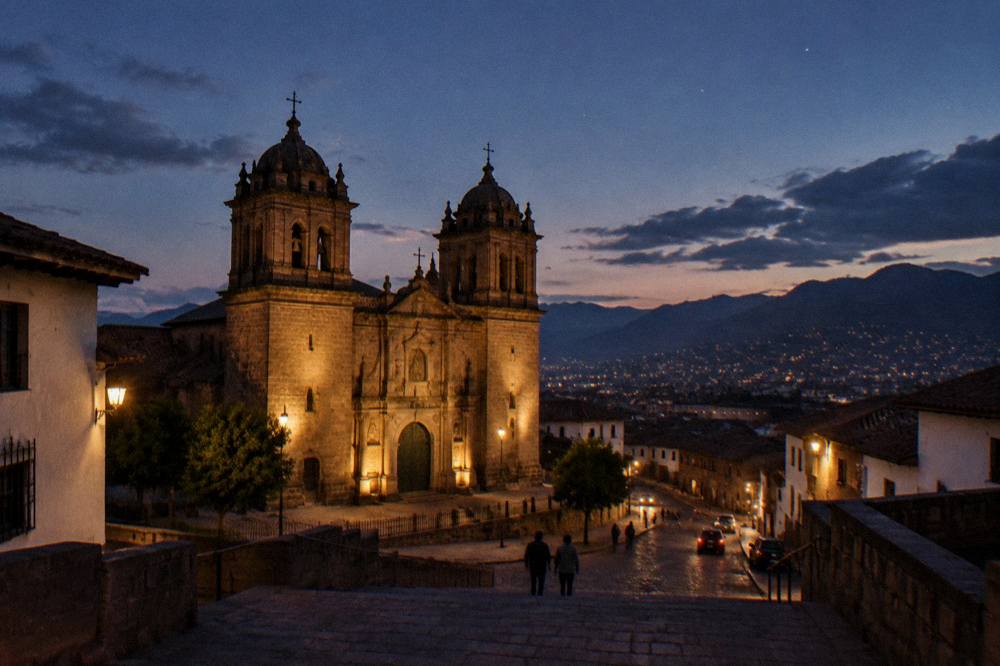
The CDC prefers a staged start after an abrupt ascent to high altitude, and Cusco suits one: the Plaza de Armas, San Pedro Market and the Qorikancha museum sit close together in the historic centre, the Planetarium runs evening astronomy visits, and the South Valley offers a quieter circuit of Tipon, Pikillacta and Andahuaylillas for the day after arrival.
The shape of a good first day follows the altitude logic. Keep it flat, keep it central and keep the escape route short. The Plaza de Armas is the obvious anchor, an open public square at 3,335 m that costs nothing to sit in. San Pedro Market sits a few blocks away, and the food and produce inside it, from juices to Andean staples, has its own coverage in what to eat in Cusco. The Qorikancha museum, on the Boleto Turistico's City circuit, is a roofed, low-effort stop between the two.
The Boleto is worth understanding on day one, because it is bought in person and not online. COSITUC, the committee that runs it, sells the integral ticket at S/ 130 for a foreign adult, valid for 10 days and covering 16 sites, or partial circuit tickets at S/ 70 each, at the counter on Av. El Sol 103 between 07:30 and 18:00 daily and at most included sites. The full mechanics, including what each circuit covers, are explained in the Boleto Turistico.
| Sight | Boleto Circuit | Where It Sits |
|---|---|---|
| Qorikancha museum (Museo de Sitio) | Circuit II, City | Historic centre |
| Sacsayhuaman | Circuit I | Above the city at 3,701 m |
| Tipon | Circuit I | South Valley |
| Pikillacta | Circuit I | South Valley |
| Pisac | Circuit III | Sacred Valley |
| Moray | Circuit III | Sacred Valley |
Sacsayhuaman is on the first-day list for the view alone, but it sits at 3,701 m, higher than anything in the city, so the honest sequencing is to save it for a day when the legs and the lungs agree. The walk up from the centre is a real climb, and it has its own treatment on the walking guide.
For the evening, the Planetarium runs astronomy visits with round-trip transport included, a seated, indoor-after-dark activity that fits a first day precisely because it asks so little of the body. The listing on this site carries the verified price and review record.
For the day after arrival, the South Valley is the quieter alternative to the Sacred Valley: a circuit of Tipon's terraces, the Pikillacta pre-Inca site and the Andahuaylillas church, all reached without the long haul to Pisac or Ollantaytambo. Tipon and Pikillacta are both on the Boleto's Circuit I, so one partial ticket can cover them. The tour listed below runs the route from Cusco with the sites laid on.
Between them, these two fill the gap that an arrival day leaves: one gentle evening option and one low-key day trip, neither of which demands the acclimatisation that Rainbow Mountain, at about 5,000 m, or the long Sacred Valley circuits would. The high-altitude and long-distance options keep better company with day three.
Common Questions About Cusco Airport
Is Cusco Airport the same as the new Chinchero airport?
No. Cusco Airport means Alejandro Velasco Astete International, about 6 km from the Plaza de Armas, and it is the only airport operating in the region. The new airport being built at Chinchero is not operating: reported progress was about 38.9 percent in mid-2026, completion is targeted for 2028, and flights are expected between 2028 and 2029. Until then, every flight to Cusco lands at Velasco Astete.
How far is Cusco Airport from the Plaza de Armas?
PromPeru places the airport about 6 km from the Plaza de Armas, with a taxi ride of 15 to 20 minutes between them. The airport sits at 3,310 m, slightly below the Plaza at 3,335 m, so the ride is short and the altitude change is negligible.
How much does a taxi from Cusco Airport to the centre cost?
The ride is reported at about S/ 15 to 25, a secondary range rather than an official tariff, and the fare is agreed with the driver before the ride starts. A pre-booked private transfer is the alternative whose fare is shown on the live listing before payment, with the meeting point fixed in the booking.
Is Cusco Airport higher than Machu Picchu?
Yes. The airport sits at 3,310 m and the Machu Picchu citadel at 2,430 m, and the sources support a gap of roughly 900 m between the city and the citadel. Cusco is the high point of the standard itinerary, not the citadel, which is why altitude planning belongs to the arrival in the city.
Do international flights land at Cusco Airport?
International visitors usually connect through Lima rather than flying into Cusco directly, and the Lima to Cusco flight takes about 1 h 15 per PromPeru. The same journey by bus takes about 21 to 26 hours. The airport code CUZ appears on bookings for the Velasco Astete airport.
When is the best time to fly into Cusco?
The dry season runs roughly May to September, with clear days, cold nights and frost in June and July, and the wet season roughly November to March, with December to March carrying 71.9 percent of the year's rain in the WMO station normal supplied by SENAMHI. Daytime maxima stay between 18.8 and 20.9 C in every month of the year.