Best Time To Visit Cusco
The dry season from May to September gives Cusco its clearest days and coldest nights, while December to March carries most of the year's rain. Here is what the station record, the visitor data and the festival calendar actually show, month by month.
Short answer
The best time to visit Cusco is the dry season, roughly May to September, when the WMO station record shows almost no rain, clear days and cold nights. June and July are the busiest and coldest months; April, May, September and October trade thinner crowds for a little more cloud and rain.
Cusco sits at 3,335 m in the Andes of southern Peru, and its year runs opposite to Europe and North America: the dry months, roughly May to September, are the southern-hemisphere winter, while the wet months, roughly November to March, are summer. The World Meteorological Organization station record for the city, supplied by Peru's SENAMHI, shows just how lopsided that split is. December to March delivers 508.7 mm of the year's 707.8 mm of rain, 71.9 percent of the total, while May to August together bring 22.8 mm, barely 3 percent. This guide lays out what that means for choosing a month: the weather record, the crowd figures from the Ministry of Culture's open data, the festival calendar and the practical trade-offs of each season.
When Is The Best Time To Visit Cusco?
The best time to visit Cusco is the dry season, roughly May to September, when the WMO and SENAMHI station record shows 1.5 to 21.8 mm of rain per month, clear days and frost-cold nights. Within that window, May and September offer the same dry conditions with somewhat thinner crowds than June to August, which is peak season and the coldest stretch of the year.
The reason the dry season dominates every planning conversation is arithmetic, not opinion. The station record for Cusco, a historical normal supplied by SENAMHI to the World Weather Information Service, puts annual rainfall at 707.8 mm, and nearly three quarters of it falls between December and March. May brings 8.7 mm, June 1.5 mm, July 4.0 mm and August 8.6 mm. For a trip built around viewpoints, ruins and day hikes, those four months are the safest bet for actually seeing the scenery rather than the inside of a cloud.
The trade-off is temperature and crowds. June and July nights are frost-cold: the mean July minimum in the station record is 0.1 C, and SENAMHI's own tourist forecast pages report even lower July minimums, so the pack quotes the WMO table and notes only that frost nights are common. Daytime is a different story. Mean daily maximums stay between 18.8 and 20.9 C in every month of the year, so a dry-season day in Cusco is usually mild and sunny even when the night has been below freezing.
Shoulder months deserve more attention than they get. April still carries 43.2 mm of rain, but that is a third of March's total, and the mean maximum of 19.7 C is as warm as May. October reaches a 20.9 C mean maximum, with 39.4 mm of rain, and the Ministry of Culture's visitor data shows October 2025 was Machu Picchu's busiest month of the year. The crowd and weather curves do not line up neatly, which is exactly why a month-by-month look pays off.
For a deeper breakdown of individual months, the site's Cusco weather by month guide carries the full station table with the planning notes for each month.
What Is The Weather Like In Cusco Month By Month?
Cusco's weather splits into a dry, cold-nighted winter from roughly May to September and a wet, milder summer from November to March, with the mean daily maximum staying between 18.8 and 20.9 C all year. The wettest month is January at 145.3 mm of rain and the driest is June at 1.5 mm, according to the WMO station record for Cusco supplied by SENAMHI.
Here is the full historical normal from the WMO World Weather Information Service station "Cuzco", supplied by SENAMHI. It is a historical normal, not a 1991-2020 series, and it is the table this site quotes for every weather claim about the city.
| Month | Mean max C | Mean min C | Rain mm |
|---|---|---|---|
| Jan | 18.9 | 6.6 | 145.3 |
| Feb | 18.8 | 6.5 | 133.7 |
| Mar | 19.1 | 6.2 | 107.0 |
| Apr | 19.7 | 4.9 | 43.2 |
| May | 19.8 | 2.5 | 8.7 |
| Jun | 19.5 | 0.3 | 1.5 |
| Jul | 19.1 | 0.1 | 4.0 |
| Aug | 19.8 | 1.6 | 8.6 |
| Sep | 19.8 | 3.9 | 21.8 |
| Oct | 20.9 | 5.5 | 39.4 |
| Nov | 20.7 | 6.1 | 71.9 |
| Dec | 19.4 | 6.4 | 122.7 |
Two patterns in that table matter more than any single number. The first is the day-night swing. In July the mean maximum and minimum sit about 19 C apart; in January the gap is 12.3 C. A dry-season packing list needs layers for both ends of that range in a single day, a point the site's altitude and acclimatisation guide picks up from the health side.
The second pattern is how fast the wet season ramps. November's 71.9 mm is more than three times October's 39.4 mm, and December nearly doubles again to 122.7 mm. The transition months are not gradual: by December the afternoon downpour is a normal feature of the day, and SENAMHI frames October to April as carrying 94 percent of annual precipitation in the high Cusco basin.
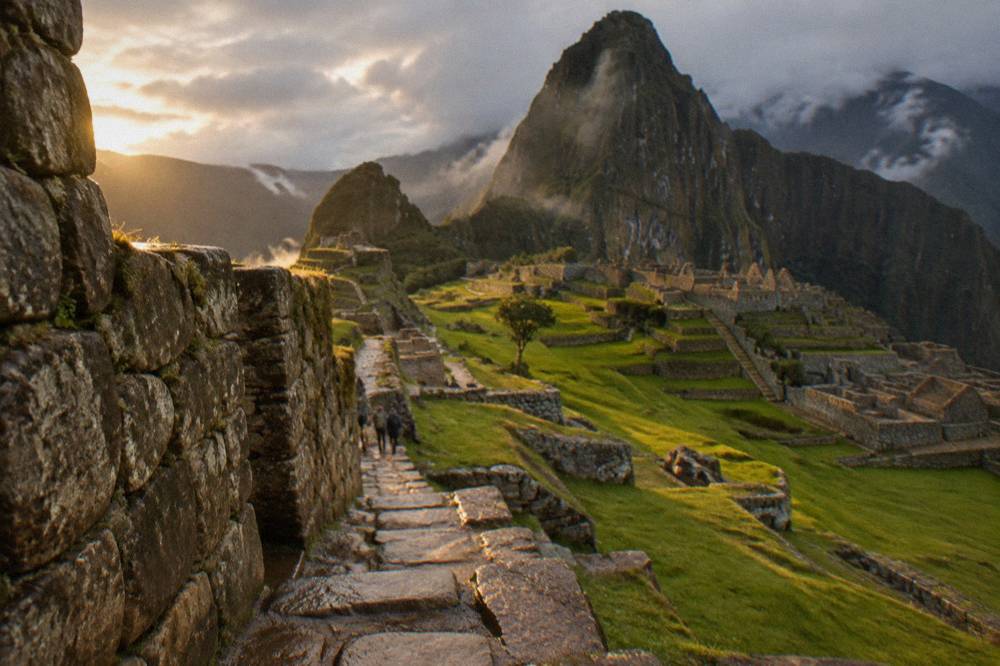
A season-by-season summary keeps the table practical:
| Season | Months | Rain character | Nights | Best for |
|---|---|---|---|---|
| Dry winter | May to Aug | 1.5 to 8.7 mm per month | Frost-cold, 0.1 to 2.5 C mean minimums | Clear views, treks, photography |
| Shoulder | Apr, Sep, Oct | 21.8 to 43.2 mm per month | Cold but above freezing | Thinner crowds, green fields in April |
| Wet summer | Nov to Mar | 71.9 to 145.3 mm per month | Mild, 6.2 to 6.6 C mean minimums | Lower prices, fewer visitors, lush scenery |
Is June To August Really Peak Season In Cusco?
Yes. June to August is Cusco's peak: it is the driest stretch of the year, it contains the Inti Raymi festival on 24 June, and the Ministry of Culture's 2026 rules raise Machu Picchu's daily capacity to 5,600 visitors from 19 June to 2 November, exactly spanning the high-season window. Clear weather plus a festival plus raised caps means the region is at its busiest.
The visitor data confirms what the capacity rule implies. In the MINCETUR open dataset, Machu Picchu recorded 151,550 visits in July 2025 and 153,655 in August, against 79,806 in February. The dry-season peak is real and measurable, and the raised daily cap from 19 June to 2 November, set under the Ministry's 2026 resolution, is the official system acknowledging it.
Peak season is not one uniform block. June carries Inti Raymi on 24 June, when the city fills for the festival, and the grandstand seats at Sacsayhuaman sell through official channels, with 2026 Zona Illapa general seats listed at S/ 490 and Zona Chaska at S/ 680 on the official seller's page. July and August have no single festival of that scale but hold the highest visitor counts of the year. Anyone planning around the festival should read the site's Inti Raymi guide before locking dates.
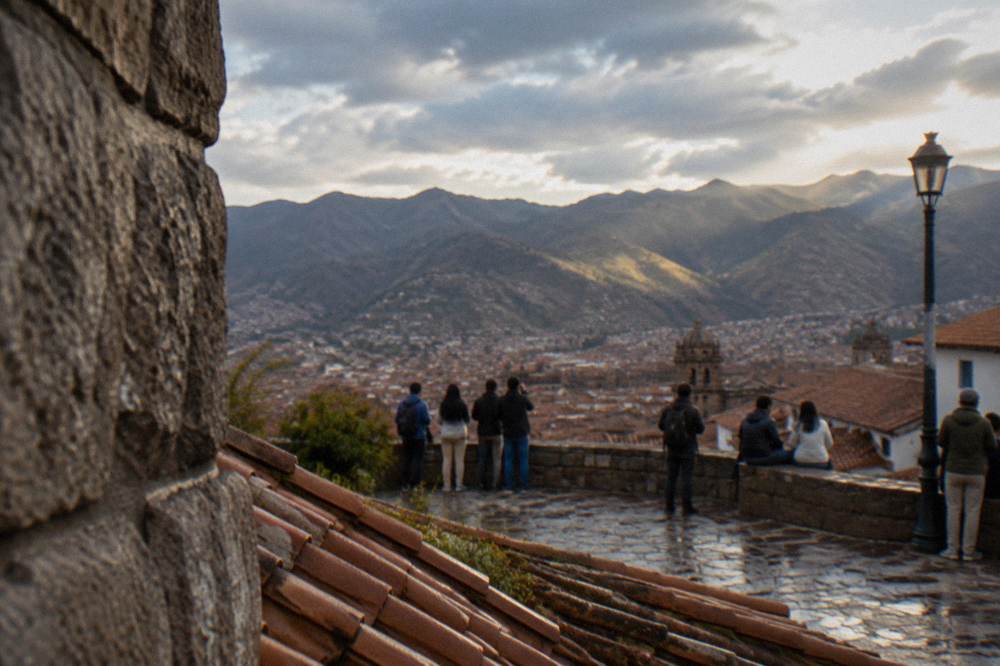
The practical reading: if the goal is the clearest possible weather and the biggest choice of departures, June to August delivers, at the cost of crowds and the coldest nights. If the goal is dry weather with some breathing room, May and September sit on either side of the peak with 8.7 mm and 21.8 mm of rain respectively. The half-day city tour of the four ruins above Cusco runs year round and is a good example of a product that does not need a specific month: it is listed at /tours/Cusco-city-tour-four-ruins-in-half-day-120993p16/, and Check availability shows the operator's live listing for any date.
When Is The Rainy Season In Cusco?
The rainy season in Cusco runs roughly November to March, with December to March delivering 508.7 mm of the year's 707.8 mm total, or 71.9 percent, at the WMO and SENAMHI station. January is the wettest single month at 145.3 mm, and February is the least visited month, with Machu Picchu recording 79,806 visits in February 2025 against October's 154,105.
Rain in the wet season is not an all-day affair in the way the monthly totals might suggest. The pattern in the Andes is typically a clear morning and a heavy afternoon downpour, though the station record only gives monthly totals, so this page stays with what the data shows: the totals climb steeply from October's 39.4 mm through November and December to the January peak.
February has a second distinction: the Inca Trail closes every February, a standing annual closure for maintenance and the wettest-month conditions, so the classic four-day trek is simply not available that month. Treks that remain open, such as the Salkantay route, run in wet-season conditions, and the rainbow mountain versus palccoyo comparison matters more in these months, since the longer Vinicunca trail is more exposed to weather than the shorter Palccoyo walk.
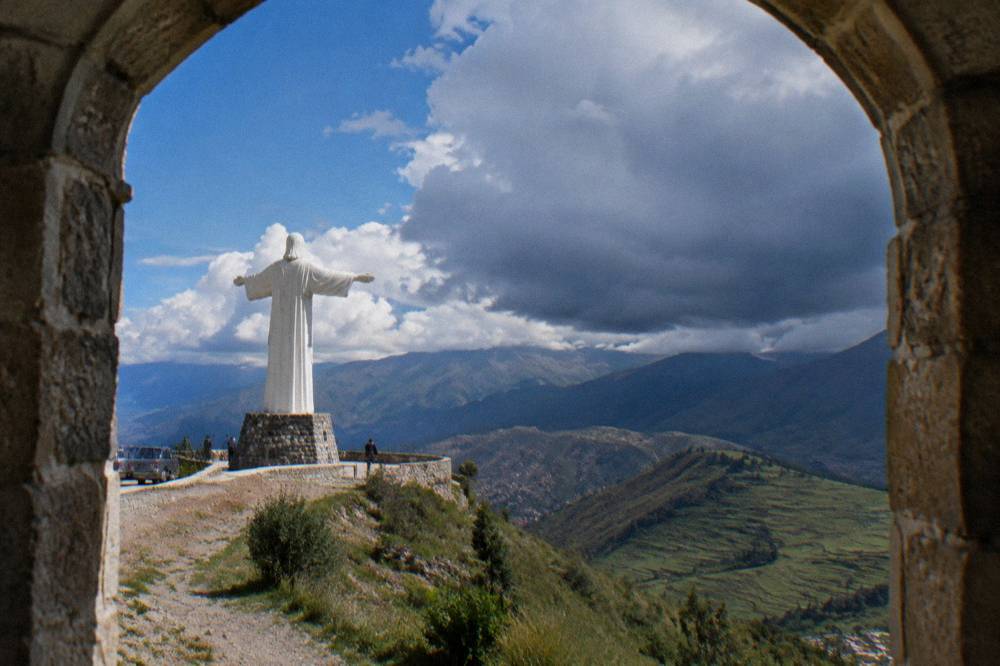
The wet season is not without its case. The crowds thin sharply, the hills turn green, and the visitor data shows the difference: February 2025 at Machu Picchu drew 1.93 times fewer visitors than October. The trade is certainty: a wet-season trip to a viewpoint or a high mountain carries a real chance of seeing fog instead of the view, and day trips to places like Rainbow Mountain, whose community entry fee runs S/ 25 to S/ 30 in cash for foreigners, can be reshaped by the weather on the day.
What Do The Crowd Figures Show Month By Month?
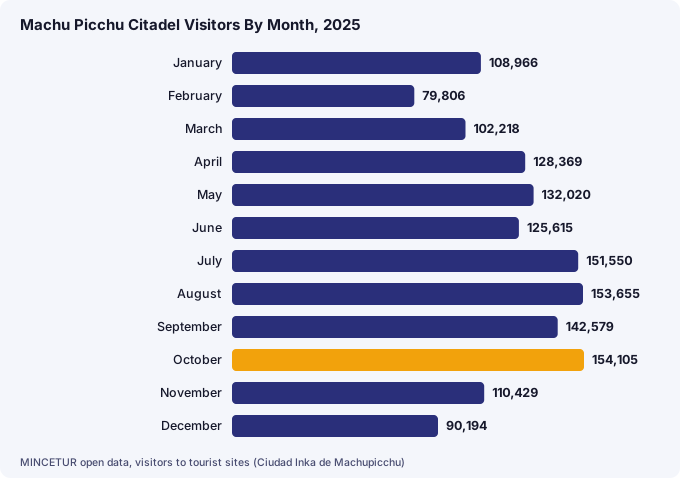
The Ministry of Culture's open data for 2025 shows Machu Picchu at its busiest in October at 154,105 visits, followed by August at 153,655 and July at 151,550, and at its quietest in February at 79,806. The dry-season months dominate, but the single busiest month of the year falls in the shoulder season, not the peak, and December drops to 90,194 visits.
Here is the full monthly series for 2025 from the MINCETUR open dataset, the most recent complete year available:
| Month (2025) | Machu Picchu visits |
|---|---|
| Jan | 108,966 |
| Feb | 79,806 |
| Mar | 102,218 |
| Apr | 128,369 |
| May | 132,020 |
| Jun | 125,615 |
| Jul | 151,550 |
| Aug | 153,655 |
| Sep | 142,579 |
| Oct | 154,105 |
| Nov | 110,429 |
| Dec | 90,194 |
The surprise in that table is October. It outranks every peak-season month, and it does so with 39.4 mm of rain and the year's warmest mean maximum at 20.9 C. The likely explanation is that October sits inside the raised-capacity window that in 2026 runs from 19 June to 2 November, and it catches travellers avoiding the July and August crush while still expecting dry weather. September, at 142,579 visits and 21.8 mm of rain, is arguably the best crowd-to-weather ratio in the whole year.
Crowds in Cusco city itself track the same curve, with one addition: festival dates. The free things to do in Cusco guide covers the walks and squares that cost nothing, and in late June the Plaza de Armas and Sacsayhuaman are the stages for Inti Raymi, when the city's own population turns out alongside the visitors.
When Are Cusco's Festivals And Should You Plan Around Them?
Cusco's festival calendar clusters in the dry season: Inti Raymi on 24 June each year, the Virgen del Carmen festival at Paucartambo traditionally on 15 to 18 July, and the Q'eswachaka bridge renewal on 2 to 4 July 2026 with its festival on 5 July. Santurantikuy, the Christmas Eve craft fair on the Plaza de Armas on 24 December, is the one major festival in the wet season.
Inti Raymi is the date with the biggest travel impact. The 24 June ceremony starts at Qorikancha, moves to the Plaza de Armas and finishes with the main event at Sacsayhuaman, and grandstand tickets for the Sacsayhuaman stage sell through official channels, with 2026 Zona Illapa seats listed at S/ 490 and Zona Chaska at S/ 680. The 2027 date falls on a Thursday, 24 June 2027, per an operator calendar that matches the computus, though the municipality had not published 2027 details.
| Festival | Usual date | Where it happens |
|---|---|---|
| Inti Raymi | 24 June each year | Qorikancha, Plaza de Armas, Sacsayhuaman |
| Virgen del Carmen | Traditionally 15 to 18 July | Paucartambo |
| Q'eswachaka bridge renewal | 2 to 4 July 2026, festival 5 July | Q'eswachaka, Apurimac River |
| Santurantikuy | 24 December | Plaza de Armas, Cusco |
The Q'eswachaka dates are a one-year fact, not a standing rule: the 2026 renewal was moved to July, and each year's dates are confirmed locally in advance. The bridge itself sits at the end of a long day trip from Cusco, and the renewal days are the one time the rebuilding can be watched.
A scheduled event further out: Pope Leo XIV's visit to Peru in November 2026 includes Cusco and Sacsayhuaman on 15 November 2026, with a public encounter at 10:30. That date is worth knowing for anyone booking November 2026, since a papal mass at the Sacsayhuaman explanada will draw large local crowds and access controls.
What Should You Pack For Cusco's Dry And Wet Seasons?
Pack for a big day-night swing in every season: in July the mean maximum is 19.1 C and the mean minimum 0.1 C, about 19 degrees apart, while in January the swing is 12.3 C. Dry-season packing means sun protection, warm layers and a jacket for frost-cold nights; wet-season packing adds a proper rain layer, with the January mean maximum still 18.9 C.
The station record makes the case better than any anecdote. Mean maximums never leave the 18.8 to 20.9 C band, so daytime in Cusco is mild year round. The minimums are where the seasons differ sharply: 2.5 C in May, 0.3 C in June, 0.1 C in July, against 6.6 C in January and 6.5 C in February. Frost nights are common from April to September, with the heladas peaking in June and July.
| Packing item | Dry season (May to Sep) | Wet season (Nov to Mar) |
|---|---|---|
| Warm layers for evening | Essential, frost nights | Lighter, mild nights |
| Rain jacket | Backup for the odd shower | Essential, afternoon downpours |
| Sun protection | Essential, clear high-altitude skies | Still needed on bright mornings |
| Footwear | Any sturdy shoe | Waterproof or fast-drying |
| Daypack cover | Optional | Useful |
Altitude changes the packing question as much as season does. At 3,335 m the sun is strong whenever the sky is clear, and the CDC's Yellow Book advises graded ascent and a doctor's input on acetazolamide rather than any specific wardrobe. The site's Cusco altitude guide covers the health side of acclimatisation in full, and the what to eat in Cusco guide covers the food side, including where a cup of coca tea, reported at about S/ 2 to S/ 5, fits into a day.
Does The Season Change Trains, Day Trips And Getting Around?
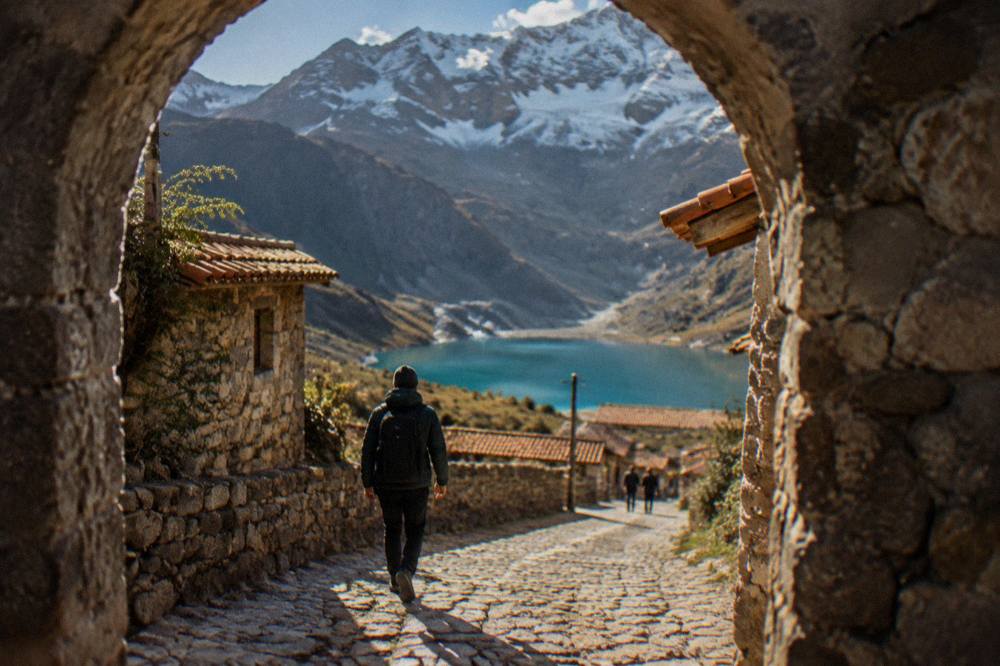
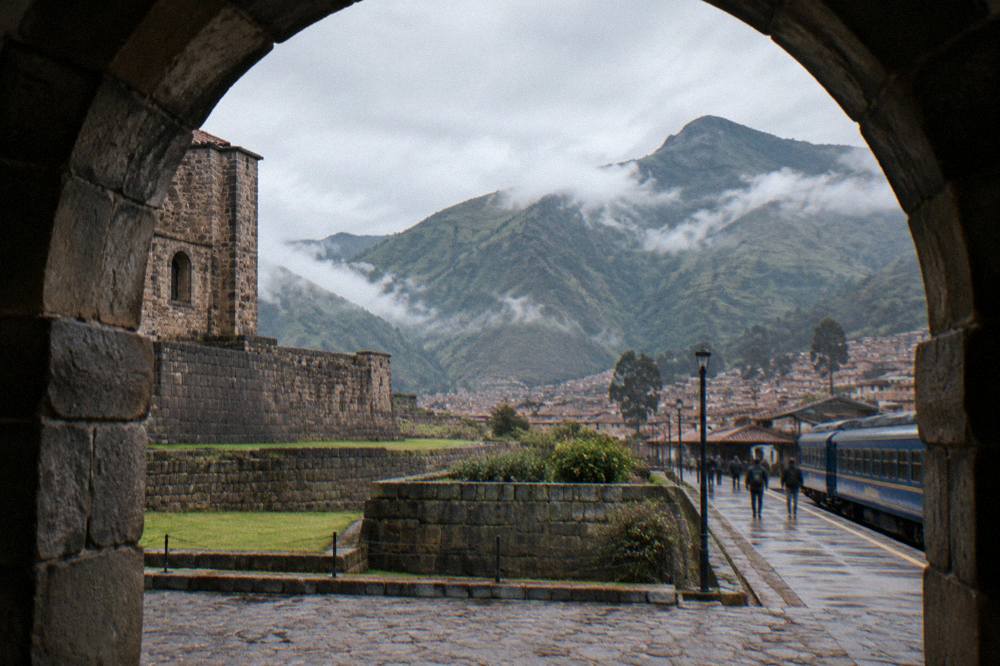
Yes, in specific ways: the Inca Trail closes every February, wet-season track conditions can put Cusco-area train stretches out of service and push operators onto a bus-plus-train combination via Ollantaytambo, and high mountain day trips to Rainbow Mountain or Humantay depend on same-day weather more than on the month. PeruRail's own news page confirms regular operations resumed in late August 2026 after earlier disruptions.
The train point is the one travellers tend to miss. Both Poroy and San Pedro serve as Cusco-side stations, and PeruRail's FAQ gives the journey times: about 3 h 30 from Poroy and about 4 h 30 from San Pedro to Machu Picchu, with Ollantaytambo to Machu Picchu about 1 h 45. When wet-season conditions affect the Cusco-area track, the bimodal option, a bus to Ollantaytambo followed by the train, is used. PeruRail's news page records that Cusco to Ollantaytambo train travel resumed from 1 September 2026, and that 2027 tickets opened on 22 September 2026. The train journey itself is a topic with its own coverage on a sibling site, so this page stops at the seasonal mechanics.
Day trips sort into two groups. Valley trips to Pisac, Ollantaytambo, Moray and the Maras salt mines run in every month, with the sites covered by the Boleto Turistico's Circuit III, and the boleto turistico guide explains the S/ 130 integral and S/ 70 partial tickets. High mountain trips, Rainbow Mountain at about 5,000 m and Humantay Lake at about 4,200 m, are weather-dependent on the day, and a wet-season booking carries a real chance of a fog-bound summit.
For the one-day Sacred Valley circuit, the season matters less than the start time: an early departure beats both the afternoon cloud build-up in the wet months and the midday tour buses in the dry ones. The site's getting around Cusco guide covers the transport options in the city, and the where to stay in Cusco guide helps with basing decisions, since a central base shortens every early departure.
For travellers who want the valley and the citadel in a single dry-season window, the two-day guided combination is the product the data favours: it compresses the Sacred Valley and Machu Picchu into one booking, which matters most in the peak months when separate day-trip seats and Machu Picchu entry are both under pressure from the raised capacity rules.
Common Questions About The Best Time To Visit Cusco
What is the best month to visit Cusco?
May and September are the strongest single months on the data: 8.7 mm and 21.8 mm of rain respectively, mean maximums of 19.8 C, and visitor counts below the July and August peak. June to August is the clearest and coldest window, and October is the busiest month of the year despite sitting outside the classic peak.
Is Cusco cold in June, July and August?
Days are mild, with mean maximums of 19.1 to 19.8 C, but nights are frost-cold, with mean minimums of 0.1 to 1.6 C in the WMO station record, and SENAMHI reports frosts peaking in June and July. Layers and a warm jacket for the evening are the standard advice.
Does it rain all day in the Cusco wet season?
The station record only gives monthly totals, with January at 145.3 mm the wettest month, so no source in this site's data describes the daily pattern. What the data does show is that December to March carries 71.9 percent of the year's rain, and that the wet months are also the mildest at night, with mean minimums of 6.2 to 6.6 C.
When is Cusco least crowded?
February is the quietest month on the visitor data, with 79,806 Machu Picchu visits in 2025 against 154,105 in October, partly because the Inca Trail closes every February. November, December, January and March are also well below the dry-season peak.
Is the wet season a bad time to visit Cusco?
It depends on the trip. High mountain viewpoints carry a real risk of fog in the wet months, and February removes the Inca Trail entirely. But the city itself, its museums, markets and food scene run year round, and the crowds and prices ease. A trip built on the city and the lower Sacred Valley sites is workable in any month.
Does Inti Raymi change when I should visit?
It can. Inti Raymi falls on 24 June each year, and the week around it is the busiest of the Cusco year, with grandstand tickets for the Sacsayhuaman ceremony sold through official channels. Travellers who want the festival should book early; travellers who do not should look at May or September for the same dry weather without the festival crowds.
Whatever month wins, the pattern worth remembering is that Cusco's weather and Cusco's crowds peak at the same time: the driest months are the busiest, the wettest are the quietest, and the shoulder months of April, May, September and October are where the two curves cross. Things To Do In Cusco Peru carries the full site, from the best hotels in Cusco to the day-trip pages, for building the rest of the itinerary around the dates that fit.