Is Cusco Safe?
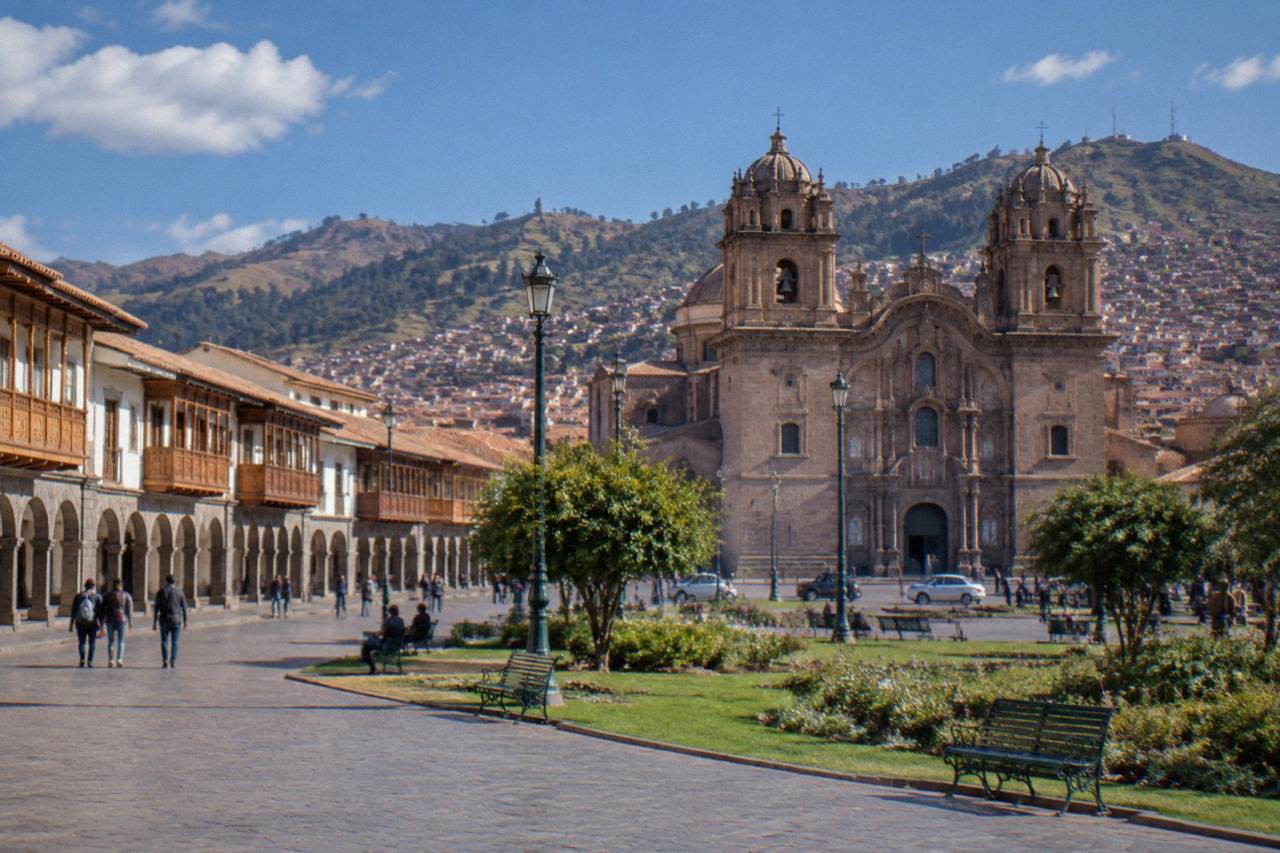
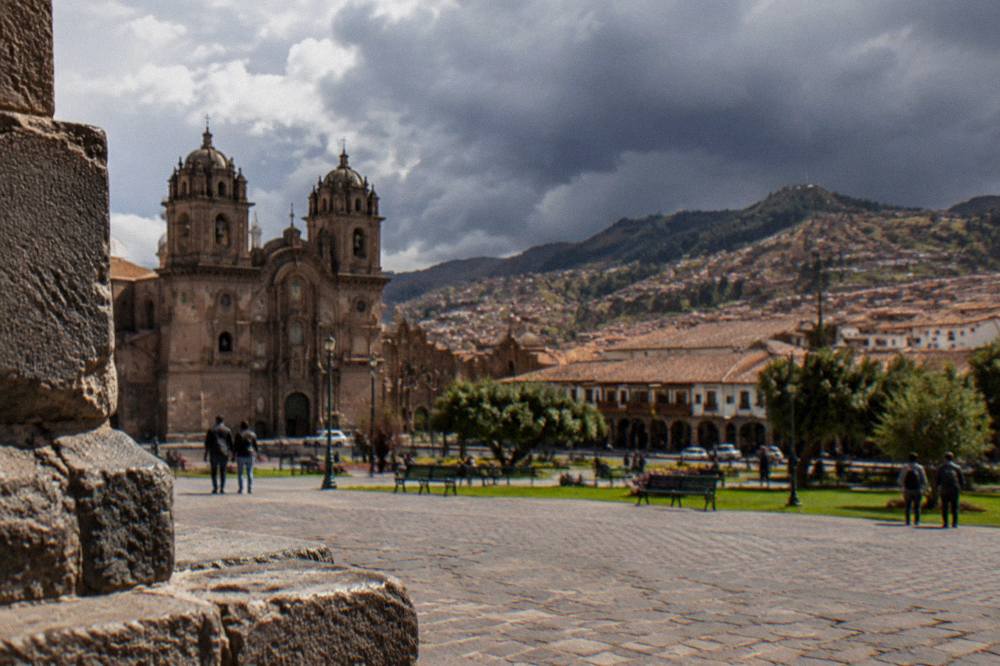
Cusco, the historic Inca capital in the Andes of southern Peru, sits at 3,335 m on the Plaza de Armas and welcomes a steady stream of visitors heading to Machu Picchu. The official advisories treat it as open to tourism, with specific warnings about night walking, fake taxis and one far-off region to avoid.
Short answer
Yes, with ordinary precautions. The CDC holds Peru at Level 1 and the US State Department advisory is Level 2, Exercise Increased Caution, with Cusco city, the Sacred Valley, the Inca Trail and Machu Picchu all outside its Do Not Travel areas. The real, sourced risks are street crime after dark, fake taxis at night, altitude and cold winter nights.
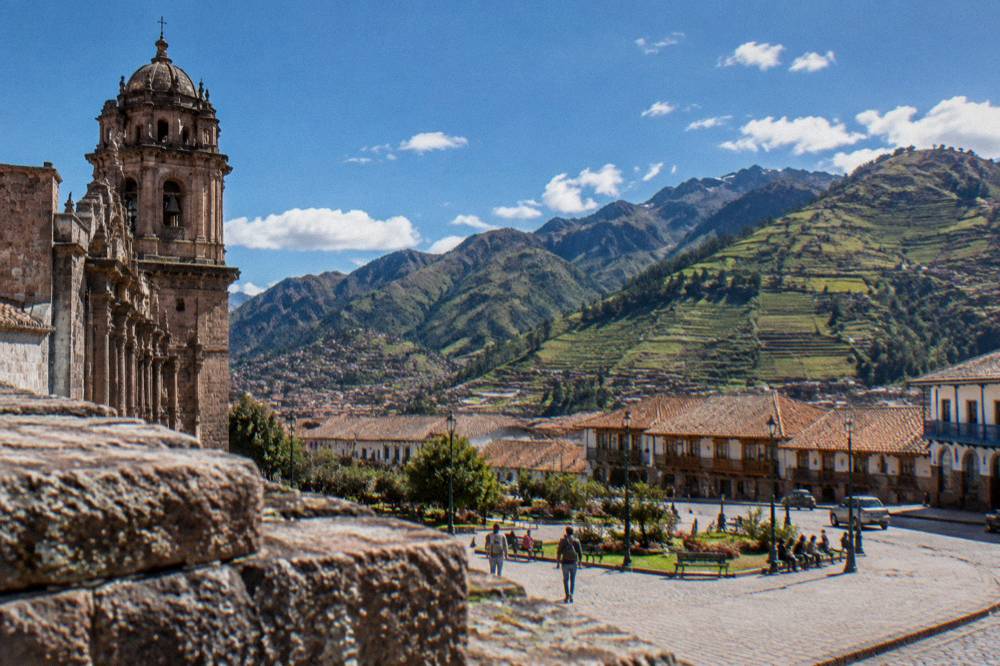
Cusco, the historic city in the Andes of southern Peru, sits at 3,335 m on the Plaza de Armas and carried 428,450 residents at the 2017 census. UNESCO inscribed the City of Cusco on the World Heritage List in 1983, and the MINCETUR open dataset counted 1,479,506 visitors at Machu Picchu alone in 2025, nearly all of whom passed through this city first. So the question of whether Cusco is safe is not abstract: it is asked by a very large number of people every year, and the official record gives a clear, sourced answer. The CDC holds Peru at Level 1, Practice Usual Precautions. The US State Department advisory is Level 2, Exercise Increased Caution, and it places Cusco city, the Sacred Valley, the Inca Trail and Machu Picchu outside its Do Not Travel areas. This page, written for Things To Do In Cusco Peru, reads the advisories line by line and separates what they actually say from what rumour adds.
What Do The Official Travel Advisories Say About Cusco?
Cusco sits inside the areas that official advisories treat as open to tourism. The CDC holds Peru at Level 1, Practice Usual Precautions, and the US State Department advisory is Level 2, Exercise Increased Caution, while placing Cusco city, the Sacred Valley, the Inca Trail and Machu Picchu outside its Do Not Travel areas. No advisory names the historic city itself as off limits.
The US advisory, reissued on 8 September 2026, lists kidnapping, crime and unrest as its reasons for the Level 2 rating, and its map of no-go zones stops well short of the tourist heartland. The Sacred Valley towns of Pisac at 2,972 m, Urubamba at 2,870 m and Ollantaytambo at 2,792 m all sit in the same open category as the city itself.
The UK Foreign, Commonwealth and Development Office is blunter about street crime. Its Peru safety page states that street crime, including muggings and thefts, is a significant problem in Lima, Cusco, Arequipa and other major cities, and advises against walking on your own in quiet areas or at night. The same page notes that Cusco is among the regions that have seen recent protests and that train services to Machu Picchu are occasionally suspended or disrupted by them.
Canada and Australia both advise exercising a high degree of caution in Peru, and both point travellers away from the VRAEM region, which includes parts of the Cusco region: Pichari, Quimbiri and Vilcabamba. Those districts are far from the city, the Sacred Valley and any route a visitor would normally take. Australia's Smartraveller adds one Cusco-relevant line: strikes can disrupt transport to Machu Picchu.
| Advisory source | Current level for Peru | What it says about Cusco |
|---|---|---|
| US State Department | Level 2, Exercise Increased Caution, reissued 8 September 2026 | Cusco city, the Sacred Valley, the Inca Trail and Machu Picchu sit outside the Do Not Travel areas |
| UK FCDO | Regional advice, no nationwide ban | Street crime including muggings and thefts is a significant problem; do not walk alone in quiet areas or at night |
| Canada and Australia | Exercise a high degree of caution | Avoid the VRAEM region, including Pichari, Quimbiri and Vilcabamba in the Cusco region |
| CDC | Level 1, Practice Usual Precautions | Machu Picchu is at high altitude; talk to a doctor before travel |
Read together, the advisories describe a city that is open, busy and ordinary in its risk profile, with two specific cautions: what happens after dark, and what happens in a taxi that was never really a taxi.
Is Cusco Safe At Night?
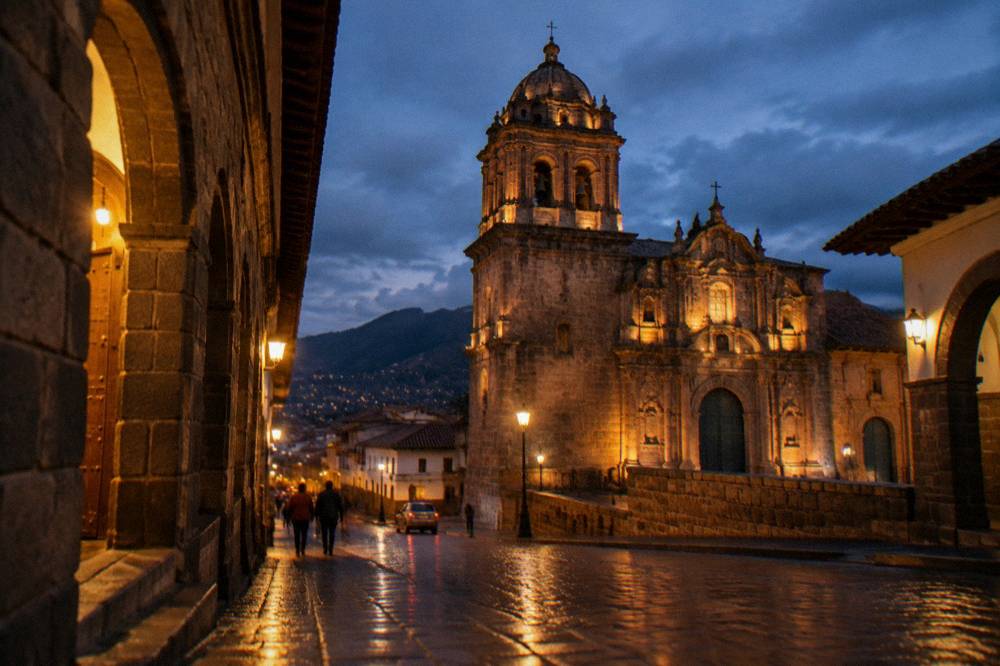
Night is when the UK FCDO's warnings get specific: it advises against walking on your own in quiet areas or at night, because street crime including muggings and thefts is a significant problem in Lima, Cusco, Arequipa and other major cities. Its rule for Cusco after dark is plain: move in company, keep to busy and lit streets, and use a taxi arranged in advance rather than one hailed in the street.
That is the whole of the sourced night guidance, and it is worth taking literally. The FCDO's express-kidnapping warning, fake taxi drivers usually operating at night, belongs to the same hours. The city's answer to the night question is the same answer every advisory gives for Peru's big cities: company, light and a booked car.
The practical version of a safe evening in Cusco is short to describe. Dinner in the historic centre, a walk back along the Plaza de Armas with other people around, and a taxi or rideshare called by phone or app rather than flagged. The nightlife options in Cusco are concentrated in walkable parts of the centre, which keeps the evening plan simple. For a fuller treatment of the after-dark question, this site carries a dedicated answer at is it safe to walk at night in Cusco.
One Cusco-specific note belongs here. The city's altitude, about 3,335 m at the Plaza de Armas, means alcohol hits harder than at sea level, and the CDC advises avoiding alcohol for the first 48 hours at high altitude. A night out on the first evening after flying in from Lima combines the FCDO's night warnings with the CDC's altitude advice, and neither advisory suggests that combination.
What Are The Main Risks In Cusco?
The risks the sourced advisories actually name are opportunistic: street crime, muggings and thefts in the city, and express kidnapping by fake taxi drivers, which the FCDO says usually happens at night. Protests can suspend train services to Machu Picchu, Australia's Smartraveller notes. No advisory names a terrorism or conflict risk in the city itself; the named no-go zones lie far from the tourist circuit.
Street crime in Cusco, per the FCDO, is theft and mugging, the same category it assigns to Lima and Arequipa. What the advisory does give is behaviour: avoid walking alone in quiet areas or at night, and treat displays of phones, cameras and cash as an invitation.
Express kidnapping is the FCDO's term for a robbery in which victims are driven to ATMs and made to withdraw cash, and it lists fake taxi drivers, usually at night, as the typical vector. The defence is the same as for any night ride: a car booked through an app, a hotel or a restaurant.
Protests are the third named risk. The FCDO records that Cusco is among the regions that have seen recent protests and that trains to Machu Picchu are occasionally suspended or disrupted by them. Smartraveller carries the same note. Neither advisory treats protest as a danger to life in the city; both treat it as a transport disruption. The train connection to Machu Picchu is covered in detail on a sibling page about getting from Cusco to Ollantaytambo, and the ticketing side of Machu Picchu belongs to its own dedicated coverage.
| Risk named by an advisory | Source wording | The response the advisory logic supports |
|---|---|---|
| Street crime, muggings, thefts | FCDO: a significant problem in Lima, Cusco, Arequipa and other major cities | Carry little, keep phones and cameras out of sight, avoid quiet areas at night |
| Walking alone at night | FCDO: do not walk on your own in quiet areas or at night | Move in company, use booked transport after dark |
| Express kidnapping | FCDO: fake taxi drivers, usually at night | Book through an app, hotel or restaurant, never hail alone late |
| Protest disruption | FCDO and Smartraveller: trains to Machu Picchu occasionally suspended | Build a buffer day into a Machu Picchu plan |
| VRAEM region | Canada and Australia: avoid Pichari, Quimbiri, Vilcabamba | Stay on the city, Sacred Valley and Machu Picchu circuit |
For a first day in the city that keeps a visitor with a group and a local guide, a half-day city tour of the four ruins is a low-stress way to see Saqsayhuaman, Q'enqo, Puka Pukara and Tambomachay without arranging anything alone.
Is Cusco Safe For Women And LGBTQ Travellers?
Peru is legal for same-sex activity and conservative in practice, the FCDO reports: crimes against the LGBT+ community are not included in hate crime legislation, same-sex partnerships are not formally recognised, and public affection may receive unwanted and negative attention. For women, the same street-crime advice applies as for everyone, with the FCDO's night and quiet-area warnings front and centre. Neither advisory singles Cusco out as worse than Lima or Arequipa.
The FCDO's LGBT+ wording is about Peru as a country, not about Cusco specifically, and it is the only sourced statement on the subject this site holds. There is no sourced LGBTQ-safety rating for the city, and no survey of how LGBTQ visitors are treated in Cusco, so this page prints no verdict beyond the advisory text. What can be said is what the advisory says: the law is not the risk, social attention is.
For women travelling alone, the advisory record contains no separate Cusco warning. The FCDO's general rules, company at night, no quiet areas after dark, booked cars, apply to everyone, and the fake-taxi warning names no gender. The US advisory's kidnapping caution is likewise national in scope. A woman planning a solo trip can read the sourced record as: ordinary city precautions, no city-specific red flag.
The free things to do in Cusco include daytime walking options in the historic centre, which keeps solo sightseeing in the hours the advisories are comfortable with.
Is The Altitude A Safety Concern In Cusco?
Altitude is the one health risk every visitor to Cusco genuinely shares. The CDC lists Cusco at approximately 3,350 m and names it a rapid-ascent destination, because the city is reached by air in about an hour and 15 minutes from Lima. The CDC's advice is graded ascent where possible, a low threshold for asking a doctor about acetazolamide when it is not, and no alcohol for the first 48 hours.
The CDC Yellow Book puts rates of altitude illness approaching 50 percent in situations of rapid ascent to high altitude where gradual or staged acclimatisation is not feasible, and it names Cusco in that context. It is not a prediction for every visitor; it is a reason the CDC keeps what it calls a low threshold for chemoprophylaxis. Acetazolamide is a prescription decision with a doctor, not a pharmacy counter choice, and the CDC's dosing guidance is a matter for that conversation.
Two CDC lines are specific to this city. One is the ascent rule drawn from the Wilderness Medical Society: avoid going from low altitude to a sleeping altitude of 2,750 m or more in a single day, and once above 3,000 m, raise sleeping altitude by no more than 500 m per night with an extra night for every 1,000 m gained. The other is a Cusco suggestion: travellers can descend to elevations lower than the airport to sleep for one or two nights and then begin their ascent, which the CDC says may remove the need for medication.
That second line is why the Sacred Valley matters to a safety plan. Pisac, Urubamba and Ollantaytambo all sleep lower than the city, and the CDC's own wording treats a night or two down the valley as a legitimate acclimatisation strategy. A booked Sacred Valley day trip with a small group, such as the Sacred Valley Full Day Tour this site features, covers that first lower-elevation day with transport and a guide included; Check availability on the operator's live listing. The full altitude picture, including what the CDC does and does not say about coca tea and day counts, sits on the Cusco altitude guide.
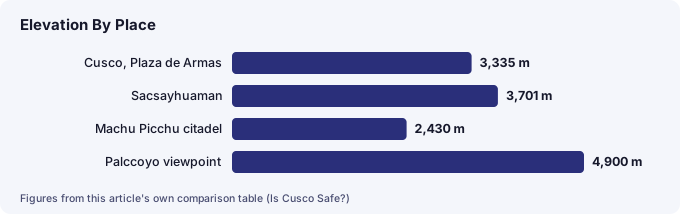
| Place | Elevation | Source note |
|---|---|---|
| Cusco, Plaza de Armas | 3,335 m | PromPeru |
| Cusco, as listed by the CDC | approximately 3,350 m | CDC Yellow Book |
| Sacsayhuaman | 3,701 m | Above the city, on the Boleto Circuit I |
| Machu Picchu citadel | 2,430 m | Official Machu Picchu site |
| Aguas Calientes town | about 2,040 m | Lower than the citadel |
| Palccoyo viewpoint | 4,900 m | PromPeru |
| Rainbow Mountain, Vinicunca | about 5,000 m | PromPeru and secondary sources |
| Humantay Lake | about 4,200 m | Secondary sources only |
The table explains the one altitude fact that surprises visitors: Cusco is higher than Machu Picchu, roughly 900 m higher, so the city is where the acclimatisation burden actually falls.
Are Taxis And Transport Around Cusco Safe?
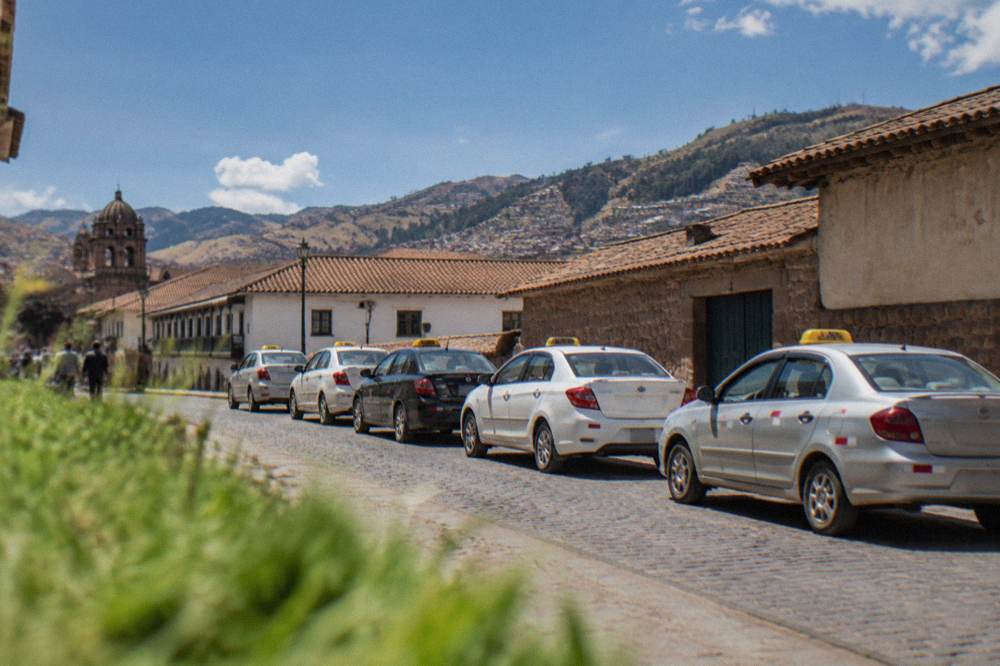
Taxis are where the FCDO's sharpest Cusco warning sits: express kidnapping by fake taxi drivers, usually at night, is listed on its Peru safety page. The countermeasures it describes are simple: book through an app or a hotel, agree the fare before the ride starts, and avoid flagging a cab alone after dark. A registered airport transfer is the lowest-friction first ride in the city.
The airport itself is close. Alejandro Velasco Astete International Airport sits about 6 km from the Plaza de Armas, 15 to 20 minutes by taxi, and an airport taxi to the centre is reported at about S/ 15 to 25, about US$4 to 7 at the roughly S/ 3.4 exchange rate this site uses. A prebooked private transfer is the version of that first ride that removes the haggling entirely; the Cusco airport guide covers the arrival process in full.
Within the city, the getting around Cusco guide lays out the options. Ride-hailing is available in Cusco, though a local transfer company notes it does not work the same way it does in Lima. The FCDO's fake-taxi warning is the reason the booked-car habit matters more here than in many cities: the risk it names is not the fare, it is the driver.
For the long legs of a trip, the picture is calmer. PeruRail and Inca Rail run the trains to Machu Picchu from the Poroy and San Pedro stations, and in wet-season disruptions a bimodal bus-plus-train option via Ollantaytambo is used. The FCDO's protest note is the one caveat worth planning around: a buffer day between arrival and a booked Machu Picchu ticket absorbs the occasional suspension. Machu Picchu tickets themselves are nominal, valid only for the stated date, hour, circuit and holder, so a missed connection is a real cost, and that ticketing topic has its own dedicated coverage.
Is The Food And Water Safe In Cusco?
The CDC's Peru guidance on food and water is short and specific: avoid contaminated water and drink bottled, boiled or treated water, and apply the same caution to food hygiene. It holds Peru at Level 1, Practice Usual Precautions, the lowest notice level, and recommends no yellow fever vaccination for travel limited to the highland circuit of Cusco city, the Inca Trail and Machu Picchu.
That is the entire sourced water guidance, and this page adds nothing to it. The CDC does not publish a tap-water verdict for Cusco beyond the bottled, boiled or treated advice, so no stronger claim appears here.
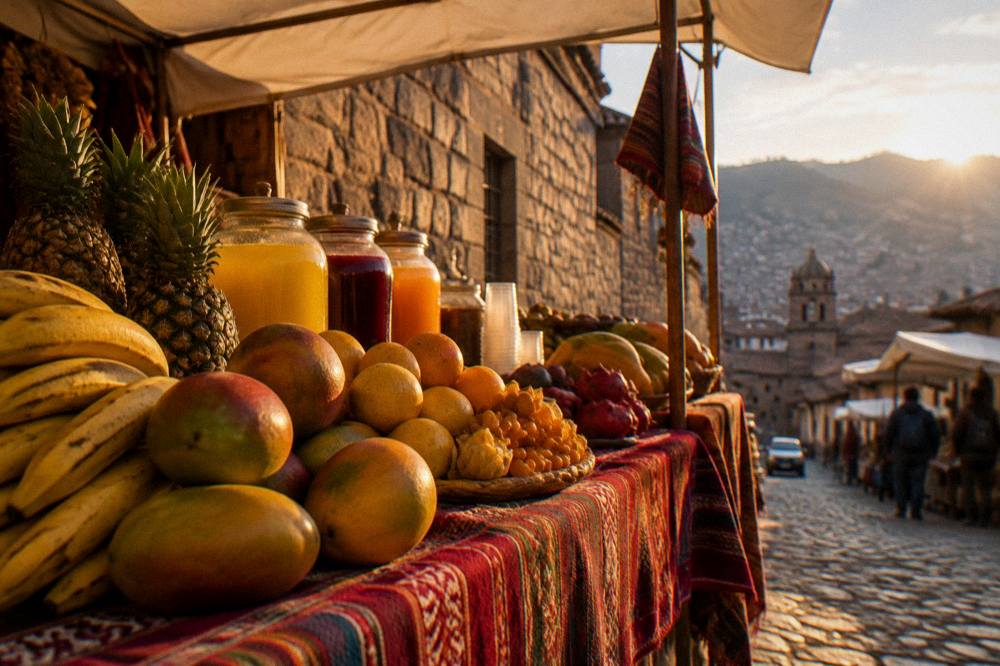
The food scene is a different matter, because the risk the CDC names is hygiene, not cuisine. A market lunch at San Pedro or a set menu del dia, reported at about S/ 8 to 15, is ordinary city eating; the what to eat in Cusco guide and the Cusco markets guide cover the dishes and the stalls. Visitors who want the kitchen side of the culture with a guide standing next to them can look at the cooking classes in Cusco, and the restaurant shortlist is on the best restaurants in Cusco page.
Vaccinations deserve one clear sentence, because the wrong version circulates widely. Yellow fever vaccination is not required for entry to Peru. The CDC recommends it for areas below 2,300 m in jungle regions and does not recommend it for travel limited to the highland tourist areas, meaning Cusco city, the Inca Trail and Machu Picchu. Its Peru guidance was updated on 12 February 2026.
| Health and entry item | The sourced rule |
|---|---|
| Visa | Not required for US, UK, EU, Canada and Australia holders; length set by the border officer, typically up to 90 days |
| Legal maximum stay | 183 days in 365 is the ceiling; it is never promised at the border |
| Passport | Valid at least 6 months from the date of entry |
| Arrival card | TAM, paper or virtual |
| Yellow fever | Not required for entry; CDC recommends it only below 2,300 m in jungle regions, not the highland circuit |
| Water | CDC: drink bottled, boiled or treated water |
| Altitude medication | Acetazolamide is a prescription decision with a doctor, per the CDC Yellow Book |
Does The Season Change Safety In Cusco?
The calendar changes the shape of risk in Cusco more than the crime map does. The wet season, roughly November to March, concentrates 71.9 percent of the year's 707.8 mm of rain at the Cuzco station, and Australia's advisory notes strikes and protests can disrupt transport to Machu Picchu. The dry winter, June to August, brings frost nights with a mean July minimum of 0.1 C, so cold is that season's hazard.
The rain numbers come from the WMO World Weather Information Service record for the Cuzco station, supplied by SENAMHI, a historical normal. December to March alone delivers 508.7 mm of the 707.8 mm annual total. May to August, by contrast, brings 22.8 mm between the four months, which is why the dry season carries the clear-sky reputation.
Winter in the Southern Hemisphere is June to August, and this page never calls it summer. Frost nights peak in June and July, SENAMHI's heladas season runs April to September, and the mean July minimum at the Cuzco station is 0.1 C while the mean maximum holds at 19.1 C. The practical translation for a visitor is a daily swing of roughly 19 C in midwinter: a warm jacket for the evening, sun for the afternoon. The month-by-month detail, including the full normals table, is on the Cusco weather by month page, and the planning trade-offs are laid out in the best time to visit Cusco.
Crowds are a seasonal safety factor in one specific way. Inti Raymi, the Inca sun festival, fills the city on 24 June each year, with the main ceremony on the Sacsayhuaman esplanade, which the MINCETUR dataset counted at 944,008 visits across 2025. The Inti Raymi guide covers the date, the route from Qorikancha to the Plaza de Armas to Sacsayhuaman, and the Teleticket grandstand sales.
| Season | Roughly | Rain at the Cuzco station | What it means for a visitor |
|---|---|---|---|
| Dry winter | May to September | May to August total 22.8 mm | Clear days, cold nights, frost in June and July |
| Shoulder | April, October | April 43.2 mm, October 39.4 mm | Mixed conditions, thinner crowds than midwinter |
| Wet season | November to March | December to March 508.7 mm, 71.9 percent of the annual 707.8 mm | Rain, and the advisory note that protests can disrupt trains |
Is Cusco Safe For Families And First-Time Visitors?
Nothing in the sourced advisories treats Cusco as unsuitable for families. The CDC notice is Level 1 and the US advisory keeps the city and the Sacred Valley outside its Do Not Travel areas. The practical risks the official guidance names are altitude, cold nights in the dry winter, and ordinary street-crime precautions, with the Policia de Turismo reachable around the clock on 980 122 335.
First-time visitors get a city that is compact, walkable in daylight and dense with things to see inside a small radius. The Boleto Turistico covers 16 sites across three circuits, S/ 130 for the 10-day integral ticket at the foreign adult rate, sold in person only at the Av. El Sol counter and at most included sites; the Boleto Turistico guide has the full site list and the validity rules. The Cusco with kids page carries the family angle in detail, and the where to stay in Cusco page covers the neighbourhood choice, with the hotel shortlist on the best hotels in Cusco.
The emergency numbers are worth saving before arrival. The Policia de Turismo, the tourist police, answers a 24-hour phone and WhatsApp line on 980 122 335. iPeru, the national tourist information service run under PromPeru, answers WhatsApp on +51 944 492 314 and phone on (01) 574 8000, around the clock.
| Service | Contact | Hours |
|---|---|---|
| Policia de Turismo, Cusco | Phone and WhatsApp 980 122 335 | 24 hours |
| iPeru tourist information | WhatsApp +51 944 492 314 | 24 hours, 7 days |
| iPeru tourist information | Phone (01) 574 8000 | 24 hours, 7 days |
For a first trip that bundles the city, the valley and Machu Picchu with transport and guides handled, a two-day Sacred Valley and Machu Picchu package is the format many visitors choose; the operator's live listing carries the current price and terms.
Common Questions About Cusco Safety
Is Cusco safe for solo travellers?
By the advisory record, yes, with the FCDO's own rules applied. No advisory names Cusco as a solo-specific risk. The FCDO's guidance is not to walk alone in quiet areas or at night, and to avoid cars hailed in the street after dark. Daylight sightseeing in the historic centre is not covered by any warning.
Is Cusco safe at night?
The FCDO advises against walking on your own in quiet areas or at night in Cusco, and lists express kidnapping by fake taxi drivers, usually at night, as a Peru risk. Its after-dark formula is company, busy streets and a taxi booked through an app, a hotel or a restaurant.
Do I need vaccinations to visit Cusco?
No vaccination is required for entry to Peru. The CDC recommends yellow fever vaccination only for areas below 2,300 m in jungle regions, and does not recommend it for travel limited to Cusco city, the Inca Trail and Machu Picchu. The CDC's Peru notice stands at Level 1, Practice Usual Precautions.
Can I drink the tap water in Cusco?
The CDC advises avoiding contaminated water and drinking bottled, boiled or treated water in Peru. That is the full extent of the sourced guidance, and this site adds no stronger claim in either direction.
What is the emergency number for tourists in Cusco?
The Policia de Turismo operates a 24-hour phone and WhatsApp line on 980 122 335. iPeru, the PromPeru tourist information service, answers WhatsApp on +51 944 492 314 and phone on (01) 574 8000, around the clock.
Is altitude sickness a safety risk in Cusco?
The CDC lists Cusco at approximately 3,350 m and names it a rapid-ascent destination, with rates of altitude illness approaching 50 percent in abrupt-ascent situations where staged acclimatisation is not feasible. Its advice is graded ascent where possible, a doctor's decision on acetazolamide where it is not, no alcohol for the first 48 hours, and the option of sleeping a night or two at a lower elevation before ascending.
The sourced record, read end to end, describes Cusco as a city that is open to visitors, watched over by a Level 1 CDC notice and a Level 2 US advisory that both exclude it from their no-go zones, and defined by three specific cautions: the FCDO's night rules, the fake-taxi warning, and the altitude that every visitor shares the moment the plane lands.