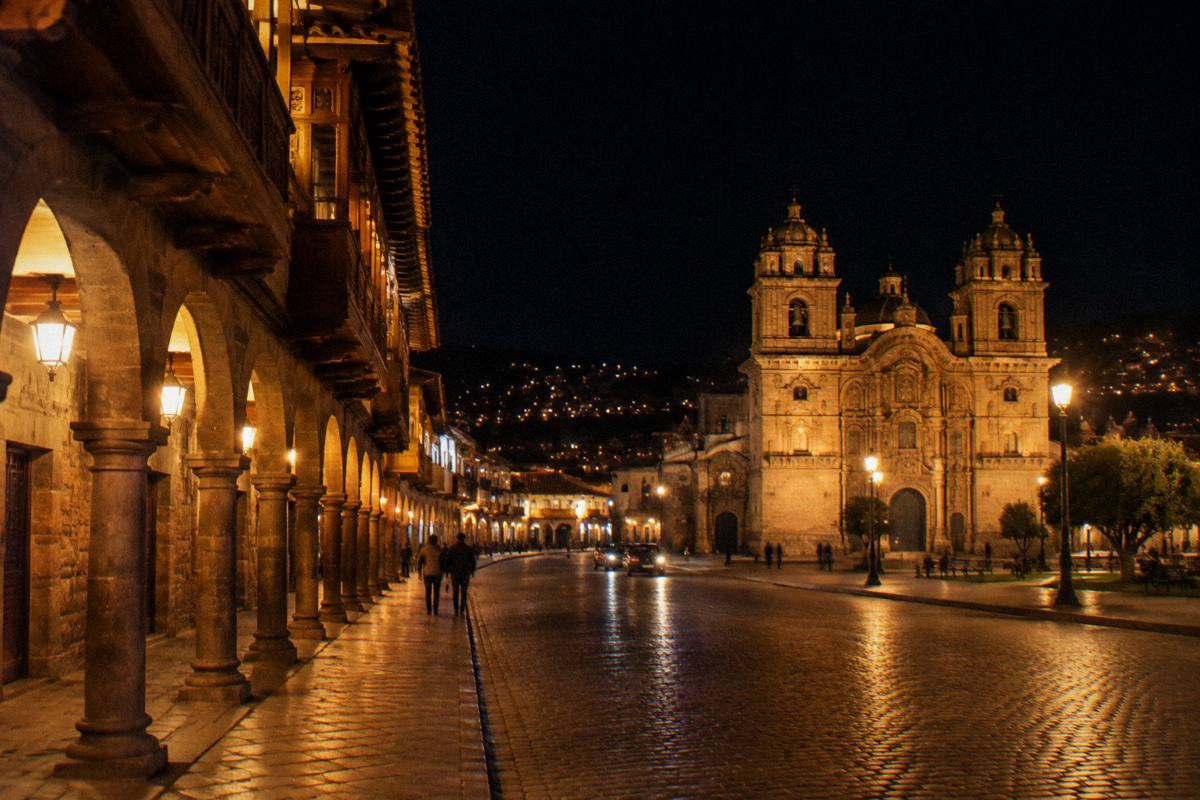
Cusco Nightlife
Cusco nights run on pisco sours, plaza views and early mornings, at an altitude of 3,335 m that reshapes how an evening feels. Here is what the sources actually say about going out after dark in the historic city.
Short answer
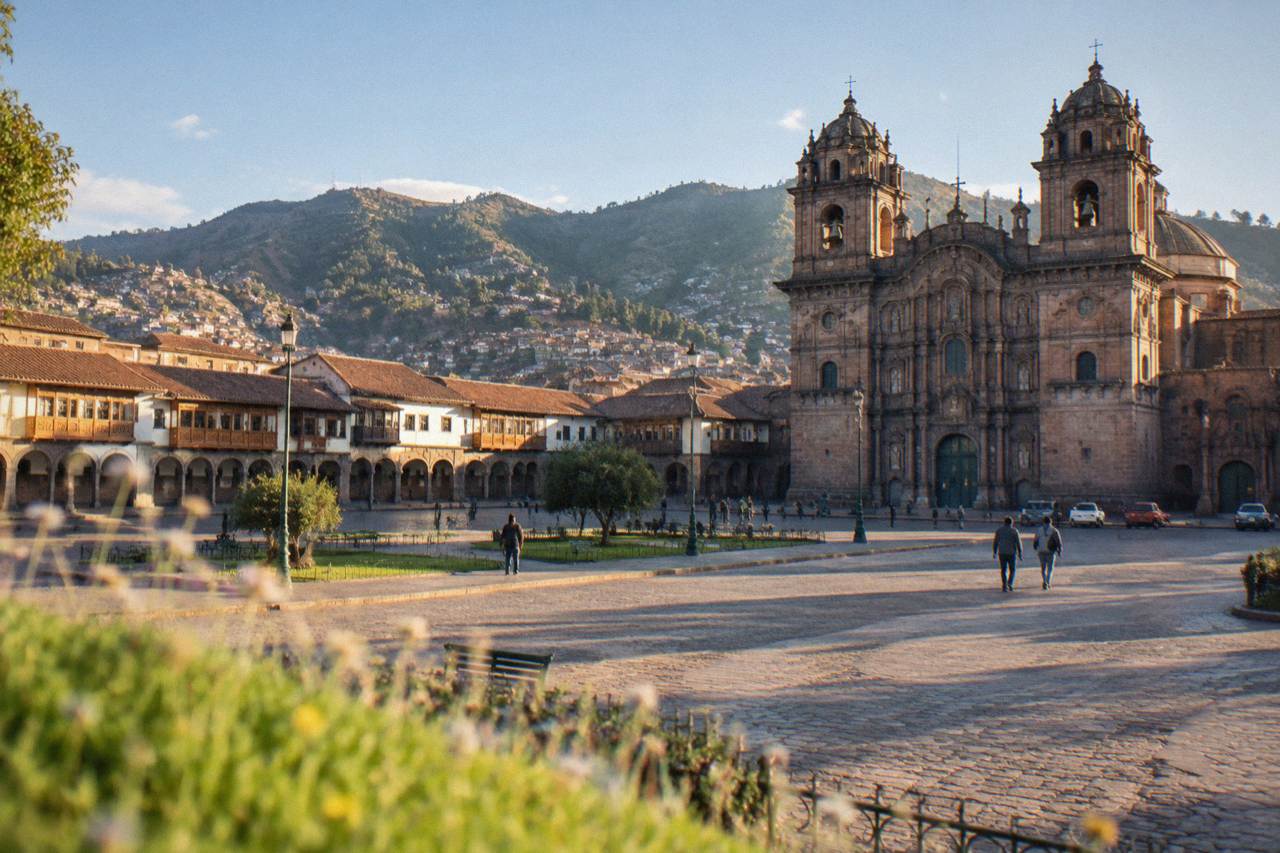
Cusco nightlife is compact, early and centred on the historic centre around the Plaza de Armas and the San Blas hill, with bars, pisco tastings, food tours and pub crawls rather than big clubs. Altitude and cold nights shape it more than any dress code.
Cusco after dark is a small-city night out staged at 3,335 m, the elevation PROMPERU records for the Plaza de Armas, in a historic centre where colonial arcades sit on Inca stone foundations. The evenings are compact, walkable and shaped less by dress codes than by the altitude itself and by the Andean calendar: a June night here is a winter night, with the WMO/SENAMHI historical normal for the "Cuzco" station putting the mean July minimum at 0.1 C. This guide reports what official and primary sources say about Cusco nightlife, from the UK FCDO's safety guidance to the CDC Yellow Book's altitude advice, and it points to the bookable evening products on Things To Do In Cusco Peru where a listing carries the live details.
What Is Cusco Nightlife Really Like?
Cusco nightlife is an early, compact and largely walkable evening scene concentrated in the historic centre, built around bars, pisco-based drinks, small food tours and guided pub crawls rather than large dedicated club districts. The city sits at 3,335 m, and the sources agree the altitude and the cold Andean nights shape the evening more than any local dress code or closing-time culture does.
The scale matters. Cusco city counted 428,450 residents at the 2017 census that INEI published, and the tourist infrastructure sits on top of a lived-in Andean city rather than beside it. What that produces at night is a scene strung between the Plaza de Armas and the San Blas hill: rooftop and balcony bars with views over lit church towers, small pisco bars, restaurants that turn into gathering places, and a handful of later-opening venues that organised pub crawls connect for visitors. The MINCETUR open dataset records the scale of the visitor economy behind those evenings: the Cusco department's listed sites counted 10,704,938 recorded visits across 2025, and the Ciudad Inka de Machupicchu alone drew 1,479,506 visitors that year.
Two things distinguish a Cusco night from a night in a coastal capital. The first is the season inversion: Cusco is in the southern hemisphere, so June to August is winter, dry and clear by day but cold enough at night that SENAMHI's frost guidance places the heladas season across April to September with its June and July peak. The second is altitude physiology, which the CDC Yellow Book treats as a real planning variable rather than a footnote, naming Cusco at approximately 3,350 m among high-altitude destinations. Neither point argues against going out. Both argue for reading the evening on its own terms, which is what the rest of this guide does, section by section, from where nights happen to what a safe walk home looks like.
Where Do Nights Out In Cusco Happen?
Most of Cusco's nightlife happens on foot in the historic centre, in the blocks around the Plaza de Armas and up the hill in San Blas, a distance short enough that the evening rarely needs a taxi until the way home. The venues are bars, pisco rooms, restaurants and small clubs, and organised pub crawls exist precisely because the scene is scattered across these few walkable blocks rather than gathered in one strip.
The geography is the historic centre's geography. The Plaza de Armas is the reference point, and the site's own area guide to the Cusco historic centre covers the daytime version of the same streets. San Blas sits uphill from the square, and the site's San Blas coverage describes the artisan quarter whose evening character is quieter, bar-and-cafe shaped, and popular with travellers staying in the neighbourhood. Between and around them, the street grid is colonial, narrow and stone-paved, which keeps the night compact.
What fills those streets at night, in the sources this site holds, is a set of bookable products rather than a documented venue list. The roster carries two guided pub crawls of Cusco, both evening products that move a small group between bars and clubs, and a hands-on pisco sour mixology session in the historic centre. No source ranks individual bars, names a best venue or states closing hours, so this guide does not either; the operator's live listing is where those specifics live, and they change often enough that a printed hour would be stale before it shipped.
A practical note on the walk home: the historic centre is genuinely walkable, which the site's is Cusco walkable coverage treats in transport terms, but the FCDO's Peru safety guidance, updated on its main page in June 2026, is blunt about the hours after the bars empty. Its advice on quiet areas and night walking appears in the safety section below, and it is the single most consequential source for the tail end of a Cusco night.
How Does Altitude Change A Night Out In Cusco?
Altitude changes a Cusco night in two documented ways: the CDC Yellow Book advises avoiding alcohol for the first 48 hours at high altitude, and it recommends graded ascent over the rapid arrival a flight into Cusco represents. At about 3,335 m, the city is higher than Machu Picchu's citadel at 2,430 m, so the adjustment burden sits on the Cusco end of a trip, not the Machu Picchu end.
The CDC Yellow Book names Cusco, at approximately 3,350 m, as a high-altitude destination and a rapid-ascent one, because visitors typically arrive by air. Its ascent guidance, citing the Wilderness Medical Society, is to avoid going from low altitude to a sleeping altitude of 2,750 m or more in a single day, and once above 3,000 m to raise sleeping altitude by no more than 500 m a night with an extra night for every 1,000 m gained. A flight into Cusco breaks that rule by definition, which is why the CDC also discusses acetazolamide as a prescription decision to take with a doctor, and why the site's Cusco altitude guide treats the acclimatisation question in full.
For nightlife specifically, the CDC's practical line is the one that bites: avoid alcohol for the first 48 hours at high altitude. That is a direct recommendation from the Yellow Book, not an invention of this site, and it reframes the first two evenings of a trip. The CDC also notes that in some rapid-ascent cases, including Cusco, travellers can sleep at elevations lower than the airport for a night or two before beginning their ascent; the Sacred Valley sits lower than the city, which is the geography behind the site's stay in Cusco or the Sacred Valley discussion.
There is no sourced figure for how likely any individual visitor is to feel the altitude, and no sourced number for how many days acclimatisation takes, so this guide states none. What the sources do hold is the CDC's situation-level framing: rates of altitude illness approach 50 percent in abrupt-ascent situations where staged acclimatisation is not feasible. That is a statement about the situation, not a prediction about the reader, and the honest planning move it supports is simple: treat the first 48 hours as adjustment evenings, and save the heavier night for later in the stay.
What Can You Do In Cusco After Dark Besides Bars?
Cusco's after-dark options beyond bars include a hands-on pisco sour mixology session, two guided pub crawls, evening food walks, chocolate-making workshops and the Planetarium Cusco's evening shows, which its own site schedules in the early-evening hours with round-trip transport included. The free GuruWalk walking tours are tip-based and daytime products, but they anchor the same historic-centre circuit the night uses.
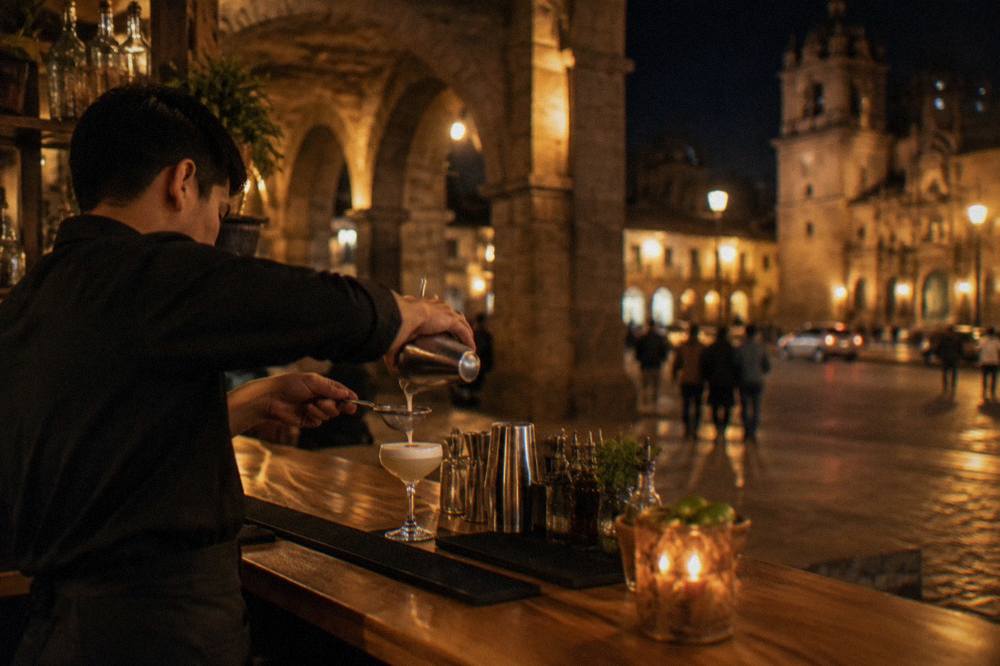
The pisco sour is Peru's national cocktail and the natural entry point to a Cusco evening, and the roster carries a small-group mixology product built around it in the historic centre. The related tour on this page is that session, and the listing carries the live price, group size and start time: Check availability. What the product description states is a maximum of twelve people and a focus on Peru's flavours through the drink itself.
Want to learn the national cocktail hands on? Book a pisco sour mixology session here.
The pub crawl lane has two entries. One is a four-and-a-half-hour crawl pitched on drinks and club entry without waiting lines; the other is a crawl starting at the Plaza de San Blas, described as a second nightlife option. Both are evening products whose listings carry the current prices and meeting points.
The second crawl differs in shape as well as in start point: it is pitched as a way to discover local bars and clubs and to meet people, which makes it the more social of the two products, while the first is built around the smoother door-to-door experience. A traveller choosing between them is choosing between a queue-free club night and a bar-hopping social night, and the listings carry the current prices for each.
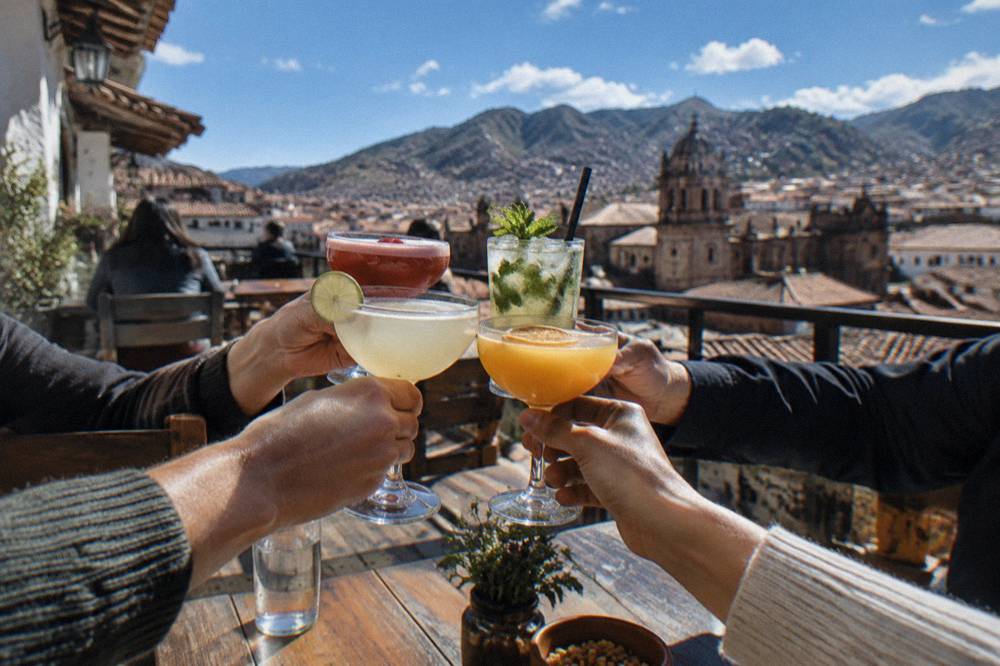
Beyond drinks, the after-dark bench is broader than most first pages of search results admit. Planetarium Cusco runs evening shows, and its own site states that the shared group experience starts at 5:30 pm with a 6:00 pm start to the session and round-trip transport included; the roster also carries a bookable admission product. Food walks operate in the early evening hours too: the roster's street food walk is a small-group tasting tour capped at ten people or fewer, and the central market food walk stops at San Pedro Market for regional dishes and fresh juices, connecting to the site's what to eat in Cusco coverage. The chocolate workshops on the roster are daytime products, but they belong to the same evening-adjacent food-and-drink lane that a Cusco night is built from. None of these products' prices, ratings or durations belongs in prose; the cards above and the listings carry them.
Is It Safe To Go Out At Night In Cusco?
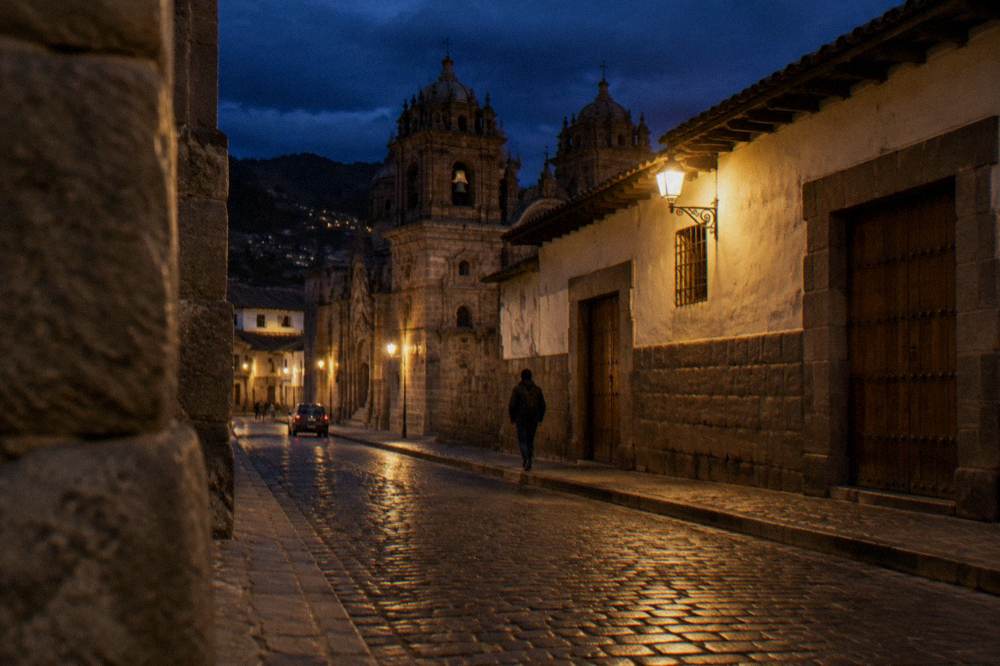
The UK FCDO states that street crime including muggings and thefts is a significant problem in Cusco and other major cities, and advises not walking alone in quiet areas or at night; the US State Department's September 2026 advisory holds Peru at Level 2, Exercise Increased Caution, while placing Cusco city, the Sacred Valley and Machu Picchu outside its Do Not Travel areas.
Those two government lines are the backbone of an honest answer, and they point the same direction: go out, but manage the walk. The FCDO's specific warnings for Peru, read on its safety and security page, cover street crime in major cities including Cusco, night walking in quiet areas, and express kidnapping by fake taxi drivers, usually at night. Its protest guidance adds that Cusco is among regions that have seen recent protests and that train services to Machu Picchu are occasionally suspended or disrupted, a watch-item for late-night planning rather than a nightlife fact. The US advisory, reissued on 8 September 2026, is Level 2 overall for crime, unrest, kidnapping and terrorism.
What the sources support, in plain terms:
| Source | What it says | What it means for a night out |
|---|---|---|
| UK FCDO safety page | Street crime is a significant problem in Cusco; do not walk alone in quiet areas or at night | Stay on lit, busy central streets; use a taxi or ride for the return |
| UK FCDO safety page | Express kidnapping by fake taxi drivers, usually at night | Use a booked or hotel-called vehicle, not a street hail |
| US State Department, 8 Sep 2026 | Peru at Level 2, Exercise Increased Caution; Cusco city outside Do Not Travel areas | Normal precautions, no region-level avoidance of the city |
| Peru tourist police (iPeru/PROMPERU lines) | 24-hour tourist police phone and WhatsApp; iPeru tourist assistance line | Save the numbers before the first night out |
The site's is Cusco safe guide carries the fuller treatment, including the FCDO's LGBT+ guidance: same-sex sexual activity is legal in Peru, but social attitudes are generally conservative and public affection may draw unwanted attention, a relevant line for anyone planning a night out as a couple. None of this says Cusco nights are dangerous by default; it says the documented risk is opportunistic street crime concentrated in quiet hours, and the documented mitigation is company, lit streets and a booked ride home.
What Are The Best Nights Of The Year In Cusco?
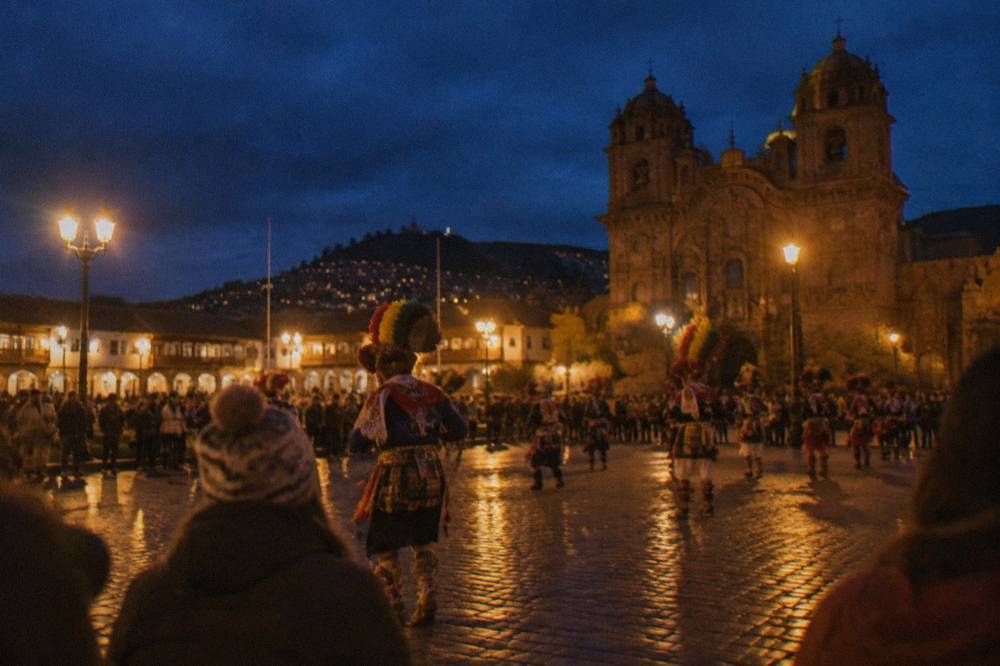
The Cusco calendar's biggest nights are Inti Raymi on 24 June, the Virgen del Carmen festival in Paucartambo traditionally on 15 to 18 July, and Santurantikuy on 24 December on the Plaza de Armas, with the Q'eswachaka bridge renewal on 2 to 4 July and its festival on 5 July in 2026. June is winter, so the flagship festival nights are cold, dry and clear rather than warm.
Inti Raymi is the headline. PROMPERU's event pages place it on 24 June each year, the winter solstice, starting at Qorikancha, moving to the Plaza de Armas and finishing with the main ceremony at Sacsayhuaman; the 2027 date is 24 June 2027, and grandstand tickets have historically sold through Teleticket from around mid-April. The site's Inti Raymi guide covers the day in full. For nightlife purposes the relevant fact is that the eve and the day of Inti Raymi turn the centre into a festival crowd, and that the 2026 edition's Sacsayhuaman grandstand seats were listed on Teleticket at S/ 490 and S/ 680 for the 2026 edition, figures for that year only.
| Festival night | Date the sources give | Where it happens |
|---|---|---|
| Inti Raymi | 24 June each year; 24 June 2027 | Qorikancha, Plaza de Armas, Sacsayhuaman |
| Virgen del Carmen | Traditionally 15 to 18 July | Paucartambo, outside the city |
| Q'eswachaka renewal and festival | 2 to 4 July 2026, festival 5 July 2026 | Apurimac River, a full-day trip from Cusco |
| Santurantikuy | 24 December | Plaza de Armas craft fair |
| Pope Leo XIV visit (scheduled) | Cusco and Sacsayhuaman on 15 November 2026, 10:30 | Sacsayhuaman explanada and the city |
The December entry deserves its own sentence: Santurantikuy is a 24 December craft fair on the Plaza de Armas per PROMPERU, which makes Christmas Eve one of the year's distinctive Cusco nights, and it falls in the wet season, when December carries 122.7 mm of the year's 707.8 mm at the WMO/SENAMHI station. The site's Cusco weather by month guide holds the full table.
The scheduled papal visit is the one forward-looking item: Vatican News and the Peruvian government's announcement place Pope Leo XIV in Cusco and Sacsayhuaman on 15 November 2026, with an encounter with the faithful at 10:30, an event expected to bring large crowds and access control around the Sacsayhuaman explanada. It is a daytime event, but it reshapes the nights around it in a city whose hotel base fills quickly. It is scheduled, not past, and should be checked rather than assumed.
What Should You Know About Money And Tipping On A Night Out In Cusco?
Peru's currency is the sol (PEN), written S/ 130 style, and the exchange rate runs about S/ 3.4 to the US dollar; on a Cusco night out the practical money facts are that free walking tours run on tips, restaurant tips run up to about 10 percent only when no service charge is on the bill, and ATMs cap withdrawals per transaction, so cash for the evening is planned rather than assumed.
The sol figures this site can state are the ones the pack holds. The BCRP, Peru's central bank, quotes the sol against the dollar, and the pack's working conversion is about S/ 3.4 to the US dollar, never a precise rate. The tipping ranges below come from a Peru travel guide's editorial advice rather than an official body, so they carry "typically" wording and a named attribution.
| Night-out expense | What the sources say |
|---|---|
| Restaurant tip | Up to 10 percent, and only if no servicio charge is already on the bill, per How to Peru's tipping guide |
| Free walking tour tip | S/ 20 to S/ 40 per person, per the same guide |
| Day-tour and pub-crawl guide tip | S/ 10 to S/ 20 per person for guides, S/ 5 to S/ 10 for drivers, per the same guide |
| ATM withdrawals | Per-transaction caps typically 400 to 700 soles, with Banco de la Nacion MultiRed machines often fee-free for foreign cards but limited to S/ 400 per transaction, per the same guide's ATM guide |
| Card conversion | Decline the machine's offer to convert to your home currency; foreign-card surcharges quoted at S/ 18 to S/ 36 |
The ATM line matters more at night than it does at noon. A per-transaction cap plus a surcharge means the cheap move is one larger withdrawal during the day, not a series of night-time withdrawals near the bars, where the pack's guidance notes airport and hotel ATMs are usually the most expensive. The site's money and ATMs coverage treats the full question. For the evening itself, cash in soles is what the street-level economy runs on, and the sol is the only currency to plan around.
Which Evening Products Are Worth Booking In Cusco?
The evening products worth booking are the ones that solve a real problem: the pisco sour session teaches the national cocktail in a small group, the pub crawls connect venues a first-time visitor cannot, and the food walks turn dinner into a guided tasting of the city's dishes. Every price, rating and duration lives on the operator's live listing, and the cards below render it from verified data rather than from this page's prose.
The trio below is the site's current pick set for this guide: the pisco session, the Route of the Sun scenic day from Puno for travellers arriving overland from the lake, and the full-day group Machu Picchu tour for the day-trip that anchors most Cusco itineraries. The Machu Picchu day is a dawn start, not a night out, but it is the single most consequential booking for how early a Cusco evening ends, and the site's Machu Picchu coverage lives at the Machu Picchu day-trip guide.
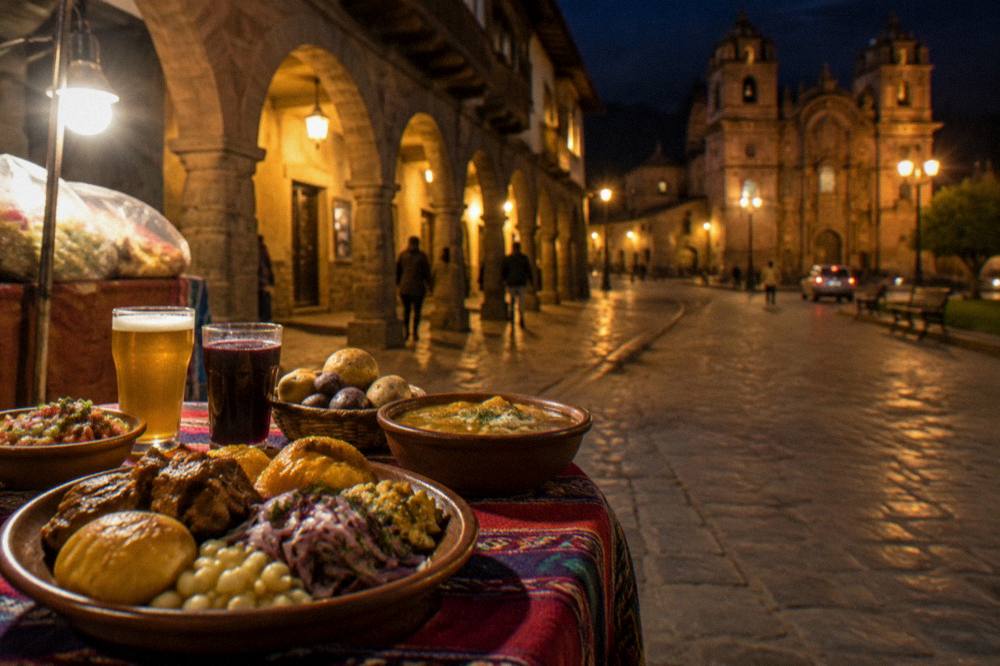
The booking logic is straightforward. A mixology session slots into an evening without costing a day; a pub crawl solves the where-to problem for a first night; a food walk doubles as dinner. What none of them should do is compete with the CDC's first-48-hours alcohol guidance, which is why this guide's own order of operations puts the food walk or the Planetarium on night one and the pisco on night two or three.
How Cold Is A Cusco Night, Really?
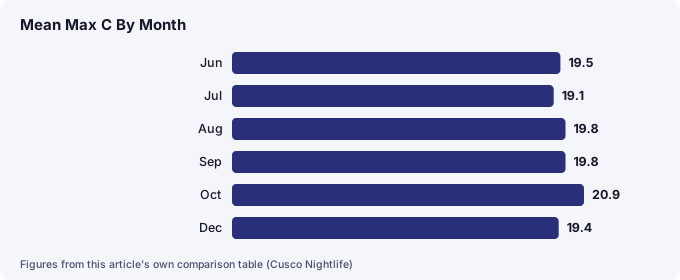
A Cusco winter night is close to freezing, with the WMO/SENAMHI historical normal for the "Cuzco" station putting the mean June minimum at 0.3 C and the mean July minimum at 0.1 C, while the mean daily maximum stays between 18.8 and 20.9 C all year. The practical consequence is the largest swing a nightlife guide has to report: roughly 19 C between day and night in July, against about 12 C in January.
The table below is the station record, supplied by SENAMHI to the World Weather Information Service, a historical normal rather than a 1991-2020 series. The nightlife column on the right is what the numbers mean for an evening out.
| Month | Mean max C | Mean min C | Rain mm | What the evening is like |
|---|---|---|---|---|
| Jun | 19.5 | 0.3 | 1.5 | Dry and clear, near-freezing night: coat weather |
| Jul | 19.1 | 0.1 | 4.0 | Coldest nights, frost common per SENAMHI |
| Aug | 19.8 | 1.6 | 8.6 | Still dry, still cold after dark |
| Sep | 19.8 | 3.9 | 21.8 | Warming nights, dry season ending |
| Oct | 20.9 | 5.5 | 39.4 | Warmest days, nights milder |
| Dec | 19.4 | 6.4 | 122.7 | Wet season: expect evening showers |
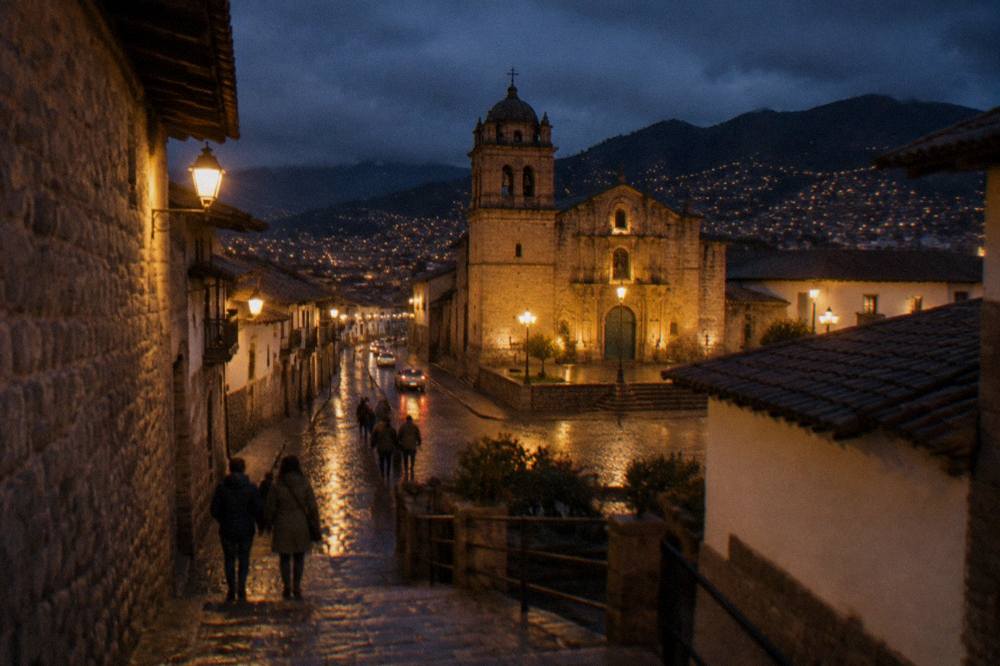
The layering advice writes itself from the data, and the site's what to wear in Cusco guide holds the full wardrobe treatment. The one nightlife-specific point the numbers make: December through March carries 71.9 percent of the year's 707.8 mm of rain at the station, so a wet-season night out plans for both a coat and an umbrella, while a June night plans for cold alone. Frost nights are common in June and July per SENAMHI's own tourist-forecast framing, and the site's best time to visit Cusco guide weighs the seasons against crowd levels.
What Time Does Cusco Nightlife Start?
Cusco evenings start early by big-city standards, with dinner-hour drinks and the historic centre's bars filling in the early evening hours, and the organised products on the roster running as evening sessions with start times on their listings. No source states a bar opening hour or a universal closing time, so this guide prints none and points to the listings for the bookable products.
What Time Does Cusco Nightlife Start?
Cusco evenings begin early, in the dinner hours, and the bookable evening products carry their own start times on their listings. The Planetarium's own site schedules its shared evening sessions with a 5:30 pm group start and a 6:00 pm session start, which is the one published evening timetable. No sourced bar-by-bar hours exist, so plan on early evenings rather than late ones.
Is Cusco Good For Nightlife?
Cusco is good for a compact, early, walkable night out built around pisco, food and small venues, not for a big-club scene. The roster's two pub crawls and a small-group mixology session exist precisely because the scene is small and scattered across the historic centre. The altitude and the cold nights shape the evening more than the venue count does.
Can You Drink Alcohol At Altitude In Cusco?
The CDC Yellow Book advises avoiding alcohol for the first 48 hours at high altitude, and it names Cusco, at approximately 3,350 m, as a high-altitude destination. After the first 48 hours the guidance eases, but the same source recommends graded ascent and treats abrupt ascent by air as the risk situation. Acetazolamide is a prescription decision to take with a doctor, not a nightlife accessory.
Is It Safe To Walk Home At Night In Cusco?
The UK FCDO advises not walking alone in quiet areas or at night in Peru, and lists street crime including muggings as a significant problem in Cusco. The US advisory keeps Peru at Level 2 while placing Cusco city outside its Do Not Travel areas. The documented mitigation is company, lit central streets and a booked vehicle rather than a street hail, especially given the FCDO's warning about fake taxi drivers at night.
What Is The Legal Drinking Situation In Peru?
No source states Peru's drinking age or licensing hours, so this guide prints no age, no hour and no licensing rule. What the pack does hold is the tipping convention, up to 10 percent in restaurants only when no service charge appears on the bill, and the ATM per-transaction caps that shape how much cash to carry for an evening.
Are There Free Evening Tours In Cusco?
The free tours on the roster are GuruWalk tip-based walking tours of the historic centre, listed as roughly two-hour daytime products, not evening ones. They are free to join with tips at the end, per the GuruWalk model, and the site's free walking tours guide covers them in full. For a structured evening, the paid products carry the evening slot.
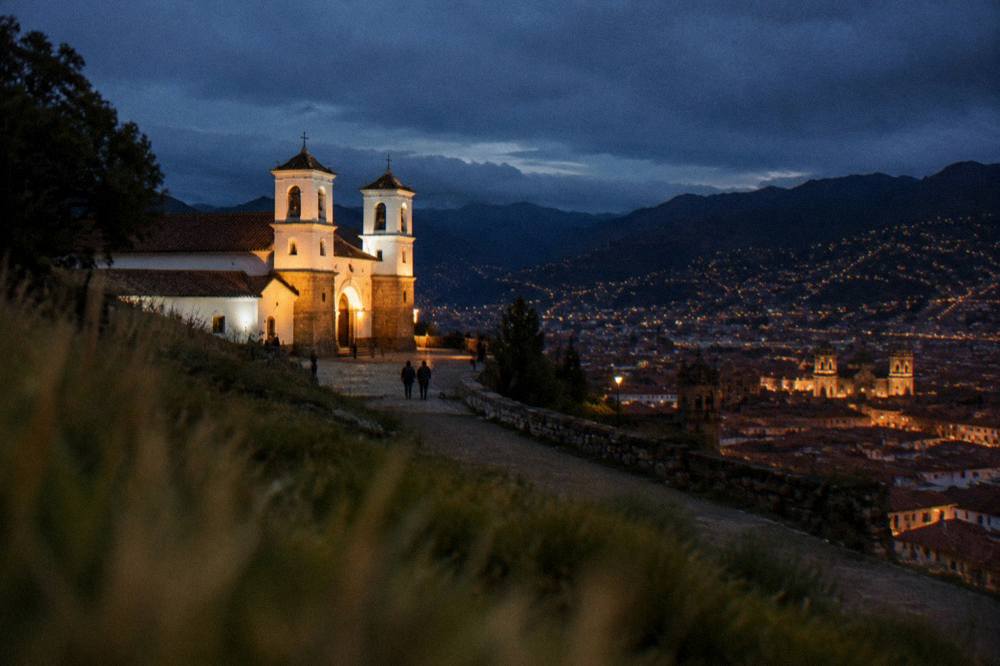
A Cusco night, read through the sources, is an early, cold, beautiful, manageable thing: a pisco sour in a colonial arcade, a food walk that doubles as dinner, a plaza lit for a festival, and a booked ride back to the hotel before the streets go quiet. The altitude sets the pace, the calendar sets the peaks, and the FCDO sets the one rule worth keeping, which is to end the night the way the sources say a night in this city should end: not alone in a quiet street.