Cusco Markets: What To Buy, Eat And Know Before You Go
Cusco, the historic city in the Andes of southern Peru at about 3,335 m, runs on its markets. This guide covers what the main markets sell, what to eat, what things cost and how to shop them well.
Short answer
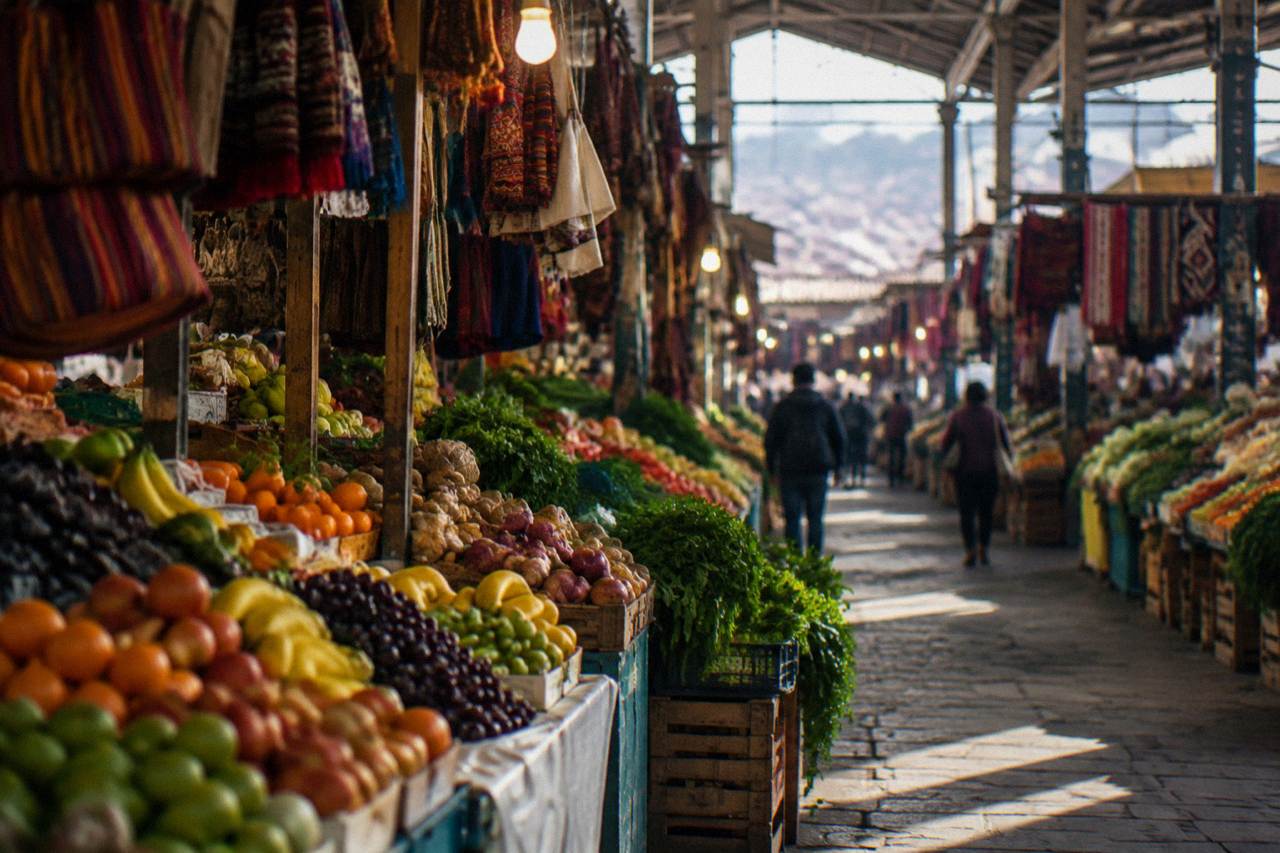
The main market to head for is San Pedro Market, a covered hall at the edge of Cusco's old quarter selling produce, juices, hot Andean dishes, bread, cheese and crafts. Around it sit smaller markets and craft sellers, and the weekly Pisac market in the Sacred Valley is the classic day-trip pairing.
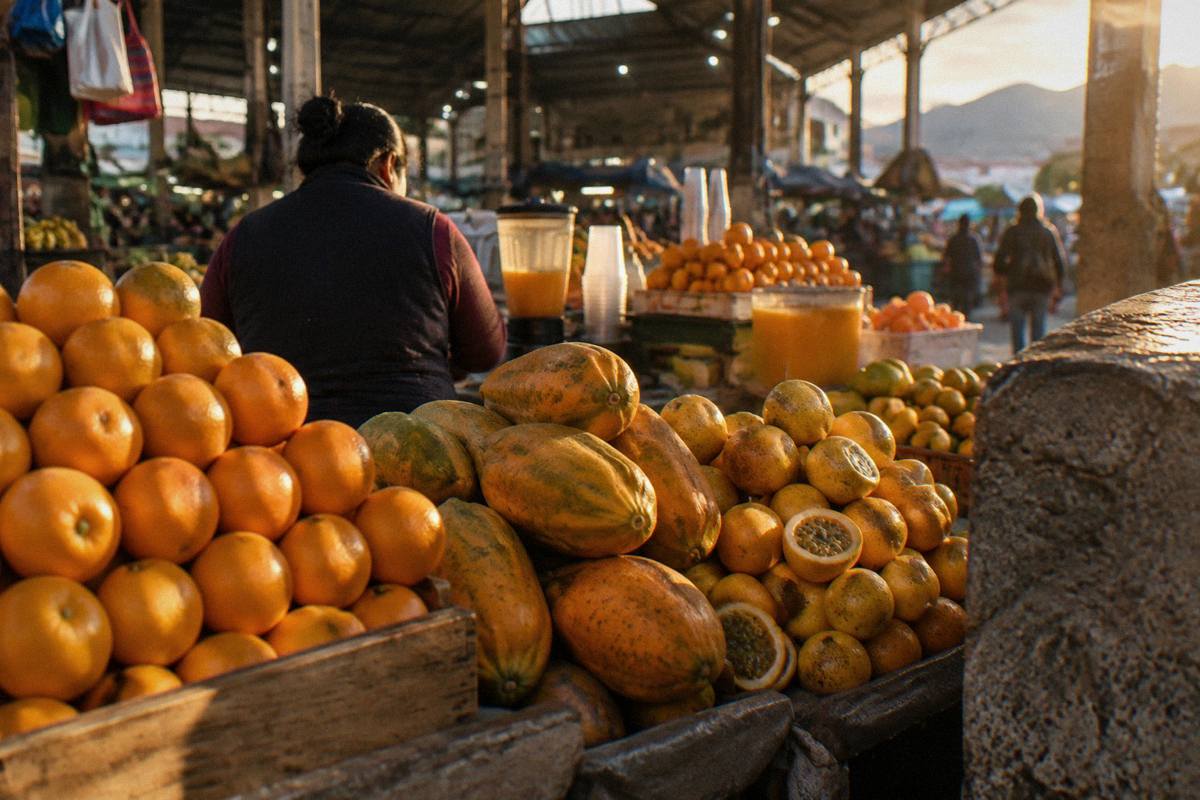
Cusco, the historic city in the Andes of southern Peru, sits at about 3,335 m on the Plaza de Armas, and its markets are where the city does its daily shopping. Long before the tourist shops open, produce lorries unload at the covered halls near the old quarter's edge, and stallholders stack potatoes in varieties that have no English name, wheel rounds of cheese, and set out breads baked that morning. For a visitor, the markets are the single best window into how Cusco actually eats, and they cost almost nothing to wander. For the wider food picture, see the companion page on what to eat in Cusco.
What Are The Main Cusco Markets To Visit?
San Pedro Market, a covered market hall at the edge of Cusco's old quarter, is the one place in the city where produce, hot food, juices, bread, cheese, herbs and crafts all sit under one roof. Around it sit smaller neighbourhood markets, and the craft markets of the centre and the weekly Pisac market in the Sacred Valley complete the picture for most trips.
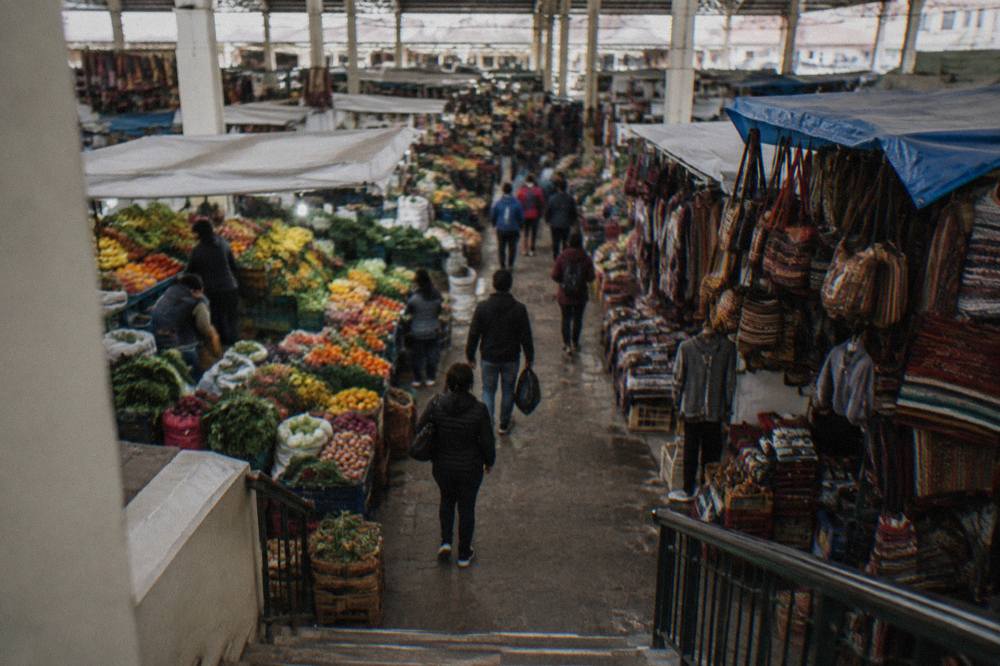
San Pedro Market is the anchor. The site's own place record puts it near San Pedro, at the old quarter's edge, a short walk downhill from the Plaza de Armas. It is a working market first and a sight second: the fruit and vegetable aisles, the juice counters, the flower stalls and the hot-food section each have their own zone, and the whole hall runs on the rhythm of the city rather than the timetable of tourism. PromPeru, Peru's official tourism body, lists market visits among the free experiences of the city, and a market needs no ticket, no tour and no booking.
The craft side of Cusco's markets is spread more widely. Sellers of textiles, knits and souvenirs cluster in the streets around the centre and in San Blas, the neighbourhood that also holds the city's artisan tradition. Further out, the Sacred Valley town of Pisac holds its celebrated craft market, and most Sacred Valley day trips call in there. The site's guide to what to buy in Cusco covers the shopping side in depth, and the question of real alpaca versus blends has its own page on buying alpaca in Cusco.
| Market | Where it is | What it is known for | Best for |
|---|---|---|---|
| San Pedro Market | Edge of the old quarter, near San Pedro | Produce, juices, hot Andean dishes, bread, cheese, herbs | First visit, eating, photography |
| Central craft sellers | Streets around the historic centre | Textiles, knits, souvenirs | Souvenir shopping |
| San Blas stalls | San Blas neighbourhood | Artisan crafts, artwork, small workshops | Gifts and browsing |
| Pisac craft market | Pisac, Sacred Valley | Textiles and crafts at a market town | Pairing with a Sacred Valley day trip |
A guided walk is one way to get past the language barrier quickly. GuruWalk lists several free, tip-based walking tours of Cusco that pass through the historic centre, including Yana Tour Operator's walk of the historic centre and Frank Emerson's free tour with a local guide, and the site keeps a full page on free walking tours in Cusco. For a food-focused visit with a local guide translating the stalls, the site's featured product is the Central Market food walking tour, which stops at San Pedro Market to taste regional dishes, fresh juices and Andean treats; details and booking terms are on the operator's live listing at Check availability.
What Can You Buy At San Pedro Market In Cusco?
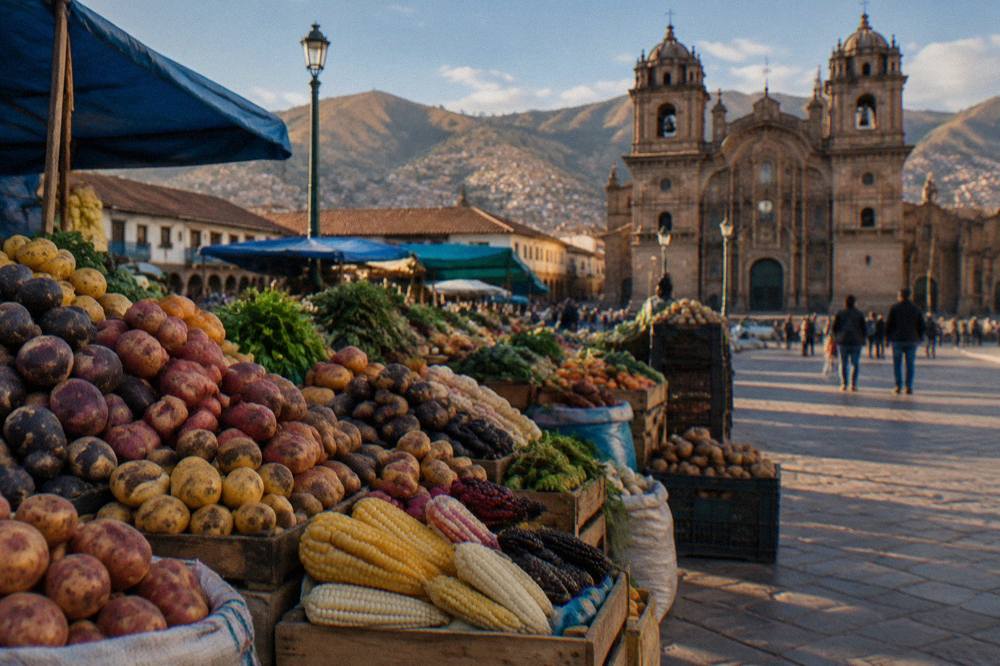
San Pedro Market sells the full range of an Andean pantry: dozens of potato and corn varieties, fresh cheese, breads, dried herbs, chilli pastes, cacao and coffee, flowers, juices made to order, and a craft section with textiles and knits. It is a grocery market with a tourist aisle, not a souvenir market with a grocery aisle, and the produce stalls are the reason to go.
The produce section is the market's heart. The Andes are one of the world's great potato heartlands, and a single aisle can carry more varieties than a European supermarket stocks in a year, alongside large-kernelled corns, quinoa, fava beans and tubers such as oca and mashua that barely exist outside the region. The cheese counters sell fresh, salty Andean cheeses; the herb stalls sell muña, coca leaf and chamomile by weight; and the juice counters blend tropical fruit that reaches Cusco from the lower valleys of the same country. Peru's geography does the rest: a country that spans coast, mountains and jungle sends all three to a highland market hall.
The craft section is smaller and more mixed. Stalls sell knitted hats, gloves, scarves, small weavings, cacao products and coffee, and prices are generally lower than the shops around the Plaza de Armas for similar goods. Quality varies, and the alpaca question deserves its own reading: much of what is sold as alpaca in Peru is a blend, and the site's page on buying alpaca in Cusco explains how to tell the difference before paying. For gifts rather than groceries, the craft sellers around the centre and the Pisac market offer more choice.
| Section of the hall | What you will find | Notes for visitors |
|---|---|---|
| Produce aisles | Potatoes, corn, quinoa, tubers, vegetables | Best photography, ask before photographing people |
| Juice counters | Made-to-order fruit juices | Sit at the counter, order by fruit |
| Cheese and bread | Fresh Andean cheese, morning breads | Sold by weight or by piece |
| Herbs and dry goods | Coca leaf, muña, chilli pastes, dried goods | Coca tea is a common altitude drink |
| Hot food section | Set Andean lunches, soups | See the eating section below |
| Craft aisle | Knits, weavings, cacao, coffee | Check fibre content before buying |
The market also answers the question of altitude in a small way. A cup of coca tea is reported at about S/ 2 to 5 at market prices, and the leaf is sold by weight at the herb stalls. Whether it helps with altitude is another matter: no sourced figure exists for its effect, and the site's page on altitude in Cusco covers what the CDC Yellow Book actually advises, which is graded ascent and a doctor's decision on acetazolamide, not tea.
What Should You Eat At A Cusco Market?
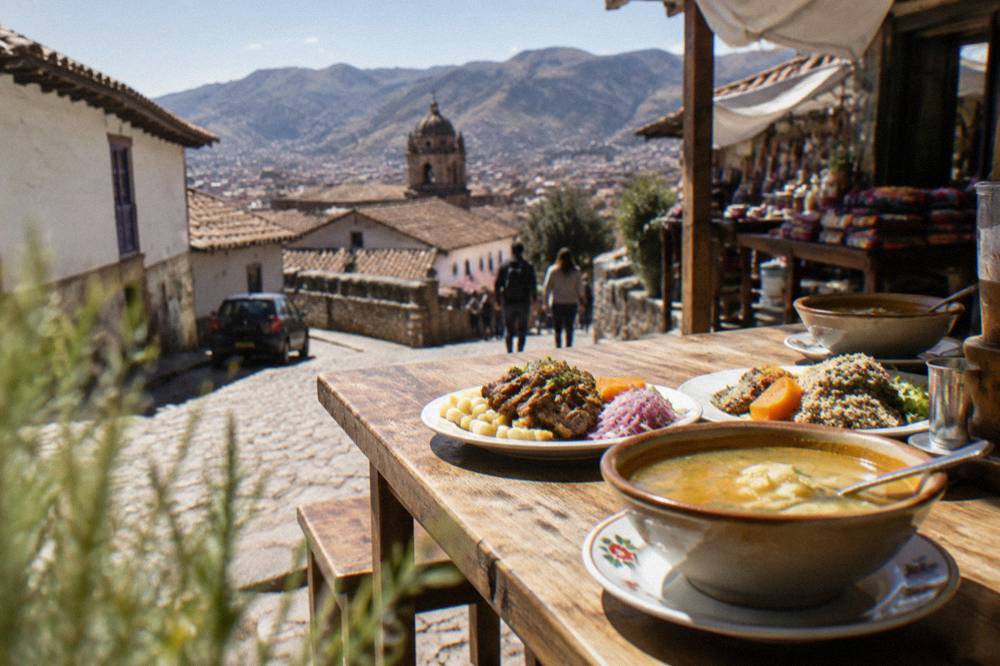
The market lunch is the dish to order: a set Andean menu built on soup, a main of meat or grain with potatoes, and a drink, reported at about S/ 8 to 15 as a menu del dia. Around it sit the dishes Cusco is known for, quinoa soup, fried trout, lomo saltado, roasted cuy, and the juice counters that turn the market's fruit into a glass on the spot.
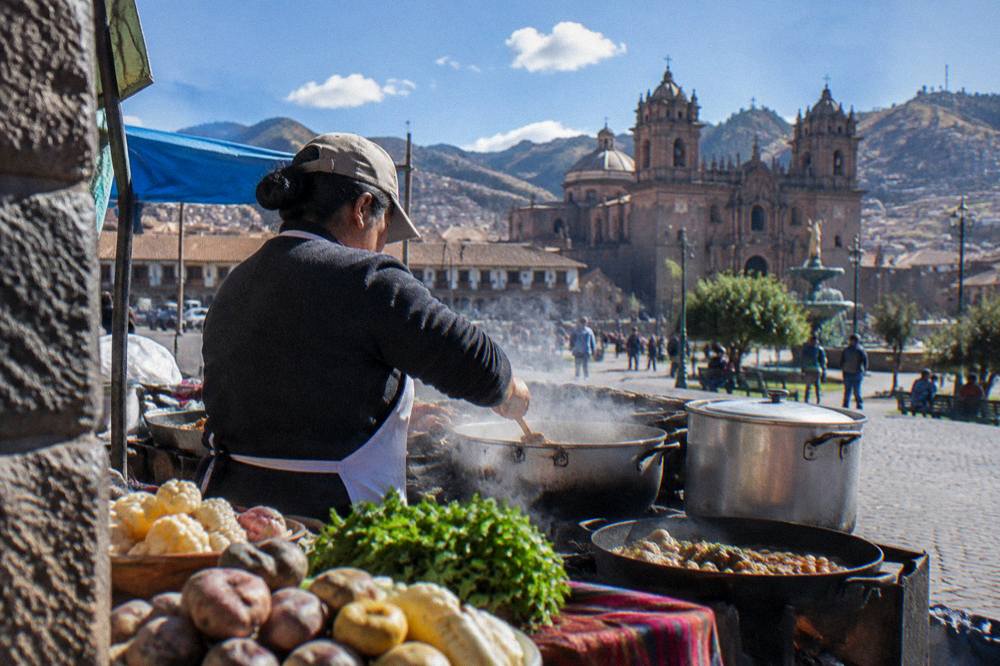
Eating at the market is the point of the visit for many travellers, and the hot-food section is where it happens. The menu del dia, the fixed lunch of soup, main and drink, is the standard working lunch of the Andes, and at market stalls it is reported at about S/ 8 to 15, a fraction of restaurant prices. The dishes are the region's own: quinoa and chuño soups, trout from the valley rivers, chicken, pork, and potatoes in every form the highlands have invented for them. Cuy, roasted guinea pig, is the traditional Andean festive dish; it is eaten across the region, and the site has a full page on cuy in Cusco for anyone curious enough to order it.
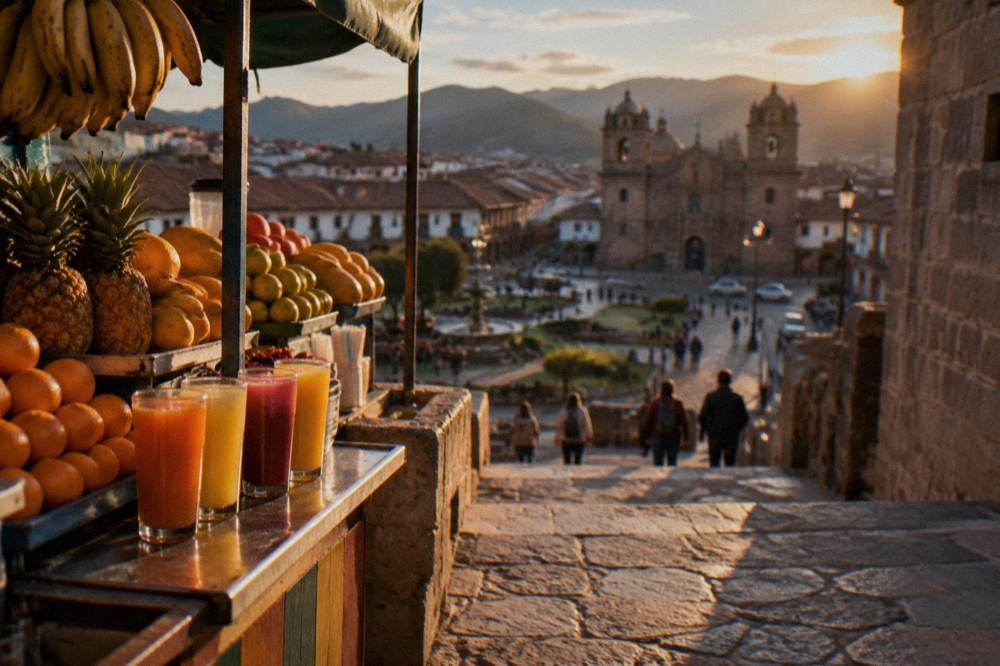
The juice counters deserve their own paragraph. Cusco's highland climate grows little tropical fruit itself, but Peru's lowlands send it up by road, and the counters blend papaya, lucuma, chirimoya, tumbo and more into glasses made to order. Ordering is simple: point at the fruit, choose with water or milk, and drink it there. The market is also the cheapest place to try the local breads and the fresh cheese, which stallholders will sell by the slice.
| Dish or drink | What it is | Where in the market |
|---|---|---|
| Menu del dia | Fixed lunch: soup, main, drink | Hot-food counters |
| Quinoa soup | Quinoa, herbs, sometimes cheese | Hot-food counters |
| Fried trout | River trout, usually with potatoes | Hot-food counters |
| Cuy | Roasted guinea pig, festive Andean dish | Some hot-food counters |
| Fresh juice | Blended to order from market fruit | Juice counters |
| Fresh cheese and bread | Andean cheese with morning bread | Cheese and bread stalls |
A guided food walk exists for exactly this moment. The Central Market food walking tour, the site's featured product for this page, is a guided downtown walk that stops at San Pedro Market to taste regional dishes, fresh juices and Andean treats, and a cooking class with a San Pedro Market tour is the natural next step for anyone who wants to cook the food rather than just eat it; the site's page on cooking classes in Cusco compares them. Booking terms and current details are on the operator's live listing.
How Much Do Things Cost At Cusco Markets?
The verified on-the-ground ranges are these: a market lunch is reported at about S/ 8 to 15, a cup of coca tea about S/ 2 to 5, and a tourist SIM about S/ 5 to 15 plus a data pack at about S/ 20 to 40. At roughly S/ 3.4 to the US dollar, a full market lunch lands in single figures in dollars, and produce bought by weight is cheaper still.
These are reported ranges, not official tariffs: no market in Cusco publishes a price list, and stall prices move with the season and the seller. The menu del dia range of about S/ 8 to 15 (about US$2 to 4) is the figure the site's verified sources hold for a set lunch, and the market's own stalls sit at the lower end of it. Coca tea at about S/ 2 to 5 is among the cheapest things to buy in the market. The SIM figure matters to the market visit itself, because a working phone is how most people now navigate, pay ride-hailing and check prices; the site's page on SIM cards and eSIM in Cusco covers the options.
The currency is the Peruvian sol, written S/, and the exchange rate runs at about S/ 3.4 to the US dollar. Stalls are cash businesses, and small notes matter: paying for a S/ 2 tea with a S/ 100 note will test the stallholder's float and your patience. ATMs in Peru typically cap withdrawals per transaction, and one Peru travel guide reports per-transaction caps of roughly 400 to 700 soles with foreign-card surcharges quoted at S/ 18 to 36, so a single withdrawal before a market day usually covers it. More of these guides are collected on Things To Do In Cusco Peru.
| Item | Reported range | Notes |
|---|---|---|
| Menu del dia lunch | About S/ 8 to 15 | Market stalls at the lower end |
| Cup of coca tea | About S/ 2 to 5 | Herb stalls and juice counters |
| Tourist SIM | About S/ 5 to 15 | Plus data pack about S/ 20 to 40 |
| ATM withdrawal cap | Typically 400 to 700 soles per transaction | Foreign-card surcharges reported S/ 18 to 36 |
| Free walking tour tip | Reported S/ 20 to 40 per person | GuruWalk walks are tip-based |
Product prices are a different matter, and this site does not type them. Any bookable tour's price, rating and duration renders from its own verified product card, never from a writer's keyboard, and the same rule applies to any band or average across products. What can be said is that the food and craft markets are, by the nature of the thing, among the cheapest experiences in a city where the headline attractions, the Boleto Turistico at S/ 130 for a foreign adult, cost real money; the site's page on the Boleto Turistico explains what that ticket covers, and it is not the markets.
How Do You Pay And Bargain At Cusco Markets?
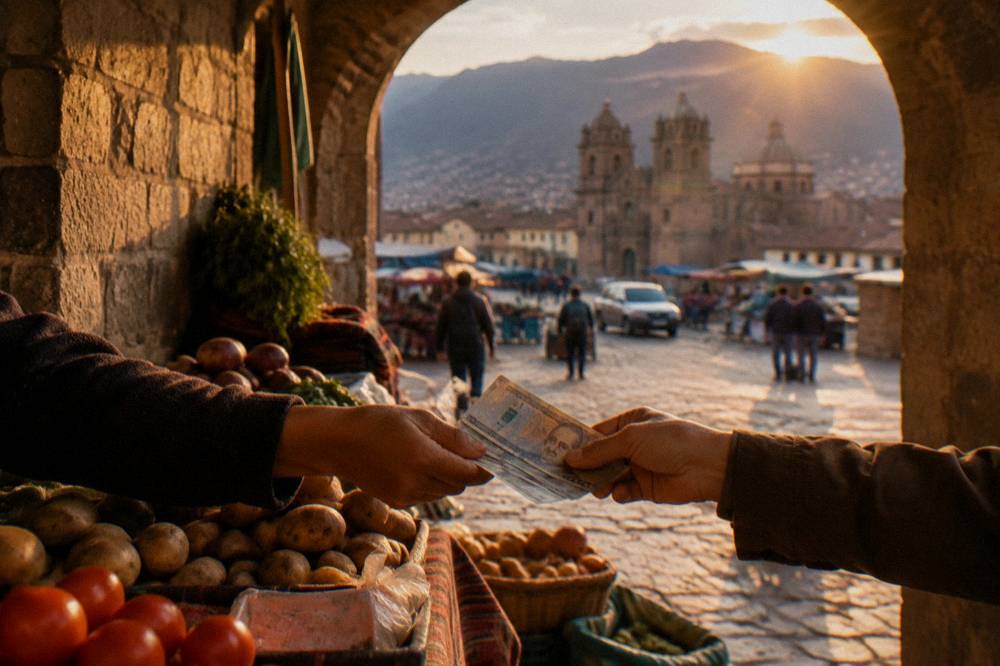
Cash in soles is the payment method at Cusco's markets, and bargaining is expected on crafts but not on food: produce, juices and lunches are sold at set prices, while textiles, knits and souvenirs carry a negotiable margin. The two rules that matter are to carry small notes and to agree a price, or at least ask it, before anything is wrapped.
The food side of the market does not bargain. A juice, a lunch or a kilo of potatoes has its price, and haggling over it marks a visitor as someone who has misread the room. The craft side is different: stalls selling textiles and knits to visitors price in a margin for negotiation, and a polite counter-offer is part of the exchange. The site's page on what to buy in Cusco covers what is worth negotiating for and what is not, and the alpaca page explains why fibre content, not price alone, is the real question with textiles.
Payment is cash, overwhelmingly. Card acceptance at market stalls is not something any verified source on this site states, and the practical assumption is notes and coins. The exchange rate sits at about S/ 3.4 to the dollar, and money changers operate around the centre, but the site's guidance on money and ATMs in Cusco is the place to read before changing anything. Tipping follows the pattern one Peru travel guide reports: up to 10 percent in restaurants only where no service charge is on the bill, and tips of about S/ 20 to 40 per person for tip-based walking tours, which is what the GuruWalk free walks of the city run on.
One practical note on the altitude: Cusco sits at about 3,335 m, and carrying a day's shopping uphill is harder work than it sounds. The CDC Yellow Book advises graded ascent where possible and names Cusco as a rapid-ascent destination, and the site's page on acclimatisation in Cusco suggests how to spend the first day or two gently. A market morning is a good first-day activity precisely because it is flat, slow and indoors.
Which Markets Sell Textiles And Alpaca In Cusco?
The craft sellers of the historic centre and San Blas carry Cusco's textile shopping, the craft aisle inside San Pedro Market sells knits and weavings at lower prices, and the weekly craft market at Pisac in the Sacred Valley is the biggest textile market within day-trip range. What varies between them is quality and price, and fibre content is the thing to check everywhere.
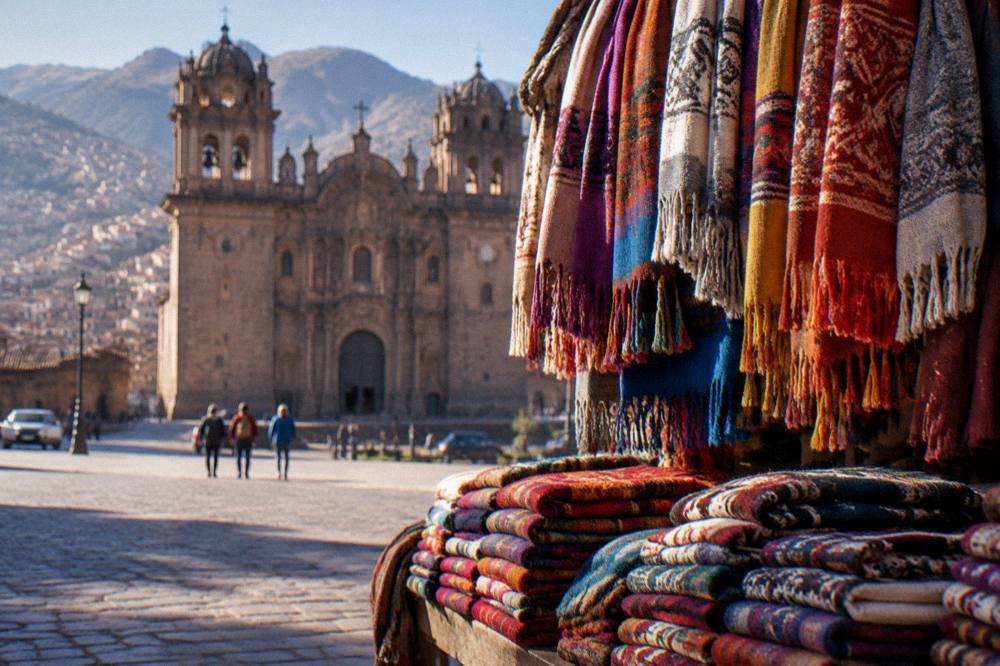
Textiles are the craft Cusco is known for, and the market chain runs from cheap market-aisle knits to hand-woven pieces sold by the weavers who made them. The difference is fibre and work: real alpaca and hand-weaving cost more than blends and machine knits, and the site's page on buying alpaca in Cusco goes through the tests, the burn test being impractical in a market but the label, the price and the feel being fair guides. Awana Kancha, the weaving centre outside the city, shows the full process from alpaca to loom, and its own page on this site covers the visit.
Pisac is the day-trip option that pairs a market with sightseeing. The Sacred Valley day trips on this site's roster call at Pisac alongside Ollantaytambo and the Maras salt mines, and the town's craft market is the classic place to buy weavings with the ruins above as the morning's other attraction. The Sacred Valley tour with Pisac, Ollantaytambo and the salt mines is one of the trio this page features, and its card prints its own price, rating and duration; the site's guide to the Sacred Valley covers the valley as a whole.
| Where to buy textiles | What you get | What to check |
|---|---|---|
| San Pedro craft aisle | Knits, scarves, small weavings | Fibre content, price negotiable |
| Centre and San Blas sellers | Wider craft range, artwork | Compare a few stalls first |
| Pisac craft market | Weavings, textiles at market scale | Pair with the Pisac ruins |
| Awana Kancha | Demonstrations and woven goods | A place to see the process |
When Is The Best Time To Visit Cusco Markets?
The markets run all year, and the choice of season is really a choice of weather: Cusco's dry season runs roughly May to September with cold, clear days, and the wet season runs roughly November to March, with December to March carrying 71.9 percent of the year's 707.8 mm of rain at the WMO's Cuzco station. A covered market hall is one of the few places in Cusco that a rainy afternoon improves.
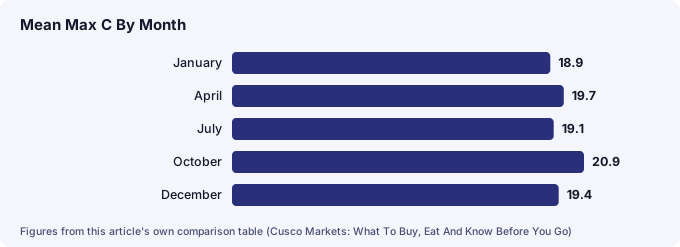
The climate data is worth reading properly, because Cusco's seasons are the inverse of Europe's and North America's. The WMO's Cuzco station record, supplied by Peru's SENAMHI, shows July with a mean minimum of 0.1 C and a mean maximum of 19.1 C: frost nights, but T-shirt afternoons under a clear sky. January shows 6.6 C at night and 18.9 C by day, with 145.3 mm of rain across the month. Mean daily maximums stay between 18.8 and 20.9 C all year, which is why the Andean advice is layers rather than a season: the day warms and cools by roughly 19 C in midwinter, and the sun at 3,335 m is strong whenever it is out. The site's month-by-month page on Cusco weather and the wider guide on the best time to visit Cusco carry the full picture.
| Month | Mean max C | Mean min C | Rain mm |
|---|---|---|---|
| January | 18.9 | 6.6 | 145.3 |
| April | 19.7 | 4.9 | 43.2 |
| July | 19.1 | 0.1 | 4.0 |
| October | 20.9 | 5.5 | 39.4 |
| December | 19.4 | 6.4 | 122.7 |
For the market visit itself, the practical difference between seasons is light and crowds rather than access. The dry-season months of May to September are Cusco's busiest for tourism, and the wet-season months are quieter and greener, with rain that typically arrives in afternoon bursts rather than all day. A covered hall with a juice counter is a reasonable place to wait one out. Anyone planning around festivals should read the site's pages on Inti Raymi and the wider Cusco festival calendar, because festival weeks fill the city and its markets with visitors.
Are Cusco Markets Safe For Visitors?
Cusco's markets are ordinary working places and generally fine to wander by day, but the standard advice for any crowded Peruvian market applies: the UK's FCDO lists street crime including muggings and thefts as a significant problem in Peru's major cities including Cusco, and advises against walking alone in quiet areas or at night. Carry little, keep the phone and camera tucked away when not in use, and go in daylight.
The safety question has a real answer and a real source. The FCDO's Peru safety page states plainly that street crime, including muggings and thefts, is a significant problem in Lima, Cusco, Arequipa and other major cities, and its advice is to avoid walking alone in quiet areas or at night. That is city-wide advice, not market-specific, but a crowded market is by definition a place where pickpocketing is the main risk, and the precautions are the same as in any market from Quito to Naples. The US State Department's Peru advisory stands at Level 2, Exercise Increased Caution, and places Cusco city, the Sacred Valley and Machu Picchu outside its Do Not Travel areas. The site's full page on safety in Cusco carries the detail.
The food-safety question is separate. The CDC's Peru page advises safe food and water habits and bottled, boiled or treated drinking water, and the site's page on avoiding food poisoning in Cusco covers the practical side. A busy market stall with a high turnover of locals eating lunch is, by the ordinary logic of street food everywhere, a different proposition from an empty one; but no verified source on this site ranks stalls, and this page will not either. Anyone uneasy about eating at the market can take a guided food walk and let a local guide choose the counters, which is precisely what the featured Central Market tour does.
How Do Cusco Markets Fit Into A Longer Trip?
A market morning slots naturally into an acclimatisation day, because it is slow, low-effort and central, and the market theme then extends outward: cooking classes that shop the market, food walks that eat it, the Pisac craft market on a Sacred Valley day, and the produce of the valley itself at Moray and Maras. Two or three days in Cusco is enough to do the markets properly and still move on.
Want to shop the market and cook what you buy? Book a cooking class and market tour here.
The first-day logic comes first. Arriving at 3,335 m from sea level, most itineraries keep the first day gentle, and a market morning followed by a slow walk around the historic centre is the classic pattern; the site's pages on acclimatisation and a one-day Cusco itinerary build exactly that. From there the food thread grows: a cooking class that begins with shopping at San Pedro Market, a food walk that eats its way through the stalls, an evening that starts at the market's juice counter and ends in San Blas, which the site's page on Cusco nightlife covers.
The outward thread runs to the Sacred Valley, which is the market theme at landscape scale. Pisac's craft market, the terraces above it, the salt pans of Maras and the concentric rings of Moray are all part of the same agricultural story the San Pedro stalls tell, and the valley's towns sit lower than Cusco, at 2,972 m for Pisac and 2,792 m for Ollantaytambo, which makes a valley day a comfortable acclimatisation step as well. The site's guides on getting around Cusco and Cusco to Ollantaytambo cover the transport, and the Sacred Valley tour with Pisac, Ollantaytambo and the salt mines is the day trip that ties it together.
Machu Picchu belongs to the end of that thread rather than to the markets, and this site keeps exactly one page for it, the Machu Picchu day-trip guide. For anyone whose trip is food-led, the pairing that works is a market day in the city, a cooking class or food walk, then the valley, then the citadel; the official entry and guided tour product in this page's trio covers the guided entry at the far end of that sequence, and its card prints its own price and rating.
Common Questions About Cusco Markets
What is the main market in Cusco?
San Pedro Market, the covered hall at the edge of the old quarter near San Pedro, is the city's main market. It combines produce, juices, hot food, bread, cheese and a craft aisle under one roof, and it needs no ticket or booking.
How much does lunch cost at a Cusco market?
A set market lunch, the menu del dia of soup, main and drink, is reported at about S/ 8 to 15, roughly US$2 to 4 at about S/ 3.4 to the dollar. Market stalls sit at the lower end of that range. These are reported on-the-ground ranges, not official prices.
Can you bargain at Cusco markets?
Bargaining is expected on crafts, textiles and souvenirs, and not on food. Juices, lunches and produce are sold at set prices; a polite counter-offer on a scarf or knitting is normal. Agree the price before anything is wrapped.
Do Cusco market stalls take cards?
Plan on cash in Peruvian soles. No verified source on this site states card acceptance at market stalls, and small notes matter; paying for a S/ 2 coca tea with a large note is awkward. ATMs in Peru typically cap withdrawals per transaction, so withdraw before a market day.
Is it safe to eat at San Pedro Market?
No verified source ranks individual stalls, and this site will not either. The CDC's Peru page advises safe food and water habits and bottled, boiled or treated water. A guided food walk with a local guide choosing the counters is the option for anyone who wants the eating without the guesswork.
When is the best time of year for Cusco markets?
The markets run all year. The dry season, roughly May to September, brings clear cold days and the biggest crowds; the wet season, roughly November to March, is quieter and greener, with December to March carrying 71.9 percent of the year's rain at the WMO's Cuzco station. A covered hall is a good place to wait out an afternoon shower.
The markets of Cusco are the city at its most ordinary and, for that reason, at its best: a covered hall where the Andes' potatoes, cheeses, soups and juices change hands for a few soles, and a craft tradition that runs from a market aisle to the weavers of the Sacred Valley. Start at San Pedro, eat the lunch, drink the juice, and let the rest of the trip grow outward from there.