Cusco Museums
Cusco's museums split into two groups: the sites bundled on the COSITUC Boleto Turistico and the standalone museums that sell their own tickets. This guide lays out both, with the verified prices and what each collection actually holds.
Short answer
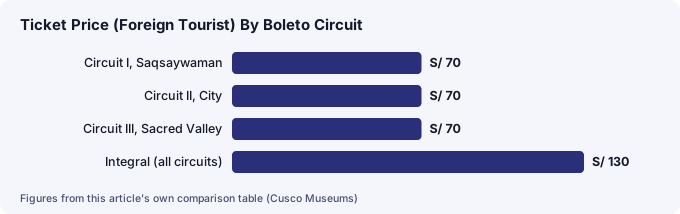
Cusco's main museums are the Inca Museum, the Museo de Arte Precolombino, the Museo de Sitio Qorikancha, the Museo Historico Regional, the Museo de Arte Popular and the Museo de Arte Contemporaneo. Five of them sit on the Boleto Turistico's City circuit at S/ 70 for the circuit or S/ 130 for the full 10-day integral ticket; the Inca Museum and MAP sell their own tickets at S/ 20 for foreign adults.
Cusco, the historic city in the Andes of southern Peru, packs an unusual number of museums into a compact historic centre built on Inca foundations. The Peruvian state tourism board, PROMPERU, describes the city as a World Heritage site with layers of Inca and colonial history, and the museum network reflects that split: some collections hold Inca stonework and pre-Columbian ceramics, others colonial painting and contemporary Andean art. The practical question for a visitor is rarely whether the museums are good. It is which ticket pays for them, because five of the city's museums sit inside the COSITUC Boleto Turistico's City circuit while the two most visited, the Inca Museum and the Museo de Arte Precolombino, sell their own admission separately.
What Are The Best Museums In Cusco?
The strongest collections in Cusco are the Inca Museum on Cuesta del Almirante, the Museo de Arte Precolombino near the Plaza de Armas, and the Museo de Sitio Qorikancha inside the Santo Domingo complex. Around them sit the Museo Historico Regional, the Museo de Arte Popular, the Museo de Arte Contemporaneo and the Centro Qosqo de Arte Nativo, all on the Boleto Turistico. The Inca Museum and MAP charge separately at S/ 20 for foreign adults.
The Inca Museum, known locally as the Museo Inka, holds the city's deepest collection of Inca material: ceramics, textiles, metalwork and the famous Inca keros, the carved wooden drinking vessels. Peru's tourism board lists it among the museums a visitor to Cusco should see, with a foreign adult ticket at S/ 20, about US$6, and opening hours of Monday to Friday 09:15 to 16:00 and Saturday 09:15 to 14:00. This site covers the building and its collection in more detail at the Museo Inka guide.
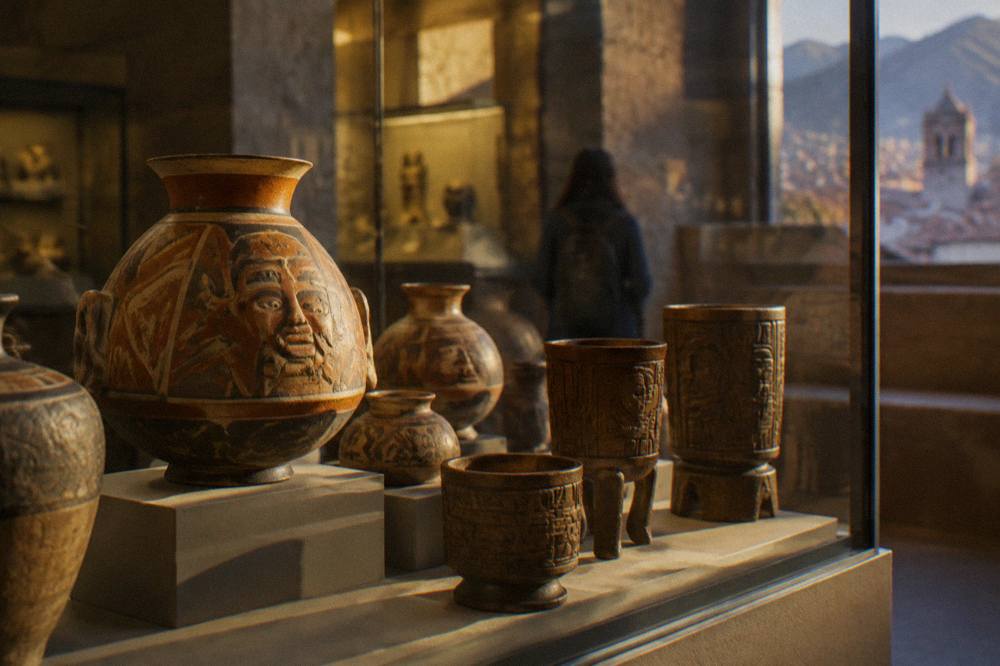
The Museo de Arte Precolombino, usually shortened to MAP, takes a different angle. Rather than telling the Inca story, it presents pre-Columbian art as art, with objects arranged for their form and craftsmanship. The same peru.travel listing gives its admission as S/ 20 general, about US$6, and S/ 10 for students. MAP sits a short walk from the Plaza de Armas, which makes it one of the easiest museums to slot into a first day in the city; the square itself is covered in the Plaza de Armas guide.
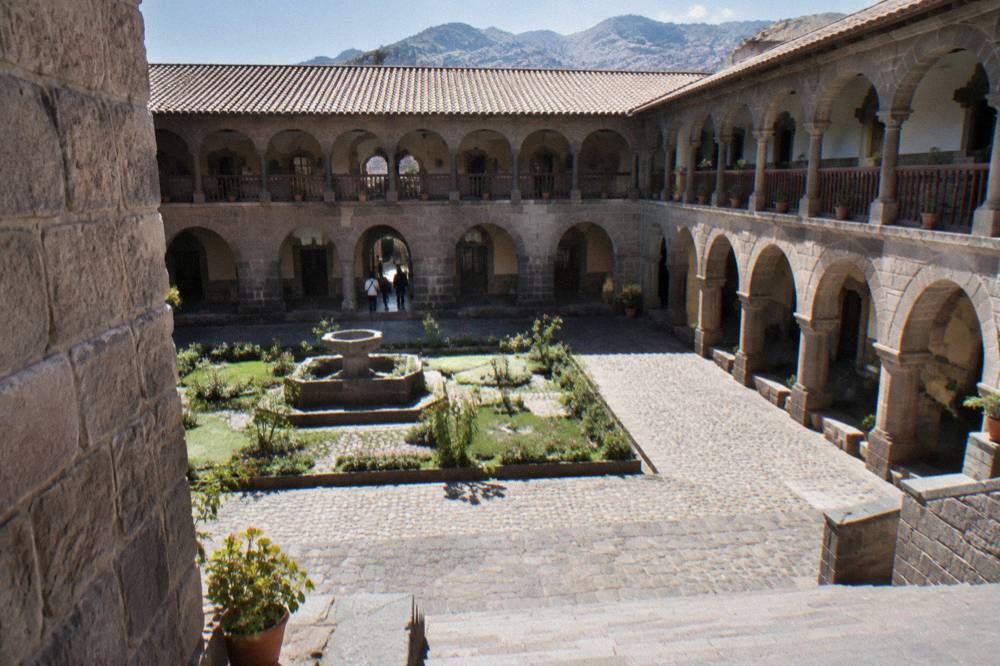
The Museo de Sitio Qorikancha is a third kind of experience. It stands inside the Santo Domingo church complex, built on the foundations of Qorikancha, the Inca temple of the sun, and the site museum displays material recovered from the temple grounds. The juxtaposition is the point: Inca wall, colonial arch, museum case, all in one building. The full story of the temple and the church is in the Qorikancha guide.
Which Cusco Museums Are On The Boleto Turistico?
Five museum entries sit on the Boleto Turistico's City circuit, Circuit II: the Museo de Sitio Qorikancha, the Museo Historico Regional, the Museo de Arte Contemporaneo, the Museo de Arte Popular and the Centro Qosqo de Arte Nativo. The circuit costs S/ 70 for foreign tourists, about US$20, and COSITUC reports partial ticket validity of 1 to 2 days. The full integral ticket, S/ 130, covers all 16 sites across three circuits for 10 days.
The COSITUC tarifario, the official price list of the committee that runs the ticket, is the source for every figure in that answer. The Boleto Turistico is sold in person only: at the central counter at Av. El Sol 103, Galerias Turisticas, open daily 07:30 to 18:00, and at most included sites. It is not sold online, so a visitor arriving without it buys it at a counter before the first museum door. The full mechanics, including what happens with children and students, are laid out in the Boleto Turistico guide.
| Boleto circuit | Ticket price (foreign tourist) | Validity | Museum and city sites included |
|---|---|---|---|
| Circuit I, Saqsaywaman | S/ 70 | 1 day | Saqsaywaman, Q'enqo, Puka Pukara, Tambomachay (no museums) |
| Circuit II, City | S/ 70 | 2 days | Museo de Sitio Qorikancha, Museo Historico Regional, Museo de Arte Contemporaneo, Museo de Arte Popular, Centro Qosqo de Arte Nativo, Monumento a Pachacutec, Tipon, Pikillacta |
| Circuit III, Sacred Valley | S/ 70 | 2 days | Pisac, Ollantaytambo, Chinchero, Moray (no museums) |
| Integral (all circuits) | S/ 130 | 10 days | All 16 sites across the three circuits |
Two details from the official COSITUC FAQ are worth carrying into a plan. First, validity starts on the day of purchase, and the FAQ notes that covering all 16 sites needs a minimum of three days, so the integral ticket rewards an early start. Second, children are free to age 9 and ages 10 to 17 pay the student price with ID, which makes the boleto unusually good value for families; more family angles are in the Cusco with kids guide.
Note what the ticket does not include. The Inca Museum and MAP sell their own admission. The Cathedral is not among the 16 boleto sites either, and no verified current admission figure for it exists, so this page prints none. The Machu Picchu citadel is also outside the boleto entirely, a point the Ministry of Culture is explicit about; that site has its own page at the Machu Picchu day trip guide.
How Much Do Cusco Museums Cost Without The Boleto?
The Inca Museum charges S/ 20 for foreign adults, about US$6, and MAP charges S/ 20 general or S/ 10 for students. The Museo de Sitio Qorikancha is covered by the Boleto Turistico Circuit II, and peru.travel also lists the Santo Domingo museum entry at S/ 20. No verified current admission figure exists for the Cusco Cathedral, so no number appears here for it.
Those are the only standalone museum prices the verified sources support. The Inca Museum and MAP figures come from peru.travel's museum listing, checked in 2026; the Qorikancha figure from the same listing, with the important nuance that the site museum is simultaneously a boleto site, so a holder of the integral or City circuit ticket does not pay it twice. For any museum not listed, hours and admission change often enough that checking on the day is the only reliable approach.
| Museum | Admission (foreign adult) | On the Boleto Turistico? | Source basis |
|---|---|---|---|
| Inca Museum (Museo Inka) | S/ 20 | No, separate ticket | peru.travel museum listing |
| Museo de Arte Precolombino (MAP) | S/ 20 general, S/ 10 students | No, separate ticket | peru.travel museum listing |
| Museo de Sitio Qorikancha | Covered by Circuit II | Yes, Circuit II | COSITUC tarifario |
| Museo Historico Regional | Covered by Circuit II | Yes, Circuit II | COSITUC tarifario |
| Museo de Arte Popular | Covered by Circuit II | Yes, Circuit II | COSITUC tarifario |
| Museo de Arte Contemporaneo | Covered by Circuit II | Yes, Circuit II | COSITUC tarifario |
| Centro Qosqo de Arte Nativo | Covered by Circuit II | Yes, Circuit II | COSITUC tarifario |
| Cusco Cathedral | No verified current figure | No, not a boleto site | Hours and admission unverified |
A quick way to frame the decision: a visitor planning to see Saqsaywaman and the four Inca sites above the city will already hold the integral ticket, and every Circuit II museum then costs nothing extra at the door. A visitor in the city for a single afternoon, museums only, faces roughly S/ 40 in standalone admission for the Inca Museum plus MAP, against S/ 70 for the City circuit that adds five boleto sites to those two. Neither route is wrong; it depends entirely on whether the ruins are on the itinerary. The four-ruins circuit above the city has its own write-up in the four ruins of Cusco article.
For visitors who want a museum experience they can taste, the ChocoMuseo on the corner of the Plaza de Armas runs a bean-to-bar chocolate workshop where participants roast and grind cacao and mould their own chocolate to take away. The workshop's own listing carries the current price and times, and the ChocoMuseo building and free exhibits are covered in the ChocoMuseo guide. Check availability.
What Does The Inca Museum Hold?
The Inca Museum, on Cuesta del Almirante near the Plaza de Armas, holds Cusco's main collection of Inca-era material: ceramics, textiles, metalwork, carved wooden keros and mummies, displayed in a colonial house across several floors. Peru's tourism board lists its foreign adult admission at S/ 20, about US$6, with hours of Monday to Friday 09:15 to 16:00 and Saturday 09:15 to 14:00, closed Sunday.
The collection is the reason this museum tops most lists of Cusco museums. The Inca keros, the paired wooden drinking vessels used in ritual toasts, are among the best displayed anywhere, and the ceramic sequence shows the shift from pre-Inca styles to the standardised Inca state ware. The building itself is part of the exhibit: a colonial residence on a steep street of Inca-era walls, a few minutes uphill from the main square.
The practical constraint is the schedule. The Saturday window is short and the museum closes on Sunday, so a weekend visitor should put it on Saturday morning rather than planning it for a Sunday. Combined with MAP, which sits closer to the square, the two standalone museums make a natural half-day pairing: Inca Museum in the morning, lunch, MAP in the afternoon.
What Are The Boleto Circuit II Museums Like?
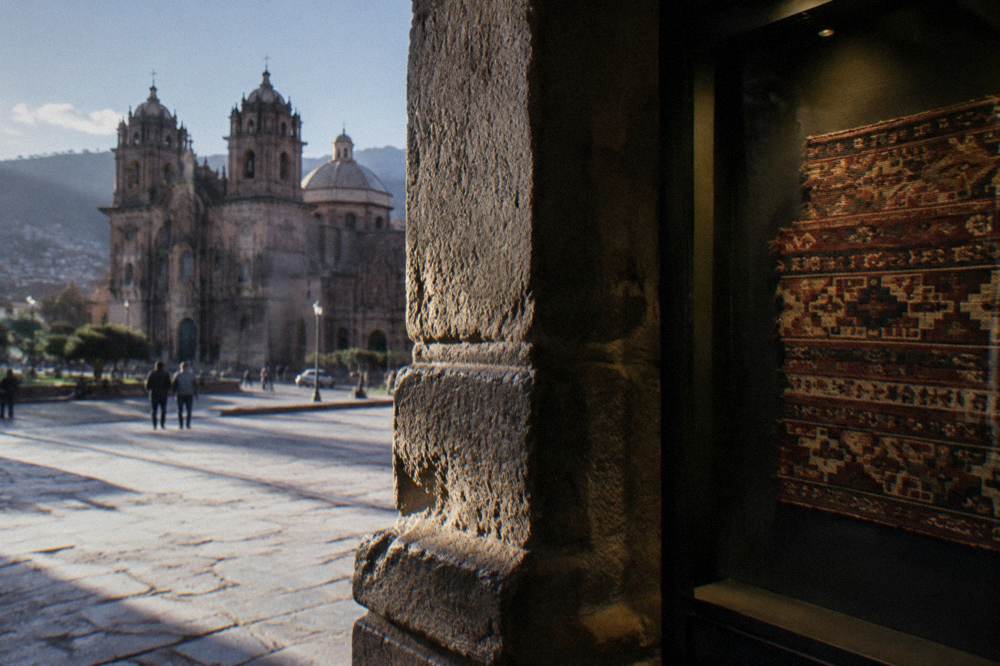
The five Circuit II entries split into three groups: the Museo Historico Regional and Museo de Sitio Qorikancha carry the historical weight, the Museo de Arte Popular and Centro Qosqo de Arte Nativo hold folk art and performance, and the Museo de Arte Contemporaneo shows modern Andean work. All five are covered by the S/ 70 City circuit ticket, and COSITUC sells that ticket at the Av. El Sol counter and at most included sites.
The Museo Historico Regional sits in the Casa Garcilaso, the colonial house associated with the chronicler Inca Garcilaso de la Vega, and its rooms trace the region's story from pre-Inca cultures through the colonial period. One COSITUC detail matters for planning: the FAQ notes that this is among the sites where the ticket itself is not sold, so a visitor arriving here without a boleto needs to buy one at another site or at the central counter first. More of these guides are collected on Things To Do In Cusco Peru.
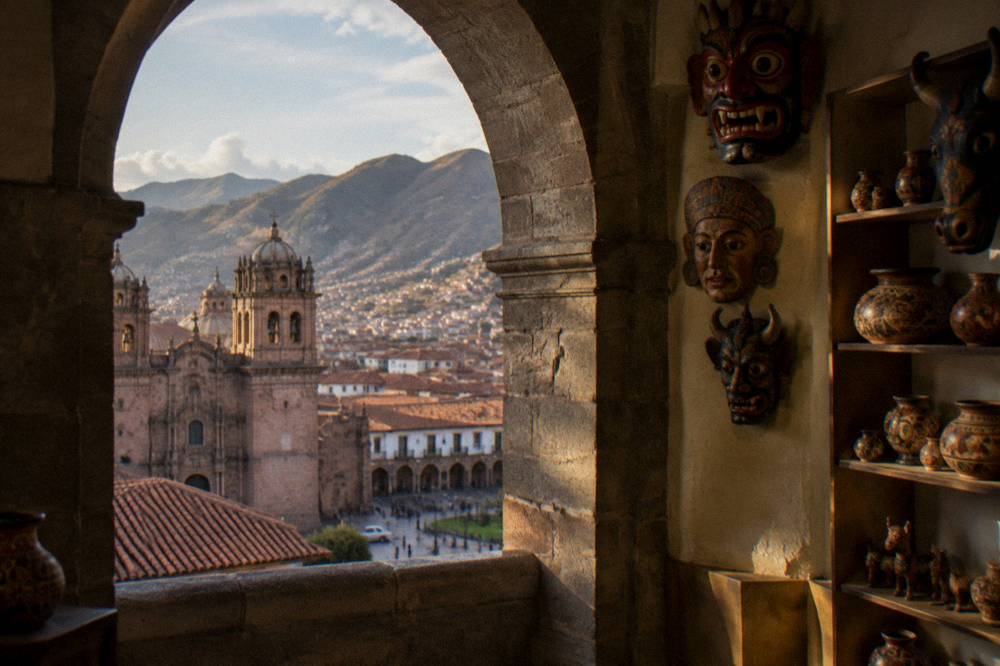
The Museo de Arte Popular holds the folk-art side of the city's culture: masks, retablos, the decorated box-alters associated with Ayacucho and the Cusco region, and ceramics in the tradition of the Quinua potters. The Centro Qosqo de Arte Nativo is different again: it is a performance venue for folk dance and music as much as a display museum, and COSITUC notes it charges children from age 6, younger than the boleto's general age-9 rule. The Museo de Arte Contemporaneo rounds out the circuit with modern painting and sculpture from Cusco and the wider region.
| Circuit II museum | What it holds | Notes for visitors |
|---|---|---|
| Museo de Sitio Qorikancha | Material from the temple of the sun site | Inside the Santo Domingo complex |
| Museo Historico Regional | Regional history, pre-Inca to colonial | Casa Garcilaso; ticket not sold here |
| Museo de Arte Contemporaneo | Modern Andean painting and sculpture | Central location |
| Museo de Arte Popular | Masks, retablos, folk ceramics | Small, pairs with the Centro Qosqo |
| Centro Qosqo de Arte Nativo | Folk dance and music performance | Children charged from age 6 |
Which Cusco Museums Work Best For Families And Rainy Days?
For families, the ChocoMuseo with its hands-on chocolate workshop and the Planetarium Cusco with its evening shows are the two most child-friendly museum experiences in the city, while the Inca Museum and MAP suit older children with patience for display cases. For rainy days, the standalone museums and the Circuit II cluster all sit within a short walk of the Plaza de Armas, making a wet afternoon easy to fill without transport.
The ChocoMuseo is the clearest family pick because the workshop is participatory: children roast cacao beans, grind them and mould chocolate, and the free exhibits on cacao and Peruvian chocolate history line the entrance. The site has a fuller write-up in the ChocoMuseo guide, and the workshop itself can be booked through the operator's live listing.
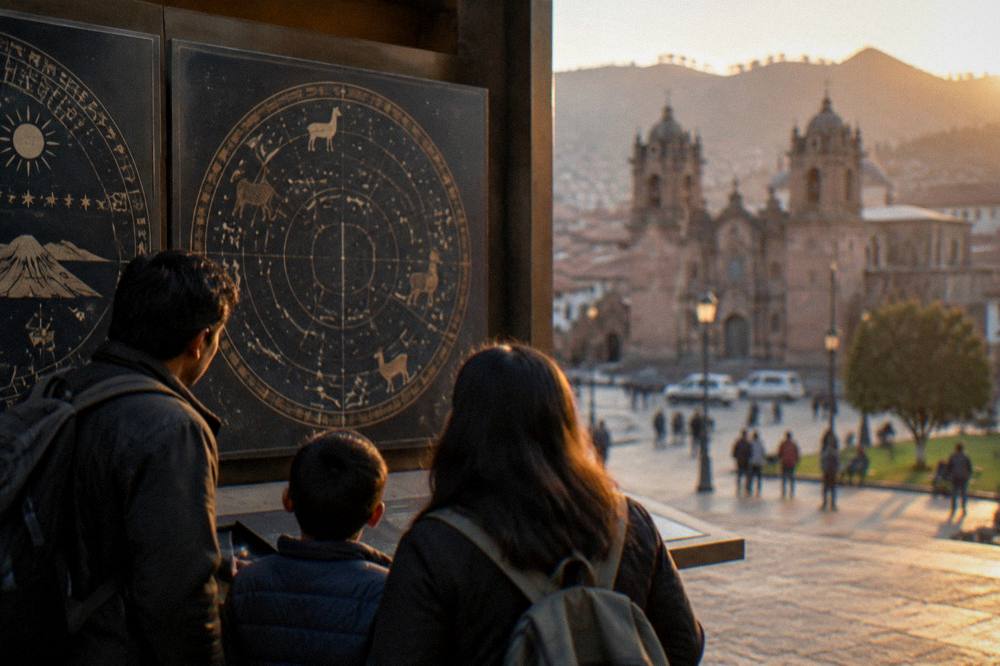
The Planetarium Cusco offers the other family-friendly angle. Its own site describes evening shows with round-trip transport included, and the planetarium frames Inca astronomy, the dark constellations the Andean cultures read in the Milky Way, which gives children a story to hold onto. The planetarium's admission and hours are unverified in the sources behind this page, so no figure appears here; its background is in the Cusco Planetarium guide, and a prebooked admission ticket is available through the operator's listing.
Rain matters more in Cusco than in most museum cities, because the city's headline attractions are outdoors. The WMO station record for Cuzco, a historical normal supplied by SENAMHI, shows December to March carrying 71.9 percent of the year's 707.8 mm of rain, against just 22.8 mm across May to August. A wet-season afternoon is therefore the natural time to move indoors, and the monthly pattern is laid out in the Cusco weather by month guide. The museum circuit is compact enough that rain rarely ruins a plan; the walking distances between the Circuit II sites are minutes, not hours.
How Do Cusco Museums Fit Into A Short Visit?
A one-day visitor should pick either the Inca Museum plus MAP for Inca material and art, or the Boleto Turistico City circuit for breadth across five sites; both sit within walking distance of the Plaza de Armas. A two- or three-day visitor can take the integral ticket and add the Qorikancha site museum to the ruins above the city and the Sacred Valley sites. The museums reward an early start because several close by mid-afternoon.
The Inca Museum's 16:00 weekday closing is the binding constraint on most itineraries. A practical sequence is the Inca Museum at opening, the Plaza de Armas and Cathedral exterior at midday, then MAP in the early afternoon, leaving the evening for a food tour or the Plaza's restaurants; the eating side of the city is covered in the what to eat in Cusco guide.
Visitors with more days should let the boleto structure the plan. The integral ticket's 10-day validity means the museums can be spread across a stay rather than crammed, and COSITUC's own FAQ notes that covering all 16 sites needs a minimum of three days. The ruins of Saqsaywaman, Q'enqo, Puka Pukara and Tambomachay share Circuit I with a 1-day validity, so those belong on a single day, while the Circuit II museums can be scattered through the week. The classic patterns are laid out in the 3 days in Cusco itinerary and the 2 days itinerary.
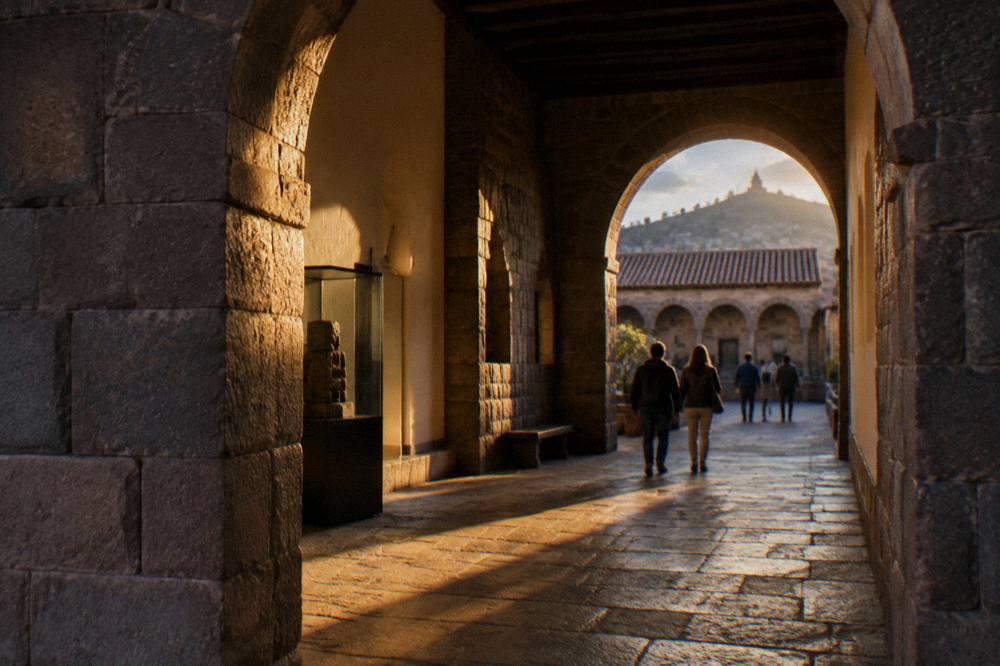
Altitude shapes the first day more than any museum schedule. The city sits at 3,335 m at the Plaza de Armas, and the CDC Yellow Book names Cusco as a rapid-ascent destination, advising graded ascent where feasible and describing acetazolamide as a decision to make with a doctor. A slow first morning in museums is not a wasted morning; it is a reasonable acclimatisation strategy, and the medical detail is in the Cusco altitude guide.
For travellers who want the museum experience to extend to the kitchen, Cusco's cooking classes pair a market visit with hands-on preparation of Andean dishes, a format that works on the same half-day footprint as a museum circuit. The options are compared in the cooking classes guide.
What About The Sacred Valley And Beyond?
The Boleto Turistico's Circuit III covers the Sacred Valley archaeology of Pisac, Ollantaytambo, Chinchero and Moray, but these are sites rather than museums, and the valley's cultural stops are workshops and living exhibits rather than collections. The Awana Kancha textile centre near Chinchero and the Maras salt mines, which charge a separate community fee of S/ 15 to S/ 20, are the two stops most often paired with a valley day trip.
Awana Kancha is the closest thing the region has to a living museum: a textile centre where visitors watch weavers at work and see the dyeing and spinning processes demonstrated with the animals that supply the fibre. It is a stop on most Sacred Valley routes rather than a ticketed museum, and it is covered in the Awana Kancha guide.
The Maras salt mines are explicitly not among the 16 boleto sites, a point the COSITUC list makes by omission, and the community fee there is reported at S/ 15 to S/ 20 in 2026 operator listings. Moray, the concentric agricultural terraces, is on Circuit III. The whole valley circuit, and how to fit it into one or two days, is in the Sacred Valley guide.
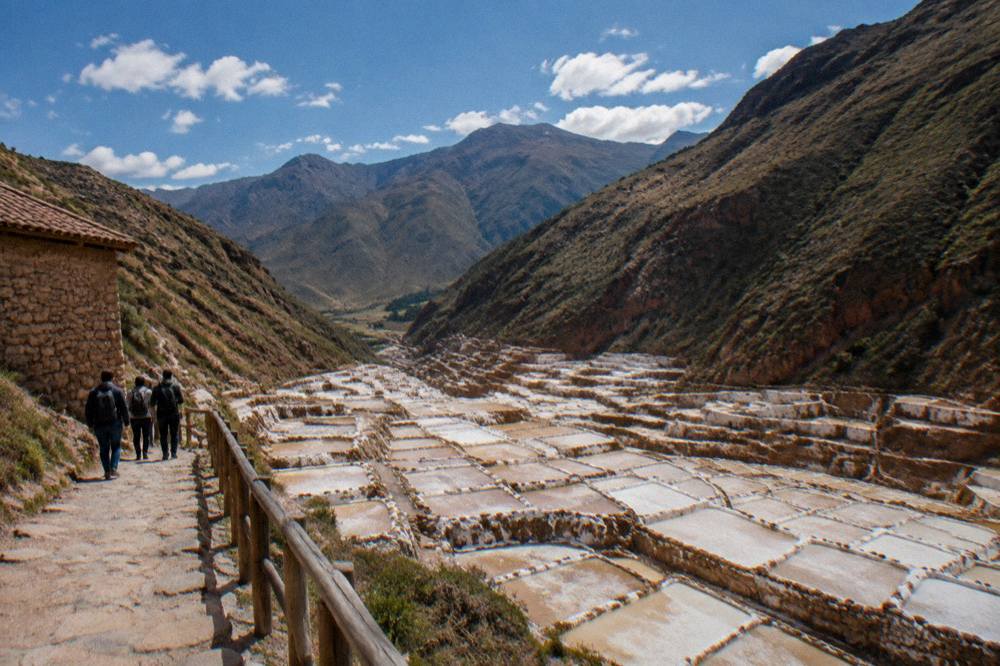
A guided valley day bundles the sites without the logistics of colectivos and separate ticket counters, and one of the most-booked options covers Pisac, Ollantaytambo and the salt mines in a single group tour from the city.
Common Questions About Cusco Museums
Is The Boleto Turistico Worth It Just For The Museums?
The City circuit costs S/ 70 and covers five museums plus Tipon, Pikillacta and the Monumento a Pachacutec, while the two standalone museums together cost S/ 40 in admission. If the museums plus a Qorikancha visit are the whole plan, the circuit pays for itself; if only one or two museums are on the list, standalone tickets are cheaper.
The arithmetic changes the moment Saqsaywaman or any Sacred Valley site enters the plan, because the integral ticket at S/ 130 then covers everything for 10 days. COSITUC sells both in person only, at Av. El Sol 103 and at most sites.
Which Cusco Museum Is Best For Inca History?
The Inca Museum holds the city's main Inca collection, with ceramics, keros, textiles and metalwork, at S/ 20 for foreign adults, open Monday to Friday 09:15 to 16:00 and Saturday to 14:00. The Museo de Sitio Qorikancha adds the material from the temple of the sun site itself, covered by the Boleto Turistico.
Between them, the two cover the state-religion and everyday-life sides of the Inca story. The Qorikancha museum has the stronger setting, inside the Santo Domingo complex built on the temple walls.
Are Cusco Museums Open On Sundays?
The Inca Museum is closed on Sunday and closes at 14:00 on Saturday, according to the peru.travel listing; no verified hours exist for the Cathedral, Qorikancha's museum or several other sites, so Sunday plans should be checked on the day. The COSITUC ticket counter at Av. El Sol 103 opens daily 07:30 to 18:00, so at least ticket purchase is never blocked.
Hours change often for small municipal museums, and the sources behind this page hold verified hours for only a few. A Sunday visitor is safest with MAP and the boleto sites, checking each door on arrival.
Do Children Pay For Cusco Museums?
On the Boleto Turistico, children are free to age 9 and ages 10 to 17 pay the student price with ID, per the COSITUC FAQ, though the Centro Qosqo de Arte Nativo charges from age 6. The Inca Museum and MAP list a student rate for MAP at S/ 10; the sources hold no separate child prices for the standalone museums.
The age-6 rule at the Centro Qosqo de Arte Nativo is the one exception families most often miss. It is stated on the COSITUC FAQ page itself.
Can You Buy Museum Tickets Online In Cusco?
The Boleto Turistico is sold in person only, at the Av. El Sol 103 counter daily 07:30 to 18:00 and at most included sites, per the official COSITUC FAQ; it is not sold online. The standalone museums sell tickets at their doors, and workshop experiences such as the ChocoMuseo chocolate class can be reserved in advance through the operator's live listing.
The in-person rule is the single most common planning mistake on this topic. A visitor who arrives on a Sunday evening and plans a Monday museum morning should build in a counter stop first.
How Many Days Do Cusco Museums Need?
One focused day covers the Inca Museum, MAP and two or three Circuit II museums; two comfortable days add the Qorikancha site museum, the Centro Qosqo de Arte Nativo and a workshop such as the ChocoMuseo bean-to-bar class. COSITUC notes that all 16 boleto sites need a minimum of three days, but the museums alone fit into two.
The constraint is rarely time, it is the mid-afternoon closing hours. Starting at the Inca Museum at 09:15 and moving downhill through the day is the pattern that fits the schedule the sources describe.