Museo Inka
The Museo Inka in Cusco, Peru, holds the city's main collection devoted to Inca culture, with a foreign adult entry of S/ 20 and weekday opening from 09:15 to 16:00. Here is what the sources say about the price, the hours, the collection and how to fit the museum into a Cusco visit.
Short answer
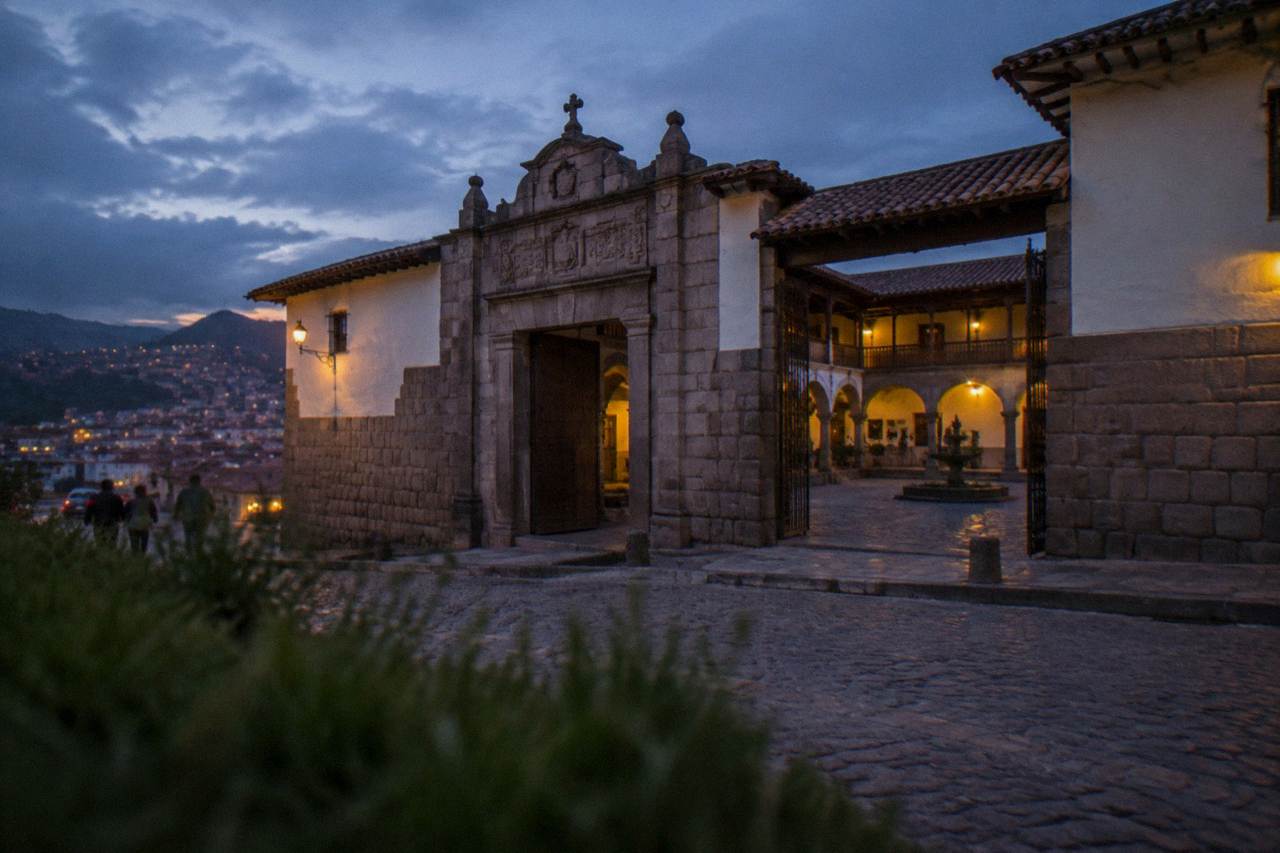
The Museo Inka in Cusco charges foreign adults S/ 20, about US$6, and opens Monday to Friday 09:15 to 16:00 and Saturday 09:15 to 14:00, per peru.travel's museum listing. It is the city's dedicated Inca collection, a short walk from the Plaza de Armas.
Cusco, the historic city in the Andes of southern Peru, was the capital of the Inca state, and the Museo Inka is the museum that tells that story in one building. The city sits at about 3,335 m at its Plaza de Armas, and its historic centre carries a 1983 UNESCO inscription, the same year the Machu Picchu sanctuary was inscribed on 9 December 1983. For a visitor spending a few days acclimatising, an indoor collection devoted to the Inca world is a natural stop between the outdoor ruins, and this page sets out the verified prices, hours and practical details, plus what the surrounding blocks offer. The figures here come from peru.travel's museum listings and the COSITUC tarifario for the Boleto Turistico, and where a figure is not verified, this guide says so rather than guessing.
What Is The Museo Inka In Cusco?
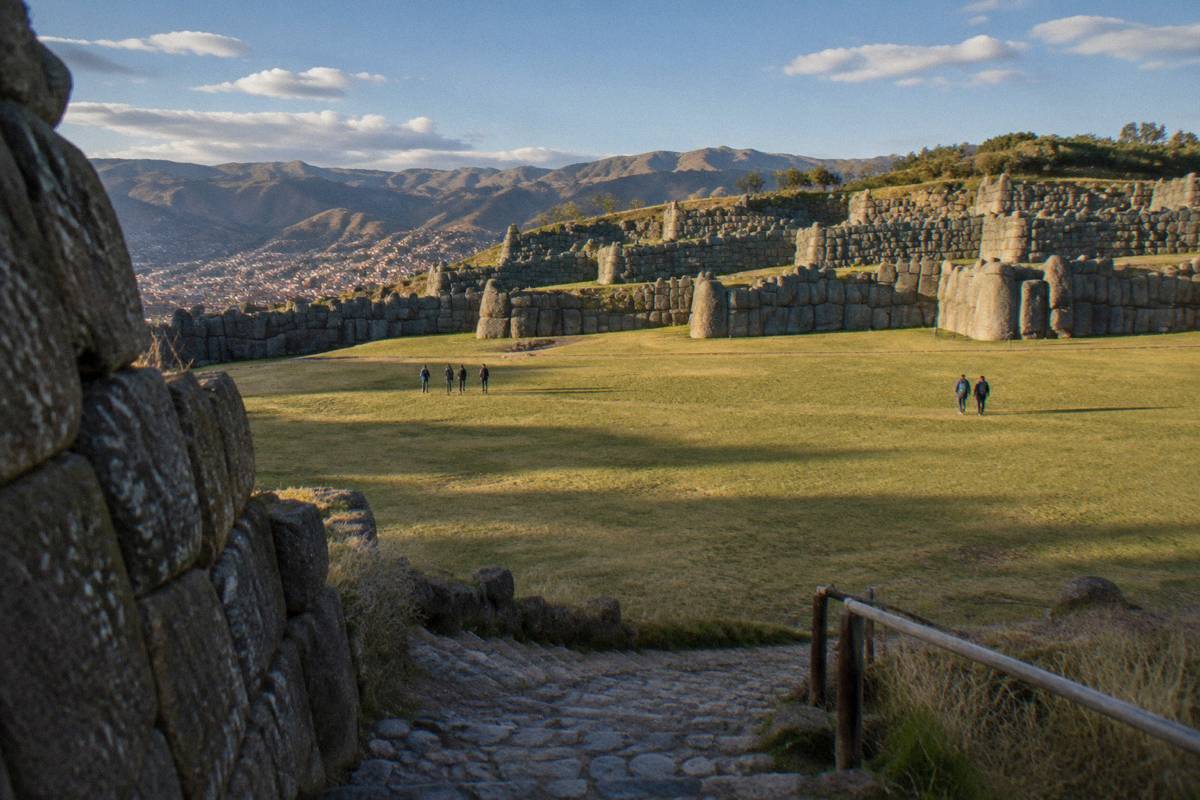
The Museo Inka is Cusco's dedicated museum of Inca culture, a collection of archaeological and ethnographic material from the Inca world and its predecessors, housed in a historic building in the centre of the city. It stands in the Cusco historic centre, a short walk from the Plaza de Armas, and it is a natural choice for visitors who want context for the ruins they have walked through at Sacsayhuaman or the Sacred Valley.
Cusco was the Inca capital, and that single fact shapes the whole city: colonial churches stand on Inca stone foundations, and Inca wall lines still mark the streets around the centre. The museum exists to explain that inheritance. Its galleries cover Inca material culture, and its displays are the reason many travellers put it ahead of the city's art museums when time is short. Anyone planning a wider route through the city's ruins can start with the guide to the Inca Ruins In Cusco, then use the museum to fill in the story behind the stones.
The building itself is part of the experience. Like many structures in the historic centre, it belongs to the colonial layer of the city, and the museum's own setting gives a sense of how Cusco layered its eras. No construction date or architect is recorded for the building, so this guide states none; what can be said is that it sits within the UNESCO-inscribed historic centre, where the fabric of the city mixes Inca and colonial work in a way few other places do.
How Much Does The Museo Inka Cost And When Is It Open?
The Museo Inka charges foreign adults S/ 20, about US$6, per peru.travel's museum listing. Its hours are Monday to Friday 09:15 to 16:00 and Saturday 09:15 to 14:00, with no Sunday opening listed. Hours at small Cusco institutions change, so checking on the day of a visit is the safe habit, and the S/ 20 figure is the only verified price for the museum.
The S/ 20 entry puts the museum in the same band as the city's other main museums rather than the big-ticket items. For comparison, peru.travel lists the Museo de Arte Precolombino at S/ 20 general admission and S/ 10 for students, and the Qorikancha site museum at S/ 20, while the Boleto Turistico integral costs S/ 130 for a foreign adult and covers 16 sites over 10 days. A visitor building a museum day in Cusco is therefore choosing between a handful of S/ 20 entries and one S/ 130 pass that bundles the major ruins and several museums together.
| Museum or site | Entry, foreign adult | Source basis |
|---|---|---|
| Museo Inka | S/ 20 (about US$6) | peru.travel listing |
| Museo de Arte Precolombino (MAP) | S/ 20 (about US$6) | peru.travel listing |
| MAP, students | S/ 10 | peru.travel listing |
| Qorikancha site museum | S/ 20 (about US$6) | peru.travel listing |
| Boleto Turistico integral, 16 sites, 10 days | S/ 130 (about US$38) | COSITUC tarifario |
Two practical notes come straight from the sources. First, the Saturday closing time is earlier than the weekday one, 14:00 against 16:00, so a weekend visit needs an earlier start. Second, the pack does not verify the museum's Sunday hours, any reduced rates beyond the general listing, or a combined ticket with other institutions, so this guide makes no claim about them. What is verified is the S/ 20 price and the weekday and Saturday windows, and those are the figures to plan around.
What Can You See Inside The Museo Inka?
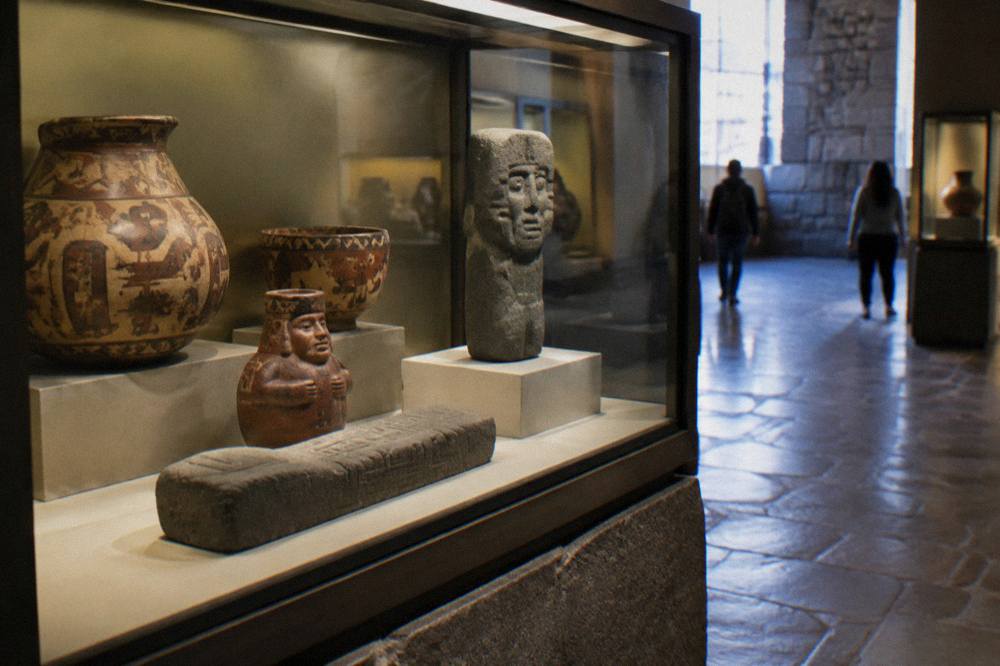
The Museo Inka's collection centres on Inca archaeology and the material culture of the Andes: ceramics, textiles, metalwork and stone pieces, alongside displays on Inca society, religion and daily life. The pack behind this page does not itemise the galleries, so no room-by-room inventory appears here, but the museum's focus is the Inca world and its antecedents, which is what separates it from Cusco's art and colonial museums.
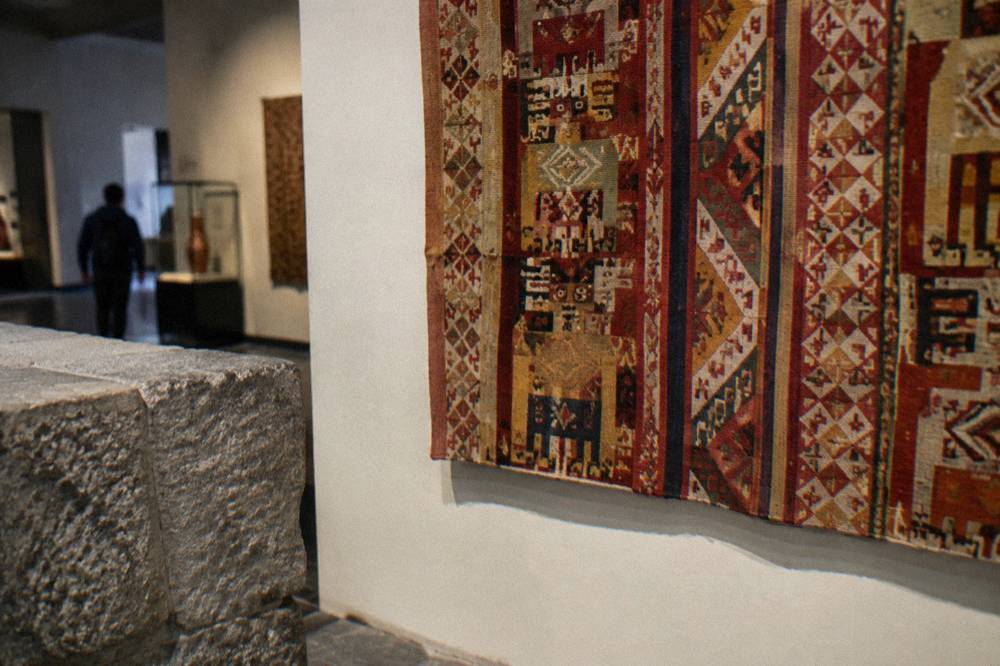
Textiles deserve a special mention. Andean weaving is one of the continuous threads of the region's culture, and museum displays of historic cloth sit alongside the living weaving traditions a visitor can still see at workshops and communities around Cusco. Anyone whose interest in textiles grows inside the museum can take it further with the Textile Workshop Experience in the Cusco region, a small-group class where Andean women teach weaving techniques; the product card carries its price, rating and duration. The Awana Kancha page covers another place where weaving and llama and alpaca fibre are part of the visit.
The museum also gives context for the objects a visitor sees scattered through the city. Inca masonry is famous for its fitted polygonal stones, and the Twelve Angled Stone on Hatunrumiyoc street is a favorite subject for photographs; the museum's collection helps explain the society that produced that standard of stonework. Widely documented qualitative statements, that Cusco was the Inca capital and that its colonial buildings rest on Inca foundations, are the frame the museum fills with objects.
Is The Museo Inka Covered By The Boleto Turistico?
The Boleto Turistico's 16-site list does not name the Museo Inka, so a visitor should not assume the pass covers it. The Boleto's Circuit II covers city museums including the Museo Historico Regional, the Qorikancha site museum and the contemporary and popular art museums, per the COSITUC list, and the S/ 70 partial or S/ 130 integral prices apply to those sites, not to every museum in Cusco.
The distinction matters because Cusco has more museums than the Boleto covers. The pass bundles 16 sites across three circuits, sold in person only at the counter on Av. El Sol 103, daily 07:30 to 18:00, and at most included sites; COSITUC does not sell it online. A visitor holding the integral ticket can work through the Boleto museums and still choose to pay the Museo Inka's separate S/ 20 entry, and many do exactly that because the Inca collection is the one they most want to see. More of these guides are collected on Things To Do In Cusco Peru.
| Boleto Turistico ticket | Price, foreign adult | Validity | Coverage |
|---|---|---|---|
| Integral (BTCI) | S/ 130 (about US$38) | 10 days | All 16 sites |
| Partial Circuit I, Saqsaywaman | S/ 70 (about US$20) | 1 day | Saqsaywaman, Q'enqo, Puka Pukara, Tambomachay |
| Partial Circuit II, City | S/ 70 (about US$20) | 2 days | City museums, Qorikancha site museum, Tipon, Pikillaacta |
| Partial Circuit III, Sacred Valley | S/ 70 (about US$20) | 2 days | Pisac, Ollantaytambo, Chinchero, Moray |
One warning the pack makes explicit: Machu Picchu is not on the Boleto at all, and its tickets sell on the Ministry of Culture platform or in person at Machu Picchu Pueblo. The full ticket picture is on the Boleto Turistico guide, and the Machu Picchu side has its own page at Machu Picchu. For the museum question, the short version is: budget S/ 20 for the Museo Inka on top of whatever Boleto circuit you buy.
How Does The Museo Inka Compare With Cusco's Other Museums?
Cusco's main museums split into three groups: the Boleto Turistico's city museums, the independent entries like the Museo Inka at S/ 20 and the MAP at S/ 20, and the site museums at the ruins themselves. The Museo Inka is the collection to pick for Inca archaeology, the MAP for pre-Columbian art, and the Qorikancha site museum for the temple complex it sits inside, per the peru.travel listings that carry these prices.
A museum day in Cusco can be built cheaply. Two S/ 20 entries plus a market lunch give a full day of indoor culture for the price of a single Boleto partial circuit, and the walk between them crosses the historic centre. The city's museums are gathered on the Cusco Museums guide with the full list, and the practical comparison below uses only the figures the pack verifies.
| Museum | Focus | Verified price | On the Boleto? |
|---|---|---|---|
| Museo Inka | Inca archaeology and culture | S/ 20 foreign adult | Not named on the 16-site list |
| Museo de Arte Precolombino (MAP) | Pre-Columbian art | S/ 20, students S/ 10 | Not named on the 16-site list |
| Qorikancha site museum | Inca temple site and museum | S/ 20, also a Circuit II Boleto site | Yes, Circuit II |
| Museo Historico Regional | Regional history | Boleto Circuit II site | Yes |
| Cusco Cathedral | Colonial religious art | Unverified, stay silent | No, not on the 16-site list |
The Cathedral row is deliberately empty of figures. The Cusco Cathedral page covers the building itself in detail.
Where Is The Museo Inka And How Do You Get There?
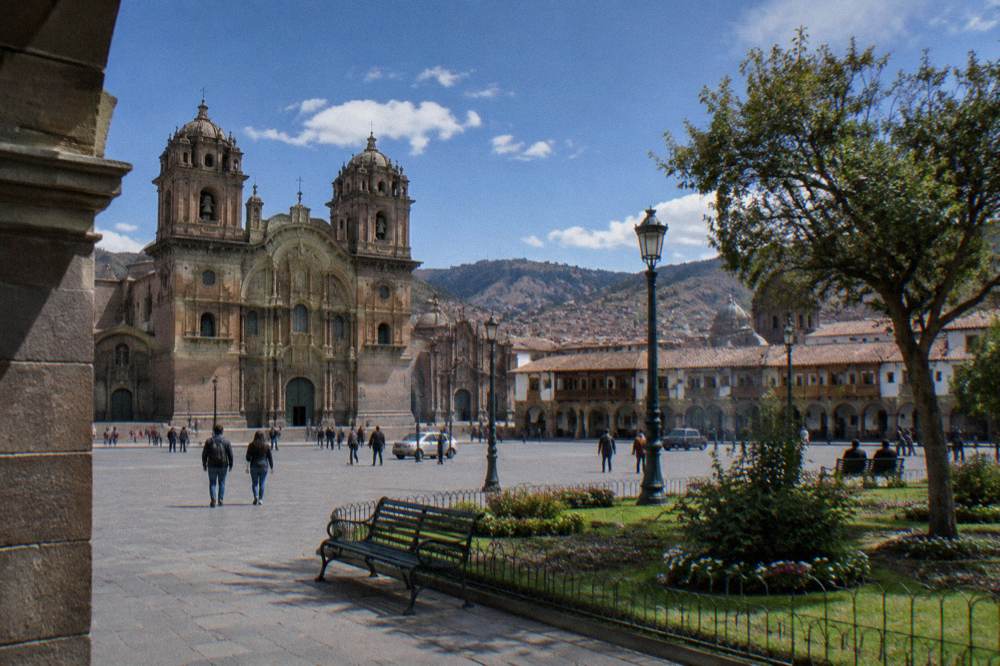
The Museo Inka stands in Cusco's historic centre, within a short walking radius of the Plaza de Armas, the Qorikancha temple complex and the San Pedro market. The pack does not carry a street address or a walking time for the museum, so no minutes figure appears here, but every one of the centre's landmarks sits on the same compact grid of Inca-walled streets, and the museum belongs to that walkable core.
Cusco is a walking city, and the historic centre's scale is the reason. The Plaza de Armas is the old centre of the city, San Blas sits on the hill to its east, and Sacsayhuaman and Cristo Blanco stand on the hills to the north, per the site's own place records. A route that starts at the Plaza, passes the Twelve Angled Stone on Hatunrumiyoc street, and continues to the museum covers the densest stretch of Inca wall in the city in a single stroll. The Centro Historico guide lays out the full walk.
For transport, the honest answer is that the centre rarely needs any. Taxis in Cusco are cheap and plentiful, and an airport taxi to the centre is reported at about S/ 15 to 25, but the museum-to-plaza journey is one that can be made on foot. The pack does not verify bus routes or frequencies to the centre, so this guide states none. Anyone arriving from further out can read the Getting Around Cusco guide for the verified transport picture.
When Is The Best Time To Visit The Museo Inka?
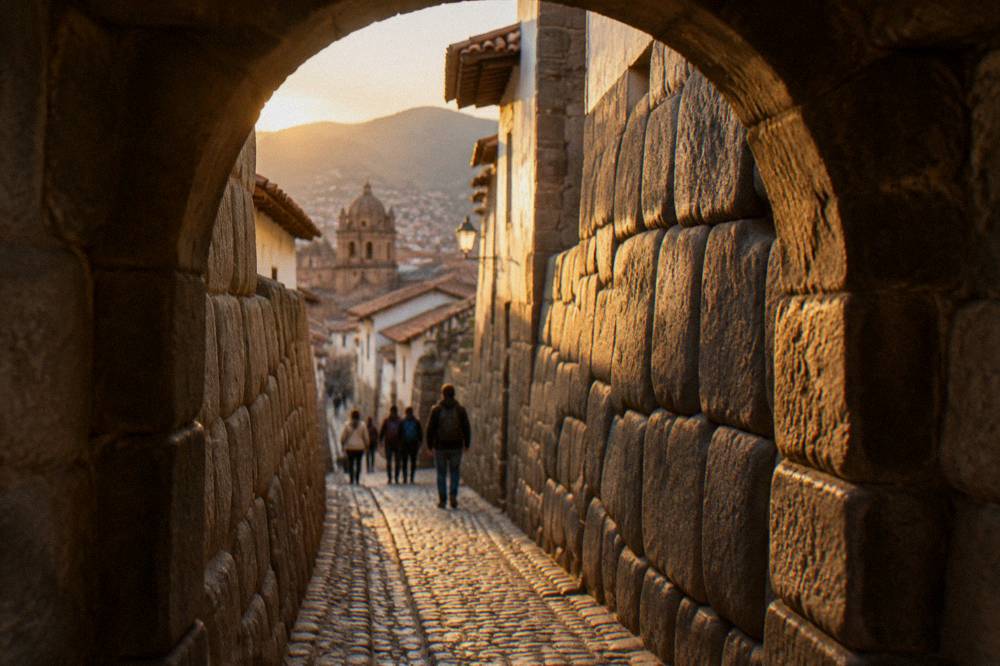
Any month works for an indoor museum, and the climate data says why: Cusco's mean daily maximum stays between 18.8 and 20.9 C all year, so the choice is about rain and crowds, not temperature. The dry season, roughly May to September, brings clear days and cold nights with frost in June and July, while December to March carries 71.9 percent of the year's 707.8 mm of rain at the WMO and SENAMHI station record, making the museum a reliable wet-season fallback.
The numbers behind that answer come from the World Weather Information Service record for the Cuzco station, supplied by SENAMHI, a historical normal whose averaging period is not stated. The table below is the full twelve-month picture, and it shows the pattern every Cusco planner should know: the rain is concentrated in the southern-hemisphere wet months, and the dry months are almost rainless.
| Month | Mean max C | Mean min C | Rain mm |
|---|---|---|---|
| Jan | 18.9 | 6.6 | 145.3 |
| Feb | 18.8 | 6.5 | 133.7 |
| Mar | 19.1 | 6.2 | 107.0 |
| Apr | 19.7 | 4.9 | 43.2 |
| May | 19.8 | 2.5 | 8.7 |
| Jun | 19.5 | 0.3 | 1.5 |
| Jul | 19.1 | 0.1 | 4.0 |
| Aug | 19.8 | 1.6 | 8.6 |
| Sep | 19.8 | 3.9 | 21.8 |
| Oct | 20.9 | 5.5 | 39.4 |
| Nov | 20.7 | 6.1 | 71.9 |
| Dec | 19.4 | 6.4 | 122.7 |
Two timing notes follow from the calendar rather than the weather. Inti Raymi falls on 24 June each year, with the main ceremony at Sacsayhuaman, and that week fills the city; the museum is an indoor option but the streets around it are at their busiest. And the museum's own hours shape the day: a 16:00 weekday close means it fits best in a morning slot, leaving the afternoon for open-air sites. The Best Time To Visit Cusco guide carries the full seasonal analysis.
What Else Is Near The Museo Inka?
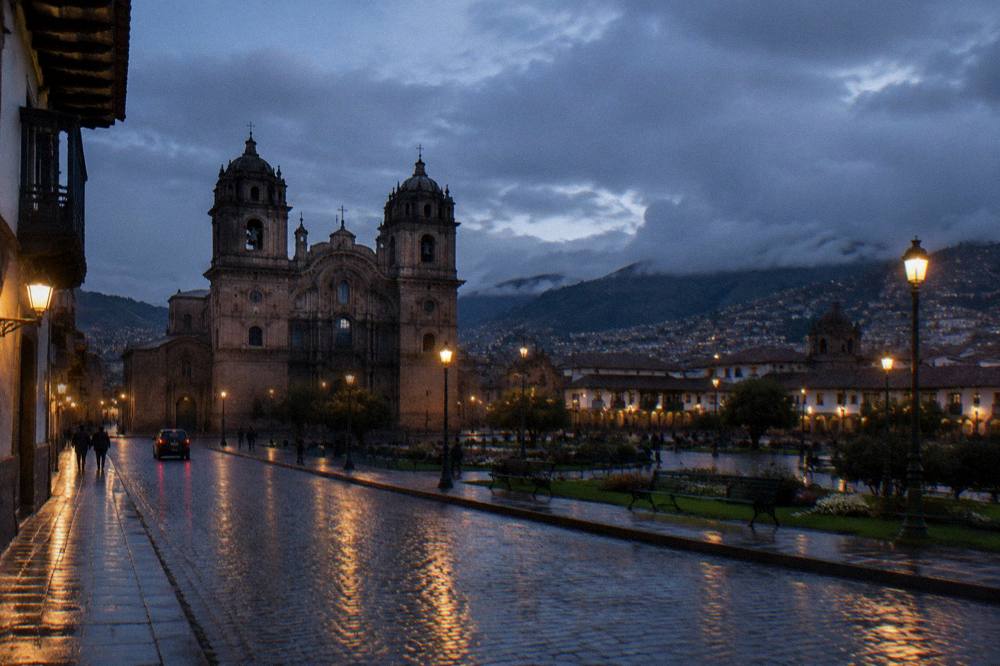
The blocks around the Museo Inka hold the densest cluster of sights in Cusco: the Plaza de Armas, the Qorikancha temple complex, the San Pedro market, the Twelve Angled Stone and the San Blas hill, all within the walkable historic centre. A visitor can pair the museum with any of them in a single morning or afternoon, and the S/ 20 entry leaves budget for the Qorikancha site museum or a market lunch on the same day.
The Qorikancha pairing is the classic combination. The temple complex was the Inca state's principal religious site, and its site museum is both a Boleto Circuit II stop and a separate S/ 20 entry per the peru.travel listing; the Qorikancha page covers the complex. Walking from there to the museum crosses the centre's Inca street lines, and the contrast between temple stonework and museum cases is the whole story of Inca Cusco in one afternoon.
The market pairing suits a different mood. San Pedro market is the city's central food and goods market, and its food stalls are where a menu del dia runs about S/ 8 to 15, per the reported on-the-ground ranges; the San Pedro Market page and the Cusco Markets guide cover it. A morning in the museum followed by a market lunch is the pattern many visitors fall into without planning to.
| Nearby sight | What it is | Verified entry |
|---|---|---|
| Plaza de Armas | The old centre of Cusco | Open public space |
| Qorikancha | Inca temple complex and site museum | S/ 20, or Boleto Circuit II |
| San Pedro market | Central food and goods market | Free entry, food at market prices |
| Twelve Angled Stone | Fitted polygonal stone in an Inca wall on Hatunrumiyoc street | Visible from the street |
| Cusco Cathedral | Colonial cathedral on the Plaza de Armas | Unverified, check on the day |
| Sacsayhuaman | Hilltop Inca site above the city | Boleto Turistico Circuit I, opens 07:00 to 18:00 |
Can You Visit The Museo Inka While Acclimatising To Cusco's Altitude?
Yes, a museum visit is one of the gentlest first-day activities in Cusco, because it is indoors, seated where you want it to be and free of the climbs the city's hills involve. The CDC Yellow Book names Cusco, at approximately 3,350 m, as a rapid-ascent destination and prefers graded ascent, so a low-exertion first day is the pattern the advice supports, and the museum fits it exactly.
The altitude facts worth knowing are short. The Plaza de Armas sits at 3,335 m, the airport at 3,310 m, and the CDC rounds the city to about 3,350 m; the citadel of Machu Picchu is lower, at 2,430 m, so Cusco is the higher of the two. The CDC advises travellers who ascend abruptly to consider acetazolamide as a prescription decision with a doctor, to avoid alcohol for the first 48 hours at high altitude, and it notes that in a case like Cusco a traveller can descend to sleep at a lower elevation for a night or two before beginning the ascent. No sourced figure exists for how many days acclimatisation takes or how likely altitude sickness is for any individual, so this guide prints none.
A first-day plan built around that advice writes itself: the museum in the morning, the Plaza and its flat edges at a slow pace, and the hills of San Blas or Sacsayhuaman saved for later days. The Acclimatisation Day guide sets out a full low-exertion itinerary, and the Cusco Altitude page carries the health detail in full.
Should You Take A Tour Or Visit The Museo Inka Independently?
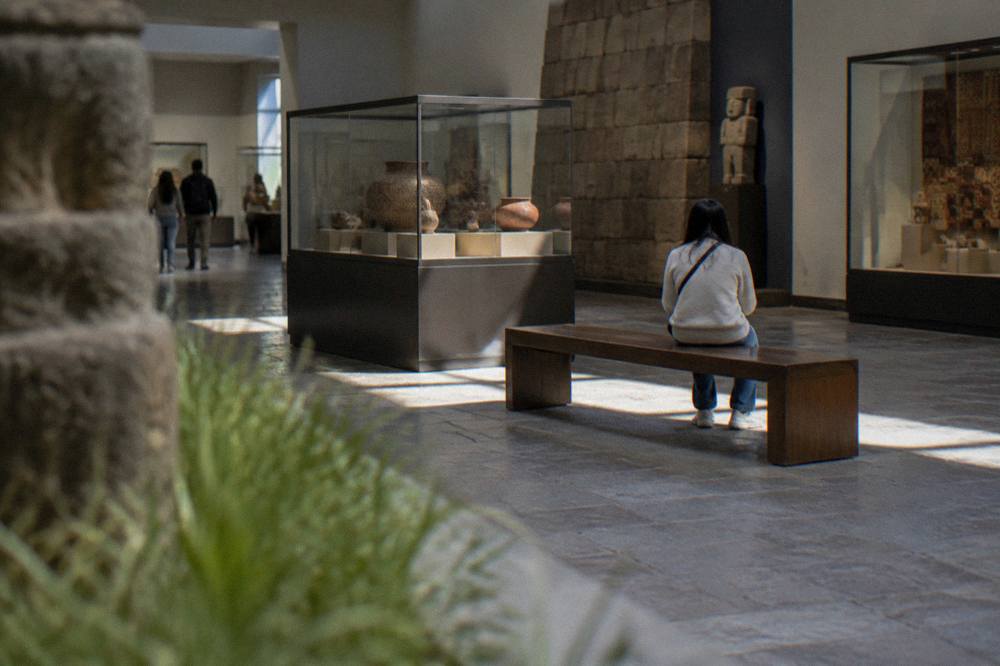
The Museo Inka works well independently, because it is a single indoor collection in the walkable centre with a simple S/ 20 entry, and no tour is needed to reach or understand it. A guided experience adds value elsewhere in the region, on the ruins circuits, the Sacred Valley and the high mountain day trips, and the verified products on this site's roster cover those, with the Textile Workshop Experience the closest cultural companion to the museum's textile displays.
The division of labour is worth being clear about. In the city, the free walking tours are the budget-friendly option: GuruWalk lists several Cusco walks that are free and tip based, including the Free Tour in Cusco with local guide, rated 4.87 from 1,275 reviews on its listing, and the YANA walking tour of the historic centre, rated 4.92 from 359 reviews. The Free Walking Tours Cusco guide compares them. A morning free walk for the streets, an independent museum visit at midday, and a paid day trip the following day is a common and sensible pattern.
For the paid side, the roster's verified products fit around the museum rather than replacing it. The Sacred Valley Full Day Tour covers Pisac, Ollantaytambo, Moray and the Maras salt mines, the circuit whose objects fill the museum's cases, and the Rainbow Mountain and Red Valley premium day trip reaches the about 5,000 m Vinicunca area, where the community entry fee runs S/ 25 to S/ 30 in cash for foreigners. Both are day trips out of the city; the museum is the in-city half of the same story.
A second option for the mountain day is the premium Rainbow Mountain and Red Valley trip, which the roster lists with meals included and early access for the Red Valley stretch. Its card carries the current price, rating and review count, and the community fee at the trailhead is paid in soles cash on top of any tour price. Between the textile workshop and the mountain day trips, the museum's static displays turn into something a visitor can either weave by hand or climb into.
Common Questions About The Museo Inka In Cusco
How much does the Museo Inka in Cusco cost?
Foreign adults pay S/ 20, about US$6, per peru.travel's museum listing. That is the only verified price for the museum; no student, child or combined rate is confirmed, so check on the day of a visit.
What are the Museo Inka's opening hours?
Per the peru.travel listing, the museum opens Monday to Friday 09:15 to 16:00 and Saturday 09:15 to 14:00. No Sunday hours are verified, and hours at small Cusco institutions change, so confirm before going.
Is the Museo Inka included in the Boleto Turistico?
The Boleto's 16-site list does not name the Museo Inka, so assume the S/ 20 entry is separate. The Boleto's Circuit II covers other city museums, including the Qorikancha site museum and the Museo Historico Regional.
How long does a visit to the Museo Inka take?
No sourced figure exists for a visit length, and none is printed here. As a practical frame, the museum is a single central collection with a 16:00 weekday close, so a morning slot with a flexible hour or two is a workable pattern.
Is the Museo Inka worth visiting if you have limited time in Cusco?
For travellers whose priority is Inca history, it is the museum that covers it, and its S/ 20 price is low against the Boleto's S/ 130. If time allows only one indoor stop alongside the ruins, the choice is between this collection and the MAP's pre-Columbian art, both listed at S/ 20.
Can you buy Museo Inka tickets in advance?
No advance-booking channel for the museum is verified in the sources behind this page, so this guide makes no claim about one. The verified picture is a walk-up entry at S/ 20 during the listed weekday and Saturday hours.
The Museo Inka is the indoor half of a Cusco trip: the place where the stones of Sacsayhuaman, the walls of Qorikancha and the terraces of the Sacred Valley turn into an explained story of the Inca world. With a verified S/ 20 entry, weekday hours from 09:15 to 16:00 and a position inside the walkable historic centre, it slots into almost any itinerary, wet season or dry. For the wider plan, the 3 Days In Cusco itinerary and the Cusco City Tour guide show where a museum morning fits between the ruins and the valley.