Sacred Valley Itinerary
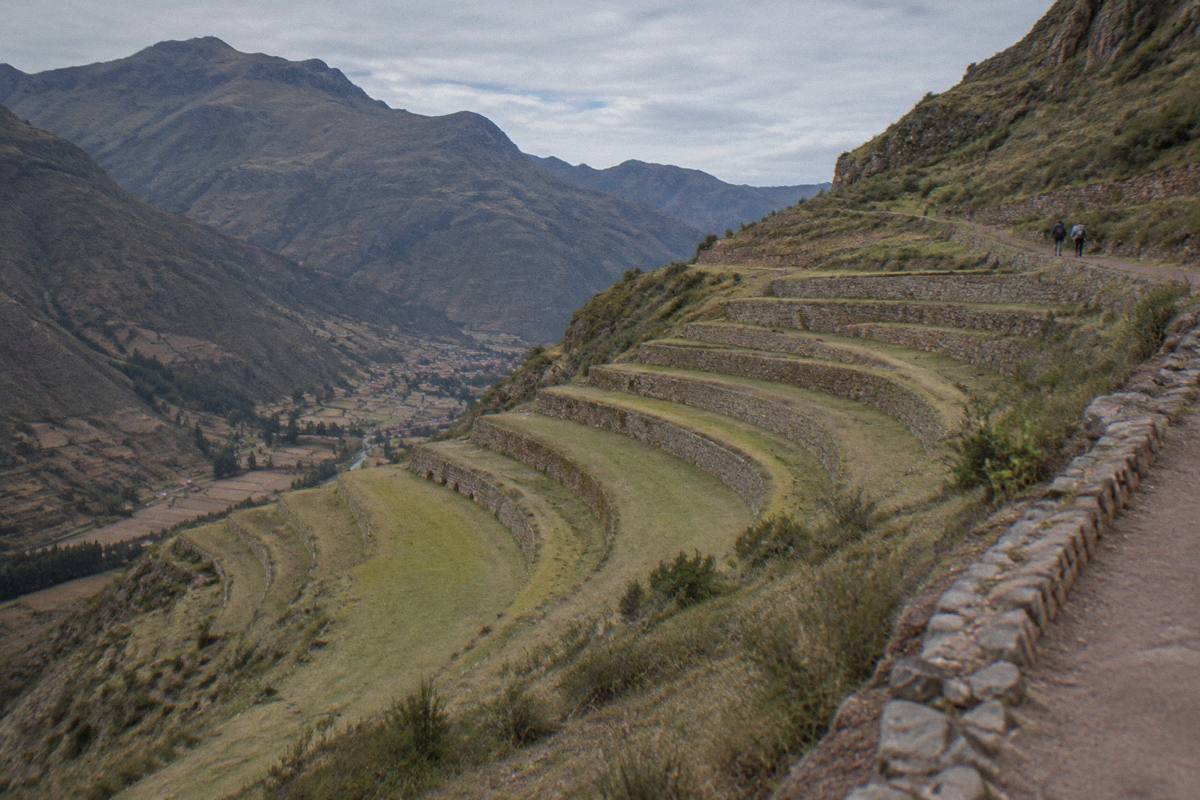
The Sacred Valley of the Incas sits below Cusco, and a two-day itinerary is the standard way to see Pisac, Moray, the Maras salt mines, Chinchero and Ollantaytambo without rushing.
Short answer
The best Sacred Valley itinerary from Cusco runs two days. Day one covers Pisac, Urubamba, Moray and the Maras salt mines. Day two covers Chinchero and Ollantaytambo, which is also the train hub for Machu Picchu.
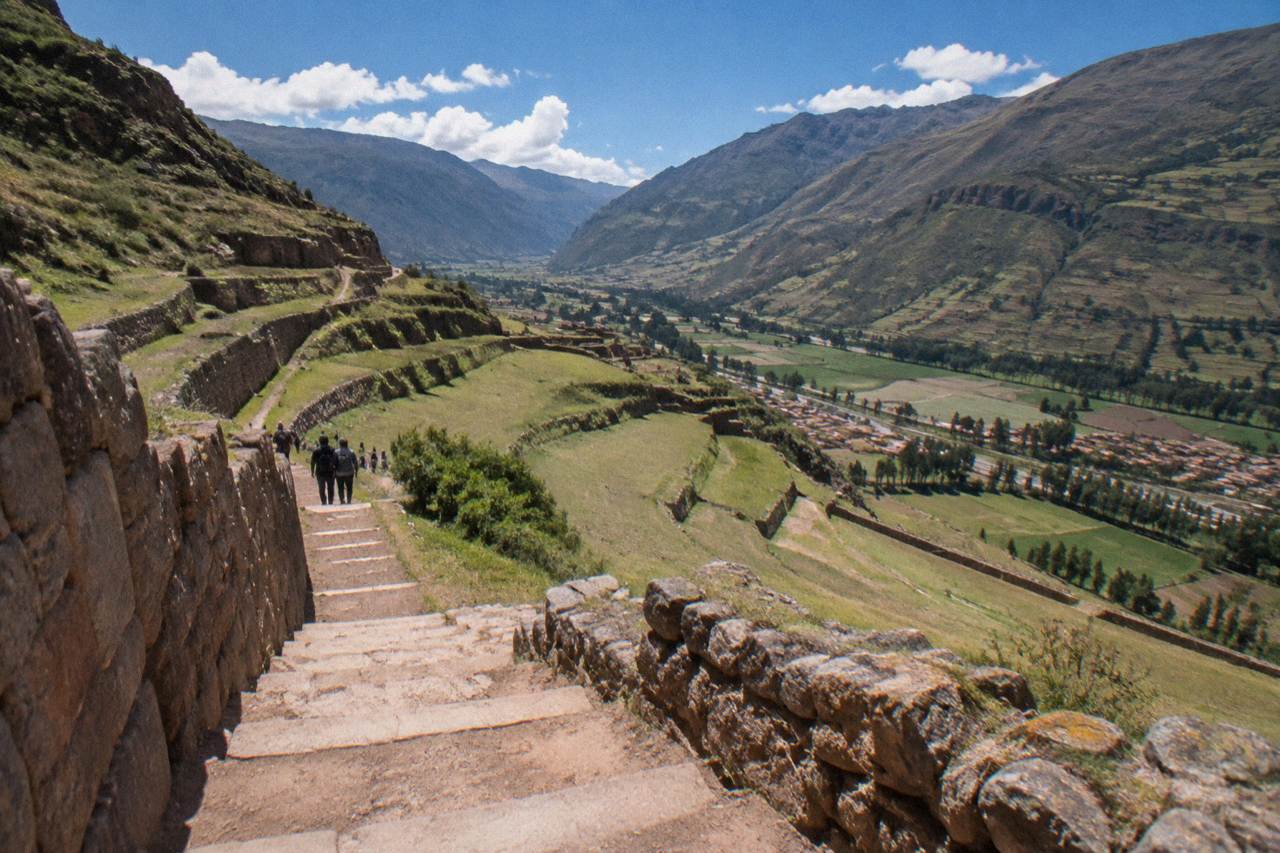
The Sacred Valley of the Incas spreads west and north of Cusco, the historic city in the Andes of southern Peru, and it runs lower than the city itself: Pisac town sits at 2,972 m, Urubamba at 2,870 m and Ollantaytambo at 2,792 m, against the 3,335 m of Cusco's Plaza de Armas. That elevation drop is not a footnote. It is the reason many itineraries put the valley before Machu Picchu rather than after arrival, and the reason the valley works well on the first or second day in the region. This page lays out a two-day Sacred Valley itinerary from Cusco, in an order that keeps driving sensible and altitude gentle, with the ticket, cost and transport facts that the official sources actually state.
What Is The Best Two-Day Sacred Valley Itinerary From Cusco?
The best two-day Sacred Valley itinerary from Cusco splits the valley along its own geography. Day one runs east to west through Pisac, Urubamba, Moray and the Maras salt mines. Day two covers Chinchero and Ollantaytambo, which leaves you at the valley's train hub with a lower sleeping altitude than Cusco and, if Machu Picchu follows, a shorter onward journey.
The order matters more than the clock. Pisac, Urubamba and Moray sit along the valley's northern side; the salt mines of Maras sit above the valley near the town of Maras at 3,300 m; Chinchero and Ollantaytambo sit on the western side, with Ollantaytambo at 2,792 m the lowest town in this set. Doing Pisac first and Ollantaytambo last means the drive never doubles back on itself, and finishing at Ollantaytambo puts you beside the station where the train to Machu Picchu runs, a journey of about 1 h 45 according to PeruRail's own FAQ.
Timings vary with traffic, road works and how long you spend at each site, so this itinerary is built around what to see in a sensible order rather than a stop-by-stop schedule. The Boleto Turistico's own FAQ says covering all 16 of its sites needs a minimum of three days, and the valley's share of those sites, Pisac, Ollantaytambo, Chinchero and Moray, is realistic across two relaxed days. The Maras salt mines are not on the boleto at all: operators report an entry fee of about S/ 15 to S/ 20, paid in cash, and that figure is a reported range rather than an official tariff.
Day one, in order:
| Stop | Elevation | Ticket |
|---|---|---|
| Pisac terraces and town | 2,972 m | Boleto Circuit III |
| Urubamba (lunch stop) | 2,870 m | None |
| Moray circular terraces | 3,385 m | Boleto Circuit III |
| Maras salt mines | 3,300 m | Not on the boleto, about S/ 15 to S/ 20 |
Day two, in order:
| Stop | Elevation | Ticket |
|---|---|---|
| Chinchero | On the boleto Circuit III | Boleto Circuit III |
| Ollantaytambo fortress and town | 2,792 m | Boleto Circuit III |
| Ollantaytambo station (if Machu Picchu follows) | 2,792 m | Train ticket, separate |
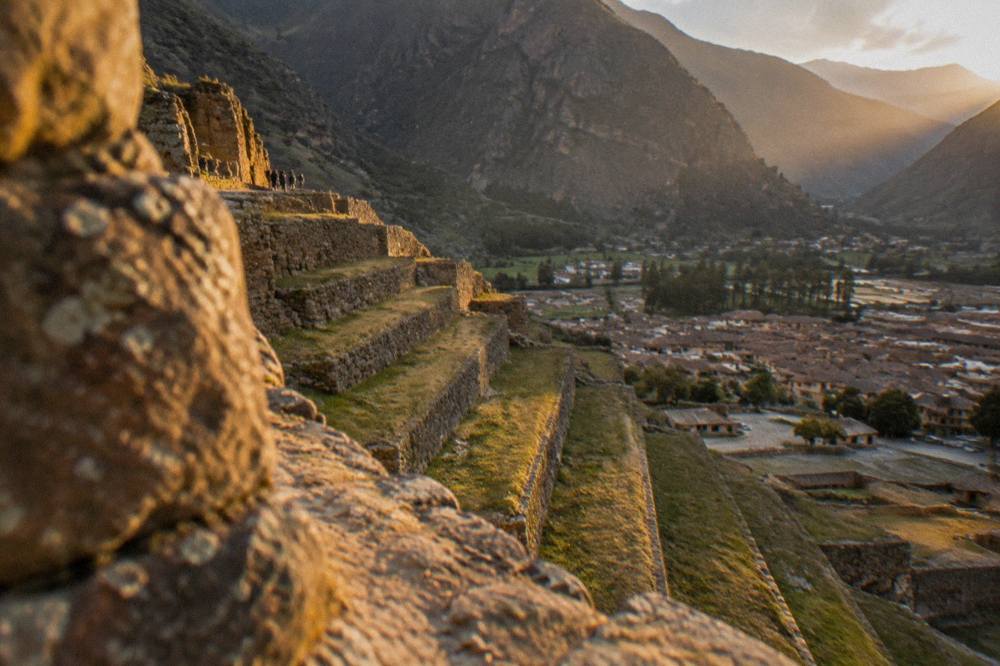
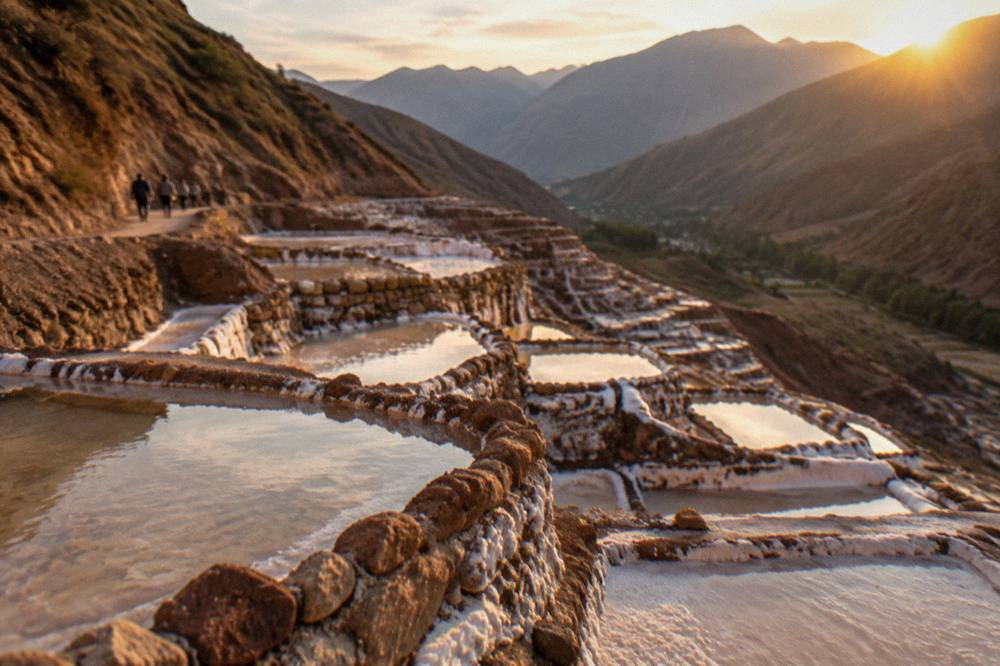
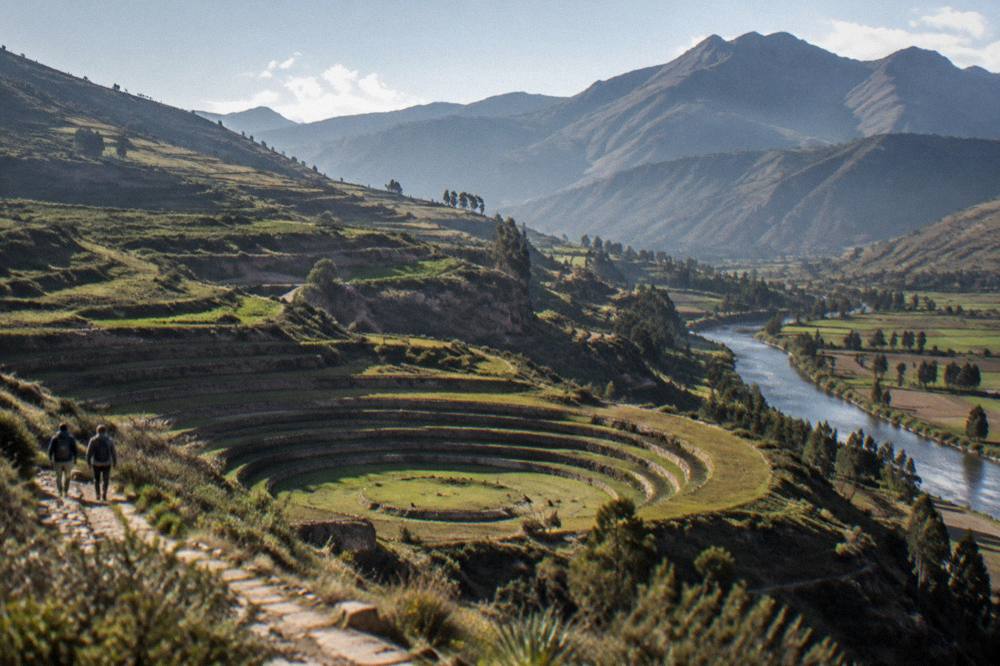
Moray deserves the slowest look of the day. The circular terraces descend below the surrounding ground level, and the site sits at 3,385 m, essentially the same altitude as Cusco, so it is not the place to sprint. The Maras salt mines sit a short drive away above the valley: evaporation pans have been worked there for salt, and the pans cascade down a hillside in a way that photographs better in afternoon light, which is one more argument for the east-to-west order.
How Many Days Do You Need For The Sacred Valley From Cusco?
Two days is the standard answer for the Sacred Valley from Cusco, and one day is the compressed version that most guided tours use. One day covers the headline sites, Pisac or Chinchero, Moray, the Maras salt mines and Ollantaytambo, at a brisk pace. Two days let you add the towns themselves, eat in Urubamba, and finish at Ollantaytambo without a pre-dawn start.
The one-day version exists and works: it is what the big group tours run, and the Sacred Valley day trip page covers it in detail. But a single day compresses five stops into one road loop, and the sites that suffer are the towns. Ollantaytambo in particular rewards time: its Inca stone foundations and street grid survive in the old quarter, and the fortress terraces above the station are the valley's most imposing single structure.
Two days also change the altitude arithmetic. The CDC Yellow Book prefers a graded ascent and names Cusco as a rapid-ascent destination, and its practical note for Cusco travellers is that they can descend to lower elevations to sleep. Urubamba at 2,870 m and Ollantaytambo at 2,792 m are both lower than Cusco, so sleeping in the valley on night one is a legitimate acclimatisation move, not just a convenience. The acclimatisation day itinerary covers the Cusco side of that first day.
For trips that combine the valley with Machu Picchu, the sequencing question has its own answer on Sacred Valley or Machu Picchu first, and the wider Cusco and Machu Picchu itinerary shows how the two-day valley block slots into a fuller week.
What Does The Boleto Turistico Cover In The Sacred Valley?
The Boleto Turistico covers four Sacred Valley sites on its Circuit III: Pisac, Ollantaytambo, Chinchero and Moray. The partial Circuit III ticket costs S/ 70, about US$20, and is valid 1 to 2 days per the COSITUC tarifario. The integral ticket at S/ 130, about US$38, is valid 10 days and adds the city and Saqsayhuaman circuits. The Maras salt mines and Machu Picchu are not on any boleto.
COSITUC, the committee that runs the ticket, sells it in person only: at the counter on Av. El Sol 103 in Cusco, open daily 07:30 to 18:00, and at most included sites. There is no online sale. Children are free to age 9, ages 10 to 17 pay the student price with ID, and the only discount category is students; the FAQ states plainly that there is no teacher or youth-card discount. Validity starts the day you buy it.
The choice between the S/ 70 partial and the S/ 130 integral is a maths question about the rest of the trip. If the itinerary includes Saqsayhuaman, Q'enqo, Puka Pukara and Tambomachay on Circuit I, or the Qorikancha site museum and the city museums on Circuit II, the integral ticket pays for itself quickly. If the trip is valley-only, the partial does the job. The full ticket structure:
| Ticket | Price (foreign adult) | Validity | Sites |
|---|---|---|---|
| Integral (BTCI) | S/ 130 | 10 days | All 16 |
| Partial Circuit I (Saqsayhuaman) | S/ 70 | 1 day | Saqsayhuaman, Q'enqo, Puka Pukara, Tambomachay |
| Partial Circuit II (City) | S/ 70 | 2 days | Qorikancha site museum, city museums, Tipon, Pikillaqta |
| Partial Circuit III (Sacred Valley) | S/ 70 | 2 days | Pisac, Ollantaytambo, Chinchero, Moray |
One trap catches readers of older guides: Circuit III does not cover Machu Picchu, and never has. Machu Picchu has its own nominal timed ticket sold through the Ministry of Culture's platform or in person at Machu Picchu Pueblo, and the site's own page at Machu Picchu covers those rules. Foreign adults pay from about S/ 163 for standard routes there, a secondary figure, and the official platform shows the live price.
Where Should You Stay During A Sacred Valley Itinerary?
Urubamba and Ollantaytambo are the two towns most often used as Sacred Valley bases, at 2,870 m and 2,792 m respectively, both lower than Cusco at 3,335 m. Ollantaytambo suits travellers continuing to Machu Picchu by train, since the station is in the town. Urubamba sits closer to the middle of the valley and pairs well with Moray and Maras. Pisac, at 2,972 m, is the third option.
The base question has a full treatment on Where To Stay In The Sacred Valley, and the Cusco-versus-valley question is answered on Stay in Cusco or Sacred Valley. The short version for a two-day itinerary: if day two ends at Ollantaytambo and Machu Picchu follows, staying in Ollantaytambo the night before saves the Cusco-to-valley leg entirely, and the train from Ollantaytambo to Machu Picchu takes about 1 h 45 per PeruRail's FAQ.
If the trip returns to Cusco instead, either town works for a single valley night. Chinchero is on the boleto but is a smaller stop than the other three, better visited en route than slept in. More of these guides are collected on Things To Do In Cusco Peru.
| Valley base | Elevation | Best for |
|---|---|---|
| Ollantaytambo | 2,792 m | Train to Machu Picchu, Inca old town |
| Urubamba | 2,870 m | Central base, food, Moray and Maras |
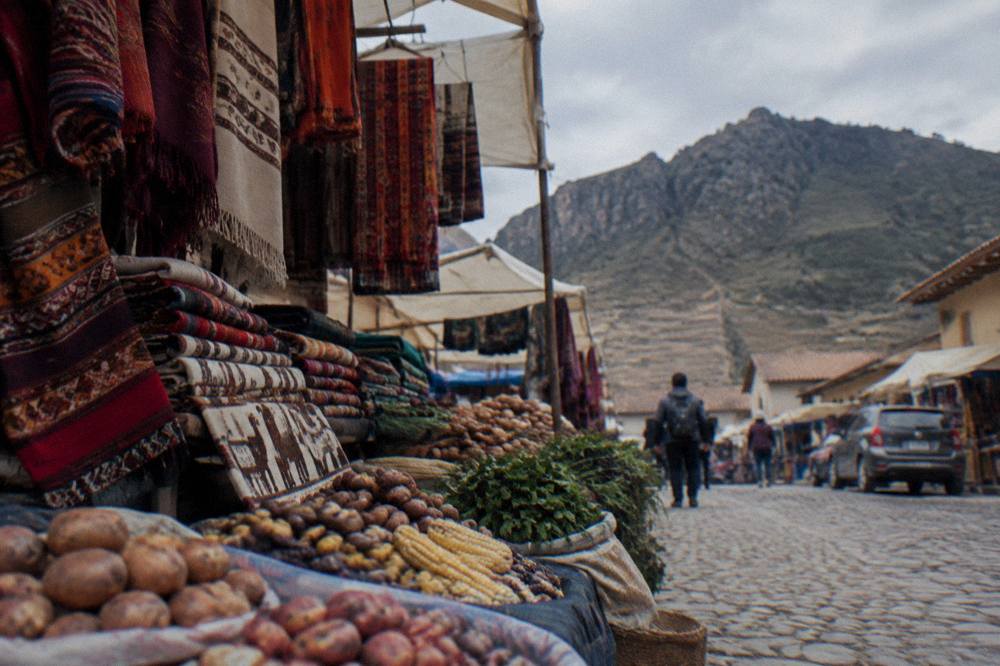
| Pisac | 2,972 m | Market town, eastern valley, craft shops |
- Tunupa Lodge HotelhotelCheck rates
When Is The Best Time Of Year For A Sacred Valley Itinerary?
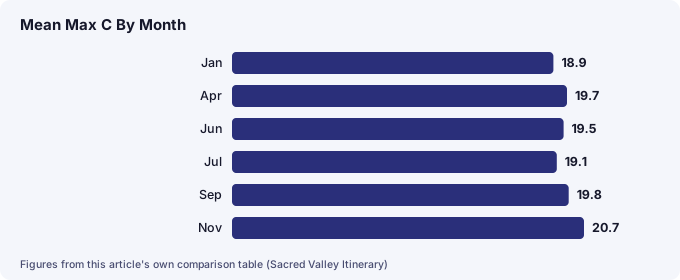
The dry season, roughly May to September, is the most reliable window for a Sacred Valley itinerary from Cusco. At the WMO and SENAMHI Cuzco station's historical normals, December to March delivers 71.9 percent of the year's 707.8 mm of rain, while May to August together bring just 22.8 mm. Mean daily maxima stay between 18.8 and 20.9 C all year, so the choice is about rain, not warmth.
This is the Southern Hemisphere, so June to August is winter: dry, clear days and cold nights, with frost common in June and July per SENAMHI. The valley towns sit lower than Cusco, but Moray at 3,385 m is not, and a wet-season day can turn a dirt-side road muddy and a viewpoint grey. The monthly picture from the station record:
| Month | Mean max C | Mean min C | Rain mm |
|---|---|---|---|
| Jan | 18.9 | 6.6 | 145.3 |
| Apr | 19.7 | 4.9 | 43.2 |
| Jun | 19.5 | 0.3 | 1.5 |
| Jul | 19.1 | 0.1 | 4.0 |
| Sep | 19.8 | 3.9 | 21.8 |
| Nov | 20.7 | 6.1 | 71.9 |
Crowds follow the dry season. The MINCETUR open dataset counted 891,526 visits to the Ollantaytambo archaeological park and 773,916 to Moray across the Cusco region's sites in 2025, and at Machu Picchu, October 2025 drew 1.93 times the visitors of February. The same dataset shows the valley busy in the shoulder months too, which is the trade: May and September carry much of the dry season's reliability with fewer peak-week crowds. The month-by-month breakdown lives on Cusco weather by month, and the fuller timing argument on the best time to visit Cusco.
Can You Do The Sacred Valley Without A Tour?
Yes, the Sacred Valley can be done without a tour, by a mix of colectivo, taxi and the boleto, and the two-day format is the friendliest version for it. The trade is logistics: the sites are spread along a valley, public transport runs between the towns rather than to the archaeological entrances, and the Maras salt mines carry a separate cash fee that no boleto covers.
The independent version is laid out on Sacred Valley without a tour, and the compressed single-day question on Sacred Valley in one day. The honest comparison is that the valley is harder to self-drive than Cusco's city centre: the sites sit above and beside the towns, so each stop involves a climb or a short extra ride from the plaza. Reported colectivo fares exist for Pisac and Ollantaytambo, but the pack holds them only as reported ranges, so check the fare before the ride.
A guided day is the middle path. The featured Sacred Valley full-day tour on this site, with its price and rating on the operator's live listing, handles transport and the site order in one booking: Check availability. For a two-day itinerary that folds Machu Picchu in after the valley, the guided options include a two-day Sacred Valley plus Machu Picchu combination, and for a day with adrenaline in it, a rafting and zip-line day on the Urubamba river sits between the valley towns.
How Much Does A Two-Day Sacred Valley Itinerary Cost?
The fixed, official costs of a two-day Sacred Valley itinerary are the Boleto Turistico at S/ 70 for the Circuit III partial, about US$20, or S/ 130 for the integral, about US$38, plus the Maras salt mines at a reported S/ 15 to S/ 20 in cash. Everything beyond that, transport, food and a bed, is either a reported on-the-ground range or a product price shown on the operator's live listing.
The boleto is the one fixed line, and it is sold in person only, so budget a stop at the Av. El Sol counter or a site kiosk. On the ground, the pack's reported ranges for the valley region are modest: a menu del dia runs about S/ 8 to 15 and a cup of coca tea about S/ 2 to 5, both reported ranges rather than tariffs. The Cusco costs guide holds the fuller budget picture.
The cost comparison that matters for planning:
| Item | Cost | Source |
|---|---|---|
| Boleto Circuit III partial | S/ 70 | COSITUC tarifario |
| Boleto integral | S/ 130 | COSITUC tarifario |
| Boleto foreign student integral | S/ 70 | COSITUC FAQ |
| Maras salt mines | about S/ 15 to S/ 20 | Operator reports, 2026 |
| Children under 10 | Free on the boleto | COSITUC FAQ |
Guided products change the arithmetic: a full-day Sacred Valley tour and the two-day combinations print their own prices on their listings, and this site never types a product figure into prose. What the official lines above show is the floor: two people sharing transport can see all four boleto sites plus the salt mines for the boleto, the salt fee and the cost of moving between towns.
Is The Sacred Valley Worth Two Days Of A Cusco Trip?
Yes, the Sacred Valley is worth two days of a Cusco trip, and the visitor counts back the judgement: the MINCETUR dataset recorded 891,526 visits to the Ollantaytambo park, 773,916 to Moray and 560,578 to Pisac in 2025, numbers that put the valley's sites among the most visited in the Cusco region. Two days also buy a lower sleeping altitude and a natural staging point for Machu Picchu.
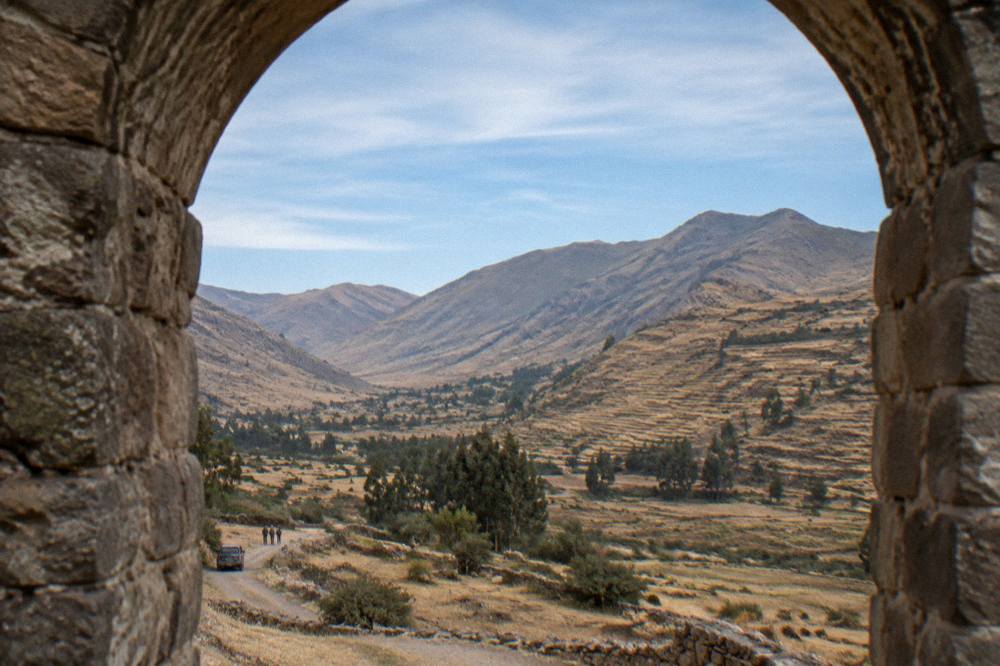
The fuller argument sits on Is the Sacred Valley worth visiting. The itinerary case is simpler: the valley holds four of the boleto's 16 sites plus the salt mines, it sits lower than Cusco, and its western end is the train hub for the region's biggest draw. A trip that skips the valley to save a day loses the terraces at Moray, the pans at Maras and the old town at Ollantaytambo, and it buys back only one day.
For longer trips, the valley block scales: the three-day, four-day and five-day Cusco itineraries all place it in the same slot, after a light arrival day and before Machu Picchu. The one-day Cusco itinerary is the version that has to choose, and it usually chooses the valley over extra city hours.
Common Questions About The Sacred Valley Itinerary
Can you do the Sacred Valley in one day from Cusco?
Yes. The one-day version covers Pisac or Chinchero, Moray, the Maras salt mines and Ollantaytambo in a single loop, and it is the format the group tours run. Two days are more comfortable and let you finish at Ollantaytambo, the train hub for Machu Picchu.
Is the Sacred Valley lower than Cusco?
Yes. The valley towns sit below Cusco: Pisac at 2,972 m, Urubamba at 2,870 m and Ollantaytambo at 2,792 m, against 3,335 m at Cusco's Plaza de Armas. Moray, at 3,385 m, is the exception and sits slightly above the city.
Does the Boleto Turistico cover the Maras salt mines?
No. The boleto's Circuit III covers Pisac, Ollantaytambo, Chinchero and Moray only. The salt mines charge a separate entry, reported at about S/ 15 to S/ 20 in cash.
Should you visit the Sacred Valley before or after Machu Picchu?
Before, in most itineraries. The valley sleeps lower than Cusco, which helps acclimatisation, and Ollantaytambo is the train hub for Machu Picchu, about 1 h 45 away by train. Ending day two there shortens the onward journey.
Can you buy the Boleto Turistico online?
No. COSITUC sells it in person only, at the counter on Av. El Sol 103 in Cusco, open daily 07:30 to 18:00, and at most included sites. The integral ticket costs S/ 130 for a foreign adult and is valid 10 days.
What is the wettest month for the Sacred Valley?
January, at 145.3 mm of rain in the WMO and SENAMHI Cuzco station's historical normals. December to March together carry 71.9 percent of the year's 707.8 mm, which is why the dry season, roughly May to September, is the reliable window.
The two-day Sacred Valley itinerary from Cusco is, in the end, a sequence with a logic: east to west, high terraces to low town, valley town to train station. Follow that order, buy the boleto in person, keep the cash for Maras, and the valley does the rest.