Is Sacred Valley, Peru Worth Visiting?
A sourced answer to whether the Sacred Valley near Cusco is worth visiting, covering elevations, entry costs, the Boleto Turistico and who the valley suits.
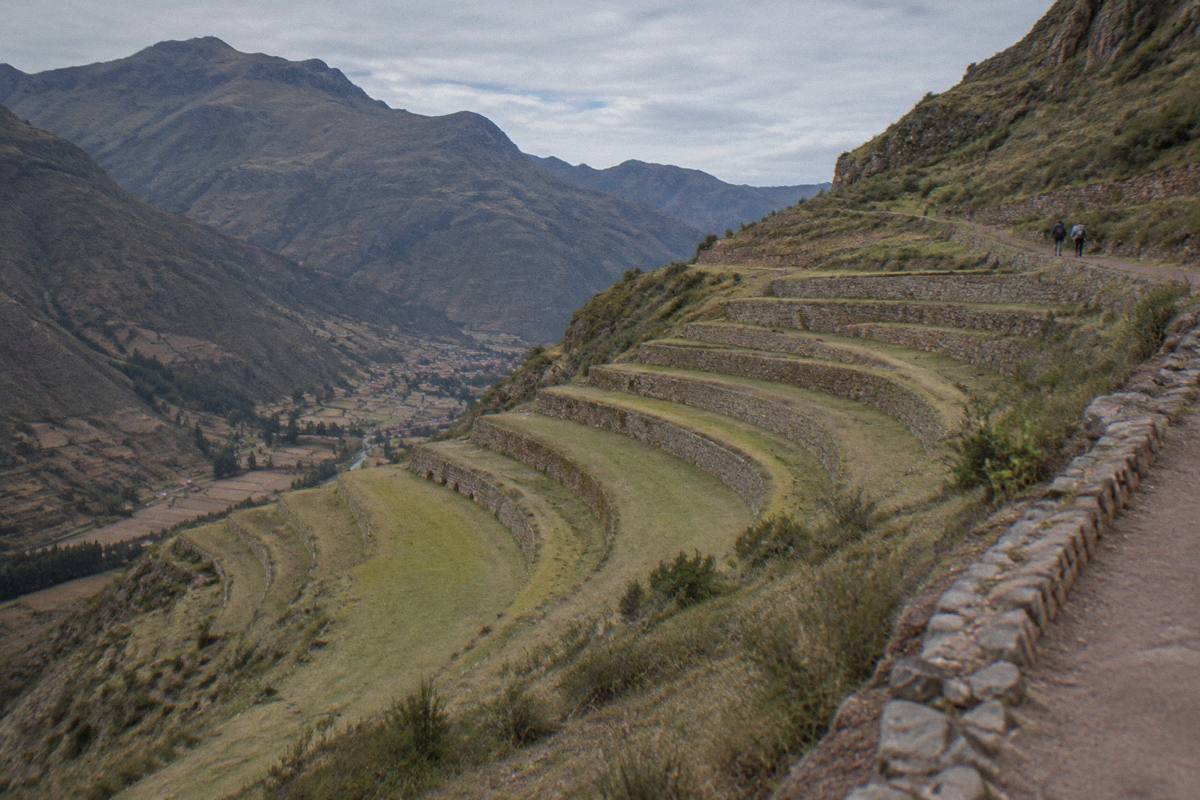
The Sacred Valley is the stretch of Andean towns and terraces that runs down from Cusco, the historic city in the Andes of southern Peru that sits at 3,335 m on its Plaza de Armas. The question every planner asks is whether the valley deserves days taken from Cusco itself or from Machu Picchu. The short answer from the numbers: the valley sits lower and therefore sleeps easier, its four Boleto Turistico sites drew a combined 2.5 million recorded visits in 2025, and its entry costs are a fraction of a Machu Picchu day. This page weighs the sourced facts, and names who should skip it.
Is Sacred Valley, Peru Worth Visiting?
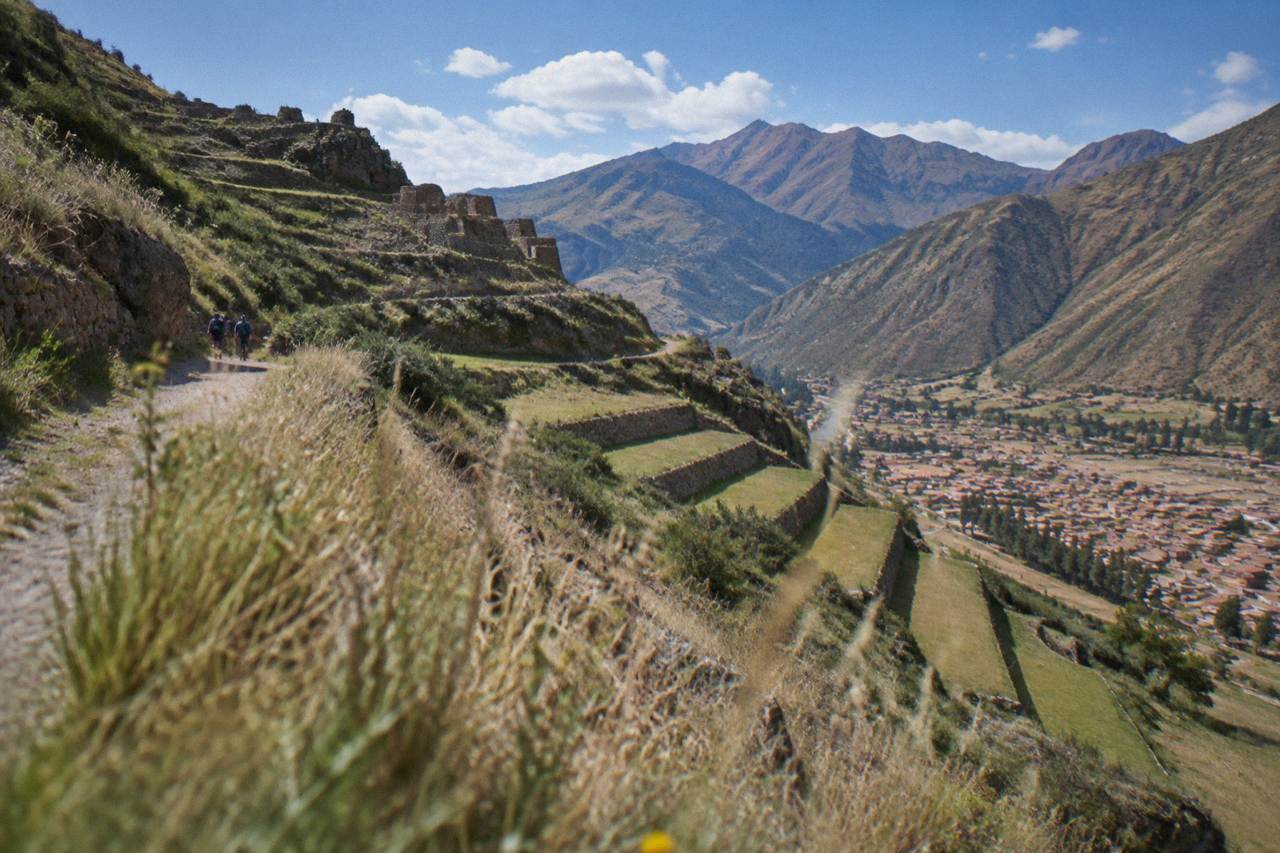
Yes, for most itineraries it is, and the sources support that plainly: the valley's main towns sit 400 to 500 m lower than Cusco, which the CDC's graded-ascent guidance treats as helpful for sleeping, its sites carry a combined 2.5 million recorded visits in 2025 per the MINCETUR dataset, and a partial Boleto Turistico at S/ 70, about US$20, covers Pisac, Ollantaytambo, Chinchero and Moray. It is not a substitute for Machu Picchu, but it is a cheaper, lower, less crowded complement.
The visitor counts are the clearest evidence that the valley is not a niche detour. The MINCETUR open dataset, which counts entries rather than unique travellers, records 891,526 visits to the Ollantaytambo archaeological park and 773,916 to Moray in 2025, plus 560,578 at Pisac. Those are working-day numbers spread across the year, and they place the valley's individual sites in the same weight class as Cusco's own Saqsaywaman esplanade, at 944,008 visits.
The altitude argument matters just as much. Cusco's Plaza de Armas sits at 3,335 m, and the CDC Yellow Book names Cusco as a rapid-ascent destination where rates of altitude illness approach 50 percent in abrupt-ascent situations. The valley towns sit lower: Pisac at 2,972 m, Urubamba at 2,870 m and Ollantaytambo at 2,792 m. The CDC specifically notes that travellers at destinations like Cusco can descend to lower elevations to sleep for the first nights, and the valley is the obvious place to do that. For a fuller treatment of that trade-off, see staying in Cusco or the Sacred Valley.
What Does The Sacred Valley Actually Offer Near Cusco?
The valley offers four Boleto Turistico archaeological sites, the Maras salt mines, a living Inca-period town plan at Ollantaytambo, and the Ollantaytambo rail connection toward Machu Picchu, which PeruRail's own FAQ gives as about 1 h 45 by train. It is a mix of ruins, markets, salt pans and working towns rather than one single monument, and that mix is why it fills one or two days easily.
COSITUC, the body that runs the Boleto Turistico, lists 16 sites across three partial circuits, and Circuit III is the Sacred Valley: Pisac, Ollantaytambo, Chinchero and Moray. The integral ticket at S/ 130 covers all 16 sites for 10 days, while the Circuit III partial at S/ 70 covers the four valley sites and is valid for 2 days. Children are free to age 9, and the ticket is sold in person only, at the counter on Av. El Sol 103 in Cusco or at most included sites, never online.
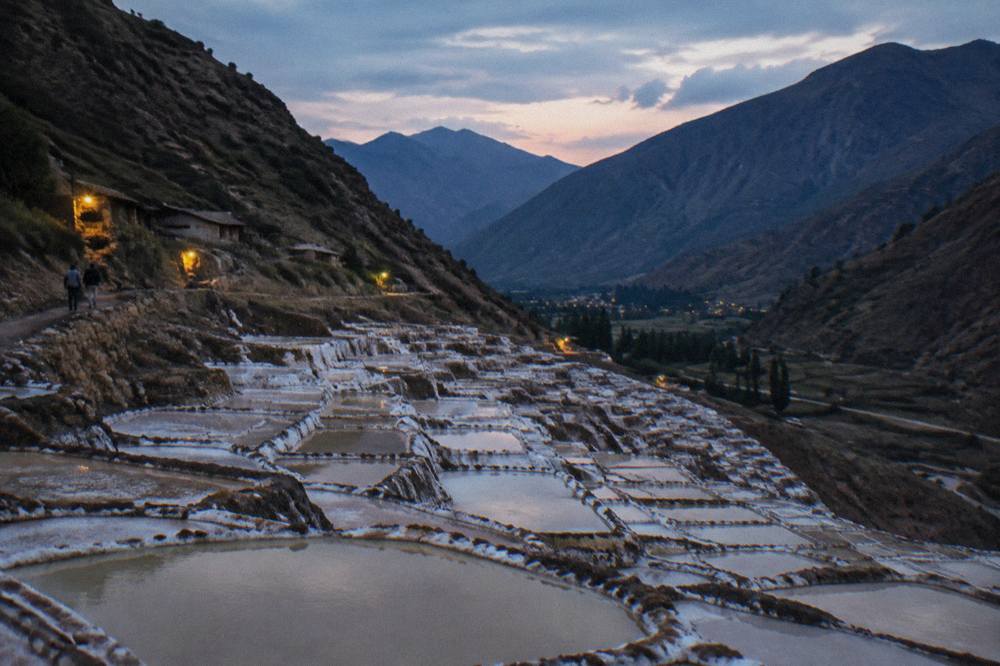
The Maras salt mines are the notable exception: they are not on the Boleto, and operators in 2026 report an entry fee of about S/ 15 to S/ 20, paid in cash. Moray, by contrast, is on the Boleto, so the classic pairing of the two costs one partial ticket plus the salt-mine fee. A new 8 km asphalt road between Maras and Moray was handed over in late December 2025, which operators report has made that pairing smoother, though the pack holds no driving times and none are stated here.
Ollantaytambo does double duty. Its archaeological park is a Boleto site, and its station is the rail hub toward Machu Picchu, with PeruRail's FAQ giving about 1 h 45 for the train journey. Many travellers therefore fold the valley into a Machu Picchu itinerary rather than treating it as a separate outing, a sequencing question covered in Sacred Valley or Machu Picchu first.
How Much Does The Sacred Valley Cost To Visit From Cusco?
The core cost is the Boleto Turistico: S/ 130 for the 10-day integral covering all 16 Cusco-region sites, or S/ 70, about US$20, for the 2-day Sacred Valley partial covering Pisac, Ollantaytambo, Chinchero and Moray. Add about S/ 15 to S/ 20 cash for the Maras salt mines if included, plus transport, which the pack does not price for valley routes.
| Item | Price | Source basis |
|---|---|---|
| Boleto integral, foreign adult, 10 days, 16 sites | S/ 130 (about US$38) | COSITUC tarifario |
| Boleto Circuit III partial, 2 days, 4 valley sites | S/ 70 (about US$20) | COSITUC tarifario |
| Boleto integral, foreign student | S/ 70 | COSITUC FAQ |
| Children | Free to age 9 | COSITUC FAQ |
| Maras salt mines entry | S/ 15 to S/ 20, cash | 2026 operator reports |
| Ollantaytambo to Machu Picchu train | about 1 h 45 | PeruRail FAQ |
Two warnings sit inside that table. First, the Boleto does not cover Machu Picchu at all: that ticket sells separately on the Ministry of Culture platform, from about S/ 163 for foreign adults on standard routes including the S/ 11 SERNANP fee in force since 1 May 2026. Second, the salt mines fee is a community charge, and the sources disagree slightly on the exact figure, so it is written here only as the reported range.
Whether a guided day makes sense depends on how much of the logistics you want handled. The site's featured option is the Sacred Valley Full Day Tour, which covers the valley's major sites from Cusco with transport and guiding included; its price and current rating render on the operator's live listing. Doing the valley independently is entirely possible, a route walked through in Sacred Valley without a tour, and the one-day version is planned in Sacred Valley in one day.
Is The Sacred Valley Better Than Staying In Cusco Itself?
For sleeping, the sources favour the valley: its towns sit 400 to 500 m below Cusco's 3,335 m, and the CDC advises descending to lower elevations to sleep for the first nights after a rapid ascent to a destination like Cusco. For everything else, Cusco holds the restaurants, the museums and the 16-site Boleto's city circuit, so the honest answer is a split rather than a winner.
The altitude logic is the valley's strongest card. The CDC's ascent rule is to avoid going from low altitude to a sleeping altitude of 2,750 m or more in a single day, and once above 3,000 m, to move sleeping altitude by no more than 500 m per night. Cusco's airport at 3,310 m breaks that rule on arrival day for anyone flying in, and the CDC's own text points out that at Cusco travellers can descend to sleep lower for a night or two, which may remove the need for medication. Urubamba at 2,870 m and Ollantaytambo at 2,792 m are exactly that lower sleep. The acclimatisation question is covered in depth at how long to acclimate.
What Cusco keeps is weight of its own. The city's UNESCO inscription dates to 1983, the same year as Machu Picchu's, and the Boleto's Circuit II covers ten city sites including the Qorikancha site museum and the regional history museum. The weather argument, often raised in favour of the valley, is thinner than people assume: Cusco's mean daily maximum stays between 18.8 and 20.9 C all year, and the valley shares the same wet-and-dry rhythm, with December to March carrying 71.9 percent of the year's 707.8 mm of rain at the WMO station record. Nobody escapes the wet season by dropping 400 m.
For travellers who want both, the practical split is covered at Sacred Valley over two days and, for the base-town question, at staying in Cusco or Ollantaytambo.
Who Should Skip The Sacred Valley?
Travellers on a tight two-night Cusco stop who are going straight to Machu Picchu can skip it honestly: the valley's sites are complements to, not prerequisites for, the citadel, and the Boleto partial is only worth buying if the four sites actually get visited. Anyone with four or more days in the region, or anyone bothered by Cusco's sleeping altitude, should not skip it, because the CDC's descent advice and the valley's own visitor numbers both argue for including it.
The skip case is real. A traveller flying into Cusco with a Machu Picchu ticket already bought can ride the train from Ollantaytambo, see the citadel, and leave without ever buying a Boleto, since Machu Picchu is not on it. The valley's sites are individually smaller than the citadel, and the weather risk in the wet season, when over 70 percent of the year's rain falls, applies to the valley terraces as much as to any viewpoint.
The include case is stronger for everyone else. The valley gives the region's only lower-altitude sleeping option within a short transfer of Cusco, four Boleto sites that a 2-day partial makes unhurried, and the salt mines, which are visually unlike anything else in the region. For families, the question is worked through at things to do in Cusco with kids, and for the budget view, at free things to do in Cusco.
Common Questions About The Sacred Valley
Is Sacred Valley, Peru worth visiting?
For most itineraries, yes. The valley's towns sit lower than Cusco, its four Boleto Turistico sites drew a combined 2.5 million recorded visits in 2025, and a 2-day partial ticket at S/ 70 covers Pisac, Ollantaytambo, Chinchero and Moray. It complements rather than replaces Machu Picchu.
Does the Boleto Turistico cover the Sacred Valley?
Yes, partially. Circuit III of the Boleto Turistico covers Pisac, Ollantaytambo, Chinchero and Moray, at S/ 70 for a 2-day partial ticket or S/ 130 for the 10-day integral covering all 16 sites. It does not cover the Maras salt mines or Machu Picchu.
Is the Sacred Valley lower than Cusco?
Yes. Cusco's Plaza de Armas sits at 3,335 m, while Pisac is at 2,972 m, Urubamba at 2,870 m and Ollantaytambo at 2,792 m. The CDC notes travellers at rapid-ascent destinations like Cusco can sleep at lower elevations for the first nights, which the valley allows.
Can you see the Sacred Valley and Machu Picchu on the same trip?
Yes, and many travellers do, often using Ollantaytambo as the rail hub, with PeruRail's FAQ giving about 1 h 45 for the train toward Machu Picchu. The sequencing question is covered separately on this site.
How many days does the Sacred Valley need?
The Boleto's own FAQ notes that covering all 16 of its sites needs a minimum of three days, but the valley's four Circuit III sites fit comfortably in one full day on a 2-day partial ticket, with a second day easing the pace.
The verdict, on the sources: the Sacred Valley earns its place on almost any Cusco-region itinerary, and the only travellers who should pass are those with no spare day at all. More planning help lives at Things To Do In Cusco Peru.