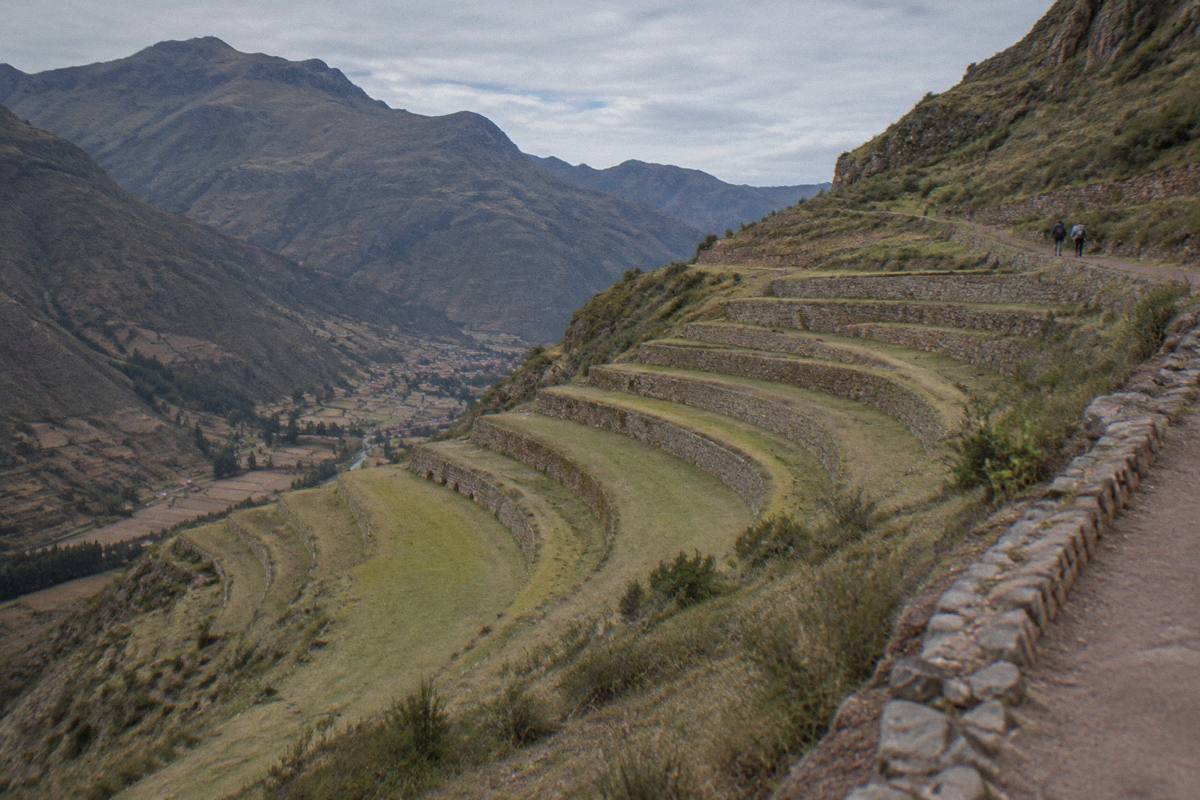
Can You Do The Sacred Valley Without A Tour?
Yes, the Sacred Valley from Cusco can be visited independently: what the Boleto Turistico covers, which sites sit on it, and when a tour still makes sense.
The Sacred Valley sits below Cusco, the historic Andean city in southern Peru, and it is one of the few major sightseeing circuits in the country that a visitor can genuinely manage alone. The towns sit lower than the city: Pisac at 2,972 m, Urubamba at 2,870 m and Ollantaytambo at 2,792 m, all below Cusco's Plaza de Armas at 3,335 m. The four headline archaeological sites, Pisac, Ollantaytambo, Chinchero and Moray, all sit on the Boleto Turistico's Circuit III, a ticket bought in person at a counter in Cusco. What an independent visit trades away is convenience, not access.
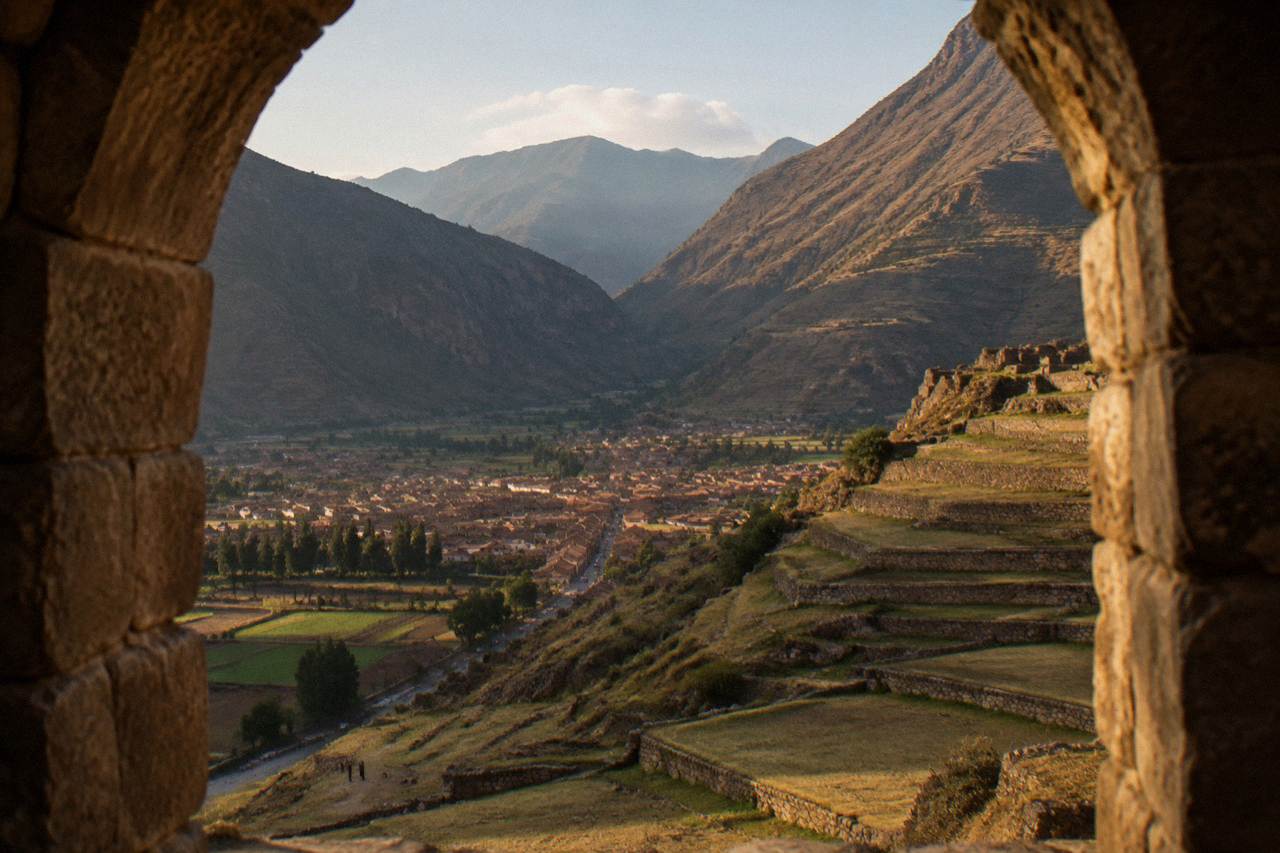
Can You Do The Sacred Valley Without A Tour?
Yes. The Sacred Valley can be visited from Cusco without a tour: the four main archaeological sites sit on the Boleto Turistico Circuit III, a S/ 70 partial ticket (about US$20) that COSITUC sells in person at its Av. El Sol 103 counter in Cusco, and the valley towns are reached by local transport. A tour buys coordination and a guide, not entry the independent visitor is denied.
COSITUC's own tarifario sets the prices. The integral Boleto Turistico costs S/ 130 for a foreign adult and is valid for 10 days; the partial tickets cost S/ 70 each, with the Sacred Valley Circuit III valid for 2 days. There is no online sale: the FAQ states the ticket is bought in person at the central counter on Av. El Sol 103, open daily 07:30 to 18:00, or at most included sites. That in-person requirement is the single biggest planning difference between the valley and Machu Picchu, whose tickets sell on the Ministry of Culture's online platform.
The valley's sites are also, unusually, clustered. Circuit III covers exactly four: Pisac, Ollantaytambo, Chinchero and Moray. The Maras salt mines sit beside Moray but are a separate community-charged site, reported at about S/ 15 to 20 for foreigners, and Machu Picchu is not on the Boleto at all. An independent day therefore needs the ticket, cash for the salt mines, and a plan for moving between towns. The site's Sacred Valley day trip guide lays out the full circuit.
| Boleto Turistico ticket | Price (foreign adult) | Validity | Sites covered |
|---|---|---|---|
| Integral (BTCI) | S/ 130 (about US$38) | 10 days | All 16 COSITUC sites |
| Partial Circuit III (Sacred Valley) | S/ 70 (about US$20) | 2 days | Pisac, Ollantaytambo, Chinchero, Moray |
| Partial Circuit I (Saqsayhuaman) | S/ 70 (about US$20) | 1 day | Saqsayhuaman, Q'enqo, Puka Pukara, Tambomachay |
| Partial Circuit II (City) | S/ 70 (about US$20) | 2 days | Qorikancha site museum, city museums, Tipon, Pikillacta |
How Do You Get Around The Sacred Valley Without A Tour?
Independent travel in the Sacred Valley runs on local transport between the towns and on foot within each site. Public vehicles connect Cusco with the valley towns, and fares are shown or agreed before the ride; no sourced fare table for these routes is published, so the costs are settled on the day. Within the towns, the archaeological sites are walkable from the plazas, which is what makes the circuit work alone.
What the verified sources do and do not say matters here. The facts pack holds no sourced driving distance or time from Cusco to any valley town, so none is stated. What is sourced is the shape of the network: Pisac, Urubamba and Ollantaytambo are the practical bases, Ollantaytambo is the rail hub where the train to Machu Picchu departs, and a journey from Ollantaytambo to Machu Picchu by train takes about 1 h 45 per PeruRail's own FAQ. Chinchero sits on the road back toward Cusco, which is why many independent itineraries run Pisac first, then Urubamba or Ollantaytambo, then Chinchero on the return.
One recent piece of infrastructure helps the independent visitor: an 8 km asphalt road between Maras and Moray was handed over in late December 2025, which links the two sites more directly than before. The salt mines of Maras charge their own entry, reported at about S/ 15 to 20, paid in cash, and Moray itself is on the Boleto. For anyone weighing where to sleep, the site's comparison of staying in Cusco or the Sacred Valley covers the trade-offs, and staying in Cusco or Ollantaytambo looks at the rail-hub option.
The honest cost of independence is time. A tour vehicle moves between four sites on a fixed schedule; local transport waits until it fills, and a missed connection can cost an hour. Visitors with one day only should read the site's plan for seeing the Sacred Valley in one day before deciding.
Which Sacred Valley Sites Need Tickets, And Which Are Free?
In the Sacred Valley, the four Boleto Circuit III sites, Pisac, Ollantaytambo, Chinchero and Moray, all need the S/ 70 partial ticket or the S/ 130 integral Boleto. The Maras salt mines are separate, reported at about S/ 15 to 20 in cash, and the town plazas, markets and viewpoints are free. Machu Picchu is not covered by any Boleto and never has been.
The distinction trips up many itineraries. COSITUC's FAQ lists the 16 sites on the ticket, and Circuit III holds exactly those four valley sites; the salt pans at Maras are a working community enterprise, so their entry charge sits outside the Boleto system. Moray, the concentric terraces, is on the ticket even though it lies beside Maras, so a combined Maras-and-Moray stop needs both the Boleto and cash for the mines.
| Sacred Valley site | Elevation | Ticket needed |
|---|---|---|
| Pisac (town) | 2,972 m | Town free; site on Boleto Circuit III |
| Urubamba (town) | 2,870 m | No ticket |
| Ollantaytambo | 2,792 m | Site on Boleto Circuit III |
| Chinchero | On Boleto Circuit III | Boleto Circuit III |
| Moray | 3,385 m | Boleto Circuit III |
| Maras salt mines | 3,300 m (Maras) | Community fee, about S/ 15 to 20, cash |
Note that Moray at 3,385 m and Maras at 3,300 m sit at almost exactly Cusco's altitude, while the river towns are several hundred metres lower. That profile matters for anyone following the acclimatisation logic in the site's guide to altitude in Cusco: the valley floor is the gentler environment, and the sites above the towns are not.
What Does An Independent Sacred Valley Day Look Like?
A workable independent day buys the Boleto Circuit III in Cusco first, then moves down the valley by local transport, taking Pisac's terraces in the morning, Urubamba or Ollantaytambo at midday, and Chinchero on the way back up to Cusco. The 2-day validity of the partial ticket means the circuit can also be split across two days without paying twice, which a one-day tour cannot offer.
The 2-day window is the independent visitor's structural advantage. COSITUC's tarifario gives Circuit III two days of validity, so a visitor can sleep in Ollantaytambo, catch the town's early light, and finish Chinchero the following afternoon. The site's two-day Sacred Valley itinerary is built around exactly that window. Ollantaytambo also carries the practical benefit of being the valley's rail hub, with the roughly 1 h 45 train to Machu Picchu, which is why the question of doing the Sacred Valley or Machu Picchu first usually resolves in the valley's favour.
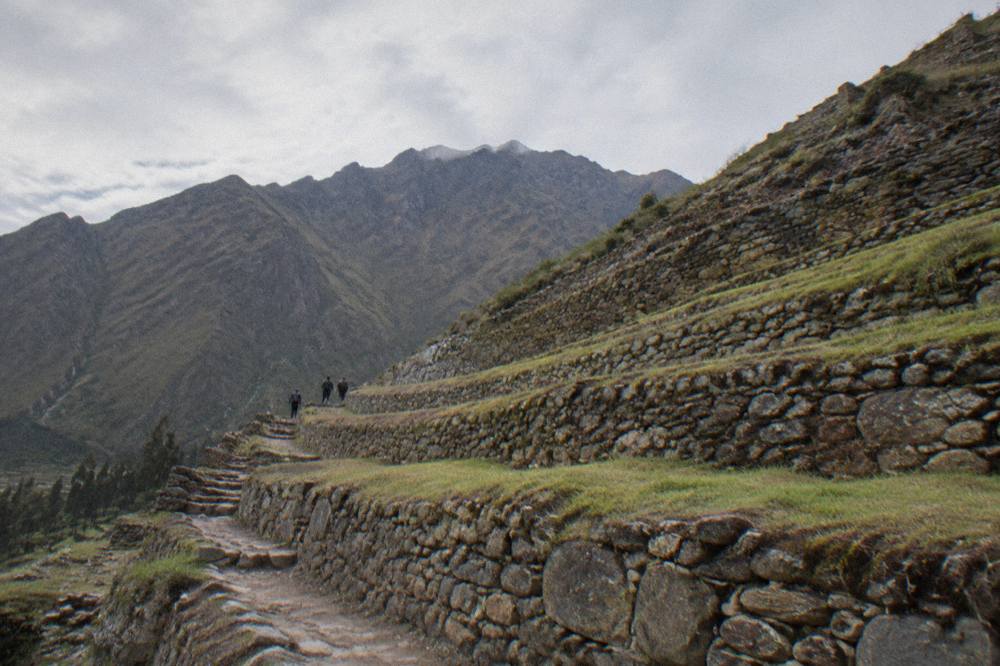
What the independent plan cannot replicate is the guide. At Machu Picchu a guide is recommended, not mandatory, under the current Ministry of Culture rules, and the same logic of self-guided visiting applies at the valley sites, where nothing requires a licensed guide for entry. Whether that matters is a knowledge question: the sites are readable without one, but the interpretation is thinner.
When Is A Sacred Valley Tour The Better Choice?
A tour is the better choice when time is short, when the day needs to combine widely separated sites, or when the visitor wants interpretation rather than just access. The Sacred Valley Full Day Tour from Cusco covers the circuit in a single guided day, and the site's roster also carries a two-day Sacred Valley plus Machu Picchu combination for visitors pairing the valley with the citadel.
The roster's own products frame the trade honestly. The Sacred Valley Full Day Tour is a guided one-day circuit of the valley from Cusco, and its Check availability link shows the operator's live listing. For visitors whose real goal is Machu Picchu with the valley as the approach, a combined product exists:
The independent route also carries a weather exposure that tours manage for you. The valley shares Cusco's inverted southern-hemisphere seasons: dry roughly May to September, wet roughly November to March, with December to March carrying 71.9 percent of the year's 707.8 mm of rain at the WMO/SENAMHI "Cuzco" station, a historical normal. A tour vehicle waits in the rain; a missed local connection does not care about it. The site's best time to visit Cusco covers the calendar in detail.
Common Questions About Visiting The Sacred Valley Without A Tour
Can you do the Sacred Valley without a tour?
Yes. The four main sites, Pisac, Ollantaytambo, Chinchero and Moray, sit on the Boleto Turistico Circuit III, a S/ 70 partial ticket (about US$20) bought in person in Cusco, and the valley towns are connected by local transport. A tour adds a guide and fixed timing, not access.
Does the Boleto Turistico cover the Maras salt mines?
No. The Boleto's Circuit III covers Pisac, Ollantaytambo, Chinchero and Moray only. The Maras salt mines charge their own community fee, reported at about S/ 15 to 20 for foreigners, paid in cash at the entrance.
Can you buy the Boleto Turistico online?
No. COSITUC's FAQ states the ticket is sold in person only, at the central counter on Av. El Sol 103 in Cusco, open daily 07:30 to 18:00, and at most included sites. There is no official online sale.
How long is the Boleto Circuit III valid?
The partial Circuit III ticket is valid for 2 days, per COSITUC's tarifario, which is enough to split the Sacred Valley across two days. The S/ 130 integral ticket is valid for 10 days.
Is the Sacred Valley lower than Cusco?
Yes. Pisac town sits at 2,972 m, Urubamba at 2,870 m and Ollantaytambo at 2,792 m, all below Cusco's Plaza de Armas at 3,335 m. Moray and Maras, at 3,385 m and 3,300 m, sit close to Cusco's own altitude.
Is the Sacred Valley worth visiting at all?
The valley holds four of the region's most visited sites; in the MINCETUR open dataset for 2025, Ollantaytambo's archaeological park recorded 891,526 visits and Moray 773,916. The site's own assessment of whether the Sacred Valley is worth visiting weighs the circuit in full.
The independent route through the Sacred Valley is not a workaround; it is a normal way to see the valley, priced by COSITUC's own tarifario and stitched together by towns that have hosted travellers for as long as the road has existed. For more planning from Cusco, Things To Do In Cusco Peru carries the full set of valley, city and Machu Picchu guides.