Where To Stay In Cusco
Cusco, the historic city in the Andes of southern Peru, sleeps at 3,335 m, and the Sacred Valley towns sit lower and closer to Machu Picchu by train. Here is what the official sources say about each base.
Short answer
Sleep in Cusco's historic centre for walkable streets, restaurants and the widest choice of rooms, or sleep lower in the Sacred Valley at Pisac, Urubamba or Ollantaytambo for easier acclimatisation and a shorter train ride to Machu Picchu. Cusco's Plaza de Armas sits at 3,335 m; Ollantaytambo, at 2,792 m, is about 1 h 45 from Machu Picchu by train.
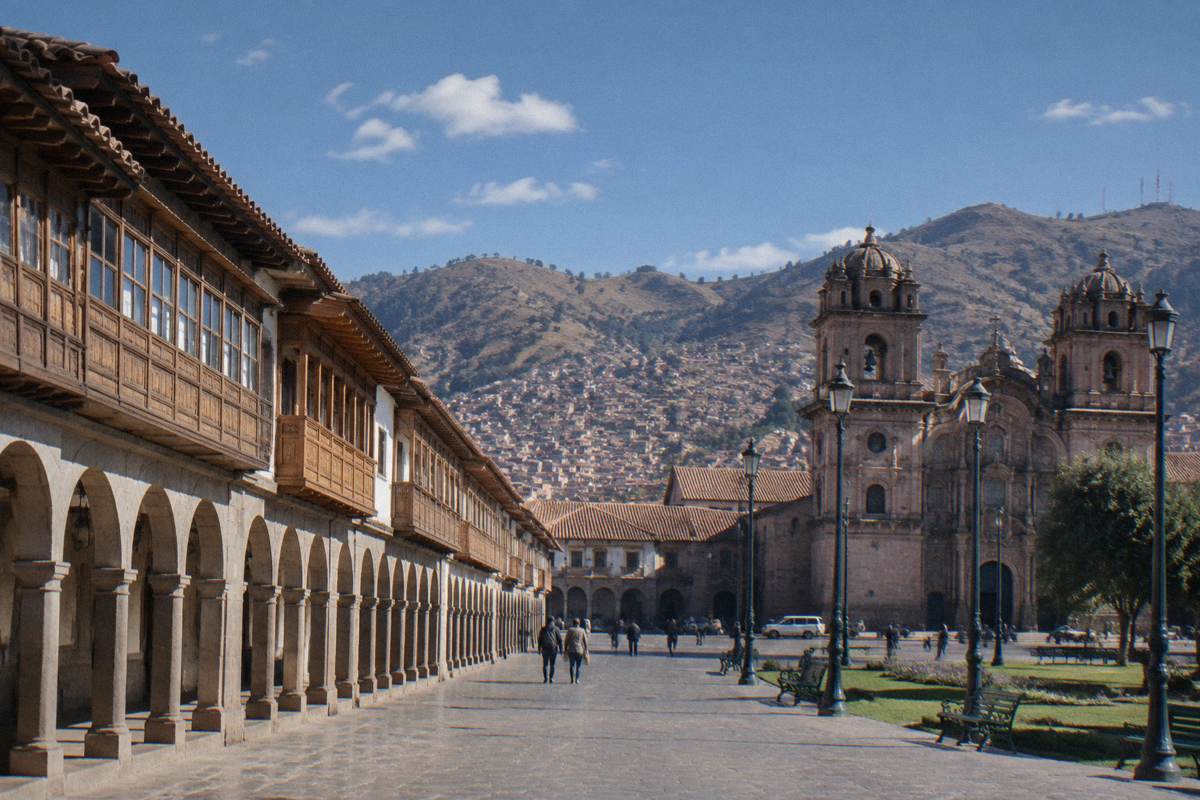
Cusco, also spelled Cuzco, is the historic city in the Andes of southern Peru, and PromPeru records its Plaza de Armas at 3,335 m. Where a traveller sleeps shapes the whole trip. The city holds the airport, the widest choice of rooms and the restaurants, while the Sacred Valley towns of Pisac, Urubamba and Ollantaytambo sit lower and shorten the train ride to Machu Picchu. This guide sets out what the primary sources say about each base, from the journey times in PeruRail's own FAQ to the altitude guidance in the CDC Yellow Book, so the choice rests on published figures rather than guesswork. The full hotel shortlist lives in the site's guide to the best Cusco hotels.
Which Area Of Cusco Should You Sleep In?
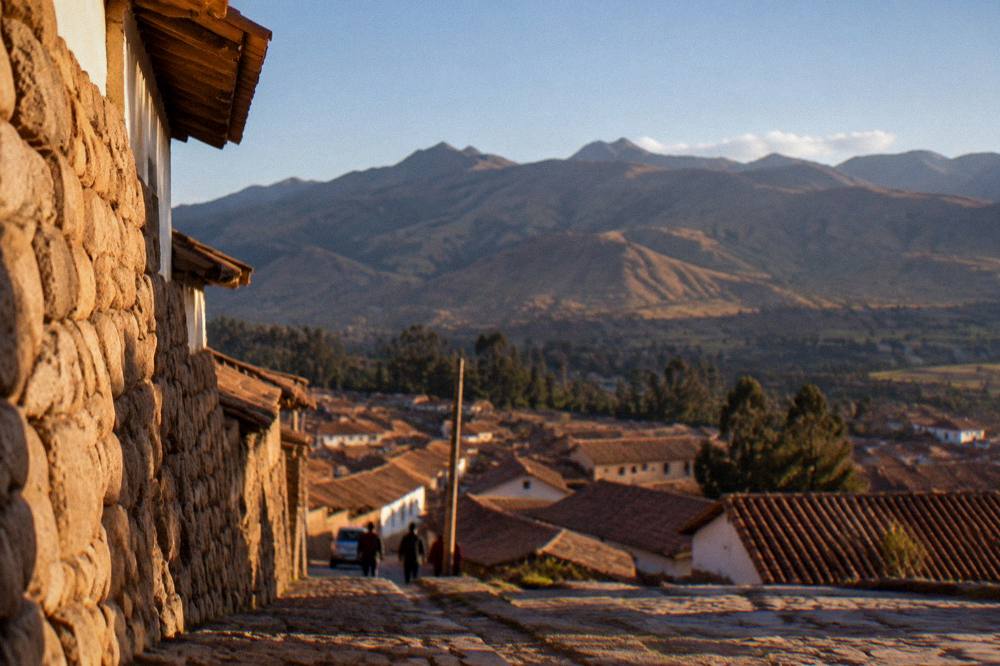
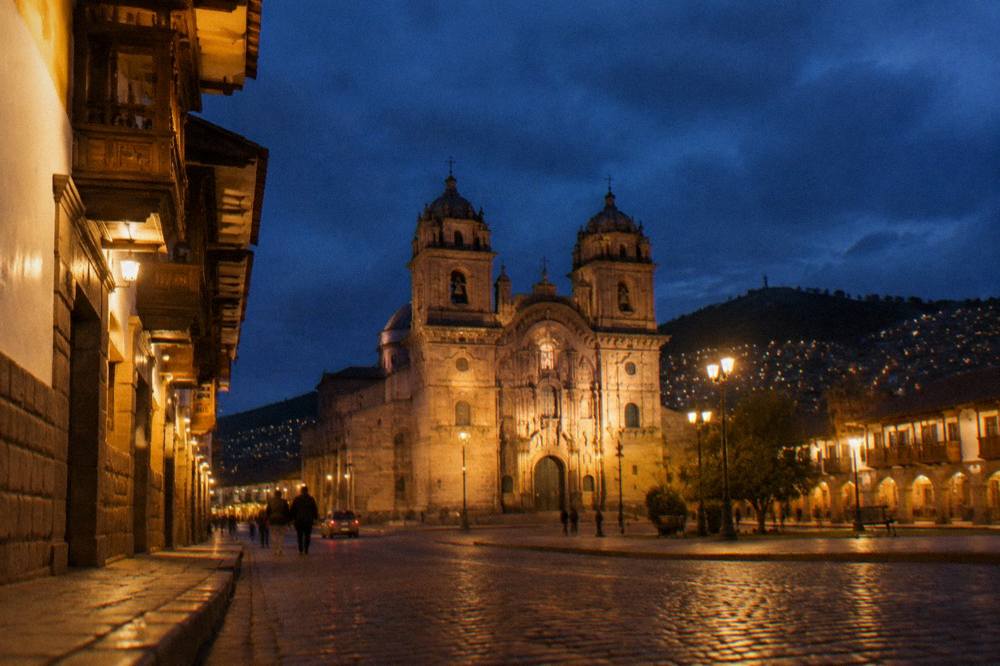
The historic centre around the Plaza de Armas keeps a visitor within walking distance of the Cathedral, Qorikancha and the San Pedro market, while San Blas sits on the hill to its east with quieter lanes and workshops. Both areas share the elevation PromPeru records for the Plaza de Armas, 3,335 m, so the choice between them turns on noise, steep streets and budget rather than on altitude.
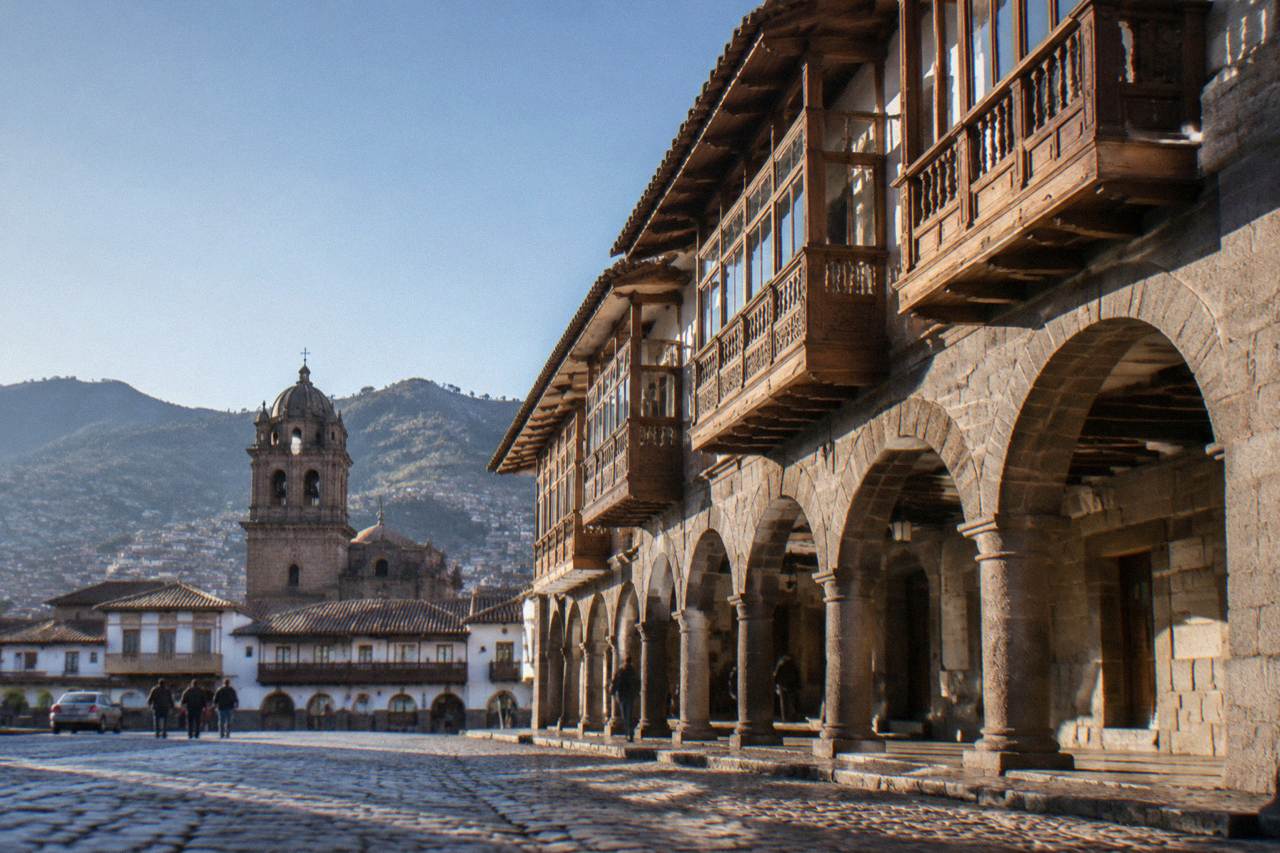
The historic centre is the practical default. The site's place records put the Plaza de Armas at the old centre of Cusco, with colonial churches standing on Inca stone foundations, a widely documented feature that needs no date attached. Qorikancha, the Inca temple site beneath the Santo Domingo complex, sits a short walk from the plaza, and its museum is on the Boleto Turistico's City circuit. The San Pedro market, covered in the guide to Cusco markets, supplies cheap meals and fruit juices, and peru.travel lists a cup of coca tea at about S/ 2 to 5 across the city's cafes and market stalls.
Want to explore the old centre with a guide? Book a half-day city tour here.
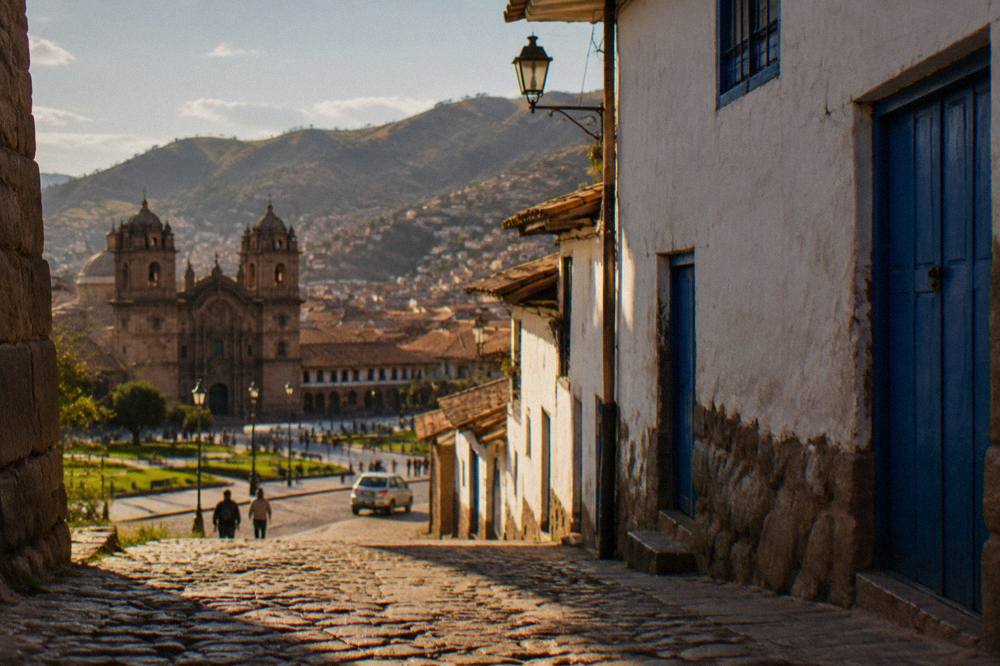
San Blas trades the plaza's noise for sloped cobbled lanes. The site's records place it on the hill to the east of the plaza, which means every return walk climbs. The trade is real: artisan workshops, smaller guesthouses and evening quiet. Visitors who book there should expect steep streets and plan luggage accordingly, since the climb from the plaza is short but unrelenting at this elevation.
Two practical notes from official sources. First, the airport, Alejandro Velasco Astete, sits about 6 km from the Plaza de Armas, 15 to 20 minutes by taxi, with an airport taxi to the centre reported at about S/ 15 to 25, so any central room is a short transfer from the runway. Second, the city's getting around guide covers the colectivo and taxi picture in detail. Neither factor separates one neighbourhood from another; the centre and San Blas are minutes apart on foot. For eating, the what to eat in Cusco guide maps the central restaurants and the best restaurants in Cusco page carries the shortlist.
Historic Centre
- Pariwana Hostel CuscohostelCheck rates
- Union Hotel CuscohotelCheck rates
- Palacio Nazarenas, A Belmond HotelhotelCheck rates
San Blas
- Antigua Casona San Blasboutique hotelCheck rates
- Samay Wasi HostelhostelCheck rates
- Historical Center ApartmentsapartmentCheck rates
San Pedro And Santa Ana
- Central Market Hotel San pedrohotelCheck rates
- Hotel Monasterio San PedrohotelCheck rates
- Loki CuscohostelCheck rates
Is It Better To Stay In Cusco Or The Sacred Valley?
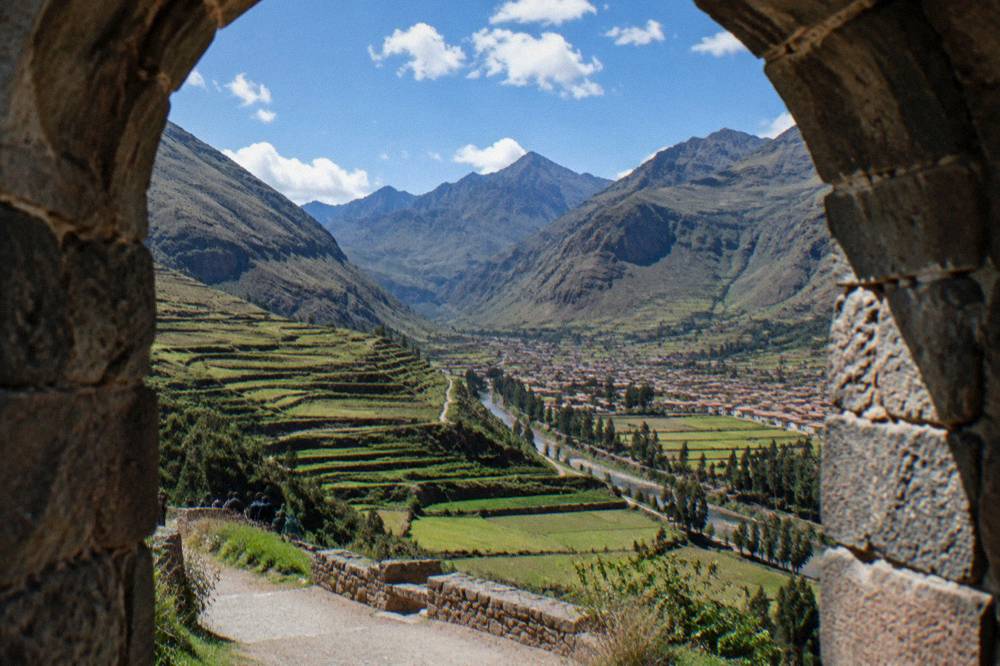
Cusco, at 3,335 m, holds the airport, the widest choice of rooms and the city's restaurants, while the Sacred Valley sleeps lower: Pisac at 2,972 m, Urubamba at 2,870 m and Ollantaytambo at 2,792 m. The CDC Yellow Book prefers graded ascent once above 3,000 m, and the valley towns sit below the city, which makes them the easier sleeping altitude after a high arrival. Ollantaytambo also stands about 1 h 45 from Machu Picchu by train.
The elevation table is the core of the argument. Every figure below comes from the site's verified facts pack, which traces each one to PromPeru, Wikipedia elevation records or official pages.
| Sleep base | Elevation | Note |
|---|---|---|
| Cusco (Plaza de Armas) | 3,335 m | PromPeru figure for the main square |
| Pisac | 2,972 m | Sacred Valley town, Circuit III site |
| Urubamba | 2,870 m | Valley transport hub |
| Ollantaytambo | 2,792 m | Train station town |
| Machu Picchu citadel | 2,430 m | The site itself, not a sleep base |
| Aguas Calientes | about 2,040 m | Town at the foot of Machu Picchu |
The CDC Yellow Book names Cusco as a high-altitude destination at about 3,350 m and sets a graded-ascent rule: avoid going from low altitude to a sleeping altitude of 2,750 m or more in a single day, and once above 3,000 m, move sleeping altitude by no more than 500 m per night. A flight into Cusco breaks that rule by definition, which is why the CDC also notes that travellers at Cusco and La Paz can descend to elevations lower than the airport to sleep for one or two nights and then begin their ascent. Sleeping in the valley after a Cusco arrival follows that published logic; it is reporting of the CDC's position, not a medical instruction.
The counter-argument is practical. Cusco has the airport transfer, the restaurant scene and the bulk of the room supply, and the city's own altitude guide works through the acclimatisation question in full. The valley wins on sleeping elevation and train access; the city wins on everything else. Many itineraries split the difference, as the site's answer on staying in Cusco or the Sacred Valley lays out, and the Sacred Valley where to stay guide covers the valley's own areas in depth.
For visitors who base in the city and tour the valley by day, the roster's Sacred Valley products cover the standard circuit, and the trio below spans a valley adventure, a city workshop and a Machu Picchu service.
Where To Stay In Cusco For Machu Picchu Access?
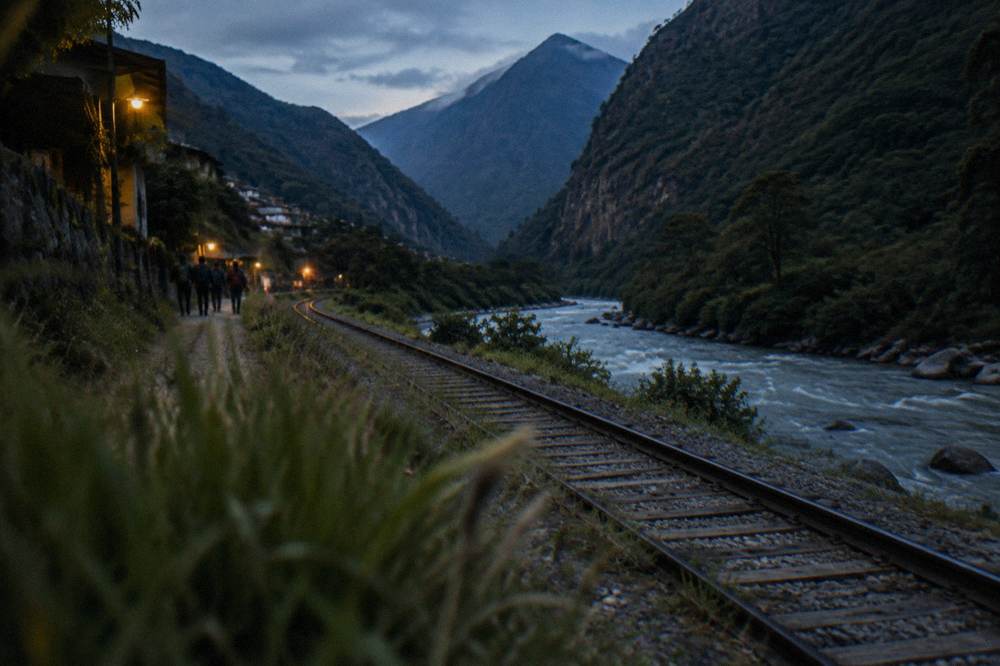
The train times PeruRail publishes shape any Machu Picchu base: about 4 h 30 from San Pedro station and about 3 h 30 from Poroy, against about 1 h 45 from Ollantaytambo. A Cusco base keeps the trip simple and keeps the city's rooms and restaurants; Ollantaytambo shortens the earliest departures, and Aguas Calientes, at about 2,040 m, sits at the foot of the site itself. The citadel stands at 2,430 m.
Two Cusco-side stations exist, Poroy and San Pedro, and PeruRail's FAQ gives the taxi legs as well: 10 minutes to San Pedro from the centre, 20 minutes to Poroy. There is no single Cusco station, a point worth checking before booking a room far from either. In wet-season disruptions, when Poroy can close, PeruRail uses a bimodal option, bus from Cusco to Ollantaytambo then train, and the operator's news page reports that train travel between Cusco and Ollantaytambo resumed from 1 September 2026.
| Rail leg | Journey time | Source |
|---|---|---|
| San Pedro (Cusco) to Machu Picchu | about 4 h 30 | PeruRail FAQ |
| Poroy (Cusco) to Machu Picchu | about 3 h 30 | PeruRail FAQ |
| Ollantaytambo to Machu Picchu | about 1 h 45 | PeruRail FAQ |
| Taxi, central Cusco to San Pedro | 10 min | PeruRail FAQ |
| Taxi, central Cusco to Poroy | 20 min | PeruRail FAQ |
The base choice follows the times. A Cusco room means the longest rail day but no hotel change; an Ollantaytambo room, covered in the site's answer on Cusco or Ollantaytambo, puts a visitor 1 h 45 out. Aguas Calientes, the town at the foot of the site, is the overnight option for the earliest entries, and the answer on staying in Cusco or Aguas Calientes compares the two directly. Machu Picchu entry itself is a separate topic with its own rules: tickets are nominal, valid only for the stated date, hour, circuit and holder, with no changes beyond a single passport-number correction, and foreign adults pay from about S/ 163 on standard routes on the Ministry of Culture platform. A guide is recommended, not mandatory, under the current Ministry of Culture resolution.
For visitors who want a guide inside the site without a group, a private guide service based at Aguas Calientes is the roster's dedicated option, and the current rule makes that a choice rather than an obligation.
The same logic applies to the Inca Trail: permits go only through licensed agencies, 500 people a day including porters and guides, and the trail closes every February. A Cusco base is where those treks start and finish, which is one more reason the city anchors a first-time itinerary.
What Does Altitude Mean For Where You Sleep In Cusco?
Cusco appears in the CDC Yellow Book as a high-altitude destination at about 3,350 m, and the CDC states that rates of altitude illness approach 50 percent when travellers ascend abruptly by air to such heights. Its ascent rule says to avoid sleeping above 2,750 m on the first day and to raise sleeping altitude by no more than 500 m per night above 3,000 m. The CDC itself notes that travellers at Cusco can descend to lower elevations to sleep for one or two nights.
The 50 percent figure needs its context. The CDC attaches it to rapid ascent by air or road to high altitude where gradual or staged acclimatisation is not feasible, not to every visitor who lands in Cusco. The same page advises considering acetazolamide to speed acclimatisation when abrupt ascent is unavoidable, and avoiding alcohol for the first 48 hours at high altitude; acetazolamide is a prescription decision to make with a doctor, and this site does not give medical advice. The CDC's Peru notice stands at Level 1, Practice Usual Precautions, and notes that Machu Picchu is at high altitude and that travellers should talk to a doctor. Other pages covering the same trip are gathered on Things To Do In Cusco Peru.
For the sleep decision, the numbers do the work. Cusco at 3,335 m is higher than every valley base and higher than Machu Picchu itself at 2,430 m, a gap the pack puts at roughly 900 m. A first night in Ollantaytambo at 2,792 m or Urubamba at 2,870 m is a descent from the airport, which is the pattern the CDC describes for Cusco. Nobody publishes a day count for acclimatisation, so any specific number of days quoted elsewhere should be treated with caution; the CDC's rule is about sleeping altitude, not a fixed schedule.
The first day or two in the city call for low-exertion plans, and the roster's city workshops fit that brief: a chocolate class in the centre keeps a visitor seated, warm and close to the room.
When Is The Best Time Of Year To Book A Cusco Stay?
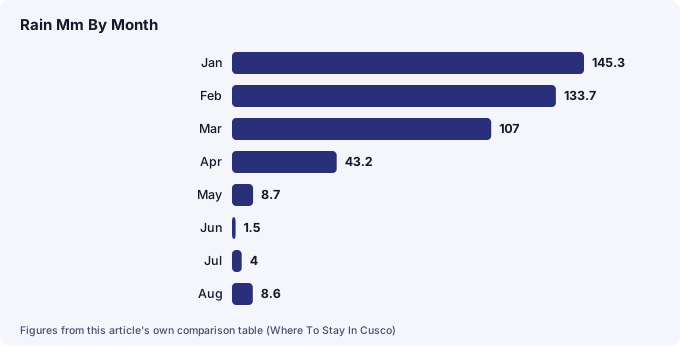
Dry season runs roughly May to September and wet season roughly November to March in this southern-hemisphere city. December to March carries 71.9 percent of the year's 707.8 mm of rain at the WMO and SENAMHI station for Cuzco, a historical normal. June to August is winter, with mean maxima near 19 C, frost nights in June and July, and mean daily maxima staying between 18.8 and 20.9 C all year.
The climate table below is the full monthly normal for the Cuzco station, supplied by SENAMHI, Peru's weather service, to the World Meteorological Organization. It is a historical normal; the record does not state its averaging period, so it is not labelled 1991-2020 here.
| Month | Mean max C | Mean min C | Rain mm |
|---|---|---|---|
| Jan | 18.9 | 6.6 | 145.3 |
| Feb | 18.8 | 6.5 | 133.7 |
| Mar | 19.1 | 6.2 | 107.0 |
| Apr | 19.7 | 4.9 | 43.2 |
| May | 19.8 | 2.5 | 8.7 |
| Jun | 19.5 | 0.3 | 1.5 |
| Jul | 19.1 | 0.1 | 4.0 |
| Aug | 19.8 | 1.6 | 8.6 |
| Sep | 19.8 | 3.9 | 21.8 |
| Oct | 20.9 | 5.5 | 39.4 |
| Nov | 20.7 | 6.1 | 71.9 |
| Dec | 19.4 | 6.4 | 122.7 |
Two features stand out. The daily swing in the dry months is large: July's mean minimum of 0.1 C sits against a mean maximum of 19.1 C, and SENAMHI's own pages record frost nights peaking in June and July. Rain, not cold, is the seasonal risk: May to August together bring just 22.8 mm, 3.2 percent of the annual total, while December to March delivers 508.7 mm. The Cusco weather by month guide unpacks the packing implications and the best time to visit Cusco page weighs the seasons against crowd levels.
Crowd levels have a sourced shape. The MINCETUR open dataset counts Machu Picchu visits by month, and the 2025 figures show the swing a Cusco stay faces.
| Month (2025) | Machu Picchu visits | Month (2025) | Machu Picchu visits |
|---|---|---|---|
| Jan | 108,966 | Jul | 151,550 |
| Feb | 79,806 | Aug | 153,655 |
| Mar | 102,218 | Sep | 142,579 |
| Apr | 128,369 | Oct | 154,105 |
| May | 132,020 | Nov | 110,429 |
| Jun | 125,615 | Dec | 90,194 |
October 2025 drew 154,105 visits against February's 79,806, and the dataset's full-year total for the Inca city was 1,479,506. February's low reflects the Inca Trail closure that month, not an empty citadel. Inti Raymi on 24 June fills Cusco itself, with grandstand tickets at Sacsayhuaman sold through Teleticket; the site's Inti Raymi guide covers it. Rooms in the dry-season peak and around the festival are the ones to book first; the monthly visitor figures on the home page track the pattern as new data lands.
How Much Does A Cusco Stay Cost Beyond The Room?
The Boleto Turistico integral costs S/ 130, about US$38, for a foreign adult and covers 16 sites over 10 days; each partial circuit costs S/ 70, about US$20. Machu Picchu is sold separately on the Ministry of Culture platform, from about S/ 163 for foreign adults on standard routes. Rainbow Mountain adds a community fee of S/ 25 to S/ 30 in cash, and the Maras salt mines S/ 15 to S/ 20.
The Boleto Turistico, run by COSITUC, is the city and valley pass, and its own FAQ states it is sold in person only: at the counter on Av. El Sol 103, daily from 07:30 to 18:00, and at most included sites. There is no online sale, which matters for planning the first morning. Validity starts the day of purchase, and the FAQ notes that covering all 16 sites needs a minimum of three days.
| Boleto Turistico ticket | Price, foreign adult | Validity |
|---|---|---|
| Integral (16 sites) | S/ 130 (about US$38) | 10 days |
| Partial Circuit I, Saqsaywaman | S/ 70 (about US$20) | 1 day |
| Partial Circuit II, City | S/ 70 (about US$20) | 2 days |
| Partial Circuit III, Sacred Valley | S/ 70 (about US$20) | 2 days |
| Integral, foreign student | S/ 70 (about US$20) | 10 days |
Children are free to age 9, and ages 10 to 17 pay the student price with ID. Machu Picchu is not on the Boleto in any form, and Circuit III covers Pisac, Ollantaytambo, Chinchero and Moray only, so it cannot substitute for a Machu Picchu ticket. The site's Boleto Turistico guide carries the full site list and buying walkthrough.
The fees beyond the Boleto are smaller but cash-dependent. Every figure below is from the verified pack, with the sourcing caveat noted where sources disagree.
| Site or entry | Fee | Note |
|---|---|---|
| Machu Picchu, standard routes | from about S/ 163 (about US$48) | Ministry of Culture platform, secondary figure |
| Machu Picchu, mountain routes | from about S/ 211 (about US$62) | Includes the S/ 11 SERNANP fee since 1 May 2026 |
| Rainbow Mountain (Vinicunca) | S/ 25 to S/ 30 | Community fee, cash |
| Palccoyo | about S/ 20 | Operator figure |
| Maras salt mines | S/ 15 to S/ 20 | 2026 operator figures |
| Humantay Lake | S/ 10 to S/ 20 | Sources disagree, no single figure |
| Q'eswachaka | about S/ 20 | Operator figure |
| Cusco Cathedral | S/ 25 | peru.travel page dated 2021 |
| Inca Museum | S/ 20 | peru.travel |
| Museo de Arte Precolombino | S/ 20 general, S/ 10 students | peru.travel |
Day trips from a Cusco base cover most of that list. The Sacred Valley circuit through Moray and the Maras salt mines also runs as a quad bike adventure, one of the roster's valley products, and the operator's live listing shows the current price and dates.
Everyday costs are modest and reported as ranges: a menu del dia runs about S/ 8 to 15, and a tourist SIM about S/ 5 to 15 plus a data pack at S/ 20 to 40. Exchange rates move; the pack's guidance is about S/ 3.4 to the US dollar, never a precise rate.
Is Cusco Safe For Visitors Staying Overnight?
The US State Department advisory for Peru stands at Level 2, Exercise Increased Caution, and it places Cusco city, the Sacred Valley, the Inca Trail and Machu Picchu outside its Do Not Travel areas. The UK FCDO reports street crime as a significant problem in Cusco and advises against walking alone in quiet areas or at night. A stay in the central streets with normal city precautions matches what both advisories describe.
The advisories are specific and worth reading as written. The State Department's September 2026 reissue cites crime, unrest, kidnapping and terrorism as reasons for its Level 2 rating, while mapping the Cusco tourist corridor outside its highest-warning zones. The FCDO adds that express kidnapping by fake taxi drivers occurs, usually at night, and that protests in the Cusco region have occasionally suspended or disrupted train services to Machu Picchu.
Support services exist and are published. Peru's tourist police run a 24-hour phone and WhatsApp line, 980 122 335, and the iPeru tourist information service takes WhatsApp messages on +51 944 492 314 and calls on (01) 574 8000 around the clock. The site's is Cusco safe guide works through the neighbourhood-level detail, including the night-walking question, and the where to avoid in Cusco answer covers the streets the advisories point to.
For evening plans from a central room, the Cusco nightlife guide maps the bars and the what to buy in Cusco page covers the shopping streets, both within the walkable core the advisories treat as normal city territory.
Whichever base the trip settles on, the roster below spans the three uses a Cusco room serves best: a valley day out, an easy city workshop and a private guide at Machu Picchu.
Common Questions About Where To Stay In Cusco
Is It Better To Stay In Cusco Or Ollantaytambo?
Cusco, at 3,335 m, holds the airport, the wider room choice and the city's restaurants. Ollantaytambo, at 2,792 m, sleeps lower and stands about 1 h 45 from Machu Picchu by train, against about 4 h 30 from San Pedro station in Cusco. The CDC's graded-ascent guidance favours the lower bed after a high arrival; convenience favours the city. The site's dedicated answer compares the two in full.
Is Cusco Higher Than Machu Picchu?
Yes. The Plaza de Armas sits at 3,335 m per PromPeru, while the Machu Picchu citadel stands at 2,430 m per the official site, a gap of roughly 900 m. The town of Aguas Calientes sits lower still, at about 2,040 m. Sleeping in Cusco is therefore the highest night of a typical itinerary.
Can You Visit Machu Picchu While Staying In Cusco?
Yes. The train from San Pedro takes about 4 h 30 and from Poroy about 3 h 30, each way, so a day trip from a Cusco room is standard practice. The 2026 daily capacity is 4,500 visitors on normal days and 5,600 on the flagged high-season dates, and tickets are nominal, valid only for the stated date, hour, circuit and holder.
Where Should You Sleep On The First Night In Cusco?
The CDC Yellow Book notes that travellers at Cusco can descend to elevations lower than the airport to sleep for one or two nights and then begin their ascent, which describes a first night in the Sacred Valley. Its rule is to raise sleeping altitude by no more than 500 m per night above 3,000 m. A first night in the city is common too; the choice is a matter of ascent profile, and any fixed day count quoted elsewhere has no official source.
Do Cusco Rooms Sell Out In High Season?
Demand follows the dry season. MINCETUR's open dataset counted 154,105 visits to Machu Picchu in October 2025 against 79,806 in February, and the dry months of May to August bring just 22.8 mm of rain at the Cuzco station, 3.2 percent of the annual total. Inti Raymi on 24 June adds a city-wide peak with grandstand tickets sold through Teleticket. Early booking is a response to that pattern, not a guarantee of any price.
Does The Boleto Turistico Cover Machu Picchu?
No. COSITUC's Boleto covers 16 city and valley sites across its three circuits, and Circuit III covers Pisac, Ollantaytambo, Chinchero and Moray only. Machu Picchu entry is sold separately on the Ministry of Culture platform or in person at Machu Picchu Pueblo, from about S/ 163 for foreign adults on standard routes.
The choice of base comes down to three published numbers: the sleeping elevation, the train time to Machu Picchu and the season. Cusco at 3,335 m carries the airport and the city; Ollantaytambo at 2,792 m carries the 1 h 45 train; the dry months from May to September carry the crowds. Weigh those against the CDC's ascent rule and the Boleto's in-person counter on Av. El Sol 103, and the right room for the itinerary sorts itself out.