Is It Better To Stay In Cusco Or Ollantaytambo?
Cusco at 3,335 m or Ollantaytambo at 2,792 m: what the CDC altitude guidance, PeruRail's published train times and the COSITUC ticket rules say about choosing a base for a Machu Picchu trip.
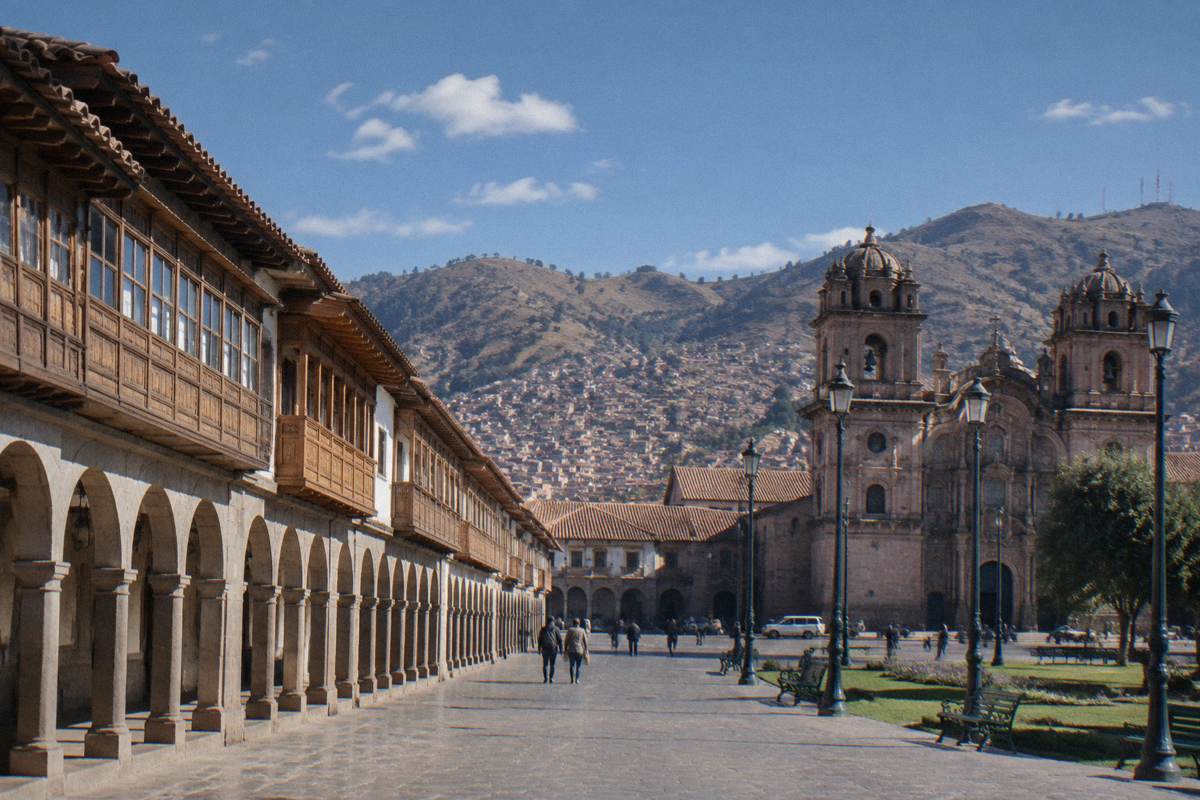
Cusco, the historic city in the Andes of southern Peru also spelled Cuzco, sits at 3,335 m at its Plaza de Armas; Ollantaytambo, the Inca town in the Sacred Valley, stands at 2,792 m with a working train station for Machu Picchu. The choice between them decides the altitude of the first night's sleep, the length of the rail ride on the Machu Picchu morning, and which ruins, museums and markets sit within easy reach. What follows is what the official record says about both places: COSITUC's ticket tariffs, PeruRail's published journey times, the CDC Yellow Book's altitude chapter and MINCETUR's visitor counts.
Is It Better To Stay In Cusco Or Ollantaytambo?
Neither town is the better choice for every trip: it depends on what the itinerary is built around. Cusco, at 3,335 m, is where the region's airport, its main museums and its largest stock of restaurants and hotels sit, and it is the natural base for the city's own ruins. Ollantaytambo, at 2,792 m, sits inside the Sacred Valley beside its own Inca site and the shortest train ride to Machu Picchu, roughly 1 h 45 each way.
Cusco is where every arrival happens. All flights into the region land at Alejandro Velasco Astete International Airport, about 6 km from the Plaza de Armas and 15 to 20 minutes by taxi; the planned replacement airport at Chinchero is not operating, with reported progress of about 38.9 percent in mid-2026 and completion targeted for 2028. Ollantaytambo has no airport. It is a town in the Sacred Valley, reached by road or by rail from the Cusco side, and its station is a departure point for Machu Picchu.
The two places differ in scale, and the census record states how much. Cusco city counted 428,450 people at the 2017 INEI census, and a city of that size carries the region's cathedral, its museum trade and its restaurant stock. Ollantaytambo is a small town organised around its Inca site and its station, trading on quiet streets, ruins and early trains.
Neither base is a wrong answer. The question is which one the itinerary is built around, and the sections that follow take the decision in order: the altitude of the first nights, the length of the Machu Picchu rail journey, and what sits within reach of each bed.
Does Sleeping Lower In Ollantaytambo Help With The Altitude?
Yes, in the specific way the CDC frames it: sleeping lower helps. Ollantaytambo stands at 2,792 m against Cusco's 3,335 m at the Plaza de Armas, and the CDC Yellow Book prefers graded ascent, names Cusco as a rapid-ascent destination and notes that travellers can descend to elevations lower than the airport to sleep for a night or two. Nobody publishes a fixed acclimatisation day count, so the elevations are the only firm figures.
The CDC lists Cusco, at approximately 3,350 m in its own text, among its high-altitude destinations. Where staged acclimatisation is not feasible, the Yellow Book writes that rates of altitude illness approach 50 percent, which is why it advises a low threshold for considering prophylaxis. Its ascent rule, citing the Wilderness Medical Society, is to avoid going from low altitude to a sleeping altitude of 2,750 m or more in a single day, and once above 3,000 m to raise the sleeping altitude by no more than 500 m per night. Acetazolamide remains a prescription decision to make with a doctor, and the CDC's practical line is to avoid alcohol for the first 48 hours at high altitude.
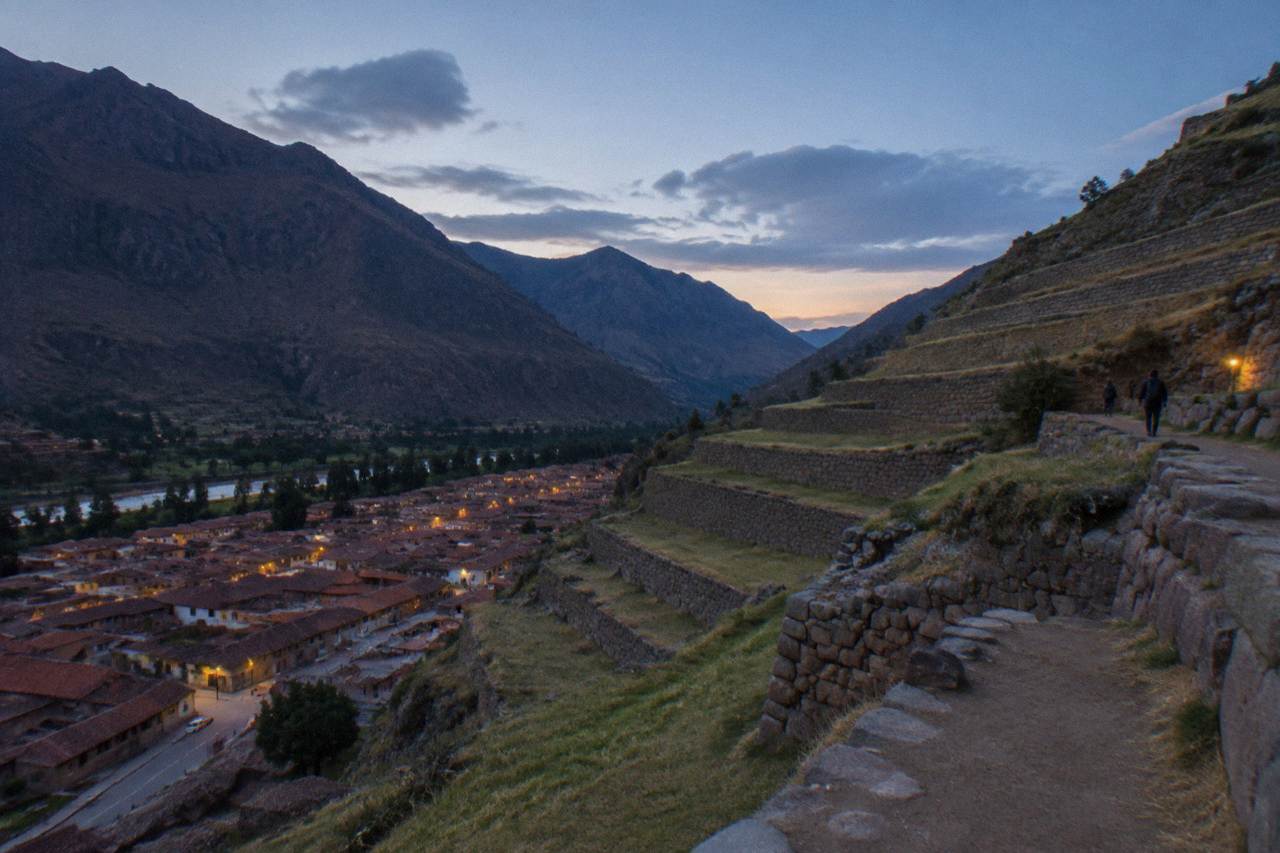
Read against that rule, the two towns are not symmetric options. Both sit above the 2,750 m single-day sleeping mark, so neither removes the abrupt-ascent problem that comes with flying into the Andes; Ollantaytambo is simply the lower of the two. The valley's other regular bases, Urubamba at 2,870 m and Pisac at 2,972 m, sit between them, and the lowest sleeping option in the whole comparison is Aguas Calientes, the Machu Picchu Pueblo, at about 2,040 m.
| Overnight base | Elevation | What the place offers a sleeper |
|---|---|---|
| Cusco (Plaza de Armas) | 3,335 m | The region's airport, museums and city ruins |
| Pisac | 2,972 m | A Boleto Circuit III site and a valley town |
| Urubamba | 2,870 m | A Sacred Valley town between the two bases |
| Ollantaytambo | 2,792 m | A Circuit III site and the Machu Picchu railhead |
| Aguas Calientes | about 2,040 m | The town at the foot of the citadel, reached by train |
For travellers weighing the health side of the decision, the CDC's wording on incidence and prophylaxis is worked through in more depth on how likely altitude sickness is. For the sightseeing side, the picks below cover both bases from Cusco and make a useful scouting run before any hotel is booked.
How Do The Train Times To Machu Picchu Compare?
Ollantaytambo is the shorter rail base by a wide margin: the train from Ollantaytambo to Machu Picchu takes about 1 h 45, while the trains from Cusco take about 4 h 30 from San Pedro station and about 3 h 30 from Poroy. Two operators, PeruRail and Inca Rail, run the route, and in wet-season disruptions a bimodal bus-plus-train option via Ollantaytambo is used.
PeruRail's own FAQ publishes the running times, and they carry most of the weight in this decision. A taxi from central Cusco needs about 10 minutes to San Pedro and about 20 minutes to Poroy before any of the rail journey begins, so a Machu Picchu morning out of Cusco stacks a taxi ride onto the longest leg of the trip. Out of Ollantaytambo the station stands in the town itself, and the ride is the shortest on the line.
There is not one Cusco station for the valley: Poroy and San Pedro both exist. In wet-season disruptions, when Poroy can close, the operators use a bimodal option that buses travellers from Cusco to Ollantaytambo and puts them on the train there, which is its own statement about which end of the line is the dependable one.
| Departure point | Train journey to Machu Picchu | Getting there from central Cusco |
|---|---|---|
| San Pedro station, Cusco | about 4 h 30 | about 10 minutes by taxi |
| Poroy station, Cusco | about 3 h 30 | about 20 minutes by taxi |
| Ollantaytambo station | about 1 h 45 | the station stands in the town itself |
The road and rail options between the two towns, including what the bimodal swap means in practice, are laid out in the guide to getting from Cusco to Ollantaytambo. For travellers who would rather not commit to a base at all, the 2-Day Tour from Cusco: Sacred Valley and Machu Picchu by Train covers both sides in one small-group booking from Cusco.
What Does Each Base Put Within Reach?
Cusco puts the city's museums and the four Circuit I ruins on its doorstep, while Ollantaytambo puts the four Circuit III sites of the Boleto Turistico, Pisac, Chinchero, Moray and its own Inca site, plus the Maras salt mines, all inside the Sacred Valley. The Boleto's partial circuits cost S/ 70 each for foreign tourists, and the salt mines charge a separate community fee reported at S/ 15 to 20.
To see the valley sites in one loop from Cusco, book a Sacred Valley day trip here.
The Boleto Turistico del Cusco is the practical map of what surrounds each base, because its three partial circuits split the region the same way the accommodation question does. Circuit I covers the four ruins above Cusco: Saqsaywaman, Q'enqo, Puka Pukara and Tambomachay. Circuit II covers the city's museums, from the Qorikancha site museum to the regional history museum. Circuit III covers the Sacred Valley: Pisac, Ollantaytambo, Chinchero and Moray.
COSITUC, the committee that runs the ticket, sells it in person only: at the counter on Av. El Sol 103 in Cusco, daily 07:30 to 18:00, and at most included sites. There is no online sale. A foreign adult pays S/ 130, about US$38, for the integral ticket covering all 16 sites over 10 days, or S/ 70, about US$20, for any one partial circuit.
| Boleto Turistico option | Price, foreign tourist | Sites | Validity |
|---|---|---|---|
| Circuit I, Saqsaywaman | S/ 70 (about US$20) | Saqsaywaman, Q'enqo, Puka Pukara, Tambomachay | 1 day (reported) |
| Circuit II, City | S/ 70 (about US$20) | Museo de Sitio Qorikancha, Museo Historico Regional, Museo de Arte Contemporaneo, Museo de Arte Popular, Centro Qosqo de Arte Nativo, Monumento a Pachacutec, Tipon, Pikillaqta | 2 days (reported) |
| Circuit III, Sacred Valley | S/ 70 (about US$20) | Pisac, Ollantaytambo, Chinchero, Moray | 2 days (reported) |
| Integral, all 16 sites | S/ 130 (about US$38) | Every site across the three circuits | 10 days |
The Maras salt mines sit outside the ticket entirely and charge their own community fee, and a paved road of about 8 km links Maras and Moray, which is why the two pair so easily on a loop from Ollantaytambo or Urubamba. Saqsaywaman is not free either: it is on the ticket through Circuit I, a point the COSITUC FAQ makes plainly.
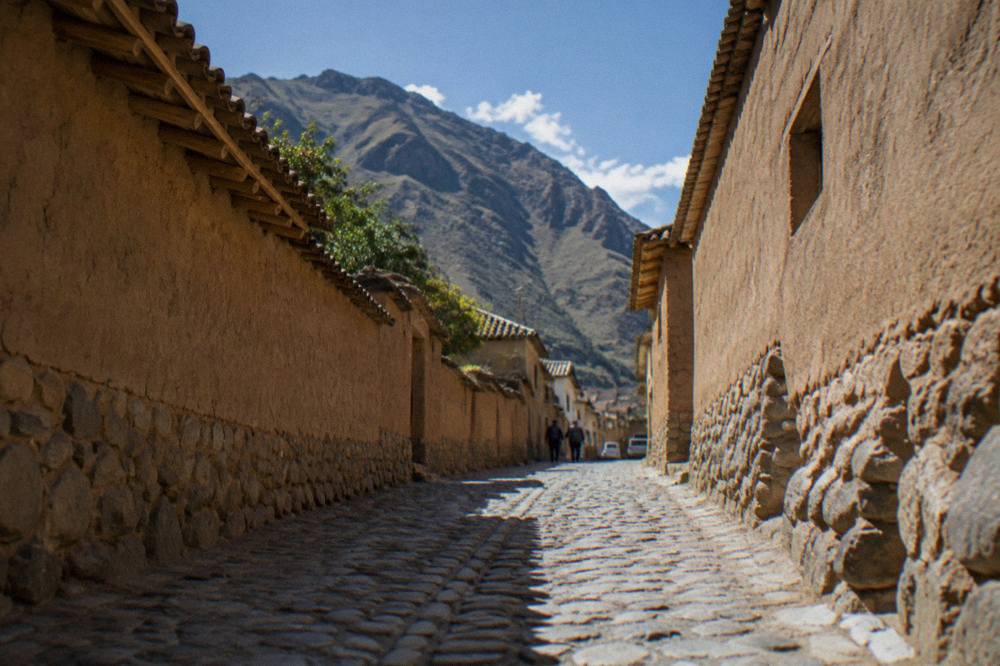
One way to see the whole Circuit III cluster before committing to a hotel is the Sacred Valley tour that links Pisac, Ollantaytambo, the salt mines and Moray in a single loop from Cusco: Check availability. The town's own ruin gets a full treatment in the guide to Ollantaytambo, including what the archaeological park covers.
How Should You Split Your Nights Between The Two?
A practical split for a first trip is two or three nights in Cusco first, then one or two in Ollantaytambo before a Machu Picchu morning. That order front-loads the abrupt arrival in Cusco, then drops to sleep at 2,792 m, the descending-to-sleep option the CDC Yellow Book describes for Cusco, and it puts travellers next to the short 1 h 45 train on the day that matters. City-only breaks of two nights can stay entirely in Cusco.
The order matters as much as the split. Arriving by air into Cusco is an abrupt ascent in the CDC's terms, and the Yellow Book's Cusco note, descending to a lower elevation to sleep for a night or two, is exactly what a first night in Ollantaytambo or Urubamba accomplishes. Travellers who go the other way, sleeping in Cusco first, get the city's museums and restaurants in the opening days and then drop into the valley for the Machu Picchu end of the trip.
Short trips change the arithmetic. A two-night city break loses little by staying in Cusco the whole time: the Circuit I ruins, the museums and the Plaza de Armas fill it, and the valley can be scouted on a day tour. Longer trips, five nights and up, are the ones that justify moving base once rather than commuting out and back.
Both towns get full accommodation breakdowns elsewhere on Things To Do In Cusco Peru: the guide to where to stay in Cusco covers the city's neighbourhoods, and where to stay in the Sacred Valley covers the valley's towns. Two related comparisons, Cusco or the Sacred Valley and Cusco or Aguas Calientes, widen the same decision to the other bases.
A split-base itinerary still needs its days filled, and these three picks cover the valley loop, the train-and-Machu-Picchu combination and a slower weaving morning.
The weaving side of the valley deserves its own morning. A private textile workshop experience run with Andean women operates in the Cusco region and pairs with either base:
Whichever way the nights are divided, the underlying facts do not change. Cusco is the higher, larger arrival city with the airport and the museums; Ollantaytambo is the lower railhead with the short train and the Circuit III doorstep, and the elevations, journey times and ticket rules above are the whole decision in miniature.
- Tunupa Lodge HotelhotelCheck rates
Common Questions About Staying In Cusco Or Ollantaytambo
The choice comes down to altitude, trains and what surrounds each bed. Cusco at 3,335 m is the region's hub for flights, museums and city ruins; Ollantaytambo at 2,792 m is a small Sacred Valley town beside its own Inca site and the 1 h 45 train to Machu Picchu. The questions below repeat what matters in one place.
Is Ollantaytambo worth staying in?
Yes, on the record. MINCETUR's open dataset counted 891,526 visits to the Ollantaytambo archaeological park in 2025, which places it among the busiest sites in the Cusco region's counts. The town combines a Boleto Circuit III ruin, a working train station for Machu Picchu and a lower sleeping elevation than Cusco, 2,792 m against 3,335 m.
Does the Boleto Turistico cover Ollantaytambo?
Yes. Ollantaytambo is one of the four Circuit III sites on the Boleto Turistico del Cusco, alongside Pisac, Chinchero and Moray. A foreign adult pays S/ 130, about US$38, for the integral ticket valid 10 days, or S/ 70, about US$20, for the Circuit III partial. COSITUC sells the ticket in person only, at the counter on Av. El Sol 103 in Cusco, daily 07:30 to 18:00, and at most included sites; it is not sold online.
Can you visit Machu Picchu from Cusco in one day?
Yes. Trains from San Pedro take about 4 h 30 and from Poroy about 3 h 30, against about 1 h 45 from Ollantaytambo, so a Cusco day trip means the longest rail day on the route. Machu Picchu entry is sold separately on the Ministry of Culture's ticket platform, and tickets are nominal: valid only for the stated date, hour, circuit and holder, with a single passport-number typo the only correction allowed.
Which town is better for the first night after flying in?
The CDC Yellow Book names Cusco as a rapid-ascent destination and notes that travellers can descend to elevations lower than the airport to sleep for a night or two, which describes a first night in Ollantaytambo at 2,792 m or Urubamba at 2,870 m. Both sit above the 2,750 m single-day sleeping mark in the CDC's ascent rule, so neither removes the abrupt-ascent problem; the valley is simply the lower place to sleep.
Do you need a car to stay in Ollantaytambo?
No. Ollantaytambo's Inca site stands at one end of the town and the train station at the other, and the Circuit III sites of Pisac, Chinchero and Moray sit within the Sacred Valley, reachable on organised day tours from either base. The town itself is small enough that its ruin, its station and its lanes are all within walking distance of one another.
Is Ollantaytambo colder than Cusco?
Cusco is the higher town, 3,335 m against 2,792 m, and the WMO and SENAMHI station record for Cuzco shows mean daily maximums staying between 18.8 and 20.9 C all year, with frost in June and July. The valley town sleeps at a lower elevation, and the temperature comparison between the two places is covered in full on the page about whether Cusco is colder than Machu Picchu.