Best Restaurants In Cusco
Cusco runs on two kitchens at once: market counters selling set lunches reported at about S/ 8 to S/ 15, and the dining rooms of the colonial centre serving the Andean larder at restaurant prices.
Short answer
Cusco's food is Andean at its base, with potatoes, maize, quinoa, alpaca and cuy layered over Spanish colonial ingredients. A set lunch is reported at about S/ 8 to S/ 15, a cup of coca tea at about S/ 2 to S/ 5, and dinner prices sit on each restaurant's own menu. Eat across the Centro Historico, San Blas and the blocks around San Pedro Market.
Cusco, the historic city in the Andes of southern Peru at 3,335 m, runs on two kitchens at once. Market counters around the old quarter sell set lunches reported at about S/ 8 to S/ 15, while the dining rooms of the colonial centre serve Andean staples alongside a national cuisine that has travelled far beyond Peru's borders. This guide sets out what to order, what eating out costs, which neighbourhoods to eat in, and how market walks, cooking classes and food tours fit around a restaurant crawl.
What Food Is Cusco Known For?
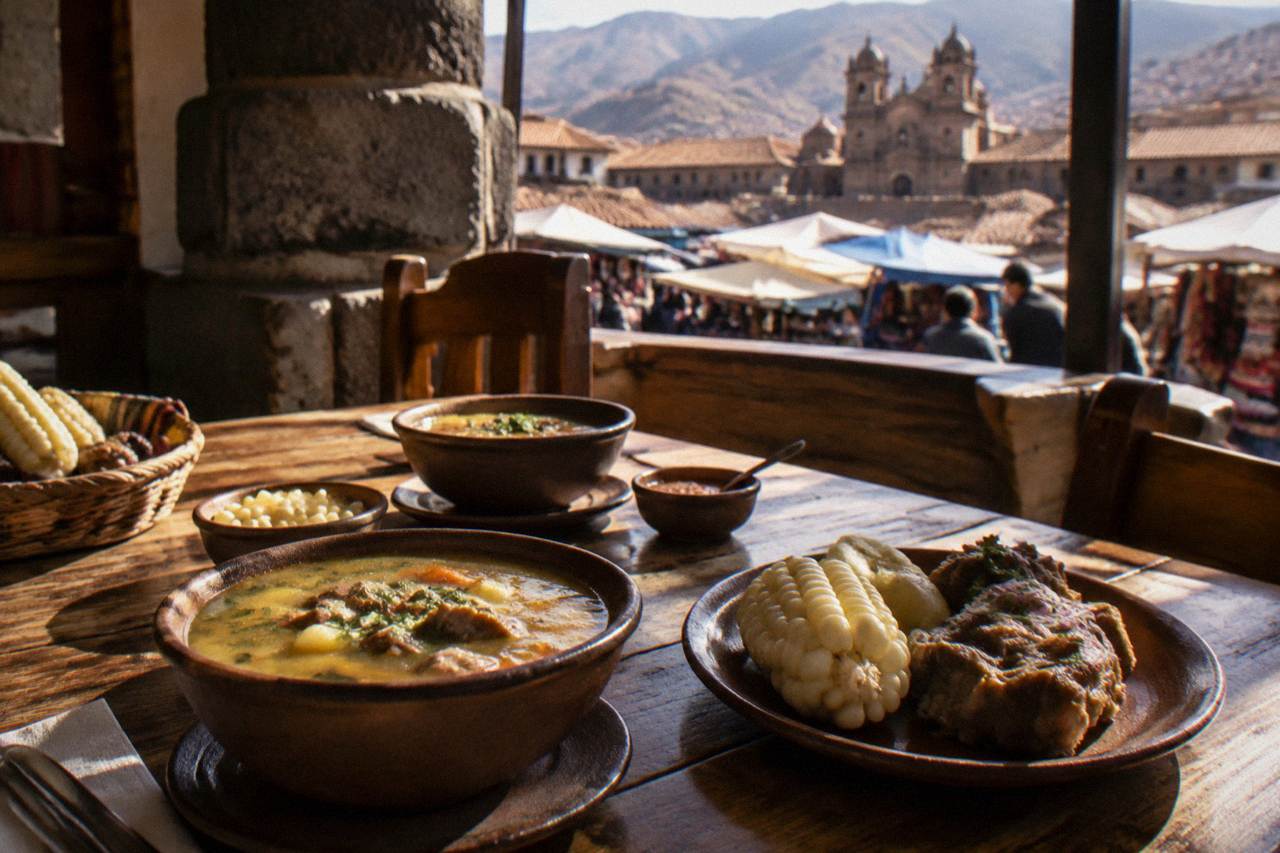
Cusco's food is Andean at its base: potatoes, maize, quinoa, alpaca and cuy, layered with Spanish colonial ingredients such as pork, wheat bread and sweet pastries, and served alongside national dishes that range from hearty soups to grilled trout. The city's restaurants share streets and suppliers with its markets, so the same raw ingredients appear at both, cooked to different budgets.
The Andean larder comes first. Cusco sits in a high basin where many varieties of potato and maize have been grown for a very long time, and the menus of the city reflect it: quinoa soups open meals, choclo, the large-kernel Andean corn, arrives boiled with fresh cheese, and purple corn turns up as chicha morada, the sweet dark drink poured beside almost everything. Colonial contact added wheat, pork and the pastry habit, and the two layers now sit on the same menus.
The meat side of the menu runs from the familiar to the confrontational. Chicharron, fried pork served with mote, a type of boiled corn, is a weekend plate across the Peruvian highlands. Trucha, trout from highland rivers and lakes, is the standard fish of an inland city. Alpaca appears as a lean red meat on tourist-facing menus, and cuy, guinea pig, is the Andean dish that carries the strongest reaction at any table. It is eaten across the region, and the complete guide to cuy in Cusco covers its place in the culture without dressing it up or hiding it.
For a wider view of the plates named above and where they fit a trip, the site's guide to what to eat in Cusco works as the companion to this page: that one is about the food itself, this one is about where and how to sit down and eat it.
How Much Does A Meal Cost In Cusco?
A set lunch, the menu del dia, is reported at about S/ 8 to S/ 15, roughly US$2 to US$4, at market counters and simple dining rooms, and a cup of coca tea at about S/ 2 to S/ 5. Dinner prices are set by each kitchen and appear on its own menu, so the room itself is the reference. The sol trades at about S/ 3.4 to the US dollar.
The menu del dia is the anchor of the Cusco food budget. Operators and travel sites reporting through 2026 put it at about S/ 8 to S/ 15 for a fixed sequence of soup, main and drink, served at midday, and the same sources put a cup of coca tea at about S/ 2 to S/ 5. These are reported ranges from operators and travel sites, not official tariffs, and they move with the exchange rate. The Central Reserve Bank quotes the sol against the US dollar, and about S/ 3.4 to the dollar is the working figure this site uses.
| Everyday item | Reported price, 2026 |
|---|---|
| Menu del dia (set lunch) | about S/ 8 to S/ 15 (about US$2 to US$4) |
| Cup of coca tea | about S/ 2 to S/ 5 |
| Tourist SIM card | about S/ 5 to S/ 15, plus about S/ 20 to S/ 40 for a data pack |
| Airport taxi to the centre | about S/ 15 to S/ 25 |
For anyone converting as they read, only a handful of fixed conversions are verified for this site, all at about S/ 3.4 to the dollar. The table below is the full set; anything between the lines is arithmetic left to the reader.
| Soles | About US dollars |
|---|---|
| S/ 11 | US$3 |
| S/ 20 | US$6 |
| S/ 25 | US$7 |
| S/ 30 | US$9 |
| S/ 70 | US$20 |
| S/ 130 | US$38 |
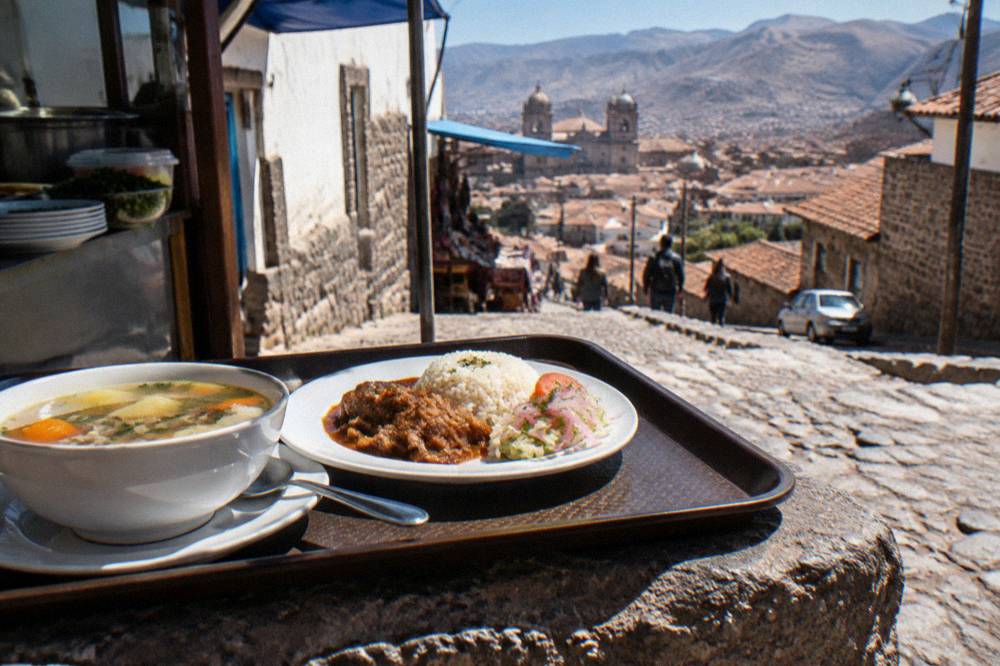
What the set-lunch culture means in practice is that the expensive meal is a choice, not an inevitability. A visitor can eat reported-range market lunches all week and spend very little in sol terms, then put the savings into one slow dinner in a colonial dining room, a cooking class, or a food walk with a guide. The products below are the ones this site has verified for exactly that kind of evening, from a bar crawl that starts where dinner ends to a Sacred Valley day trip built around a buffet lunch and the official Machu Picchu entrance ticket for the day after.
Which Cusco Neighbourhoods Have The Best Restaurants?
The Centro Historico around the Plaza de Armas carries the dining rooms with colonial balconies and arcades, San Blas uphill holds the artisan quarter's cafés and small kitchens, and the blocks around San Pedro market feed the city at market prices. After dark the centre's focus shifts from plates to bars, and the pub crawl circuit joins the evening up.
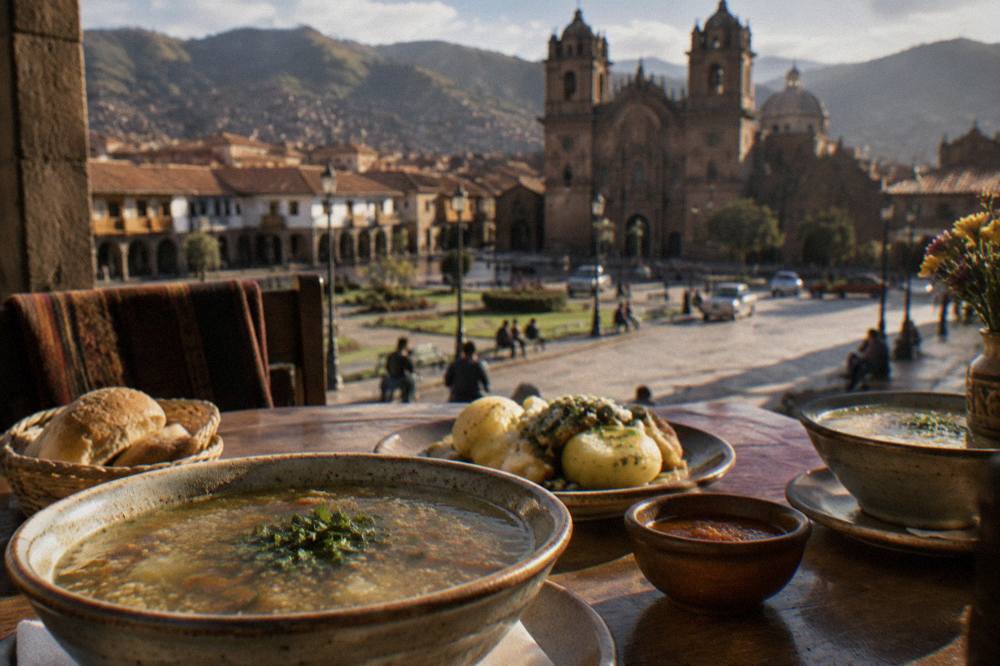
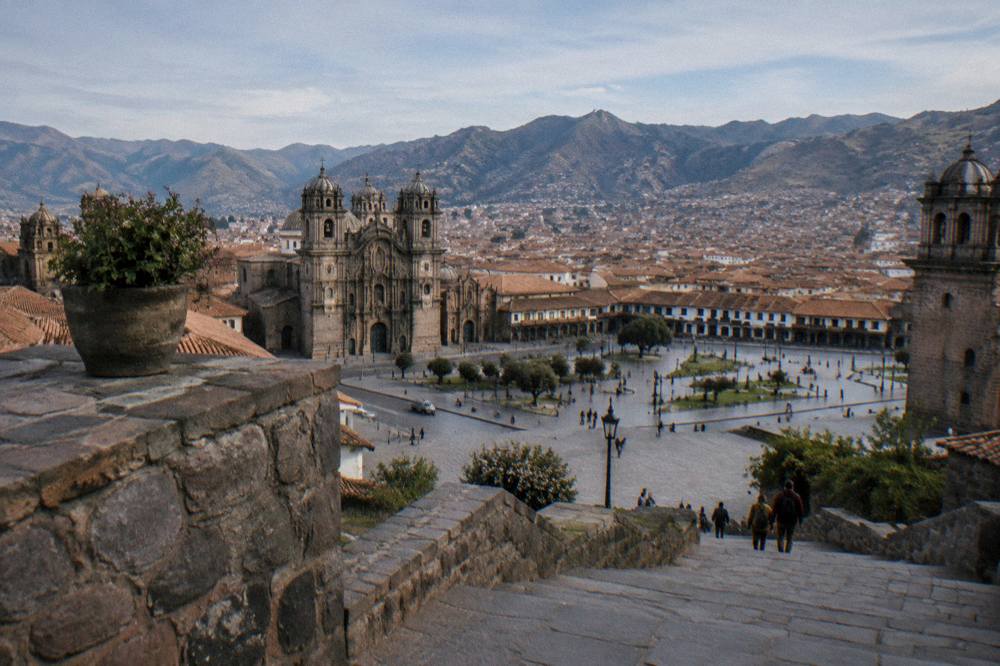
The Centro Historico is where the postcard dining happens. Stone arcades, wooden balconies and views across the plaza define the rooms, and the kitchens underneath them serve the full spread from Andean standards to international plates. The Cusco Historic Centre guide covers the streets themselves; for eating, the point is simple: the centre is the setting, and the setting is half of what is being paid for.
San Blas, the artisan quarter on the hill above the centre, works differently. Its lanes are narrower, its kitchens are smaller, and its cafés sit among workshops and galleries. It is the neighbourhood for a long lunch or a slow coffee between browsing, and the walk back down to the centre burns off exactly as much as it needs to.
The third food zone is the market belt around San Pedro, covered in full below, and after dinner the map changes again. Cusco's bar scene clusters in the centre and San Blas, and the Cusco nightlife guide maps it. For travellers whose dinner ends in a night out, the Cusco Pub Crawl: Bar Tour, Drinks And Club with no waiting lines connects central bars to a club without the queues; the details and live availability are on the pub crawl's own page, and you can Check availability directly. This Things To Do In Cusco Peru guide continues with the market itself.
Where To Eat Around San Pedro Market In Cusco?
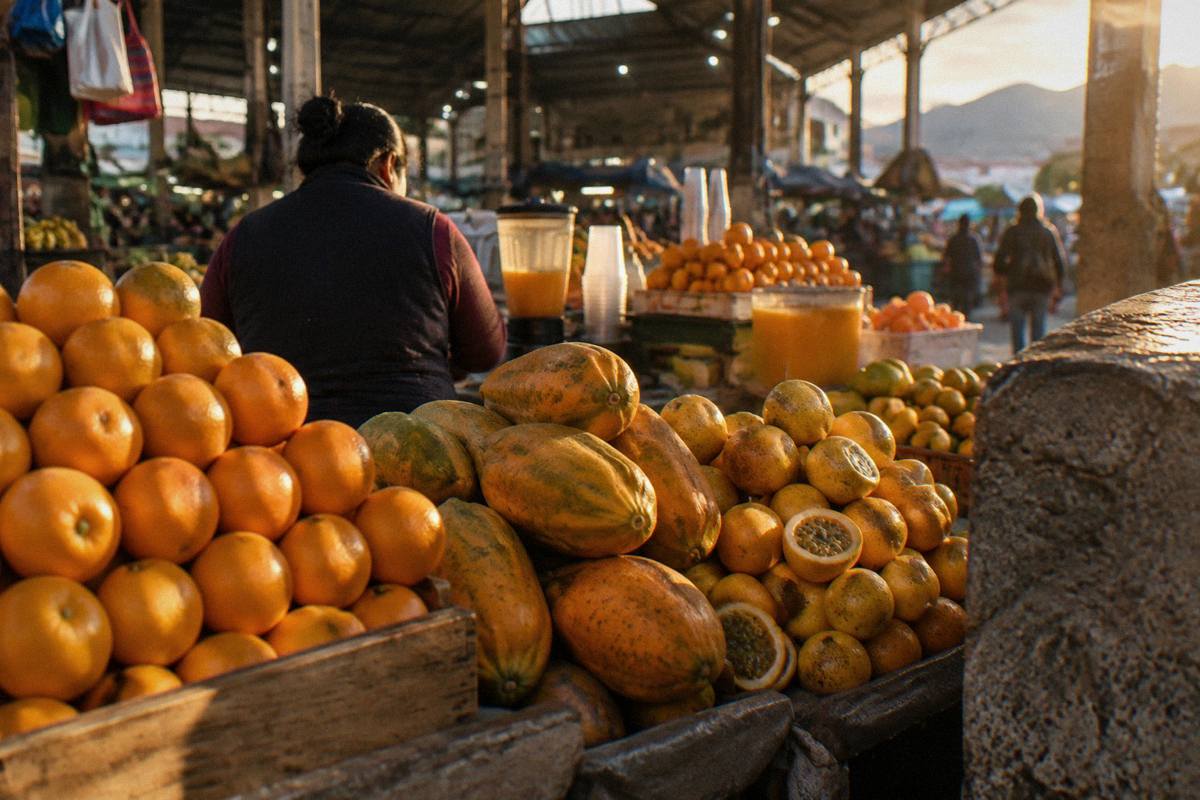
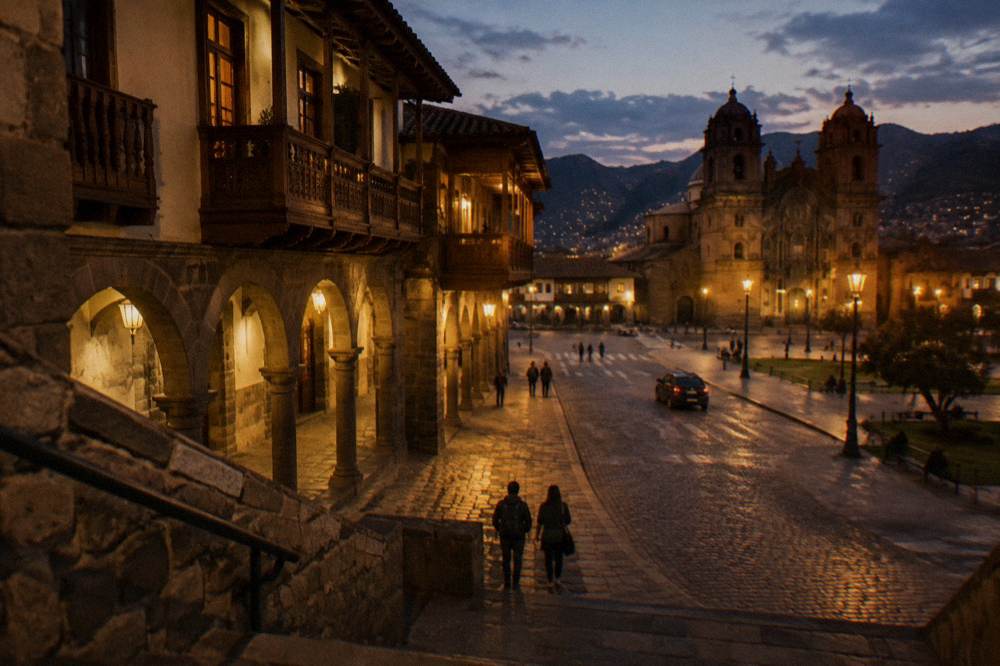
San Pedro Market sits at the edge of the old quarter and works as the city's food hall: counters plate up set lunches, soups and grilled dishes, juice stalls blend tropical fruit by the glass, and the streets around it add bakeries and simple dining rooms. Treat it as a market rather than a timetable, and go with the stalls that are cooking.
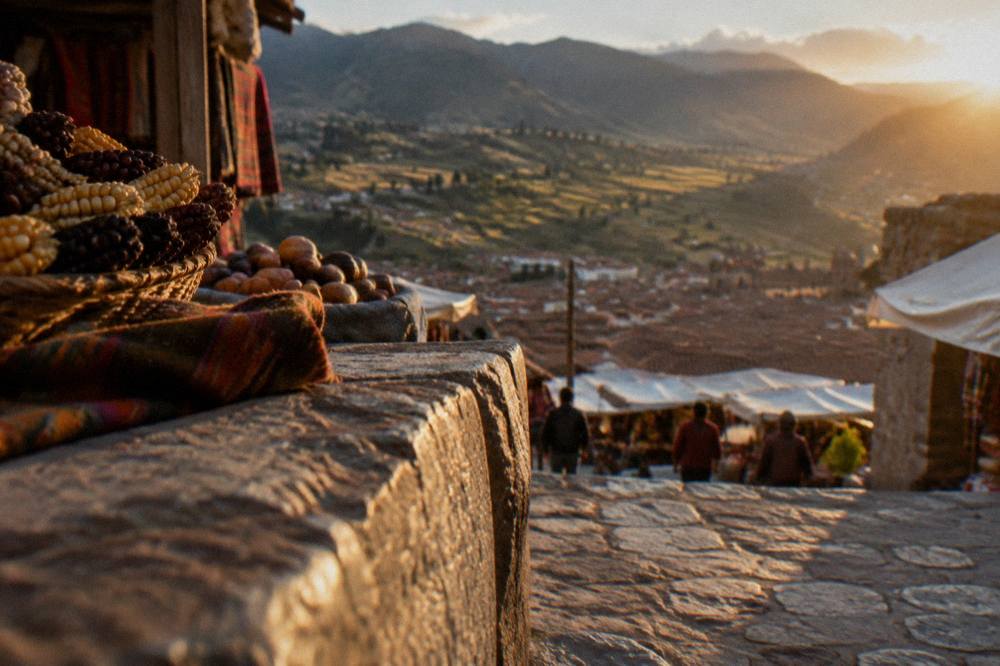
The market is the cheapest and most direct introduction to Cusco's food. The set lunches described in the cost section above are at their most reliable here, the juice stalls turn tropical fruit that cannot grow at 3,335 m into glasses drunk standing or perched on stools, and the surrounding blocks add bakeries and dining rooms that share the market's suppliers. The site's Cusco markets guide covers the market as a destination in its own right, including what to buy and take home.
Eating at a market counter is also the fastest way to watch the city eat. Office workers, market vendors and visiting trekkers share the same benches at midday, and the menu del dia rotates through the Andean calendar of soups and mains rather than a fixed card. The honest comparison with a restaurant dining room is not price alone, it is the whole shape of the meal: faster, louder, plainer, and closer to the stove.
For visitors who want the market explained rather than decoded solo, a guided food walk turns the counters into a tour. The Cusco Food Walking Tour & Central Market stops at San Pedro Market to taste regional dishes, fresh juices and Andean treats on a guided downtown walk, and its verified card sits below; the full details are on the food walking tour's page.
What Should You Order Beyond The Tourist Menu In Cusco?
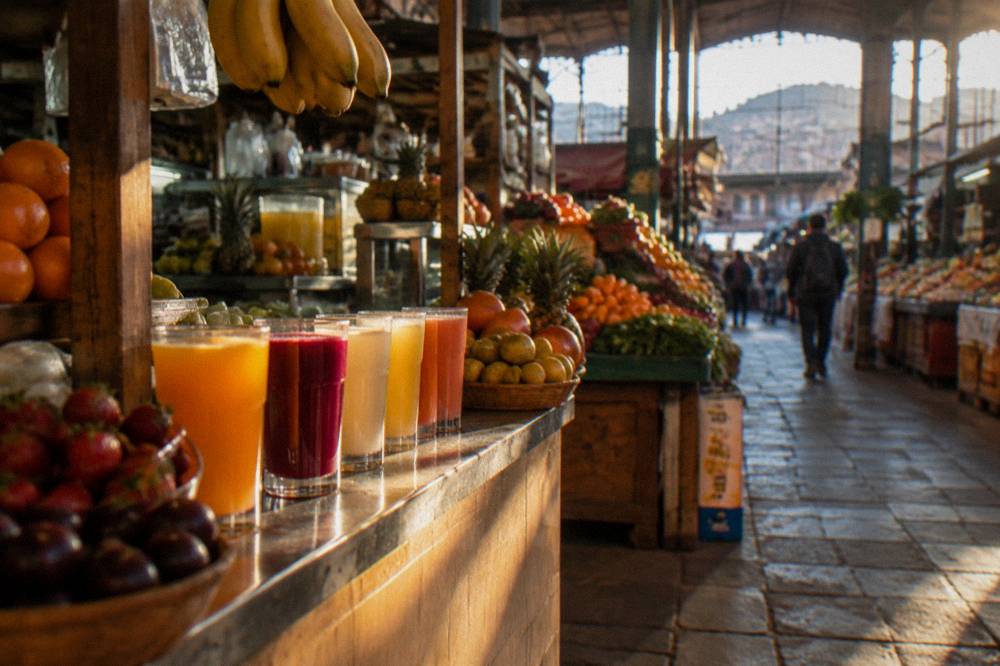
Order the Andean plates the city is built on: quinoa soup as a starter, choclo con queso, the large-kernel Andean corn served with fresh cheese, chicharron fried pork with mote, grilled trucha, and alpaca for the more adventurous, with cuy as the dish that carries the most weight in local culture. Sweet pastries and chicha morada fill the gaps between meals.
Build the meal from the bottom up. A quinoa soup is the safest possible opener, hot and filling at altitude, and choclo con queso works as a snack at any hour. Chicharron is the plate to order when a market counter looks confident, and trucha is the inland standard when the menu turns to fish: grilled, pan-fried or stuffed, it is the trout that highland waters produce. Alpaca, lean and dark, appears on most tourist-facing menus and divides opinion less than visitors expect.
Cuy is the one to decide on before it arrives. It is a ceremonial and celebratory dish across the Andes, served whole, and no number, price or ranking is attached to it on this site because none is verified. The cuy guide gives it a full page of context, which is more useful than a menu description ever is.
Two practical notes round this out. First, the sweet side of Cusco is underrated: bakeries around the centre and the market belt sell pastries that pair with the coffee culture of a city that hosts a lot of early trekkers. Second, families eating their way around the city have a dedicated Cusco with kids guide, which handles the practical questions a food-first itinerary raises, from pacing at altitude to which plates travel well to a child's table.
Where To Eat Outside The City On A Sacred Valley Day Trip?
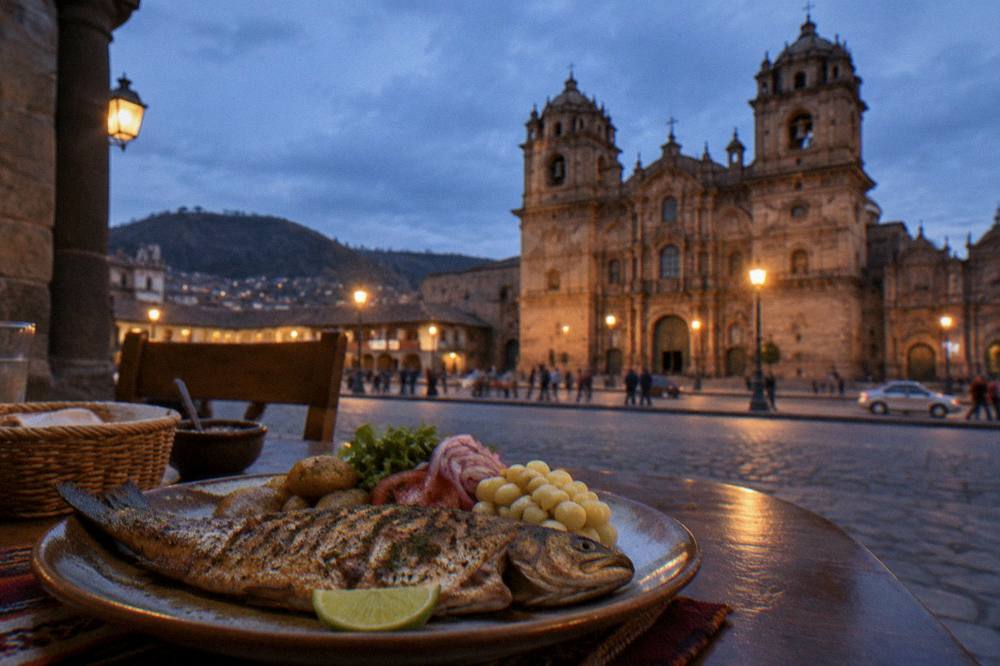
The Sacred Valley sits below Cusco, and its dining towns are lower with it: Pisac at 2,972 m, Urubamba at 2,870 m and Ollantaytambo at 2,792 m, against 3,335 m at the Plaza de Armas. Day trips to the valley pair the ruins and the Maras salt mines with buffet lunches, and the valley's kitchens serve the same Andean larder at gentler altitudes.
The drop in elevation is the quiet point of a valley food trip. Cusco's visitors spend their first days acclimatising, and the valley's towns sit several hundred metres lower, which is why the standard advice is to slide downhill for a day. The Cusco altitude guide explains the acclimatisation logic in full; for eating, the practical effect is that a valley lunch arrives in air that feels different from the centre of Cusco.
| Place | Elevation |
|---|---|
| Cusco, Plaza de Armas | 3,335 m |
| Moray | 3,385 m |
| Maras | 3,300 m |
| Pisac | 2,972 m |
| Urubamba | 2,870 m |
| Ollantaytambo | 2,792 m |
| Machu Picchu citadel | 2,430 m |
| Aguas Calientes (Machu Picchu Pueblo) | 2,040 m |
The valley route is also the busiest dining corridor in the region. The Ministry of Culture's open tourism dataset counts site visits across the Cusco region, and the 2025 figures show where the day-trip crowds actually eat: the valley's archaeological parks and the train services that feed them.
| Site or service, Cusco region | Recorded visits, 2025 |
|---|---|
| Santuario Historico de Machupicchu | 1,542,350 |
| Ciudad Inka de Machupicchu | 1,479,506 |
| Explanada de Saqsaywaman | 944,008 |
| Parque Arqueologico de Ollantaytambo | 891,526 |
| Inca Rail trains | 855,718 |
| Moray | 773,916 |
| PeruRail trains | 698,742 |
| Pisaq | 560,578 |
Those are entries across sites, not unique diners, but the shape is clear: Ollantaytambo, Moray and Pisac are where valley day trips concentrate, and the buffet lunch is the standard midday stop on exactly that circuit. Small-group valley tours that include a buffet lunch, such as the Sacred Valley & Salt Mines Tour with Buffet Lunch, run the Moray, Maras, Pisac and Ollantaytambo loop from Cusco; the logistics of the last leg are covered in the Cusco to Ollantaytambo guide. The site keeps exactly one Machu Picchu page, at the Machu Picchu day trip guide, for anyone extending the valley run downhill to the citadel.
When Is The Best Month To Eat Out In Cusco?
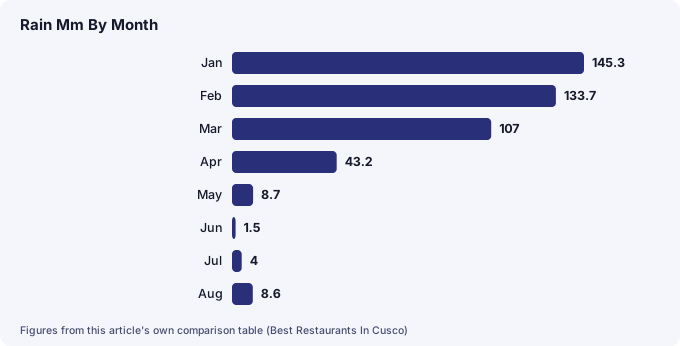
The dry season, roughly May to September, is the terrace season: clear days, mean maximums of 19.1 to 19.8 C from June to August, and cold nights with frost common in June and July. The wet season, roughly November to March, carries 71.9 percent of the year's 707.8 mm of rain between December and March, so dining moves indoors. Mean daily maximums stay between 18.8 and 20.9 C all year.
Cusco is in the Southern Hemisphere at high altitude, so the calendar is the reverse of Europe and North America: June to August is winter, dry and clear by day and close to freezing at night, while December to March is the wet heart of the year. The WMO's World Weather Information Service carries a full set of climate normals for its Cuzco station, supplied by SENAMHI, Peru's weather service, and it is a historical normal rather than a recent one. The table below is that set.
| Month | Mean max C | Mean min C | Rain mm |
|---|---|---|---|
| Jan | 18.9 | 6.6 | 145.3 |
| Feb | 18.8 | 6.5 | 133.7 |
| Mar | 19.1 | 6.2 | 107.0 |
| Apr | 19.7 | 4.9 | 43.2 |
| May | 19.8 | 2.5 | 8.7 |
| Jun | 19.5 | 0.3 | 1.5 |
| Jul | 19.1 | 0.1 | 4.0 |
| Aug | 19.8 | 1.6 | 8.6 |
| Sep | 19.8 | 3.9 | 21.8 |
| Oct | 20.9 | 5.5 | 39.4 |
| Nov | 20.7 | 6.1 | 71.9 |
| Dec | 19.4 | 6.4 | 122.7 |
For restaurant planning, the pattern that matters is the swing. A dry-season dinner on a balcony can drop from a 19 C evening to a night cold enough for frost, so the terrace and the closed room both get used in one sitting. In the wet months the rain is concentrated and heavy rather than constant, and the market counters stay the most reliable meal in the city. The month-by-month detail, including what the rain does to valley day trips, sits in the Cusco weather by month guide, and the wider timing call for a whole trip is in the best time to visit Cusco guide.
The products below are the three this site verified for eating-led trips: the bar crawl for the evening, the buffet-lunch valley tour for the day trip, and the official Machu Picchu entrance ticket for the leg beyond the valley.
How Do Festivals Change Eating Out In Cusco?
Cusco's festival calendar puts fixed dates on the eating year: Inti Raymi on 24 June each year runs from Qorikancha through the Plaza de Armas to Sacsayhuaman, and Santurantikuy fills the same square with a craft fair on 24 December. Both take over the Plaza de Armas, so a food-focused itinerary sits best when it is planned around the calendar rather than through it.
The June festival is the big one for the restaurant map. Inti Raymi, the Inca sun ceremony staged each 24 June, moves from Qorikancha to the Plaza de Armas and up to the Sacsayhuaman esplanade for the main ceremony, and grandstand tickets are sold in advance through official sellers. The Inti Raymi guide covers the ceremony, the route and the ticket system in full. What it means for dinner is that the centre's attention, and its tables, sit inside a festival route that day.
| Event | Date | What happens |
|---|---|---|
| Inti Raymi | 24 June each year | Ceremony from Qorikancha via the Plaza de Armas to Sacsayhuaman |
| Virgen del Carmen, Paucartambo | 15 to 18 July, traditional | Procession festival in a town outside the city |
| Q'eswachaka bridge renewal | 2 to 4 July 2026, festival 5 July 2026 | Annual rebuilding of the Inca rope bridge over the Apurimac, 2026 dates |
| Santurantikuy | 24 December each year | Craft fair filling the Plaza de Armas |
The December fair reverses the June pattern. Santurantikuy turns the Plaza de Armas into a market of artisans and figurine makers on 24 December, which makes the square itself the destination and the surrounding dining rooms the warm places around it. Both events are free to walk into, and they sit alongside the rest of the calendar in the free things to do in Cusco guide. The Q'eswachaka dates are 2026 specifics rather than a standing rule, and the bridge renewal is a rural event far from any restaurant row, but it marks how deep the food-and-culture calendar runs outside the city.
Can A Cooking Class Or A Food Tour Replace A Restaurant Night In Cusco?
Cooking classes and guided food walks sit between a meal and a sightseeing trip, and Cusco sells both. A class with a market component teaches the dishes and then serves the result, while a street-food walk moves from stall to stall with a local guide explaining each one. Neither replaces a slow dinner, but both explain what the dinner is made of.
The class route is the most complete version. The Cusco Cooking Classes and San Pedro Market Tour runs as a small-group class that begins with the market itself, buying what the kitchen will cook, then turns the Andean larder into a meal that the class eats. The full card is below, and the details sit on the cooking class tour's page.
To try the market and the kitchen in one go, book a cooking class with market tour here.
The walk route is the opposite trade. The Curious Monkey Cusco: Eat the Streets walking food tour is a small-group street-food walk limited to ten people or fewer, tasting papas, meats and sweets while talking with the street food vendors, which is the part of the food culture a dining room cannot stage. Its verified card and live availability are below, with the details on the street food walk's page.
Beyond those two shapes, the city also sells cocktail-led classes and chocolate workshops, and the Cusco cooking classes guide compares the formats properly. The honest framing is that a class or a walk is a meal plus an explanation, at a price the card states and this page does not, and the visitors who get the most from them are the ones who book one early in the trip and then order better for the rest of it.
Common Questions About Cusco Restaurants
Are there Michelin-starred restaurants in Cusco?
No. The Michelin Guide does not list restaurants in Peru; its Peruvian-cuisine list covers restaurants in other countries. No Cusco restaurant carries a Michelin listing, and this site states no ranking for any individual restaurant.
How much does dinner cost in Cusco?
No verified range exists for restaurant dinner prices in Cusco. The reported figures this site holds are for the set lunch culture: a menu del dia at about S/ 8 to S/ 15, roughly US$2 to US$4, and a cup of coca tea at about S/ 2 to S/ 5. Dinner prices sit on each restaurant's own menu, and the sol trades at about S/ 3.4 to the US dollar.
What time do people eat dinner in Cusco?
Nobody publishes a reliably sourced figure for when Cusco's dining rooms fill up in the evening, and this page will not guess one. The practical answer is to ask the restaurant directly when booking, or check the venue's own page for its service hours.
Is it safe to eat street food in Cusco?
The CDC's Peru guidance advises usual food and water precautions: avoid contaminated water and drink bottled, boiled or treated water. Street food in Cusco is a real and active part of the food culture, and guided walks such as the Curious Monkey street food tour move through it with a local guide. General safety questions are covered in the Is Cusco safe guide.
Is cuy on every Cusco menu?
Cuy is eaten across the Andes and appears in Cusco, but not on every menu, and no price, restaurant or ranking for it is verified on this site. The full cuy guide covers the dish, its cultural weight and how it is served.
Do Cusco restaurants take credit cards?
Card acceptance and card surcharges in Cusco restaurants are details this site stays silent on. Ask before ordering; the menu and the counter are where the real answer sits, and market counters in particular should be treated as cash-first until told otherwise.