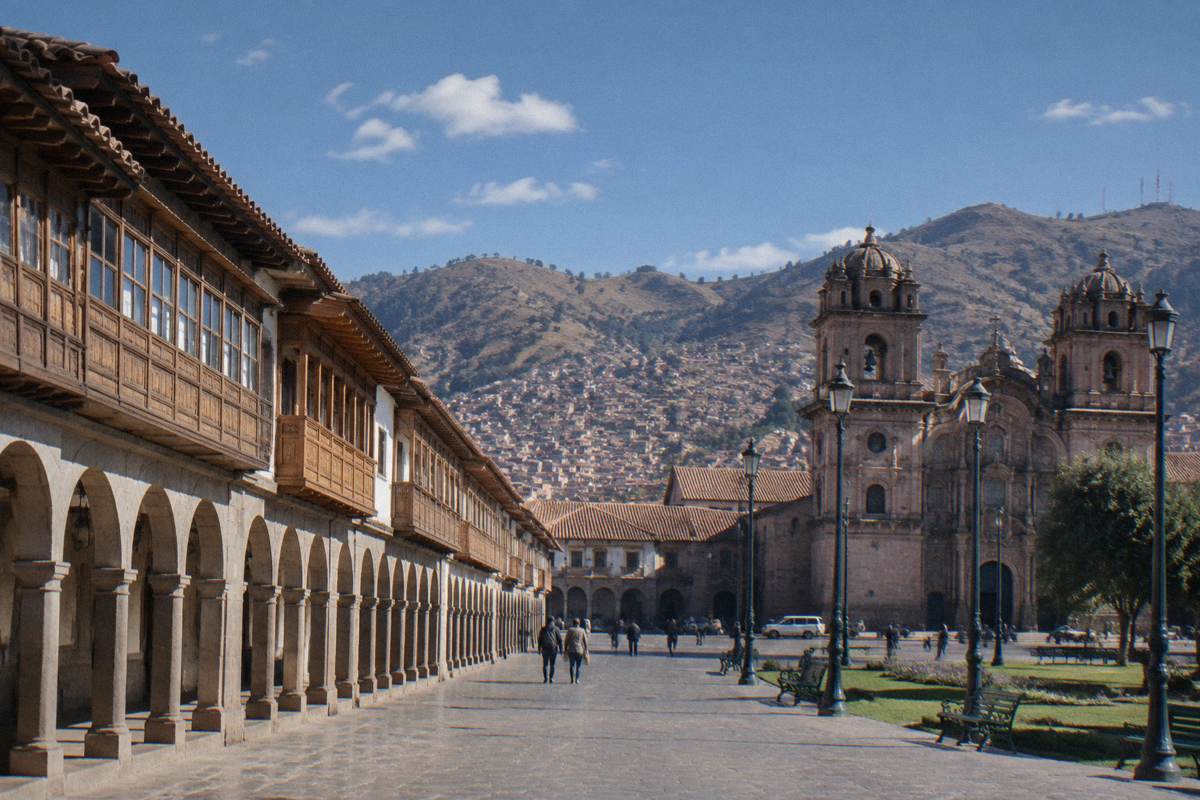
Luggage Storage In Cusco
Cusco sits at 3,335 m in the Andes of southern Peru, and almost every visitor uses it as a base for day trips and treks that are easier with a light day pack. This guide sets out where bags can be left, what the Machu Picchu size limit means, and how to split luggage between what travels and what stays.
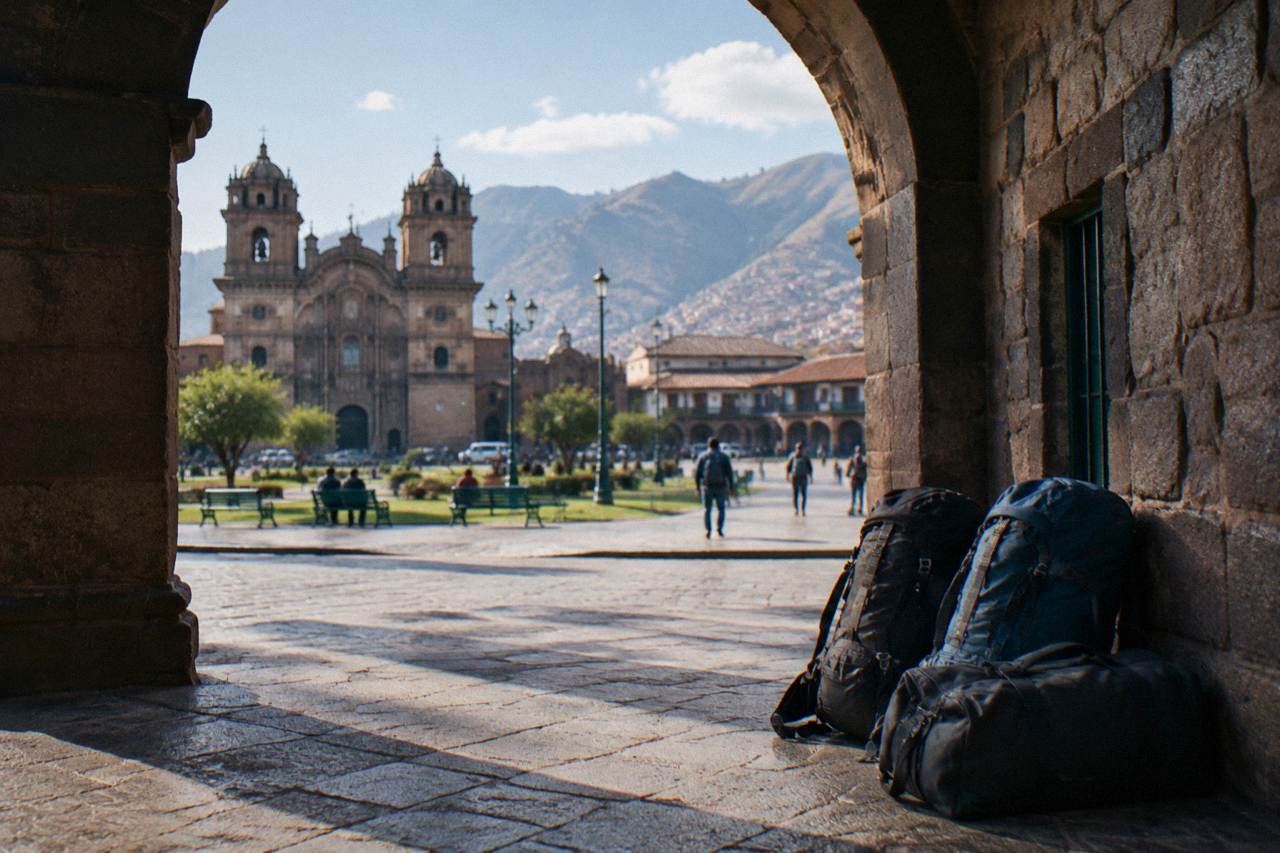
Short answer
Hotels and guesthouses in Cusco commonly hold bags for guests, storage services can be booked through a luggage-network listing, and the Machu Picchu code of conduct caps day bags at 40 x 35 x 20 cm, so most visitors leave the main pack behind for citadel, valley and mountain days.
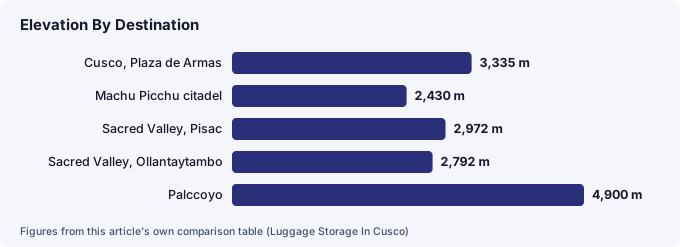
Cusco is the high-altitude base camp for southern Peru's biggest sights, and the arithmetic of the region makes luggage a real planning question rather than an afterthought. The Plaza de Armas sits at 3,335 m, the Machu Picchu citadel is lower at 2,430 m, and Rainbow Mountain sits at about 5,000 m. A visitor who carries a full pack to all three is working against the geography. This guide, written by Oleg for Things To Do In Cusco Peru, reports what official rules and operator listings say about leaving bags behind: where storage fits into a Cusco itinerary, what the citadel's size limit allows, and how trekkers and day-trippers typically split their load.
Where Can You Store Luggage In Cusco?
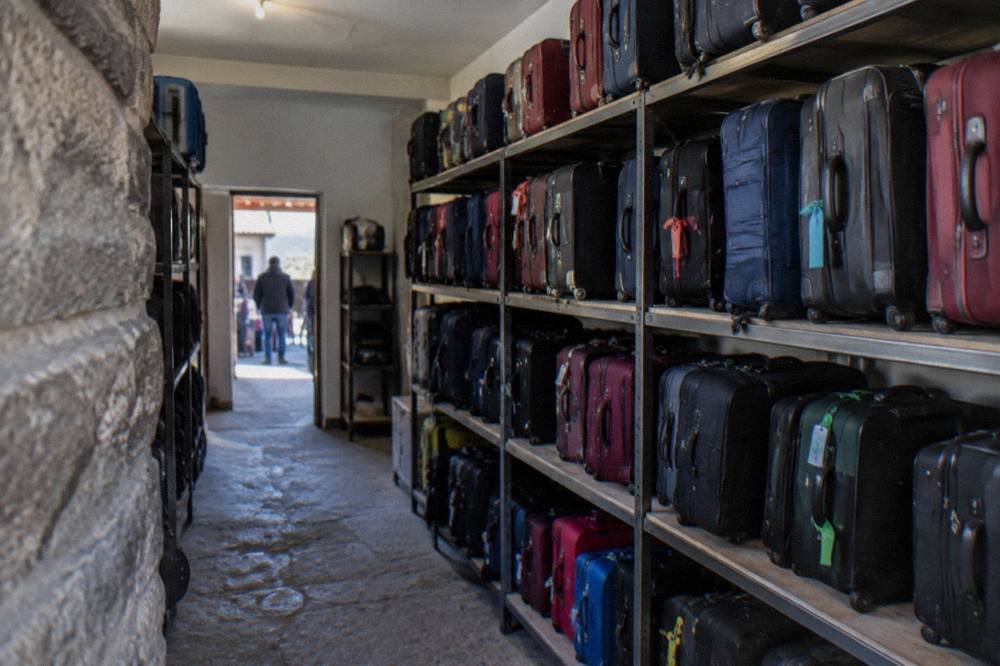
The three working options are the accommodation itself, a booked luggage-storage service reached through a storage-network listing, and, for specific activities, the tour or trekking agency that runs the trip. No storage point in Cusco has a confirmed address, hours or price here, so treat each as a service to confirm on its own listing rather than a named recommendation.
Hotels and guesthouses are the default answer, and the reason is structural: Cusco's visitor economy runs on guests who leave for Machu Picchu, the Sacred Valley or a multi-day trek and come back. Accommodations that depend on return guests generally hold bags in a back room or office, sometimes tagged, sometimes against a signature. The practical move is to ask at check-in, not the night before, and to confirm whether the room itself stays booked, because a stored bag and a held room are two different agreements.
The second option is a dedicated storage service. This site links to a luggage-storage network that lists vetted points in Cusco, bookable in advance: see the storage listings for Cusco. The network model means a traveller books a slot per bag per day and receives an address and instructions, which matters in a city where the useful hours are early: day trips to the mountains leave before dawn, and a storage point that opens at nine is useless for a 05:00 pickup. Booking ahead also answers the two questions a hotel cannot: whether the point takes non-guests, and what happens on the return date if a train or bus runs late.
The third option is the agency. Licensed trekking operators running the Inca Trail, the Salkantay route or the Lares valley routinely take clients' main bags into store for the duration of the trek and return them at the end; the trade is standard enough that it is worth confirming in writing what is included, where the bag sits, and who is responsible for it. The Ministry of Culture rules that govern the Inca Trail say nothing about luggage, so the storage arrangement is purely between client and agency.
What Bag Size Is Allowed At Machu Picchu, And Why Does It Force A Storage Decision?
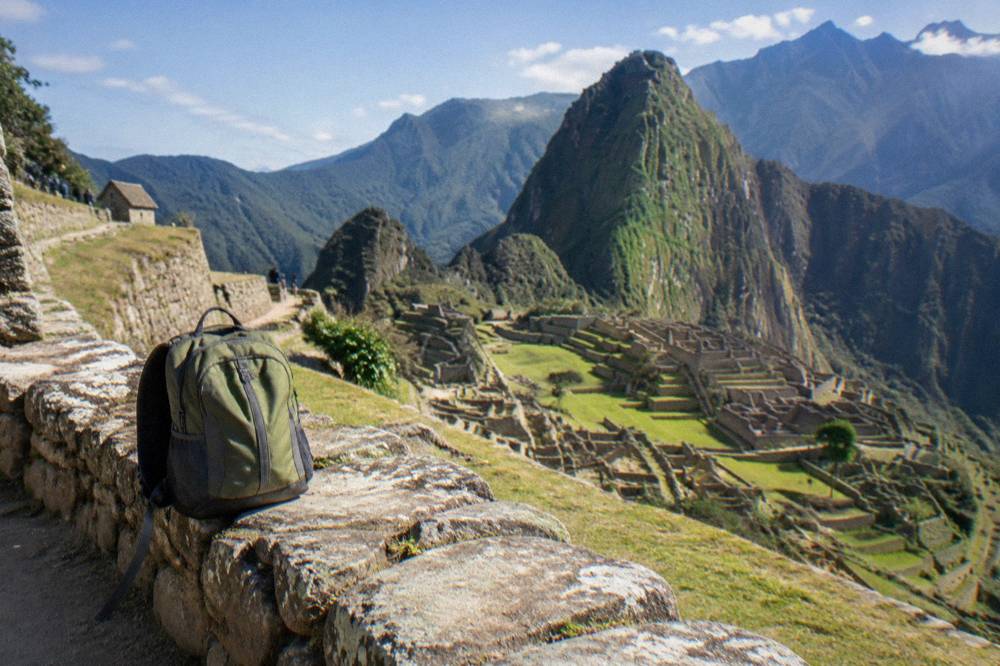
The Machu Picchu code of conduct, published on the official citadel site, prohibits bags larger than 40 x 35 x 20 cm inside the sanctuary, and also bans food, tripods, selfie sticks, umbrellas, drones and strollers. That limit is smaller than a standard school daypack, so the main luggage stays in Cusco or Aguas Calientes and only a small bag travels to the citadel.
The rule is enforced at the entrance control, and the list is long: the official code of conduct page carries a 25-item list that also covers hard-soled shoes and loud noise. The size cap is the item that reshapes a packing plan. A 40 x 35 x 20 cm bag holds a rain jacket, sun protection, water, documents and a camera; it does not hold a sleeping bag, a spare pair of boots or a week of clothing. Visitors on the classic pattern, Cusco to Machu Picchu and back, therefore make a split: the main pack stays in Cusco, and a small bag rides the train.
| Item | Fits 40 x 35 x 20 cm | Storage decision |
|---|---|---|
| Rain jacket, warm layer | Yes | Carry to the citadel |
| Passport and ticket | Yes | Carry, required at entry |
| Water bottle | Yes | Carry; food is prohibited |
| Camera, no tripod | Yes | Carry; tripods are prohibited |
| Umbrella | No | Prohibited; carry a poncho instead |
| Main suitcase or trek pack | No | Store in Cusco or Aguas Calientes |
| Stroller | No | Prohibited at the citadel |
| Drone | No | Prohibited in the sanctuary |
The second storage decision happens at the Aguas Calientes end. The town, officially Machu Picchu Pueblo, sits at about 2,040 m, and visitors staying there overnight commonly leave the main bag at the accommodation and walk up to the citadel with the small day bag. Visitors doing the citadel in one long day from Cusco, a pattern this site covers in depth on the Machu Picchu day trip page, make the split in Cusco before the train instead. This site keeps exactly one Machu Picchu page, and the ticketing and train details that belong to sibling sites get only this mention: tickets sell on the Ministry of Culture platform, and the train is a separate topic covered elsewhere.
For the day itself, a booked tour with transport and entry bundled removes most of the bag-handling friction. Two options from this site's roster fit the pattern:
Does Cusco Airport Have Luggage Storage, And How Do Bags Get From The Airport To A Hotel?
Every Cusco flight uses Alejandro Velasco Astete International Airport, which sits at 3,310 m about 6 km from the Plaza de Armas, and the airport's own pages were not verified for a storage counter, so no facility is claimed here. The reliable pattern is to take all bags straight to the accommodation and make the storage split there, before the first day trip.
The airport question matters because Cusco's flight schedule pushes arrivals into the morning: the high-altitude winds and the afternoon build-up make early arrivals the norm, and a traveller landing with a full pack often has hours before a hotel room is ready. The honest position is that no storage counter, no left-luggage desk and no price board appear at the terminal, so nothing of the kind is stated. What the pack does hold is the ground: the airport is about 6 km from the centre, a taxi is reported at about S/ 15 to 25 for the ride, and a private transfer can be booked in advance.
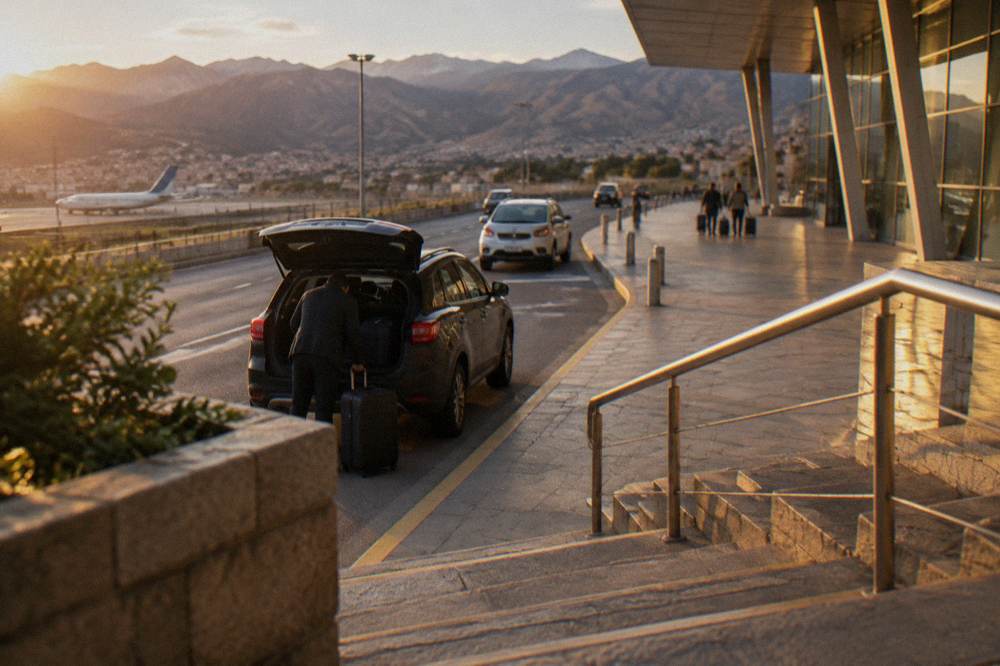
A pre-booked transfer is the cleanest answer for a luggage-heavy arrival, because the driver meets the party at the terminal and every bag goes into one vehicle with no negotiation at the kerb. The private airport transfer on this site's roster covers exactly that run, from the terminal to centrally located hotels:
The wider arrival picture, including altitude timing and where to base yourself, is covered on the Cusco airport guide and the where to stay in Cusco guide. One practical note belongs here: the new airport at Chinchero is not operating, with completion targeted for 2028, so every arrival for the foreseeable future lands at Velasco Astete.
How Much Does Luggage Storage In Cusco Cost?
No storage price in Cusco is printed here, so no figure appears. Storage networks price per bag per day on their own listings, hotels that store bags for guests usually do so as a courtesy rather than a charged service, and trekking agencies include storage in the trip package or itemise it in the booking terms. The live price sits on the booking page for the specific service.
The reason for the silence is deliberate. Published roundups of Cusco storage prices disagree, none traces to a primary price board, and a wrong sol figure is worse than none. What can be said is how the three channels behave. A storage network charges per bag per day, booked in advance, with the rate shown at booking. A hotel holding a guest's bag while the guest is away on a paid night, or between checkout and a late departure, generally treats it as part of the relationship rather than a line item. An agency holding trek luggage folds it into the trek's inclusions, and the booking terms are the place to check.
The cost question also has a second half that travellers underweight: the cost of carrying too much. A porter on a supported trek carries a set weight allowance, and anything above it either travels in the client's own day pack or does not travel at all. On the Inca Trail the daily quota is 500 people including porters and guides, and the pack each trekker personally carries is small by design. The packing decision made in Cusco is the one that governs the next four days.
| Trip from Cusco | Typical luggage split | Where the main bag sits |
|---|---|---|
| Machu Picchu day trip by train | Small day bag only | Cusco hotel or storage service |
| Machu Picchu with a night in Aguas Calientes | Day bag plus overnight kit | Aguas Calientes accommodation |
| Inca Trail 4-day trek | Day pack, porter allowance | Trekking agency office in Cusco |
| Salkantay or Lares trek | Day pack, duffel for porters | Agency storage, returned post-trek |
| Sacred Valley day trip | Day bag | Cusco accommodation |
| Rainbow Mountain day trip | Very small pack | Cusco accommodation |
What Should You Store Versus Carry For Each Kind Of Day Out?
The pattern that works across the region is one small day pack for every day out and one stored main bag, with the day pack sized by destination: rain and sun protection everywhere, warm layers for the high mountain days, and nothing beyond water and documents for the citadel, where food and oversized bags are banned at the control.
The elevation table explains the packing logic better than any rule of thumb. Cusco at 3,335 m is the reference point, and every day trip moves either up or down from it. The mountain days move up, and up means cold: the WMO/SENAMHI historical normal for the Cuzco station shows mean minimums of 0.3 C in June and 0.1 C in July, and SENAMHI records that frost nights peak in those months. A day pack for Rainbow Mountain at about 5,000 m or Humantay at about 4,200 m is a winter pack even in the dry season.
| Destination | Elevation | Day-pack priority |
|---|---|---|
| Cusco, Plaza de Armas | 3,335 m | Base; store here |
| Machu Picchu citadel | 2,430 m | Documents, water, sun protection |
| Aguas Calientes town | About 2,040 m | Overnight kit for stays |
| Sacred Valley, Pisac | 2,972 m | Sun protection, layers |
| Sacred Valley, Ollantaytambo | 2,792 m | Day bag, water |
| Humantay Lake | About 4,200 m | Warm layers, rain shell |
| Palccoyo | 4,900 m | Full winter kit |
| Rainbow Mountain, Vinicunca | About 5,000 m | Full winter kit, cash for the community fee |
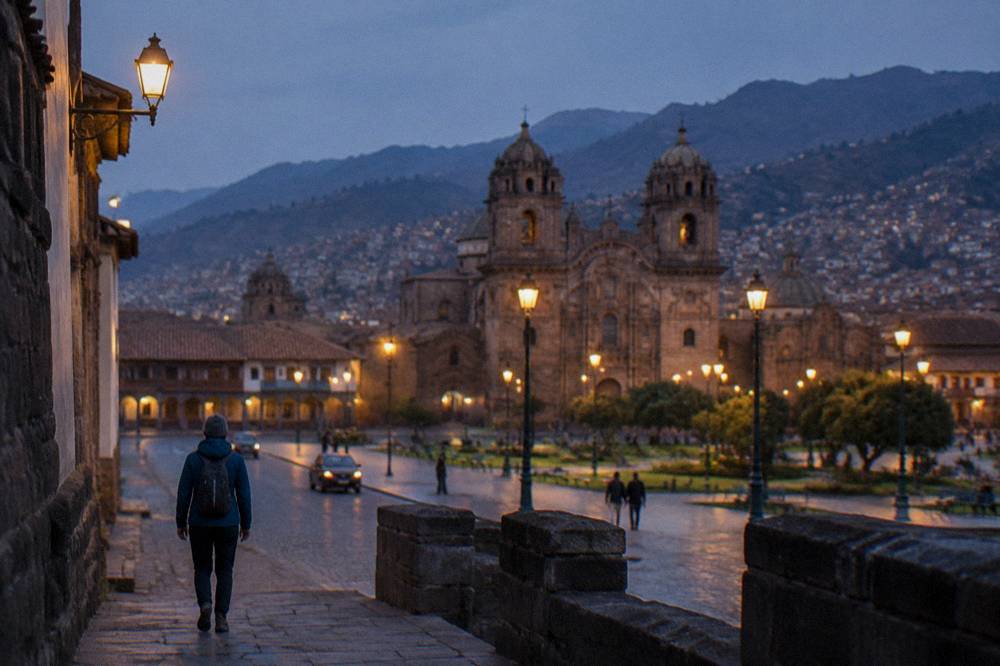
The valley days are the gentle half. A Sacred Valley circuit drops below Cusco's altitude, and the mean daily maximum across the whole year in Cusco stays between 18.8 and 20.9 C, so the day pack is a sun-and-layers job rather than a mountaineering one. The full-day Sacred Valley tour on this site's roster is the classic bag-light day out, with transport handling the movement while the main bag waits in Cusco:
Season changes the contents more than the structure. The dry season, roughly May to September, brings 22.8 mm of rain across the whole May-to-August stretch at the Cuzco station, while December to March alone carries 71.9 percent of the year's 707.8 mm. A wet-season day pack carries a real rain shell; a dry-season one carries sun cream and lip balm. The Cusco weather by month guide and the best time to visit Cusco guide carry the full breakdown.
How Do Trekkers Handle Luggage For The Inca Trail, Salkantay And Lares?
Trekkers leave the main bag with the licensed agency in Cusco, carry a small day pack themselves, and hand a duffel to the porter team within the weight allowance, with the Inca Trail closed every February and permits sold only through licensed agencies under a 500-person daily quota that includes porters and guides.
The Inca Trail's structure dictates the luggage plan. The 500-person daily quota includes everyone, porters and guides counted, and the Ministry of Culture resolutions that govern the route allow permits to be sold only through licensed agencies. That means the agency is the single counterparty for the trek, and the storage question becomes a clause in the booking: where the main bag sits for the trek days, when it is returned, and what the porter allowance is. The trail itself closes every February for maintenance and the wet season, and the permit includes Machu Picchu entry.
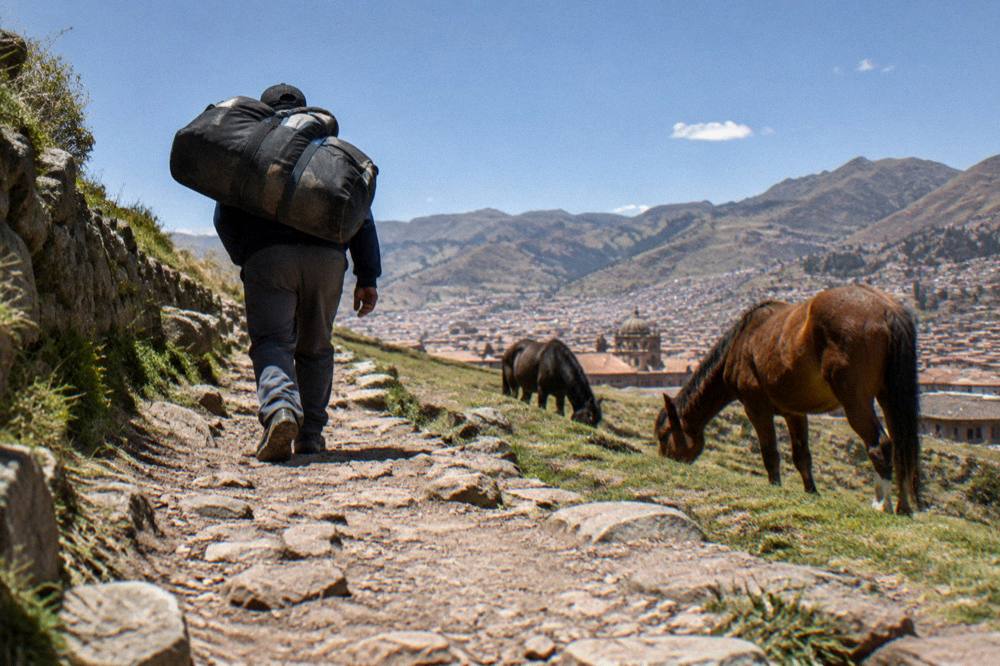
The Salkantay and Lares routes work the same way commercially even though they sit outside the Inca Trail permit system. A supported trek moves camp gear by horse or porter, and the trekker's personal load is a day pack plus a duffel within the stated allowance. The packing list that matters is short: the agency states the duffel weight limit in the booking terms, and everything else stays in Cusco. This site's Inca Trail guide, Salkantay trek guide and Lares trek guide carry the route detail; the storage point is one line in the booking confirmation.
One date-specific wrinkle is worth flagging for 2026 planners. Pope Leo XIV's visit brings an event at Sacsayhuaman in Cusco on 15 November 2026, scheduled for 10:30, and large public events change the practical picture around access and crowds. Anyone storing bags and moving around the city that week should confirm arrangements with the accommodation directly.
Is Luggage Storage In Cusco Safe, And What Should You Know Before Handing Over A Bag?
The honest answer is that no storage point in Cusco publishes audited security data, so the working safeguards are procedural: store valuables and documents on your person or in a hotel safe, photograph the bag at handover, get a tag or receipt, and check whether the storage arrangement is insured at all. The US advisory for Peru is Level 2, exercise increased caution, and Cusco's main tourist zones sit outside the Do Not Travel areas.
Handing a bag over is a trust transaction, and the safeguards are the same ones that govern any left-luggage arrangement worldwide. A tagged ticket, a named shelf, a locked room and a written agreement all beat a friendly nod. The valuables rule is the one that actually protects people: passports, cash and electronics travel on the person or live in a safe, not in a stored duffel. The UK foreign office's Peru guidance notes that street crime including muggings is a significant problem in major cities including Cusco and advises against walking alone at night in quiet areas, which is a general safety point rather than a storage one, but it shapes the same behaviour: the bag you carry should be the one you can keep an eye on.
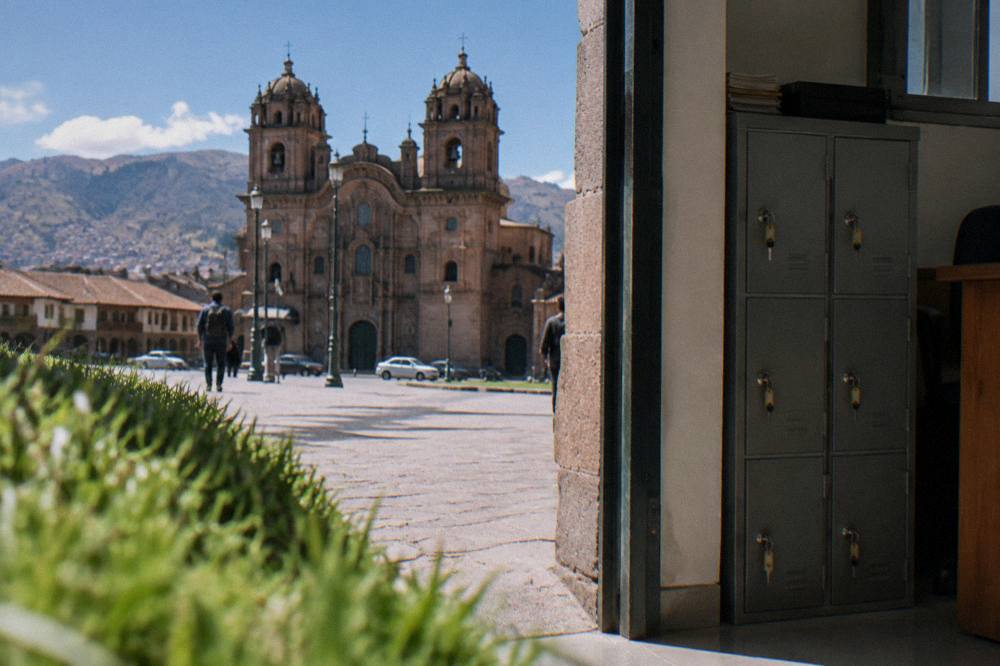
The broader safety picture for the city, including night walking and transport, is on the is Cusco safe guide. For storage specifically, the practical checklist is short and sourceable: confirm the return time in local hours, confirm what happens if the return slips a day, and keep the ticket. A booked storage-network listing carries its own terms, which is one reason to book rather than improvise: see the Cusco storage listings.
How Does Luggage Fit A Cusco Itinerary Day By Day?
A standard Cusco itinerary stores the main bag on arrival day, carries a day pack for the acclimatisation days in the city, keeps the small bag for every day trip and trek, and retrieves the main bag only for the departure. The first days in the city are deliberately light, because the CDC names Cusco a rapid-ascent destination and advises a graded approach to altitude.
The acclimatisation logic is why the luggage plan and the itinerary plan are the same plan. The CDC Yellow Book names Cusco, at approximately 3,350 m by its figure, as a high-altitude destination where abrupt ascent is the problem, and it advises avoiding a single-day jump to a sleeping altitude of 2,750 m or more where possible. The first days in Cusco are therefore walking days, market days and museum days, none of which need a heavy pack, and the acclimatisation day guide and Cusco altitude guide set out the full approach.
| Itinerary day | Bags carried | Bags stored | Notes |
|---|---|---|---|
| Arrival day | All bags, straight to the hotel | None yet | Transfer beats kerb negotiation |
| Acclimatisation day 1 | Day pack | Main bag at the hotel | Light walking, city centre |
| Acclimatisation day 2 | Day pack | Main bag | Markets, museums, viewpoints |
| Sacred Valley day | Day pack | Main bag | Tour transport carries the day |
| Machu Picchu day | 40 x 35 x 20 cm bag or smaller | Main bag in Cusco | Size limit at the entrance |
| Trek days | Day pack plus porter duffel | Main bag with the agency | Allowance in booking terms |
| Departure day | All bags | None | Retrieve, transfer to the airport |
The itineraries this site publishes, from one day in Cusco through three days to a week, all assume this split implicitly: a base in the city, day trips out, and the main bag staying put. The getting around Cusco guide covers the transport layer that makes the split work, and the Cusco to Ollantaytambo guide covers the valley leg that most Machu Picchu routes use.
For the evenings that stay in the city, the stored-bag pattern frees the night out as well. A pisco sour mixology session in the historic centre is the kind of plan that only works hands-free, and the one on this site's roster runs as a small-group evening:
The same logic extends to the whole evening economy: the Cusco nightlife guide and the what to eat in Cusco guide both assume a traveller unencumbered by a main pack. The second set of tour options below rounds out the trio this page features:
Common Questions About Luggage Storage In Cusco
Can I Store Luggage In Cusco For Free?
Hotels and guesthouses commonly hold guests' bags at no charge, especially when the guest is away on a trek and returning, or has a late departure after checkout. Dedicated storage services charge per bag per day, with the rate shown on the booking page at booking. No free public left-luggage facility in Cusco is claimed here.
Can I Take A Backpack Into Machu Picchu?
Only if it is no larger than 40 x 35 x 20 cm, per the citadel's official code of conduct, which also prohibits food, tripods, selfie sticks, umbrellas, drones and strollers. A standard daypack exceeds the limit, so the main bag stays in Cusco or Aguas Calientes and only a small bag travels to the entrance control.
Where Do I Leave Luggage During A Trek From Cusco?
With the licensed agency running the trek. Operators on the Inca Trail, Salkantay and Lares routes routinely store clients' main bags for the trek's duration and return them at the end. The arrangement, the location and responsibility for the bag are set by the booking terms, so confirm them in writing before the trek starts.
Does Cusco Airport Have Left Luggage?
No storage counter at Alejandro Velasco Astete International Airport is listed in the terminal's public information, so no facility is stated. The working pattern is to take all bags from the terminal to the accommodation, about 6 km to the centre, and make the storage split there. A private transfer booked in advance handles the full load in one vehicle.
Is It Safe To Leave A Bag With A Cusco Hotel?
Accommodations that depend on returning guests make bag storage a routine part of the service, and the standard safeguards apply: a tag or receipt, a locked room, and no valuables in the stored bag. Passports, cash and electronics belong on your person or in a safe. Photographing the bag at handover costs nothing and settles any dispute about condition.
How Many Bags Should I Bring To Cusco At All?
The pattern that fits the region is one main bag that stays in Cusco and one small day pack that travels everywhere, sized to the 40 x 35 x 20 cm citadel limit if Machu Picchu is on the plan. Trekkers add a duffel within the porter allowance. Everything beyond that is storage weight rather than travel kit.
The last word belongs to the geography that started the page. Cusco is the high base, the day trips swing from 2,040 m at Aguas Calientes to about 5,000 m at Vinicunca, and the citadel's own rules cap the bag at the gate. A traveller who stores the main pack on day one and carries a small bag for everything after that has matched the luggage plan to the map, which is the whole trick of visiting this region comfortably.