Is It Safe To Walk Around Cusco At Night?
Is it safe to walk around Cusco at night? A sourced answer for the Andean city at 3,335 m: official travel advisories, the areas to treat with care after dark, and practical night-time precautions.
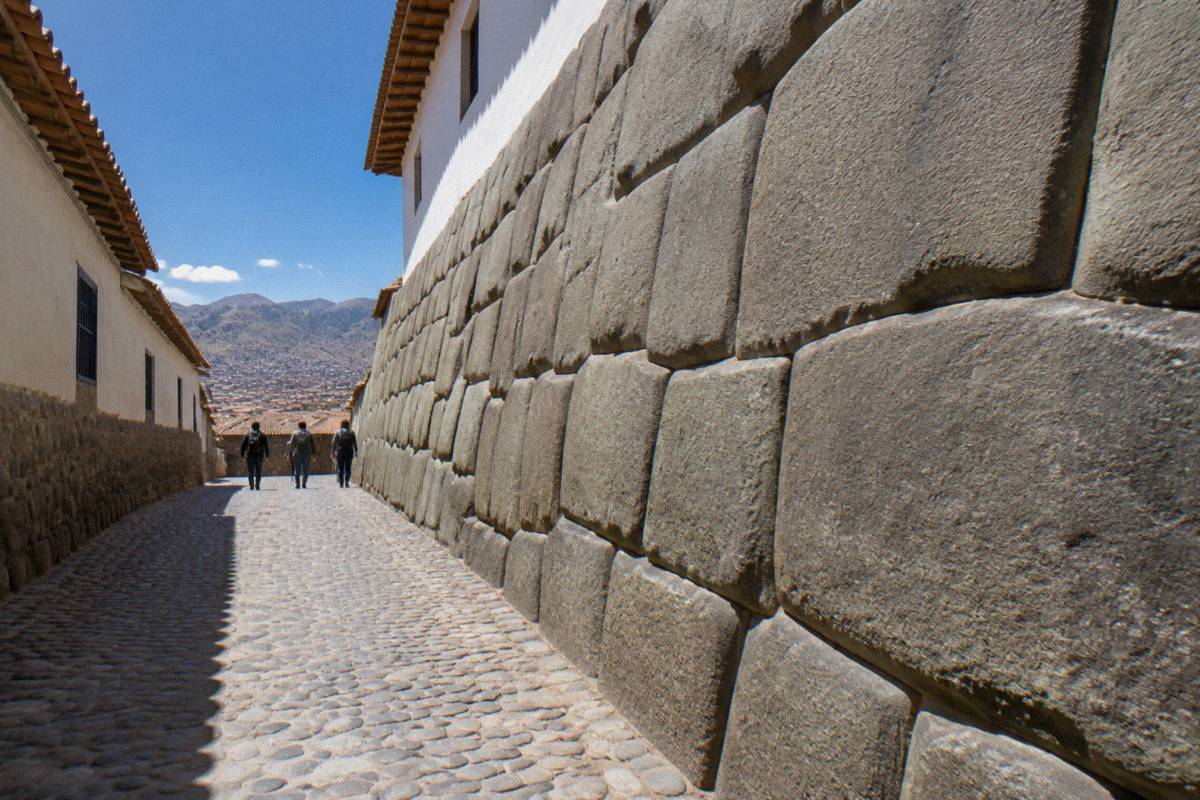
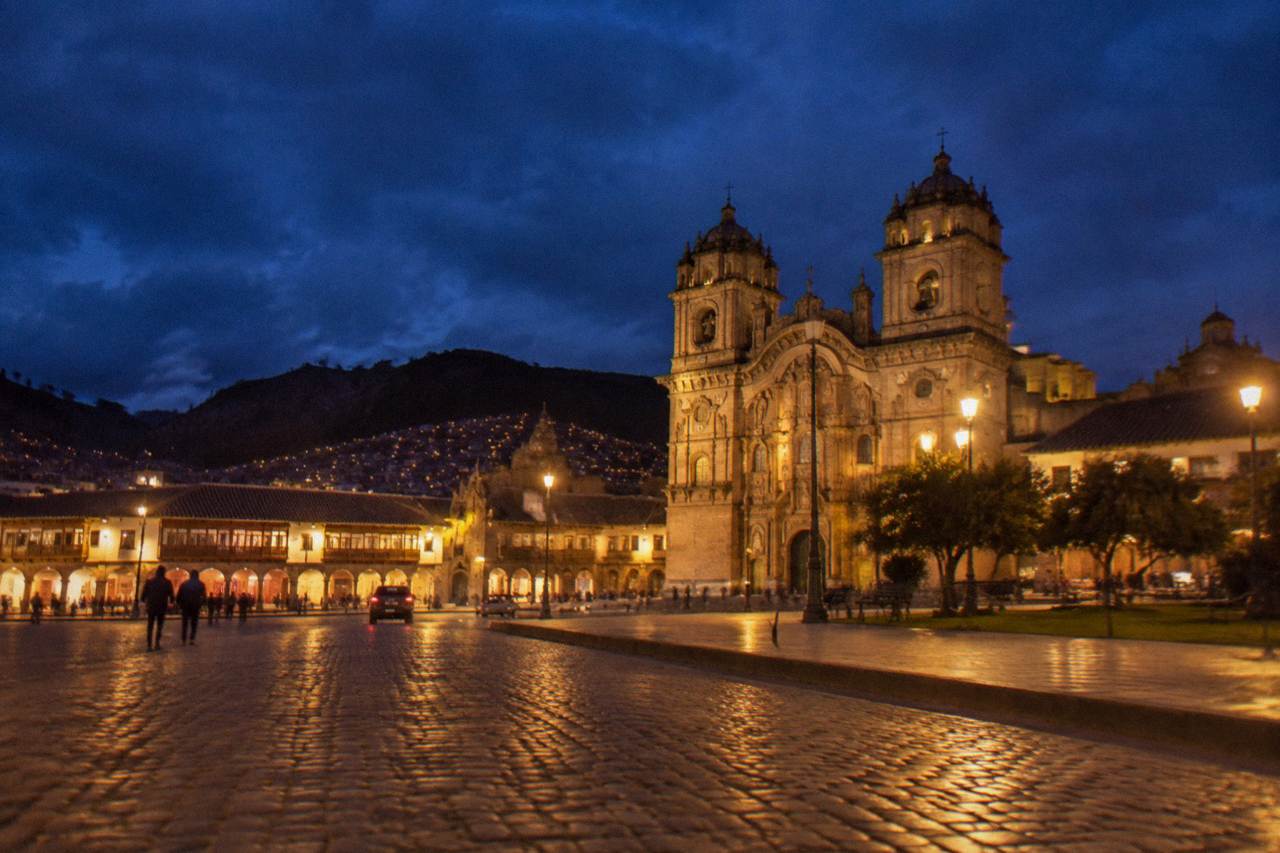
Cusco, the historic Andean city in southern Peru whose Plaza de Armas sits at 3,335 m, keeps a busy night-time core: the plaza is lit, the arcades around it stay open, and the San Blas and centro historico streets carry foot traffic well after sunset. The question visitors actually ask is narrower than the general safety question, which this site covers in depth in its Cusco safety guide. It is about walking: whether the fifteen minutes back from dinner to a hotel, or the stroll up to a viewpoint after dark, are reasonable. The short answer, drawn from what official advisories state, is that the lit, busy centre is one thing and quiet streets alone after dark are another, and the difference is exactly where the official warnings point.
Is It Safe To Walk Around Cusco At Night?
Yes, in the busy, lit core around the Plaza de Armas and central Cusco, walking at night is normal city life, but official advice draws a hard line: the UK Foreign Office warns that street crime including muggings is a significant problem in Cusco and says do not walk alone in quiet areas or at night. The practical reading is to stay on populated, illuminated streets, avoid walking solo, and use a taxi for longer night-time crossings.
The UK Foreign, Commonwealth and Development Office is the bluntest source on this. Its Peru safety and security page states that street crime, including muggings and thefts, is a significant problem in Lima, Cusco, Arequipa and other major cities, and it advises plainly: do not walk on your own in quiet areas or at night. It also warns about express kidnapping by fake taxi drivers, usually at night, which is the single most specific night-time risk it names for Peruvian cities.
The US State Department's advisory for Peru, reissued in September 2026, sits at Level 2, Exercise Increased Caution, citing crime, unrest, kidnapping and terrorism. The same advisory places Cusco city, the Sacred Valley, the Inca Trail and Machu Picchu outside its Do Not Travel areas, which matters for context: the American government's strongest warnings do not cover the places this page is about. Canada and Australia advise a high degree of caution in Peru, and Australia notes that strikes can occasionally disrupt transport to Machu Picchu, a daytime logistics point rather than a night-walking one.
For a sense of scale, the MINCETUR open dataset counted 944,008 visits to the Saqsaywaman esplanade and 1,479,506 to Machu Picchu in 2025, and the historic centre that connects them is a functioning city of 428,450 people (2017 census, INEI). Night-time Cusco is not an empty stage. It is a regional capital where restaurants, bars and the plaza stay active, and where the precautions are the same ones that apply in Lima or Arequipa after dark.
| Source | Level or wording | What it means for walking at night in Cusco |
|---|---|---|
| UK FCDO, Peru safety page | Street crime including muggings is a significant problem in Cusco; do not walk alone in quiet areas or at night | Busy lit streets are a different case from quiet ones; never walk solo after dark |
| US State Department, September 2026 advisory | Level 2, Exercise Increased Caution; Cusco city outside Do Not Travel areas | Ordinary tourist caution applies; no elevated warning specific to Cusco city |
| Australia, Smartraveller | Exercise a high degree of caution; strikes can disrupt Machu Picchu transport | A transport contingency point, not a night-walking ban |
| CDC, Peru travel notice | Level 1, Practice Usual Precautions | The health notice is the lowest tier; altitude is the flagged concern, not crime |
| PromPeru, tourist assistance | Policia de Turismo 24h phone and WhatsApp 980 122 335; iPeru phone (01) 574 8000, 24/7 | Named, round-the-clock contacts if something does happen |
Which Parts Of Cusco Are Different After Dark?
The illuminated core around the Plaza de Armas, the streets toward San Blas, and the restaurant rows of the centro historico remain active and patrolled at night, while the steep residential lanes above San Blas, the empty stretches toward the airport road, and the paths up to Sacsayhuaman are the places official wording about quiet areas points to. The rule of thumb is light, people and slope: where any of the three run out, take a taxi.
The centre of gravity at night is the Plaza de Armas itself, lit and busy, with the Cathedral and the arcades around it. This site's Plaza de Armas guide covers the daytime square; at night the same space functions as the safest open-air reference point in the city, simply because it is never deserted. The walk between the plaza and San Blas, the artisan quarter uphill, is short and normally trafficked, but it climbs, and the lanes thin out fast a block or two above.
The paths beyond the edge are where the FCDO's "quiet areas" language bites hardest. The walk up to Sacsayhuaman, which this site rates as a good daytime outing in its walk from Cusco to Sacsayhuaman answer, is not a night-time activity: the site's listed hours are 07:00 to 18:00, so after dark there is nothing open at the top and no reason to make the climb. The Cristo Blanco viewpoint above the city is a similar case, a daytime photo stop rather than an evening stroll.
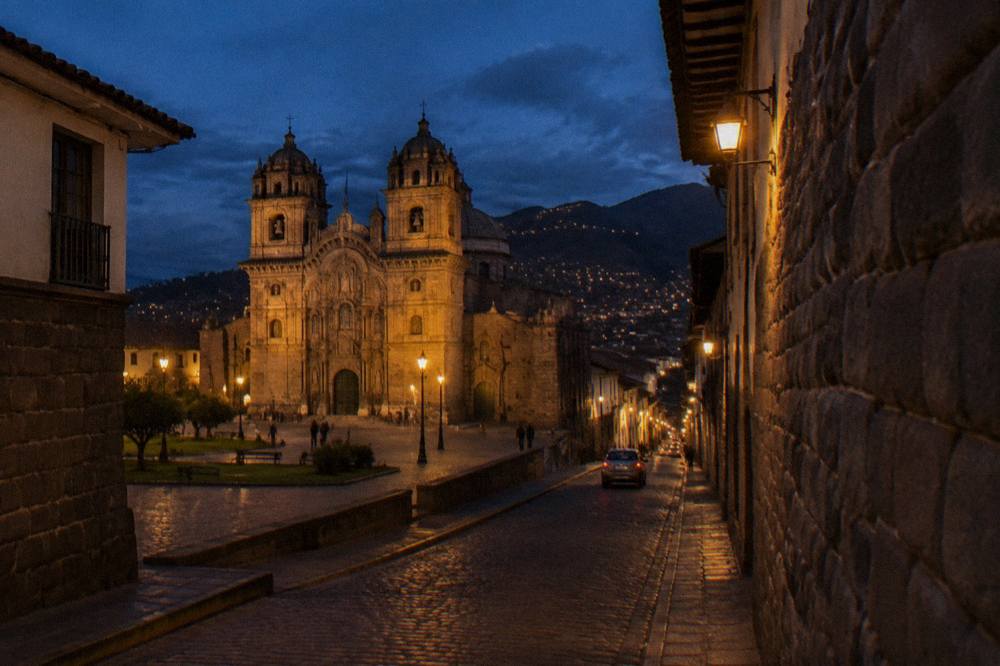
One Cusco-specific factor compounds the ordinary night-time caution: the terrain. The historic centre is steep, cobbled and, in the June and July winter, frost is common at night, per SENAMHI's frost season guidance. A street that is an easy walk in daylight becomes a slow, careful descent in the dark, and a stumble on wet stone is the more likely incident, not a confrontation. The what to wear in Cusco answer on this site covers footwear; at night, shoes with grip matter as much as the route.
An evening activity that keeps you in the lit core with a local host sidesteps the whole question. The Pisco Sour Secrets mixology session runs through the historic centre in a small group, and it is the kind of structured night out that ends with a short, known walk back.
What Precautions Do Official Sources Actually Advise?
The consistent official package is: avoid walking alone at night or in quiet areas, use registered taxis or a booked transfer rather than hailing an unknown car, keep phones and cameras out of sight on the street, carry only what is needed for the evening, and save the tourist police number, 980 122 335 on phone and WhatsApp, before going out. None of it is Cusco-specific paranoia; it is the same advice the FCDO gives for Lima and Arequipa.
The fake-taxi warning deserves its own sentence because it is the one express night-time risk the FCDO names: express kidnappings by fake taxi drivers, usually at night. The countermeasure is to have a hotel or restaurant call a known company or radio taxi, or to use a ride app, rather than waving at whatever passes. Uber operates in Cusco, though local sources note it works differently from Lima; the practical point is that a booked car with a record beats a street hail after dark. The rest of the planning pages sit on Things To Do In Cusco Peru.
Money handling at night follows the same logic as the daytime advice on this site's money and ATMs guide. Per-transaction ATM caps are typically 400 to 700 soles, and airport and hotel machines are usually the most expensive, so the evening's cash is best withdrawn earlier in the day from a machine in a bank lobby rather than a street-facing one at 22:00. Decline the machine's offer to convert to your home currency; the rate is worse than the roughly S/ 3.4 to the dollar the interbank market quotes.
| Situation | Sourced advice | Where it comes from |
|---|---|---|
| Walking alone after dark | Do not walk on your own in quiet areas or at night | UK FCDO, Peru safety and security page |
| Getting a car at night | Beware express kidnapping by fake taxi drivers, usually at night; use booked or company taxis | UK FCDO, same page |
| General caution level for Peru | Exercise Increased Caution; Cusco city outside Do Not Travel areas | US State Department advisory, September 2026 |
| If something happens | Policia de Turismo, 24h, phone and WhatsApp 980 122 335; iPeru (01) 574 8000, 24/7 | PromPeru emergency information |
| Altitude and alcohol | Avoid alcohol for the first 48 hours at high altitude | CDC Yellow Book, high-altitude travel chapter |
The altitude line belongs on a night-safety page more than it first appears. The CDC Yellow Book names Cusco, at approximately 3,350 m, as a rapid-ascent destination and advises avoiding alcohol for the first 48 hours at high altitude. Nights out are when that advice gets tested. This site's how likely is altitude sickness answer covers the physiology; for night-walking purposes, the CDC's graded-ascent preference and the 48-hour alcohol line are the two sourced rules, and the second one directly shapes a first evening in the city.
Is Cusco Safer At Night Than Other Peruvian Cities?
No sourced ranking, survey or comparison between Cusco and Lima or any other Peruvian city exists, so an honest answer cannot rank them. What the sources do say is that Cusco city sits outside the US advisory's Do Not Travel areas, that the FCDO groups Cusco with Lima and Arequipa for street crime, and that the regions the UK, Canada and Australia warn about, the VRAEM, including Pichari, Quimbiri and Vilcabamba in the Cusco department, are rural zones far from the tourist centre.
That last point is worth spelling out because it confuses people. Parts of the Cusco region, the VRAEM districts named by the UK, Canadian and Australian advisories, carry warnings. The city of Cusco, the Sacred Valley, the Inca Trail and Machu Picchu do not. A visitor reading only the words "Cusco region" in an advisory headline can wrongly conclude the city itself is flagged; the district-level detail says otherwise.
Within the city, the practical geography of a safe evening is compact. The San Blas guide and the centro historico guide on this site map the two neighbourhoods where nearly all evening activity happens, and both sit within a short, lit walk of the plaza. The where to avoid in Cusco answer covers the daytime version of the same question; at night the same places apply with less margin for error.
Common Questions About Walking In Cusco At Night
Is it safe to walk around Cusco at night?
In the busy, lit core around the Plaza de Armas and central Cusco, yes, with normal city caution. The UK FCDO warns that street crime including muggings is a significant problem in Cusco and advises not walking alone in quiet areas or at night, so the rule is to stay on populated, illuminated streets and take a taxi for anything longer or steeper.
Is Cusco safe for solo travellers after dark?
The FCDO's wording, do not walk on your own in quiet areas or at night, applies to everyone, solo travellers included. Solo visitors can still enjoy Cusco's evenings by staying in the lit core, joining a small-group activity, and using a booked taxi rather than a street hail for the ride home.
Are taxis in Cusco safe at night?
Booked and company taxis are the recommended option. The FCDO specifically warns about express kidnapping by fake taxi drivers, usually at night, so the advice is to have a hotel or restaurant call a known company or use a ride app rather than hailing an unknown car on the street.
What should I do if something goes wrong at night in Cusco?
Peru's tourist police operate a 24-hour line, 980 122 335 on both phone and WhatsApp, and PromPeru's iPeru tourist assistance runs on (01) 574 8000 around the clock. Saving both numbers before the first evening out is the practical step every source points to.
Does altitude make Cusco nights riskier?
The CDC Yellow Book advises avoiding alcohol for the first 48 hours at high altitude and names Cusco, at approximately 3,350 m, as a rapid-ascent destination. Nights are when that advice bites, and a first evening paced around it is the sourced precaution.
Is San Blas safe to walk through at night?
The stretch of San Blas closest to the plaza is normally trafficked in the evening, but the lanes thin out quickly uphill. The FCDO's quiet-areas wording applies a block or two above the main street, so the walk down to the plaza is fine and the dark residential lanes above it are a taxi ride.
Can I walk up to Sacsayhuaman at night?
No. The site's listed hours are 07:00 to 18:00, so it is closed after dark, and there is no lit, populated route up. Sacsayhuaman is a daytime visit; the evening plan belongs in the centre.
The verdict, stated plainly: walking at night in Cusco is safe on the lit, busy streets of the historic centre and unsafe by official definition in quiet areas walked alone. Keep the evening inside the arc of the plaza and San Blas, take a booked car for anything beyond it, and carry the tourist police number, and the city after dark is simply a city, not a risk.