The Cusco City Tour
The classic Cusco city tour strings the historic centre and the four Inca sites above the city into one loop. Here is what it covers, what the Boleto Turistico pays for and what it does not.
Short answer
A Cusco city tour covers the Plaza de Armas, Qorikancha and the four Inca sites above the city, Sacsayhuaman, Q'enqo, Puka Pukara and Tambomachay. The Boleto Turistico integral ticket costs S/ 130 for a foreign adult and is valid for 10 days; the four ruins sit on Circuit I, a S/ 70 partial ticket valid for 1 day.
Cusco, the historic city in the Andes of southern Peru, sits at 3,335 m on the Plaza de Armas, and its classic city tour is one of the most repeated circuits in South American travel: the colonial churches and Inca walls of the historic centre, then the four archaeological sites stacked on the hills directly above the town. The city was inscribed by UNESCO in 1983, and the same year, on 9 December 1983, the Machu Picchu Historic Sanctuary joined it on the World Heritage list. This page lays out what the Cusco city tour actually includes, what the Boleto Turistico pays for, what a guided half-day adds and what the free walking tours cover, all from the official tarifario and the verified facts this site works from. The Things To Do In Cusco Peru homepage carries the full destination overview; this page stays on the city loop itself.
What Is The Cusco City Tour And What Does It Include?
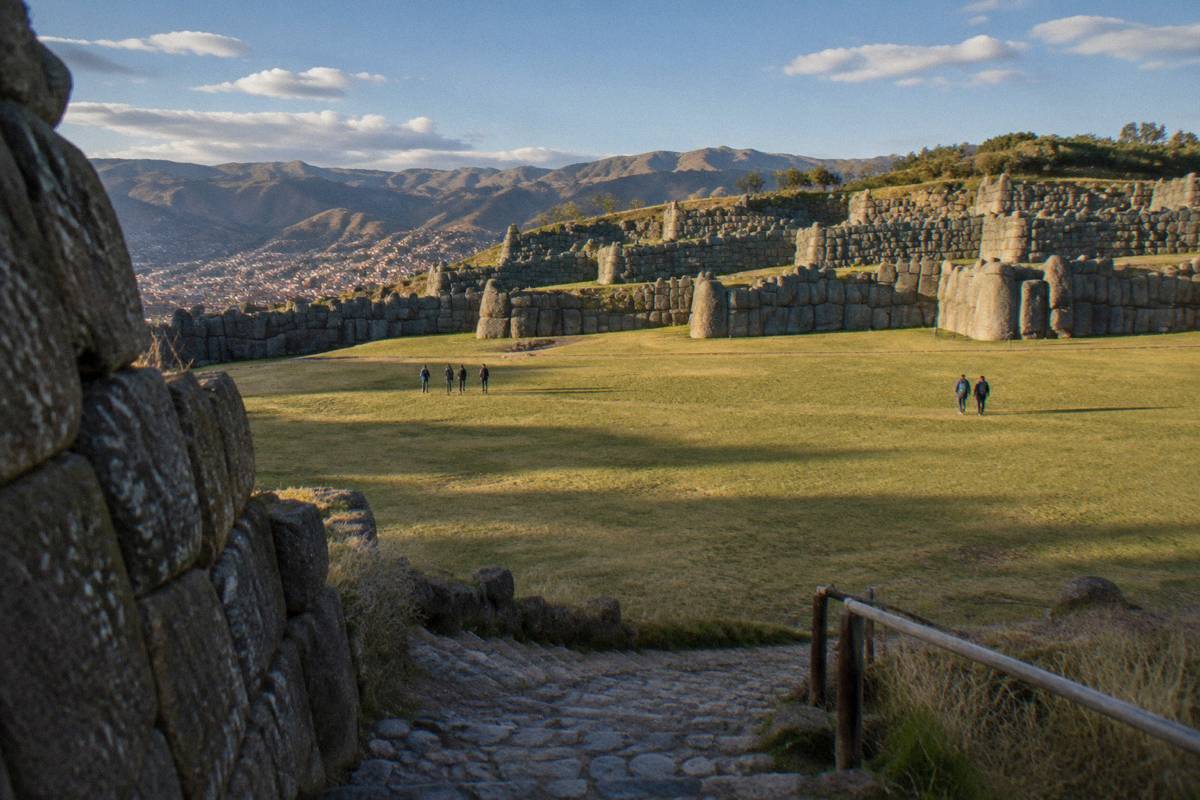
The Cusco city tour is a half-day circuit of the historic centre and the four Inca sites immediately above the city: Sacsayhuaman, Q'enqo, Puka Pukara and Tambomachay. The centre portion usually takes in the Plaza de Armas, the Cathedral, Qorikancha and the Inca walls of streets such as Hatunrumiyoc, while the ruins portion follows a single road loop out of the city and back.
The tour exists in two forms. The guided version, sold as a group or private product, puts a licensed guide on the microphone and a vehicle between stops, and the operator's live listing carries the price and the review record. The independent version costs nothing beyond tickets and transport: the four ruins sit on one road above the city, the historic centre is walkable, and COSITUC, the body that runs the Boleto Turistico, sells the ticket at its counter on Av. El Sol 103, open daily 07:30 to 18:00. COSITUC does not sell the ticket online, so the in-person rule shapes almost every itinerary decision.
What the tour is not: it is not Machu Picchu. Machu Picchu is a separate destination, lower at 2,430 m, reached by train or trek, and it is not covered by the Boleto Turistico at all. The Machu Picchu day trip page covers that circuit. The city tour stays inside Cusco and its immediate hillside, and that is its strength: it works on an arrival day, it works in almost any weather, and it can be done before the altitude has been fully mastered because the climbing is modest by Andean standards.
What Does The Boleto Turistico Cover On A Cusco City Tour?
The Boleto Turistico integral ticket costs S/ 130 for a foreign adult, about US$38, is valid for 10 days from the day of purchase and covers 16 sites across three circuits. The partial tickets cost S/ 70 each per circuit: Circuit I covers Sacsayhuaman, Q'enqo, Puka Pukara and Tambomachay and is valid for 1 day, while Circuits II and III are valid for 2 days each.
The COSITUC tarifario is the source for every figure in that answer. The integral ticket is the one that matters for a full city-plus-valley stay: it covers the four ruins of the city tour, the city museums of Circuit II and the Sacred Valley sites of Circuit III, Pisac, Ollantaytambo, Chinchero and Moray. The partials suit shorter visits. A visitor doing only the classic half-day city tour needs Circuit I at S/ 70; a visitor adding Qorikancha's site museum and the city museums adds Circuit II; the integral pays for itself once the Sacred Valley enters the plan. Foreign students pay S/ 70 for the integral with student ID, and children are free to age 9, with ages 10 to 17 paying the student price with ID.
| Boleto Turistico option | Foreign adult price | Validity | What it covers |
|---|---|---|---|
| Integral (BTCI) | S/ 130 | 10 days | All 16 sites on all three circuits |
| Partial Circuit I | S/ 70 | 1 day | Sacsayhuaman, Q'enqo, Puka Pukara, Tambomachay |
| Partial Circuit II | S/ 70 | 2 days | City museums and sites, including the Qorikancha site museum, Tipon and Pikillaqta |
| Partial Circuit III | S/ 70 | 2 days | Pisac, Ollantaytambo, Chinchero, Moray |
| Foreign student integral | S/ 70 | 10 days | All 16 sites, with student ID |
Two boundaries matter. First, the Cathedral is not one of the 16 Boleto sites, so its separate admission is paid at the door. Second, Machu Picchu is not on the Boleto in any form; its tickets sell on the Ministry of Culture platform or in person at Machu Picchu Pueblo, and foreign adult entry runs from about S/ 163 on standard routes including the S/ 11 SERNANP fee in place since 1 May 2026. The full ticket mechanics, including where the counter is and which sites sell the Boleto on the spot, are on the Boleto Turistico guide.
What Are The Four Ruins Above Cusco On The City Tour?
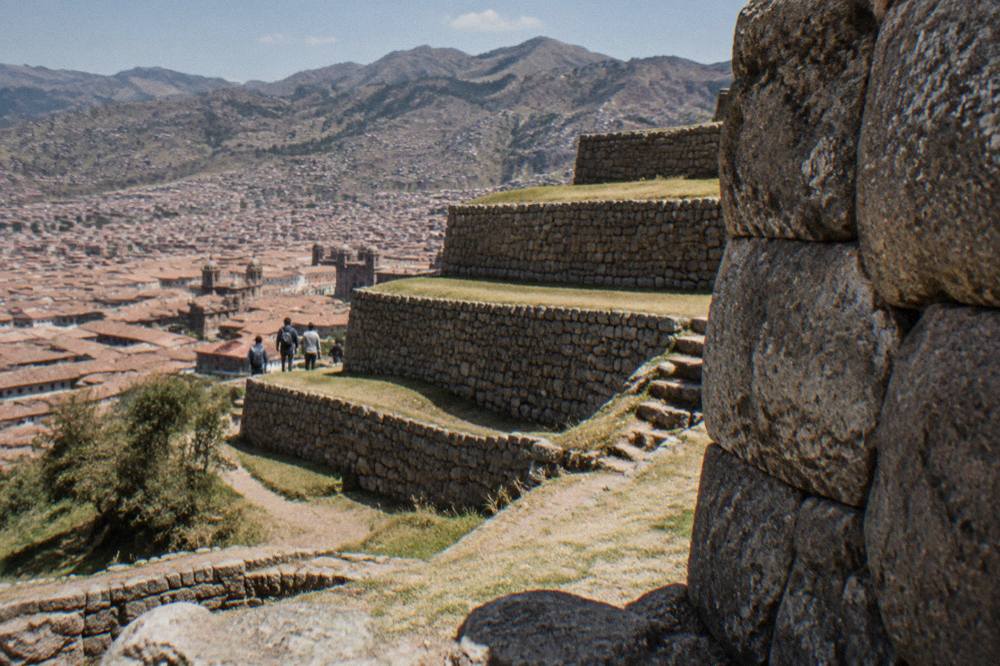
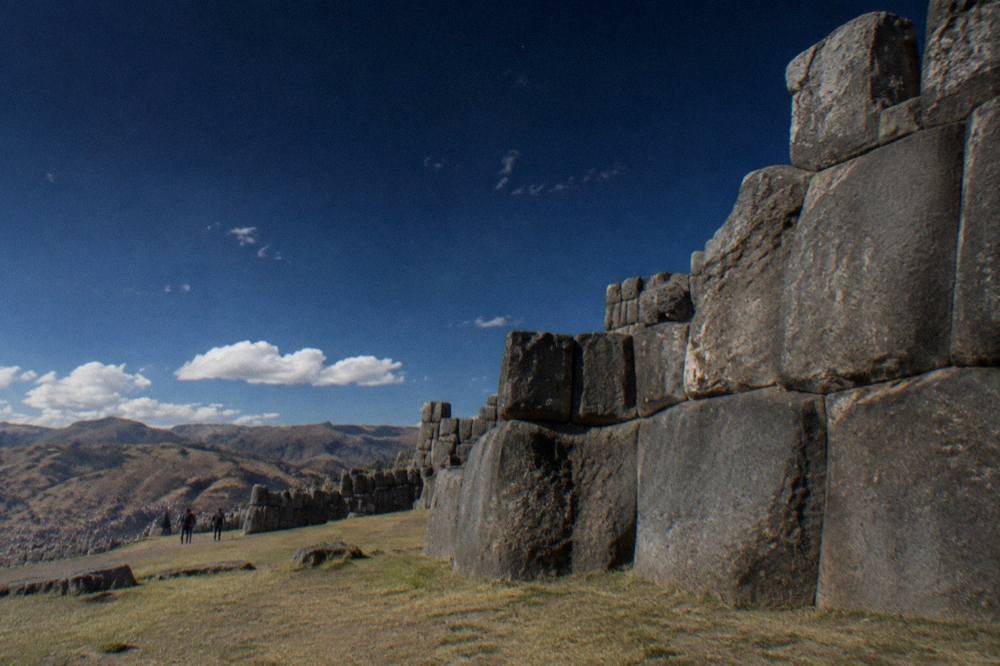
The four ruins are Sacsayhuaman at 3,701 m, then Q'enqo, Puka Pukara and Tambomachay, all on one loop road above the city and all covered by Boleto Circuit I. Sacsayhuaman is the largest and the one with an entry checkpoint; the other three are smaller roadside sites, and the whole loop is what the guided half-day tours drive in a few hours.
Sacsayhuaman is the headline stop. Its esplanade recorded 944,008 visits in 2025 in the MINCETUR open dataset, which makes it the most-visited free-standing site in the Cusco area after Machu Picchu and Ollantaytambo, and the setting for Inti Raymi each 24 June, the winter-solstice ceremony that starts at Qorikancha and ends at Sacsayhuaman with grandstand tickets sold through Teleticket. The site's hours are 07:00 to 18:00, and it is on the Boleto, not free. The Sacsayhuaman guide covers the site in depth, and the walk up from the city is a real option for anyone acclimatised, covered on the site's own page.
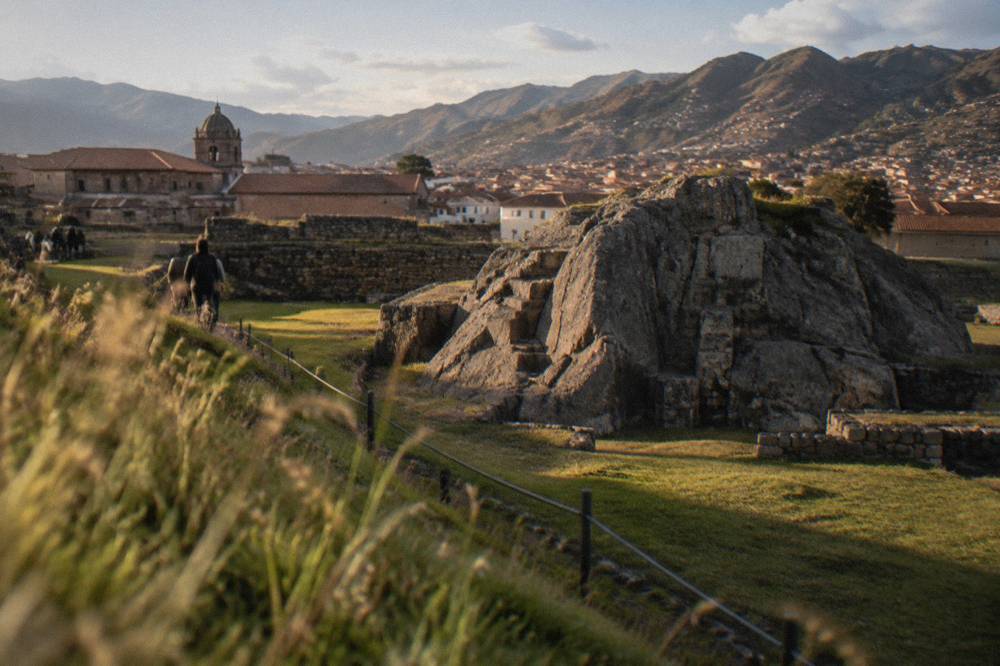
Q'enqo, Puka Pukara and Tambomachay follow along the same road. Q'enqo is a carved limestone outcrop with passages and a ceremonial platform; Puka Pukara is a small fortified complex of terraces and rooms overlooking the valley; Tambomachay is a set of finely built water channels and fountain niches. Each has its own page on this site, the Q'enqo guide, the Puka Pukara guide and the Tambomachay guide, and each is covered by the same Circuit I ticket. A guided half-day tour that strings the cathedral quarter with these four ruins is one of the site's roster products:
The listing above carries the live price, the review record and the cancellation terms, all rendered from verified data rather than typed into the page. For a visitor weighing it against the independent loop, the comparison is simple: the guided version buys the vehicle, the guide and the ordering, while the independent version buys flexibility at the cost of arranging the ticket and the transport separately. Either way the Boleto Circuit I ticket is the same S/ 70, and either way the loop ends back in the centre before dark.
The independent version is straightforward. The road above the city passes the sites in order, taxis run the loop, and the walk back down from Sacsayhuaman to the Plaza de Armas is a well-used descent. The only planning note the sources support: buy the Circuit I ticket first, at the COSITUC counter or at Sacsayhuaman itself, because the checkpoint is at Sacsayhuaman and the smaller sites are checked less predictably.
What Does The Historic Centre Half Of The Tour Cover?
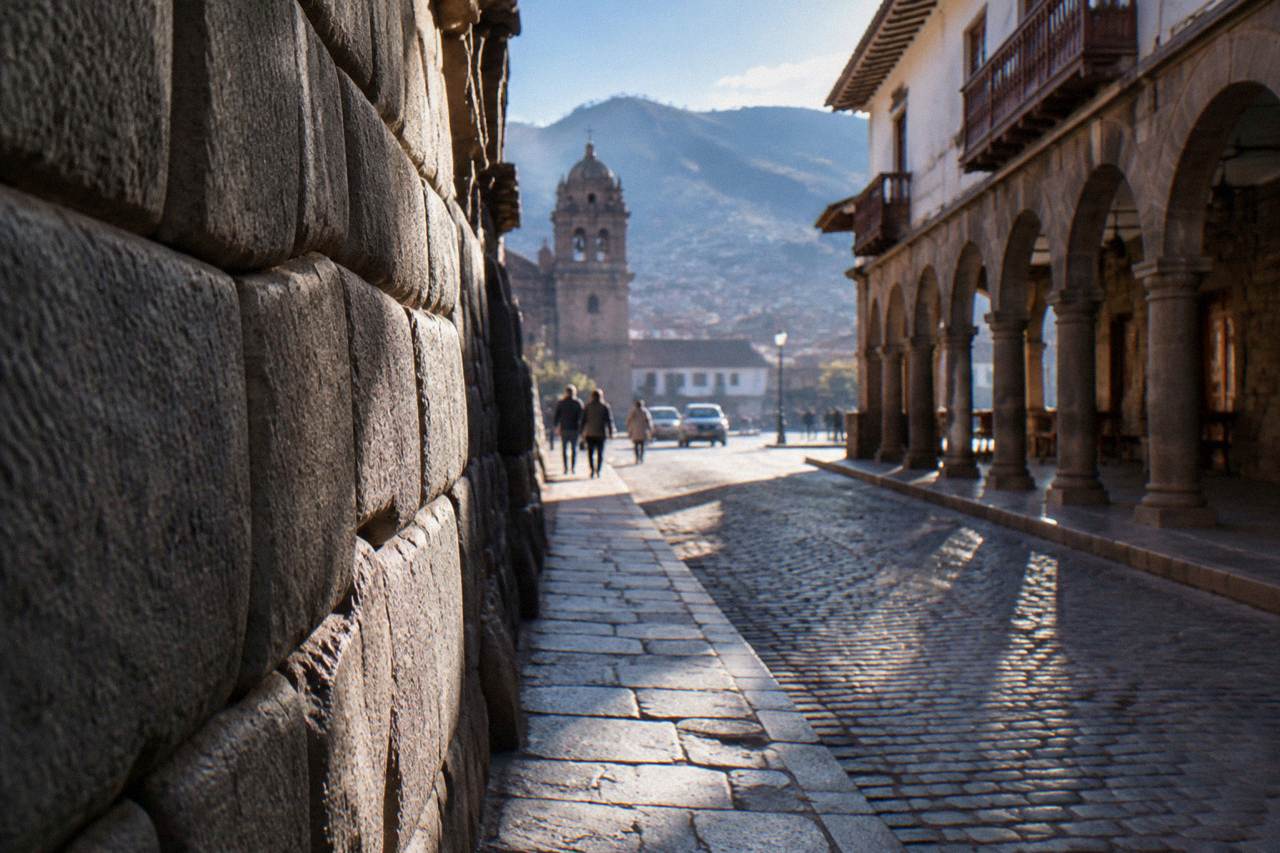
The centre half of the Cusco city tour covers the Plaza de Armas at 3,335 m, the Cathedral facing it, the Qorikancha site museum on the Santo Domingo complex, and the Inca wall stones of streets such as Hatunrumiyoc on the way up to San Blas. The Cathedral charges its own admission, S/ 25 on the peru.travel listing, and Qorikancha's museum is on Boleto Circuit II.
The Plaza de Armas is the city's anchor, the point PROMPERU gives as 3,335 m, and the square where Inti Raymi passes on its way to Sacsayhuaman. The Cathedral on its eastern side is not in the 16-site Boleto list, so its S/ 25 admission, a figure from a peru.travel page dated 2021, is paid separately and should be re-checked at the door. The Plaza de Armas guide and the Cusco Cathedral guide cover both stops in detail.
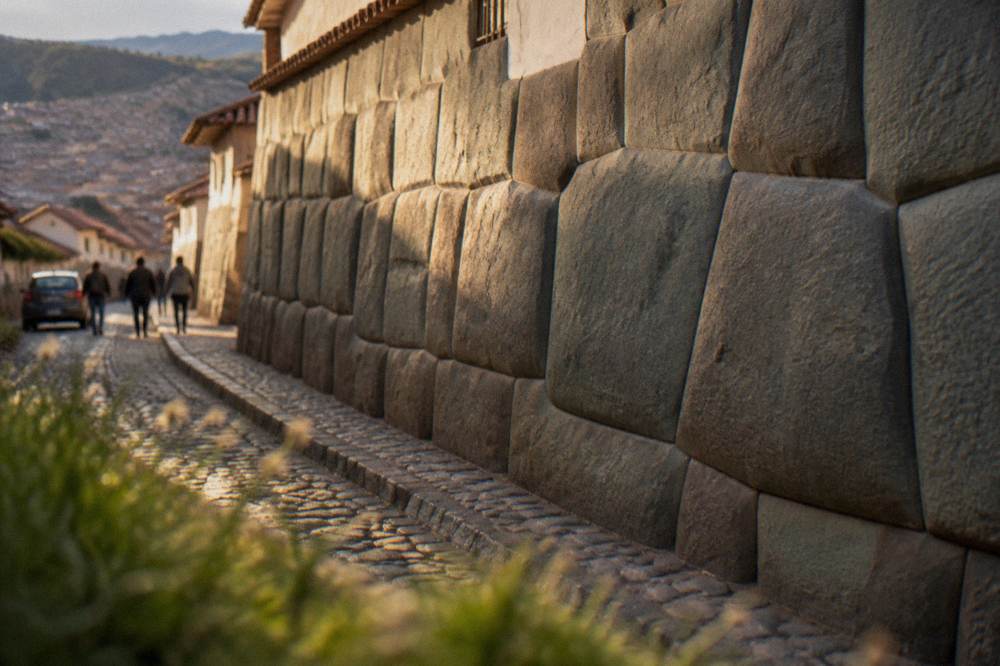
Qorikancha is the other anchor. The Inca temple site now sits under the colonial Santo Domingo complex, and its site museum is on Boleto Circuit II. The Qorikancha guide covers what the ticket covers and what it does not. From there the standard walking route climbs through the historic centre's narrow streets toward San Blas, the artisan quarter above the centre, passing the twelve-angled stone on Hatunrumiyoc, a large, finely fitted polygonal stone in an Inca wall near the Plaza de Armas and San Blas and one of the most photographed single stones in the city. The San Blas guide covers the quarter, and the twelve-angled stone page covers the wall.
A short walking tour with a local guide is the roster's budget option for exactly this centre loop:
| Centre stop | Ticket it needs | Source figure |
|---|---|---|
| Plaza de Armas | None, open public square | Elevation 3,335 m, PROMPERU |
| Cathedral | Own admission, not on the Boleto | S/ 25, peru.travel listing dated 2021 |
| Qorikancha site museum | Boleto Circuit II or integral | S/ 20 adult on a peru.travel museums listing |
| Museo Inka | Own admission | S/ 20 foreign adult, peru.travel listing |
| Museo de Arte Precolombino (MAP) | Own admission | S/ 20 general, S/ 10 student, peru.travel listing |
| Twelve-angled stone, Hatunrumiyoc | None, a street wall | No admission, public street |
Are Free Walking Tours In Cusco A Real Alternative?
Yes. GuruWalk lists seven free, tip-based walking tours in Cusco, several of which cover the same historic-centre ground as the paid city tour, and they cost nothing up front: the guides work for tips. The roster's free options include Frank Emerson's Free Tour in Cusco with local guide, the Yana Tour Operator historic-centre walk and Erick's historical tour, and none of them should carry a printed price because they are tip-based.
GuruWalk is named here deliberately: these are not this site's products, and the platform is where they run. The walks concentrate on the historic centre and its Inca foundations, and they suit an arrival day when a full ruins loop feels like too much. The site's free walking tours guide compares all seven, and the free things to do in Cusco guide places them among the no-ticket options.
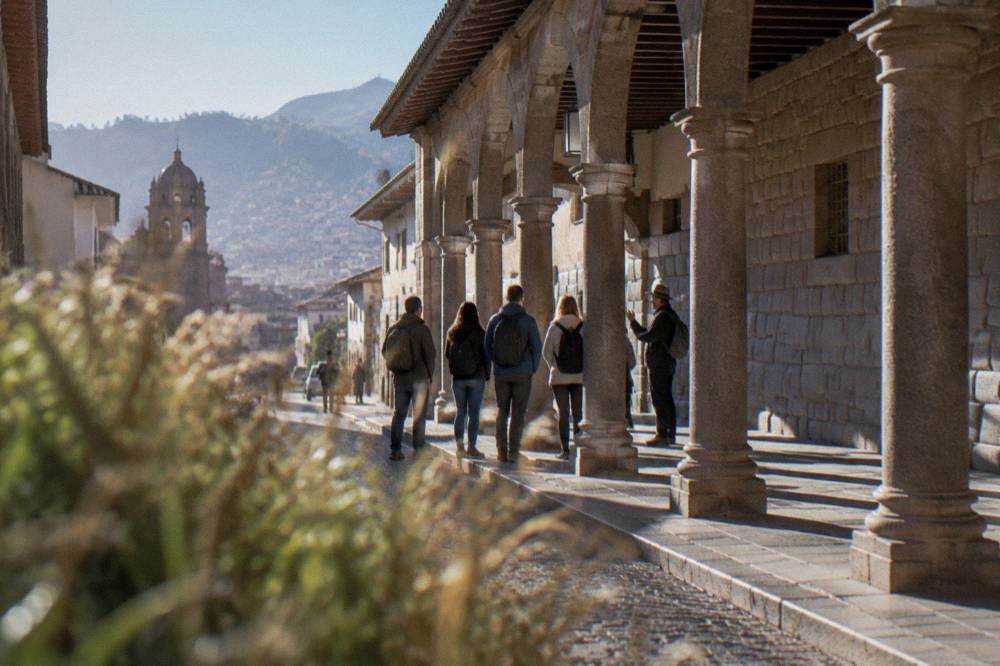
The honest framing of a free walk against a paid half-day: the free walk covers the centre, the stories and the street-level Inca walls, but it does not include the four ruins above the city, and it does not include any ticket. The paid half-day covers the ruins with transport and a guide but usually leaves the museums out. Neither covers Machu Picchu, which is a separate ticket, a separate journey and a separate page.
What Does A Cusco City Tour Cost In Total?
For a foreign adult doing the classic loop independently, the ticket cost is S/ 70 for Boleto Circuit I, about US$20, plus the Cathedral's own admission if the cathedral is included, plus whatever is agreed with a taxi or driver for the ruins loop, a fare that is shown or agreed before the ride. The integral Boleto at S/ 130 becomes the better buy the moment the Sacred Valley or the city museums join the plan.
The pack's on-the-ground ranges are narrow and worth repeating with their caveats: a menu del dia runs about S/ 8 to 15, a cup of coca tea about S/ 2 to 5, and an airport taxi to the centre about S/ 15 to 25, all reported secondary ranges, never official tariffs. The Cusco costs guide holds the full budget picture.
| Cost item | Figure | Status |
|---|---|---|
| Boleto Circuit I (four ruins) | S/ 70, about US$20 | COSITUC tarifario |
| Boleto integral (16 sites, 10 days) | S/ 130, about US$38 | COSITUC tarifario |
| Cathedral admission | S/ 25 | peru.travel listing dated 2021, re-check at the door |
| Qorikancha site museum | On Boleto Circuit II; S/ 20 listed separately by peru.travel | peru.travel museums listing |
| GuruWalk free tours | Tip-based, no printed price | Platform listing |
| Airport taxi to centre | About S/ 15 to 25 | Reported secondary range |
Guided products render their own prices from the listing, which is why this page prints none of them. The half-day city tour, the walking tour and the planetarium visit below all carry live prices and cancellation terms on the operator's listing, and the free walks carry none at all.
When Is The Best Time Of Year To Do The Cusco City Tour?
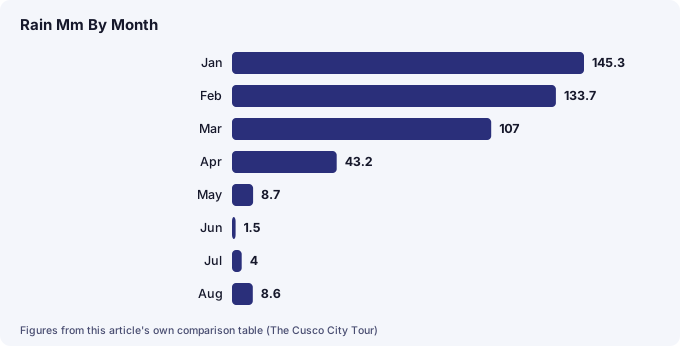
The dry season, roughly May to September, is the reliable window: May to August together bring just 22.8 mm of rain at the WMO/SENAMHI Cuzco station, 3.2 percent of the year's 707.8 mm, while December to March carries 71.9 percent. Mean daily maximums stay between 18.8 and 20.9 C all year, so the choice is about rain and night cold, not heat.
The climate record behind that answer is a historical normal from the Cuzco station, supplied by SENAMHI to the World Weather Information Service. June and July are the coldest nights, with mean minimums of 0.3 C and 0.1 C, and frost is common in those months, but the daytime maximums barely move, which is why a city tour works year-round: the loop is short, the stops have cover nearby, and a wet afternoon in the centre is a museum afternoon. The Cusco weather by month guide and the best time to visit Cusco guide carry the full analysis.
| Month | Mean max C | Mean min C | Rain mm |
|---|---|---|---|
| Jan | 18.9 | 6.6 | 145.3 |
| Feb | 18.8 | 6.5 | 133.7 |
| Mar | 19.1 | 6.2 | 107.0 |
| Apr | 19.7 | 4.9 | 43.2 |
| May | 19.8 | 2.5 | 8.7 |
| Jun | 19.5 | 0.3 | 1.5 |
| Jul | 19.1 | 0.1 | 4.0 |
| Aug | 19.8 | 1.6 | 8.6 |
| Sep | 19.8 | 3.9 | 21.8 |
| Oct | 20.9 | 5.5 | 39.4 |
| Nov | 20.7 | 6.1 | 71.9 |
| Dec | 19.4 | 6.4 | 122.7 |
One dated note belongs here rather than in a weather section: a papal visit scheduled for November 2026 includes Cusco and Sacsayhuaman on 15 November 2026, and crowding around the esplanade is likely that day. It is a scheduled event, not a certainty, and the Inti Raymi page covers the other big crowd date, 24 June each year.
How Does The Cusco City Tour Fit An Arrival Day And The Altitude?
The city tour is a common arrival-day activity because it is low-effort by Andean standards: the centre sits at 3,335 m and Sacsayhuaman at 3,701 m, and the CDC Yellow Book names Cusco, at about 3,350 m, as a rapid-ascent destination where rates of altitude illness approach 50 percent in abrupt-ascent situations and a graded ascent is preferred. A guided loop with transport removes the climb from the equation.
The CDC's advice, not this site's, is the standard: avoid ascending from low altitude to a sleeping altitude of 2,750 m or more in a single day where possible, consider acetazolamide as a prescription decision with a doctor, avoid alcohol for the first 48 hours, and note the CDC's own observation that travellers arriving in Cusco can descend to lower elevations to sleep for the first night or two. The Cusco altitude guide and the acclimatisation day guide turn that into a day plan. For the city tour itself, the practical reading is simple: the ruins loop involves a vehicle on the guided versions, and the only real climb on an independent day is the walk up to Sacsayhuaman or San Blas, both of which can be skipped, shortened or taxi-assisted.
| Stop on the loop | Elevation | Ticket |
|---|---|---|
| Plaza de Armas | 3,335 m | None |
| San Blas quarter | Above the centre, no sourced figure | None |
| Sacsayhuaman | 3,701 m | Boleto Circuit I |
| Q'enqo | On the loop road, no sourced figure | Boleto Circuit I |
| Puka Pukara | On the loop road, no sourced figure | Boleto Circuit I |
| Tambomachay | On the loop road, no sourced figure | Boleto Circuit I |
| Machu Picchu citadel, for comparison | 2,430 m | Separate Ministry of Culture ticket |
What Comes After The City Tour: Evenings, Food And The Next Loop?
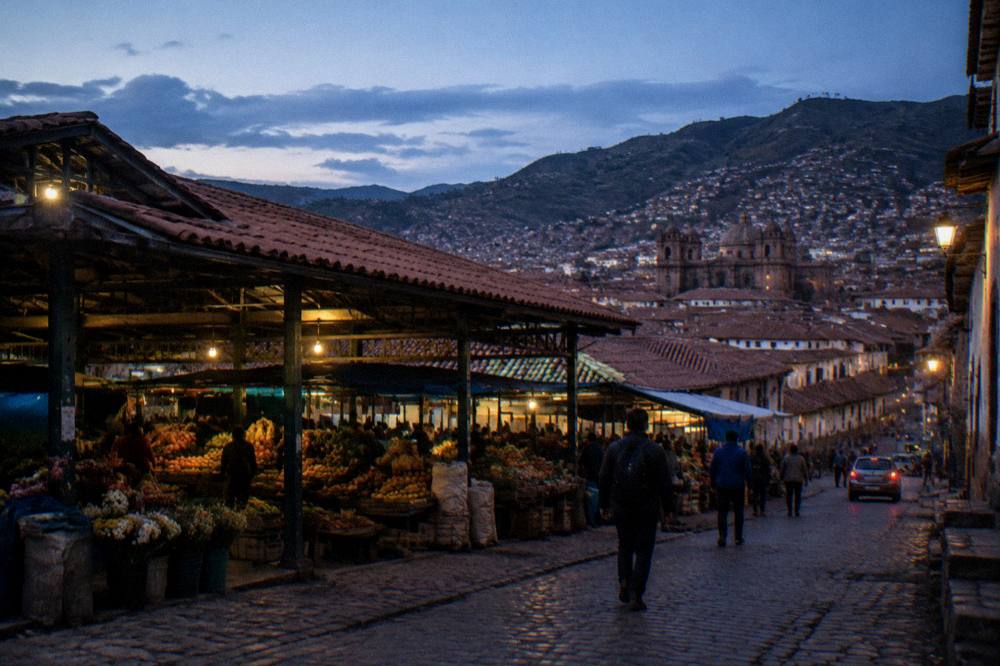
After the city tour the natural add-ons are an evening at the Cusco Planetarium, a food tour or cooking class built around San Pedro Market, and the Sacred Valley day trips that the integral Boleto already covers. The Planetarium Cusco runs shared evening sessions with round-trip transport included, and its admission is a roster product on this site; the market and food options each have a dedicated guide.
The planetarium is the related pick for this page because it is the one evening activity in the roster that fits the city-tour day without adding a journey: the sessions run after dark, the operator's own site shows the adult price from S/ 90 with transport included, and the product listing below carries the live figures.
The food thread is the other half of a Cusco evening. The what to eat in Cusco guide, the San Pedro Market guide and the cooking classes guide cover the market-and-table circuit, and the Cusco nightlife guide covers the bars of the centre and San Blas. Families have a dedicated page in the Cusco with kids guide, and the shopping thread runs through what to buy in Cusco and buying alpaca in Cusco.
The onward loops are covered elsewhere on the site and only named here: the Sacred Valley day trips from Pisac to Ollantaytambo, the mountain days at Rainbow Mountain and Palccoyo compared on the Rainbow Mountain versus Palccoyo page, and the Machu Picchu circuit on its own day-trip page. The Puno direction, toward Lake Titicaca, is a single sentence here: a scenic day trip with lunch runs that route, and it is one of the trio above.
Common Questions About The Cusco City Tour
Is the Cusco city tour worth it?
The loop covers a UNESCO-inscribed historic centre and four Inca sites on one road above the city, and the Boleto Circuit I ticket at S/ 70 covers the ruins. Whether a guided version is worth it over the independent loop is a budget-and-guidance choice: the guided product's price and review record sit on the operator's live listing, and the free GuruWalk walks cover the centre at no upfront cost.
Does the Boleto Turistico cover the Cusco city tour?
It covers the four ruins, Sacsayhuaman, Q'enqo, Puka Pukara and Tambomachay, through partial Circuit I at S/ 70, and the Qorikancha site museum through Circuit II. It does not cover the Cathedral, which charges its own admission, and it does not cover Machu Picchu in any form.
How long does the Cusco city tour take?
The guided half-day products on this site's roster run about five hours, and the independent loop of the centre plus the four ruins fills an afternoon comfortably. No source gives a walking time between the centre and Sacsayhuaman, so that figure stays off this page.
Can you do the Cusco city tour without a tour?
Yes. The four ruins sit on one loop road above the city, taxis run it, the Boleto is sold in person at the COSITUC counter on Av. El Sol 103 daily 07:30 to 18:00 and at most included sites, and the historic centre is walkable. COSITUC does not sell the ticket online.
Is Sacsayhuaman free to visit?
No. Sacsayhuaman is on the Boleto Turistico, Circuit I, and the site's listed hours are 07:00 to 18:00. The esplanade recorded 944,008 visits in 2025 in the MINCETUR dataset, which makes it one of the most-visited sites in the Cusco area.
Is the Cusco city tour the same as Machu Picchu?
No. Cusco sits at 3,335 m and Machu Picchu is a separate site at 2,430 m, reached by train or trek on a separate ticket sold on the Ministry of Culture platform. The city tour stays in and above the city; Machu Picchu has its own day-trip page on this site.
The Cusco city tour, done on the Boleto or with a guide, remains the most efficient first day in the city: one ticket, one road, one UNESCO-listed centre, and the whole circuit back at the Plaza de Armas before the evening cold sets in.